Posts

Obama Allowed Hezbollah to Smuggle Drugs Into the US to Protect the Iran Nuke Deal

A bombshell report from Politico Sunday revealed that the Obama administration let Hezbollah’s money-laundering and drug-trafficking operations slide in order to protect the Iran nuclear deal from collapsing.

The Drug Enforcement Administration led a campaign dubbed Project Cassandra that reportedly targeted the criminal activities of the militant group.

However, Justice and Treasury Department officials reportedly delayed or outright rejected the DEA’s requests for investigations, sanctions and prosecutions against members of Hezbollah.

According to Josh Meyer of Politico, these players included: “Hezbollah’s high-profile envoy to Iran, a Lebanese bank that allegedly laundered billions in alleged drug profits, and a central player in a U.S.-based cell of the Iranian paramilitary Quds force.”

In December 2011, U.S. attorney Preet Bharara filed a civil money laundering lawsuit against “Lebanese Financial Institutions That Facilitated a Hizballah-Related Money Laundering Scheme.”

The lawsuit claimed that “Lebanese Financial Institutions, Including Institutions Linked to Hizballah, Allegedly Wired Over $300 Million into the United States for the Purchase and Shipment of Used Cars to West Africa as Part of Money Laundering Scheme.”

The suit added that “Proceeds from Car Sales and Narcotics Trafficking Allegedly Were Funneled Back to Lebanon Through Hizballah-Controlled Money Laundering Channels.”

While Bharara originally sought over $480 million in the suit, it was eventually settled in 2013 for $102 million.

Another example of the Obama administration hindering DEA progress against Hezbollah was its decision to refrain from pressuring the Czech government from extraditing Lebanese arms dealer Ali Fayad back to the U.S. amid U.S. courts indicting him on charges involving attempts to acquire anti-aircraft missiles, attempts to provide material support to a terror cell and plans to kill U.S. government employees.

As reported by Politico, U.S. officials believe Fayad is now helping to weaponize Syrian militants.

Perhaps most surprisingly, members of Project Cassandra claim that officials in the Obama administration undermined the DEA’s efforts to take down of one of Hezbollah’s top operatives, a man named “Ghost,” — one of the world’s largest cocaine smugglers, including to the U.S.

Four former DEA officials with direct access to these cases say that the Justice Department also refused to investigate Abdallah Saffiedine, overseer of the Hezbollah’s “Business Affairs Component,” which involved international drug trafficking.

According to Defense of Department illicit finance analyst David Asher, these blockades set forth by the Obama administration, as well as other instances such as the DOJ’s refusal to charge the militant group’s military wing as an ongoing criminal syndicate, “was a policy decision, it was a systematic decision.”

“They serially ripped apart this entire effort that was very well supported and resourced, and it was done from the top down,” he added, referring to the Obama administration’s actions in handling the DEA’s requests for investigating Hezbollah.

In February, a Treasury official from the Obama-era, Katherine Bauer, stated in a written testimony, “under the Obama administration … these (Hezbollah-related) investigations were tamped down for fear of rocking the boat with Iran and jeopardizing the nuclear deal.”

However, former administration officials have countered these claims, stating that the decisions made during Obama’s tenure were not done out of politics.

“There has been a consistent pattern of actions taken against Hezbollah, both through tough sanctions and law enforcement actions before and after the Iran deal,” said Kevin Lewis, an official who worked at the Justice Department and White House during the Obama administration.

Fox News detailed that after announcement of the deal in January 2016, Project Cassandra members were given other assignments unrelated to the Hezbollah investigation.

The Lebanese militant group is one of the world’s largest cocaine traffickers and supplies chemical and conventional weapons to Syrian dictator Bashar al-Assad — weapons the dictator has reportedly used on his own people.

As reported by Fox News, Hezbollah was formed in 1982 by the Iranian Revolutionary Guard in order to combat Israel’s invasion of Beirut. Under direction of a new leader in 1992, the group’s motive shifted from trying to implement an Islamic republic in Lebanon to fighting against Israel. (For more from the author of “Obama Allowed Hezbollah to Smuggle Drugs Into the US to Protect the Iran Nuke Deal” please click HERE)

Follow Joe Miller on Twitter HERE and Facebook HERE.

Iran Seeks ‘New World Order’ on ‘Ruins’ of West

The prime objective of Iran’s mullah-led regime is to export its Islamic revolution worldwide to build a new Shiite “world order” on the “ruins” of Western civilization, declared a columnist for a daily paper affiliated with the country’s religious leadership, reports Joseph Farah’s G2 Bulletin..

“Iran will, in the future, become one of the poles of the world,” wrote Abdollah Motevalian in a recent column in the daily newspaper Javan.

The paper is “affiliated with the country’s ideological camp,” according to the Middle East Media Research Institute, which monitors and analyzes media in the region.

The writer cited a list of principles that provide the foundation for the Islamic revolution’s objectives.

“Identifying the enemy; believing in the need for fighting the enemy; a revolutionary discourse; a fighting strategy; persistence in fighting, with no hiatus; jihadi spirit; a plan for the fighting; tirelessness; making it a people’s war and leveraging all the human potential in the country.” (Read more from “Iran Seeks ‘New World Order’ on ‘Ruins’ of West” HERE)

Follow Joe Miller on Twitter HERE and Facebook HERE.

Saudi Arabia and Iran Battle for Power in the Middle East

Saudi Arabia’s order for its citizens to evacuate Lebanon is the latest ominous signal in an escalating confrontation between the Middle East’s chief regional rivals, the Kingdom of Saudi Arabia and the Islamic Republic of Iran.

The two nations have long fought proxy wars against each other, but many fear that the newly empowered Saudi Crown Prince Mohammed bin Salman is looking to assert Saudi Arabia’s regional dominance at any cost. The conflict heated up last year when Saudi Arabia executed a Shiite cleric and then severed diplomatic ties with Iran.

Now the Saudis are publicly airing their disapproval with Iran’s chief foreign affiliate, Hezbollah, which has significant representation in Lebanon’s parliament and has asserted its influence in neighboring Syria.

Experts, however, don’t think a regional conflagration is imminent. “The Saudis have always thought the wrong solution for their problem with Iran and now their hope is the Trump administration will come in and tilt the balance in their favor,” said Ali Vaez, the Iran project director at Crisis Group. “It’s unlikely to change Iran’s regional policy — Iran will continue to support its allies and proxies in the region — but it’s unlikely to result in a major conflict.”

Even if the conflict doesn’t boil over, there is plenty at stake for the U.S. and the world in the battle between the Kingdom of Saudi Arabia and the Islamic Republic of Iran. There’s the price of oil, which rises during crises — an ironic benefit to the belligerents, who have some of the world’s largest oil reserves — and there’s the regional balance of power. (Read more from “Saudi Arabia and Iran Battle for Power in the Middle East” HERE)

Follow Joe Miller on Twitter HERE and Facebook HERE.

Poll: Americans Stand With Trump on Iran Nuclear Deal

The American people stand strongly with President Trump on the controversy of the Iran nuclear deal.

After choosing to forgo recertifying the deal last week, the president has called on Congress to renegotiate the terms of the deal with the nuclear weapons-seeking Iranian regime. An overwhelming majority of voters — 70 percent — say the Obama-era deal should be renegotiated, according to a new Harvard-Harris Poll.

Broken down by party affiliation, 85 percent of Republicans, 71 percent of independents, and 57 percent of Democrats support new terms of the deal.

A 60 percent majority of Americans believes Obama’s deal with Iran was bad for the U.S, and two-thirds of those surveyed believes Iran has not complied with the terms, including half of Democratic voters.

In a rebuke of the Obama administration’s style of unilateral decision-making, a whopping 81 percent said a new deal needs to be received by Congress as a treaty and should require Senate approval.

After President Trump decertified the Iran deal, Congress has 60 days to act and put sanctions against Iran back in place. If Congress fails to act, the president has declared he will officially cancel the deal. (For more from the author of “Poll: Americans Stand With Trump on Iran Nuclear Deal” please click HERE)

Follow Joe Miller on Twitter HERE and Facebook HERE.

Iran Promises to Attack US If Trump Labels Army as ‘Terrorist Group’ – Trump Does It Anyway

Ignoring Iranian warnings of retaliation, the Trump administration announced on Friday it will not be certifying the Iran nuclear deal. The administration is imposing new sanctions against the the regime’s Revolutionary Guard Corps, describing the group as playing a “central role” in “Iran becoming the world’s foremost state sponsor of terror.”

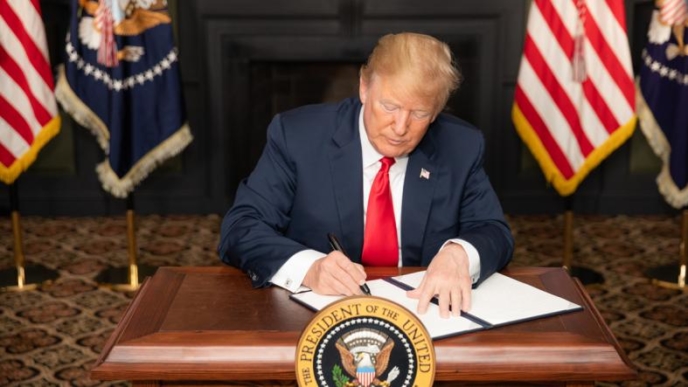
“I am announcing today that we cannot and will not make this certification,” President Donald Trump said during a speech at the White House. “We will not continue down a path whose predictable conclusion is more violence, more terror, and the very real threat of Iran’s nuclear breakthrough.”

“Friday’s announcement does not withdraw the United States from the Iran deal, which the president called ‘one of the worst and most one-sided transactions the United States has ever entered into,’” Fox News reported. “But the president threatened that he could still ultimately pull out of the deal.”

Congress now has 60 days to decide whether to reimpose the sanctions lifted as part of the 2015 deal, modify them or do nothing. If no agreement is reached with Congress, Trump has stated he will pull the United States out of the accord.

Trump also announced additional sanctions against the Revolutionary Guard.

“I am authorizing the Treasury Department to further sanction the entire Islamic Revolutionary Guard Corps for its support for terrorism and to apply sanctions to its officials, agents, and affiliates,” he said. “I urge our allies to join us in taking strong actions to curb Iran’s continued dangerous and destabilizing behavior.”

The Treasury Department also issued a statement regarding the sanctions.

“The IRGC has played a central role to Iran becoming the world’s foremost state sponsor of terror,” Treasury Secretary Steven Mnuchin said Friday. “We urge the private sector to recognize that the IRGC permeates much of the Iranian economy, and those who transact with IRGC-controlled companies do so at great risk.”

Mnuchin singled out the Guard as the “key Iranian entity” enabling Syrian President Bashar al-Assad to engage in brutal violence against his own people. He also noted the IRGC Quds Force has provided material support to terrorist activities of Hezbollah, Hamas and the Taliban.

IRGC Command Maj. Gen. Mohammad Ali Jafari warned if the Trump administration designated his force as a terrorist group, American forces can expect repercussions, particularly on the battlefield in the Middle East.

“If the news is correct about the stupidity of the American government in considering the Guards a terrorist group, then the Guards will consider the American army to be like Daesh all around the world particularly in the Middle East,” said Gen. Jafari, according to the Tehran Times.

“The Americans are too small to be able to harm the Revolutionary Guards,” added Ali Akbar Velayati, the top adviser to Leader of the Islamic Revolution Ayatollah Ali Khamenei.

Breitbart reported, “In January 2016, IRGC vessels captured and humiliated 10 U.S. Navy sailors after their two ships drifted into Iranian waters. Iran ended up releasing the American sailors the following day.”

Trump has consistently criticized the Iran nuclear deal for failing to address the terrorist activities of the Islamic Republic. (For more from the author of “Iran Promises to Attack US If Trump Labels Army as ‘Terrorist Group’ – Trump Does It Anyway” please click HERE)

Follow Joe Miller on Twitter HERE and Facebook HERE.

The Insane Strategy of Empowering Iran, Islamists Against Kurds

If you believe the Arabs living in Israel need a state but the Kurds should cede their state to the Islamic governments of Turkey, Baghdad, and Iran, you might be part of the Swamp.

We have spent several trillion dollars, lost thousands of dead, and ruined lives of our military fighting for our enemies in the Middle East or refereeing Islamic civil wars with no good outcome for America. Yet our government is now spitting on the one semi-stable, pro-Western, non-Islamic ally that could serve as a hedge against all our Middle Eastern enemies. We are dumping on the Kurds for taking a democratic vote for sovereignty — all for the purpose of allying with the Iranian-backed government in Baghdad and cozying up to Erdogan.

Iraq doesn’t exist any more and only existed for a few generations, drawn together randomly after WWI by immoral, arbitrary lines. Once we overthrew Saddam Hussein and handed Baghdad to Iran, there was no more Iraq. We’ve spent over a decade refereeing the Islamic civil war between Iranian-backed Shia militants and Sunni jihadists. Now, in order to “defeat ISIS,” we have essentially allied with Iran, handing them a Hezbollah terror corridor from Iran to the Mediterranean Sea.

Even worse, when Iran’s domination over Sunni areas reaches another boiling point and triggers the next round of the Sunni insurgency, our genius civilian and military leadership will feel obligated to “fix Iraq” again and bail out Iran, which is much more of a strategic threat than any Sunni group.

Enter the Kurds, who are the only successful fighting force against the Sunni insurgency but are also pro-American and can actually hold a growing area of northern Iraq in a stable way that serves every one of our interests. They voted overwhelmingly to become independent. And all the Kurds need are national recognition, a fraction of the military aid we give the corrupt Afghani and Baghdad governments, and the simple, helpful tools of statecraft we’d give to any allies. Rather than a bloody choice between helping Iran and helping Sunni jihadists, with the loss of tremendous blood and treasure, we can help a stable ally almost for free.

Yet not only are we not helping, we are rebuking the Kurds for taking up their sovereignty. The State Department said it was “deeply disappointed” by the democratic affirmation of sovereignty. Sen. Bob Corker, the king of the Iran deal, complained that the Kurdish vote was not in our national interests because it would weaken the Iranian-backed government. War is peace and peace is war!

This has emboldened the Baghdad government (aka Iran) to cut off all flights to Erbil airport, the Kurdish capital. Erdogan has threatened to attack the Kurds. Isn’t it amazing that while we pressured the Arab nations to back off Qatar, we are sitting idly by while they threaten the Kurds?

The Iraqi Kurdistan Regional Government (KRG) declared victory earlier this week when the population voted 93 percent in favor of Kurdish independence. The Kurds are also on the cusp of winning back even more territory than they originally lost to Sunni jihadists. After we spent tens of billions training the “Iraqi army,” it fled the minute ISIS attacked. Now that the Kurds are winning back their original land, which had been stolen by Arab Baathists for the past half-century, we are siding with Baghdad to pressure them to pull back. Our government is literally siding with Iran and Shiite militias, some of which are designated as terrorist groups, in their dispute with the Kurds over Kirkuk. We are also allowing Baghdad to hold up foreign aid for them while we refuse to cut off aid to the Lebanese Army at a time when Hezbollah is more empowered than ever before.

The Kurds are the biggest buffer against Iranian hegemony. NSC director H.R. McMaster won’t say what the administration’s strategy is to stop Iranian and Hezbollah expansion in the region, which was accelerated by our own military intervention on their behalf. Now the Kurds have the ability to undermine the Iranians. Iranian Kurds are already celebrating the move toward independence and rattling the Islamic republic.

It’s amazing to ponder the breathtaking insanity of our government’s policies in the Middle East. We will invest trillions in tying a noose around our own necks, yet we won’t invest pennies and moral support to allies who will help our interests for free. Just consider how the Special Inspector General for Afghanistan Reconstruction (SIGAR) just reported that we’ve flushed $70 billion down the tubes propping up the failed Afghani military in order to sustain their Sharia government, yet we won’t simply give the green light to those who have demonstrated they can secure their country and remain pro-West.

Finally, as we explained already this month, creating an independent Kurdistan in northern Iraq would kill two birds with one stone by serving as that regional resettlement home Trump has promised for refugees rather than resettling them in America.

It’s tragically ironic that at a time when we are struggling to defend our own sovereignty, we would disrespect the sovereignty of the Kurds. Yet, much like the backward domestic policy priorities of our political class, when it comes to foreign policy, friend is enemy and enemy is friend. The first 10 names in any telephone book would do a better job identifying the right investments, alliances, and strategic interests abroad than the current political and military leaders.

The question nobody in government is willing to ask is: How much longer are we going to continue throwing good money and lives after 16 years of failure in Iraq and Afghanistan? How many opportunities will we ignore while fighting for foreign Islamic countries that no longer exist?

(For more from the author of “The Insane Strategy of Empowering Iran, Islamists Against Kurds” please click HERE)

Follow Joe Miller on Twitter HERE and Facebook HERE.

Texas School District Will Permit Students to Kneel During Anthem

While some high schools and colleges across the U.S. are beginning to ban kneeling during the national anthem following the NFL protests from last weekend, the Frisco School District in Texas is tacitly encouraging students to protest (arguably even inviting them to do so).

In an email directive, Frisco Independent School District coaches have been told not to stop any students from kneeling. If students choose to kneel before the game, “they may do so without repercussion,” states a copy of the note provided to CR by a member of the Frisco ISD community.

While some high schools and colleges across the U.S. are beginning to ban kneeling during the national anthem following the NFL protests from last weekend, the Frisco School District in Texas is tacitly encouraging students to protest (arguably even inviting them to do so).

In an email directive, Frisco Independent School District coaches have been told not to stop any students from kneeling. If students choose to kneel before the game, “they may do so without repercussion,” states a copy of the note provided to CR by a member of the Frisco ISD community.

The point of this letter is ostensibly to provide “guidance” to school coaches, to help navigate around potential trouble. Its defenders will claim the district is in no way encouraging students to protest the national anthem.

But what is the purpose of sending this directive where there was no indication students were planning a protest? In sending this letter (which countless coaches have undoubtedly shared with their teams), the school preemptively declared there will be no consequences for a protest that wasn’t happening. By doing this, the school is actually inviting such a protest.

It’s like saying, “By the way, kids, if you want to protest during the anthem, you won’t be punished.” “We aren’t protesting.” “OK, but if you do, we won’t punish you.”

Don’t be surprised if Frisco ISD athletes start kneeling during the national anthem now that the school essentially gave them the all-clear. (For more from the author of “Texas School District Will Permit Students to Kneel During Anthem” please click HERE)

Follow Joe Miller on Twitter HERE and Facebook HERE.

Iran Threatens to Send Warships to Atlantic and Ramp up Nuclear Activities If U.S. Continues Sanctions

Amid Americans’ concerns that North Korea threatened to launch a missile at Guam, Iran is planning on building up a flotilla of warships in the Atlantic Ocean, while Iranian leader Hassan Rouhani has threatened to revitalize the country’s nuclear program if the U.S. continues “threats and sanctions.”

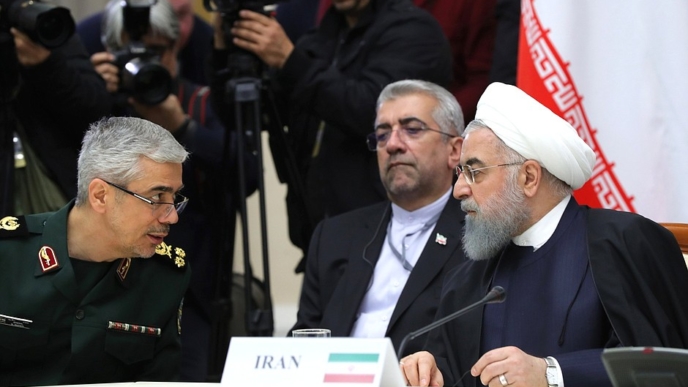
If Washington continues with “threats and sanctions” against Iran, Tehran could easily ramp up its nuclear activities Rouhani said in Iranian Parliament, AP reported.

In an hour and a day, Iran could return to a more advanced (nuclear) level than at the beginning of the negotiations.

“The U.S. has shown that it is neither a good partner nor a trustable negotiator,” Rouhani added. “Those who are trying to go back to the language of threats and sanctions are prisoners of their past hallucinations. They deprive themselves of the advantages of peace.”

Iranian lawmakers reportedly shouted “death to America” as they passed the bill to increase military spending.

The legislation also imposes sanctions on U.S. military officials who are in the region.

Meanwhile, after the announcement of a massive $500 million investment in war spending, Iran has planned to send flotilla of warships to the Atlantic Ocean in response to the U.S. proposed sanctions against the country.

“No military official in the world thought that we can go around Africa to the Atlantic Ocean through the Suez Canal but we did it as we had declared that we would go to the Atlantic and its Western waters,” Iranian Navy Commander Rear Admiral Habibollah Sayyari said.

This comes amid previous weeks of several tense interplays where Iranian military ships have carried out a series of dangerous drills near U.S. ships.

Just last Monday U.S. military officials reported another “unsafe” encounter with an Iranian drone that was following a U.S. carrier in the Persian Gulf that allegedly came close enough to an American F-18 jet to risk the pilot’s life.

In early August, U.S. President Donald Trump signed into law new sanctions on Iran, Russia and North Korea passed by the U.S. Congress.

Iran has maintained the new U.S. sanctions amount to a “hostile” breach of the 2015 nuclear deal.

U.S. President Donald Trump has stated several times that the Iran deal was a “bad deal” and continues looking into ways to repeal the deal.

Meanwhile, Iran has just threatened Trump saying they will “abandon its nuclear agreement with world powers within hours” if the United States imposes any more new sanctions, Reuters reported.

“If America wants to go back to the experience (of imposing sanctions), Iran would certainly return in a short time — not a week or a month but within hours — to conditions more advanced than before the start of negotiations,” Rouhani told a session of parliament broadcast live on state television.

“The world has clearly seen that under Trump, America has ignored international agreements and, in addition to undermining the (nuclear deal), has broken its word on the Paris agreement and the Cuba accord…and that the United States is not a good partner or a reliable negotiator,” Rouhani added.

Another U.S. president and just more geopolitical wars mounting up. Nothing ever seems to change even though all presidents seem to campaign on ending wars. (For more from the author of “Iran Threatens to Send Warships to Atlantic and Ramp up Nuclear Activities If U.S. Continues Sanctions” please click HERE)

Follow Joe Miller on Twitter HERE and Facebook HERE.

Busted Iran Front Group Loaded Clinton Foundation With Cash

An Iranian foundation recently convicted as a front organization for the theocratic regime in Tehran donated five-figure sums to the infamous Clinton Foundation.

Last week, a New York grand jury ruled that the government can seize a building majority-owned by the Alavi Foundation, agreeing with prosecutors that it is a front group for the mullahs in Tehran. The foundation used the Manhattan skyscraper to garner hundreds of millions in revenue so it could supply cash for its “charitable” endeavors inside the United States.

The Alavi Foundation rarely donated to non-Islamic or non-academic institutions. Alavi spent most of its funds on building Shiite institutions — such as mosques and cultural centers — and installing Iran-friendly professors at prominent American universities.

So its regular donations to the Clinton Foundation — now estimated at around $100,000 — particularly stood out. From 1985 to 2014, the Alavi Foundation — which last year listed its assets at over $100 million — donated to only 13 non-Islamic organizations.

In addition to its direct donations to the Clinton Foundation, the Alavi Foundation has also sent money to organizations associated with the non-profit. Alavi has given funds to the Clinton Foundation through its supposed humanitarian programs (the “Child Foundation”) in Louisiana and Haiti.

Prominent legislators have labeled the Clinton Foundation as something resembling a money-laundering and influence-peddling operation. Its critics argue that the foundation was primarily utilized to curry favor with the power Clinton family. They point to instances like the foundation’s disaster-relief fundraising efforts in Haiti, which ended up enriching the Clinton Foundation and not doing anything substantive to relieve the suffering of the people on the ground.

When first confronted with the possibility that the Alavi Foundation was an Iranian front group, the Clinton Foundation refused to return its donations.

At the time, in 2015, New York U.S. Attorney Preet Bharara said: “For two decades, the Alavi Foundation’s affairs have been directed by various Iranian officials, including Iranian ambassadors at the United Nations, in violation of a series of U.S. laws.”

It remains unclear if the conviction of the Alavi Foundation will change whether the Clinton Foundation will dispose of the terror-linked funds they have regularly received from the Iranian front group. If the Clinton Foundation continues to take funds from Alavi, the Clintons will be enabling a country determined — by bipartisan consensus — in U.S. government circles as the world’s foremost state sponsor of terrorism. (For more from the author of “Busted Iran Front Group Loaded Clinton Foundation With Cash” please click HERE)

Follow Joe Miller on Twitter HERE and Facebook HERE.

Iran Re-Elects Rouhani as President

Iranian President Hassan Rouhani won a second term in office on Friday, securing about 57 percent of the votes cast in Iran’s carefully vetted and stage-managed presidential election.

Rouhani, a pragmatic hardliner often mistakenly described as a “moderate” by western media, outpolled a field of rival candidates that included Ebrahim Raisi, an ultra-hardline protégé of Ayatollah Ali Khamenei, Iran’s Supreme Leader.

The election will change little in Iran. In Iran’s theocratic political system, elections advance the interests of mullahcracy, not democracy.

Iran’s clerical rulers claim legitimacy by purporting to be carrying out the will of God, not the will of the people.

Unlike in the U.S., Iran’s president is a political figurehead with very limited powers and responsibilities.

Iran’s Supreme leader is the ultimate arbiter of the important issues, particularly those the United States is most concerned about: Iran’s nuclear program, its ballistic missile force, its export of terrorism, and its efforts to export its revolution to Bahrain, Iraq, Lebanon, Saudi Arabia, Yemen and other places.

As the leader of Iran’s Islamic revolution, the Supreme Leader controls the Islamic Revolutionary Guard Corps?the cutting edge of the regime?which suppresses political opposition, protects the regime at home and abroad, controls Iran’s ballistic missile force as well as covert nuclear efforts, and orchestrates Iran’s support for terrorist groups.

Iran’s theocratic dictatorship has constructed a façade of democracy to mask the fact that real power always has been wielded by unelected clerical leaders. It is the ayatollahs, after all, who approve which candidates are allowed to run for president.

This year, more than 1,600 male candidates announced plans to run for the presidency (women cannot run), but only six were approved by the Guardian Council, an Orwellian body that certifies that candidates reliably support the radical goals of Iran’s Islamic revolution.

The political process amounts to more of a selection than an election. The political campaign provides something of a barometer for measuring popular opinion, but it is still a small, self-perpetuating clerical elite that makes the critical decisions.

This year’s campaign focused primarily on economic issues. Many Iranians were disappointed when the lifting of economic sanctions as part of the 2015 nuclear deal did not trickle down to improve their lives—something Rouhani had promised.

This didn’t happen, in part was because Iran’s biggest trade deals were designed to benefit state-controlled industries and firms affiliated with the Revolutionary Guards, who control a large chunk of the Iranian economy.

Moreover, low oil prices have depressed Iran’s oil export revenues, which are the backbone of its economy.

The regime has exacerbated the situation by funneling many of the economic dividends provided by sanctions relief into a military buildup and an increasingly costly military intervention in Syria to prop up the brutal Assad regime.

Rouhani has little control over those decisions, which are made by Ayatollah Khamenei.

In reality, Iran’s election on Friday was a charade. All it did was re-select Rouhani as president—a president in name only.

Under Iran’s revolutionary political system, Ayatollah Khamenei, the leader of the revolution, greatly outranks the leader of the Iranian state.

Khamenei, who has ruled Iran since 1989, reportedly has suffered from prostate cancer in recent years. The selection of his successor will have a greater impact on Iran’s future than the selection of any president. (For more from the author of “Iran Re-Elects Rouhani as President” please click HERE)

Follow Joe Miller on Twitter HERE and Facebook HERE.