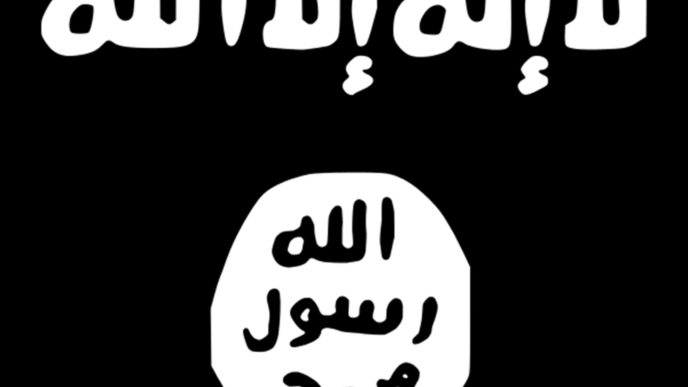
Posts

High Stakes for the US Navy as It Wages War on ISIS

During the early days of World War II, the United Kingdom’s Prime Minister Winston Churchill made a memorable comment about British pilots’ defense of their homeland from Nazi Germany.

“Never in the field of human conflict was so much owed by so many to so few,” Churchill said in an August 1940 speech.

Seventy-seven years later, U.S. Navy aviators and sailors have their own singular burden to bear as they support Operation Inherent Resolve, the U.S.-led coalition against the Islamic State in Syria and Iraq.

In this war, a single misstep born of a split-second decision during combat operations—both in the air and at sea—could cost hundreds of innocent lives, or perhaps even precipitate a shooting war between the U.S. and Russia.

“You’re always on guard,” Lt. Brandon Rogers, call sign “Barf,” an F/A-18 Hornet strike fighter pilot aboard the USS George H.W. Bush, told The Daily Signal.

“We train for both the predictable and unpredictable,” Rogers said. “There’s always a threat, it’s just a matter of whether it’s your time to get engaged or not. We’re engaging the enemies on the ground constantly; it’s just a matter of time before you’re next.”

The Daily Signal was aboard the USS George H.W. Bush aircraft carrier during combat operations in support of Operation Inherent Resolve.

As the Islamic State, the terrorist army also known as ISIS, loses territory, the myriad military forces arrayed against it are converging. The battle space, consequently, is increasingly crowded, and U.S. forces and the local groups partnered with them on the ground are more frequently brushing up against the Russian and Syrian regime militaries.

Meanwhile, at sea in the eastern Mediterranean, U.S. warships supporting Operation Inherent Resolve are interacting with the Russian navy in ways not seen since the Cold War.

“As the area gets more and more constricted, as Russian forces and pro-regime Syrian forces as well as U.S. forces and forces that the U.S. backs start moving tighter and tighter into other areas, then that deconfliction will have to be worked out,” Rear Adm. Kenneth Whitesell, commander of Carrier Strike Group Two, told The Daily Signal in an interview.

“There is no desire to militarily escalate the situation,” Whitesell said. “It basically comes down to our training. We trust their training, and we assume that [the Russians] trust our training, too. They are not the enemy. ISIS is the enemy.”

The air war over Syria is one of most complex that U.S. Navy aviators and sailors have ever faced. Aviators are on guard against air-to-air threats while they exercise a close air support mission honed from 16 years of post-9/11 counterinsurgency operations. While at sea, sailors dust off Cold War-era tactics to deal with increasingly bold and persistent run-ins with Russian warships.

At stake every day are U.S. strategic interests, the fate of ISIS, and the lives of civilians caught in the crossfire. Also, the durability of peace between the world’s top two nuclear powers hinges on the coolheadedness and judgment of U.S. military personnel.

“We spend about a year training before we deploy. And those trainings will go from diverse air-to-air scenarios to close air support,” Capt. James A. McCall, commander of Carrier Air Wing Eight, told The Daily Signal in an interview.

“So, I think our guys are well-postured,” McCall said. “They understand their airframe and they understand how to distill commander’s intent and mission orders into the employment of aircraft on a daily basis in a pretty complex battle space and make decisions that are really life and death, and frankly have strategic impact to our country.”

Combat

The USS George H.W. Bush aircraft carrier is on its third deployment, and the second in support of Operation Inherent Resolve. The sailors refer to the ship as “the Bush,” although their commanders discourage that nickname.

The George H.W. Bush was commissioned on Jan. 10, 2009. It’s the 10th and last of the Nimitz-class carriers, which date back to 1975. The ship is 1,092 feet in length—about as long as the Empire State Building is tall. Two nuclear reactors with enough fuel for 20 years provide power. Despite its massive size (more than 200 feet longer than the Titanic), the carrier boasts a top speed in excess of 30 knots (about 35 miles per hour).

The carrier is a veritable city at sea. It towers 20 stories above the waterline, displaces about 97,000 tons, and the flight deck comprises 4 and a half acres. Roughly 5,000 sailors are on board, along with 80 aircraft.

Most of the F/A-18 Hornet and Super Hornet strike fighters that launch from the deck of the USS George H.W. Bush are loaded with live munitions—both air-to-air missiles and precision bombs. Almost all the jets are adorned with a few rows of small bomb symbols painted beneath the canopy rails, a testament to the combat history of each aircraft. There are also EA-18G Growlers on board, which have the same airframe as the Hornet but wield an electronic warfare suite instead of kinetic weapons.

To the uninitiated observer, flight deck operations are orchestrated chaos. It’s loud and confusing as the Hornets and Growlers advance one-by-one to the catapults. There, the planes stop, and the green shirts attach the catapult shuttle to the front landing gear.

The blast deflectors are raised. A few checks, some hand signals. The green shirt runs away from beneath the landing gear to get clear and then gives a thumbs up. Now, the engines spool up to full power. The pilot scans the flight instruments and engine readings. All good. The afterburners crackle and roar. The aircraft settles into its landing gear struts against the shackled thrust of the engines. The pilot salutes, then braces for the squeezing G-forces of launch.

The yellow shirted “shooter” lunges like an attacking fencer, the signal for launch. One second, maybe two later, the warplane lurches forward with the initial kick of the catapult and then accelerates straight and smooth from zero to 184 miles per hour in just two seconds before rocketing off the edge of the flight deck. The airborne jet slides straight away, maintaining the level of the deck for a beat before it climbs, the afterburners’ fire glowing behind.

Then, the whole process repeats itself, again and again, until the catapults clear out and it’s time for the landings. The planes come in at a steady rhythm. Once they hit the deck, the drooping tail hook catches the arresting wire. The deceleration from an approach speed of 155 miles per hour to a full stop happens in about 320 feet.

Amid the awesome spectacle of carrier flight deck operations, there are subtle clues that this is a ship at war. The bomb symbols painted on the sides of the jets, for example. Or, the fact that some of those Navy warplanes coming back to land on the George H.W. Bush are missing a bomb or two from their wing pylons. A quiet reminder that many of the ship’s daily launches and landings are not for training—they are for combat. Each day, in fact, the ship averages between 16 and 24 combat sorties.

These pilots and the warplanes they wield are the leading edge of America’s ongoing air war against ISIS—and they kill the enemy every day.

“We’re rooting out an enemy that needs to go away, and I think the administration’s been very clear that our job is to annihilate them, and that’s why we’re here and why we’re doing it,” McCall, the Carrier Air Wing Eight commander said.

After nearly three years, U.S. military pilots such as those operating off the George H.W. Bush continue to wage a relentless air war against ISIS from over the skies of Syria and Iraq. The terrorist army is on its heels. Its stronghold of Mosul is lost. And Raqqa, its de facto capital, is under siege.

ISIS has largely lost freedom of movement in the open, exposed expanses of Syria and Iraq where its fighters are easy prey for U.S. and coalition warplanes and the “unblinking eye” of intelligence, surveillance, and reconnaissance (ISR) aircraft.

U.S. pilots say the coalition has the battlefield momentum and ISIS is in its death throes—but the war is not over.

“They’ve been resilient from the beginning, and they just find new ways to stay resilient,” Rogers, the F/A-18 pilot, told The Daily Signal. “So it’s taken a concerted effort, both by the guys on the ground as in the air to make sure that the right targets are being hit.”

As ISIS is squeezed out of Raqqa, its leadership is moving south down the Euphrates River valley to re-establish its forces in the Deir ez-Zor and the Tal Afar areas.

After three years under pressure from the U.S.-led air campaign, the terror group has lost more than two-thirds of the territory it held in 2014, when Operation Inherent Resolve began. And, according to U.S. officials, more than 60,000 ISIS fighters have died in combat since 2014.

In the summer of 2015, the war against ISIS was at a macabre equilibrium. The U.S.-led coalition was killing about 300 ISIS fighters a week, roughly the same rate at which the terrorist army was able to recruit new fighters. Now, recruitment has slowed as the militants’ losses continue to mount.

“When you start seeing people going back to their homes, when we see cities being liberated, that’s success,” a Navy F/A-18 Hornet pilot who goes by the call sign “Bacon” told The Daily Signal in an interview. The pilot, a lieutenant, agreed to be photographed, but asked that his full name not be used due to security concerns.

“We’re in the driver’s seat, we’ve got them on their heels,” Bacon said.

Battle-Tested

Operation Inherent Resolve uniquely fuses in a single mission the lessons learned from the Cold War with the past 16 years of post-9/11 counterinsurgency warfare.

The battle space in which the U.S. military operates to fight ISIS, over the skies of Iraq and Syria and in the eastern Mediterranean Sea, is as eclectic and challenging as any in U.S. military history. There, U.S. personnel face myriad threats and fulfill multiple combat roles on every sortie.

“We train to all these mission sets, we just haven’t put it all together in one mission before,” Bacon said. “If you’re not learning, you’re wrong. There’s nothing comfortable or routine about what we’re doing.”

On each mission, U.S. pilots face legitimate air-to-air and surface-to-air threats—threats that were virtually nonexistent to supersonic fighters during the majority of the post-9/11 wars in Iraq and Afghanistan.

“We certainly have to honor the capabilities of any asset out there that’s not U.S.-flagged,” McCall, commander of Carrier Air Wing Eight, told The Daily Signal. “But we’re not here to fight the Syrian regime, we’re not here to fight the Russians. We’re here to fight ISIS.”

Once on station, the U.S. warplanes and their aircrews face the more familiar role of providing close air support and aerial surveillance to ground units. But there’s a twist—coalition partner ground forces operate with only a shadow U.S. ground presence, often removed from the front lines against ISIS.

Therefore, without reliable direct communications with the ground units they’re supporting, U.S. pilots commonly rely on airborne ISR sensor feeds from manned and unmanned aircraft to search for their targets and keep an eye out for civilians. It’s a challenging task, in which the U.S. military leans on battlefield experience and technology advancements born from the post-9/11 wars in Iraq and Afghanistan.

“Our situational awareness, which then leads to precision targeting, is completely different than when I was a part of Desert Storm and Desert Shield,” Whitesell, the Carrier Strike Group Two commander, said.

For 16 years, U.S. military personnel have observed the ground-level behavior of insurgent groups from the skies over Iraq and Afghanistan. Due to that education, U.S. tactics and technology are now able to prosecute a counterinsurgency campaign almost exclusively from the air, clearing the way for foreign ground forces to advance with a minimum U.S. ground footprint.

“It’s mentally tough,” Lt. Cmdr. Scott Welles, an F/A-18 pilot who goes by the call sign “Butters,” told The Daily Signal. “The most effective approach we can have is definitely being concerned with more than just the actual execution of a specific task. We strive to have the full understanding of what we’re being asked to do, where it is, what the impacts could be. It’s very much a two-way back and forth with whomever we’re talking with on the ground.”

U.S. pilots decide when to drop bombs based on pattern of life observations. That’s to say, by observing, over a period of time, the behavior and movements of individuals on the ground who appear only as black and white images on a small screen in the pilot’s cramped fighter jet cockpit.

Command and control staff at ground operations centers analyze those images and approve airstrikes, but it ultimately falls on the pilot or airborne weapons system operator to make the final call before releasing weapons. It’s his or her hand on the button, and if something doesn’t look or even feel right, it’s their prerogative to abort.

“From the air, nobody’s wearing, ‘Hey, I’m the bad guy’ clothes,” Whitesell said.

He continued:

One of our pinnacle moments was when we were cleared to do a strike into one of the areas. And the pilot was able to look and see, look through his device, and what he saw was a group of people coming out of a house, and they just kept coming out of a building … and they started walking along a street. And that pattern of life did not equate to what ISIS would [do]. Even though he was cleared for that strike, he decided to abort … and then relay back to command and control organizations that it looks like we’ve got refugees in this town moving out of this building… you just don’t drive in if you’re approved for the strike.

That kind of judgment and clear thinking under pressure comes from years of combat experience distilled into effective training programs.

When you have seconds to decide whether a group of people walking toward friendly forces is a unit of ISIS fighters or a gaggle of refugees, there is no black and white set of criteria upon which to rely. It’s more akin to an art than a reproducible, workmanlike checklist. And the consequences for making the wrong decision are catastrophic.

“As long as we’re operating within those rules of engagement that the commanders have given us, we’ll operate to the fullest extent,” Rogers, the F/A-18 pilot, said. “And a lot of that is focused on not having any civilian casualties; to do everything we can to make sure the enemy is being engaged and that every single effort is done to minimize civilian casualties.”

U.S. military operators perform their jobs according to their commanders’ stated intents and clearly prescribed rules of engagement. But no commander’s guidance or rule of engagement is ever perfectly crafted to cover every possible situation. It takes judgment and training to properly apply the spirit of those decision-making templates to the reality of the battlefield as it is.

“So, is it a bellwether for things to come? I have no idea,” McCall said. “What I can tell you is I believe the United States is going to be relentless in pursuing ISIS around the globe. And if they try to run somewhere, we’re gonna follow them.”

Multiple Hats

U.S. Navy aviators say they frequently encounter Russian warplanes over Syria. There is a direct phone line set up between American and Russian three-star generals in their respective operations centers to deconflict air operations, and Whitesell said it’s used several times every day.

“If we see something in the air that we don’t understand we call back to the command and control organization and they get the message back to the CAOC [Combined Air Operations Center] and someone gets on the phone and talks to the Russians immediately so that we can resolve any misunderstanding that we’ve got over any of these areas,” Whitesell said.

“There is open communication between the Russians and our military,” McCall said.

“That allows us to enjoy some perspective on what their operations are and what our objectives are … it does allow for some deconfliction of airspace and roles within the skies. And that allows an overall de-escalation of potential tension.”

At sea, the USS George H.W. Bush carrier strike group has frequent run-ins with a gamut of Russian naval vessels. Unlike in the air, however, there is no unique agreement moderating U.S.-Russian naval interactions in this theater. Instead, the two navies rely on a Cold War-era agreement called “Incidents at Sea.” They use their bridge-to-bridge radios over a common frequency, communicating with each other through a series of codes hashed out in 1972.

“The funny thing about that is when I first came in the Navy quite some time ago that was something we trained on quite a bit because it was the end of the Cold War,” Capt. Benjamin Nicholson, commodore of Destroyer Squadron 22, told The Daily Signal, referring to the Incidents at Sea agreement.

Nicholson continued:

And as we went into a time post-Cold War, we really didn’t have these interactions with the Russians … Well, the publication and the agreement is still on the books, and it’s something that over the last several years has been coming back quite a bit … to communicate with the Russians to ensure that there is no misinterpretation of what the other one is doing … We talk to the Russian ships that are here and tell them what we’re doing so we can position ourselves and not have something be mistaken for something threatening.

Going to School

American military personnel mostly shrug off brushes with Russian naval vessels and warplanes as part of their daily routine, whereas civilian media and political leaders typically characterize the encounters as a much bigger deal.

“Not to dampen the excitement, but frankly they’ve been fairly routine,” McCall said, referring to encounters with Russian warplanes over Syria.

Ultimately, it’s the mutually shared overtures of professionalism between Russian and U.S. military personnel that prevent interactions at sea or in the air from escalating into a conflict.

“We operate in close proximity to the Russian forces out here, and you can do that, you can operate close to each other if you’re a professional force, a professional military,” Whitesell, the Carrier Strike Group Two commander, said. “And it’s been safe and professional up until now with these guys. And I don’t think it’s going to change at all.”

“There’s always the standard thing of poking a bear that doesn’t need to be poked, right?” Rogers, the F/A-18 pilot, said. “So, in that respect, we’ll fly nice and professional profiles. And they as well, fly safe and professional profiles. So, as a pilot that’s my primary deconfliction means, and anything else I kind of leave over to people with more rank on their shoulders than me. The best I can do is be safe and professional in my operating environment. And as long as they do the same, then we’re deconflicted.”

U.S. military personnel look at these encounters as a valuable chance to get real-world experience interacting with Russian forces, which U.S. forces usually have to simulate in training.

“It’s like going to school,” McCall said. “We can do a lot of training at home, a lot of that is academic, but getting the opportunity to go out and interact with essentially a near peer I think is something that is beneficial to our aircrews. I think it’s something that will stick with them for a long time. But again, because those interactions have been what I would deem professional, I don’t think any of our aircrew are overanxious about them or [it’s] something that really gets the blood pumping too much.”

Personnel aboard the George H.W. Bush said the Russians have not hindered or interfered with U.S. combat operations in support of Operation Inherent Resolve on their current deployment. But the Americans clearly don’t want to give the Russians any advantages. The two sides tolerate each other, but also watch each other closely.

“We’ve had a number of different Russian ships that transit through the area, but notably, we’ve had a couple of their top-line frigates that have been with us consistently for a period of time,” Nicholson told The Daily Signal.

“In addition to those frigates, they’ve had one of their top-line diesel submarines that’s been operating in the area,” Nicholson said. “And then they have had a couple of, at various times, some of their intelligence collection ships in the area as well, too. Sometimes, these ships just transit through. Sometimes, we find that those ships will gravitate toward where the carrier strike group is and stay with us over time.”

It is, in many ways, a return to a Cold War back and forth between U.S. and Russian forces, in which both sides know the limits of what their counterparts will tolerate. A shared understanding that with military forces operating in such close vicinity to each other, interactions are unavoidable—as is the temptation to snoop on how the other side does business.

“We’re not at hostilities with the Russians right now, so it is open free water,” Nicholson said. “I think that any time ships are out amongst each other you obviously do observations of the ones you wanna do some sort of collection on, whether it’s visual, electronic, or what not. We maneuver, they maneuver. We try to stay out of each other’s way as best we can.”

Line in the Sand

On June 18, a U.S. Navy F/A-18 Super Hornet shot down a Syrian Su-22 that was attacking Syrian Democratic Forces troops, a U.S. partner force on the ground. It was the first U.S. military air-to-air kill in 18 years.

“There’s a heightened sense of awareness now,” Bacon said, referring to how the shootdown affected U.S. Navy combat operations over Syria. “We re-evaluated our tactics and how we are operating. We’ve got our line in the sand, and we stick to it.”

On April 6, the U.S. military launched a barrage of 59 Tomahawk cruise missiles at a Syrian air base. The facility, jointly used by Russian forces, was the launch point for a chemical weapons attack on April 4 that killed about 80 people, including children, U.S. officials said. The U.S. has since vowed to strike the Syrian regime if it uses chemical weapons again.

Navy commanders aboard the USS George H.W. Bush are confident the carrier strike group could rebuff any retaliatory strike by the Syrian regime. Syria has coastal defense missiles, but they can be avoided by staying outside their range, or with countermeasures, the commanders said.

“If we’re inside of a particular weapon’s range, we have to be on a little bit more of an alert. But we’re prepared for all of those threats,” Nicholson, the Destroyer Squadron 22 commodore, said. “We’ll operate where we need to operate. It doesn’t matter if there’s a particular threat or not. We can handle those threats.” (For more from the author of “High Stakes for the US Navy as It Wages War on ISIS” please click HERE)

Follow Joe Miller on Twitter HERE and Facebook HERE.

The Troubling US Post-Prison Experiment to ‘Rehabilitate’ an ISIS Supporter

When a young man from Minnesota’s Somali community who admitted trying to join ISIS appeared for sentencing in November, the judge made him an offer: avoid more prison time and participate in an experimental “terrorist rehabilitation.”

But two months ago Abdullahi Yusuf, 21, was back before the judge charged with violating the terms of his probation after watching a news documentary about western ISIS fighters in a halfway house where he is confined.

Critics say Yusuf’s troubles underscore the limits of trying to rehabilitate wanna-be terrorists in the U.S.

“Terrorist rehab is a joke and a total waste of U.S. taxpayer dollars,” said Col. James Williamson, who founded the group OPSEC that advocates for U.S. Special Forces. “All cases are different as are each of the individuals but as a rule, there is no such thing as rehabilitating a committed jihadist. They should be dealt with by military courts and, if not able to execute under the military courts martial, they should be locked up forever.”

This latest infraction was not Yusef’s first while undergoing de-radicalization in the halfway house. (Read more from “The Troubling US Post-Prison Experiment to ‘Rehabilitate’ an ISIS Supporter” HERE)

Follow Joe Miller on Twitter HERE and Facebook HERE.

He’s Alive? Kurds Say ISIS ‘Caliph’ Not Dead, Contrary to Claims

A top Kurdish official believes with 99 percent certainty that ISIS leader Abu Bakr al-Baghdadi is alive and well, following another round of reports from around the world claiming the demise of the terrorist “caliph.”

“Baghdadi is definitely alive. He is not dead. We have information that he is alive. We believe 99 percent he is alive,” Kurdish counterterror official Lahur Talabany told Reuters Monday.

The Kurdish official said that Baghdadi is an expert at absconding from the reach of advanced intelligence services.

“Don’t forget his roots go back to al Qaeda days in Iraq,” Talabany explained. “He was hiding from security services. He knows what he is doing.”

Talabany added that reports about the Islamic State’s demise were also greatly exaggerated. The Kurdish official argued that ISIS does not need to hold masses of territory to be successful. He predicted that it would take three or four years to eliminate the global jihadist entity. Even after defeat, the group could morph into an al-Qaida on “steroids,” he explained.

The ISIS leader’s whereabouts remain a complete mystery. But Talabany guessed that Baghdadi remained somewhere in the eastern part of Raqqa, Syria.

Countless past reports claiming Baghdadi’s death have not turned up any verifiable proof. In June, Russia claimed with a “high degree of certainty” that Baghdadi was killed in a late May air strike. Following the claim, the Syrian Observatory for Human Rights supposedly “confirmed information” that Baghdadi was killed.

Baghdadi last released an audio recording on November 3, 2016, asking members of ISIS to continue to fight for the city of Mosul, Iraq, which was recently liberated from the grip of ISIS by U.S. and coalition forces.

Baghdadi was arrested by U.S. forces in Iraq in 2004 but later released as a “low-level prisoner.” He declared himself the “caliph” of ISIS. In 2010, he became the leader of al-Qaida in Iraq (AQI). Then in 2013, he announced the formation of what is now known as the Islamic State, ISIS, ISIL, IS, or DAESH. In 2014, Baghdadi declared the establishment of an Islamic State, with himself as the “caliph” of the group.

The U.S. government continues to offer a $25 million reward for information that brings Baghdadi to justice. (For more from the author of “He’s Alive? Kurds Say ISIS ‘Caliph’ Not Dead, Contrary to Claims” please click HERE)

Follow Joe Miller on Twitter HERE and Facebook HERE.

Soldier Arrested by FBI SWAT Team for Alleged Ties to ISIS

An FBI SWAT team arrested Hawaii-based soldier Ikaika Erik Kang on Saturday for alleged ties to the Islamic State.

The FBI field office in Honolulu stated that the 34-year-old active-duty soldier is stationed at the Schofield Barracks and appeared in court Monday regarding allegations of terror links, USA Today reports.

According to the criminal complaint filed in the U.S. District Court of Hawaii, Kang, part of the 25th Infantry Division, pledged allegiance to ISIS. Moreover, Kang also attempted to provide military documents to ISIS contacts, authorities allege.

Unlike other service members apprehended due to terror connections, Sgt. 1st Class Kang had a long record of service, having been awarded the Global War on Terrorism Service Medal, the Afghanistan Campaign Medal and the Iraq Campaign Medal, among others. He deployed to Iraq in 2010 and Afghanistan in 2014. (Read more from “Soldier Arrested by FBI SWAT Team for Alleged Ties to ISIS” HERE)

Follow Joe Miller on Twitter HERE and Facebook HERE.

Terrorism Evolving and on the Rise in Europe, Expert Tells House Panel

Europeans who are joining ISIS make up one big reason the rise of terrorism isn’t going to be thwarted anytime soon, an expert on the subject told a congressional panel.

“At least 5,000 to 6,000 Europeans who have fought alongside ISIS and other Islamist groups in Syria and Iraq are now returning to their home countries,” Heritage Foundation scholar Robin Simcox testified Tuesday.

Simcox, the Margaret Thatcher fellow at the conservative think tank, specializes in terrorism and national security. He said the terrorist threat is becoming more widespread across Europe, pointing to Germany as an example.

“There was an eightfold increase in plots between 2015 and 2016, largely due to a surge in plots involving refugees,” Simcox said. “In fact, Germany faced more plots last year than it did in the entire 2000-2015 period.”

The House Foreign Affairs subcommittee on terrorism, nonproliferation, and trade held the hearing, titled “Allies Under Attack: The Terrorist Threat to Europe.

Recent terror attacks in Europe include June 3 on London Bridge; June 19 in North London; May 22 outside a stadium in Manchester, England; April 20 along the Champs-Élysées in Paris; and April 7 in Stockholm.

The British government alone is monitoring 23,000 individuals who may pose a terrorist threat, Simcox said.

Terrorist activity has shot up in the past three years, he said:

Between January 2014 and the end of May 2017, there had been 15 separate countries targeted; most commonly, Belgium, France, Germany, and the U.K. This year, there have been multiple attacks on traditional Islamist targets in the U.K. and France.

Despite the growing threat, Simcox said, it isn’t possible to successfully find most of those who are making terror plots.

“While there are certainly trends, it is impossible to build a catch-all profile of who will carry out these attacks,” Simcox said, adding: “It is not just young men, for example. Khalid Masood, the Westminster Bridge attacker, was 52. My research has even shown an uptick in plotting by teenagers and girls.”

Also changing is terrorists’ weapons of choice, he said:

Since November 2015, Belgium, France, Germany, and the U.K. have all seen operatives acquiring the expertise and materials to assemble suicide bombs without having their plans thwarted. There has also been a multitude of plots involving firearms, knives, or some other form of edged weapon, such as a machete or an ax, and, of course, the use of vehicles.

The hard truth, Simcox said, is that “the grave danger that terrorism poses to Europe is only likely to increase.”

“The U.S. must work with Europe to defeat this threat,” he told the lawmakers.

Before joining The Heritage Foundation in 2016, Simcox was a research fellow at the Henry Jackson Society, a foreign policy think tank in London.

While there, he wrote about terrorism, including co-authoring a pamphlet titled “Al-Qaeda in the United States,” which profiled every known court conviction in America linked to al-Qaeda. (For more from the author of “Terrorism Evolving and on the Rise in Europe, Expert Tells House Panel” please click HERE)

Follow Joe Miller on Twitter HERE and Facebook HERE.
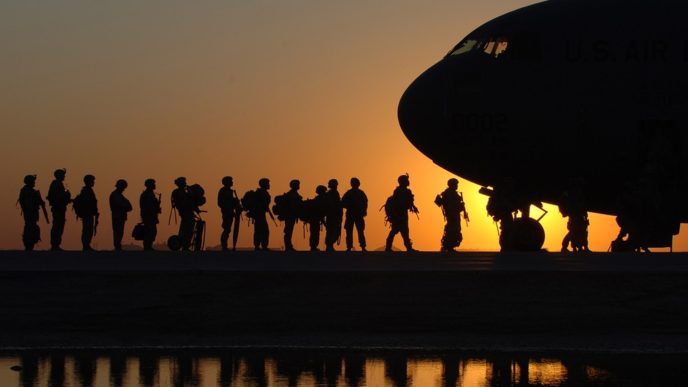
‘We Have a Problem’: ISIS in Afghanistan ‘Not Getting Better’ as US Mulls Thousands More Troops

The Islamic State’s affiliate in Afghanistan continues to thrive despite several U.S. and Afghan military efforts to annihilate the group, Pentagon Chief Spokeswoman Dana White told Voice of America Wednesday.

ISIS in Afghanistan has morphed from a nascent band of militants in 2015 to a full-fledged threat in the eastern province of Nangarhar. The group controls a relatively small amount of territory but has used it to launch multiple complex attacks on the capital city of Kabul, killing hundreds with its brutal tactics.

Several U.S. troops have died in Nangarhar province in recent months on missions targeting the terrorist group. The U.S. considered defeat of the insurgents such a priority it dropped the largest non-nuclear bomb in its arsenal on ISIS’s cave network, killing approximately 100 fighters.

“It’s not getting better in Afghanistan in terms of ISIS. We have a problem, and we have to defeat them and we have to be focused on that problem,” White declared. White’s statement contradicts the Pentagon’s recent report on the state of war in Afghanistan which claims that the Afghan National Security Forces (ANSF) recent efforts as well as “pressure from the Taliban, and a lack of support from the local populace have diminished ISIS-K’s influence and caused it to decline in size, capability, and ability to hold territory.”

The report however admits that ISIS in Afghanistan “remains a threat to security in Afghanistan and the Afghanistan-Pakistan border region and a threat to U.S. and coalition forces, and ISIS-K retains the ability to conduct high-profile attacks in urban centers.” (Read more from “‘We Have a Problem’: ISIS in Afghanistan ‘Not Getting Better’ as US Mulls Thousands More Troops” HERE)

Follow Joe Miller on Twitter HERE and Facebook HERE.
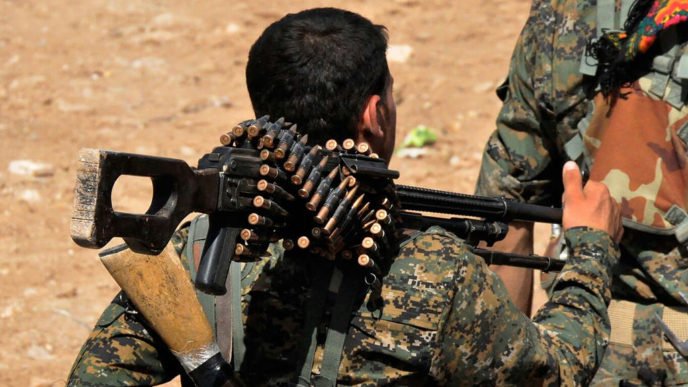
Watch: Christian Aid Worker Braves ISIS Gunfire to Rescue Little Girl in Mosul

A former special forces operative who now works as an aid worker was recently caught on camera braving the Islamic State gunfire in the open in order to save a little girl in Mosul, Iraq.

David Eubank, 56, is founder of the Free Burma Rangers, an organization dedicated to assisting pro-Democracy groups in conflict zones such as Burma or Iraq with highly trained, highly mobile, multipurpose relief teams. These teams deliver food, clothing, water, and medical care where they are dispatched and where other organizations don’t have the skill to go.

Eubank, who is also a husband and father of three, was a member of the First Special Forces Group. According to the Los Angeles Times, Eubank joined the special forces team when he was 18, but after 10 years decided that he needed “the freedom to go where God was leading.”

The Times reported that when a Burmese Bible group asked Eubank’s Christian missionary parents for help, they turned to their son.

“The Burmese said they were a warrior people, and they needed someone like that. My parents called me up and asked what I thought,” Eubank said. “I figured I could go and even if I helped only one person, at least they would be happy and I would be happy.” (Read more from “Watch: Christian Aid Worker Braves ISIS Gunfire to Rescue Little Girl in Mosul” HERE)

Follow Joe Miller on Twitter HERE and Facebook HERE.
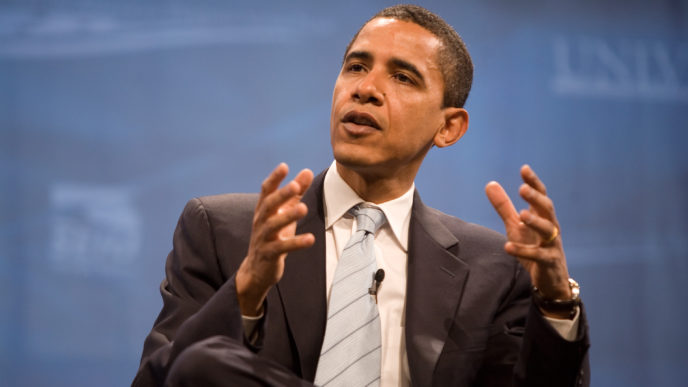
Russia Claims It Killed ISIS Leader Baghdadi in Airstrike

The Russian defense ministry claims to have killed Islamic State leader Abu Bakr al-Baghdadi in a May 28 airstrike in Raqqa, Syria.

Russian forces in Syria launched the airstrike after receiving intelligence that ISIS leaders were planning a meeting in the outskirts of Raqqa.

“According to the information that is being verified through various channels, ISIS leader Abu Bakr al-Baghdadi also attended the meeting and was killed in the airstrike,” the ministry said in a statement Friday, according to the Associated Press.

In addition to several senior ISIS leaders, Russia estimates around 30 field commanders and 300 personal guards were killed in the strike.

The ministry claims it informed the U.S. of the airstrike in advance. Air Force Col. John Dorrian, the spokesman of the U.S.-led coalition, said he could not confirm the Russian report of Baghdadi’s death. (Read more from “Russia Claims It Killed ISIS Leader Baghdadi in Airstrike” HERE)

Follow Joe Miller on Twitter HERE and Facebook HERE.

Tolerance Will Not Stop Terrorism

At some point, leaders in the West will have to recognize that they share very little in common with the worldview of Islamic terrorists. At some point, they will have to take seriously Islamic theology and the mindset of a radical Muslim. At some point, they will have to come to grips with the fact that they cannot combat Islamic terrorism with tolerance.

Better Opportunities Won’t Combat Terrorism

In his significant new book, The Islam in Islamic Terrorism: The Importance of Beliefs, Ideas, and Ideology, Ibn Warraq writes:

There are many contemporary political commentators and intellectuals who do not accept what seems an obvious starting point in trying to explain the behavior of Islamic terrorists, namely their beliefs, their ideology as laid down in tract after tract, statement after statement, interview after interview, and book after book — books that are the careful work of Muslim scholars of Islam, lavishly sprinkled with quotes from the Koran, which is the very word of Allah, the hadīth (the sayings and deeds of Muhammad and his Companions), the sira (life of the Prophet), all used to justify their heinous acts, even against civilians, including women, children, and the old.

Because of this, Western leaders are always looking for other causes of Islamic terrorism. The problem is unemployment. Or poverty. Or lack of education. Or the history of Western colonialism in the Muslim world. Or something else. Anything but Islamic theology and beliefs.

Just last month, former Secretary of State John Kerry advised graduates of Harvard’s Kennedy School of Government that the way to solve the terror problem in Middle East was to provide better educational and vocational opportunities for the youth. He said, “Surely we can begin to prevent tomorrow’s extremism by offering young people the promise of modernity and good governance, not the destruction of strapping on a suicide vest and blowing yourself up and a whole bunch of innocent people.” (He said this in the aftermath of the Manchester suicide bombing.)

The reality is that many terrorists come up from upper- and middle-class families. Many are well educated (including Ph.D.’s and medical doctors). And many have all the opportunities a young person could ask for. (Remember that Osama bin Laden was a friend of Saudi royalty and came from a rich, influential Saudi family.)

It is Islamic theology that drives the terrorist, and jobs, educational opportunity, and all the benefits of the West will not deter him. He is at war with the unbelievers, whether he finds them in London or Algeria. His sacred duty is holy war.

Denying the Root Cause

Speaking of the Charlie Hebdo slaughter in France, Ibn Warraq writes,

After the massacre “White House press secretary Josh Earnest suggested that ‘these are individuals who carried out an act of terrorism, and … later tried to justify that act of terrorism by invoking the religion of Islam and their own deviant view of it.’” This sounds as if the Charlie Hebdo terrorists set out to commit a random act of violence, and then, when they realized they needed some justification afterwards, plucked “Islam” out of the air by sheer chance.

Precisely. This is what our “enlightened” leaders would have us believe. These attacks have nothing to do with Islam. If we can understand what is upsetting these people, then we can live together in peace.

Not so. What is upsetting them is their theology.

After the most recent terrorist attack in London, major security questions are being asked. How did these terrorists slip through the cracks? Some were already known to the police and national security. Yet they were able to operate freely enough to concoct and carry out their murderous plot.

One of the London terrorists previously appeared in a UK documentary called The Jihadis Next Door in which he was seen praying with an unfurled ISIS flag. Yet he was able to remain in the UK and, quite obviously, was not that closely monitored.

Do the British authorities want to stop terrorism? Of course they do, with all their hearts and souls. Do they care deeply about the wellbeing of their people? Without a doubt. I’m sure many would give their lives to save the lives of others. And I imagine their system is strained to the max as they try to stay one step ahead of the killers.

But that illustrates a large part of the problem. Any country that thinks it can tolerate the presence of thousands of jihadi Muslims is deceiving itself. Soon enough, blood will be shed — lots of it.

Italy’s Intolerance — And Safety

I just spent three days in Italy and Germany. While in Italy, I spoke with a colleague who served as a policeman for years. He had dealt with high-level security cases in the past and explained to me why, so far, Italy has not had a rash of Islamic terror attacks. (He is not boasting; rather, he is grateful.)

One factor is that many Islamic immigrants pass from Africa into Italy on their way to other countries, so they are not as likely to launch an attack. They want Italy to be a safe haven for them.

Another is how the military police and local police are involved in their communities, constantly gathering and sharing information.

Yet another factor (only in Italy!) is that in Sicily, where I was staying, the mafia controls the building industry, including access to explosives, and they are not going to sell explosives to terrorists.

Finally, there is Italy’s intolerance of radical Muslims. My friend explained that the moment someone is caught going in this direction (in other words, acting like the jihadi next door), that person is arrested and deported. This is also widely reported in the media so as to send out a warning as well.

Because Italy is intolerant of this terrorist ideology, the government combats it more aggressively.

This does not guarantee the nation’s safety, but it goes a long way to preserving it, since you cannot fight terrorism with tolerance. Quite the contrary. It is only a strategic, wide-ranging, and uncompromising intolerance that can combat Islamic terrorism. That will never happen as long as Western leaders refuse to recognize the Islamic roots of Islamic terror. (For more from the author of “Tolerance Will Not Stop Terrorism” please click HERE)

Follow Joe Miller on Twitter HERE and Facebook HERE.

Pro-Life Filmmaker Documents Quest by Victims of ISIS to Revoke Obama’s Nobel Peace Prize

I learned of filmmaker and pro-life activist Jason Jones’ new project in the usual way (for Jason): He called me from the front lines where he was already making it.

I mean “front lines” quite literally. He told me on the crackling phone call that he was five or ten miles, max, from ISIS-controlled territory in Iraq. It was just him, a few Kurdish militiamen, and a camera guy. They were driving from ruined town to town, from makeshift refugee camps to blasted shells of churches. He was talking to women, children, bishops, pastors, fathers who’d lost their families, and volunteer freedom fighters. On a shoestring and a bunch of rapidly maxing out credit cards, he was determined to capture the footage. “Who knows if all these people will still be alive next year?” he said. “If ISIS turns the tide.” He said he could smell the cordite from exploding IEDs.

Later on he would figure out how to pay for editing, post-production, and distribution, he promised. Now that he’s safely back in the States, Jason settled in to tell me much more about the project.

Stream: You’re a father of seven. What on earth moved you to go to one of the most dangerous regions on the planet to make a film?

Jones: What has driven me since age 17 was a passion to protect the vulnerable from violence. That started when I couldn’t protect my own daughter. So I swore then, for her sake, to fight with every fiber of my being to defend people like her: the abandoned, the forgotten, who would otherwise die in darkness.

The unborn are still treated as public enemy number one. But a close second are religious minorities in the Middle East, such as the Christians and the Yazidis.

Some might ask why you don’t concentrate your efforts closer to home. Focus on the homeless in America’s streets….

Jones: I do work with the homeless in U.S. cities. And I’ve spoken out against the abuses of capital punishment. But those causes get a great deal of attention from Americans already. I’ll give some liberals and a lot of Christians credit for taking those issues on.

But there are certain victims whom Americans really don’t want to look at. I feel especially called to put those victims’ stories in the public eye. We don’t really want to see the Planned Parenthood videos. That’s why you have judges perverting the law to try to ban them. News organizations falsely claiming that the videos were doctored. Prosecutors trying to put the journalists who made them in prison. Kamala Harris of California rode her persecution of David Daleiden all the way to the U.S. Senate.

What other victims don’t Americans want to see?

The victims of our own country’s failed foreign policy. You and I were among the few conservatives who opposed the Iraq war back in 2002. We saw that there was no plan for protecting religious minorities, or keeping that fragile country from collapsing into chaos. Sadly, that’s what happened. U.S. forces obeyed their orders to stand down, while jihadis ethnically cleansed almost a million Iraqi Christians right under our troops’ noses.

Then we opposed Obama’s reckless decision to pull out American forces and abandon Iraq to its fate. Sure enough, ISIS emerged to fill the vacuum, and launch its campaign of genocide, religious persecution, mass rape and sex trafficking — not to mention terrorism in countries around the world. We protested again when Obama went further than the looniest neoconservative fantasy, and encouraged the “Arab Spring,” which replaced thuggish but secular dictators with howling Islamist mobs from Cairo to Benghazi to Aleppo.

You and I were both vocal during the 2016 presidential campaign in opposing reckless calls for the U.S. to do to Syria what it had done to Iraq. The best thing about Donald Trump was his refusal to keep on pursuing the same policies and expect a different outcome. The U.S. is being much smarter on Syria as a result — helping the Kurds to liberate themselves, their own way and on their own terms.

This is a documentary. So what are you trying to document?

The real-world impact, in the lives of hundreds of thousands of helpless people, of careless rhetoric. Of utopian daydreams cooked up in comfortable corner offices in Washington, D.C., with no regard for real-world constraints. Of shallow breast-thumping and hollow promises.

With abortion, there’s a clear causal connection between our sex-drenched culture and dumpsters full of the parts of unborn American babies. Well the same is true of foreign policy. You can draw a bright, unbreakable line between Obama’s messianic promises and sloppy “idealist” policies — and Iraq’s burned-out villages, ISIS-run rape camps, and shallow graves full of victims young and old.

Exposing How Obama Cleared the Field for ISIS

Does the film tell a story?

Instead of presenting a straight history lesson, we personalize it. On my visit to Iraq I met dozens of amazing people whom I’ll remember the rest of my life. Soldiers, pastors, parents…. But two really stuck out to me: A Kurdish Muslim surgeon, and a young girl whose name I can’t use — because she was a Yazidi captured by ISIS. They processed her into their computerized database of sex slaves, and tortured her for months. She finally escaped, and now she wants to tell her story. But these two women want to do something more.

When I met them in Iraq, they told me how scandalized Iraqi victims are by the fact that Barack Obama received and still holds a Nobel Peace Prize. That’s the highest international honor that exists. Yet the man who received it yawned his way through eight long years of outrages and horrors. He spoke like a prophet of peace. But his policies made the war worse. They empowered the vilest, most violent organization on earth to take over most of two countries. And that is an outrage.

So what do your Iraqi friends want to do?

They’re campaigning to get the Nobel Committee to revoke Obama’s peace prize. Who knows if they’ll make any progress? But their plan is to collect thousands of signatures, and hundreds of testimonies, from victims of Obama’s foreign policy. Then they will take them to Oslo, and present them to the Nobel Committee, maybe even the King of Sweden — who confers the prize. Imagine (Michael Moore’s breakthrough documentary) Roger and Me, if it focused not on lost auto jobs but rape camps and genocide.

What do you hope this film will achieve?

I want to help Americans understand how dangerous Islamist terrorists really are, and what we can do to help today. I hope that the film will be a powerful document of historical memory — and a powerful tool which activists, political leaders, clergy, and others can use to awaken the consciences of millions of Americans. We will record the testimonies of the most vulnerable, abandoned people on earth, and bring them to the U.S. media, the halls of Congress, and the White House.

What can Stream readers do?

Jones: They can visit our Indiegogo page, which is how we’re crowdsourcing the film. They can give, and share it, and spread the word. We want the world to remember, for the sake of the victims today — and the people who might be victims tomorrow.

(For more from the author of “Pro-Life Filmmaker Documents Quest by Victims of ISIS to Revoke Obama’s Nobel Peace Prize” please click HERE)

Follow Joe Miller on Twitter HERE and Facebook HERE.