Posts

State Department Issues Travel Warning for Mexico

The U.S. State Department put out a travel warning Tuesday for Americans traveling to parts in Mexico that have been deemed unsafe and dangerous.

The notice warns American citizens to avoid traveling to certain areas in light of an increase in violent crimes and robberies in various Mexican states.

“U.S. citizens have been the victims of violent crimes, including homicide, kidnapping, carjacking, and robbery in various Mexican states,” the travel warning said.

“Gun battles between rival criminal organizations or with Mexican authorities have taken place on streets and in public places during broad daylight,” the notice added.

Areas like Baja California Sur and Quintana Roo, where the popular tourist attraction Cancun is located, have seen dramatic increases in homicide rates and violence in 2017.

The warning said there was not any evidence that criminal organizations have targeted U.S. citizens based on their nationality.

“Resort areas and tourist destinations in Mexico generally do not see the level of drug-related violence and crime that are reported in the border region or in areas along major trafficking routes,” the warning said.

U.S. citizens traveling to Mexico may be forced to go through government checkpoints, which are operated by military personnel or law enforcement officials.

The notice warned that in other areas, criminal organizations and cartels have created their own “unauthorized checkpoints” and have killed or abducted those who haven’t stopped.

The State Department said Americans “should cooperate at all checkpoints.”

The advisory replaces the Travel Warning for Mexico issued December 8, 2016 under the Obama administration.

The Trump administration issued a travel advisory in March to those visiting certain parts of Mexico for spring break, warning that rampant crime has made travel dangerous for Americans. (For more from the author of “State Department Issues Travel Warning for Mexico” please click HERE)

Follow Joe Miller on Twitter HERE and Facebook HERE.

How to Make Mexico Pay for the Fence

In the course of a day’s driving, I heard National Public Radio claim repeatedly that illegal immigration from Mexico is nearly zero nowadays. But the non-partisan Center for Immigration Studies (CIS) reported in June 2016 that illegal immigration averaged 550,000 per year, up from 350,000 per year when President Obama won his second term. That’s an explosion. And at some point, immigration morphs into invasion.

I have strong opinions on the president’s immigration policies, partly because I lived directly on the Mexican border and have even lived inside Mexico. They’re good people, for the most part. If we have to be invaded, I’d rather be invaded by family-oriented Christians, like most Mexican adults, than by jihadis or atheists.

But I don’t want to be invaded. That’s not because I’m a xenophobe. If it is, I must be one of the best-traveled xenophobes on Earth. And it’s not because I’m bigoted or fearful of Hispanics – I’m the only non-Hispanic in my household, and I have voluntarily inhabited multiple Hispanic neighborhoods.

I’m against illegal immigration for some of the same reasons Cesar Chavez opposed it: it depresses U.S. wages, cripples labor law enforcement, and suffocates blue-collar trade unions in the cradle. But there are other reasons.

Invasion deprives us of our right to be us. Our mutual loyalties and moral consensus steadily dissolve. Homeowners feel ambivalent about taxes and bond issues that invest in communities long ceded to hostile, insular strangers. Young invaders often develop a contempt for their hosts in the communities they occupy. They are prone to litter and vandalize, to mark our private and communal spaces as their own.

There has been some debate whether “illegal alien” is a pejorative term. The favored euphemism is “undocumented,” which I reject because they do have documents. They’re just not American documents. The problem is not that they lack pieces of paper. The problem is that they are occupying our country without our permission.

Likewise, I reject the phrase “path to citizenship.” Illegal aliens are already citizens. They are not stateless persons. They are citizens of foreign countries, and they routinely appeal to their own consulates in the U.S. to intervene when they feel mistreated or excluded.

Our government’s paralysis has not been reciprocated by the Mexican government. The Mexican consulate in Los Angeles gets involved in California street demonstrations. It has confronted and threatened American citizens who have rallied against illegal immigration.

One writer quipped that the illegals ought to be called “undocumented Democrats.” And indeed Democrats have doubled down on illegal immigration as the future salvation of their party. With dependable ethnic bloc voting fortified by promiscuous naturalization of wave after wave of illegal immigrants, Democratic strategists are confident that they’ll be able to impose their will on the remaining red-state holdouts in perpetuity, even without amending the Electoral College.

Thus they are eager to relabel amnesty as “comprehensive immigration reform.” It is not reform of any kind. It is capitulation to a foreign invasion, not only of our labor market and social safety net, but our voting booths.

I am troubled not only by illegal immigration, but by high levels of legal immigration, and by the nature of that immigration. My primary care physician is an immigrant. Various surgeons and cardiologists who kept me alive over the years are immigrants. I’m grateful for them, and I hope they never leave America, but they are not the norm.

The massive influx of immigrants into the U.S. in recent decades was neither random nor spontaneous. The Mexican government has encouraged immigration by its least skilled and least educated citizens to our country. Although there is upward mobility for Mexicans after they arrive here, middle-class Mexican immigration is extremely rare. This amounts to an unspoken conspiracy between U.S. and Mexican elites at the expense of middle-class and working-class Americans.

The overall low quality of immigrants since the 1960s is partly an unintended consequence of our policy preference for family unification. It has lead to “chain migration,” in which immigrants determine who the next immigrants will be. We tend not to get the cream of the crop under that system. High achievers tend to prosper in their own countries, and stay put. Troubled adolescents and struggling siblings tend to get petitioned into the U.S. in hopes of a turnaround.

U.S. law has changed to permit immigrants to become naturalized citizens of our country without renouncing allegiance to the country they came from. This is troubling to those of us who have no plan B. America is all we have; it had better work out for us.

Should these tentative, conditional Americans get one vote apiece, just like us, if they keep their options open to revert to their alternate nationalities? Are they really Americans if their loyalties are not exclusively American? Alternative nationality, like an “alternative fact,” bears a strong resemblance to a lie.

Anybody who attended the soccer match between the Mexican and U.S. national teams in Chicago a few years ago knows that the immigrants who massed in Soldier Field are suffering no identity crisis. They’re Mexicans and they know it. No matter what their passports say.

I respect that. You should know who you are, and to whom you owe loyalty. Shame on us if we don’t know who we are, and if we don’t act in resolute loyalty toward fellow Americans.

Which brings me to “the fence.” If we don’t get a fence, I would like a refund on my passport. Do we really have our own country if foreigners can come in whenever they please? Of course we need a fence. Even if there were no illegal immigration at all, we’d need a fence to hinder terrorist incursions, and protect our border-area communities and ranchers from marauding criminal cartels.

It’s been disorienting to hear Democrats, who don’t blink at a $20 trillion deficit, gasp at the thought of spending $15-21 billion on a border fence. Suddenly they are deficit hawks.

But I do think the Democrats’ criticism of the president’s funding mechanism for a border fence is valid. A tax on imports from Mexico will be paid by American consumers, not by Mexico. If that tariff is part of a broader tax overhaul engineered in part to shake some money loose for the fence’s construction, then the fence will be funded neither by consumers nor Mexico, but by U.S. taxpayers.

Why not tax foreign remittances (via Moneygram, Western Union, bank transfers, money orders, etc.) from the U.S. to Mexico? This tax would be paid primarily by the illegal aliens who have made the fence necessary. These are admittedly solid, hard-working family men (give or take a few cartel soldiers and human traffickers). But they are nevertheless foreigners who have come to extract wealth from our people and send it away to their own. There is no ripple effect, there is no job creation, there is no investment in our communities with American money that has been sent on a one-way trip to Mexico.

Some of the tax burden would fall on legal immigrants and naturalized U.S. citizens from Mexico, who also have helped make the wall necessary by harboring illegals and encouraging them to stay after they arrive. They, too, are extracting wealth from our economy and sending it into the Mexican economy. If not, the remittance tax won’t touch them.

Is it a perfect funding mechanism? No. For one thing, there are free riders – like Central American countries that also send illegal immigrants north across our Mexican border. I would therefore favor applying the tax to foreign remittances sent to Guatemala, Honduras, Nicaragua and El Salvador.

We ought to consider continuing this tax after the fence is paid for. There will be continued costs for ground surveillance, Border Patrol flights and ICE enforcement at the illegal aliens’ places of employment.

We require drunk drivers to bear much of the expense of the government response to their law-breaking, whether therapeutic or simple incarceration. Why should foreigners invade our sovereign territory and be fed, housed and provided medical care in detention at our expense after they’re caught?

Why should we bankrupt our communities’ hospitals to provide care to foreigners who have no intention of paying their bills? I hope we’ll tax illegal aliens in a fair and focused way to fund the costs of resisting their lawlessness, and to defray the costs of humanitarian medical care for them and their families.

What of the president’s plans to staff up the Border Patrol and ICE? Didn’t he order a federal hiring freeze?

I recommend that he consider creating a reserve component for Immigration & Customs Enforcement (ICE) and the Border Patrol, to routinely augment full-time officers and to provide surge capacity – the ability to mobilize large numbers of trained, qualified officers during an enforcement crisis.

Our military is not the only organization with a reserve component. When I was a Civil Defense program manager, I remember some very capable, experienced FEMA reservists responding to our catastrophic weather events. Counties in California and Indiana train and deploy reserve sheriff deputies. Volunteer fire departments provide much of the fire protection and emergency medical response in rural America. Why not ask American citizens to consider stepping forward to protect our nation’s sovereignty?

I believe there will be an abundance of civic-minded volunteers, including many bilingual Hispanics, whose neighborhoods are disproportionately impacted by the Mexican invasion. The reservists would comprise a large, qualified pool of candidates for full-time vacancies, already screened and trained, with the necessary security clearances and performance evaluations.

If “sanctuary city” politicians or cartel-compromised Mexican officials mobilize anti-enforcement mobs against ICE and Border Patrol operations, the rule of law is unlikely to prevail without a surge of enforcement muscle. I believe a well-trained, well-equipped, well-supervised reserve component can go a long way toward restoring compliance with American law at our borders and in our workplaces.

Follow Joe Miller on Twitter HERE and Facebook HERE.

American Autos Built in Mexico Have Surprise in Trunk

If you recently bought a new car manufactured in a Mexican auto plant, you might want to perform a routine examination of your vehicle, like checking the spare tire – especially if it’s a Ford Fusion.

While law-enforcement authorities in Ohio and at the Drug Enforcement Agency announced this week the discovery of more than $1 million of marijuana hidden within bogus spare tires of new cars transported by rail, a WND investigation suggests the incident may be just the tip of the iceberg.

More than 400 pounds of marijuana was found packed inside of new Ford cars that were made in Mexico and shipped to Northeast Ohio.

The discovery was made when a service employee for a Ford dealership in Portage County, Ohio, noticed a suspicious package in the trunk of a brand new Ford Fusion during a routine inspection. The car had just been taken off the transport carrier. The package was pressed marijuana, placed in the vehicle to look like a spare tire.

Authorities found the car had been shipped by train from Mexico to the rail yard in Ohio. At the rail yard they found five more loads of marijuana in five other new Ford Fusions. Later, they found nine more packages in new Fusions already shipped to other Ohio locations and one in Pennsylvania. (Read more from “American Autos Built in Mexico Have Surprise in Trunk” HERE)

Follow Joe Miller on Twitter HERE and Facebook HERE.
National Front to Rebrand After Crushing Defeat in French Election

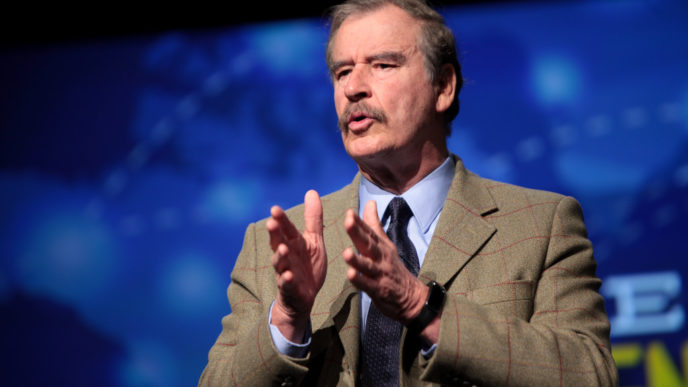
Marine Le Pen’s National Front party will engage in a rebranding effort after suffering a crushing loss Sunday to centrist candidate Emmanuel Macron.

Le Pen told supporters that the party must reevaluate itself, and that she will continue to fight for its policies in the upcoming parliamentary elections in June. The populist leader lost the run-off election after receiving approximately 35 percent of the vote.

“The National Front must also renew itself,” said Le Pen in an address to supporters after the results came in. “I will therefore start the process of a deep transformation of our movement … I call upon all patriots to join us.”

Le Pen promised to create a “number one opposition force” to counter globalization in France.

The party will change its name, among other things, according to National Front Vice President Florian Philippot. (Read more from “National Front to Rebrand After Crushing Defeat in French Election” HERE)

Follow Joe Miller on Twitter HERE and Facebook HERE.
Trump’s Border Wall Proposal Faces Many Obstacles

President Donald Trump has now laid out exactly what he wants in the “big, beautiful wall” that he’s promised to build on the U.S.-Mexico border. But his effort to build a huge hurdle to those entering the U.S. illegally faces impediments of its own.

It’s still not clear how Trump will pay for the wall that, as described in contracting notices, would be 30 feet (9 meters) high and easy on the eye for those looking at it from the north. The Trump administration will also have to contend with unfavorable geography and many legal battles . . .

Trump promised that Mexico would pay for his wall, a demand Mexico has repeatedly rejected. Trump’s first budget proposal to Congress, a preliminary draft that was light on details, asked lawmakers for a $2.6 billion down payment for the wall. An internal report prepared for Homeland Security Secretary John Kelly estimated that a wall along the entire border would cost about $21 billion. Congressional Republicans have estimated a more moderate price tag of $12 billion to $15 billion. Trump himself has suggested a cost of about $12 billion. (Read more from “Trump’s Border Wall Proposal Faces Many Obstacles” HERE)

Follow Joe Miller on Twitter HERE and Facebook HERE.

Mexican President Says He Will Not Attend Meeting with Trump

Mexican President Enrique Pena Nieto said Thursday he will not attend a planned Jan. 31 meeting with President Donald J. Trump, hours after Trump tweeted that the meeting should be canceled if Mexico won’t pay for a border wall.

Pena Nieto’s message on Twitter ended days of uncertainty about how he would respond to Trump’s aggressive stance toward the country, and illustrated the challenges world leaders are likely to face in dealing with Trump’s voluble, Twitter-based diplomacy.

“This morning we have informed the White House I will not attend the working meeting planned for next Tuesday,” Pena Nieto tweeted.

(Read more from “Mexican President Says He Will Not Attend Meeting with Trump” HERE)

Follow Joe Miller on Twitter HERE and Facebook HERE.

See Where Fencing Has yet to Be Built along Mexico Border

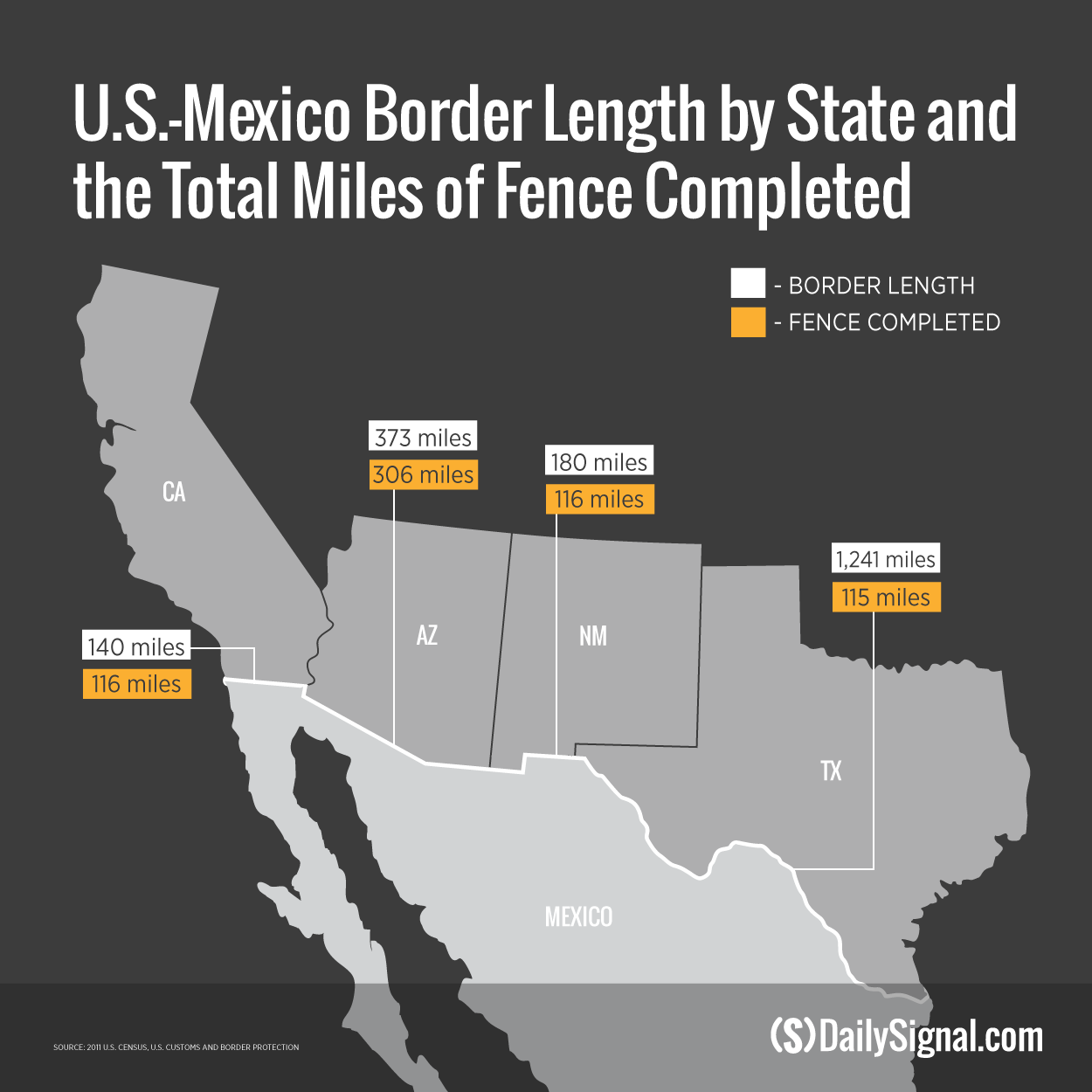
The U.S. government has built fencing along roughly one-third of the 1,933-mile southern border with Mexico.

The border state with the longest boundary—Texas, at about 1,241 miles—is covered by only 115 miles of fencing.

Data obtained by The Daily Signal shows there is plenty of space for President-elect Donald Trump to make good on his campaign promise to build a wall between the U.S. and Mexico.

But according to experts, physical barriers are only one component of border security, and Trump could encounter similar challenges to his predecessors in trying to construct a wall—or more likely, additional fencing—across complicated, unpredictable terrain.

170110_border-length-fence_v3

Trump and congressional Republicans say they could use a 2006 law signed by President George W. Bush called the Secure Fence Act that mandated a minimum of 700 miles of “physical barrier” on the southern border without specifying any particular location where fencing must be built.

The law was never fully implemented, and it did not set a deadline for the fencing to be built, meaning Trump could pick up where Bush left off.

The incoming administration just needs money from Congress to do it.

“We’re going to build a wall,” Trump reiterated in his first press conference as president-elect on Wednesday. “I don’t feel like waiting a year or a year and a half. We’re going to start building.”

According to Customs and Border Protection, an agency of the Department of Homeland Security, there is currently about 654 miles of fencing along the border. Christiana Coleman, a spokeswoman for Customs and Border Protection, told The Daily Signal 36 miles of that fencing is double-layered and 14 miles have three layers.

Coleman said the fencing consists of roughly 350 miles of single-layer pedestrian fences, most which stand about 18 feet, and 300 miles of low-level vehicle barriers that can be easily bypassed by pedestrians. The fencing is not continuous. The last segment of the fencing was built in 2014, she said.

170110_fencing-levels

The government is obligated by statute to reach the 700-mile floor, meaning it must still build nearly 50 additional miles of fencing at minimum.

A recent report by the Congressional Research Service stated that under the law, the government can build beyond the required 700 miles.

Trump has said that he would not seek to build a wall, or fencing, across the entirety of the nearly 2,000-mile border. He said he envisions the wall covering about half the border because of “natural barriers.”

Trump has estimated the cost of the wall to be from $8 billion to $12 billion. Other estimates have put the cost at $25 billion.

Coleman noted that challenging terrain and other considerations require alternative border security tools, such as “virtual fence” technology using towers, manned and unmanned aircraft, and surveillance sensors.

Building a wall or fence in Texas is especially difficult because U.S. citizens privately own about two-thirds of the border in the state, according to a Government Accountability Office report.

The government would have to purchase land from Texans to build on it.

During his confirmation hearing this week, John F. Kelly, a retired Marine Corps general who is Trump’s nominee to lead the Department of Homeland Security, emphasized these constraints, saying that “a physical barrier in and of itself will not do the job,” and added, “it has to be really a layered defense.” (For more from the author of “See Where Fencing Has yet to Be Built along Mexico Border” please click HERE)

Follow Joe Miller on Twitter HERE and Facebook HERE.

Mexico Overtakes Canada as No. 2 U.S. Exporter

Mexico is overtaking Canada as the No. 2 exporter of goods to the U.S. this year, in large part due to car manufacturing. It’s a sign of how economic ties have deepened between the two countries even as the relationship is being questioned by President-elect Donald Trump.

Shipments from Mexico totaled $245 billion in the first 10 months of the year, according to Commerce Department figures released Tuesday, ahead of Canada’s $230 billion. If the trend continues, it would be the first time ever the U.S. bought more imports from its neighbor to the south. The two countries ended 2015 tied in exports to the U.S.

The trend of catching up to Canada puts China and Mexico as the top two exporters to the U.S. just as Trump prepares to take office in January, reflecting the strong pull of lower cost jurisdictions for the U.S. economy. Canada, which has one of the highest cost bases in the Americas, has seen its share of U.S. imports fall to about 13 percent from around 20 percent two decades ago.

“Integration with Mexico has become more solid than with Canada,” said Marco Oviedo, chief Mexico economist for Barclays Plc. “Manufacturing continues to be very competitive in terms of wages and location to other U.S. producers and suppliers.”

The growing links between Mexico and the U.S. hinge on motor vehicles. Mexico has won new factories over the past six years from Toyota Motor Corp., Volkswagen AG’s luxury Audi unit, Kia Motors Corp. and BMW AG — up to $25.9 billion in new auto investments since 2010, according to the Center for Automotive Research in Ann Arbor, Michigan — fueling car shipments totaling $90 billion in the first 10 months. That’s versus $54 billion from Canada. (Read more from “Mexico Overtakes Canada as No. 2 U.S. Exporter” HERE)

Follow Joe Miller on Twitter HERE and Facebook HERE.

Mexican Cement Maker Ready to Help Trump Build Border Wall

A Mexican cement maker is ready to lend its services to U.S. President-elect Donald Trump to build the wall he wants to erect on the southern border of the United States to curb immigration.

“We can’t be choosy,” Enrique Escalante, Chief Executive Officer of Grupo Cementos de Chihuahua (GCC) said in an interview. “We’re an important producer in that area and we have to respect our clients on both sides of the border.”

Republican Trump campaigned vowing to build a “big, beautiful, powerful” wall across the 2,000 mile (3,200 km) frontier in order to stop illegal immigrants from Mexico, which he accused of sending rapists and drug traffickers north.

The campaign of the New York businessman who has never previously held public office was widely reviled in Mexico.

Parts of the border are already divided by high fences, and a huge part of the boundary runs along the Rio Grande river. (Read more from “Mexican Cement Maker Ready to Help Trump Build Border Wall” HERE)

Follow Joe Miller on Twitter HERE and Facebook HERE.

Trump Heads to Mexico, but Someone’s Lying About That Border Wall

Mexican president Enrique Peña Nieto disputed remarks made by Republican candidate for president Donald Trump regarding the construction of a wall along the U.S-Mexico border.

Having Mexico pay for the construction of a wall along the border has been a key theme of Mr. Trump’s campaign, since his announcement last year. His campaign website features a detailed plan titled “compelling Mexico to pay for the wall.”

When asked if he discussed his plans with the Mexican president in their meeting today, Mr. Trump said the topic was not broached.

“Who pays for the wall? We didn’t discuss,” Trump said when asked by a reporter during the follow-up questions to their statements. “We did discuss the wall. We didn’t discuss payment of the wall. That’ll be for a later date.”

President Peña Nieto has disputed that account of their meeting. According to Peña Nieto, he flat out told Mr. Trump Mexico will not pay for a wall at the very beginning of their meeting.

“At the beginning of meeting with Donald Trump, I made it clear Mexico will not pay for the wall.”

One of these two men seems to be lying. (For more from the author of “Trump Heads to Mexico, but Someone’s Lying About That Border Wall” please click HERE)

Follow Joe Miller on Twitter HERE and Facebook HERE.