Posts

Local Official Calls Situation ‘Very Desperate,’ People Trapped in Cars and on Roofs

As Hurricane Florence slowly approached the East Coast on Thursday, officials in New Bern, North Carolina, reported that roughly 150 residents were awaiting rescue.

Officials had warned for days of the possibility that the storm could bring catastrophic flooding to areas in its path. The threat prompted widespread mandatory and voluntary evacuations along the coast of Virginia and the Carolinas.

By Thursday evening, however, the window for evacuation had closed for many residents, including those trapped and awaiting rescue in New Bern. The Craven County city was placed under a mandatory evacuation order on Tuesday.

According to ABC News, officials tweeted that emergency response crews had already arrived and more were on the way to handle the crisis.

“Currently ~150 awaiting rescue in New Bern,” the city said. “We have 2 out-of-state FEMA teams here for swift water rescue. More are on the way to help us. WE ARE COMING TO GET YOU. You may need to move up to the second story, or to your attic, but WE ARE COMING TO GET YOU.”

Assistant County Manager Gene Hodges said a total of five rescue teams were in the area and officials were busy scouring neighborhoods in search of locals in need of assistance.

“We’re working as hard as we can,” he said.

As NPR reported, there were already a number of obstacles reported in addition to rising flood waters. Some areas of New Bern were blocked due to fallen trees and power lines, officials said.

Craven County Public Information Officer Amber Parker warned that the peripheral hazards associated with this storm might not be as obvious as flooded roads.

“You never know where there are active downed power lines that could cause an electric situation,” she said. “We just want people to be careful.”

Parker described some areas of the city as “very desperate,” adding that locals “can be trapped in water, in vehicles, on roofs.”

WUNC-FM’s Jeff Tiberii cited Gov. Roy Cooper in a Friday morning tweet confirming that no hurricane-related deaths had been reported.

“We have learned a lot from previous storms that have hit NC,” Cooper said. “The planning and strategy in place is helping us right now. I know long-term recovery is an arduous process, with lots of bureaucracy and red tape.”

In an interview with NPR’s Morning Edition, the governor said that state authorities are “working very hard to save lives.” (For more from the author of “Local Official Calls Situation ‘Very Desperate,’ People Trapped in Cars and on Roofs” please click HERE)

Follow Joe Miller on Twitter HERE and Facebook HERE.

Here Is an Invitation for You to Help Make History in a Very Real Sense

In December, the North Carolina State Senate and State Assembly passed a law that reduced the number of required signatures to gain ballot access in that state from nearly 95,000 valid signatures of registered voters (a near impossible task) down to 12,000. The thinking behind the law was to enable the Green Party to gain ballot access and thereby enable the Republicans to regain control of the governorship. The law was vetoed by the Democratic Governor but then overridden by a very slim margin by both Republican-controlled legislative bodies.

This unexpected move presented the Constitution Party with a rare opportunity. Almost overnight the North Carolina Constitution Party began organizing to take advantage of this law change to gain ballot access. They have been working gun show after gun show and other venues to gain the needed signatures to achieve ballot access. As of this writing, they have gathered nearly 2,500 signatures, over 80% of which have been gathered by volunteers. The signatures need to be validated by the counties and then turned in to the North Carolina Secretary of State. Thus far, they have achieved an 83% validation rate, which is remarkable. The Constitution Party has never succeeded in getting on the ballot in that state before, so success this year will be a historic first for the party.

Gaining ballot access this year will enable the party to run candidates for office this year and will also secure ballot position for the next Presidential Election in 2020. That will serve as an insurance policy to secure spots on the November ballot in the event that the GOP Establishment regains total control of their party. This is where you can play a critical and vital role. If you live in North Carolina. you can contact the state party leadership to volunteer both your time, talent, and yes, your financial support to ensure that ballot position is gained. Simply go to the National Constitution Party website at www.constitutionparty.com. You can reach both the national party and the state party via that website. When making a donation, select the “Ballot Access” or “General Donation” buttons.

The party has until May 31st to gather the required number of signatures and get them turned in to the North Carolina Secretary of State. The looming deadline has made it necessary for the party to hire a professional petitioner. This costs the party $2.00 per signature plus boarding and per diem allowance. Please consider donating what you are able. A $5.00, $10.00, $25.00, $50.00, $100.00 or more donation will be deeply appreciated. Small donations are as critical as are larger ones. Achieving ballot access in North Carolina will be a historic accomplishment for the party. In March, we succeeded in getting enough signatures to qualify for ballot position in Hawaii. After North Carolina, we have other states that are within our reach.

In summary, the time to act is now. Your signature, your talent, and your financial support are critical to the Constitution Party’s success. Please share this alert with family and friends of like mind. Working together we can make a difference. If we are to restore our government to the principles of Integrity, Liberty, and Prosperity that our nation was founded upon, it will take the individual and untiring effort of each of us.

‘Black, Queer-Owned’ Brewery in ‘Beer City’ Says It Closed Because of ‘White Supremacy’

A brewery in Asheville, North Carolina that boasted it was black and queer woman-owned shut down, and offered this reason for the closing: “white supremacy.”

Black Star Line Brewing Co. of Hendersonville was one of numerous breweries near the city of Asheville; according to exploreasheville.com the city has more breweries per capita than any U.S. city.

But last week, the brewery bemoaned its closing on Facebook. On Monday, the brewery stated, “Like many people of color on this land, displacement at the hands of white supremacists policies and institutions is not past, but present.”

That was followed by a post on Wednesday that acknowledged the brewery had bought “oversold” supplies and utilized hand-me-down equipment. The post added, “Black Star Line was sabotaged by white supremacists, government officials (J. Edgar Hoover), and policies and procedures that were invoked to intentionally end the operations of Black Star Line.”

Company founder L.A. McCrae complained to Munchies, “White supremacy shut us down. Our world has been rocked,” although McCrae admitted that the brewery had been underfunded when it opened last summer. She claimed a lender had given the brewery $50,000 but the brewery could not contact the lender before the brewery was evicted from its premises. (Read more from “‘Black, Queer-Owned’ Brewery in ‘Beer City’ Says It Closed Because of ‘White Supremacy’” HERE)

Follow Joe Miller on Twitter HERE and Facebook HERE.

Shark Spotted Swimming Near Man Trying to Escape Police Custody

A North Carolina man allegedly attempted to elude police on Wednesday by diving into the ocean and swimming away — but unknowingly he was just feet away from a shark while trying the brazen escape.

Zachary Kingsbury, 20, was pulled over for a traffic stop just before 5 p.m. in Surf City, according to WECT.

He allegedly tried to escape when officers spotted illegal contraband inside the vehicle and asked him to exit the car. Kingsbury jumped into the ocean and began swimming away, leading to an hours-long standoff, officials said.

Within an hour, Kingsbury was reportedly 4,000 feet from the shore, and the Surf City Police Department launched a drone to track the escapee . . .

But as police were trying to save Kingsbury, they noticed a shark swimming near the man, drone footage showed. (Read more from “Shark Spotted Swimming Near Man Trying to Escape Police Custody” HERE)

Follow Joe Miller on Twitter HERE and Facebook HERE.

North Carolina Law Removes Roadblock to the Use of Gold and Silver as Money

North Carolina Gov. Roy Cooper has signed a bill into law exempting the sale and purchase of gold and silver from state sales taxes. The new law will remove an important roadblock in the way of their everyday use as money, taking the first step toward breaking the Federal Reserve’s monopoly.

Rep. Dana Bumgardner (R-Gastonia) and Rep. Jeff Collins (R-Rocky Mount) introduced House Bill 434 (H434) in March. The legislation exempts precious metals in various forms from state sales tax, including investment metal bullion, U.S. Mint-produced gold and silver, investment coins and non-coin currency.

The House passed H434 on second reading by a 104-8 vote in May. It then gave final approval on the third reading by a voice vote. The Senate concurred with a vote of 35-13 on June 27. With the governor’s signature, the law went into effect retroactively to July 1, 2017.

IN PRACTICE

Imagine if you asked a grocery clerk to break a $5 bill and he charged you a 35 cent tax. Silly, right? After all, you were only exchanging one form of money for another. But that’s essentially what North Carolina’s sales tax on gold and silver did. By removing the sales tax on the exchange of gold and silver, North Carolina will treat specie as money instead of a commodity. This represents a small step toward reestablishing gold and silver as legal tender and breaking down the Fed’s monopoly on money.

Practically speaking, eliminating taxes on the sale of gold and silver cracks open the door for people to begin using gold and silver in regular business transactions.This would mark an important small step toward currency competition. If sound money gains a foothold in the marketplace against Federal Reserve notes, the people would be able to choose the time-tested stability of gold and silver over the central bank’s rapidly-depreciating paper currency.

BACKGROUND INFORMATION

The United States Constitution states in Article I, Section 10, “No State shall…make any Thing but gold and silver Coin a Tender in Payment of Debts.” States have simply ignored this constitutional provision for years. It’s impossible for states to return to a constitutional sound money system when it taxes gold and silver as a commodity.

This North Carolina law takes a step towards that constitutional requirement, ignored for decades in every state. Such a tactic sets the stage to undermine the monopoly of the Federal Reserve by introducing competition into the monetary system.

Constitutional tender expert Professor William Greene said when people in multiple states actually start using gold and silver instead of Federal Reserve Notes, it would effectively nullify the Federal Reserve and end the federal government’s monopoly on money.

Over time, as residents of the state use both Federal Reserve notes and silver and gold coins, the fact that the coins hold their value more than Federal Reserve notes do will lead to a “reverse Gresham’s Law” effect, where good money (gold and silver coins) will drive out bad money (Federal Reserve notes). As this happens, a cascade of events can begin to occur, including the flow of real wealth toward the state’s treasury, an influx of banking business from outside of the state – as people in other states carry out their desire to bank with sound money – and an eventual outcry against the use of Federal Reserve notes for any transactions.

Once things get to that point, Federal Reserve notes would become largely unwanted and irrelevant for ordinary people. Nullifying the Fed on a state by state level is what will get us there. (For more from the author of “North Carolina Law Removes Roadblock to the Use of Gold and Silver as Money” please click HERE)

Follow Joe Miller on Twitter HERE and Facebook HERE.

Did North Carolina Legislators Sell Their Souls for Dollars?

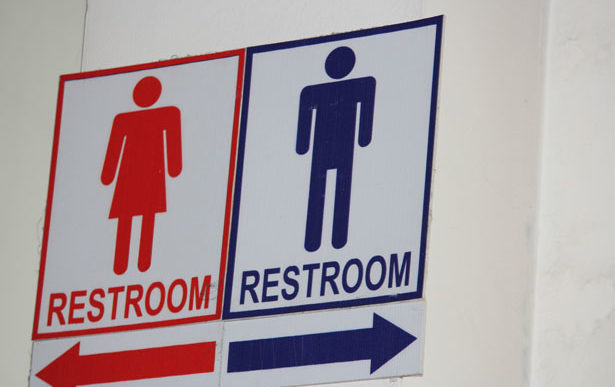
How should we view North Carolina’s repeal of HB2, the so-called Bathroom Privacy Act?

It’s true that the state caved to the bullying tactics of the NCAA. But was it a complete capitulation? On one hand, the legislators took a step in the wrong direction. That’s why conservative organizations like ADF and FRC condemned the repeal. On the other hand, the legislators pushed back against LGBT activism. That’s why LGBT groups condemned the new bill. How do we sort this out?

Did North Carolina Give in to Bullies?

Let’s start with the negative.

Since the day HB2 passed, North Carolina has been bullied by big business, the media, and the world of sports and entertainment. “If you don’t repeal this mean-spirited bill, we will take our business elsewhere!”

Judging by the news reports, you’d think the state’s economy was floundering because of this pressure. The economy is actually thriving. It’s receiving some of the highest ratings in the nation in terms of overall health. As Lt. Gov. Dan Forest explained, the boycotts cost the state roughly one-tenth of 1 percent of its economy.

Why, then, did some legislators cave in when the NCAA gave them a 24-hour deadline to repeal HB2? Was it the bad publicity? Was it the importance of having these major college events brought back to the state? (After all, North Carolina just won the NCAA college basketball championship this week.)

Whatever the motivation, the capitulation seemed cowardly, as if money was more important than morality and popularity more important than principle.

As expressed by Kellie Fiedorek of ADF:

Sadly, North Carolina has failed families by giving in to hypocritical bullies like the NCAA and billion-dollar corporations. Every North Carolinian deserves to have their privacy respected in intimate settings like locker rooms and restrooms. One of government’s essential duties is to protect the citizens it governs, not to create uncertainty about whether showers and locker rooms will still be safe for women and girls. North Carolina’s economy is booming, so the state should not let the NCAA and others dictate the state’s policies and sell out their citizens’ interests based on flat-out lies about an economic doomsday that never happened.

LGBT Activists Didn’t Get What They Wanted

Still, things are not all bad. As former NC governor Pat McCrory explained, LGBT activists “did not get a full repeal of HB2.” (According to the HRC, McCrory’s support for the state’s compromise was a “kiss of death.”)

That’s why the editorial board of the left-leaning Charlotte Observer wrote:

Legislators and Gov. Roy Cooper hailed Thursday’s HB2 repeal bill as a compromise. In fact, it is nothing of the kind. It is a betrayal of the promises the governor made to the LGBT community and an entrenchment on discrimination by Republican legislators who have backed it all along.

Referring to the new bill, HB 142, the editors opined,

House Bill 142 literally does not do one thing to protect the LGBT community and locks in HB2’s most basic and offensive provision. It repeals HB2 in name only and will not satisfy any business or organization that is truly intolerant of an anti-gay environment and of a state that codifies discrimination.

HB2’s most fundamental requirement was that local governments cannot pass anti-discrimination ordinances that govern public accommodations such as restaurants and hotels. Under Thursday’s agreement, that is still true, until at least December 2020.

Return to the Status Quo

So where does this new bill leave us? How should we respond?

When it comes to bathroom privacy, the biggest thing the bill does is return to the status quo of 2015. This was before the Charlotte City Council passed a radical bill that would have in effect rendered all public bathrooms and locker rooms gender neutral. (This applied to public schools as well.)

As explained by law professor Greg Wallace, before “the Charlotte ordinance that sparked the debate, there were no laws regarding bathroom usage. If a man went into the women’s restroom, or vice versa … he’d likely be asked to leave, and if he refused, he could be arrested for trespassing.”

But, says the Charlotte Observer, “the legislation dodges the whole bathroom question. Charlotte’s ordinance allowed transgender individuals to use the public bathroom of the gender with which they identify. HB2 banned that. The new law does not specify what transgender people are to do.”

And that brings us back to where we were before 2016, which is not such a bad place.

Were there numerous instances of men posing as women in order to invade the ladies’ bathrooms and locker rooms? Not to my knowledge.

Were there male-to-female transgenders who appeared to be female getting kicked out ladies’ bathrooms? Not to my knowledge.

The NCAA is Happy With The Change

As the saying goes, if it’s not broken, don’t fix it. Yet that is just what the Charlotte City Council did in 2016 with its city ordinance, leading to the passing of HB2. This led to the national boycotts and bad publicity, which led to the partial repeal of HB2.

As much as LGBT activists and their allies are outraged by the state’s actions, things were not so terrible before 2016. That’s why the NCAA and the NBA had no problem with full participation in the state. That’s why PayPal planned to bring new business to Charlotte. That’s why entertainers like Bruce Springsteen and Ringo Starr were scheduled to perform here.

Even the NCAA recognized this in their announcement that they were lifting their boycott:

We recognize the quality championships hosted by the people of North Carolina in years before HB2. And this new law restores the state to that legal landscape: a landscape similar to other jurisdictions presently hosting NCAA championships.

Of course, the NCAA managed to make some politically correct (but logically bankrupt) statements. They referred to “the cumulative impact HB2 had on local communities’ ability to ensure a safe, healthy, discrimination-free atmosphere for all those watching and participating in our events.”

Can someone please tell me how allowing biological males to play on female sports teams and share their locker rooms ensures “a safe, healthy, discrimination-free atmosphere for all those watching and participating in our events”? Can anyone explain this? And what would the NCAA do if one of the nation’s top, male college players announced he was female? Would he/she be welcomed on the women’s teams?

Naturally, the NCAA was careful to say that “as with most compromises, this new law is far from perfect.” Nonetheless, the NCAA’s decision to reverse its boycott indicates that the old status quo was acceptable. Therefore, with the partial repeal of HB2, there was no reason to continue the boycott.

Hopefully the NBA and others will follow suit. But if they choose not to, I hope the people of North Carolina will say, “we will do just fine without you.”

Back to Where We Were

As for moral conservatives upset by the compromise, I have a word of encouragement. The sky is not falling. HB 142 will not empower male predators to pose as women so as to prey on children and women. Common sense will prevail. The people of North Carolina will not have to fear speaking up to a bathroom intruder.

And where does this leave transgenders? As in the past, if no one can tell that you have “transitioned,” then no one will protest your presence in a bathroom. Why would they?

But if you are clearly a biological male who identifies as female and you walk into a ladies’ room, don’t be surprised if some ladies ask you to leave.

“That’s unfair,” you might say.

But what about fairness to everyone else? What about fairness to the 99 percent who are not transgender? What about the women who have been sexually abused by men who are traumatized by a male presence in these private places — even if the male in question is totally harmless?

I can’t imagine the struggles that trans individuals live with and the difficult choices they make. But we can’t turn society upside down to accommodate the few struggling souls. Instead, we listen to the them and do our best to help them, but we also remember the needs of the vast majority.

In short, here in North Carolina, we’re back to where we were in 2015 but with a few more legislative safeguards in place.

Overall, that’s not so bad. (For more from the author of “Did North Carolina Legislators Sell Their Souls for Dollars?” please click HERE)

Follow Joe Miller on Twitter HERE and Facebook HERE.

Left and Right Unhappy With Repeal of North Carolina’s Bathroom Law

A legislative compromise watering down North Carolina’s “bathroom law” leaves access to public bathrooms muddier than ever, conservative opponents of the change say, and it removes the standard of privacy espoused last year by state officials.

“They’ve taken away that baseline of privacy that ensured that [use of] every multi-occupancy restroom, locker room, and shower in the state’s public buildings would be based on a person’s biological sex,” Kellie Fiedorek, counsel at the Christian legal group Alliance Defending Freedom, told The Daily Signal in a phone interview Thursday.

This means, Fiedorek said, that a man won’t be arrested for entering a women’s restroom, unless someone decides to press charges.

“If a male wanted to use the females’ restroom, there’s nothing to really prevent him from doing that, unless someone finds him in there and they want to file a trespass action,” she said.

The state Senate passed the bill Thursday by a vote of 32-16, and the House then passed it 70-48.

The deal, the work of Gov. Roy Cooper, a Democrat, and the Republican leaders of the state Legislature, repeals the bathroom law, also known as House Bill 2.

That law, praised by some and assailed by others, required that individuals use restrooms and locker rooms in schools, public universities, and other government buildings that correspond with their biological sex.

The main provision of the bill reads:

State agencies, boards, offices, departments, institutions, branches of government including the University of North Carolina and the North Carolina Community College System, and political subdivisions of the state, including local boards of education, are preempted from regulation of access to multiple occupancy restrooms, showers, or changing facilities, except in accordance with an act of the General Assembly.

Advocates for lesbian, gay, bisexual, and transgender Americans had labeled the law as hateful and encouraged businesses and tourists to boycott North Carolina as a result.

The state’s Republican governor, Pat McCrory, lost re-election to Cooper by a close margin in November, conceding four weeks later, after signing the bathroom bill into law in March 2016.

Cooper hailed the deal to repeal the law.

“l support the House Bill 2 repeal compromise,” Cooper said. “It’s not a perfect deal, but it repeals House Bill 2 and begins to repair our reputation.”

The bill prevents any local government from adopting or amending an existing law regulating employment practices and public accommodations until Dec. 1, 2020, Fiedorek noted.

Senate Leader Phil Berger, R-Rockingham, and House Speaker Tim Moore, R-Cleveland, helped craft the deal.

“Compromise requires give and take from all sides, and we are pleased this proposal fully protects bathroom safety and privacy,” Berger and Moore said in a joint statement.

U.S. Sen. Thom Tillis, R-N.C., said he approved of the repeal. In a prepared statement, Tillis said:

North Carolina’s brand and continued economic prosperity should not be beholden to the loudest voices on either the far left or the far right who don’t have our state’s best interests in mind. I’m glad that state lawmakers were able to reach a commonsense compromise to repeal House Bill 2.

Democrat lawmakers opposing the measure for not going far enough to protect transgender individuals included state Sens. Jay Chaudhuri of Raleigh; Mike Woodard and Floyd McKissick of Durham; Valerie Foushee of Hillsborough; Jeff Jackson of Charlotte; and Don Davis of Greenville, The News & Observer reported.

But Ryan T. Anderson, a senior research fellow at The Heritage Foundation, told The Daily Signal in an email that North Carolina lawmakers gave in to special interests.

“North Carolina’s political leaders caved to the demands of big business and special interests,” Ryan said, adding:

This is a prime example of what I have called ‘cultural cronyism‘—when the left can’t win on an issue through normal political persuasion, they get progressive big businesses to use their outsized market share to make economic threats to pressure the government to do their bidding—at the expense of the common good.

Jackson tweeted his reason for opposing the measure:

McKissick called the measure a “heartless compromise” and said he “couldn’t support it as a matter of philosophy and principle.”

The Human Rights Campaign, which advocates LGBT rights and calls itself “America’s largest civil rights organization,” called the legislative deal “dangerous”:

The organization also tweeted that lawmakers who supported the measure “betrayed” those who aren’t heterosexual:

(For more from the author of “Left and Right Unhappy With Repeal of North Carolina’s Bathroom Law” please click HERE)

Follow Joe Miller on Twitter HERE and Facebook HERE.
Republican HQ Firebombed in North Carolina

Gov. Pat McCrory Sunday called the weekend firebombing of a North Carolina Republican headquarters “an attack on our democracy,” while one GOP official called it an act of “political terrorism.”

In a tweet, Republican presidential candidate Donald Trump blamed “Animals representing Hillary Clinton and Dems in North Carolina.”

Hillsborough police said somebody threw a bottle of flammable liquid through the window of Orange County’s GOP headquarters, setting campaign signs, supplies and furniture ablaze before burning itself out.

A swastika and “Nazi Republicans get out of town or else” were spray painted on the side of an adjacent building. No damage estimates were available.

“The firebombing of a local political headquarters in Orange County is clearly an attack on our democracy,” McCrory said in a statement. “Violence has no place in our society – but especially in our elections. … I will use every resource as governor to assist local authorities in this investigation.” (Read more from “Republican HQ Firebombed in North Carolina” HERE)

Follow Joe Miller on Twitter HERE and Facebook HERE.

Appeals Court Reverses Ruling Banning NC County’s Prayers

The U.S. Court of Appeals for the Fourth Circuit yesterday reversed and remanded a lower court’s decision that Rowan County, North Carolina, commissioners’ prayers before public meetings violated the Establishment Clause of the First Amendment.

In a 2-1 ruling written by Judge Steven Agee, with Judge Dennis Shedd concurring, the court determined that Rowan County’s practice of an invocation before meetings was not unconstitutional, as plaintiffs, who were represented by the ACLU, had charged. Judge Wilkinson dissented.

In February of 2012, the ACLU sent a letter to the Rowan County Board of Commissioners objecting to the pre-meeting prayers. Although the Board didn’t respond formally, several commissioners stated their intent to continue to express their Christian faith through prayers. According to the majority opinion, one then-commissioner stated, “I will continue to pray in Jesus’ name. I am not perfect so I need all the help I can get, and asking for guidance for my decisions from Jesus is the best I, and Rowan County, can ever hope for.”

Plaintiffs “alleged that the prayer practice unconstitutionally affiliated the Board with one particular faith and caused them to feel excluded as ‘outsiders.’” Plaintiffs sought an injunction preventing any future prayers, and moved for a preliminary injunction on the basis that “sectarian legislative prayer was a constitutional violation.”

Judge James A. Beaty, Jr., Senior District Judge of the U.S. District Court for the Middle District of North Carolina, ruled in May of 2015 that the Rowan County commissioners violated the Establishment Clause of the First Amendment since almost all of the prayers offered before public meetings invoked the Christian faith.

Yesterday’s majority opinion recalled, citing an earlier case as support, that the Founders appointed official chaplains to open sessions in prayer and it is a tradition continued today:

Observing that legislative invocations containing explicitly religious themes were accepted at the time of the first Congress and remain vibrant today, the Court concluded, “[a]n insistence on nonsectarian or ecumenical prayer as a single, fixed standard is not consistent with [our accepted] tradition of legislative prayer.”

The Court reversed and remanded the earlier ruling, stating that:

The Board’s legislative prayer practice falls within our recognized tradition and does not coerce participation by nonadherents. It is therefore constitutional. The district court erred in concluding to the contrary.

Chris Brook, Legal Director for the ACLU of North Carolina, was disappointed with the ruling and pledged to ask the Fourth Circuit to review the decision en banc, or by all 15 judges. “Today’s ruling is out of step with the First Amendment’s protection of religious liberty for all, and we will ask the full appellate court to review this decision,” he said, adding that, “Rowan County residents should be able to attend local government meetings without being coerced to participate in a sectarian prayer or worry that the commissioners may discriminate against them if they do not.”

Brett Harvey, Senior Counsel for Alliance Defending Freedom and co-counsel for Defendants, stated that “All Americans, including public servants, should have the freedom to pray without being censored … the First Amendment affirms the liberty of Americans to pray according to their consciences before public meetings. For that reason, the 4th Circuit rightly upheld Rowan County’s prayer policy, which is clearly constitutional.”

Rowan County Commission Chairman Greg Edds said the Board was very pleased with the court’s decision, adding that, “Our attorneys are currently working through the decision and we will know more about it in the coming days.”

Monday’s decision overrules the injunction on prayer imposed by Judge Beaty. (For more from the author of “Appeals Court Reverses Ruling Banning NC County’s Prayers” please click HERE)

Follow Joe Miller on Twitter HERE and Facebook HERE.

Audit Shows Majority of North Carolina Bathroom Bill Protest Petitions Were From out of State

Petitions delivered by LGBT activists to the North Carolina governor’s office, calling for a repeal of the state’s “bathroom bill,” were mostly signed by out-of-state individuals, the North State Journal reported.

In March, North Carolina Gov. Pat McCrory, a Republican, signed House Bill 2 that established public restroom facility accessibility be based on biological sex.

A joint project of the Human Rights Campaign, the Campaign for Southern Equality, the ACLU of North Carolina, and Equality North Carolina, called Turn Out! NC, organized a drive in which the groups say they delivered 190,000 opposing petitions to McCrory’s office on April 25.

Media reports showed the groups delivering numerous boxes of petitions to McCrory’s office. A local TV anchor and reporter with WRAL-TV in Raleigh tweeted a photo that shows at least a couple dozen boxes stacked up:

An Associated Press photo shows Human Rights Campaign President Chad Griffin, along with others, delivering boxes to McCrory’s office. The photo is credited to Jason E. Miczek with AP Images for Human Rights Campaign.

“While they made for a compelling visual, the boxes themselves and the signature boasting that followed painted a misleading picture of the public opinion in North Carolina, as was affirmed by a recent analysis of the petitions,” Sister Toldjah wrote in an op-ed for Independent Journal Review.

The governor’s office claimed on Twitter that the groups delivered enough petitions to fill two boxes. McCrory’s office tweeted a photo showing a much larger stack of out-of-state petitions next to a smaller pile of petitions:

Sandy Rios, director of governmental affairs for the American Family Association and host of “Sandy Rios in the Morning” on American Family Radio, says LGBT activists created illusions with empty boxes.

“LGBT activists are masters of PR and public manipulation,” Rios told The Daily Signal. “With the help of the media, they mold public opinion by skewing poll questions and results, masterfully creating inevitability as they did on gay marriage.”

“The truth is, this is a movement fueled by smoke and mirrors…and empty boxes,” Rios added.

The North State Journal obtained an audit of the petitions through a public information request and found that 85 percent of the petitions came from out of state.

“We had so many signatures on the petitions, we printed only the list of names rather than more than 185,000 pages of individually signed petitions. And contrary to what Gov. McCrory has suggested, thousands of these signatories are North Carolinians,” The Human Rights Campaign said in a statement, WRAL.com reported.

The Human Rights Campaign did not respond to request for comment by email or phone.

“House Bill 2 is bad for North Carolina; it’s bad for our reputation and it needs to be repealed,” Chris Sgro, executive director of Equality North Carolina, told The Daily Signal. Sgro said:

Gov. McCrory and legislative leaders have heard from both tens of thousands of North Carolinians, poll after poll that shows that a majority of North Carolinians oppose House Bill 2, and hundreds of thousands of people across the United States that House Bill 2 is detrimental to our civil rights and to our economy.

Under North Carolina’s law, The Heritage Foundation’s Ryan T. Anderson wrote that private schools and business are free to establish whatever bathroom policies they would like.

Retail giant Target implemented an “inclusive” bathroom policy in April, allowing individuals to use the bathroom of their choice, based on gender identity.

Over 1.3 million people have signed a pledge to boycott Target that was started by the American Family Association, a nonprofit that supports Christians values.

“With its profits in the gender-free toilet, Target CEO Brian Cornell was on the hot seat with investors for the decision, which analysts say has cost the retailer more than $4.5 billion—and counting,” Family Research Council President Tony Perkins’ Washington Update from Thursday says.

“As everyone on Wall Street knows, Target’s stocks have taken a nearly 20-percent nosedive since April 19, when the change was announced,” the Washington Update added. (For more from the author of “Audit Shows Majority of North Carolina Bathroom Bill Protest Petitions Were From out of State” please click HERE)

Follow Joe Miller on Twitter HERE and Facebook HERE.