Posts

Scientists Left Baffled by Reports of Orca ‘Attacks’

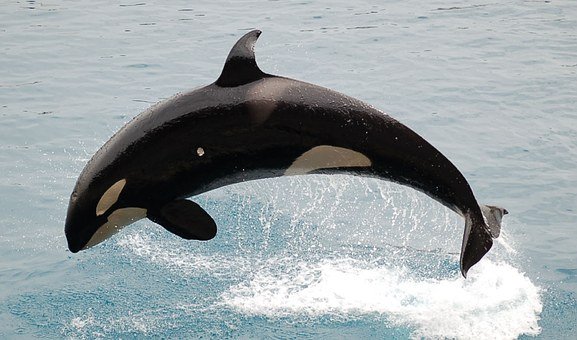
Scientists admit they are baffled by a rise in aggressive orca activity, with the whales ramming boats along the Spanish and Portuguese coasts, according to reports by the Guardian.

The number of reported incidents involving orcas has risen over the summer months, with researchers noting that interactions between the whales and boats are not unusual, but the level of aggression displayed in July and August is “highly unusual.”

Researchers speculate that it might be competition for tuna populations along the coast that has led to some distress among the whale populations. Alfredo Lopez, coordinator for the Study of Marine Mammals in Galicia, said orcas make their way up the coast each September to chase tuna.

Since 1999, two of five pods common to the area have learned to take tuna from fishermen drop lines, with several sustaining injuries from the lines as a result. . .

“These are very strange events,” says Ezequiel Andreu Cazalla, a cetacean researcher. “But I don’t think they’re attacks. (Read more from “Scientists Left Baffled by Reports of Orca ‘Attacks'” HERE)

Follow Joe Miller on Twitter HERE and Facebook HERE

Mysterious Sea Creature Draws Alien, Devil Comparisons

By Fox News. Hanna Mary was strolling along a beach with her mom and pup close behind when she spotted what she first believed was plastic sheeting. After a rough storm hit Canterbury, New Zealand, last week, Mary anticipated piles of “rubbish” would wash ashore.

But when she inspected the bizarre-looking object Saturday at a Rakaia Huts beach, shrieking after she realized it wasn’t just another piece of trash — it was the skeleton of an “alien”-like critter. . .

With its wings, small fins on its back, two “legs” on either side and “barbs all over” that look like teeth, Mary had to partially agree with her followers that it was definitely unusual. That’s why she decided to take it to a local taxidermist, though he wasn’t able to confirm anything.

Malcolm Francis, a fisheries scientist and marine ecologist at National Institute of Water and Atmospheric Research (NIWA), told the New Zealand Herald it’s a New Zealand rough skate, also known as a Dipturus nasutus.

“They are called rough skate because they are very prickly … it’s quite common in Canterbury,” Francis, who has been studying fish for more than 40 years, told the newspaper. “It’s like flat shark, it has a skeleton made out of cartilage. They spend much of their time on the bottom.” (Read more from “Mysterious Sea Creature Draws ‘Alien’ Comparisons” HERE)

_________________________________________________

‘It looks like the devil’: Mystery sea creature baffles locals after washing up on a New Zealand beach… so do you know what it is?

By Daily Mail. The skeleton of a mystery sea creature has washed up on a beach, baffling locals as to what kind of animal it could be. . .

The strange creature was found at a beach in Canterbury, New Zealand and was originally assumed to be an alien. . .

Skates are a type of fish that have cartilage instead of bone and enlarged pectoral fins attached to their heads forming a disc-shaped body. (Read more from “‘It looks like the devil’: Mystery sea creature baffles locals after washing up on a New Zealand beach… so do you know what it is?” HERE)

Follow Joe Miller on Twitter HERE and Facebook HERE.

Scientists Find Creepy ‘Lizardfish’ Lurking off Coast of Carolinas

After seeing what a National Oceanic and Atmospheric Administration Exploration and Research team has found off the coast of the Carolinas, I can understand that fear. Scaly horrors swim beneath us — and we hardly know anything about them. . .

The expedition encountered one of the ocean’s simultaneously most bizarre and terrifying creatures on July 1. At a depth of 5,810 feet, the camera’s light casting an eerie, blue fluorescence.

The picture shows a small fish with delicately feathered fins, scales that resemble those of an iguana and a nightmare-inducing visage. Flat, button-like eyes punctuate a spiny maw that looks as though it could strip skin away with the barest twitch of its jaws.

What’s more, the animal gets even odder the more you learn about it. For instance, every member of the species possesses a set of genitals for both sexes, meaning its always able to reproduce with another lizardfish. . .

A dive on June 29 revealed “an unidentified fish … seen in a burrow,” its protruding jaw set in a seeming grimace. Think back to some of the aliens that appeared in Jabba the Hutt’s palace in the 1983 movie “Return of the Jedi,” and you have a pretty good idea of what this one looks like. (Read more from “Scientists Find Creepy ‘Lizardfish’ Lurking off Coast of Carolinas” HERE)

Follow Joe Miller on Twitter HERE and Facebook HERE.

Mysterious ‘Dinosaur’ Shark Caught

. . .The animal, which was snagged off the coast of Portugal, is considered a “living fossil” by scientists because the species is thought to have remained largely unchanged … After it was caught, the commercial fishermen reported their strange catch and the creature was transferred to a research vessel where scientists examined it.

According to the fishermen, the beast measured an impressive five feet in length and had been hauled in from a depth of around 2,300 feet. The odd sharks are thought to live at extreme depths, and have been caught as far as 5,150 feet, which is the primary reason humans very rarely encounter them. Old tales of sailors encountering “sea serpents” may have been inspired by the occasional spotting of the animals, but there’s really no way of knowing.

That’s not necessarily a bad thing, as the frilled shark is a pretty frightening creature to see. With a long, snake-like body, it hunts by lunging at its prey and snagging them with its rows of needle-like teeth. (Read more from “Mysterious ‘Dinosaur’ Shark Caught” HERE)

Follow Joe Miller on Twitter HERE and Facebook HERE.

Higher Levels of Fukushima Cesium Detected Offshore, Pacific Ocean

Scientists monitoring the spread of radiation in the ocean from the Fukushima nuclear accident report finding an increased number of sites off the US West Coast showing signs of contamination from Fukushima. This includes the highest detected level to date from a sample collected about 1,600 miles west of San Francisco. The level of radioactive cesium isotopes in the sample, 11 Becquerel’s per cubic meter of seawater (about 264 gallons), is 50 percent higher than other samples collected along the West Coast so far, but is still more than 500 times lower than US government safety limits for drinking water, and well below limits of concern for direct exposure while swimming, boating, or other recreational activities.

Ken Buesseler, a marine radiochemist with the Woods Hole Oceanographic Institution (WHOI) and director of the WHOI Center for Marine and Environmental Radioactivity, was among the first to begin monitoring radiation in the Pacific, organizing a research expedition to the Northwest Pacific near Japan just three months after the accident that started in March 2011. Through a citizen science sampling effort, Our Radioactive Ocean, that he launched in 2014, as well as research funded by the National Science Foundation, Buesseler and his colleagues are using sophisticated sensors to look for minute levels of ocean-borne radioactivity from Fukushima. In 2015, they have added more than 110 new samples in the Pacific to the more than 135 previously collected and posted on the Our Radioactive Ocean web site.

“These new data are important for two reasons,” said Buesseler. “First, despite the fact that the levels of contamination off our shores remain well below government-established safety limits for human health or to marine life, the changing values underscore the need to more closely monitor contamination levels across the Pacific. Second, these long-lived radioisotopes will serve as markers for years to come for scientists studying ocean currents and mixing in coastal and offshore waters.”

The recent findings reported by Buesseler agree with those reported by scientists who are part of the group Kelp Watch and by the team of Canadian scientists working under the InFORM umbrella. While Buesseler’s work focuses on ocean chemistry and does not involve sampling of biological organisms, the InFORM scientists have done sampling of fish and have not seen any Fukushima cesium in fish collected in British Columbia.

Almost any seawater sample from the Pacific will show traces of cesium-137, an isotope of cesium with a 30-year half-life, some of which is left over from nuclear weapons testing carried out in the 1950s to 1970s. The isotope cesium-134 is the “fingerprint” of Fukushima, but, with a 2-year half-life, it decays much quicker than cesium-137. Scientists back calculate traces of cesium-134 to determine how much was actually released from Fukushima in 2011 and add to it an equal amount of cesium-137 that would have been released at the same time.

Working with Japanese colleagues, Buesseler also continues to independently monitor the ongoing leaks from Fukushima Dai-ichi by collecting samples from as close as one kilometer (one-half mile) away from the nuclear power plants. During his most recent trip this October they collected samples of ocean water, marine organisms, seafloor sediment and groundwater along the coast near the reactors. Buesseler says the levels of radioactivity off Fukushima remain elevated – some 10 to 100 times higher than off the US West Coast today, and he is working with colleagues at WHOI to try to determine how much radioactive material is still being released to the ocean each day.

“Levels today off Japan are thousands of times lower than during the peak releases in 2011. That said, finding values that are still elevated off Fukushima confirms that there is continued release from the plant,” said Buesseler.

Buesseler will present his latest findings on the spread of Fukushima radiation at the American Geophysical Union conference in San Francisco on Dec. 14, 2015. (See “Higher Levels of Fukushima Cesium Detected Offshore,” news release originally posted HERE)

Follow Joe Miller on Twitter HERE and Facebook HERE.

Diver Breaks up Mortal Combat Between Deadly Sea Snake, Stonefish

7d1a5abee75541b91b6b0c3620d2ecb0If an average person happened upon the world’s most poisonous snake and the world’s most poisonous fish engaged in battle, stepping between them would probably be the last idea to come to mind. Leaving the area and trying to find a change of underpants would be more likely.

But for experienced diver and fisherman Rick Trippe of Darwin, Australia, breaking up such a deadly struggle of nature didn’t even require a second thought.

The Australian realtor with a passion for being on the water found a sea snake and stonefish fighting each other during a Thursday trip in Darwin Harbor. He separated them with his own two hands and set them both free. The photos he posted of the encounter on his Facebook page quickly went viral, netting him emails from around the globe that probably contain phrases like “Are you insane?!?”

Trippe told CNET’s Crave blog that he and a friend had just “up-anchored from an old World War II wreck and were feeling pretty chuffed” about the fish they caught when he first noticed the sea snake.

“We were going to our next wreck when we saw something in the middle of the harbor but couldn’t make out what it says,” Trippe said. “So with curiosity, we motored over to find a massive sea snake. It was close to 2 meters (6.5 feet) long and thick. As we approached the sea snake, we saw that it had a stonefish in its mouth.” (Read more from “Diver Breaks up Mortal Combat Between Deadly Sea Snake, Stonefish” HERE)

Follow Joe Miller on Twitter HERE and Facebook HERE.
NOAA Scientist: Experiment Suggests Worst of Fukushima “still on the way”

It’s been over a year since natural disaster ravaged a nuclear plant in Fukushima and interrupted the lives of millions of Japanese. Scientists now fear though that contaminated water is on course to America, and it could be more toxic than thought.

Researchers have released the findings of an intense study into the aftermath of last year’s Fukushima nuclear disaster and warn that the United States isn’t exactly spared just yet. In fact, scientists now fear that incredibly contaminated ocean waters could be reaching the West Coast of the US in a matter of only five years, and the toxicity of those waves could eventually be worse than what was seen in Japan.

A team of scientists led by Joke F Lübbecke of the National Oceanic and Atmospheric Administration’s (NOAA) Pacific Marine Environmental Laboratory have published the findings of an experiment recently conducted to measure the impact of last year’s nuclear disaster and the results are eye-opening to say the least. By simulating the spreading of contaminated ocean waters and seeing how currents could carry them across the Pacific from Japan to the US, scientists believe that the worst might be still on the way.

“Within one year it will have spread over the entire western half of the North Pacific and in five years we predict it will reach the US West Coast.” Claus Böning, co-author of the study, tells the website Environmentalresearchweb.

Böning adds that “The levels of radiation that hit the US coast will be small relative to the levels released by Fukushima,” yet fails to exactly stand by that statement in the fullest. “But we cannot estimate accurately what those levels will be because we do not know for certain what was released by Fukushima,” the doctor adds.  In fact, others fear that contaminated ocean waters may collect in packets and produce waves of highly concentrated nuclear toxins that could pose a dangerous toll to Americans.

Read more from this story HERE.

Publisher’s note:  This article was originally published by RT News.  Shortly after posting, Restoring Liberty received a voice mail from Ms. Jana Goldman, a ” NOAA Communication officer.”  Ms. Goldman reported that the scientist involved in the above-referenced study regarding Fukushima was not actually with NOAA at the time the report was prepared.  Rather, she was with a team from Germany, even though she is now employed by NOAA.  Ms. Goldman confirmed this information by email as well.

Photo credit: Ryan Somma