Posts

Russia: Trump Has Sanctioned Us More in Three Years Than Obama in Eight

Russian Foreign Minister Sergey Lavrov said at a press conference on Tuesday that the Trump administration has made more sanctions decisions against Russia in three years than the Obama administration did in eight.

“I’ve lost count already, trying to sum up the number of decisions made by both the Obama and the Trump Administrations. The Trump Administration, by the way, has already long surpassed Obama’s by the sheer amount of persons and legal entities covered by these decisions,” said Lavrov, as quoted by Russia’s state-run Tass news agency.

Of course, Lavrov did not render this verdict in an approving manner. He grumbled that the United States has grown less interested in resolving international disputes through negotiations than Russia or China.

“Our American colleagues have basically long ago embarked on abandoning diplomacy as a method of conducting business at the international arena. Unless it is a very exotic diplomacy, comprised of primitive simple moves: a demand is put forth, and, unless the demand meets total capitulation, then sanctions are threatened, complete with an ultimatum terms, and, if there is again no capitulation, the US imposes those sanctions,” he complained. (Read more from “Russia: Trump Has Sanctioned Us More in Three Years Than Obama in Eight” HERE)

Follow Joe Miller on Twitter HERE and Facebook HERE

What U.S. Leaving Open Skies Treaty Means for U.S.-Russia Relations

When making foreign policy decisions, one must be careful not to view the world prescriptively (the way we want it to be), but rather to view it descriptively (the harsh reality of what is).

That’s easier said than done.

After President Donald Trump announced May 21 that the United States would withdraw from the 1992 Treaty on Open Skies, many jumped to accuse the president of taking another step to dismantle a stable world order where relationships with U.S. adversaries are fine and dandy, and any international security agreement has independent value.

Fortunately, the Trump administration identified the harsh reality: While Open Skies can indeed benefit the United States by enabling imagery intelligence collection on relatively short order and by easing information-sharing with allies, regrettably, years of Russian violations and abuse of the treaty have become too grave to continue turning a blind eye.

Russia has denied the United States and its allies observation flights over key military sites, which not only violates the treaty, but also defeats its very purpose of instilling confidence and security among parties to the treaty.

Russia has also exploited the treaty for its own hostile and revisionist purposes, including to collect information to target U.S. civilian infrastructure and to justify its regional aggression against the sovereign states of Ukraine and Georgia.

After years of Russian violations of not only Open Skies, but nearly every other international agreement to which Russia has been a party, such as the Intermediate-Range Nuclear Forces Treaty, the Trump administration is correct to finally take a stand and show Russia and the world that such behavior will have consequences.

So, what does this mean for U.S.-Russian relations?

Far from the notion that withdrawing from Open Skies begins a retreat to a spiraling arms race, the decision can place the United States on stronger footing for future arms control negotiations.

It’s first worth noting that the administration has made clear that should Russia return to full compliance with the Open Skies Treaty, the United States might reconsider withdrawal. After all, trust- and confidence-building agreements like Open Skies can indeed be stabilizing—when all parties comply.

But more significantly, withdrawing from Open Skies can strengthen the U.S. position in renegotiating the New Strategic Arms Reduction Treaty (START) with Russia, an agreement that limits U.S. and Russian deployed nuclear warheads and delivery systems and which is set to expire in February 2021.

In initial discussions with his Russian counterpart, special presidential envoy Marshall Billingslea has begun to highlight U.S. concerns with New START.

Russia has taken advantage of New START’s flaws by developing a robust capacity to upload more nuclear warheads to its missile arsenal, growing its unconstrained stockpile of nuclear weapons to use on the battlefield, and developing new delivery systems not covered by New START.

While the State Department has reported Russian compliance with New START, its exploitation of weak treaty rules is no different from its exploitation of Open Skies.

Trump has also made it clear that the next arms control agreement must include China, which has been pursuing freely an unconstrained nuclear triad and warhead arsenal.

Withdrawing from Open Skies in response to Russian noncompliance and abuse demonstrates the very real fact that the United States will walk away from New START negotiations if we do not get what we want, which includes help from the Russians in bringing China into a trilateral arms control agreement.

Considering that the Russians have repeatedly offered to extend New START, it’s becoming increasingly clear that the United States can gain the upper hand in negotiations.

But to reap the benefits of a strengthened negotiating posture, the United States needs to do two things.

First, we can expect Russia to ramp up anti-U.S. propaganda in the coming weeks that blames the United States for the demise of Open Skies, but the U.S. government, the American public, and our NATO allies and partners cannot buy into it.

Russia has become adept at rampantly spreading misinformation that accuses the United States of breaking down arms control agreements, even though viewing the world descriptively reveals Russia’s penchant to cheat and exploit.

Republicans and Democrats alike should unite around the correct narrative depicting that behavior.

Second, the United States must stick to its nuclear modernization plan.

Any cuts to nuclear recapitalization programs such as the Ground Based Strategic Deterrent or plutonium pit production would hinder U.S. leverage and help ease Russian and Chinese worries about U.S. capabilities that induce them to negotiate in the first place.

By taking real action against Russian violations and abuse of international security agreements, the Trump administration has demonstrated that it does not view the world through rose-colored glasses.

All can agree on the goal of forming verifiable confidence-building agreements, but doing so requires negotiating from a position of strength.

Hopefully, an exit from Open Skies, if necessary, will prove to Russia, China, and the rest of the world that when it comes to effective arms control and other security agreements, the United States means business. (For more from the author of “What U.S. Leaving Open Skies Treaty Means for U.S.-Russia Relations” please click HERE)

Follow Joe Miller on Twitter HERE and Facebook HERE
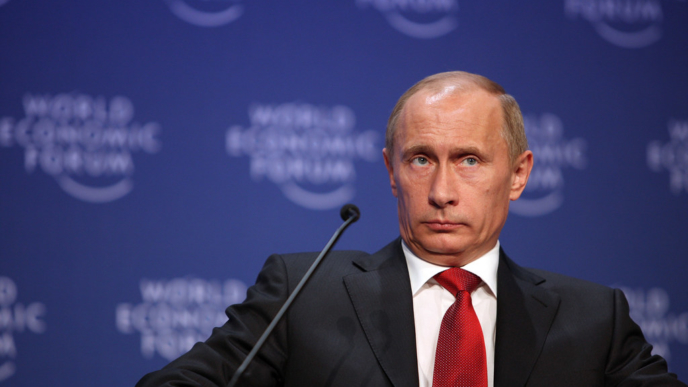
Putin to Loosen Lockdown Despite Russia’s Emergence as Coronavirus Hot Spot

Russia is easing orders that require most workers to stay at home even as the country’s coronavirus cases continue to grow rapidly.

Russian President Vladimir Putin announced the move on Monday and said that the “nonworking period” would be lifted the following day.

“Starting from tomorrow, May 12, the national period of nonworking days will be over for all sectors of the economy,” he said during a meeting with officials, according to Agence France-Presse.

Putin said that individual regions of the country would still be able to maintain restrictions to combat the pandemic. The mayor of Moscow extended a lockdown of Russia’s capital through the rest of May. (Read more from “Putin to Loosen Lockdown Despite Russia’s Emergence as Coronavirus Hot Spot” HERE)

Follow Joe Miller on Twitter HERE and Facebook HERE

Top General: Russia Is Testing U.S. Military for Weaknesses Amid Pandemic

Russia is testing whether the U.S. military has developed any weaknesses during the novel coronavirus crisis, a top general said, noting three run-ins with that country’s planes over a two-month period.

“We just want to make it very clear to them … there are no vulnerabilities as a result of COVID-19,” Air Force Gen. Terrence J. O’Shaughnessy, head of U.S. Northern Command, told reporters Tuesday. “We are postured and maintain that ability to respond at a moment’s notice.” . . .

Air Force F-22 Raptor fighter jets intercepted two Russian maritime patrol planes earlier this month approximately 50 miles from Alaska’s Aleutian Islands. About a month earlier, a pair of Russian reconnaissance aircraft were intercepted by U.S. and Canadian jets 50 miles from the state’s coast over the Beaufort Sea.

That was the second time in days Russian aircraft were spotted in the region. A Russian plane also flew within 25 feet of a Navy P-8A Poseidon reconnaissance aircraft last week. The aircraft was flying inverted at high speed, putting the Navy crew at risk, officials said.

O’Shaughnessy said Russia is likely to continue testing the U.S. — including near the homeland. (Read more from “Top General: Russia Is Testing U.S. Military for Weaknesses Amid Pandemic” HERE)

Follow Joe Miller on Twitter HERE and Facebook HERE

U.S. Intelligence Knew Russia Preferred Hillary to Trump, But John Brennan Hid the Truth

Did Russia interfere in the 2016 election in order to help Donald Trump defeat Hillary Clinton? Contrary to the left’s favorite narrative, the reverse was true — and known to be true among the U.S. Intelligence Community, according to Fred Fleitz, former chief of staff to Trump’s National Security Council. Fleitz claimed that then-CIA Director John Brennan suppressed the truth and put forward lower quality intelligence to claim the Russians backed Trump.

Fleitz, a former CIA analyst who also worked on the House Intelligence Committee, took to Fox News to disagree with a bipartisan Senate Intelligence Committee report released Tuesday. That report claims that the 2017 intelligence community assessment showing that Russia backed Trump over Clinton followed proper procedures, contradicting a House committee report from March 2018 showing that it did not.

Newly declassified intelligence further undermines the 2017 assessment, and Fleitz focused on a few basic procedures that were violated in the production of that assessment.

“For example, although the protocols require intelligence community assessments to be ‘community products’ and vetted with all intelligence agencies and analysts with equities in a given subject, only three intelligence agencies were asked to draft this assessment: the CIA, National Security Agency and FBI,” he wrote. “With the 14 other intelligence agencies left out, the three participating agencies included only two dozen ‘handpicked’ analysts.”

Worse, Fleitz said his sources inside the House Intelligence Committee told him “the actual drafting of the intelligence community assessment was done by three close associates of former CIA Director Brennan, who has proven to be the most politicized intelligence chief in American history. Contrary to common practice for controversial intelligence community assessments, Brennan’s team allowed no dissenting views or even an annex with reviews by outside experts.” (Read more from “U.S. Intelligence Knew Russia Preferred Hillary to Trump, But John Brennan Hid the Truth” HERE)

Follow Joe Miller on Twitter HERE and Facebook HERE
Democrat Lawyer Behind ‘Russia Dossier’ Pressures State to Allow ‘Ballot Harvesting’

A lawyer whose firm hired Fusion GPS to produce opposition research on Donald Trump leading to the phony “Russia dossier” has written to the State of Nevada pressuring it to bow to Democrat demands to allow “ballot harvesting.”

Mark Elias, a Perkins Coie lawyer who once represented Hillary Clinton’s presidential campaign, wrote on behalf of the Nevada Democratic Party to Nevada Secretary of State Barbara Cegavske on April 10 demanding that the state refrain from prosecuting violations of current state law, which only allows “a member of the voter’s family” to return an absentee ballot on their behalf. It is a felony for someone other than a family member to submit a ballot on someone else’s behalf.

Across the state line, in California, Democrats allow “ballot harvesting,” in which party operatives may collect and submit as many ballots as they want. (The practice is almost exclusive to Democrats; Republicans do not easily part with their ballots.) . . .

The practice is illegal in Nevada and most other states — as well as most other countries, where the practice is associated with fraud and corruption. Democrats, however, want to make “ballot harvesting” the law nationwide — and wanted to do so long before the coronavirus pandemic.

As Fox News noted Tuesday, Democrats now claim that “ballot harvesting” is necessary to overcome obstacles resulting from coronavirus — though they are also arguing for more in-person voting sites in Nevada, according to Elias’s letter. (Read more from “Democrat Lawyer Behind ‘Russia Dossier’ Pressures State to Allow ‘Ballot Harvesting’” HERE)

Follow Joe Miller on Twitter HERE and Facebook HERE

AG Barr Just Signaled That Things Are About to Get Ugly for the Russia Collusion Team; Nunes Says There May Be More Criminal Referrals; It Looks Like Putin Conned the FBI Into the ‘Russiagate’ Probe

By The Hill. “Travesty” is not a nice word. It usually is applied to gross perversions of justice, and that apparently is the context Attorney General William Barr desired when he dropped it into an interview answer the other day in the breezy courtyard of the Department of Justice (DOJ).

His composed, understated delivery almost disguised the weighty magnitude of that disturbing word and the loaded adjective that preceded it. “I think what happened to him,” he said, referring to the president and the FBI’s counterintelligence investigation into his campaign, “was one of the greatest travesties in American history.”

Okay, it’s important to pause for a moment and absorb what the AG said. He just called an FBI investigation not just a travesty but one of the “greatest” travesties in the nation’s history. It was an unprecedented statement by an attorney general about his own department’s premier agency. . .

Is the AG’s assessment fair? The answer is entwined in his next statement: “Without any basis [the FBI] started this investigation into [Donald Trump’s] campaign … .”

Oops, stop again right there. Mr. Barr is making a definitive statement about that which many of us have speculated all along, namely that the weirdly unprecedented investigative team put together by former FBI Director James Comey and Deputy Director Andrew McCabe did not have adequate legal reasons to open a case into the Trump campaign in the first place. The attorney general just confirmed that. (Read more from “AG Barr Just Signaled That Things Are About to Get Ugly for the Russia Collusion Team” HERE)

__________________________________________________

Devin Nunes Says There May Be More Criminal Referrals Following Declassified Footnotes

By PJ Media. After Friday’s revelation that the FBI used Russian government disinformation to get secret warrants to spy on the Trump campaign, Congressman Devin Nunes says you can expect more criminal referrals against those who plotted to take down Trump.

The information that many thought likely is now confirmed in black and white in the declassified footnotes of the Inspector General’s report on the FISA court abuses.

On Fox and Friends on Saturday morning, the ranking member of the House Intelligence Committee said the revelations reported on Friday before the holiday weekend mean that he’ll be calling for more criminal referrals.

“People should go and look at the footnotes that are now public, ok? Because likely we’re going to have more criminals referrals based on these.

We know the Democrats were spreading disinformation, Russian disinformation, which we were saying the whole time. It never made sense he would have a political operative – the Clinton campaign working with Fusion GPS, hiring a former foreign spy – that they know is supposedly getting information from a Russian intel folks.

(Read more from “Devin Nunes Says There May Be More Criminal Referrals Following Declassified Footnotes” HERE)

__________________________________________________

It Looks Like Putin Conned the FBI Into the ‘Russiagate’ Probe

By New York Post. It is becoming increasingly clear that the Russia investigation launched and conducted by James Comey’s Federal Bureau of Investigation deserves to rank as one of the agency’s great blunders — at best.

President Trump famously calls the probe a hoax, a label he uses liberally, but in this instance, it may literally be true.

We’ve spent years obsessing about Russian meddling in our politics, and now it turns out that the original FBI investigation into the Trump campaign that morphed into the Mueller probe may have been instigated, in part, by Russian disinformation.

In other words, the Kremlin may have succeeded in getting us to turn even more viciously against ourselves and conduct our politics in an atmosphere characterized by screaming headlines, dark insinuations and endless investigations — all by feeding a few lies to a private eye hired by the Hillary Clinton campaign to dig up dirt on Trump. (Read more from “It Looks Like Putin Conned the FBI Into the ‘Russiagate’ Probe” HERE)

Follow Joe Miller on Twitter HERE and Facebook HERE

Saudi Arabia and Russia Reach Deal to End Oil Price War

Saudi Arabia and Russia ended their price war and are poised to deliver the oil production cut President Trump has been demanding in order to raise historically low prices that have damaged the U.S. shale industry.

Saudi-led OPEC and its allies agreed in principle to a deal during an unprecedented emergency remote video meeting Thursday to cut production by 10 million barrels per day beginning in May.

The agreement for that level of cuts would last for two months, with reductions subsequently leveling off through April 2022 depending on progress in containing the coronavirus outbreak. Trump spoke Thursday night with Russian President Vladimir Putin and King Salman of Saudi Arabia to discuss finalizing the oil production cut deal.

After the call, Trump said at his daily press conference that “they are getting close to a deal.” . . .

Trump has been pushing Saudi Arabia and Russia to cut output in the hopes that less crude on the market will raise oil prices, which have fallen by two-thirds since the start of the year and reached a 18-year low last month. (Read more from “Saudi Arabia and Russia Reach Deal to End Oil Price War” HERE)

Follow Joe Miller on Twitter HERE and Facebook HERE

Why Russia Fears Sweden’s Deadly Submarines

For decades, submarines came in two discrete flavors: traditional diesel-electric submarines that need to surface every day or two to recharge their noisy, air-breathing diesel engines, and nuclear-powered submarines that could quietly hum along under the sea at relatively high speeds for months at a time thanks to their nuclear reactors.

The downside to the nuclear-powered variety, of course, is that they cost many times the price of a comparable diesel submarines and require nuclear propulsion technology, which may not be worth the trouble for a country only interested in defending its coastal waters. A diesel submarine may also run more quietly than a nuclear submarine by turning off its engines and running on batteries—but only for a very short amount of time. Still, there remains a performance gap in stealth and endurance that many countries would like to bridge at an affordable price.

One such country was Sweden, which happens to be in a busy neighborhood opposite to Russian naval bases on the Baltic Sea. Though Sweden is not a member of NATO, Moscow has made clear it might take measures to ‘eliminate the threat,’ as Putin put it, if Stockholm decides to join or support the alliance. After a Soviet Whiskey-class submarine ran aground just six miles away from a Swedish naval base in 1981, Swedish ships opened fire on suspected Soviet submarines on several occasions throughout the rest of the 1980s. More recently, Russia has run an exercise simulating a nuclear attack on Sweden and likely infiltrated Swedish territorial waters with least one submarine in 2014. . .

The Swedish firm has unveiled concept art depicting a submarine with a ‘chinned’ sail, X-shaped tail fins for greater maneuverability in rocky Baltic waters, and four 533-millimeter torpedo tubes can fire both heavyweight torpedoes, back up by two 400-millimeter tubes, all of which would use wire-guided torpedoes. The vessel’s four Stirling engines apparently allow allowing for higher sustainable underwater cruising speed of 6 to 10 knots. . .

Sweden’s two A26s should be completed between 2022 and 2024, at which point it will be possible to gauge whether they can meet their ambitious performance parameters. In general, advancements to AIP submarines are allowing countries across the globe to acquire capable short and medium-range submarines at an affordable price. (Read more from “Why Russia Fears Sweden’s Deadly Submarines” HERE)

Follow Joe Miller on Twitter HERE and Facebook HERE

U.S. Fighters Catch Russian Spy Planes Near Alaska for 2nd Time in Days

For the second time in less than a week, the U.S. has intercepted Russian maritime surveillance aircraft in what’s known as the Alaska Air Defense Identification Zone, military officials announced Saturday.

Two pairs of Tu-142 maritime reconnaissance and anti-submarine warfare aircraft were tracked and intercepted Saturday by Air Force F-22 Raptors, supported by KC-132 Stratotanker refueling aircraft and E-3 Sentry Airborne Warning and Control System planes.

“The Russian aircraft entered the ADIZ from the West and North of Alaska respectively,” officials with the North American Aerospace Defense Command, or NORAD, said in a release. “The western pair of Tu-142s remained within the ADIZ for approximately 4 hours and loitered in the vicinity of the U.S. Navy’s ICEX where they are conducting submarine exercises. The Tu-142s were escorted by F-22s the entire time.” . . .

A pair of Tu-142s to the north spent only about 15 minutes in the zone, and also received an F-22 escort, officials said.

ICEX, which began March 5, is an Arctic preparedness exercise involving two U.S. Navy submarines, forces from five different countries and more than 100 participants. The exercise requires troops to set up a temporary camp on an ice floe and use the camp as a command center for submarine operations taking place below the ice, at temperatures averaging negative 27 degrees Fahrenheit. (Read more from “U.S. Fighters Catch Russian Spy Planes Near Alaska for 2nd Time in Days” HERE)

Follow Joe Miller on Twitter HERE and Facebook HERE