Posts

Why Americans Should Care About Attacks on Religious Liberty in Russia

There are troubling new developments in Russia. Russia’s parliament, the Federal Assembly, has just approved so-called anti-terrorism legislation that criminalizes free speech and that attacks religious liberty.

If President Vladimir Putin signs this into law in the coming weeks, it will be illegal for Christians to share their faith outside of a church building, as if faith is constrained by the four walls of a structure and belief to a single day of the week.

In some ways, this isn’t a surprise.

There’s a lot wrong with Russia. We are witnessing a rising authoritarianism in a declining state. Moscow routinely tramples the rights of press, assembly, speech, dissent, and national sovereignty.

Ask the families of murdered journalists. Ask student groups who face intimidation. Ask the political dissidents who fear imprisonment. Ask the Ukrainian people who fear being fully overrun.

Why is this happening?

Because Putin and his government cronies think they can make Russia great again by hoarding wealth, by abusing power, and by crushing any and all opposition. They strike a strongman pose but this is not real strength.

True strength is rooting in virtue: selflessness and sacrifice on behalf of the weak.

Putin is driven by cheap imitation and intimidation, more akin to bullying. Vice masked as virtue. We know that Russia’s offenses are many and egregious.

At the same time, Americans well understand that it is not our national calling—nor is it within our power—to attempt to right every wrong in a broken world.

But we should be clear about what is happening—as well as the fact that there is not an easy fix here. It is naive to hope that Russia can be reformed with reset buttons or with promises of future “flexibility.”

Instead we need to begin telling the truth about an increasingly aggressive actor in global affairs.

Again let me be explicit: The U.S. does not have a solemn obligation to make the world free, but we absolutely do have an obligation to speak on behalf of those who are made speechless in the dark corners of the globe.

This Russian law would be an affront to free people everywhere—at home and abroad—who believe that rights of conscience—the rights to free speech and to freedom of religion—are pre-political.

These freedoms do not ebb and flow with history. They do not rise and fall with the political fortunes of a despot.

Governments do not give us these rights and governments cannot take them away. These rights of speech and religion and assembly belong to every man, woman, and child because all of us are image-bearers of our creator.

I’m speaking tonight because this new Russian legislation is emblematic of a destructive growing nationalism and of a thirst for power that cannot be ignored.

Putin has a desire to squeeze down on civil society, on other venues for discussion and debate, and on other institutions outside of politics where human dignity can and should be expressed.

He has this desire because he is weak, not because he is strong. We here in this body, without regard to political party, and representing all 50 states, must be sober and clear-eyed about Russia.

We must become more sober and clearer-eyed about its hostilities and its dangerous trajectory. We have a duty here to be telling the truth early about where this might be headed. (For more from the author of “Why Americans Should Care About Attacks on Religious Liberty in Russia” please click HERE)

Follow Joe Miller on Twitter HERE and Facebook HERE.
NATO Sends Clear Message to Putin

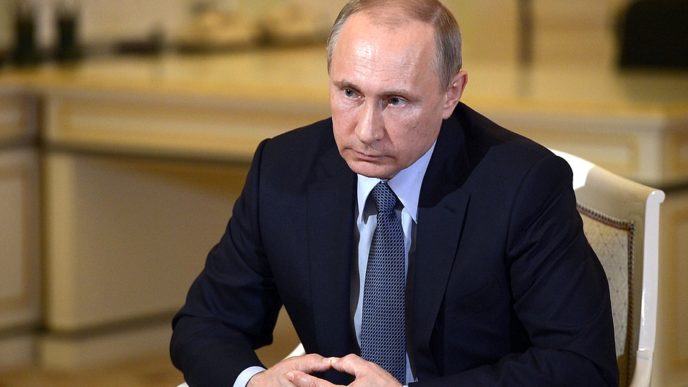
Thousands of American troops have been taking part in a large-scale military exercise on NATO’s front-line state of Poland, which borders Vladimir Putin’s Russia, its close ally Belarus, and war-torn Ukraine. The message is unmistakable—letting Moscow know that the U.S. and its allies take its treaty obligation to defend Eastern Europe seriously.

The 10-day Polish led exercise, called Anakonda, ended June 16. It consisted of over 31,000 troops from 24 countries, including 14,000 American troops.

This drill began in 2006 as a lone Polish effort, and has grown to be one of the largest military exercises to occur in Poland in 25 years.

According to the U.S. Army, “This exercise further supports assurance and deterrence measures by demonstrating allied defense capabilities to deploy, mass and sustain combat power.”

That is code for assuring America’s allies that the U.S. will defend them should the Russians decide to invade.

The Russian annexation of Crimea and invasion of Ukraine has left many of the eastern NATO countries nervous and anxious for guarantees of NATO protection. History buttresses their anxiety.

Russia still views Eastern Europe as its backyard—as it did during Imperial times. It is estimated that, at its height, it was expanding at the rate of almost 90 square miles a day. By 1896 Tsar Nicholas the 2nd was crowned as “[Emperor] of All the Russians, Czar of Moscow”, as well as ruler of Poland, Kiev, Lithuania, Finland, Estonia, Bulgaria, and many more.

To this day Russia does not view these as sovereign countries, but as former vestiges of Russian Imperialism that belong under the influence of Moscow.

Many of these nations are members of NATO, now firmly part of the West. That is why these nations, now our treaty allies, fear the threat of invasion. Much of their history is blemished by Russian subjugation.

The Baltics (Latvia, Lithuania, and Estonia) are small, geographically isolated from the rest of NATO, and have a significant ethnic Russian minority population. They are also facing a non-traditional threat to their security—active measures, or what is now commonly called “hybrid warfare.”

Active measures are a type of information warfare. It combines disinformation, propaganda, and manipulation of public opinion in order to influence the actions of a foreign country or people. These were used extensively by the Soviets in an effort to create instability in areas of interest.

The Baltic countries find themselves fighting Russian active measures on multiple fronts: their language and politics are being subverted. Russian media outlets are buying more space in order to push out native speaking media with a pro-Russian message. In the Baltics there is no need to translate or tailor their propaganda, because of the Russian speaking population. Because of this ethnic Russians and other Russian speakers are motivated to force their countries closer to Moscow.

There is also corruption problem. According to the 2016 Index of Economic Freedom, Latvia scores a 55 in the category freedom from corruption. The world average is 42.6, and Latvia has shown increases in this measure since 2013. However, there is still an element of the Russian elite and professional criminals bringing money into Latvia. This brings in both unwanted attention and influence pulling Latvia ever closer to Moscow. Lastly, there is the tangible threat of Russian hard power. The Russian military has been moving to assert power over the Baltic Sea and airspace over Estonia increasingly in the past few years.

Understanding this threat, is NATO prepared to defend its front-line Eastern Allies?

Putin revived a Soviet era strategy called active measures, or “hybrid warfare”, and has successfully integrated this strategy to fit his imperialist agenda. His implementation is leading to a slow, steady corrupting influence into the Baltics. With Ukraine and Crimea, it has gone further and outright violence ensued. An expansionist policy may be the norm for Vladimir Putin, but NATO has an obligation to curb such appetites against its members.

That is why Anakonda 2016 matters. This exercise has already drawn criticism from the Russian government about escalating tensions between Moscow and NATO. Russian Foreign Minister Sergey Lavrov has called this exercise unjustified, as well as commenting that there is no Russian threat to any NATO member. But he did make sure to add that, “Russia’s sovereign right to ensure its security will come into force, [making use] of methods adequate to [respond to] today’s challenges.”

In light of this, it is important for our allies to feel that they are not being forgotten. The most important facet of NATO deterrence is the credible threat that aggression will be met with a resounding military response. Without showing our allies that they can believe in the U.S. commitment to their security, we might as well be paving the way for a Russian invasion. (For more from the author of “NATO Sends Clear Message to Putin” please click HERE)

Follow Joe Miller on Twitter HERE and Facebook HERE.

Putin Ups His Persecution of Social Media Users

The Kremlin has started cracking down with increasing severity on users of social media who dare to criticize the state of affairs in Russia or who parody Russian leader Vladimir Putin.

For the crime of posting a picture of a tube of toothpaste with the caption “Squeeze Russia out of yourself,” Andrei Bubeyev was sentenced to three years in prison.

The law under which this draconian verdict was handed down was passed in 2002. Vaguely worded, it has been targeted at extremism, hate speech and anti-government speech alike. Extremism is defined as activities that aim to undermine the nation’s security or constitutional order, or glorify terrorism or racism. The law allows the judge to interpret who poses a danger to the state, and last year as many as 54 social media users were caught in its net.

Bubeyev seems an unlikely candidate for such draconian punishment. He is a construction worker with a passion for politics, but only 12 followers on his VKontakte page—Russia’s most popular social media network that has a total of 270 million accounts.

The Russian authorities may have decided to make an example of him to deter online dissenters.

The Russian government’s war on dissent recently extended to pressuring Twitter to take down a popular account spoofing Putin, @DarthPutinKGB. This feeble decision on Twitter’s part was immediately protested by @DarthPutinKGB’s 50,000 followers, who include Estonian President Toomas Hendrik Ilves. Ilves tweeted:

Essentially, the Russian government has declared war on the very concept of objective news reporting itself. In the warped word of Russian propaganda, reality is whatever the Russian leadership decides it is.

Ironically, at a recent media forum titled, “The New Era of Journalism: A Farewell to the Mainstream,” Russian propaganda chief Dmitry Kieselev argued that in the world of social media, there really is no need for traditional news anymore. With the Russian government’s war on social media, Russians are in effect denied both.

Russians are living behind a wall of unreality, in a state of “information isolation,” as described by the Levada Center, an independent Russian polling organization. Only 1 percent of Russians receive news from foreign sources on a daily basis. Tragically, 87 percent never do.

That isolation helps keep Putin in power, and it makes Russians paranoid about the West, especially the United States. (For more from the author of “Putin Ups His Persecution of Social Media Users” please click HERE)

Follow Joe Miller on Twitter HERE and Facebook HERE.

Admiral Warns: Russian Subs Waging Cold War-Style ‘Battle of the Atlantic’

Russia has stepped up its submarine operations and is regularly probing U.S. anti-submarine networks in a new “Battle of the Atlantic,” the commander of U.S. 6th Fleet said.

In an article for the U.S. Naval Institute’s June issue of Proceedings, Vice Adm. James Foggo III outlined a new era in U.S. and Russian submarine warfare he dubs “The Fourth Battle of the Atlantic.”

In his piece, Foggo compares the current uptick in Russian submarine posture to the great submarine battles between the Allies and the Germans in World War I and World War II and the Soviets and the U.S. during the Cold War.

“Once again, an effective, skilled, and technologically advanced Russian submarine force is challenging us. Russian submarines are prowling the Atlantic, testing our defenses, confronting our command of the seas, and preparing the complex underwater battlespace to give them an edge in any future conflict,” Foggo wrote.

“Not only have Russia’s actions and capabilities increased in alarming and confrontational ways, its national-security policy is aimed at challenging the United States and its NATO allies and partners.” (Read more from “Admiral Warns: Russian Subs Waging Cold War-Style ‘Battle of the Atlantic'” HERE)

Follow Joe Miller on Twitter HERE and Facebook HERE.

Russia Flight Tests Anti-Satellite Missile

Russia conducted a successful flight test of a developmental anti-satellite missile on Wednesday that is capable of destroying satellites in orbit, American defense officials said.

The Nudol direct ascent anti-satellite missile was launched from the Plesetsk test launch facility, located 500 miles north of Moscow, said officials familiar with the situation.

The missile was monitored by U.S. intelligence satellites and the test appeared to be successful.

The launch marks another major milestone for Moscow’s efforts to develop weapons capable of destroying U.S. navigation, communications, and intelligence satellites, a key strategic advantage.

No additional details were available, and it could not be learned if the Nudol missile was fired against a satellite or was test launched in a suborbital trajectory without hitting a target. (Read more from “Russia Flight Tests Anti-Satellite Missile” HERE)

Follow Joe Miller on Twitter HERE and Facebook HERE.
Threat From Russian and Chinese Warplanes Mounts

Chinese and Russian warplanes have been increasingly aggressive intercepting U.S. military aircraft and patrolling near America’s West Coast, prompting the Air Force’s top combat officer to label their provocations one of his top worries.

Air Force Gen. Herbert “Hawk” Carlisle, who leads Air Combat Command, said in an interview with USA TODAY that meeting the challenge from the Russian and Chinese to flights in international airspace is essential but dangerous . . .

Both countries are intent on expanding their spheres of influence — Russia in eastern Europe and the Pacific with China focusing much of its effort over the disputed South China Sea.

“Their intent is to get us not to be there,” Carlisle said. “So that the influence in those international spaces is controlled only by them. My belief is that we cannot allow that to happen. We have to continue to operate legally in international airspace and international waterways. We have to continue to call them out when they are being aggressive and unsafe.”

The stakes are high. Aggressive intercepts of U.S. patrol planes run the risk of mid-air collisions that would escalate tensions among nuclear powers. (Read more from “Threat From Russian and Chinese Warplanes Mounts” HERE)

Follow Joe Miller on Twitter HERE and Facebook HERE.

Putin: Russia Will Consider Tackling NATO Missile Defense Threat

(Editor’s note: the original publisher of this article, RT News, is funded by the Russian government) Russia is being forced to look for ways to neutralize threats to its national security due to deployment of the NATO anti-missile shield in Europe, Russian President Vladimir Putin said after the alliance launched a missile defense site in Romania.

“Now, after the deployment of those anti-missile system elements, we’ll be forced to think about neutralizing developing threats to Russia’s security,” Putin said.

The US missile shield in Europe is a clear violation of Russian-American arms treaties, Putin said at a meeting with Russian military officials, adding that the anti-missile facilities can be easily repurposed for firing short and midrange missiles.

The US anti-missile shield in Europe is yet another step in increasing international tensions and launching a new arms race, he stressed.

“We’re not going to be dragged into this race. We’ll go our own way. We’ll work very accurately without exceeding the plans to finance the re-equipment of our Army and Navy, which have already been laid out for the next several years,” Putin said. (Read more from “Putin: Russia Will Consider Tackling NATO Missile Defense Threat” HERE)

Follow Joe Miller on Twitter HERE and Facebook HERE.
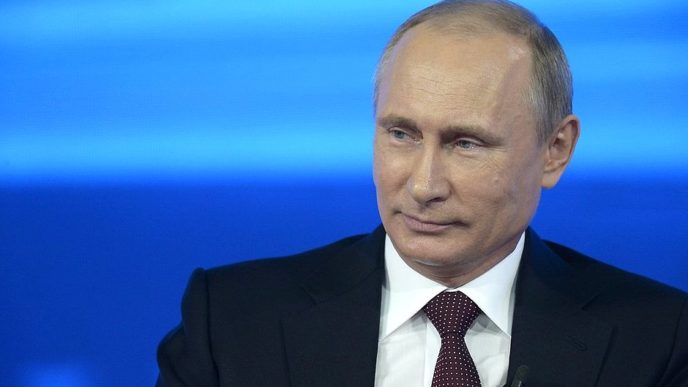
How Russia Is Lying to Us About Syria

I2ExDlublYfgAT4J3FSotqA5HEjPJr5YWhat seemed like an encouraging headline a few weeks ago was really all smoke and mirrors—far from pulling out of Syria, Russia has been rolling in even more troops and equipment. Russian President Vladimir Putin has once again proven that he cannot be trusted.

On March 14, Putin began ordering troops to return home from Syria. It is true that some troops did leave the country, but we now know that this announcement was more about distracting the world and portraying Russia as part of the solution in Syria rather than being part of the problem.

Even though Russia might have removed some troops, it left behind advanced anti-aircraft systems, plenty of fighter planes and bombers, and hundreds of troops and special forces. Don’t forget that Russia entered Syria last year with only a naval base located at Tartus and is now leaving Syria with an additional air base at Hmeimim.

Less than a month later, evidence was released of more troops filtering back into the war-torn country. The cover story was that they were supposedly there to clear out a number of mines, but no one really knew their true intentions.

Russia is still conducting airstrikes, even after their cessation of hostilities agreement with the United States. Russian special forces and air force helping Assad’s army were involved in fighting for the ancient city of Palmyra. There is talk that a Russian-supported offensive against Aleppo is in the works.

Currently, Russia is transporting artillery units into northern Syria and the White House is definitely concerned. According to Ben Rhodes, a deputy national security adviser for the U.S., President Barack Obama told Putin that “Russia should focus its efforts on the diplomatic process.” However, it doesn’t seem like Moscow will heed this instruction.

As shown, Russia doesn’t exactly have the best track record for keeping its word. Moscow routinely violates its cease-fire arrangement with Ukraine and continues to supply weapons to Ukrainian separatists.

So why is Russia even in Syria to begin with? One explanation could be its desired military presence around the world to show that it is a global power. Another explanation is to use its influence in Syria to secure a stronger negotiating position on other issues like Ukraine.

Clever propaganda run directly from the Kremlin has largely affected the world’s perception of the country. The Kremlin wants the world to think of Russia as part of the solution to many of the world’s problems when the opposite is true. The Russian people have done poorly in a declining economy while Putin and his cronies become richer and richer each year.

Whether it is in Georgia, Ukraine, or Syria, Putin will do anything to make it seem that Russia is a global power on equal footing with the United States. As long as the West lets him get away with it, Putin will keep on lying. It is time for the world to wake up. (For more from the author of “How Russia Is Lying to Us About Syria” please click HERE)

Follow Joe Miller on Twitter HERE and Facebook HERE.

Failed Obama ‘Reset’ Has Encouraged Russian Aggression

6Yzp2IFSgB3zTsa73qLnFRHuNABPFkpsPeople seem a bit surprised—even perplexed—by the breathless news reports and video of Russian warplanes “buzzing” an American warship operating in international waters in the Baltic Sea this week.

The reality is that they shouldn’t be.

That, of course, isn’t to say that we shouldn’t be deeply troubled for the safety of our sailors on the USS Donald Cook at the hands of some “hot dog” Russian pilots involved in reckless and provocative actions that could have had dire and or unintended consequences.

But, that said, there’s a method to Moscow’s madness.

First, there’s the matter of geography. The Baltic Sea has long been a Russian security priority. For instance, the Baltic waters lap up against the Russian coast at the iconic city of St. Petersburg (once Leningrad), where a successful invading force could drive into the heart of Russia, including reaching Moscow.

During the Cold War, the Soviet Union controlled the southern Baltic Sea coastline from Russia through the Baltic States (Latvia, Lithuania and Estonia), across Poland and into East Germany. In Moscow’s eyes at that time, the Baltic Sea should be a Soviet “lake.”

Today, rather than lined with Soviet Republics and loyal members of the Warsaw Pact, that same coastline is instead populated with NATO states with rough relations with the Russians. That’s not at all comforting to Kremlin & Co.

The only section of the southern Baltic Coast that isn’t part of NATO is Kaliningrad, a Russia-controlled outpost between Poland and Lithuania that Russia sees as not only isolated and vulnerable, but strategic to Russian security.

Indeed, after the less-than-stellar response to the Crimea crisis, there’s been a constant concern among some that Moscow might try to carve out a Russian-controlled access route to Kaliningrad through NATO member Lithuania

Of course, taking on NATO is different than taking on Ukraine.

Second, the Russian show of force in the Baltic is meant to send a signal of strength in response to perceptions of American weakness, resulting largely from the White House’s failed “reset” policy toward the Kremlin, going back to 2009.

In fact, concerns about Russian aggression in the Baltics and Eastern Europe along NATO’s eastern flank have caused the Pentagon to rotate a Brigade Combat Team (BCT) back to Europe under the European Reassurance Initiative.

This effort involves several thousand U.S. soldiers, a couple hundred tanks, armored vehicles and artillery pieces that will join 60,000-plus of America’s bravest already in Europe. U.S. pre-positioned weapons stockpiles will also be improved.

The returning American BCT will be forward-deployed along NATO’s eastern flank to frontline states including Lithuania, Latvia, Estonia, Poland, Romania and Bulgaria.

It’s a good move, but is it enough?

Not surprisingly, Russia isn’t happy about the U.S.-NATO moves and has promised an “asymmetric response,” which may include this week’s dangerous fly-bys of the Russian Su-24 Fencers against the USS Donald Cook in the Baltic.

More Moscow mischief may be in the offing.

Sure, Russia could get more feisty, but considering the failure of the White House’s “reset” policy toward the Kremlin so far, it’s probably time for a serious change toward Russia—one that comes from a position of strength. (For more from the author of “Failed Obama ‘Reset’ Has Encouraged Russian Aggression” please click HERE)

Follow Joe Miller on Twitter HERE and Facebook HERE.
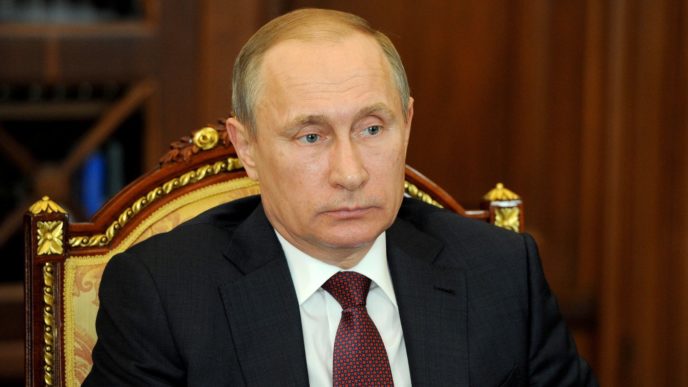
Turkey Arrests, Detains Without Charge, US Evangelist; Russia Says Turkish Civil War Underway

6711234961_a6d9c006b7_oBy Morning Star News. Turkish authorities have detained a U.S. evangelist and ordered him held for 30 days without charge ahead of deportation, sources said.

Declaring David Byle “a danger to public order,” authorities in Turkey took him into custody on April 6 after asking him to report to the immigration office in Istanbul regarding his application for a residency permit.

Byle, 46, was told his application had been denied; he was immediately taken into custody and then transferred to the Fatih police station in Istanbul. Police held him for two days before transferring him on Friday (April 8) to a holding center for foreigners awaiting deportation, the sources said. . .

The arrest took place days before Byle was set to teach a class to a group of Turks on how to tell people about the gospel, though there was no public indication of a link between the arrest and the scheduled training. (Read more from “Turkey Arrests, Detains Without Charge, US Evangelist; Russia Says Turkish Civil War Underway” HERE)

______________________________________

Putin: Ankara ‘Not So Much Fights Radicals as Cooperates With Them,’ Civil War Underway in Turkey

By RT. The Turkish authorities are not so much fighting with the radicals, but working side by side with them instead, Russian President Vladimir Putin said during his annual Q&A session, noting that there is a civil war going on in southern Turkey.

“We believe that the current Turkish leadership not so much fights the radicals, but rather cooperates with them,” Putin said.

“In fact, there is a civil war going on in southern Turkey. We try to ignore it, the international community pretends not to notice it, but it’s a fact. Moreover, [the war goes on] with the use of heavy weaponry and equipment, artillery and so on,” he said, highlighting the fact that terrorist attacks take place in Turkey “nearly each week.” (Read more from “Putin: Ankara ‘Not So Much Fights Radicals as Cooperates With Them,’ Civil War Underway in Turkey” HERE)

Follow Joe Miller on Twitter HERE and Facebook HERE.