Posts

South Korea Seeing Rise in Patients Who Test Positive for Coronavirus a Second Time; The Coronavirus Is Particularly Unkind to Those Who Are Obese

By Fox News. South Korea says it’s continuing to see a rise in patients who test positive for the coronavirus for a second time after being diagnosed as recovered. However, the risk of transmissions from such cases so far appears to be low.]

Jeong Eun-kyeong, director of the country’s Centers for Disease Control and Prevention, said Friday at least 163 people have tested positive again after their initial release from hospitals, accounting for more than 2% of the country’s 7,829 recoveries.

She says the patients on average were 13.5 days removed from their release when they tested positive again, although the longest gap was 35 days.

Jeong says none of the patients were in serious condition although 61 of them were exhibiting mild symptoms. Officials are monitoring about 300 people who contacted the patients but have so far detected no transmissions of the virus. (Read more from “South Korea Seeing Rise in Patients Who Test Positive for Coronavirus a Second Time” HERE)

_______________________________________________

The Coronavirus Is Particularly Unkind to Those Who Are Obese

By Los Angeles Times. America’s obesity epidemic appears to be making the coronavirus outbreak more dangerous — and potentially more deadly — in the United States, new research suggests. For younger and middle-aged adults in particular, carrying excess weight may significantly boost the likelihood of becoming severely ill with COVID-19.

The evidence for this comes from thousands of COVID-19 patients who sought treatment in emergency departments in New York, and it’s prompting alarm among doctors and other health experts. In the U.S., 42.4% of adults have obesity, which means their body-mass index, or BMI, is 30 or more.

In one of two new studies released this week, COVID-19 patients who were younger than 60 and had a BMI between 30 and 34 were twice as likely as their non-obese peers to be admitted to the hospital for acute care instead of being sent home from the ER. They were also 1.8 times more likely to require critical care in a hospital’s intensive care unit.

More severe obesity posed an even greater risk to COVID-19 patients in this under-60 age group. When these patients had a BMI of 35 or higher, they were 2.2 times more likely than their non-obese peers to need standard hospital care and 3.6 times more likely to end up in the ICU. (Read more from “The Coronavirus Is Particularly Unkind to Those Who Are Obese” HERE)

Follow Joe Miller on Twitter HERE and Facebook HERE

Harvard Epidemiologist Predicts Most of the World Will Be Infected by Next Year; U.S. Soldier Stationed in South Korea Tests Positive for Coronavirus; Senator ‘Appalled’ by Trump’s Classified Briefing on Coronavirus

CDC Warns Disruption to U.S. Life “May be Severe”

By Alexandria Hein. The Centers for Disease Control and Prevention (CDC) on Tuesday warned that it expects the novel coronavirus to begin spreading in the U.S. at the community level, and that “disruption to everyday life may be severe.”

Dr. Nancy Messonnier, the agency’s director of the National Center for Immunization and Respiratory Diseases, said in a press briefing on Tuesday that the time for Americans to begin preparing for a potential outbreak of the virus is now . . . “As more and more countries experience community spread, successful containment at our borders becomes harder and harder,” Messonnier said. “Ultimately, we expect we will see community spread in this country. It’s not so much a question of if this will happen anymore, but rather more a question of when this will happen, and how many people in this country will have severe illness.”

Citing the recent uptick in cases in countries with confirmed illnesses, Messonnier said health officials recognize that once the virus hits, it moves “quite rapidly,” adding that the outbreak is inching closer toward pandemic status. She explained several measures the U.S. is prepared to take should the outbreak become severe, including closing schools and hosting meetings remotely.

“I understand this whole situation may seem overwhelming and that disruption to everyday life may be severe, but these are things people need to start thinking about now,” Messonnier said. (Read more HERE)
____________________________________________________

US Soldier Tests Positive

By The Blaze. An American soldier stationed in South Korea has tested positive for COVID-19, the coronavirus, the U.S. military announced Wednesday, in what is the first confirmed case of a servicemember contracting the new disease. . .

The patient is a 23-year-old male stationed at Camp Carroll near the southeastern city of Daegu. According to a statement issued by United States Forces Korea, the soldier “is currently in self quarantine at his off-base residence.”

The command said that “health professionals are actively conducting contact tracing to determine whether any others may have been exposed,” adding, “USFK is implementing all appropriate control measures to help control the spread of COVID-19 and remains at risk level ‘high’ for USFK peninsula-wide as a prudent measure to protect the force.”

The Daily Mail reported that South Korea announced the same day that the country has 1,146 cases of COVID-19, which means it has “the biggest outbreak outside mainland China.” China has reported more than 2,700 deaths due to coronavirus with another 78,000 confirmed cases of infection.

The U.S. currently has around 28,5000 troops stationed in South Korea, as a deterrent against North Korean aggression. (Read more from “U.S. Soldier Stationed in South Korea Tests Positive for Coronavirus” HERE)

____________________________________________________

Yes, You’ll Likely Get It – Harvard Epidemiologist Predicts Most of the World Will Be Infected by Next Year

By The Atlantic. . .Coronaviruses are similar to influenza viruses in that they both contain single strands of RNA.* Four coronaviruses commonly infect humans, causing colds. These are believed to have evolved in humans to maximize their own spread—which means sickening, but not killing, people. By contrast, the two prior novel coronavirus outbreaks—SARS (severe acute respiratory syndrome) and MERS (Middle East respiratory syndrome, named for where the first outbreak occurred)—were picked up from animals, as was H5N1. These diseases were highly fatal to humans. If there were mild or asymptomatic cases, they were extremely few. Had there been more of them, the disease would have spread widely. Ultimately, SARS and MERS each killed fewer than 1,000 people. . .

The Harvard epidemiology professor Marc Lipsitch is exacting in his diction, even for an epidemiologist. Twice in our conversation he started to say something, then paused and said, “Actually, let me start again.” So it’s striking when one of the points he wanted to get exactly right was this: “I think the likely outcome is that it will ultimately not be containable.”

Containment is the first step in responding to any outbreak. In the case of COVID-19, the possibility (however implausible) of preventing a pandemic seemed to play out in a matter of days. Starting in January, China began cordoning off progressively larger areas, radiating outward from the city of Wuhan and eventually encapsulating some 100 million people. People were barred from leaving home, and lectured by drones if they were caught outside. Nonetheless, the virus has now been found in 24 countries.

Despite the apparent ineffectiveness of such measures—relative to their inordinate social and economic cost, at least—the crackdown continues to escalate. Under political pressure to “stop” the virus, last Thursday the Chinese government announced that officials in Hubei province would be going door-to-door, testing people for fevers and looking for signs of illness, then sending all potential cases to quarantine camps. But even with the ideal containment, the virus’s spread may have been inevitable. Testing people who are already extremely sick is an imperfect strategy if people can spread the virus without even feeling bad enough to stay home from work.

Lipsitch predicts that within the coming year, some 40 to 70 percent of people around the world will be infected with the virus that causes COVID-19. But, he clarifies emphatically, this does not mean that all will have severe illnesses. “It’s likely that many will have mild disease, or may be asymptomatic,” he said. As with influenza, which is often life-threatening to people with chronic health conditions and of older age, most cases pass without medical care. (Overall, about 14 percent of people with influenza have no symptoms.) (Read more from “Yes, You’ll Likely Get It – Harvard Epidemiologist Predicts Most of the World Will Be Infected by Next Year” HERE)

____________________________________________________

Democrat ‘Appalled’ by Classified Senate Briefing on Coronavirus: ‘Should Have Been Fully Open to American People’

By Raw Story.Sen. Richard Blumenthal (D-CT) blasted the Trump administration for withholding information about coronavirus preparations from the public.

The administration gave senators a classified briefing Tuesday morning on the virus, which Senate Minority Leader Chuck Schumer (D-NY) warned Monday could turn into a potential pandemic unless President Donald Trump and his team took swift action.

(Read more from “Democrat ‘Appalled’ by Classified Senate Briefing on Coronavirus: ‘Should Have Been Fully Open to American People’” HERE)

Follow Joe Miller on Twitter HERE and Facebook HERE

South Korea Steps Up Containment Efforts As Virus Cases Jump To 208; Health Officials Worry As Untraceable Coronavirus Clusters Emerge

By The Korea Herald. South Korea said Friday the new coronavirus is in the initial stage of a full-blown outbreak, but stressed that it is still “manageable,” although the number of infections has almost quadrupled in just three days.

The country reported 104 new cases of the novel coronavirus as of 7 p.m. on Friday, bringing the total number of infections to 208, the Korea Center for Disease Control and Prevention (KCDC) said.

Most new infections have been traced to church services in the southeastern city of Daegu.

Daegu, where the 2.5 million inhabitants have been asked to stay indoors, and neighboring Cheongdo were designated as a “special management zone” earlier in the day. The nation’s capital, Seoul, banned demonstrations in downtown areas.

Of the 104 new cases, 86 are in Daegu, 300 kilometers southeast of Seoul, and neighboring North Gyeongsang Province. Another seven were reported in Seoul, the KCDC said. (Read more from “South Korea Steps Up Containment Efforts As Virus Cases Jump To 208” HERE)

_____________________________________________________

Health Officials Worry As Untraceable Coronavirus Clusters Emerge

By Star Advertiser. In South Korea, Singapore and Iran, clusters of infections are leading to a jump in cases of the new viral illness outside China. But it’s not the numbers that are worrying experts: It’s that increasingly they can’t trace where the clusters started.

World Health Organization officials said China’s crackdown on parts of the country bought time for the rest of the world to prepare for the new virus. But as hot spots emerge around the globe, trouble finding each source — the first patient who sparks every new cluster — might signal the disease has begun spreading too widely for tried-and-true public health steps to stamp it out.

“A number of spot fires, occurring around the world is a sign that things are ticking along, and what we are going to have here is probably a pandemic,” said Ian Mackay, who studies viruses at Australia’s University of Queensland.

That worst-case isn’t here yet, the WHO insists. It isn’t convinced that countries outside China need more draconian measures, but it pointed to spikes in cases in Iran and South Korea to warn that time may be running out to contain the virus. . .

The newest red flag: Iran reported 18 cases, including four deaths, in just two days. The cluster began in the city of Qom, a popular religious destination, but it’s not clear how. Worse, infected travelers from Iran already have been discovered in Lebanon and Canada. (Read more from “Health Officials Worry As Untraceable Coronavirus Clusters Emerge” HERE)

Follow Joe Miller on Twitter HERE and Facebook HERE

U.S. Ambassador Defends ‘Offensive’ Mustache, Says It’s a Break From Military Life

The US ambassador to South Korea is in a hairy situation when it comes to maintaining diplomatic relations.

The aptly named envoy, Harry Harris, is getting flak for sporting a mustache — a look that some Koreans find offensive and critics say is reminiscent of oppressive governors-general when Korea was under Japanese rule between 1910 and 1945.

Harris, the highly decorated 40-year U.S. Navy veteran who was nominated by President Trump and confirmed to the post in June, defended his facial hair in an interview last week with The Korea Times.

“I wanted to make a break between my life as a military officer and my new life as a diplomat,” he told the publication in the wide-ranging interview. “I tried to get taller but I couldn’t grow any taller, and so I tried to get younger but I couldn’t get younger. But I could grow a mustache, so I did that.” (Read more from “U.S. Ambassador Defends ‘Offensive’ Mustache, Says It’s a Break From Military Life” HERE)

Follow Joe Miller on Twitter HERE and Facebook HERE

South Korea Fires Warning Shots as Russian, Chinese Military Planes Enter Airspace

South Korea has reportedly fired warning shots after Russian military planes violated the nation’s airspace on Tuesday, according to South Korea’s Defense Ministry.

The Associated Press reported that, according to South Korea’s Defense Ministry, “multiple Russian military planes violated the South Korean airspace off its east coast” and “Chinese military planes also intruded into South Korea’s aerial identification zone.” . . .

The provocation comes after “two Russian military aircraft violated South Korea’s air defense identification zone [last Thursday], prompting the Air Force to scramble fighter jets in response,” the Korea Herald reported.

The incident comes as North Korean dictator Kim Jong Un “inspected a large newly built submarine, state news agency KCNA reported on Tuesday, potentially signalling continued development of a submarine-launched ballistic missile (SLBM) program,” Reuters reported. . .

“We can clearly see that it is a massive submarine — much larger than the existing one that’s been well known since 2014,” said Ankit Panda, a senior fellow at the U.S.-based Federation of American Scientists. “What I find significant about the political messaging here is that this is the first time since a February 2018 military parade that he has inspected a military system clearly designed to carry and deliver nuclear weapons. I take that as an ominous signal that we should be taking Kim Jong Un’s end-of-year deadline for the implementation of a change in U.S. policy with the utmost seriousness.” (Read more from “South Korea Fires Warning Shots as Russian, Chinese Military Planes Enter Airspace” HERE)

Follow Joe Miller on Twitter HERE and Facebook HERE
South Korea Lifts 70-Year Anti-Abortion Law

The Western satellite state of South Korea let itself succumb to the worst of Western impulses this week when the country’s top court declared a 70-year ban on abortion in most cases to be unconstitutional. South Korean lawmakers now have until the end of 2020 to draft a new law permitting the murderous practice.

The 7-2 ruling on Thursday (ironically, the exact same ratio as Roe v. Wade) dictated that the abortion ban “limits women’s rights to pursue their own destinies, and violates their rights to health by limiting their access to safe and timely procedures.” As is the case with every one of these rulings, the well-being or humanity of the unborn child played no factor in the final outcome.

According to HuffPost, the restrictive anti-abortion law effectively banned the procedure in all cases except for rape, incest, and the life of the mother. Passed in 1953 at the end of the Korean War, the law also permitted punishments for both women and doctors who procured abortions. Women were also required to have spousal approval in the rare exceptions where abortions were permitted. Thursday’s ruling resulted from an abortion doctor facing criminal charges for performing over 69 illegal abortions.

The ruling also made the claim that unborn babies cannot be treated as an independent entity due to their dependency on the mother’s body.

According to Reuters, the lawyer representing the plaintiff said that the ruling will “free women from shackles.” Feminist activists also celebrated the ruling with the same fervor. (Read more from “South Korea Lifts 70-Year Anti-Abortion Law” HERE)

Follow Joe Miller on Twitter HERE and Facebook HERE
Ending U.S. War Games With South Korea Will Help Prevent War

“The reason I do not want military drills with South Korea is to save hundreds of millions of dollars for the U.S. for which we are not reimbursed,” President Trump tweeted Sunday of his administration’s decision to end large-scale war games with South Korean forces. “Also,” Trump added, “reducing tensions with North Korea at this time is a good thing!” In a follow-up tweet Monday, he redoubled the argument from thrift, insisting the move was not discussed during his recent second summit with North Korean leader Kim Jong-un and that anyone saying otherwise is “FAKE NEWS.”

The savings here are not inconsequential—the Pentagon estimates the two annual exercises in question cost about $14 million each—but are easily overshadowed by the more than $800 million the Defense Department spends annually to station U.S. troops in South Korea, to say nothing of the Pentagon’s $700 billion annual budget. But for all Trump downplayed it, the strategic rationale here is more important than the money: It is good to reduce tensions with North Korea, and ending these drills is a positive step toward that end.

That’s why this move comes with South Korean support—indeed, at Seoul’s request. It should be one piece of a broader strategy of Korean-led diplomacy which prioritizes concrete shifts toward peace and normalcy over creation of a tidy but unrealistic denuclearization deal.

This requires a sharp shift away from the rut in which U.S.-North Korean relations have floundered across multiple decades and presidencies. It rejects conceptualizing the United States as the “indispensable nation,” to borrow the Clinton administration’s infamous phrase, and hands the diplomatic reins to our South Korean partners. While Trump’s latest meeting with Kim seems to have done little to move negotiations along, ongoing conversations between Seoul and Pyongyang have racked up a steady stream of small but significant wins over the last year.

Guiding talks with North Korea is a task to which South Korea is uniquely suited in terms of cultural and physical proximity alike. The obscene destruction South Korea would suffer should war break out—far more serious than anything Kim could hope to inflict on the United States—necessitates an invaluable prudence and patience in Seoul’s negotiating which Washington seems incapable of reproducing. (Read more from “Ending U.S. War Games With South Korea Will Help Prevent War” HERE)

Follow Joe Miller on Twitter HERE and Facebook HERE
Researchers Found Spider Fossils From ‘110 Million Years’ Ago. The Eyes Still Glowed

A collection of spider fossils was discovered in South Korea, including two with eyes that appeared to glow, according to a study. . .

Researchers say two of the fossils of the spider family Lagonomegopidae, believed to have lived 110 million to 113 million years ago, have reflective eyes that were helpful for hunting at night. . .

“Because these spiders were preserved in strange slivery flecks on dark rock, what was immediately obvious was their rather large eyes brightly marked with crescentic features,” Paul Selden, a professor of geology and director of the Paleontological Institute at the University of Kansas’ Biodiversity Institute and Natural History Museum, said in a statement.

The study was completed in collaboration with a researcher at the Korea Polar Research Institute and a high school teacher with the Daejeon Science High School for the Gifted in South Korea who discovered the fossils. . .

“It has to be a very special situation where they were washed into a body of water,” he said. “Normally, they’d float. But here, they sunk, and that kept them away from decaying bacteria – it may have been a low-oxygen condition.” (Read more from “Researchers Found Spider Fossils From ‘110 Million Years’ Ago. The Eyes Still Glowed” HERE)

Follow Joe Miller on Twitter HERE and Facebook HERE
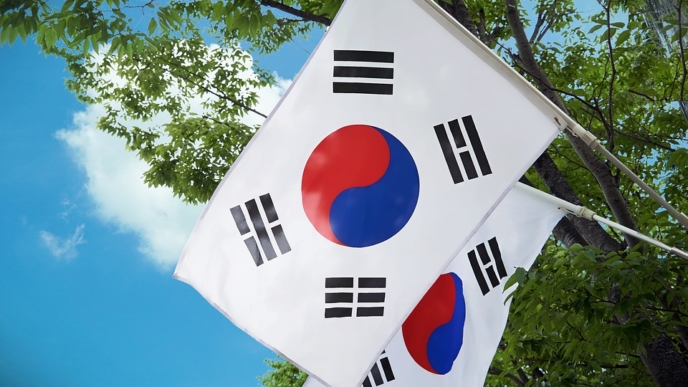
S. Korean Police Warn Korean Citizens in Canada to Stay Away From Pot or Face Criminal Charges

South Korean citizens living in Canada have received a new warning from police in their home country to stay away from pot or else they could face criminal charges at home.

The warning came earlier this week from Yoon Se-jin, head of the narcotics crime investigation division at Gyeonggi Nambu Provincial Police Agency, who said violators could face up to five years in prison, the Korea Times reported.

“Weed smokers will be punished according to the Korean law, even if they did so in countries where smoking marijuana is legal. There won’t be an exception,” Yoon said, according to the Korea Times. . .

About 23,000 South Korean students are living in Canada, according to Ministry of Foreign Affairs data, the Korean Times reported. . .

“South Korea can’t screen everyone who visited a foreign country, but the police maintain a blacklist that leads to certain individuals being supervised,” Lee Chang-Hoon, a professor in the department of police administration at Hannam University in Daejeon, said. (Read more from “S. Korean Police Warn Korean Citizens in Canada to Stay Away From Pot or Face Criminal Charges” HERE)

Follow Joe Miller on Twitter HERE and Facebook HERE.

South Korean President Moon Jae-In Reveals How He Feels About President Trump

By The Daily Caller. South Korean President Moon Jae-in discussed his relationship with President Trump during an interview with Fox News’ Bret Baier on Tuesday evening.

“Ever since my inauguration last May, I had seven summit meetings with President Trump as well as more than 20 phone calls. I can tell you that I have become more than a friend with President Trump and between the two of us, there is absolutely perfect trust,” he said. (Read more from “South Korean President Moon Jae-In Reveals How He Feels About President Trump” HERE)

________________________________________________

Trump Could Meet With Kim Jong Un by Year’s End

By Fox News. President Trump and North Korean leader Kim Jong Un could meet for a second summit before the end of 2018, according to the South Korean president.

South Korean President Moon Jae-in replied “yes” when asked during an interview Tuesday with Fox News’ Bret Baier whether he expected the two world leaders to meet in the “coming weeks.”

And when asked whether that meeting could take place “before the end of the year,” Moon replied: “Yes, I believe so.”

“I traveled to Pyongyang last week and had a very good meeting with Chairman Kim. And through the summit meeting, we had achieved some progress on denuclearization,” Moon recounted. “And also, President Trump yesterday congratulated me on the major success of the meeting I had in Pyongyang. And I look forward to a summit meeting taking place between Chairman Kim and President Trump in the not-too-distant future.” . . .

He added that Kim vowed to “permanently dismantle” both a missile engine test site and a launch platform, in addition to destroying “the nuclear facilities in Yongbyon subject to corresponding measures from the United States.” (Read more from “Trump Could Meet With Kim Jong Un by Year’s End” HERE)

Follow Joe Miller on Twitter HERE and Facebook HERE.