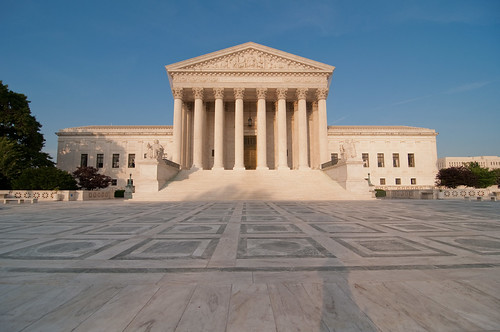
The Supreme Court has unanimously decided to handcuff liberal judges who want to help the growing number of migrants who lose their asylum pleas at the Justice Department.
“The unanimous decision in Urias–Orellana v. Bondi is a win for the Trump Administration in maintaining a high burden to overturn [the Justice Department’s] immigration courts in asylum cases,” said lawyer Jonathan Turley.
The decision means that millions of migrants will face even tougher pressure to leave the United States, especially after they are arrested by ICE.
The win is one of many gains by President Donald Trump’s deputies as they try to accelerate the number of self-deportations and ICE deportations. For example, in December, 38 percent of the migrants detained by ICE chose to go home rather than file lawsuits to stay in the United States.
The court decision in Urias-Orellana v. Bondi was written by the court’s most left-wing judge, Justice Ketanji Brown Jackson. (Read more from “SCOTUS Backs Trump: Votes 9:0 to Curb Migrants’ Asylum Claims” HERE)
The Supreme Court on Monday blocked a law that prevents California schools from telling parents if their child comes out as transgender, after granting an emergency appeal from a conservative legal group.
The order for now blocks a state law signed by Gov. Gavin Newsom in July 2024 that made California the first state to bar school districts from requiring staff to notify parents of their child’s gender identification.
The ruling also blocks a rule that required teachers to use a student’s preferred pronouns.
Monday’s granting of an emergency appeal from a conservative legal group comes after many parents and teachers challenged the law.
The Thomas More Society, representing two sets of Catholic parents, argued the law causes schools to mislead them and secretly facilitates gender transition in minors. (Read more from “Supreme Court Blocks California Law That Stopped Schools From Telling Parents if Their Kid Is Transgender” HERE)
https://joemiller.us/wp-content/uploads/trans_flag.jpg8371254Joe Millerhttps://joemiller.us/wp-content/uploads/logotext.pngJoe Miller2026-03-02 20:32:142026-03-02 20:22:19Supreme Court Blocks California Law That Stopped Schools From Telling Parents if Their Kid Is Transgender
President Trump declared Monday that the US would be “screwed” if the Supreme Court rules against his reciprocal tariff policies — arguing the feds would have to “pay back” billions in revenue collected over the past year.
“[I]f the Supreme Court rules against the United States of America on this National Security bonanza, WE’RE SCREWED!” Trump wrote on Truth Social.
“The actual numbers that we would have to pay back if, for any reason, the Supreme Court were to rule against the United States of America on Tariffs, would be many Hundreds of Billions of Dollars,” he wrote.
“[A]nd that doesn’t include the amount of ‘payback’ that Countries and Companies would require for the Investments they are making on building Plants, Factories, and Equipment, for the purpose of being able to avoid the payment of Tariffs.”
Trump argued that “[w]hen these Investments are added, we are talking about Trillions of Dollars! It would be a complete mess, and almost impossible for our Country to pay.” (Read more from “Trump’s Ominous Two-Word Warning If Supreme Court Rules Against Emergency Tariffs” HERE)
The U.S. Supreme Court on Tuesday extended its order blocking full Supplemental Nutrition Assistance Program (SNAP) payments, prolonging uncertainty for millions of Americans who rely on the program to feed their families. The decision comes as Congress inches closer to a deal that could end the ongoing government shutdown and restore federal aid.
The temporary order—set to expire just before midnight Thursday—keeps in place a chaotic patchwork of food aid distribution across the country. In some states, SNAP recipients have received their full monthly benefits, while others have gotten partial payments or none at all.
The Senate has already passed a bipartisan bill to reopen the government, and the House of Representatives could vote as early as Wednesday. If approved and signed into law, the measure would restart the flow of funds to roughly 42 million Americans who depend on SNAP. Still, it’s unclear how quickly full payments could resume once the government reopens, as implementation timelines vary by state.
Advocates and state officials say the uneven distribution of benefits has left families scrambling to make ends meet. “It’s easier to make full payments quickly than partial ones,” said Carolyn Vega, a policy analyst with the anti-hunger group Share Our Strength, who noted that states issuing partial benefits may face technical hurdles when processing remaining payments.
In Pennsylvania, some recipients received their full November benefits last week, while others remain empty-handed. Jim Malliard, 41, of Franklin, said his family’s $350 monthly benefit has yet to arrive. Caring full-time for his blind wife and medically fragile teenage daughter, Malliard said he’s been rationing what’s left in the pantry.
“It’s been a lot of late nights, counting every penny,” he said. “Anxiety doesn’t even begin to describe it.”
The Trump administration halted full SNAP funding after October, triggering a wave of lawsuits and conflicting court rulings. While some judges ordered the government to restore partial payments—up to 65% of normal benefits—one ruling last week required the administration to resume full funding, prompting the Justice Department to appeal to the Supreme Court.
In its filing, Solicitor General D. John Sauer argued that “the answer to this crisis is not for federal courts to reallocate resources without lawful authority,” maintaining that only Congress can resolve the issue by reopening the government.
An appeals court on Monday ordered the return of full payments, a move that was set to take effect Tuesday night before the Supreme Court stepped in to block it.
The Senate-passed bill would replenish SNAP funding and reopen the federal government through the fiscal year. House Speaker Mike Johnson has called lawmakers back to Washington to consider the deal, which was negotiated between Senate Democrats and Republicans.
President Donald Trump has not confirmed whether he will sign the bill but told reporters Sunday that “it looks like we’re getting close to the shutdown ending.”
For now, millions of low-income Americans remain caught in limbo—waiting on Washington’s next move to determine whether they’ll be able to afford their next meal.
https://joemiller.us/wp-content/uploads/6075050600_ab3c24a0fb_b-122388894.jpeg6751024Joe Millerhttps://joemiller.us/wp-content/uploads/logotext.pngJoe Miller2025-11-11 20:31:122025-11-11 20:28:06Supreme Court Extends Block on Full SNAP Payments as Shutdown Nears Possible End
The Supreme Court issued a ruling blocking an order from a federal judge that required the Trump administration to pay full Supplemental Nutrition Assistance Program (SNAP) benefits for November.
The decision from the Supreme Court came after the Trump administration requested that U.S. District Judge John McConnell’s order that the administration dish out full SNAP benefits by Friday be blocked, according to the Associated Press.
Per the outlet:
A judge had given the Republican administration until Friday to make the payments through the Supplemental Nutrition Assistance Program. But the administration asked the appeals court to suspend any court orders requiring it to spend more money than is available in a contingency fund, and instead allow it to continue with planned partial SNAP payments for the month.
While Supreme Court Justice Ketanji Brown Jackson issued a temporary pause of McConnell’s order in order “to give an appeals court more time to weigh the legal arguments raised by the government,” she did not issue a ruling “on the legality” of the Trump administration’s actions, according to the New York Times. (Read more from “Supreme Court Blocks Court Order Requiring Trump Admin Pay Full Snap Benefits” HERE)
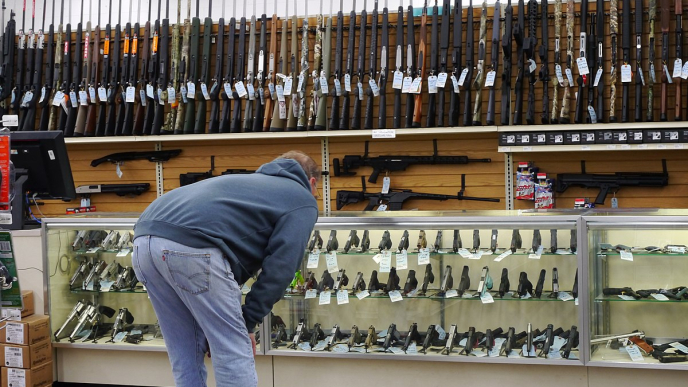
The United States Court of Appeals for the Ninth Circuit has officially overturned California’s “one-gun-a-month” restriction, issuing a mandate Thursday that makes the court’s earlier ruling enforceable.
The case, Nguyen v. Bonta, was brought by the Second Amendment Foundation, the Firearms Policy Coalition, San Diego County Gun Owners PAC, two federally licensed firearms dealers, and six private citizens, including Michelle Nguyen.
Under the overturned law, most California residents were prohibited from purchasing more than one handgun or semi-automatic centerfire rifle from a licensed dealer within any 30-day period. Supporters of the challenge argued the measure unfairly restricted law-abiding citizens’ rights under the Second Amendment.
The August 14 mandate follows a June 20, 2025, decision by a three-judge Ninth Circuit panel that affirmed a lower court ruling against the restriction. Writing for the majority, Judge Danielle Forrest stated:
“California’s law is facially unconstitutional because possession of multiple firearms and the ability to acquire firearms through purchase without meaningful constraints are protected by the Second Amendment and California’s law is not supported by our nation’s tradition of firearms regulation.”
The decision marks the first time the Ninth Circuit has issued a final judgment striking down a law under the Second Amendment, according to the Firearms Policy Coalition.
With the mandate now in effect, California’s one-gun-per-month purchasing limit is no longer enforceable.
Today, FPC announced that the Ninth Circuit has issued its mandate in FPC’s victory over California’s "one-gun-per-month" gun ban law, making it the first time the Circuit has issued a final judgment striking down a law under the Second Amendment. https://t.co/rETVHA7Jyo
https://joemiller.us/wp-content/uploads/1200px-Gun_section_in_Stans_Merry_Mart_Wenatchee.jpg9011200kfranceshttps://joemiller.us/wp-content/uploads/logotext.pngkfrances2025-08-15 11:55:312025-08-15 11:52:26Ninth Circuit Strikes Down California’s ‘One-Gun-Per-Month’ Law
The Supreme Court on Thursday ruled that South Carolina is allowed to block Medicaid funding from going to Planned Parenthood clinics in the state.
The case was brought by Planned Parenthood South Atlantic and a Medicaid patient after South Carolina Gov. Henry McMaster (R) signed an executive order in 2018 seeking to exclude the abortion giant from its Medicaid program. The abortion organization argued the order violated federal law and contended that Medicaid patients had a right to sue the state under Section 1983, part of the Civil Right Act of 1871, to choose their own qualified healthcare provider.
The Supreme Court issued a 6-3 decision disagreeing with Planned Parenthood’s arguments and siding with South Carolina, essentially allowing the state to defund Planned Parenthood after being blocked from doing so for years by lower courts.
NEW: In Medina v. Planned Parenthood South Atlantic, a case about whether there is a private right to bring a lawsuit challenging South Carolina's decision to end Planned Parenthood's participation in the state's Medicaid program, the court holds that there is not.
“Section 1983 permits private plaintiffs to sue for violations of federal spending-power statutes only in ‘atypical’ situations … where the provision in question ‘clear[ly]’ and ‘unambiguous[ly]’ confers an individual ‘right,’” Justice Neil Gorsuch wrote in the majority opinion, adding that the law in question “is not such a statute.”
“After all, the decision whether to let private plaintiffs enforce a new statutory right poses delicate questions of public policy,” Gorsuch continued. “New rights for some mean new duties for others. And private enforcement actions, meritorious or not, can force governments to direct money away from public services and spend it instead on litigation. The job of resolving how best to weigh those competing costs and benefits belongs to the people’s elected representatives, not unelected judges charged with applying the law as they find it.” (Read more from “Supreme Court Allows State to Defund Planned Parenthood” HERE)
The Supreme Court allowed the Trump administration to more quickly deport illegal migrants to countries not specified in their removal orders.
A majority temporarily blocked a lower court order that required the Department of Homeland Security (DHS) to give migrants notice and allow them to raise concerns about potential threats of torture before deporting them to a “third country.”
Justices Sonia Sotomayor, Ketanji Brown Jackson and Elena Kagan dissented from the decision.
“Apparently, the Court finds the idea that thousands will suffer violence in farflung locales more palatable than the remote possibility that a District Court exceeded its remedial powers when it ordered the Government to provide notice and process to which the plaintiffs are constitutionally and statutorily entitled,” Sotomayor wrote. “That use of discretion is as incomprehensible as it is inexcusable.”
The Trump administration argued the order interfered with their ability to deport “some of the worst of the worst illegal aliens” in its emergency application. (Read more from “Supreme Court Hands Trump Admin Victory On Efforts To Deport ‘Worst’ Illegal Migrants” HERE)
By MSNBC. The Supreme Court has upheld Tennessee’s ban on gender-affirming care [sic] for minors, in an opinion by Chief Justice John Roberts over dissent from the court’s Democratic appointees.
The Republican-appointed majority said Wednesday that the state law isn’t subject to heightened scrutiny under the Constitution’s equal protection clause. Reasoning that the law doesn’t discriminate based on sex, Roberts wrote that it “prohibits healthcare providers from administering puberty blockers and hormones to minors for certain medical uses, regardless of a minor’s sex.”
. . . Defending the law, the state [of Tennessee] said it’s “not unconstitutional discrimination to say that drugs can be prescribed for one reason but not another.” The state further argued that its law doesn’t classify people based on sex but rather creates two groups: “minors seeking drugs for gender transition and minors seeking drugs for other medical purposes.” (Read more from “Major SCOTUS Victory for America’s Families: State Bans on Hormone Blockers, Trans-Surgeries for Kids Upheld” HERE)
Supreme Court Ruling on Trans Treatments for Minors Decried by Media as ‘Huge Setback for Transgender Rights’
By Fox News. The legacy media was united in its disapproval of the Supreme Court’s landmark ruling upholding Tennessee’s ban on transgender medical treatment for minors.
In a 6-3 decision, the Supreme Court struck down a challenge to a Tennessee law restricting access to puberty blockers and hormone treatment to children who identify as the opposite sex.
Several news organizations framed the ruling negatively and implied it was a “setback for transgender rights” for all ages, despite the decision affecting only minors. The result was also described as a “major blow,” a “devastating loss,” and a “stunning setback.”
“BREAKING: The Supreme Court upholds a Tennessee ban on gender-affirming care for transgender minors in a huge setback for transgender rights,” the Associated Press reported on X Wednesday.
“BREAKING: Supreme Court upholds a Tennessee law restricting gender transition care for minors, delivering a major blow to transgender rights,” NBC News similarly posted. (Read more from “Supreme Court Ruling on Trans Treatments for Minors Decried by Media as ‘Huge Setback for Transgender Rights’” HERE)
The Supreme Court Did the Right Thing. I Know Because I Was Part of a Horrifying Gender Transition
By Fox News. The issues raised at the U.S. Supreme Court in United States of America v. Skrmetti are pretty academic to most Americans. The court concluded on June 18 that states can protect children from dangerous gender-transition procedures. Most people don’t have to know more than they want to about what is taking place in many hospitals in America.
But it’s different for me and for thousands of other people who have been defrauded by negligent doctors and harmful policies. I was part of the experiment.
The “procedures” the lawyers debated involve doctor-prescribed, counselor-encouraged drugs and surgeries that have been described as harmful, unnecessary, and high-risk by research and rigorously reviewed studies.
I wasn’t informed of all the risks involved when I was told to take these drugs. I wasn’t given ethical or evidence-based treatment. I was given life-altering drugs and surgeries based on pseudoscience and the singular fact that I hated myself.
I believed the lies my doctors told me because I was vulnerable from abuse and trauma. By the time I was 14, I’d been raped, became pregnant, and suffered a miscarriage. By 16, I had been diagnosed with anorexia, anxiety and obsessive-compulsive disorder and was hospitalized for depression and self-harm. I tried to kill myself several times. A medical resident talked with me — once — and suddenly decided, despite all my other documented physical and mental health struggles, that my real trouble was a “gender-identity crisis.” (Read more from “The Supreme Court Did the Right Thing. I Know Because I Was Part of a Horrifying Gender Transition” HERE)
https://joemiller.us/wp-content/uploads/5486338003_22baa78f1b-904153444.jpeg365500Joe Millerhttps://joemiller.us/wp-content/uploads/logotext.pngJoe Miller2025-06-18 21:59:382025-06-18 21:24:45Major SCOTUS Victory for America’s Families: State Bans on Hormone Blockers, Trans-Surgeries for Kids Upheld
A transgender influencer started pointing fingers at other members of the community regarding the Supreme Court’s 6-3 ruling Wednesday, which upheld Tennessee’s law banning child sex change procedures.
Trans woman Brianna Wu, who formerly ran for election to the U.S. House of Representatives to represent Massachusetts in 2020, said it’s the “legal precedent that will allow red states to ban HRT for adults.”
Wu aimed his criticism at “the narcissists” at the American Civil Liberties Union (ACLU), which represented the plaintiff, and more specifically at Chase Strangio, a transgender person who served as the lead attorney representing the plaintiffs of United States v. Skrmetti.
Wu said that Strangio was worse for the trans movement than Republican Rep. Nancy Mace of South Carolina, who has been openly critical of the trans ideology, “because she’s not actively laying the legal framework that hurts actual transsexuals.”
Wu said Strangio was “destroying” transgender rights with her “arrogance in your extreme gender ideology.”
This non-binary, self-ID nonsense is the legal basis for SCOTUS dismantling transsexual rights today.
And the logic makes perfect sense. This isn’t just a medical condition, thanks to the progressive fringe. It’s now a category anyone can self ID into.
https://joemiller.us/wp-content/uploads/14212092781_933829823b_b-2960407742.jpeg6831024Joe Millerhttps://joemiller.us/wp-content/uploads/logotext.pngJoe Miller2025-06-18 21:37:062025-06-18 12:39:46‘Hell Is Not Enough for You’: SCOTUS Decision on Child Sex Changes Sparks Trans Infighting