Posts

Gorsuch Sides with Liberal Justices in Hunting Case

By Townhall. Supreme Court Justice Neil Gorsuch broke with conservatives and sided with the liberal wing of the Court on Monday.

The case, Herrera v. Wyoming, called into question a federal treaty from 1868 that allowed members of the Crow Tribe of Indians to hunt on “unoccupied lands of the United States” when Wyoming was admitted to the Union. Clayvin Herrera is a tribal member who hunted in the Bighorn National Forest and was charged for hunting during the off season. The Supreme Court had to decide if the treaty was still in effect or were nullified when Wyoming became a state in 1890. (Read more from “Gorsuch Sides with Liberal Justices in Hunting Case” HERE)

________________________________________________

Gorsuch Breaks with Conservative Justices, Delivering Win to Native American Hunter

By Fox News. One of President Trump’s nominees sided Monday with the liberal wing of the Supreme Court for the second time in two weeks, as Justice Neil Gorsuch joined a narrow majority in support of a Native American man convicted for hunting in a national forest. . .

The opinion by Justice Sonia Sotomayor – and joined by Ruth Bader Ginsburg, Elena Kagan, Stephen Breyer, and Gorsuch – ruled that the treaty indeed still applies, and that Crow member Clayvin Herrera was improperly convicted of off-season hunting in Bighorn National Forest in 2014.

The court’s 5-4 ruling, which vacated the decision from the state appellate court, is based on the 1999 decision in Minnesota v. Mille Lacs Band of Chippewa Indians. In that case, the Supreme Court said that a territory gaining statehood is not enough “to extinguish Indian treaty rights to hunt, fish, and gather on land within state boundaries.” The court went further in that case, stating that Congress “must clearly express” an intention to end a treaty with a Native American tribe in order for the treaty’s rights to expire.

By siding with the traditionally liberal justices, Gorsuch gave them a 5-4 majority in the case.

The opinion came exactly one week after Trump’s other nominee, Justice Brett Kavanaugh, sided with liberals in a 5-4 decision that he wrote, ruling that Apple could be sued by iPhone owners over high prices in their App Store. (Read more from “Gorsuch Breaks with Conservative Justices, Delivering Win to Native American Hunter” HERE)

Follow Joe Miller on Twitter HERE and Facebook HERE

Remember the ‘Travel Ban’? Lower Courts Seeking to ‘Overturn’ That Supreme Court Decision

For several generations, we have been told by the political elites that the Supreme Court stands above the other two branches of government, even when the high court violates the Constitution or claims to decide a broad public policy question squarely within the purview or powers of the other branches. Now, it appears that any lower court can simply issue a ruling more progressive than what the Supreme Court just said, and the other branches feel compelled to abide by that ruling!

Remember when a slew of lower courts created a right to immigrate for the first time and issued unprecedented injunctions demanding that Trump surrender to the courts his control over the right of entry into the United States? Well, we all thought that insanity was put to rest when the Supreme Court ruled in Trump v. Hawaii that the president has unquestionable authority to shut off any or all forms of immigration when he believes it’s detrimental to American interests, as it plainly says in 8 U.S.C. §1182.

Evidently, some of the lower court judges who were overturned by the Supreme Court on this issue are now granting standing to some of the same groups to sue again! U.S. District Judge Theodore Chuang of Maryland ruled last Thursday that a lawsuit can proceed against the travel ban from five countries.

A group of refugee resettlement contractors and other immigration groups are suing because they don’t like the process the administration has set up to allow waivers of the ban. The problem is that the Supreme Court said quite clearly that the president can disallow migration without offering any waivers whatsoever. Chief Justice Roberts could not have been any clearer:

“By its terms, §1182(f) exudes deference to the President in every clause,” wrote Roberts in the majority opinion in Trump v. Hawaii. “It entrusts to the President the decisions whether and when to suspend entry, whose entry to suspend, for how long, and on what conditions. It thus vests the President with ‘ample power’ to impose entry restrictions in addition to those elsewhere enumerated in the INA.” (Emphasis added.)

Yet there is no stigma in the legal profession against lower court judges attempting to obstruct and twist Supreme Court rulings they disagree with. Judge Chuang, without ever mentioning the fact that he himself was overturned on this very issue, brazenly declared that Trump v. Hawaii was only “representing a snapshot in time and does not necessarily preclude a different determination at a later stage of the case on a more fulsome record.” From reading most of his opinion, you’d have thought it was the Trump administration that lost in the Supreme Court.

Taking that position to its logical conclusion, a lower court can always find ways that the same question presented in a slightly different case is not governed by the obvious controlling Supreme Court precedent because that SCOTUS case was only “a snapshot in time.”

Liberals are seeking similar lawsuits against the travel ban in their favorite California courts as well. In February, Judge James Donato allowed a similar lawsuit to proceed in the Northern District of California.

Clarence Thomas has warned about the need to end this practice of lower court universal injunctions, which not only violate the separation of powers between the courts and the other branches, but also essentially strip the Supreme Court of its legitimate supremacy over the judicial branch itself. In June 2017, Thomas warned, after the Supreme Court initially removed only part of the lower court injunction against the travel ban, that the forum shoppers would continue to go back to the same repudiated lower courts. “Litigation of the factual and legal issues that are likely to arise will presumably be directed to the two District Courts whose initial orders in these cases this Court has now— unanimously—found sufficiently questionable to be stayed as to the vast majority of the people potentially affected,” warned an irate Thomas during the preliminary stages of the lawsuit.

If these same district judges place another injunction on Trump’s partial immigration moratorium, will he suddenly begin issuing visas to these people unless the Supreme Court steps in yet again? How can the Supreme Court both (wrongly) be regarded as supreme over the other branches but not supreme over its own inferior courts? According forum-shopped judges, they have the power to continuously alter public policy for years until the case reaches the Supreme Court, not only when we know they will be reversed but when they have already been reversed. This is a recipe for a banana republic.

This is part of a broader trend of lower courts “repealing” Supreme Court opinions they don’t like. In one of the most egregious rulings of all time, a California judge said that Trump must continue the discretionary and temporary program of Temporary Protected Status (TPS) because Trump, in the estimation of Judge Edward Chen, has “animus against non-white, non-European immigrants.” SCOTUS already said in Trump v. Hawaii that such considerations cannot be used to block the president’s lawful authority, but the Trump administration refused to delegitimize this ruling.

More recently, two federal judges, one in Oregon and one in Washington, issued injunctions against Trump’s gag rule prohibiting Title X recipients from referring women for abortions. The Supreme Court upheld this exact regulation under Reagan in Rust v. Sullivan (1991), but Judges Michael McShane and Stanley Bastian ignored it.

Lower courts have similarly gutted the Heller decision over the past decade, often citing Justice Breyer’s dissent. Recently, a federal judge in Oregon essentially overturned the landmark Janus decision last year banning forced union dues. Thus, while conservatives have lost marriage, life, and so many cultural issues to the Supreme Court and have unquestioningly accepted those rulings as gospel, liberals respond to the few losses at the high court with, “Hold my beer and let me show you the power of a district judge.”

It’s important to note that the lower courts already won in the travel ban case by successfully forcing Trump to water down his original order twice. The original order prioritized persecuted Christians in the Middle East for refugee resettlement and placed caps on refugees. It was actually upheld by one Massachusetts judge, but the administration wrongly agreed to the notion that another single district judge can shut it down. Even though the Supreme Court’s ruling would easily have covered the original order, were Trump to ever strengthen it, the courts would begin the process again.

Allowing this cancer of lower court supremacy to continue brings irrevocable harm to our country. A liberal legal writer for Slate observed approvingly this week how the “lower courts are lobbying SCOTUS to rein in partisan gerrymandering” and that “while SCOTUS dillydallies, the lower courts are taking action, aggressively overturning gerrymanders across the country.”

The term “lobbying” is quite peculiar to describe a court, but Slate is not wrong in its observation of how lower courts are pushing the Supreme Court rather than being pulled by it. Despite the fact that the Supreme Court has already signaled in a Wisconsin case that the courts shouldn’t get involved in most political gerrymandering decisions and is deciding the ultimate case on the issue within weeks, two federal judges in Michigan and Ohio brazenly declared the GOP maps in both states unconstitutional after the states had been electing congressmen for a decade based on those lines.

Let’s face it: conservatives have done a poor job educating people on the role of the judiciary over the past few generations. They have agreed to the notion that the Supreme Court rules on political issues absolutely. But now, the trend of progressive lower court supremacism has not only contradicted our constitutional system of checks and balances, but has butted heads with Supreme Court supremacism itself. The real truth is that this has never been about a principled belief in judicial supremacism, but rather a pragmatic stratagem of “heads we win, tails you lose” on the part of the Left. If the Trump administration continues to legitimize these decisions, it has nobody else to blame. (For more from the author of “Remember the ‘Travel Ban’? Lower Courts Seeking to ‘Overturn’ That Supreme Court Decision” please click HERE)

Follow Joe Miller on Twitter HERE and Facebook HERE

Supreme Court Hears Oral Arguments in Citizenship Census Question Case, Looks Likely to Rule for Trump Admin

The Supreme Court heard oral arguments on Tuesday as it tries to decide whether the Trump administration has the authority to add a citizenship question to the 2020 census. Based on the questions posed by the justices during these arguments, the court seems likely to rule in favor of the administration.

The total number of Americans counted by the census is used to determine how many seats each state gets in the House of Representatives, as well as how many electoral votes it gets during the presidential election. The census is taken once every ten years. This particular question has been on the census before but was removed in 1960.

When he ruled in January to block the addition of this question, U.S. District Judge Jesse Furman said that adding the question would result in “hundreds of thousands — of millions — people” going uncounted. He also said that “for decades thereafter the official position of the Census Bureau was that reintroducing such a question was inadvisable because it would depress the count for already ‘hard-to-count’ groups — particularly noncitizens and Hispanics — whose members would be less likely to participate in the census for fear that the data could be used against them or their loved ones.”

But the Trump administration has argued that the citizenship question is needed to properly enforce the Voting Rights Act. Presenting the administration’s case before the court on Tuesday, Solicitor General Noel Francisco said that Commerce Secretary Wilbur Ross “understood there was a downside” to adding the question, but had “concluded that the benefits outweighed the costs.”

The Voting Rights Act of 1965 was designed to prevent the suppression of minority votes.

Justices Elena Kagan and Sonia Sotomayor grilled Francisco about the addition of the question, as expected. Chief Justice John Roberts, however, now largely considered to be the swing vote since the retirement of former Associate Justice Anthony Kennedy, asked the New York Solicitor General Barbara Underwood, who was arguing against adding the question, if the administration could be right that the question would help enforcement of the Voting Rights Act:

Do you think it wouldn’t help voting rights enforcement? The CVAP, Citizen Voting Age Population, is the critical element in voting rights enforcement, and this is getting citizen information.

The other conservative justices also seemed to lean in favor of the administration. Newly minted Justice Brett Kavanaugh, who succeeded the more liberal Kennedy, noted that many other countries include such a question. Justices Neil Gorsuch and Samuel Alito both questioned whether adding the question would actually depress the number of responses, since obstacles like a language barrier or socioeconomic differences might keep non-citizens from filling out their census forms. Both Kavanaugh and Gorsuch are Trump appointees.

The court is expected to issue a ruling on the case in June. (For more from the author of “Supreme Court Hears Oral Arguments in Citizenship Census Question Case, Looks Likely to Rule for Trump Admin” please click HERE)

Follow Joe Miller on Twitter HERE and Facebook HERE
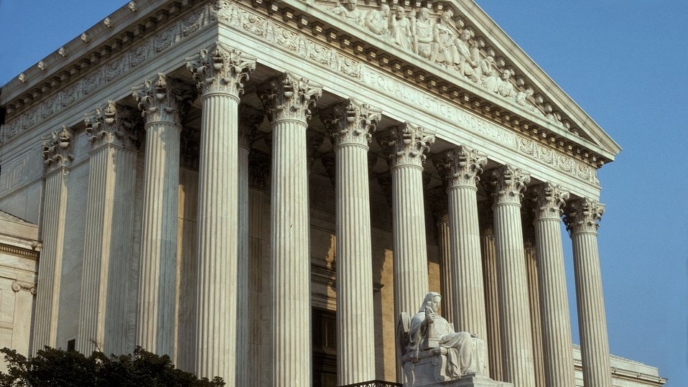
Major Upset: Conservative Supreme Court Candidate Shocks Liberals With Surprise Victory

It was a statewide race that only the nerdiest of political nerds were following at the national level, but suffice it to say that we’d be hearing a lot about it if the expected outcome had come to pass. By way of background, Wisconsin’s Supreme Court has been decidedly conservative for years, but when a liberal justice won a resounding 12-point victory last fall (Badger State voters choose Supreme Court members in nominally “non-partisan” elections), the Left immediately set it sights on the 2019 contest. If a left-leaning candidate had defeated another right-leaning jurist — as was widely anticipated by political experts — liberals believed they’d have a very real shot at wresting ideological control of the state’s high court in 2020. But a funny thing happened on the way to that liberal judicial renaissance. Voters intervened:

Appeals Judge Brian Hagedorn held a narrow lead early Wednesday in the race for Wisconsin Supreme Court, according to unofficial tallies that were so close both sides were bracing for a recount. In an early morning tweet and statement to supporters, Hagedorn claimed victory. “The people of Wisconsin have spoken and our margin of victory is insurmountable,” the statement read…Hagedorn led fellow Appeals Judge Lisa Neubauer 50.2% to 49.8% with nearly all of Tuesday’s votes unofficially counted — at a margin that allows a recount. A win by Hagedorn would defy the predictions of prominent groups that typically back conservative judicial candidates but counted him out and wouldn’t spend on his behalf during the race.

Hagedorn, the conservative, was seen as such a long-shot underdog that some deep-pocketed conservative groups decided not to spend money in the race, resulting in a large disparity that favored the left-wing message machine. But a concerted push by grassroots activists, and an eleventh-hour blitz by former Governor Scott Walker, helped secure what appears to be a major upset. Conservative groups closed the race with an ad reminding voters of the Kavanaugh fight, while liberal organizations (like Eric Holder’s) tried to tie their opponent to President Trump. Also, you night think that Hillary Clinton’s 2016 loss would’ve helped Democrats internalize the lesson that, contra their own talking points and hilarious posturing, money does not necessarily “buy” elections. This outcome should reinforce that reality:

(Read more from “Major Upset: Conservative Supreme Court Candidate Shocks Liberals With Surprise Victory” HERE)

Follow Joe Miller on Twitter HERE and Facebook HERE

Planned Parenthood Just Had a Disappointing Supreme Court Win

On Monday, the U.S. Supreme Court declined to issue a writ of certiorari to hear an appeal from the U.S. Court of Appeals for the Ninth Circuit to dismiss a key abortion-related case. The writ to dismiss the underlying lawsuit was sought by David Daleiden’s group, the Center for Medical Progress.

The Hill reports:

The Center for Medical Progress had requested the Supreme Court toss out Planned Parenthood’s claims that they committed federal conspiracy and wiretapping violations. Planned Parenthood also claims that the Center for Medical Progress violated California law by fraudulently gaining access to its facilities. …

The Center for Medical Progress, led by activist David Daleiden, had argued it was exercising its First Amendment rights in making the videos. The group also claimed that the Planned Parenthood lawsuit was in violation of California “anti-SLAPP” laws, which prevent strategic legal action aimed at silencing individuals or groups.

The denial of a writ of certiorari confirms that Planned Parenthood’s suit against the Center for Medical Progress (CMP) in the Ninth Circuit will proceed in full. As CBS News states, “Planned Parenthood’s lawsuit alleges that CMP engaged in wire and mail fraud, committed illegal secret recording and trespassing. The pro-abortion rights group is accusing CMP of lying to the IRS and the state of California in order to illegally get tax-exempt status. It also says that CMP set up a fake health care firm and used fake IDs to register at a private medical conferences on reproductive health.” (Read more from “Planned Parenthood Just Had a Disappointing Supreme Court Win” HERE)

Follow Joe Miller on Twitter HERE and Facebook HERE
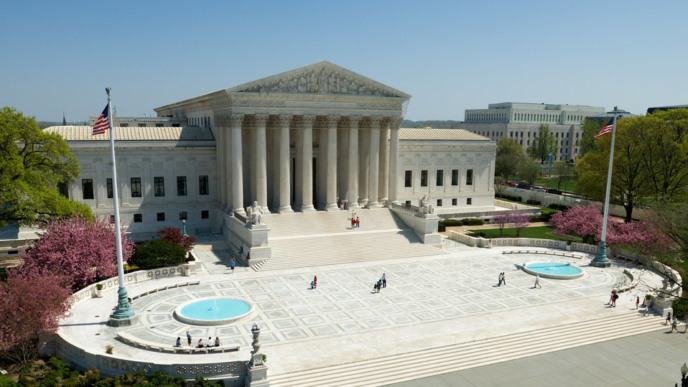
House Conservative Counters Dem Court-Packing Schemes With Constitutional Amendment

A conservative House Republican has proposed an amendment to the Constitution that would permanently fix the number of Supreme Court justices at nine.

The proposal from House Freedom Caucus member Rep. Mark Green, R-Tenn., comes in response to recent talk from Democratic presidential candidates about packing the Supreme Court with extra judges if they gain control of the Oval Office in 2020.

“Schemes to ‘court pack’ thwart the Founders’ intent to create an independent and impartial judiciary that serves as a check on both the Executive and Legislative branches of government,” reads a press release from Green, who also explained that Democrats would pack the court with “liberal, activist justices who will pass rulings that conform to their dystopian, socialist agenda.”

Democrats, however, have portrayed the idea of court-packing as a response to GOP actions, particularly the move to block Merrick Garland from a vote during Obama’s last year in office.

“It’s not just about expansion, it’s about depoliticizing the Supreme Court,” Sen. Elizabeth Warren, D-Mass., said in a recent Politico story. Sen. Kamala Harris, D-Calif., told the outlet, “We are on the verge of a crisis of confidence in the Supreme Court” and “everything is on the table” to meet that supposed challenge.

“Limiting the number of seats to the nine we have currently,” Green contends, “would help ensure the U.S. Supreme Court remain an impartial branch beholden to the Constitution and no political party.”

The proposed amendment would have three sections, according to Green’s office:

Section 1:

The Supreme Court of the United States shall be composed of nine justices, though one or more of these nine offices may be vacant until filled.

Section 2:

If the size of the Supreme Court has been increased to more than nine justices before this amendment is ratified, upon this amendment’s ratification, those additional offices are void.

Section 3:

The Congress shall have the power to enforce this article by appropriate legislation.

In order to be ratified, a constitutional amendment proposed in Congress requires the votes of two-thirds of the members of both houses of Congress and must be approved by three-fourths of state legislatures. Amendments may also be proposed at a convention called for by at least two-thirds of state legislatures, per Article V of the Constitution. (For more from the author of “House Conservative Counters Dem Court-Packing Schemes With Constitutional Amendment” please click HERE)

Follow Joe Miller on Twitter HERE and Facebook HERE
White House Preparing ‘Gingerly’ to Replace Ginsburg

Supreme Court Justice Ruth Bader Ginsburg had never missed oral arguments during her tenure on the high court until Monday as the court’s eldest judge continued to recover from surgery to remove cancerous cells from her left lung.

Now, a new report suggests that the White House is quietly preparing for another Supreme Court appointment given the possibility that the 85-year-old Ginsburg’s health could force her to retire. . .

According to the Daily Caller, “gingerly preparations” are underway in the White House counsel’s office in the event that Ginsburg’s Supreme Court departure comes sooner than expected.

“Gingerly preparations are underway, not just for Ginsburg but for any SCOTUS retirement,” a source “directly involved” in the process told the Daily Caller.

Indeed, another source told the outlet that President Donald Trump’s White House and White House counsel Pat Cipollone, remain well-prepared to handle another Supreme Court appointment, given the existing infrastructure inside the West Wing from Trump’s first two high court appointments. (Read more from “White House Preparing ‘Gingerly’ to Replace Ginsburg” HERE)

Follow Joe Miller on Twitter HERE and Facebook HERE

Chief Justice Roberts’ Troubling Comment Is Worse Than You Think

Chief Justice John Roberts erroneously believes that his court is supreme to the other independent branches of government, yet he evidently doesn’t believe the Supreme Court is supreme to the lower courts of his own branch of government.

As a drive-by Thanksgiving curse to the nation last week, John Roberts took the extraordinary step of answering a question directly posed to his office by the AP regarding Trump’s frustration with lower court judges violating national sovereignty by issuing lawless injunctions. After Judge Jon Tigar took the unprecedented step of placing an injunction on our border admission policies and violated all legal norms and rules of standing, Trump said, “This was an Obama judge, and I’ll tell you what, it’s not going to happen like this anymore.”

When presented with the question by AP, rather than following tradition and simply saying “no comment,” Roberts responded, “We do not have Obama judges or Trump judges, Bush judges or Clinton judges. What we have is an extraordinary group of dedicated judges doing their level best to do equal right to those appearing before them.” He concluded, “The independent judiciary is something we should all be thankful for.”

Despite the dead news cycle of Thanksgiving eve, this comment set off a firestorm of headlines blaring the news that the “Chief Justice hits Trump in rare rebuke.” Undoubtedly, Roberts knew exactly how the media would convey his remark.

This comment is even more troubling than many realize, and it has nothing to do with Trump. It has everything to do with dangerous judicial supremacy of the robed priesthood and a reluctance to actually reform that priesthood from his perch as high priest.

As I’ve observed in painstaking detail over the past few years, despite the conservative-leaning Supreme Court, the lower courts are more liberal than ever and are violating the most basic legal doctrines of standing and the plenary power doctrine on immigration. Yet the Supreme Court has continuously been slow to take up the appeals from these unprecedented injunctions and often refuses to take up the appeals at all, even though these rulings violate settled law on immigration. Even when it does, the decisions fail to categorically rebuke these lower court judges, as Clarence Thomas has done in his own writings.

As such, I have concluded that despite the optimism on the Right of a more conservative Supreme Court, there won’t be enough Clarence Thomases to shut down the endless lawless lawfare in the lower courts. Worse, because the political class has already put the Supreme Court on notice for being “political,” Roberts is even more reluctant to aggressively take emergency appeals and categorically rebuke those judges. As Vanderbilt Law School Professor Brian Fitzpatrick predicted on my podcast several months ago, Roberts and several other justices will be “conservative” in the sense that they will be cautious to aggressively swat down these lower court opinions.

And let’s not forget that while the other branches continue to regard lower courts as supreme and John Roberts fails to act, there is irreversible damage from these injunctions on our national security policy. “It’s very concerning,” Professor Fitzpatrick told me, “because the Supreme Court is conservative institutionally … they do not like to get involved in matters until the issue has received percolation. They like legal issues to have been bounced around in the lower courts for years before they drop in and settle the issue.”

Thus, Roberts and his colleagues are allowing every radical lower court trend to gain traction. There is nothing out of bounds in his mind — except for Trump’s frustration with this process.

If lower courts are violating the law on the one hand and if members of the other branches of government are saying things that politically offend the Chief Justice on the other hand, which one should he be quicker to rebuke? Roberts has been completely silent about lawless lower court judges, but suddenly, he’s quick on the draw when it comes to rebuking the president — the executive branch — for simply making a political statement about the bad opinions, which is what one would expect from a president of either party. Is Roberts now suggesting that the judiciary is above reproach?

“The independent judiciary” is a mindless bromide being used to silence debate, and just like the canard of “separation of church and state,” it is not in the Constitution. The Constitution says the exact opposite. No branch of government can make itself supreme or independent from the reach of the other branches’ powers. In fact, the entire judiciary and its structure was created by Congress. Congress has full authority to strip Roberts’ court of all appellate jurisdiction and abolish the lower courts altogether. As Roberts’ colleague, Clarence Thomas, recently wrote, “When Congress strips federal courts of jurisdiction, it exercises a valid legislative power no less than when it lays taxes, coins money, declares war, or invokes any other power that the Constitution grants it.”

Accordingly, if Congress were to exercise this power, would Roberts bemoan the assault on the “independent judiciary”?

Turns out the Constitution itself didn’t respect an independent judiciary, because it gave Congress the power to regulate its jurisdiction. As Edmund Randolph, the first attorney general of the United States, said in 1790, “The Supreme Court, though inherent in the Constitution, was to receive the first motion from Congress; the inferior courts must have slept forever without the pleasure of Congress.”

Roberts believes in judicial supremacism. But that belief makes his utter callous disregard of lower court tyranny all the more indefensible. Roberts has already allowed an egregious global warming lawsuit to proceed; he has allowed courts to mandate that Trump continue Obama’s discretionary policies; and he has enabled the Ninth Circuit to force Arizona to follow Obama’s amnesty rather than our sovereignty laws on the books.

The real question is how many of the other justices will follow the lead of Roberts and go out of their way to show that they are not deferential to Trump, even when the law requires that result? Justices Alito and Kavanaugh did not join Thomas and Gorsuch in trying to stop the insane global warming lawsuit.

The more Roberts continues this duplicity of wielding judicial supremacism over the president but taking a hands-off approach to his lawless minions in the lower courts, he will learn the lesson of Scalia’s prophecy in his blockbuster Obergefell dissent: “With each decision of ours that takes from the People a question properly left to them—with each decision that is unabashedly based not on law, but on the ‘reasoned judgment’ of a bare majority of this Court—we move one step closer to being reminded of our impotence.” (For more from the author of “Chief Justice Roberts’ Troubling Comment Is Worse Than You Think” please click HERE)

Follow Joe Miller on Twitter HERE and Facebook HERE.

Supreme Court to Hear Another Landmark Religious Liberty Case

The Supreme Court granted cert last week in what promises to be another landmark case on religious liberty — call it the Masterpiece Cakeshop case of war memorials. In The American Legion et al. v. American Humanist Association et al, the Supreme Court will decide whether to reverse a lower court decision that ruled the Bladensburg World War I Veterans Memorial should be removed. The plaintiffs argue a public monument that includes any aspect of Christianity entangles government and religion and is therefore unconstitutional.

The Bladensburg World War I Veterans Memorial is a 93-year-old cross-shaped monument that sits in Prince George’s County, Maryland, on state land. Decades ago, local Gold Star mothers spearheaded the project to honor 49 Prince George’s County men who gave their lives while serving in WWI.

They chose a cross shape to mimic the cross-shaped grave markers standing over the countless American graves on the Western Front of that war. This gesture was particularly meaningful for family members who were unable to bury their dead on U.S. soil. The monument stood for dozens of years, until 2014, when the American Humanist Association filed a lawsuit claiming the cross-shaped memorial was unconstitutional.

In 2015, the U.S. District Court for the District of Maryland disagreed, ruling the memorial was in fact constitutional. Crosses mark the graves of fallen American servicemen overseas, in Arlington cemetery, and in hundreds of other important places we remember the fallen . . .

The Supreme Court will now hear the merits of the case and decide if the latest ruling that found the monument unconstitutional should stand or not. As was to be expected, liberals are not happy the Supreme Court decided to hear this case. For starters, it’s typically a good sign when the court wants to hear something. It means they might disagree with the previous ruling. The Supreme Court has reversed 70 percent of lower court rulings since 2007, so the chances the previous decision will be overturned are high. (Read more from “Supreme Court to Hear Another Landmark Religious Liberty Case” HERE)

Follow Joe Miller on Twitter HERE and Facebook HERE.

Second Kavanaugh Accuser Steps Forward With Her Story

Brett Kavanaugh’s former classmate at Yale, Deborah Ramirez, stepped forward on Sunday night accusing the Supreme Court nominee of sexual assault.

Ramirez detailed her account of the alleged assault in an exclusive with The New Yorker after spending a week conferring with her attorney and attempting to piece together gaps of the story she can’t remember.

According to Ramirez, she and Kavanaugh were both freshmen at Yale when they both attended a party at Lawrance Hall on-campus. The group of college students sat together in a circle and played a drinking game. Ramirez said she was repeatedly pick to drink and quickly became incoherent. She said one of the young men “pointed a gag plastic penis in her direction.” . . .

From The New Yorker:

A third male student then exposed himself to her. “I remember a penis being in front of my face,” she said. “I knew that’s not what I wanted, even in that state of mind.” She recalled remarking, “That’s not a real penis,” and the other students laughing at her confusion and taunting her, one encouraging her to “kiss it.” She said that she pushed the person away, touching it in the process. Ramirez, who was raised a devout Catholic in Connecticut, said that she was shaken. “I wasn’t going to touch a penis until I was married,” she said. “I was embarrassed and ashamed and humiliated.” She remembers Kavanaugh standing to her right and laughing, pulling up his pants. “Brett was laughing,” she said. “I can still see his face, and his hips coming forward, like when you pull up your pants.” She recalled another male student shouting about the incident. “Somebody yelled down the hall, ‘Brett Kavanaugh just put his penis in Debbie’s face,’ ” she said. “It was his full name. I don’t think it was just ‘Brett.’ And I remember hearing and being mortified that this was out there.”

(Read more from “Second Kavanaugh Accuser Steps Forward With Her Story” HERE)

Follow Joe Miller on Twitter HERE and Facebook HERE.