Posts

NYC Caves on Gun Law to Avoid a Second Amendment Showdown at SCOTUS. Will It Work?

When the Supreme Court comes back to work in the fall, it’s currently scheduled to take up its first big gun rights case in a while, but not if the city of New York has its way.

The question to be decided in the case of New York State Rifle & Pistol Association Inc. [NYSRPA] v. City of New York, New York — which the Supreme Court agreed in January to take up — is whether New York City’s laws about transporting a licensed, unloaded, and locked firearm to a residence or shooting range outside the five boroughs is consistent with the Second Amendment.

Now, however, New York City claims that because it finally eased the restrictions on transporting firearms for the city’s licensed gun owners, there’s no longer a controversy that requires the Supreme Court’s review of the matter.

“Independently and together, the new statute and regulation give petitioners everything they have sought in this lawsuit,” the city’s legal team argued in a court document in July.

“Time and again, therefore, this Court has ordered cases dismissed … where intervening developments seemingly mooted a case but plaintiffs nonetheless implored the Court to decide it,” the city added. “Put another way, [the Supreme Court] may not ‘rule on a plaintiff’s entitlement to relief’ simply because he ‘won’t take “yes” for an answer,’” the city suggested, citing a previous opinion by Chief Justice John Roberts.

Lawyers for the NYSRPA responded to the city’s position with a letter saying that the case should still go before the Supreme Court.

“Whatever the merits of respondents’ mootness arguments, there is no reason to validate respondents’ efforts to deviate from the ordinary procedures for bringing those arguments before this Court,” the letter says.

The Supreme Court, according to the Washington Post, has told both parties involved to continue filing briefs on the matter and that the court will decide before the October session begins whether to hear the case or not.

The city’s policy reversal came after the city successfully defended the regulations in both federal district and appeals court, the Post pointed out, suggesting that the city doesn’t think it has much of a chance of success in front of the current court, with Trump-appointed Justices Neil Gorsuch and Brett Kavanaugh.

If the court still decides to press ahead and hear the case despite New York City’s mootness claims, a final decision would come out well before the 2020 general election and possibly during primary season. (For more from the author of “NYC Caves on Gun Law to Avoid a Second Amendment Showdown at SCOTUS. Will It Work?” please click HERE)

Follow Joe Miller on Twitter HERE and Facebook HERE
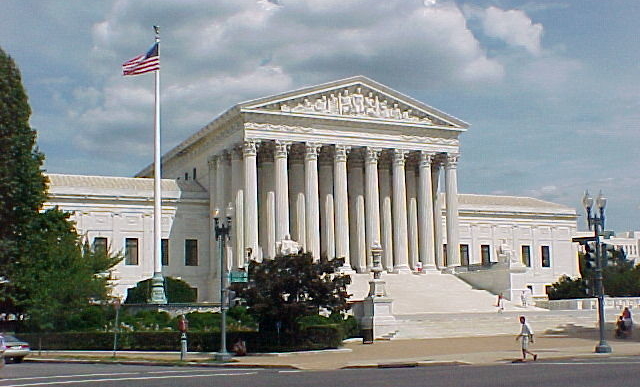
Senate Dems Give Bizarre Warning to SCOTUS: Change or Face ‘Restructuring’

Even though leftists have damaged the Supreme Court beyond repair by legislating from the bench and trying to ruin the lives of conservative nominees with sketchy sexual assault allegations from more than 30 years ago, several Senate Democrats issued a bizarre warning to the court this week by challenging them to “heal” division or else face “restructuring” in the future — which is to say, vote liberal or else have conservatives rotated off the court.

“The ominous and unusual warning was delivered as part of a brief filed Monday in a case related to a New York City gun law,” reports Fox News. “The [brief] was filed in the case of New York State Rifle & Pistol Association, Inc. v. City of New York, which dealt with legal limitations on where gun owners could transport their licensed, locked, and unloaded firearms. They are urging the court to stay out of the case brought by the NRA-backed group, claiming that because the city recently changed the law to ease restrictions, the push to the Supreme Court is part of an ‘industrial-strength influence campaign’ to get the conservative majority to rule in favor of gun owners.”

The brief was filed on behalf of Sens. Sheldon Whitehouse (D-RI) Richard Blumenthal (D-CT), Mazie Hirono (D-HI), Richard Durbin (D-IL), and Kirsten Gillibrand, (D-NY), who all took issue with recent conservative majority rulings.

“The Supreme Court is not well. And the people know it,” the brief said. “Perhaps the Court can heal itself before the public demands it be ‘restructured in order to reduce the influence of politics.'”

Do the senators actually believe that the conservative justices will fold and side with the liberals to keep up with appearances? Perhaps not, though Chief Justice John Roberts has shown himself to cave in to political pressure in the face of Democratic bullying, as demonstrated by his infamous vote in favor of Obamacare. (Read more from “Senate Dems Give Bizarre Warning to SCOTUS: Change or Face ‘Restructuring’” HERE)

Follow Joe Miller on Twitter HERE and Facebook HERE

Rick Perry: Now That Ross Perot Is Gone, I Can Tell This Story

This week, the nation remembers Ross Perot for his success in business, his two independent White House bids and his no-nonsense, straight Texas talk. His love of country, larger-than-life personality and generosity are all part of his legacy that will live on. But there is another little-known part of the life of Ross Perot that should be told now that he is gone. He was a tireless, but private, supporter of our wounded veterans.

During my time as governor of this great state, I had the honor and privilege of knowing countless warriors who stepped forward to serve in Iraq and Afghanistan and returned home with horrific wounds of war. U.S. Army Cpl. Alan Babin Jr. is one such hero. . .

On the one-year anniversary of his wounding, I joined Alan and his family for a small gathering. He was still in very bad shape, neurologically and physically incapacitated. When I asked his mother, Rosie, what I could do to help, she said she was eager to get him out of the hospital and back home, but struggling with the prospect of transporting Alan to his many medical visits.

I knew there was one person to call: Ross Perot. What happened next still amazes me to this day. The next morning, Ross personally called Rosie and made arrangements for his plane to pick up the Babins in Austin and fly them to Dallas where Alan could be seen by leading neurologists at Zale Lipshy University Hospital.

When the hospital elevators opened, Ross was standing there to meet Alan personally and ensure that he got the best of care. Later that day, Rosie was handed a key to a hotel room across the street so she could be close to Alan throughout his extended stay. (Read more from “Rick Perry: Now That Ross Perot Is Gone, I Can Tell This Story” HERE)

Follow Joe Miller on Twitter HERE and Facebook HERE

SCOTUS Sides with Trump on Constitutionality of Census Citizenship Question, but the Question Is Still Unlikely to Appear on 2020 Forms Due to Remand

In a complicated 5-4 ruling handed down on its last day of its recent session, the Supreme Court ruled that the Trump administration’s addition of a citizenship question to the census complied with the constitution, but also effectively blocked its implementation for the 2020 survey.

In short, the ruling finds that the executive branch has a right to reinstate a question about citizenship, but that it needs to come up with a better explanation for adding it.

A five-member majority composed of Chief Justice John Roberts and Justices Stephen Breyer, Elena Kagan, Sonia Sotomayor, and Ruth Bader Ginsburg found that the Trump administration did not violate federal administrative law in the Administrative Procedure Act or the Enumeration Clause of the Constitution, which mandates a federal census. Justices Samuel Alito, Clarence Thomas, Brett Kavanaugh and Neil Gorsuch were opposed.

“The text of that clause ‘vests Congress with virtually unlimited discretion in conducting the decennial ‘actual Enumeration,” and Congress ‘has delegated its broad authority over the census to the Secretary,’” the majority found. “Given that expansive grant of authority, we have rejected challenges to the conduct of the census where the Secretary’s decisions bore a ‘reasonable relationship to the accomplishment of an actual enumeration.’”

At the same time, the ruling also sent the issue back to the lower courts for further development of the administration’s decision to add the question, citing “unusual circumstances” and a “disconnect between the decision made and the explanation given.”

“The reasoned explanation requirement of administrative law, after all, is meant to ensure that agencies offer genuine justifications for important decisions, reasons that can be scrutinized by courts and the interested public,” the ruling says. “If judicial review is to be more than an empty ritual, it must demand something better than the explanation offered for the action taken in this case.”

Sending this issue back down the judicial chain, however, makes it highly unlikely that the question will appear on the federal 2020 census, given the fact that the case had already been fast tracked in order to provide a ruling before the administration had to start printing forms in the coming months.

Following the decision, the American Civil Liberties Union — which opposed the administration in the case — called the ruling “a victory for immigrants and communities of color across America. It is a victory for democracy itself,” and added that “Everyone MUST come together to make sure that the 2020 census counts every person.”

The administration announced the new question in March 2018. It was then challenged in federal court, where it was blocked earlier this year. Democrats’ opposition to the question has also led to a subpoena fight between House Democrats and the Departments of Justice and Commerce in recent weeks.

UPDATE:

“We are disappointed by the Supreme Court’s decision today,” DOJ spokesperson Kelly Laco told Blaze Media in a statement. “The Department of Justice will continue to defend this Administration’s lawful exercises of executive power.”

(For more from the author of “Scotus Sides with Trump on Constitutionality of Census Citizenship Question, but the Question Is Still Unlikely to Appear on 2020 Forms Due to Remand” please click HERE)

Follow Joe Miller on Twitter HERE and Facebook HERE

Thomas Dissent Rips into Kavanaugh SCOTUS Opinion – over Racial Politics

There have been 783,453 homicides in this country since the black-robed masters “allowed” us to continue our constitutional heritage of meting out capital punishment for murderers. Yet despite the raucous debate surrounding its use, just 1,500 individuals have been executed in 43 years. That is because the worst, most cold-blooded murderers have many ways to overturn capital convictions even when the evidence is beyond a shadow of a doubt. In recent years, Chief Justice John Roberts has been joining the Left in opening up a new avenue to disqualify such convictions: namely, tainting the jury pools as racist. With today’s opinion, it’s clear he now has a companion in Justice Kavanaugh.

In Flowers v. Mississippi, Kavanaugh wrote a 7-2 majority opinion overturning a sixth conviction of a cold-blooded murderer who was convicted of killing four people 23 years ago. Although he was convicted with evidence beyond a shadow of a doubt, in Kavanagh’s view the jury pool was racist. Overturning state due process: This is yet another example of the growing trend of the federal courts taking over state criminal law procedures and according the worst criminals a degree of process that would confound our Founders. And it’s most often because of racial politics.

Nobody disputes the fact that the Mississippi courts convicted Curtis Flowers for the murders based on solid eyewitness and physical evidence and that the jury’s verdict itself was impartial. However, Kavanaugh and the other six justices believes that the Mississippi Supreme Court erred in ruling that one particular peremptory (discretionary) strike conducted by the prosecutor against someone in the jury pool at jury selection for the original trial was animated by “discriminatory intent” and therefore entitles Flowers to a seventh trial!

“In sum, the State’s pattern of striking black prospective jurors persisted from Flowers’ first trial through Flowers’ sixth trial,” concluded Kavanaugh in an opinion that was tinged with racial overtones about the suspect being black and the witnesses, prosecutors, and victims being white. “In the six trials combined, the State struck 41 of the 42 black prospective jurors it could have struck. At the sixth trial, the State struck five of six.”

Justice Thomas shot back in his dissent and noted that not only does he disagree with the underlying premise and recent precedent (in Foster v. Chatman) that such facts would be grounds to overturn a conviction, but he disagrees with the notion that there was discriminatory intent. “The only clear errors in this case are committed by today’s majority,” wrote a clearly irate Thomas, who is getting tired of these cases.

Confirming that we never should have taken this case, the Court almost entirely ignores—and certainly does not refute—the race-neutral reasons given by the State for striking Wright and four other black prospective jurors. Two of these prospective jurors knew Flowers’ family and had been sued by Tardy Furniture—the family business of one of the victims and also of one of the trial witnesses. One refused to consider the death penalty and apparently lied about working side-by-side with Flowers’ sister. One was related to Flowers and lied about her opinion of the death penalty to try to get out of jury duty. And one said that because she worked with two of Flowers’ family members, she might favor him and would not consider only the evidence presented. The state courts’ findings that these strikes were not based on race are the opposite of clearly erroneous; they are clearly correct.

In Thomas’ view, “Today’s decision distorts the record of this case, eviscerates our standard of review, and vacates four murder convictions because the State struck a juror who would have been stricken by any competent attorney.”

Thomas accused the court of granting appeal “because the case has received a fair amount of media attention” and charged the majority with replacing careful trial records of the facts with “entertaining melodrama” that will result in “the litigation and relitigation of criminal trials in the media, to the potential detriment of all parties.”

He concluded, “Any competent prosecutor would have struck the jurors struck below. Indeed, some of the jurors’ conflicts might even have justified for-cause strikes.”

Thomas went on to say that under the Batson v. Kentucky (1986) precedent of invalidating convictions based on charges of discriminatory intent by the prosecutor in jury selection, the standard the Supreme Court must use is “whether the state courts were clearly wrong.” Thomas believes the answer is “obviously no,” based on a wealth of counter-evidence he cites in his lengthy dissent. “Yet the Court [majority] discovers ‘clear error’ based on its own review of a near-decade-old record. The majority apparently thinks that it is in a better position than the trial court to judge the tone of the questions and answers, the demeanor of the attorneys and jurors, the courtroom dynamic, and the culture of Winona, Mississippi.”

Thomas ended his dissent by essentially accusing the majority of ignoring the facts in order to engage in race-based virtue-signaling: “Although the Court’s opinion might boost its self-esteem, it also needlessly prolongs the suffering of four victims’ families.”

Justice Gorsuch joined this part of the dissent, which once again demonstrates that we only have two originalists on the court, not five. Yet, still, Thomas stands in a league of his own. He seems to be the only one willing to consistently follow the Constitution. Gorsuch did not join “part IV” of Thomas’ dissent, in which Thomas declares his disdain for the entire premise “that a duly convicted criminal go free because a juror was arguably deprived of his right to serve on the jury,” in Thomas’ words, established in the “sacred” Batson v. Kentucky case.

Thomas believes that Batson was “a departure from the previous century of jurisprudence” causing the court for the next few decades to move “its focus from the protections accorded the defendant to the perceptions of a hypothetical struck juror.” He accused Batson of disregarding “Article III’s limitations on standing by giving a windfall to a convicted criminal who, even under Batson’s logic, suffered no injury” and of forcing “equal protection principles onto a procedure designed to give parties absolute discretion in making individual strikes.”

What’s the bottom line for originalists? We only have one solid originalist on the court. Gorsuch is a very reliable ally of Thomas in most cases, but he often won’t go as far in rolling back existing bad precedent, depending on the issue. Alito has become unreliable on many issues, even as he remains quite solid on others. In this case, he indicated that while he normally doesn’t like overturning such convictions, he felt this case was “likely one of a kind.” And Kavanaugh is the new Roberts.

The Left has successfully enmeshed its entire agenda into racially sensitive jurisprudence, wrapping its abortion, election law, immigration, sexuality, and criminal law agenda in an identity politics juggernaut that only Thomas seems to be willing to confront head-on. If you think for a moment that there exists anywhere near a majority to stop the expansion of bad precedents – especially when they intersect with race-baiting politics – you are living in a conservative dream world. (For more from the author of “Thomas Dissent Rips into Kavanaugh SCOTUS Opinion – over Racial Politics” please click HERE)

Follow Joe Miller on Twitter HERE and Facebook HERE

SCOTUS Throws out $135,000 Fine Against Christian Bakers in Gay Wedding Cake Case

The Supreme Court refused to take up a high-profile religious liberty case involving a family of Christian bakers on Monday and instead sent it back to the lower courts for further consideration in light of the high court’s ruling in the Masterpiece Cakeshop case.

The case of Aaron and Melissa Klein, whose Oregon bakery became a major focal point of the national debate about religious liberty and the LGBT movement, has been remanded to the Oregon Court of Appeals. The Supreme Court also tossed out the Court of Appeals’ previous decision to uphold a $135,000 fine against the couple because of their refusal to participate in a same-sex wedding ceremony in 2013 by making a cake for it.

Those standing behind the Kleins are chalking up Monday’s Supreme Court order as a big win.

“This is a victory for Aaron and Melissa Klein and for religious liberty for all Americans,” said First Liberty president, CEO and chief counsel Kelly Shackelford, whose organization is representing the Kleins along with Boyden Gray & Associates, in an emailed statement. “The Constitution protects speech, popular or not, from condemnation by the government. The message from the Court is clear, government hostility toward religious Americans will not be tolerated.”

The case is to be re-evaluated in light of the Supreme Court’s June 2018 narrow decision in the case of Masterpiece Cakeshop v. Colorado Civil Rights Commission, which reversed a decision by the Colorado Court of appeals in a similar religious liberty case.

However, since and despite the 2018 ruling, Masterpiece Cakeshop owner Jack Phillips has been sued multiple times for alleged discrimination. Earlier this year, the state of Colorado dropped a lawsuit it brought against Phillips for refusing to bake a cake for a gender transition just weeks after last year’s ruling. Last week, the same transgender individual behind the previous lawsuit sued Phillips for allegedly refusing to sell a birthday cake; an attorney representing Phillips dismissed the claim as “yet another desperate attempt to harass” the baker. (For more from the author of “SCOTUS Throws out $135,000 Fine Against Christian Bakers in Gay Wedding Cake Case” please click HERE)

Follow Joe Miller on Twitter HERE and Facebook HERE

Clarence Thomas: Supreme Court Needs to Consider Overturning Prior Precedent

Supreme Court Justice Clarence Thomas on Thursday urged his colleagues on the high court to consider overturning prior decisions despite precedent, something pro-life advocates are considering to be a reference to overturning Roe v. Wade, which gave women the legal right to obtain an abortion. Thomas made his case in a concurring opinion in Gamble v. United States, a case dealing with double jeopardy.

“When faced with a demonstrably erroneous precedent, my rule is simple: We should not follow it,” Thomas wrote, noting that lower federal courts should also disregard poor precedents. Thomas went on to add that precedent “may remain relevant when it is not demonstrably erroneous.” . . .

Kristen Clarke, the President and Executive Director of the Lawyers’ Committee for Civil Rights Under Law, told Fox News Thomas’ stance on overturning precedent is clear attack on abortion rights.

“One can’t ignore the timing of Justice Thomas’s concurring opinion which comes at a moment when we are seeing a coordinated and relentless attack on Roe v. Wade across the country. The laws that have been adopted in several states violate the Court’s settled precedent in Roe. In his concurring opinion, Justice Thomas has made clear his willingness to reject precedents that he personally deems incorrect, a position that unnecessarily politicizes the Court,” Clark said. “Justice Thomas’s view is fundamentally at odds with the way in which the Supreme Court has generally operated. It is a view that threatens to further undermine the integrity of the Court and weaken the stability of the institution.” (Read more from “Clarence Thomas: Supreme Court Needs to Consider Overturning Prior Precedent” HERE)

Follow Joe Miller on Twitter HERE and Facebook HERE
Religious Freedom Loss: Supreme Court Rules Against Florist Who Refused Same-Sex Wedding

In a hotly anticipated decision, the Washington Supreme Court ruled against a florist who was fined for not providing services for a gay couple’s wedding.

The court had previously heard the case, State of Washington v. Arlene’s Flowers, ruling that Barronelle Stutzman and her store, Arlene’s Flowers, violated the Washington Law Against Discrimination (WLAD) for refusing to make floral arrangements for a gay couple in 2013. Stutzman claimed that she was only acting in accordance with her religious beliefs. The U.S. Supreme Court asked the state high court to take another look at whether it violated her religious rights by not being neutral to her religion when making its decision. . .

“We now hold that the answer to the Supreme Court’s question is no; the adjudicatory bodies that considered this case did not act with religious animus when they ruled that the florist and her corporation violated the Washington Law Against Discrimination … by declining to sell wedding flowers to a gay couple,” the Washington Supreme Court’s ruling said, “and they did not act with religious animus when they ruled that such discrimination is not privileged or excused by the United States Constitution or the Washington Constitution.”

The U.S. Supreme Court held off on reviewing the case so that the state court could take another look in light of the 2018 SCOTUS decision in Masterpiece Cakeshop v. Colorado Civil Rights Commission. That case drew national attention, as it pitted the First Amendment against LGBT rights.

The high court declined to get involved in that battle, however, ruling in favor of the baker by stating that the Colorado commission was improperly hostile to his religious beliefs when they found him in violation of a state law. The U.S. Supreme Court asked the Washington Supreme Court to make sure they did not make the same mistake. (Read more from “Religious Freedom Loss: Supreme Court Rules Against Florist Who Refused Same-Sex Wedding” HERE)

Follow Joe Miller on Twitter HERE and Facebook HERE
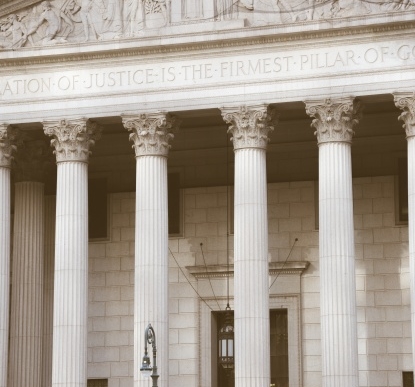
Bader Ginsburg Just Sided with Conservative Justices

Ruth Bader Ginsburg, one of the four liberal justices on the Supreme Court, sided with her conservative colleagues on Monday over a prisoner’s supervisory release. She joined Justices Clarence Thomas, John Roberts, Samuel Alito and Brett Kavanaugh in the majority, deciding that a criminal defendant, in this case Jason Mont, can be sentenced for violating his supervised release, even if the release expires while he is incarcerated ahead of facing new charges. Her vote was swapped with conservative Justice Neil Gorsuch, who joined liberal Justices Sonia Sotomayor, Stephen Breyer and Elena Kagan in their dissent.

Mont had been indicted by a grand jury for multiple drug and firearm offenses. He was released from federal prison on March 6, 2012, but broke the law again on supervised release, found guilty of two counts of cocaine trafficking. He then tested positive on several drug tests. His supervised release date was set for June 28, 2017.

The District Court issued a warrant on March 30, 2017, and ultimately set a supervised-release hearing for June 28, 2017. Two days before that hearing, Mont challenged the jurisdiction of the District Court based on the fact that his supervised release had initially been set to expire on March 6, 2017. The court concluded that it had authority to supervise Mont, revoked his supervised release, and ordered him to serve an additional 42 months’ imprisonment to run consecutive to his state sentence.

(Read more from “Bader Ginsburg Just Sided with Conservative Justices” HERE)

Follow Joe Miller on Twitter HERE and Facebook HERE

Justice Thomas Explains the Horrible Historic Connection Between Abortion and Eugenics

Tuesday morning, the Supreme court issued two orders on pro-life laws in Indiana.

First, the court upheld a Hoosier State requirement that the remains of aborted children be buried or cremated with dignity — rather than disposed of alongside hazardous medical waste.

But on the question of whether or not states can outlaw the practice of aborting children based on sex, race, or disability, the court decided to wait.

“Our opinion likewise expresses no view on the merits of the second question presented, i.e., whether Indiana may prohibit the knowing provision of sex-, race-, and disability selective abortions by abortion providers,” the court’s opinion reads. “We follow our ordinary practice of denying petitions insofar as they raise legal issues that have not been considered by additional Courts of Appeals.”

One of the factors determining whether or not the Supreme Court will take up a case is “ripeness,” or whether or not the legal questions of a case have fully developed into a controversy needing resolution by the court.

Indiana’s legal code makes it illegal for a person to perform an abortion “if the person knows that the pregnant woman is seeking the abortion solely because of the race, color, national origin, or ancestry of the fetus.” State law also prevents abortions motivated by selecting the baby’s sex, a Down syndrome diagnosis, or a diagnosis of “any other disability.” Currently, the statute has only been ruled on by one federal appeals court.

But while he agreed with his colleagues’ decision to not hear the case for the time being, Justice Clarence Thomas did not mince words in his description of what will be at stake when the court eventually does.

“The Court’s decision to allow further percolation should not be interpreted as agreement with the decisions below,” Thomas explains at the beginning of his concurrence. “Enshrining a constitutional right to an abortion based solely on the race, sex, or disability of an unborn child, as Planned Parenthood advocates, would constitutionalize the views of the 20th-century eugenics movement.”

Thomas gave the horrible history of the relationship between abortion and eugenics during the early 20th century.

“The use of abortion to achieve eugenic goals is not merely hypothetical,” the concurrence says. “The foundations for legalizing abortion in America were laid during the early 20th-century birth-control movement. That movement developed alongside the American eugenics movement.”

Thomas then mentioned party to the case Planned Parenthood and its founder — Margaret Sanger — by name.

“And significantly, Planned Parenthood founder Margaret Sanger recognized the eugenic potential of her cause. She emphasized and embraced the notion that birth control ‘opens the way to the eugenist.’”

He explained that her ideas laid the intellectual foundation for other eugenic-minded abortion supporters.

“Whereas Sanger believed that birth control could prevent ‘unfit’ people from reproducing, abortion can prevent them from being born in the first place,” Thomas explained. “Many eugenicists therefore supported legalizing abortion, and abortion advocates — including future Planned Parenthood President Alan Guttmacher — endorsed the use of abortion for eugenic reasons.”

Thomas’ sources are listed in the footnotes of the opinion.

“Given the potential for abortion to become a tool of eugenic manipulation, the Court will soon need to confront the constitutionality of laws like Indiana’s,” Thomas concluded. “But because further percolation may assist our review of this issue of first impression, I join the Court in declining to take up the issue now.” (For more from the author of “Justice Thomas Explains the Horrible Historic Connection Between Abortion and Eugenics” please click HERE)

Follow Joe Miller on Twitter HERE and Facebook HERE