Posts

Trump Can Use This Supreme Court Victory to Neutralize ‘Resistance’ Judges

In June 2018, following endless litigation against Trump’s “travel ban,” the Supreme Court stated the obvious: The president has full authority to regulate and deny entry to foreign nationals at will. Yet the lower courts continue to come back for more and are even demanding that the Trump administration hand over more information to these same litigants who should not have standing to sue, per the Supreme Court decision. Will Trump’s victory yesterday at the Supreme Court for his enforcement of public charge laws have any greater success than the travel ban has had in the courts? It’s up to the president and Congress to check these rogue judges.

By a vote of 5-4, the Supreme Court agreed to stay the injunction placed on Trump’s public charge law by a New York district judge. It’s not a surprise that five justices understand the absurdity of a lower court enjoining a modest enforcement of a long-standing law against prospective immigrants accessing welfare and then receiving a green card.

What is more important, however, is the concurrence written by Justice Gorsuch, joined by Justice Thomas, because it gets to the heart of the judicial insanity grinding our sovereignty to a halt and hampering any effort by President Trump to enforce unambiguous statutes on the books.

No matter how many times these lower courts get slapped down by the Supreme Court, they feel they can still come back for another round, even on the same issue, and halt an entire policy, beyond legitimate litigants with standing before the court. Gorsuch wrote, “It would be delusional to think that one stay today suffices to remedy the problem.” Clearly observing this illegitimate trend of nationwide injunctions issued by forum-shopped judges in numerous other cases, Gorsuch called on his colleagues to “at some point, confront these important objections to this increasingly widespread practice.”

Much as in Justice Thomas’ concurrence in Trump v. Hawaii, Gorsuch observed that universal injunctions, used as ad hoc judicial vetoes on broad presidential authorities or statutes, clearly violates the limited scope of judicial power. “When a court goes further than that, ordering the government to take (or not take) some action with respect to those who are strangers to the suit, it is hard to see how the court could still be acting in the judicial role of resolving cases and controversies,” wrote Gorsuch in his concurrence.

Gorsuch went even further to illustrate some of the political chaos, absurdities, and undemocratic outcomes that are resulting from this unconstitutional practice. “As the brief and furious history of the regulation before us illustrates, the routine issuance of universal injunctions is patently unworkable, sowing chaos for litigants, the government, courts, and all those affected by these conflicting decisions.”

Finally, Gorsuch took it to the next step and explained, as I’ve been warning for two years, that once you legitimize this game of forum-shopping and judicial vetoes, there’s nothing stopping the Democrats from coming back for endless rounds of this:

There are currently more than 1,000 active and senior district court judges, sitting across 94 judicial districts, and subject to review in 12 regional courts of appeal. Because plaintiffs generally are not bound by adverse decisions in cases to which they were not a party, there is a nearly boundless opportunity to shop for a friendly forum to secure a win nationwide. The risk of winning conflicting nationwide injunctions is real too.

And the stakes are asymmetric. If a single successful challenge is enough to stay the challenged rule across the country, the government’s hope of implementing any new policy could face the long odds of a straight sweep, parlaying a 94-to-0 win in the district courts into a 12-to-0 victory in the courts of appeal. A single loss and the policy goes on ice—possibly for good, or just as possibly for some indeterminate period of time until another court jumps in to grant a stay. And all that can repeat, ad infinitum, until either one side gives up or this Court grants certiorari. What in this gamesmanship and chaos can we be proud of?

This is certainly refreshing. But too many supporters of the president will take this as a win and go home, simply hoping that three other justices join Gorsuch and Thomas in “overturning” the concept of universal injunctions. However, not only is that unlikely to happen, we shouldn’t have to wait for the Supreme Court to “allow” us to function as a constitutional republic. The other branches of government need to put these judges in their place and refuse to give effect to their civil disobedience.

Throughout the day yesterday, there were numerous headlines exclaiming how the Supreme Court “allowed” the public charge rule to go forward. Such language should give any constitutionalist heartburn. Courts do not stand above the other branches of government, and they do not veto or ratify policies. If that were the case, we would cease to have three co-equal, independent branches of government.

A spokesperson for the Department of Justice hailed the victory in a statement yesterday and expressed “hope” that “the Supreme Court is able to address the matter of nationwide injunctions once and for all at the appropriate juncture.” Well, the best way to ensure that this illegal practice doesn’t continue is for the other branches to refuse to give it effect.

Congress has plenary power over the Supreme Court’s subject-matter jurisdiction and judicial procedures and has full power over the entire existence of lower courts. It’s a disgrace that Republicans in Congress have failed to address this with a relentless legislative push.

As for the president and the attorney general, they must heed the principle of President Lincoln and the words of his attorney general, Edward Bates: “That is the sum of its [judicial] powers, ample and efficient for all the purposes of distributive justice among individual parties, but powerless to impose rules of action and of judgment upon the other departments.” (For more from the author of “Trump Can Use This Supreme Court Victory to Neutralize ‘Resistance’ Judges” please click HERE)

Follow Joe Miller on Twitter HERE and Facebook HERE

Supreme Court Allows Trump’s ‘Public Charge’ Immigration Rule to Take Effect

The Supreme Court said Monday that it will allow the Trump administration’s “public charge” rule to take effect after the immigration policy had been blocked by lower courts.

The 5-4 vote was divided along partisan lines, with the court’s four Democratic appointees indicating that they would not have allowed the policy to be enforced.

The court’s five conservatives, including Chief Justice John Roberts, formed the majority siding with the administration. The decision came as Roberts was presiding over President Donald Trump’s impeachment trial in the Senate.

The rule, which was proposed in August, will make it more difficult for immigrants to obtain permanent residency, or green cards, if they have used or are likely to use public benefits like food stamps and Medicaid.

Under previous federal rules, a more narrow universe of public benefits, such as cash assistance and long-term hospitalization, were considered in determining whether an immigrant was likely to become a “public charge.” (Read more from “Supreme Court Allows Trump’s ‘Public Charge’ Immigration Rule to Take Effect” HERE)

Follow Joe Miller on Twitter HERE and Facebook HERE

SCOTUS to Hear Electoral College Case That Could Impact 2020 Election

On Friday, the Supreme Court agreed to hear a case that would decide whether electoral college delegates must vote for the winner of their state’s popular vote. Half the states currently have laws requiring their electors to follow the voters’ decision in their state.

Electors who do not vote in accordance to the winner of their state’s popular vote are known as “faithless electors.” According to NBC News, the so-called problem of faithless electors has never really been an actual problem before. In fact, most states simply throw out the ballot of an elector who doesn’t follow the state’s popular vote.

But in 2016, the Democrats ran such a rotten candidate that several electors in states carried by Hillary Clinton cast their ballots for someone else. One elector in Colorado voted for John Kasich, one in Hawaii voted for Bernie Sanders, and four in Washington state voted for someone else — three for Colin Powell and one for Faith Spotted Eagle, the name of a Native American activist, not Elizabeth Warren. Other Democratic electors contemplated voting differently but were reportedly pressured into voting for Clinton. Colorado simply replaced its errant elector with one that would vote for Hillary, while Washington state fined their independent-thinking electors for violating state law.

The Washington state Supreme Court ruled against the electors who challenged the fines imposed upon them. In his dissenting opinion, Justice Steven Gonzalez took issue with the court’s decision, arguing “[t]he Constitution provides the state only with the power to appoint, leaving the electors with the discretion to vote their conscience.”

While states can choose their own electors and require them to pledge certain loyalties, once the electors form the electoral college they are no longer serving a state function but a federal one. (Read more from “SCOTUS to Hear Electoral College Case That Could Impact 2020 Election” HERE)

Follow Joe Miller on Twitter HERE and Facebook HERE

Lower Courts Reign Supreme: So Much for the ‘Travel Ban’

Conservatives continue to entertain false hopes of transforming the judiciary through a “conservative” Supreme Court and through Trump’s appointment of 20 percent of the lower court judges. But the Supreme Court does not rein in lower-court judges, and the Trump administration keeps abiding by district judges’ nationwide injunctions, so the Left continues to gut Trump’s ironclad executive powers, even after he already won at the Supreme Court. The case of the “travel ban” is a perfect example of why Trump should finally delegitimize the entire concept of judicial supremacy rather than trying to beat the Left at its own casino game.

Throughout Trump’s first year in office, we watched one lower court after another create a right to immigrate and demand that the commander in chief surrender his power over sovereignty and national security to the courts. The courts violated 130 years of case law that emphatically concluded courts have no power to grant standing for lawsuits asserting a right to enter the country and that such decisions are exclusively up to the political branches of government. And this administration went along with the charade, even when a Massachusetts judge said its first, stronger, immigration moratorium was totally within the president’s powers.

On June 26, 2018, the “debate” over sovereignty should have come to an end when Chief Justice Roberts, writing for the 5-4 majority in Trump v. Hawaii, ruled that the president has categorical and plenary authority under 8 U.S.C. §1182(f) to exclude anyone he wants. However, on that day, I warned that “until we shut down the lower courts’ terrible practice of placing nationwide injunctions on national security policies, a power they manifestly do not have, the Left will continue shopping these cases to the same capricious lower court judges.” I also warned that experience with other issues has shown that as the lower courts continue chipping away at the original SCOTUS ruling, “the Supreme Court will gradually adopt their approach in the ever-evolving, one-directional ratchet of progressive jurisprudence.”

And here we are today. This AP article shows how a number of foreign nationals from countries on the so-called “travel ban” list – Iran, Libya, Somalia, Syria, and Yemen – continue successfully obtaining visas from the administration under the threat of incessant lawsuits. In an interview with a lawyer for the Council on American-Islamic Relations, a group named as an unindicted co-conspirator in a terror finance trial by the Fifth Circuit Court of Appeals, the AP observed, “When people file litigation, it attracts swift notice from the State Department or the Department of Homeland Security.”

The Trump administration allowed the lower courts to win by watering down the moratorium twice rather than having the Supreme Court rule on the original one. One of the changes in the watered-down version was relinquishing the categorical ban on visas and offering waivers to those who apply for them and claim exigent circumstances. The AP reports that of the 28,100 immigrant visa applications from those countries between December 2017 and Oct. 31, 2019, “11,325 have been deemed qualified for waivers and 16,775 have not.” So much for a “ban,” even on immigration from the very few countries on the list.

Now, groups like CAIR and the ACLU are using this against the administration. Agitation groups are now filing lawsuits and asserting that all these people are entitled to waivers. The AP observes, “The Supreme Court upheld the ban in June 2018, in part because of the promised waiver system that would allow people to come despite the ban if certain criteria were met.” That seems to be the thinking of administration officials based on what lower courts are now doing, but it’s simply not true.

While Roberts mentioned the existence of waivers as one of the factors to swat down arguments of the lower courts and of plaintiffs that the president had acted unlawfully, he offered one all-encompassing reason to uphold the ban without qualification.

The Immigration and Nationality Act (8 U.S.C. §1182(f)) allows the president “for such period as he shall deem necessary, [to] suspend the entry of all aliens or any class of aliens as immigrants or nonimmigrants, or impose on the entry of aliens any restrictions he may deem to be appropriate.” The Supreme Court already ruled on this in 1993, and Chief Justice John Roberts made it clear that there are no limits to this power. “By its terms, §1182(f) exudes deference to the President in every clause,” wrote Roberts in the majority opinion in Trump v. Hawaii. “It entrusts to the President the decisions whether and when to suspend entry, whose entry to suspend, for how long, and on what conditions. It thus vests the President with ‘ample power’ to impose entry restrictions in addition to those elsewhere enumerated in the INA. Sale, 509 U. S., at 187.”

Thus, the issue of waivers is moot because the Trump administration doesn’t have to issue them at all to anyone who is not a citizen. But the hands-off Supreme Court and activist forum-shopped lower court judges are ensuring that victories at the high court are merely formulaic and ultimately meaningless. As I warned at the time, only Justice Thomas made it clear that there is no avenue for anyone to ever get standing in a lawsuit for the right to enter the country as an alien and that there are absolutely no limitations on the president’s power over admission into the country whatsoever. I predicted that absent a five-justice majority built on Thomas’ concurrence, the lower courts would just manipulate the perceived loopholes in the Roberts ruling, despite the general categorical language he used to affirm Trump’s broad power over entry.

And the rest is history. We are left with a slowdown of visas from just a handful of countries, in lieu of the original promise of a moratorium on immigration from the Middle East. All because the administration refuses to assert executive power over visas, even after the SCOTUS ruling.

This is just one issue, but it’s a glimpse into why the Left keeps winning the judicial game. Most victories at the Supreme Court are even more meaningless than the travel ban verdict, because the language is even more ambiguous. Lower-court liberal judges have no shame in going against the Supreme Court. Yet somehow the executive branch feels bound not just to a political opinion of the co-equal Supreme Court, but even to opinions from rogue lower-court judges. Until the administration gets more aggressive, even the most ironclad executive powers will be weakened and the campaign promises that hinge upon them relegated to nothing more than a dream. (For more from the author of “Lower Courts Reign Supreme: So Much for the ‘Travel Ban’” please click HERE)

Follow Joe Miller on Twitter HERE and Facebook HERE
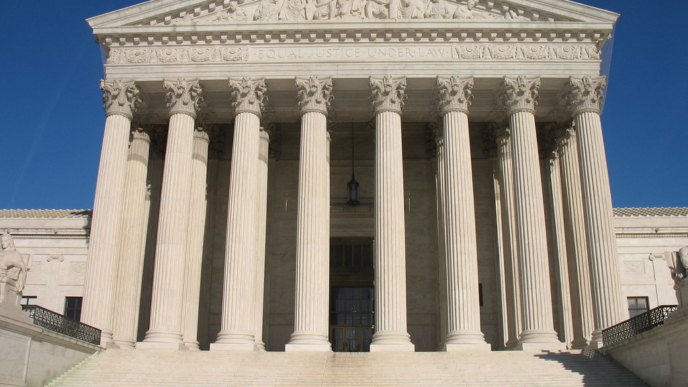
Supreme Court Agrees to Constitutional Right to Camp on City Streets

So much for the conservative Supreme Court. The same Supreme Court that has been slow to reverse lower court decisions granting cities and states power to thwart federal immigration law suddenly believes that states are vassals of the federal judiciary when it comes to enforcing their own internal public order issues.

Yesterday, the Supreme Court denied an appeal from the city of Boise, Idaho, to reverse a Ninth Circuit ruling that the city cannot close homeless encampments on the streets because it violates the Eighth Amendment’s prohibition on cruel and unusual punishment. Does it get more radical than that?

The growing trend of public homeless encampment is becoming a major public policy challenge for America’s cities, especially in the western part of the country. As Heather Mac Donald noted on my podcast based on extensive firsthand research of San Francisco’s homeless epidemic, the more a city caters to the culture of vagrancy, the more the public encampment takes root. It has brought with it public disorder, environmental damage, drugs, theft, and violent assaults, threatening the basic peace of city streets. “Tolerating street vagrancy is a choice that cities make; for the public good, in San Francisco and elsewhere, that choice should be unmade,” wrote Mac Donald in her blockbuster report on San Francisco’s homeless crisis.

The core job of a local government, as Madison envisioned, is to deal with “objects which, in the ordinary course of affairs, concern the lives, liberties, and properties of the people, and the internal order, improvement, and prosperity of the State.” Keeping the streets safe, clean, and orderly is a core job of local government. Yet in September 2018, the Ninth Circuit ruled, against an Idaho district court ruling, that Boise and other cities cannot enforce anti-encampment ordinances. “As long as there is no option of sleeping indoors, the government cannot criminalize indigent, homeless people for sleeping outdoors, on public property,” ruled the liberal court in Martin v. City of Boise.

This was part of a recent slew of crazy Eighth Amendment rulings from the Ninth Circuit. For example, earlier this year, the court ruled that Idaho is violating the Eighth Amendment if the state doesn’t fund a castration surgery for a male inmate in state prison. Like that case, it seemed to be a no-brainer that the Supreme Court would not allow a lower court to concoct such a sweeping and consequential new constitutional right and that it would immediately stay the injunction or at the very least take up the case on the merits. Yet, shockingly, the faux conservative court denied the appeal. That denial speaks as loudly as if the court actively ruled on this case, given the novel and insane premise of the court below.

The notion that someone has the right to camp out and defile public streets as if it’s an immutable characteristic of the person is insane. In 2000, the Eleventh Circuit (Joel v. City of Orlando) ruled in a similar lawsuit against an Orlando anti-encampment ordinance that cities can always ban a behavior that negatively affects the jurisdiction so long as they are not banning a state of being. “A distinction exists between applying criminal laws to punish conduct, which is constitutionally permissible, and applying them to punish status, which is not,” concluded a unanimous appeals court in favor of a Florida district judge’s ruling. Boise’s law is the same as the one in the Eleventh Circuit in the sense that it prohibits behavior broadly applicable to anyone without targeting an identity.

Of course, to begin with, the entire scope of the constitutional concept of “cruel and unusual punishment” was a degree of severity of criminal punishment, such as torture, not the scope of criminalization of a behavior through police issuing a citation. A citation, by definition, cannot be cruel and unusual, even if there were other legal problems with it. As Justice Thomas wrote in Graham v. Florida, “The Cruel and Unusual Punishments Clause was originally understood as prohibiting torturous methods of punishment—specifically methods akin to those that had been considered cruel and unusual at the time the Bill of Rights” (emphasis added).

Expanding the Eighth Amendment to include the right to public vagrancy is almost as radical as applying it to taxpayer-funded castration. This decision is so radical that even the city of Los Angeles filed an amicus brief in favor of Boise’s anti-encampment law. That places the “conservative majority” on the Supreme Court squarely to the left of L.A. politicians.

One would think this Eleventh Circuit case would be viewed as a circuit split on the issue by the Supreme Court, triggering immediate review. Yet not only can this “conservative” Supreme Court not be trusted to overturn past decades of bogus constitutional rights, it won’t even reverse new radical rights discovered by today’s lower courts.

It’s hard to overstate the significance of this ruling. Cities are being flooded with a culture of vagrancy. It’s inextricably linked to the rise in crime in many cities and states. Courts have already created a right for foreign criminals to immigrate and all sorts of novel rights for domestic criminals to avoid punishment and deterrence. Now they are creating a right to street vagrancy and public defecation. A business owner in Monroe, Washington, recently tried to report drugs and trespassing in front of her business from the vagrant encampments and was assaulted while she was snapping a picture of their behavior. A local police officer told her that they have a right to be there. “He told me that the vagrant had the right to defend himself [from my photography],” said a distraught Jovanna Edge. “And he was defending himself with the rock and with this bottle of liquid.”

Inalienable rights protected by the Constitution, by definition, are things that don’t harm the civil society at large. The growth of street vagrancy and the breakdown of public order are causing enormous fiscal and security threats.

The day the Supreme Court upheld a right for courts to override our self-government at the most local level yesterday happened to be the 246th anniversary of the Boston Tea Party. On December 16, 1773, the colonists living in Boston publicly rebelled against the concept of taxation without representation. What we face today is a greater threat to self-government – that of social transformation without representation. Any random federal court can create the most radical non-right “rights” imaginable and socially transform our communities through them. But only if we let them. (For more from the author of “Supreme Court Agrees to Constitutional Right to Camp on City Streets” please click HERE)

Follow Joe Miller on Twitter HERE and Facebook HERE
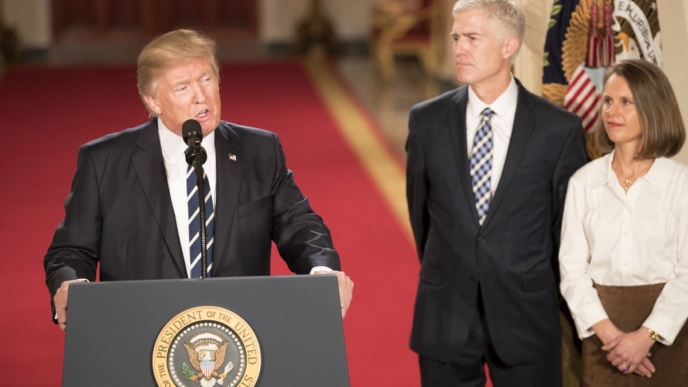
The Supreme Court Temporarily Blocked Trump’s Bid to Restart Federal Executions

The Supreme Court dealt a temporary setback Friday to the Trump administration’s bid to revive the death penalty after a 17-year hiatus, refusing the government’s request to clear the way for four federal executions a lower court judge put on hold.

The high court did not disclose the vote count or its reasoning, as is typical of orders of this nature. However, the justices did instruct the lower courts to speedily process the dispute.

“We expect that the Court of Appeals will render its decision with appropriate dispatch,” Friday’s order reads. Justice Samuel Alito put a finer point on that directive in a statement accompanying the decision, which Justices Neil Gorsuch and Brett Kavanaugh joined.

“The Court has expressed the hope that the Court of Appeals will proceed with ‘appropriate dispatch,’ and I see no reason why the Court of Appeals should not be able to decide this case, one way or the other, within the next 60 days,” Alito’s opinion reads. “The question, though important, is straightforward and has already been very ably briefed in considerable detail by both the Solicitor General and by the prisoners’ 17-attorney legal team.”

The Trump administration resumed executions after a near-20 year reprieve in July. Attorney General William Barr directed the Bureau of Prisons (BOP) to use a single-drug pentobarbital lethal injection protocol for capital punishment, which was at issue in the case before the high court. (Read more from “The Supreme Court Temporarily Blocked Trump’s Bid to Restart Federal Executions” HERE)

Follow Joe Miller on Twitter HERE and Facebook HERE

If SCOTUS Won’t Overturn Even Recent Bad Decisions, Why Does Anyone Think Roe Is in Danger?

It should be a no-brainer that any reputed conservative Supreme Court would easily overturn recent bad decisions limiting sentences of life without parole for juvenile murderers, like the infamous D.C. sniper, Lee Boyd Malvo, who, along with his older partner, killed 17 and injured 10 in 2002 in the D.C. area. Yet here we are, completely unsure whether we have to five justices willing to affirm the long-standing precedent.

Many conservatives somehow think we are building an originalist majority to overturn terrible court decisions from 50 years ago, such as Roe v. Wade, yet no legal analyst seems to think we even have the votes to overturn terrible decisions made by Anthony Kennedy this past decade. Then what good are these much-vaunted Supreme Court nominees?

Before delving into the Malvo case, some background is in order. In 2005, contrary to practice in our country since the Founding, the Supreme Court ruled that capital punishment for juveniles violates the Eighth Amendment’s prohibition on cruel and unusual punishment in all cases. Writing for the majority in Roper v. Simmons, Anthony Kennedy applied foreign law to overturn a 1989 Supreme Court decision (Stanford v. Kentucky) and rule that a punishment in practice at the time of our Founding somehow violated our own Constitution. He felt that “the evolving standards of decency” gave him the right to unilaterally amend the Constitution. Liberals never have problems reversing precedents they don’t like when they discover new “rights.”

Well, what’s the alternative to the death penalty for people like Malvo who commit mass murder at the age of 17? Life in prison without parole, right? In Graham v. Florida (2010), Kennedy, joined by the liberals and Roberts, ruled that life in prison without parole for a juvenile is unconstitutional except for cases of murder. Then, in his incremental ad hoc constitutional amendment process, in Miller v. Alabama (2012), Kennedy took it to the next level and joined with the four liberals to rule that state laws mandating life in prison without parole even for murder are unconstitutional. Finally, in Montgomery v. Louisiana, the court retroactively applied the Miller v. Alabama decision to roughly 2,500 people already serving mandatory sentences of life without parole as juvenile murderers. Roberts bizarrely joined in with Montgomery, even though he wrote the dissent in Miller.

Freeze-frame right here. Given that it was Anthony Kennedy who insidiously took a hatchet to long-standing state powers over juvenile justice from 2005 to 2016, and he has now been replaced with the much-vaunted Brett Kavanaugh, shouldn’t we have the confidence that everything from Roper through Montgomery should be reversed? If we are promised by the Republican legal establishment that the new Supreme Court will overturn long-standing bad precedent, it certainly should easily overturn this craziness from just a few years ago.

Remember, we are not debating the policy or political merits of capital punishment or life without parole for juvenile murderers. We are debating the notion that the Constitution prohibits states from passing these laws. No originalist can ever contemplate such a novel idea, and with all the hype surrounding Gorsuch and Kavanaugh, this should be easy to overturn. Anyone calling himself an originalist should agree with what Thomas wrote in Graham v. Florida – that “the Cruel and Unusual Punishments Clause was originally understood as prohibiting torturous methods of punishment—specifically methods akin to those that had been considered cruel and unusual at the time the Bill of Rights” (emphasis added).

Sadly, none of the legal analysts believe this will happen, and as is the case with so many issues, there is no confidence that anyone besides Thomas and Alito would categorically overturn these four cases.

The issue at hand in Mathena v. Malvo is whether to expand Montgomery to a case where the juvenile murderer wasn’t even sentenced to life without parole under a mandatory guideline. Lawyers for Malvo argue that the jury never really contemplated anything lower than life without parole, so while such a punishment wasn’t mandated, the jury never fully vetted out whether this specific juvenile was “incorrigible,” as required under the Miller decision. The Fourth Circuit agreed with Malvo.

Most of the oral argument time on Wednesday was dedicated to splitting hairs over whether Malvo fits into Miller and Montgomery. And even on that account, some legal bloggers like SCOTUSblog’s Amy Howe hypothesized that “Justice Brett Kavanaugh [is] potentially the pivotal vote.” Howe believes it’s “possible that a majority might try to navigate a middle ground that sends the case back for the lower courts to take a closer look at whether Malvo had a real opportunity to have the judge and jury consider whether his youth might warrant a lighter sentence.”

Time will tell, but notice how it’s not even under discussion that there might be five votes to completely overturn Montgomery and Miller, much less the previous cases. Nobody in the legal world believes anyone other than Thomas and Alito would categorically apply the Eighth Amendment as understood at the time of its adoption. That is because Gorsuch, although decent on many issues, is no Scalia, and Kavanaugh certainly is not. Roberts is getting worse by the day. And while many of these justices will not add to the existing bad case law, their political motivations will make them reluctant to overturn even the most egregious 5-4 decisions of the past decade or two.

Do you think Democrats have any doubt that the current four liberals plus their next potential fifth vote would overturn the Heller decision on gun rights from 2008 in a heartbeat? Heck, in the gay marriage case of 2016, they overturned a 9-0 decision from 1971. The courts have always been a one-way ratchet for the Left and a dead end for conservatives. The Left will toss out 200 years of precedent, history, tradition, and statute overnight on immigration or social issues, while judges like Roberts and Kavanaugh will dogmatically legitimize that breach itself as new precedent that must be accorded the highest degree of respect.

For decades, rather than militating against the premise of judicial supremacy over political questions, the GOP legal establishment has legitimized the concept, albeit with the promise that we would somehow win the supremacy game by “appointing better judges.” It was the ultimate scam for voting Republican rather than looking outside the GOP for a home for conservatism. Now, they believe they’ve finally achieved that goal. Yet nothing has changed. As always, when liberals have a clear majority, they make earth-shattering transformational changes. When Republicans get a majority, the lower courts still make radical decisions, and at best, the Supreme Court merely maintains the status quo. And in some instances, there is at least one GOP appointee peeled off to join with the transformational changes, as we witnessed multiple times last term.

Just remember, in the current legal system, for every Clarence Thomas, there are numerous John Robertses and Brett Kavanaughs – and an endless supply of Ruth Bader Ginsburgs. The capacity and resolve of a good judge to do good is nowhere near the capacity and resolve of a bad judge to do bad. (For more from the author of “If SCOTUS Won’t Overturn Even Recent Bad Decisions, Why Does Anyone Think Roe Is in Danger?” please click HERE)

Follow Joe Miller on Twitter HERE and Facebook HERE

Supreme Court Rejects NYC’s Attempt to Get Second Amendment Case Thrown out

New York City’s latest effort not to have to go to court over one of its gun laws failed at the Supreme Court on Monday. Justices told the city’s lawyers to wait until December to try again.

The case in question is New York State Rifle & Pistol Association Inc. [NYSRPA] v. City of New York, New York, which asks whether New York City’s laws about transporting a licensed, unloaded, and locked firearm to a residence or shooting range outside the five boroughs is consistent with the Second Amendment.

The city has tried to make the case that, because it eased its transport restrictions, that the case is now moot. The Supreme Court, however, didn’t see it that way Monday when it issued an order denying New York’s “suggestion of mootness” and adding, “The
question of mootness will be subject to further consideration at oral argument, and the parties should be prepared to discuss it.” Oral arguments in the case are scheduled for early December.

Back in July, the city filed a document making the case for mootness after it put out a new set of regulations that it said “give petitioners everything they have sought in this lawsuit.”

Lawyers for the petitioners in the case — the New York State Rifle and Pistol Association — responded to that by saying the case should nonetheless go before the court.

New York state law requires licenses for handgun ownership that are issued by local authorities; these are either a “possess on premises” or concealed carry permit. The case began over six years ago in March 2013 and deals with the former. Under New York City’s previous set of regulations, a Federalist Society blog post explains, “a New Yorker whom the City itself has licensed to possess a handgun cannot transport her handgun to a weekend second home (even to exercise the core constitutional purpose of self-defense), to an upstate county to participate in a shooting competition, or even across the bridge to a neighboring city for target practice.” (For more from the author of “Supreme Court Rejects NYC’s Attempt to Get Second Amendment Case Thrown out” please click HERE)

Follow Joe Miller on Twitter HERE and Facebook HERE

Three Jewish Supreme Court Justices and Their Liberal Impact on American Law

Like most of the US Jewish community, all three of the US Supreme Court’s Jewish justices are on the liberal side. But agree or disagree with their decisions, they each have their own unique character and image that have put a powerful stamp on US Jewry and Israel. . .

In 2018, [Ruth Bader Ginsberg] came to Israel to receive the inaugural Genesis Lifetime Achievement Award, initiating a year of The Genesis Prize Foundation’s (GPF) philanthropy dedicated to women’s empowerment. An outspoken advocate for gender equality, she was selected to receive the award “for her groundbreaking legal work in the fields of civil liberties and women’s rights,” and her vision to “open doors to women” inspired GPF to make grants to organizations in Israel and North America promoting socio-economic opportunities for women. . .

[Justice] Breyer has talked about his Jewish identity publicly many times over the years, usually emphasizing a commitment to social Jewish values, and appears to identify as being more traditional than some other Jewish justices. . .

In her near decade on the US Supreme Court, Justice Elena Kagan has become more of a leading force for the court’s liberal wing. . .[She once quoted] Moses Seixas of Newport, Rhode Island, who thanked Washington in 1790 with “a deep sense of gratitude” for the new government [and stated] that the US has “a government, which to bigotry gives no sanction, to persecution no assistance – but generously affording to all liberty of conscience and immunities of citizenship: deeming every one, of whatever nation, tongue, or language, equal parts of the great governmental machine.”

[This] quote explained the significance of the government not showing preference to a specific religion in a 5-4 dissent against a decision by the court regarding separation between “church and state,” which allowed a primarily Christian town to hold prayers at the start of its meetings. (Read more from “Three Jewish Supreme Court Justices and Their Liberal Impact on American Law” HERE)

Follow Joe Miller on Twitter HERE and Facebook HERE

Why Conservatives Must Fight Judicial Supremacism — and Not Hang Their Hopes on John Roberts

The reason why judges don’t stand for election is because they are supposed to look narrowly at the law, regardless of their political positions or political pressure from elites in media and culture. Yet Chief Justice John Roberts appears to be crafting vital legal opinions based on nothing more than a scorecard of how often each political side wins on a legal question. The latest revelation that Roberts might have changed his mind on the census case, just as he did on Obamacare, should give conservatives pause about putting their faith in a “conservative Supreme Court” rather than delegitimizing the concept of judicial supremacy in the first place.

Joan Biskupic, a CNN legal analyst and Supreme Court biographer, wrote an “exclusive” exposé on Thursday suggesting that initially, “Roberts was ready to rule for [Secretary of Commerce] Ross and the administration. But sometime in the weeks that followed, sources said, Roberts began to waver.”

The reason this report sounds credible is because, as I noted at the time of the ruling, if you read Roberts’ plurality opinion, the legal reasoning sounds like the opposite of his final order, the same phenomenon that gave away his flip in the Obamacare case. Roberts noted that the citizenship question is the essence of the census, has been with us for most of our history, and that nothing in the Constitution, census statute, or even the rule-making process under the APA precluded the president from doing this. But he then concluded that the case should go back to the lower court because he didn’t like the reason the secretary of commerce gave for why the administration chose to reinstate the citizenship question.

The problem with this rationale is that if there is no violation of statute or the Constitution, then how is there a valid case or controversy against the administration, regardless of the reason they give for a policy, especially something as obvious as asking about citizenship on a census? Whether you are a liberal or a conservative, his decision made no sense.

I have noticed in following many other Roberts decisions that he has an iron political motivation to avoid making the Supreme Court look too “conservative” at all costs. Thus, he finds ways to either allow liberal rulings to stand by not taking up appeals or uses tortured logic to join with the liberals on some other cases, but in a convoluted way that he thinks won’t offend his personal jurisprudence. He so badly doesn’t want to be political that he is more political than anyone else.

In the run-up to this past term’s grand finale in June, many court watchers and commentators that I follow were speculating about a “conservative sweep” in the critical cases. But Roberts found ways to side with the leftists. He did so on a number of criminal “rights” cases, executions, a global warming case, and an administrative state case, in addition to flipping on the census.

There is a simple reason why conservatives should win every case at the Supreme Court: The law compels it. Most (but not all) political cases initially brought to court are from the Left. This is because, in general, leftists control the legal profession and more aggressively litigate political issues, but it’s also particularly true today because Trump is president and they will naturally shoot at anything he does in court. Thus, by definition, the cases the Supreme Court gets are appeals from lower court judges who created insane new constitutional rights or adopted novel rules of standing. Sorry to break it to you, Roberts, but you have an obligation to aggressively swat them down categorically.

Most of the court’s cases are not 50-50 equal constitutional questions. They are legally 100-0 no-brainers but nonetheless are viewed, at least by the elites, as political 50-50 issues or as leftist winners. Any judge, regardless of his politics, is obligated to side with the law, even if that means siding against the political outcome of the more popular political movement in Washington 10 out of 10 times.

Take Obama’s DACA amnesty, for example. Among the D.C. elites, 90 percent of Republicans support it. Heck, even Trump supports it. Nonetheless, anyone with any legal honesty would know that this doesn’t even register as a legal case. There is no way, however much you want the result, to say that Obama can take people whom law requires be deported and give them legal documents, much less mandate that Trump must continue this usurpation. You could be a rabid open-borders advocate from a political standpoint, but you’d have to concede that there is no legal justification, much less legal mandate, for Obama’s amnesty.

But it appears that for Roberts, it would be perceived as an act of right-wing court bias to rule correctly. Thus, either he will employ another tortured legal trick to avoid categorically throwing out the lawsuit, or he will “compensate” for a proper ruling on amnesty by agreeing with the Left in another absurd case. And there are plenty of totally absurd cases to choose from: a ruling creating a right for 7.8 billion people to immigrate, a ruling creating a right for Planned Parenthood to be subsidized, another case where they say transgenderism is in the Civil Rights Act, and yet another case where the Ninth Circuit says the Eight Amendment creates a right for prisoners to undergo taxpayer-funded castration.

No sane person can say the law or Constitution mandates those policies. As such, any honest justice not only must reverse those opinions, but is obligated to do so as early and as categorically as possible. The simple reality is that most cases coming before the court that are very political have a “legal” foundation built upon insanely novel “constitutional” ideas.

Imagine for a moment if the shoe were on the other foot. Let’s say conservatives got their favorite judges to indulge the following propositions: abstinence organizations are entitled to free taxpayer funding, government can mandate that all citizens without a criminal record must own a gun, and government must pay for at least one firearm for people who can’t afford them. Even with gun rights emphatically listed in the Constitution, while the right to immigrate is not, Americans suing for government-funded guns is absurd. And illegal aliens crashing our border and then suing because they don’t like the free medical care they get is even zanier. But the Supreme Court would immediately “side with the Left” in these hypotheticals, and likely call for the removal of those lower court judges mandating taxpayer-funded firearms.

But the Left has successfully made its most insane ideas mainstream and at least a 50-50 toss-up legal questions in the courts. This is why Roberts feels the pressure to make up reasons to rule with the Left and often quietly allows absurd lower court rulings to stand in the “shadow docket,” as he sometimes agrees to overturn others.

Which brings us back to the census case. Nobody had any inkling that Roberts could buy into the absurd notion that the census can’t ask a citizenship question. But he is not governed by law or rationality; it seems he is governed by his perception of the equilibrium of politics in Washington.

This is why conservatives are foolish to agree to judicial supremacism and then put their faith in somehow winning the supremacism game. Instead, it’s time to educate the public in the fact that the courts don’t have the final say over political matters. Courts are every bit as political as the political branches. So let’s keep the politics where it actually belongs, where it is more transparent, and where the public can address their problems through elections. (For more from the author of “Why Conservatives Must Fight Judicial Supremacism — and Not Hang Their Hopes on John Roberts” please click HERE)

Follow Joe Miller on Twitter HERE and Facebook HERE