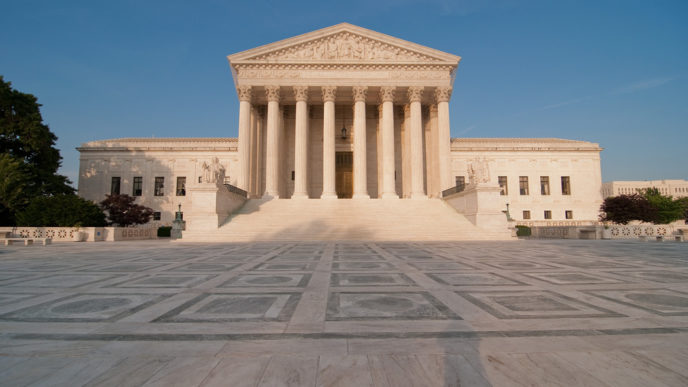
As the AP reports, the U.S. Supreme Court has thrown out most of the lower court decisions that crippled President Trump’s immigration decisions (that is, his “travel ban”). This is good news not just for fighting terrorism. It’s huge for fans of the separation of powers, the rule of law, national security, and democratic lawmaking. Read David French’s excellent legal analysis of why each of those claims is true.
Essentially, the lower courts vastly overreached the legitimate function of jurists. Their job was to scrutinize the laws to see whether President Trump’s decision to restrict travel from terrorist-ridden hellholes was Constitutional. Instead, they regurgitated his campaign rhetoric and pored over his Twitter archive to scrutinize his alleged motives. They invented imaginary rights for foreign residents. They granted legal “standing” to law firms who recruited foreign clients. Attempting to reverse the effects of a presidential election, they usurped the legitimate powers of the president.
The executive branch has broad Constitutional and legislated authority to protect national security. Immigrants have zero presumptive right to enter the United States. It would be perfectly Constitutional, though stupid, to admit them based on aesthetics (that is, a “Melania” standard).
Avoiding a Constitutional Crisis
Had the Supreme Court followed the lower courts’ lawless precedent on this case, it should have provoked a Constitutional crisis — in the form of GOP-backed bills to challenge courts’ jurisdiction, or term-limit SCOTUS members. I think that even the liberal justices on the Supreme Court saw that, which is why most of them blinked and backed away from the brink.
With many crucial issues on the docket, that crisis still might come. There is just one way to avoid it: If the president stays true to his campaign to appoint only strict constructionists to the courts. Or else if conservatives cravenly surrender.
I wrote before the 2016 election that the race was mostly about the courts. Since Roe v. Wade, the left has relied on the judicial branch to override voters’ will on crucial issues. Progressives wield vast, overweening power. They micromanage the media. They smother and censor the colleges. They terrorize big business via pressure campaigns.
Still, sometimes all that doesn’t turn out to be enough. We saw that in the recent Georgia election: Jon Ossoff called in Planned Parenthood as his Death Star, and still lost to the pro-life Karen Handel.
The Left’s All Purpose Plan for Overriding the Voters
So where they can’t get the votes, as they couldn’t on same-sex marriage, leftists follow this playbook:
Pretend that the U.S. Constitution enshrines whatever “basic rights” that academic elites invented five minutes ago — even those that would have horrified every one of the U.S. Founders, down to the last pallid Deist.
Claim that “international norms” from foreign courts or the United Nations have binding force in basic American laws.
Convince Democrat appointees on lower courts to overturn or stay a democratically enacted law. Or a legitimate use of presidential authority. Because it violates those invented rights.
Pretend that each case is the same as Brown v. Board of Education. And each of their opponents is no better than a bigoted Southern sheriff. Imply that those who put up a fight will end up as disgraced and marginalized as white segregationists.
Win in the Supreme Court by a narrow margin. Then despite the learned dissents by distinguished jurists…
Pretend that anyone who still opposes the decision is an uncivilized Neanderthal. Their organizations are “hate groups.” Except if they’re Muslim. Those groups are exempt, because they’re so peaceful that we don’t want to provoke them.
Use this brand-new consensus to browbeat churches into rewriting the Gospel. Then presto-chango, 2000 years of Christian belief and practice is discredited.
Rinse and repeat.
This strategy worked amazingly well on same-sex marriage. The narrowly decided and crudely anti-Constitutional Obergefell decision is now being foamed into every nook and corner of the culture like toxic asbestos insulation. “Mainline” churchmen (Catholic and Protestant alike) are falling over themselves to accommodate it. They’re wearing out holes in their clerical shirts from patting themselves on the back for groveling before Caesar.
We Will Fight in the Wedding Chapels
But the same strategy backfired on abortion. The pro-life movement is gaining in power, popularity, and influence. Even the socially laissez faire President Trump seems like a genuine convert on the topic.
So there’s no need to despair. And no excuse to retreat into some “Benedict Option” ghetto, which would always be just one court decision away from the cops coming to remove Christian kids from their parents’ custody. Which is happening not in North Korea but in Canada.
We should welcome lawful decisions, and fight lawless ones tooth and nail. We cannot even give up on seemingly implausible goals like overturning Obergefell, and returning marriage jurisdiction to the states. That decision, as Justice Roberts (hardly a right-wing extremist) warned, planted religious liberty time bombs throughout our legal system. Christianity cannot coexist with legal same-sex marriage forever. One of them or the other will end up legally hamstrung. America needs to pick between them.
Yes fixing Obergefell seems out of reach and hopelessly unpopular. But then, in 1973, Roe v. Wade seemed untouchable too. (For more from the author of “On “Travel Ban,” Supreme Court Backs Away From Brink of a Constitutional Crisis” please click HERE)
Last week, the U.S. Supreme Court heard oral arguments in Trinity Lutheran Church v. Comer. The case stems directly from religious bigotry in the mid-1800s.
In 2012 Trinity Lutheran Church in Missouri applied for a state grant to resurface their playground to make it safer. The church’s pre-school uses the playground and it’s also available to the local community. Most of the children in the pre-school and neighborhood do not attend the church.
Missouri denied the funds. They claimed state law prohibited them from aiding “any church, sect, or denomination of religion.”
And so on to court and now to the U. S. Supreme Court. The case offers the Court the chance put right the wrong imposed on religious believers in Missouri 140 years ago.
That wrong is called the Blaine Amendment.
Catholic Immigrants Found Catholic Schools
By the mid-1800s, in the wake of the Second Great Awakening, the religion of the American people was for the most part lowest-common-denominator (LCD) Protestantism. Charles Finney, the most prominent evangelist during the awakening, summed it up:
Persons of all denominations, forgetting their differences, gave themselves to the work. They all preached the same thing, the same simple Gospel. They held out substantially the same truth: Christ died to save souls; you may be saved; you are a sinner and need to be saved; now, will you come to Christ and submit yourself to God? This was about the amount of instruction.
That LCD Protestantism influenced all of American public life including public education. Since Protestantism was part of what it meant to be a real American, public schools promoted it with enthusiasm.
During that same era, the country experienced great waves of Catholic immigrants. For Catholics, Mr. Finney’s “simple gospel” was true as far as it went. It just didn’t go far enough. In fact, they found it so inadequate and, in the public schools, so objectionable that they founded their own schools. These would promote Catholic faith, education, and identity.
Keeping “Sectarian” Catholic Schools at Bay
Protestant America was never very keen on Catholics, but this went beyond too far. There had to be a way to make it harder for poor Catholics to send their children to these new “sectarian” Catholic schools. How could Catholic children be forced into the public schools with their “non-sectarian” Protestant bias so that they could become good Americans — and good Protestants?
To save the Republic from rampant Catholicism, the Order of the Star Spangled Banner was formed in 1849. Their core issue was the abolition of slavery, an extremely good cause, but they fueled that good cause with anti-Catholic bigotry. The Order was a secret society. When asked about it, members were bound by oath to say, “I know nothing.” Hence, they were called “The Know-Nothings.” Politically they were the American Party.
Their idea of the First Amendment was to keep Catholic “sectarianism” at bay while strengthening “non-sectarian” LCD Protestantism.
This was nearly enshrined in the U. S. Constitution in 1879. President Ulysses S. Grant proposed an amendment banning “sectarian” religious instruction in public schools and the use of tax dollars to in any way support “sectarian” schools. The amendment was named for James G. Blaine who had been Speaker of the House.
Protestants and non-religious people loved the amendment. While it was never ratified, all but eleven states adopted and still have Blaine Amendments or similar legislation. Missouri is one of them.
Danger for All Religious Groups
What Grant, Blaine, the Know-Nothings, and the amendment’s other supporters didn’t take into account is that “sectarian” is in the eye of the beholder.
They thought they were safeguarding the republic from the dangers of “rum, Romanism, and rebellion.” Instead they created a legal trap for religious believers including the good folk at Trinity Lutheran. Today when all religion is regarded as “sectarian” it’s possible to exclude all religion from government benefits.
Now I know it’s a mistake to judge those in the past by our standards. It’s easy to second-guess a 140-year old decision with 20/20 hindsight. Still, the Blaine Amendments give states the power to discriminate against any or all religious groups. That exacts a steep tax on freedom as Trinity Lutheran and many others have discovered.
Those who observe the Supreme Court seem to think that the Court will find for Trinity Lutheran. Besides, the new governor of Missouri has changed the policy. One way or the other, Trinity Lutheran will receive their grant.
What the Court should do, if it can, is declare Blaine Amendments across the country unconstitutional. That would set right a long standing injustice. (For more from the author of “The Supreme Court Has a Chance to Right a Long Standing Wrong” please click HERE)
https://joemiller.us/wp-content/uploads/Supreme-Court-Flickr-1.jpg339672Joe Millerhttps://joemiller.us/wp-content/uploads/logotext.pngJoe Miller2017-04-25 22:00:512017-04-25 22:00:51The Supreme Court Has a Chance to Right a Long Standing Wrong
On Monday morning, the U.S. Supreme Court declined to review the case of Michel v. McConnell, where the courts below rejected a citizen’s effort to sue senators for inaction on D.C. Circuit Chief Judge Merrick Garland’s nomination to the Supreme Court.
The lower courts’ opinions explain why another controversial dispute, Citizens for Responsibility and Ethics in Washington (CREW) v. Donald J. Trump, will also fail—with only days left until the government’s response is due in that case.
Disappointed with the process of the Senate’s refusal to hold a vote on Garland’s nomination to the Supreme Court, Steven S. Michel sued Sens. Mitch McConnell, R-Ky., and Chuck Grassley, R-Iowa, for allegedly violating his constitutional right “to elect his senators by depriving his home-state senators of a voice” in the nomination process.
A Political Issue
The U.S. Court of Appeals found, as did the district court below, that Michel “lacked standing to bring this action because he failed to demonstrate an injury in fact.” It found his “alleged injury—the diminution of the effectiveness of his votes for Senators—is ‘wholly abstract and widely dispersed.’”
As the district court wrote, Michel suffered only “the type of undifferentiated harm common to all citizens that is appropriate for redress in the political sphere,” not the courts. The Supreme Court appropriately denied Michel’s petition for review.
Lawyers with CREW face similar problems in their lawsuit, filed in January in the Southern District of New York, against President Donald Trump, because they also raise claims that do not touch their lives in any materially different way from any other citizen—except, perhaps, at the ballot box.
CREW argues that Trump violates the U.S. Constitution’s little-known Foreign Emoluments Clause whenever any of his businesses engage in any commercial transaction with any foreign state agent.
For several reasons related to its text and history, it is improbable that the clause—which was designed to keep ambassadors off of foreign states’ doles—is that broad. Nor is it so selective: Past presidents from George Washington to Barack Obama would likely have violated CREW’s far-reaching interpretation of that clause (explained here).
A ‘Silly’ Claim
As Michel v. McConnell clarifies once again, standing requires a plaintiff to show a specific and concrete injury—not a mere distaste for or disagreement with a politician. CREW claims, however, that Trump has injured the group because the costs it absorbed in suing him “diverted” resources it could have used to sue other politicians for ethics violations.
The injury CREW alleges is roughly equivalent to the “injury” that its complaint has imposed on the court and the Trump administration—which too must divert scarce governmental resources to respond to and hear the suit. Stanford Law School professor Michael McConnell told CNN, “The idea that a group has standing because it has to spend time on this more than other things is just so silly that I can’t believe they put it on paper.”
Well before Michel v. McConnell, the Supreme Court had “repeatedly held that such a ‘generalized grievance,’ no matter how sincere, is insufficient to confer standing.” And in Clapper v. Amnesty International USA (2013), Justice Samuel Alito wrote that plaintiffs “cannot manufacture standing merely by inflicting harm on themselves.”
The lawyers at CREW seek to avoid Michel’s fate by arguing that they are not suing as individuals, but as an organization. They base their argument on two cases: Havens Realty Corp. v. Coleman, a 1982 Supreme Court decision, and Ragin v. Harry Macklowe Real Estate Co., a 1993 opinion of the U.S. Court of Appeals for the 2nd Circuit.
Neither does the job.
Both cases arose under the Fair Housing Act of 1968, in which Congress sought to end racially segregated housing. The law authorized citizens to bring civil lawsuits and lowered ordinary standing requirements in order to more liberally enforce remedial policies.
In Havens Realty Corp., Justice William Brennan, writing the majority opinion, stated that “Congress intended standing under [the law]” to be lax, and “[w]ith this understanding,” found that a small nonprofit, Housing Opportunities Made Equal (HOME), had standing to sue the Havens Realty Corp. One of the latter’s employees denied housing to the former’s client on the basis of race, which compelled HOME employees “to devote significant resources to identify and counteract … racially discriminatory steering practices”—not to its ordinary “counseling and referral services.”
The very discrimination the law barred was hitting HOME’s bottom line, and HOME asked the court only to return “lost” funds and litigation expenses.
CREW’s lawyers, by contrast, argue that they cannot as robustly fulfill their mission to sue other politicians when they voluntarily pay to sue a politician. And unlike HOME’s humble request for sunk costs, CREW seeks broad declaratory and injunctive relief designed to transform novel and far-reaching constitutional theories into binding law.
In a concurring opinion, Justice Lewis Powell provided another reason why CREW’s reliance on Havens is misplaced. The district court had originally dismissed HOME’s lawsuit because the group lacked standing. And by the time their case reached the U.S. Supreme Court, Powell wrote, HOME had advanced only “meaningless averments concerning the disputed question of standing.”
That does not bode well for CREW.
Ragin likewise is of no help to CREW.
Like CREW’s case, Ragin was filed in federal court in the Southern District of New York. There, “individual plaintiffs [testified] that they were offended when they saw” housing advertisements featuring only white models, and filed suit under the same law.
The court saw “no significant difference between the statutorily recognized injury” in Havens and Ragin. In fact, it cited Havens for “the long-held principle that” the kind of injury the Supreme Court found absent in Michel v. McConnell “may exist solely by virtue of ‘statutes creating legal rights, the invasion of which creates standing.’”
Because CREW’s lawyers do not claim that Trump has violated their rights under the Fair Housing Act or any other statute that might grant them standing, it is unclear how these cases support them. The opposite may be true.
A Tidal Wave of Lawsuits
Powell’s concurrence in Havens notes “a high price” to the liberal pleading standard in that case “in terms of a severe imposition on already overburdened federal courts as well as unjustified expense to the litigants.”
If the courts were to change the well-settled standing rules in CREW’s favor, then any organization—and maybe even Michel—could get away with suing any politician or group of politicians because (1) the organization disagrees with them and (2) filing a lawsuit costs money.
If that were so, the judiciary would likely face a tidal wave of lawsuits and few federal policies would ever be implemented without first having to clear hurdles erected by some angry and litigious group or individual (although the Center for Consumer Freedom notes that CREW, for its part, almost exclusively sues Republican officials).
For these reasons, Robert Kelner, a partner at Covington & Burling, said that CREW’s standing claim “barely passes the laugh test,” and “[t]he courts will toss this one out.” Michel v. McConnell shores up that bet. As Powell stated in his Havens concurrence: “One can well understand the impatience of the District Court that dismissed the complaint.” (For more from the author of “Supreme Court Rejects Challenge Over Merrick Garland Nomination, Shows Why ‘Emoluments’ Suit Against Trump Will Fail” please click HERE)
With Supreme Court decisions erroneously regarded as the supreme law of the land instead of the Constitution, everyone on the Right is clamoring to ensure that Trump makes the best Supreme Court pick(s) possible. But given that well under one percent of all federal civil and criminal cases make it to the Supreme Court, decisions coming out of the 13 federal courts of appeals ostensibly (and again, erroneously) serve as “the law of the land” for many critical social and political issues, as we so painfully witnessed with last week’s “9th Circus” ruling.
That is why it is at least as an important to fill the federal circuits with originalists as it is for the Supreme Court. However, if Trump is going to leave his mark on the judiciary, that would require taking bold measures to overturn established traditions so that each appeals court nominee would be more in the mold of Clarence Thomas than even a Neil Gorsuch, much less a John Roberts or Anthony Kennedy.
Why the U.S. Court of Appeals is so vital
For those paying attention to how a mere district judge in one bad circuit can violate the national sovereignty, you need no tutorial on the importance of the lower courts.
In 2015, 54,244 cases were filed in the 12 regional courts of appeals (not including the specialized appeals court for the Federal Circuit) out of a total of 361,689 that began at the district level. At the same time, only about 80 cases were granted full review by the Supreme Court. In other words, the federal courts of appeals are ostensibly the court of last resort for most federal cases. And given that the Left has successfully redefined the Constitution, almost every political issue has become a federal case.
Even though many of the major cases broadly affecting public policy are granted review by the high court, many languish in the lower courts for years and never make it to the Supreme Court. Moreover, the Supreme Court is clearly influenced by the jurisprudential momentum of the lower courts. Given that most of the circuits are full of post-constitutionalists who make Anthony Kennedy look like James Madison, it creates a peer pressure in the legal community to move away from the Constitution as written.
Remember, gay marriage didn’t happen in a vacuum with the Obergefell case. Almost every district court and all but one of the circuits redefined marriage in one of the most anti-constitutional opinions of all time. We are witnessing a similar trend with lower courts chipping away at the “plenary power doctrine” on immigration in recent years.
Furthermore, justices will rarely take up a case expeditiously when there is no split decision among at least two circuit courts. Given that the lower courts are in such bad shape — with such a dearth of originalists — conservatives can rarely win in even one circuit on such bedrock issues as voter ID, religious conscience, and an array of immigration issues. The lower courts tee up the contours and the dynamics of the cases that reach the high court. Therefore, if we fail to change the personnel and the procedures of the lower courts, another two solid originalists on the Supreme Court (assuming one of the liberals dies or resigns from office) would have only a limited effect.
Keep in mind that most of the major cases of consequence pending before the Supreme Court have been appealed by conservatives because of bad lower court decisions. The tyranny begins and usually ends in the circuits. Given that Republicans have control of the federal government and most state governments, we will only be playing defense in the lower courts because that is where the Left will plant their flag, even more so than during the Obama era.
Where the circuits stand: An anti-constitutional circus
It’s not just the 9th Circus.
You could probably count on your fingers the number of true originalists (à la Clarence Thomas) on the circuit courts. While it’s arduous to game out the “ideology” of each judge and circuit, here is my preliminary attempt at an overview of the circuits.
First, we will begin with this infographic detailing the number of Republican appointees and Democrat appointees by circuit among active judges (not including semi-retired “senior judges”). The graphic also shows the strong influence of Obama’s eight years on the appeals courts and the immediate vacancies that can be filled by Trump.
A few observations stand out.
1. Among active judges, Democrats now have an outright majority on nine of the 13 circuits.
And as we will explain in a moment, the courts are in worse shape than this topline number would suggest because almost every Democrat-appointee is a post-constitutionalist while only half the GOP-appointees are conservatives and only relatively small number are true originalists. Just consider how two GOP-appointed judges were already involved in the immigration ruling, one of the most radical and harmful decisions of all-time.
2. There are 20 vacancies that Trump can and should fill immediately.
But Obama’s presidency was so strategic that it will take a long time to swing back a single circuit. Only 10 of those 20 are Democrat vacancies that would tilt the balance of a seat and most are not in circuits that will fundamentally alter the balance of most three-judge panels.
3. The all-important D.C. Circuit is now 7-4 majority Democrat appointees, with four judges appointed by Obama alone.
The D.C. Circuit is the second most influential court in the land on constitutional issues. Worse, while there are some solid senior judges, Janice Rogers Brown is the only real originalist left among the active judges, with Brett Kavanaugh a mostly reliable conservative. The D.C. Circuit is going to be a dumpster fire for the indefinite future. Moreover, if you drill down into the district level, the District Court for the District of Columbia has an 11-0 Democrat majority among active judges!
By the middle of the year, when all the current vacancies take effect, there will be 90 Democrat appointees, 69 GOP appointees, and 20 vacancies among active seats on the appeals courts. However, the circuit courts are really in much worse shape than even the top line numbers would suggest.
Remember, almost all of the cases in the appeals courts are decided by a randomly selected three-judge panel, which also includes the senior judges (although their caseload is reduced in varying degrees). While it is possible to request a full en banc review of a case by the full circuit, those reviews are relatively rare in most circuits. Due to the clear Democrat majority on nine of the circuits and the lack of originalists on most of those panels, the legal Left is almost always assured a favorable panel for whatever they are looking to do: redefine marriage, infringe upon religious liberty, throw out abortion regulations, block photo ID, etc.
On the other hand, we’d be lucky to find 15 originalists on the appeals courts who are every bit as conservative as the 90 Democrat appointees — and a number of Republican appointees — are liberal.
Now let’s take a look at the four circuits where there is a supposed GOP majority:
7th Circuit
This is the easiest one to game out. The 6-3 GOP majority is extremely deceiving. This circuit is home to the infamous Richard Posner, a Reagan appointee who quite literally believes that the Constitution as adopted is outdated and should be disregarded. He wrote the 7th Circuit’s tyrannical gay marriage opinion, among many other bad decisions.
Only two of the nine active judges can be considered reliable originalists across the board: Michael Kanne and Dianne Sykes. While many conservative legal theorists have respected Frank Easterbrook for many years, he has shown that he doesn’t believe in an individual right to bear arms. The rest of the Republican appointees range from progressive to unreliable. Thus liberals can pretty much rely on a favorable three-judge panel for almost anything they want.
6th Circuit
The 9-5 majority of GOP appointees is very misleading if one thinks this is an originalist-dominated circuit.
First, Judge Helene White, although appointed by Bush, is really a liberal Democrat who was selected by Michigan’s two Democrat senators as part of a deal. Jeffrey Sutton, another W appointee, wrote the court’s opinion upholding Obamacare. Out of the seven remaining GOP appointees, only Alice Batchelder could be counted among the most reliable originalists with a few others leaning conservative, such as Raymond Kethledge. Another conservative, Danny Boggs, just retired, so at best his vacancy will be a wash.
Thus, between the liberal active judges and a number of other liberal senior judges in this circuit, it’s hit or miss for conservatives in terms of getting a reliable three-judge panel. In fact, the far Left recently got a three-judge panel to say that transgenderism is settled law and helped promote Jill Stein’s crazy recount in Michigan!
5th and 8th Circuits
The only two circuits that could remotely be considered conservative are the 5th and 8th circuits. However, even the fifth is not as good as its numbers would suggest. The panel certainly has its share of solid judges, with Edith Jones, Priscilla Owen, Jennifer Elrod, and Jerry Smith. But last year, conservatives couldn’t even get voter ID past the full panel because a few GOP appointees joined with the Left.
The 8th Circuit is probably the best panel in the country. However, that makes the three vacancies on the court somewhat moot because they’d be better served on other courts.
The balance of power will not shift very soon
As you can see, although there is much hype surrounding the more than 100 vacancies on the court, they will not swing the balance in terms of the circuits. Only 20 of the vacancies are on appeals courts, of which only 10 are Democrat seats, and many of them are on circuits that are irremediably broken or on the 8th Circuit, which is already good.
Moreover, the prognosis for the future is grim. Many Democrat judges will view Trump as anathema that they will not retire under his watch. A quick glance at the vacancy list shows that all five of the circuit court judges who retired since Trump won the election were Republican, as were most of the district court retirees. Thus the trend is not indicative of a host of opportunities to flip the balance of the circuits. Which is one more reason why we need wholesale judicial reform in addition to filling vacancies.
Trump must act soon to fill vacancies and demand originalists in the mold of Thomas
Nonetheless, it is important that Trump not wait the traditional six months or so to start the process of filling lower court vacancies. While I don’t believe it will fundamentally alter the balance of the courts, the better judges who are in the circuits make it more likely we will get lucky and have a decent three-judge panel for random, important cases.
However, if Trump is to make his appointments meaningful, he would have to depart from longstanding tradition that gives home state senators major input on nominees and allows them to potentially scuttle the nomination.
One of the reasons why we have many liberal judges from Republican presidents — such as Judge Robart, a W appointee — is because Democrat senators can “blue slip” any nominee from their state they dislike. Under Senate tradition, the Judiciary Committee will refuse to hold a hearing on any nominee that is officially opposed by the home state senators. This is why it’s so hard to get even a marginally conservative judge approved from blue states, much less someone in the mold of Clarence Thomas.
Even in red states with two GOP senators, the judicial nominees often reflect a legal mirror image of their political views, which are moderate at best. And in states with senators from opposing parties, Republicans have often cut deals to approve only those nominees who are acceptable to their home state Democrat senator.
The problem of home state RINOS and Democrats is further exacerbated by the fact that tradition tends to bind the president to maintaining state continuity in seats within a circuit court. According to CRS, just 13 percent of circuit court appointments since the Kennedy administration have changed state representation from the vacant seat. And it is downright mandated by law that every state has at least one judge on the given circuit court and that every nominee must at least reside within the circuit at the time of the appointment.
Consequently, if a president wants to fill a vacant seat from a state with a Democrat senator, he would be constrained by tradition from filling it with someone from a state with two Republicans, thereby avoiding a blue slip problem.
To begin with, it’s so hard to find Clarence Thomases in this profession. The limitation of state allocation rules and blue slip obstruction are killers. This is why despite swearing every time we will do a better job “appointing better judges,” we wind up with more Kennedys and Roberts on the lower courts. It’s also why outside of the geographical areas of the fifth and eighth circuits, it’s hard to appoint a string of reliable conservatives. There are three vacancies from the 3rd Circuit, for example, but it will be very hard to fill them with originalists given the geographical problem.
As such, Trump would have to expend as much political capital trying to “appoint better judges” in a meaningful way as he would by pursuing judicial reform. Yet the latter would actually solve the problem in the long run.
It’s quite evident that we still need judicial reform, but in the meantime Trump would be wise to fill the vacancies aggressively on circuit courts and make it clear to Senate Republicans that they are to promote originalists with the same gusto that Obama used to confirm anti-constitutionalists. (For more from the author of “‘Circuits’ or ‘Circuses’? Here’s Why We Desperately Need Judicial Reform at the Circuit Court Level” please click HERE)
https://joemiller.us/wp-content/uploads/judge-gavel-1461966217cii.jpg12801920Joe Millerhttps://joemiller.us/wp-content/uploads/logotext.pngJoe Miller2017-02-15 22:45:482017-02-15 22:45:41‘Circuits’ or ‘Circuses’? Here’s Why We Desperately Need Judicial Reform at the Circuit Court Level
Two conservative advocacy organizations hope to stop Senate Democrats from blocking President Donald Trump’s Supreme Court nominee.
“The focus is to put pressure on Democratic senators to decide between following the will of American people and the voters in their state or to follow Sen. Chuck Schumer and the radical left down a path of obstructionism,” Judicial Crisis Network senior adviser Gary Marx told The Daily Signal.
The Judicial Crisis Network and Heritage Action for America have both launched campaigns to bolster the confirmation of Judge Neil Gorsuch to the U.S. Supreme Court. Gorsuch, currently a judge on the U.S. Court of Appeals for the 10th Circuit, was nominated by Trump to fill the seat of the late Antonin Scalia.
Judicial Crisis Network has formed a coalition enterprise to engage in a $10 million campaign of television and digital advertising, research, and grassroots activism. The group claims this is the “most robust operation in the history of confirmation battles.”
Judicial Crisis Network and Heritage Action are targeting Democrat senators from states that Trump won in the 2016 presidential election. Judicial Confirmation Network is also focusing on Colorado, which is Gorsuch’s home state, while Heritage Action has Minnesota, a state Trump narrowly lost, on its list.
1. Sen. Tammy Baldwin of Wisconsin
2. Sen. Michael Bennet of Colorado
3. Sen. Sherrod Brown of Ohio
4. Sen. Bob Casey of Pennsylvania
5. Sen. Joe Donnelly of Indiana
6. Sen. Heidi Heitkamp of North Dakota
7. Sen. Amy Klobuchar of Minnesota
8. Sen. Joe Manchin of West Virginia
9. Sen. Claire McCaskill of Missouri
10. Sen. Bill Nelson of Florida
11. Sen. Debbie Stabenow of Michigan
12. Sen. Jon Tester of Montana
“Any vulnerable senator who signs up for Schumer’s obstructionist strategy will pay a heavy price,” said Carrie Severino, chief counsel and policy director of the Judicial Crisis Network. “Exit polls showed that over one-fifth of voters said the Supreme Court was a primary reason for their vote, and of that large percentage of Americans, Trump won those voters by a resounding 57-40 margin.”
In a phone interview with The Daily Signal, Severino noted that the group’s pro-Gorsuch campaign is about holding senators accountable to their constituents.
Before Gorsuch was nominated, Schumer, the Senate Democrat leader from New York, said in an MSNBC interview, “We are not going to settle on a Supreme Court nominee. If they don’t appoint someone who is really good, we are going to oppose them tooth and nail.”
Tea Party Patriots’ co-founder and national coordinator, Jenny Beth Martin, who is assisting Judicial Crisis Network’s grassroots effort, told The Daily Signal that “our big initiative includes making phone calls to senators, doing sign-waiving events, letters to the editor, social media posts, and also reaching out to constituents in the key swing states with Democratic senators.”
Judicial Crisis Network also launched a new pro-Gorsuch ad, which began airing on Friday in Montana, Indiana, North Dakota, Colorado, and the District of Columbia, according to a press release. This ad is part of the over $2 million initial advertising buy that started on Tuesday night after Gorsuch was nominated. The campaign is part of the organization’s $10 million overall effort.
Heritage Action’s campaign also targets senators in 10 states where Trump won, although it also targets Klobuchar of Minnesota rather than Stabenow. The group, a sister organization of The Heritage Foundation, asks its support to call these senators and ask for a swift confirmation. It also encourages senators to promptly carry out their constitutional role of “advise and consent.” (For more the author of “Conservatives Pressure 12 Democrats on Supreme Court Pick” please click HERE)
Now that the dust has settled in the aftermath of the president’s nomination of Justice Neil Gorsuch and the battle lines are being drawn, here are four major takeaways.
1. Trump is Fulfilling Campaign Promises — Fast
First, more than any president in memory, Trump is acting swiftly on his campaign promises, and when he said to the American people the night of the Gorsuch announcement that “I am a man of my word,” you had to say to yourself, “Like him or not, he’s doing exactly what he said he would do.” This is incredibly significant.
In February 2016, in the heat of the Republican primaries, I wrote an article titled “Donald Trump, Vacillator-in-Chief,” starting with this: “If Donald Trump ends up being our next president, I will pray that he will be the greatest president we have ever had and I will fervently hope that I’m absolutely wrong about all of my concerns. Until then (or at least until we decide on the Republican nominee), I will sound the alarm and raise my voice as loudly and clearly as I can.
“Do not be duped by Donald Trump!”
Among other examples in the article, I stated that Trump “vacillated wildly when asked whether his sister (of pro-partial birth abortion fame) should be nominated as a Supreme Court justice including: yes; no; I was joking; I wasn’t joking; I have no idea what she believes. (This is a partial, very rough summary.) Then add to the mix that in 2000 he said there should be no abortion litmus test for federal judges.”
That he did the very thing he promised he would do — and quite swiftly at that, given the turmoil surrounding his first weeks in office — is something to commend.
I also pointed out that “During Thursday night’s debate, Leon Wolf tweeted this quote from Trump: ‘I have great respect for Justice Scalia,’ followed by, ‘Trump Less than 5 months ago … slammed Scalia for not supporting affirmative action.’”
As the campaign wore on, Trump’s positions became more and more consistent, to the point that he convinced me that he was serious about nominating a pro-life justice in the mold of Scalia.
So, let it sink in. Donald Trump is keeping his word. (And, as noted in the quote from my February article, I’m glad I was proven wrong. My hope now is that our president will weigh his words even more carefully so that what he promises to do is what he should do.)
2. The Great Divide Between Right and Left
Second, the ideological divide in our country between left and right has never been more stark. (The horrifically costly divisions during the time of the Civil War were along other lines.)
The conservative praise for Gorsuch is off the charts, and I could fill this entire article with links to quotes from well-placed individuals (like Senator Ted Cruz) to influential organizations (like the Family Research Council) to conservative websites (like the National Review Online) all praising Gorsuch as someone truly in the mold of Scalia, a real Constitutionalist, a worthy pro-life nominee.
The reaction against Gorsuch from the left has been at least as strident — if not far more — than the reaction from the right, and it can truly be called hysterical.
An op-ed headline on USA Today announced, “Time for outrageous obstruction against Gorsuch: Jason Sattler,” while Nancy Pelosi said at a CNN Townhall meeting, “If you breathe air, drink water, eat food, take medicine, or in any other way interact with the courts, this is a very bad decision,” labeling Gorsuch a “very hostile appointment.” Could you make yourself a little clearer, Ms. Minority Leader?
It is true that there is a history of hysterical reactions to Supreme Court picks in the past, but the reactions to Gorsuch are just the very sharp, quite obvious tip of the iceberg of massive social divide. Or did a former aide to President George W. Bush suggest the military overthrow of President Obama, as a former aide to Obama just did to Trump? Or did conservative entertainers call for a violent coup against the newly-installed President Obama, as Sarah Silverman just did to Trump? (And let’s not forget Madonna’s expressed desire to blow up the White House.)
The opposition to Gorsuch simply illustrates the intensity and depth of the chasm between right and left.
3. The Democratic Party Can Not Be Appeased
Third, there will be no appeasing the Democratic Party.
As much as Trump may want to be a team player (I do believe he’d like to be seen as someone who can bridge divides) and as much as he is a master negotiator, there will be no appeasing the current Democrat leadership, which is simply dead-set against him.
Forget about common political courtesies.
Forget about building a consensus.
Right now, there’s as much chance as that happening with the Democrats as there is of Cecile Richards of Planned Parenthood being nominated pro-life champion of the year.
Of course, Trump’s style of campaigning and leadership has certainly contributed to the conflict, but the Democratic response to Trump’s pick so far — namely, oppose him at all costs, and use every tactic in the book to do it — should be a strong reminder to Trump that a friendly, let’s meet in the middle attitude will be totally counterproductive right now.
The simple fact that some of the same Democrats who voted for Gorsuch in 2006 are now firmly pledged to vote against him says it all.
4. Pray for the Supreme Court
Fourth, believers who pray regularly for our president should also pray for the members of the Supreme Court, especially for Gorsuch should he be appointed, as seems highly likely.
I say that because nothing can be taken for granted with our justices, and hardly anyone would have imagined that Justice Kennedy, appointed by Ronald Reagan, would one day be the swing vote in redefining marriage (really now, who would have imagined during Reagan’s presidency that the Supreme Court would one day sanction homosexual “marriage”?), nor would many have guessed that Chief Justice Roberts, appointed by George W. Bush, would have been the swing vote in favor of Obamacare.
It is true that neither Kennedy nor Roberts have the pedigree of Gorsuch, but the significant failings of these two justices should put a cautionary damper on our enthusiasm, at the least, reminding us to pray for Justice Gorsuch to judge righteously if appointed.
The late Justice Scalia famously wrote that “A system of government that makes the People subordinate to a committee of nine unelected lawyers does not deserve to be called a democracy.”
Unfortunately, that is the system of government which we currently have, and with Neil Gorsuch having the real potential to serve our nation well past the year of 2050, an investment of prayer on his behalf makes good sense.
And while we’re at it, we should pray for God’s mercy on our land. If ever we needed it, it is now. (If I sound like a broken record here, it is quite intentional. America needs the mercy of God!) (For more from the author of “Four Major Takeaways From President Trump’s Nomination of Justice Gorsuch” please click HERE)
https://joemiller.us/wp-content/uploads/US_Supreme_Court.jpg23043072Joe Millerhttps://joemiller.us/wp-content/uploads/logotext.pngJoe Miller2017-02-03 19:50:332017-02-03 19:50:33Four Major Takeaways From President Trump’s Nomination of Justice Gorsuch
President Donald Trump’s pick for the Supreme Court—Neil M. Gorsuch—is a terrific choice to succeed the late Justice Antonin Scalia.
Heritage Foundation legal scholars and others have noted a number of similarities between the two great judges, and one of them is their sensitivity to issues of overcriminalization.
If confirmed to the bench, Gorsuch would carry on Scalia’s legacy of respect for the rule of law and his keen awareness of how federal criminal law has been misused to punish Americans for minor mistakes that don’t warrant federal prosecution.
Here is some direct evidence.
Undersized Fish, Oversized Federal Criminal Code
Most fishermen can spin a yarn, but in 2007, Florida fisherman John Yates probably never imagined that tossing undersized fish overboard to avoid a citation would bring him before the United States Supreme Court.
Much less, he never expected he would be fighting a maximum 20-year federal prison sentence for allegedly violating the Sarbanes-Oxley Act.
Congress enacted that statute after the Enron fiasco to prevent auditors from destroying corporate records that may contain evidence of crime, thereby obstructing federal investigations.
At oral argument, Scalia balked at the absurdity of Yates’ predicament. He made clear that twisting fairly trivial misconduct already banned by state law into a major federal felony offense is unwise, to say the least.
“This captain is throwing a fish overboard,” said Scalia. “He could have gotten 20 years … What kind of a mad prosecutor would try to send this guy up for 20 years?”
Scalia said that he would be cautious about “how much coverage I give to severe statutes” if prosecutors could stretch them beyond their breaking point.
Justice Elena Kagan wrote in her dissenting opinion that Yates’ case spotlights “overcriminalization and excessive punishment in the U. S. Code,” resulting from an excess of “bad law—too broad and undifferentiated, with too-high maximum penalties, which give prosecutors too much leverage and sentencers too much discretion.”
Kagan called the situation “not an outlier, but an emblem of a deeper pathology in the federal criminal code.”
Gorsuch and Scalia in Lockstep
In one of Scalia’s many pithy dissents—this one in Sykes v. United States (2011), ruling that Indiana’s felony vehicle flight offense counts toward the Armed Career Criminal Act’s sentencing scheme—he directly addressed the legislature’s role in overcriminalization:
We face a Congress that puts forth an ever-increasing volume of laws in general, and of criminal laws in particular. It should be no surprise that as the volume increases, so do the number of imprecise laws. And no surprise that our indulgence of imprecisions that violate the Constitution encourages imprecisions that violate the Constitution. Fuzzy, leave-the-details-to-be-sorted-out-by-the-courts legislation is attractive to the Congressman who wants credit for addressing a national problem but does not have the time (or perhaps the votes) to grapple with the nitty-gritty. In the field of criminal law, at least, it is time to call a halt.
Gorsuch matches not only Scalia’s respect for the principle that judges are not empowered to rewrite or repeal law as they see fit, but also Scalia’s aversion to ramping relatively minor state offenses into major federal prosecutions, or otherwise turning innocent conduct into a crime.
And Gorsuch matches Scalia’s wit, too, especially when it comes to issues of overcriminalization.
In a 2013 lecture titled “Law’s Irony,” published in the Harvard Journal of Law and Public Policy, Gorsuch wrote that today’s criminal justice system “bears its share of ironies.”
He noted that “today we have about 5,000 federal criminal statutes on the books, most of them added in the last few decades, and the spigot keeps pouring, with literally hundreds of new statutory crimes inked every single year.”
And that does not “begin to count the thousands of additional regulatory crimes buried in the federal register,” said Gorsuch. “There are so many crimes cowled in the numbing fine print of those pages that scholars have given up counting and are now debating their number.”
He cited a few examples:
While then-Sen. Joe Biden, D-Del., “worried that we have assumed a tendency to federalize ‘everything that walks, talks, and moves,’” Gorsuch noted that “we should say ‘hoots’ too, because it’s now a federal crime to misuse the likeness of Woodsy the Owl … ”
“Businessmen who import lobster tails in plastic bags rather than cardboard boxes can be brought up on charges.”
“Mattress sellers who remove that little tag? Yes, they’re probably federal criminals too.”
Gorsuch summed up the problem: “Whether because of public choice problems or otherwise there appears to be a ratchet, relentlessly clicking away, always in the direction of more, never fewer, federal criminal laws.”
He asks, “What happens to individual freedom and equality when the criminal law comes to cover so many facets of daily life that prosecutors can almost choose their targets with impunity?”
Warnings From History
Digging into America’s common law history, Gorsuch explained that the “excesses of executive authority invited by too few written laws led to the rebellion against King John and the sealing of the Magna Carta, one of the great advances in the rule of law.”
Looking further into the history of criminal law, Gorsuch noted how “history bears warning that too much—and too much inaccessible—law can lead to executive excess as well. [The Roman emperor] Caligula sought to protect his authority by publishing the law in a hand so small and posted so high that no one could really be sure what was and wasn’t forbidden.”
The American framers were well aware of this history.
“[James] Madison warned that when laws become just a paper blizzard citizens are left unable to know ‘what the law is’ and to conform their conduct to it”—and Gorsuch warns today that either “too much or too little can impair liberty.”
Scalia’s forceful dissent in Sykes v. United States provides some insight into how today’s bloated federal criminal code imperils liberty. Heritage legal scholars and many others have written extensively on the pitfalls, perils, and paths away from overcriminalization.
But as Gorsuch continues in his lecture, “The fact is, the law can be a messy, human business.”
Like Scalia, however, Gorsuch would look to “careful application of the law’s existing premises,” rather than his view on what the law should be, to resolve contemporary social problems.
For that and many other reasons, Gorsuch and Scalia are of like minds.
Both demonstrated respect for the constitutional right to life and the death penalty as punishment for a capital offense, for example. Both are devoted textualists whose opinions reject legislating from the bench.
And Gorsuch would continue Scalia’s legacy on many issues of criminal law—including a sharp, conservative skepticism of the federal government’s ever-increasing expansion of criminal liability. (For more from the author of “One Way Neil Gorsuch Will Carry Scalia’s Legacy on the Supreme Court” please click HERE)
https://joemiller.us/wp-content/uploads/Antonin_Scalia_2010-2.jpg14402160Joe Millerhttps://joemiller.us/wp-content/uploads/logotext.pngJoe Miller2017-02-03 16:39:342017-02-03 16:39:34One Way Neil Gorsuch Will Carry Scalia’s Legacy on the Supreme Court
When President Donald Trump introduced his pick for the U.S. Supreme Court at the White House Tuesday night, he told the American people that he had kept his campaign promise “to select someone who respects our laws … and who loves our Constitution and someone who will interpret them as written.”
With the nomination of Tenth Circuit Judge Neil Gorsuch, Trump has indeed kept his word. Gorsuch’s record as a lawyer, judge, and legal intellectual demonstrates that he is indeed a constitutional textualist who believes, as he said in a 2016 speech on the passing of Justice Antonin Scalia at Case Western, that judges must:
apply the law as it is, focusing backward, not forward, and looking to text, structure and history to decide what a reasonable reader at the time of the events in question would have understood the law to be – not to decide cases based on their own moral convictions or the policy consequences they believe might serve society best.
Gorsuch confirmed that this is his view of the proper role of a judge when he spoke to the invited crowd of administration supporters at the White House, and said something that many liberals — including some who sit on our federal courts — disagree with:
in our legal order it is for Congress and not the courts to write new laws. It is the role of judges to apply, not alter, the work of the people’s representatives. A judge who likes every outcome he reaches is very likely a bad judge stretching for results he prefers rather than those the law demands.
Most importantly, Gorsuch has demonstrated that same approach in numerous opinions upholding basic rights in the Bill of Rights. In Riddle v. Hickenlooper, for example, he concurred in an opinion that tossed out a law setting different campaign contribution limits for major and minor party candidates. As he said, no one can dispute:
that the act of contributing to political campaigns implicates a ‘basic constitutional freedom,’ one lying ‘at the foundation of a free society’ and enjoying a significant relationship to the right to speak and associate — both expressly protected First Amendment activities.
This is very important because the Supreme Court has had a series of cases in recent years involving restrictions on campaign financing and speech that the liberal justices on the Court have refused to recognize as violating the First Amendment right to freely associate and engage in political activity. Justice Scalia was the needed fifth vote in these cases, such as Citizens United v. FEC, so it is vital that the new justice be someone like Gorsuch who has shown a firm commitment to upholding the First Amendment in the area of political speech and political activity.
In cases ranging from Hobby Lobby v. Burwell to Little Sisters of the Poor v. Burwell to Summum v. Pleasant Grove City, Gorsuch either joined majority opinions or filed dissents upholding the religious freedom rights of citizens under the First Amendment or the Religious Freedom Restoration Act, particularly their right to be protected from undue burdens imposed by the government that violate their religious beliefs. And that includes dissents criticizing the Supreme Court in American Atheists Inc. v. Davenport and Green v. Haskel County Board of Commissioners for creating a test that is far too likely to find supposedly impermissible endorsements of religion by the government when none was intended, resulting in religious adherents being prohibited from participating in public life.
Given the threat imposed to our liberty, our freedom, and our financial wellbeing by overregulation and unaccountable federal bureaucracies, the views that Gorsuch has expressed towards the administrative state are also needed on the Supreme Court. Last year in Gutierrez-Brizuela v. Lynch, he authored a concurring opinion in which he criticized the validity of the Supreme Court’s holding in Chevron v. NRDC.
That decision established a rule giving broad deference to decisions made by federal bureaucrats, rather than judges, when it comes to interpreting ambiguous laws. According to Gorsuch, this rule allows “executive bureaucracies to swallow huge amounts of core judicial and legislative power and concentrate federal power in a way that seems more than a little difficult to square with the Constitution of the framers’ design.”
Gorsuch summarily encapsulated the problems with the type of activist judges who think of themselves as super legislators in his speech at Case Western. As Gorsuch said, consider what happens when we allow a judge to act as a legislator:
Unconstrained by the bicameralism and presentment hurdles of Article I, the judge would need only his own vote, or those of just a few colleagues, to revise the law willy-nilly in accordance with his preferences and the task of legislating would become a relatively simply thing. Notice, too, how hard it would be to revise this so-easily-made judicial legislation to account for changes in the world or to fix mistakes. Unable to throw judges out of office in regular elections, you’d have to wait for them to die before you’d have any chance of change. And even then you’d find change difficult, for courts cannot so easily undo their errors given the weight they afford precedent. Notice finally how little voice the people would be left in a government where life-appointed judges are free to legislate alongside elected representatives. The very idea of self-government would seem to wither to the point of pointlessness.
That is exactly the kind of attitude against unrestrained judges who rewrite the law to suit their ideology that we need in a Supreme Court justice. Hopefully with the help of Justice Gorsuch, President Donald Trump and the new Congress will finally start to rein in the federal government and the administrative state and start to corral it back within the limits on its power that the Founders set out in the Constitution. (For more from the author of “From Campaign Finance to Regulations: Why Gorsuch Was the Perfect Pick for Trump” please click HERE)
https://joemiller.us/wp-content/uploads/7432022562_a1a01ce5a2_b.jpg6801024Joe Millerhttps://joemiller.us/wp-content/uploads/logotext.pngJoe Miller2017-02-02 21:08:022017-02-02 21:08:02From Campaign Finance to Regulations: Why Gorsuch Was the Perfect Pick for Trump
Several Democrat senators are sending mixed signals as to whether they will support an up-or-down vote on President Donald Trump’s nominee for the Supreme Court. The uncertainty could complicate or delay the confirmation of Judge Neil Gorsuch.
With liberal activists calling on Democrats to block Gorsuch’s confirmation, Senate Minority Leader Chuck Schumer, D-N.Y., is demanding a 60-vote threshold. Republicans have 52 seats, meaning they would need to secure the support of eight Democrats to end a filibuster and move to a confirmation vote.
So far, at least eight Democrats have said they support a “vote” on Gorsuch, although their statements aren’t exactly clear on what they mean.
“Various Democrats are trying to use weasely language about a supposed 60-vote standard for Supreme Court nominees in order to try to sound tough to some of their constituents,” said Ed Whelan, president of the Ethics and Public Policy Center. “At the same time, in order to try to appear reasonable to other constituents, they state their support for a floor vote on the Gorsuch nomination.”
Whelan said Democrats “can’t have it both ways.”
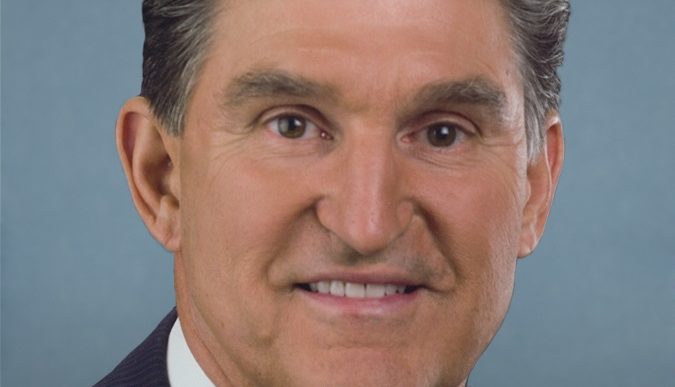
There are some like Sen. Joe Manchin of West Virginia who have clearly ruled out a Democrat-led filibuster of Gorsuch, whom Trump picked Tuesday to fill the late Antonin Scalia’s seat.
“The Senate should hold committee hearings,” Manchin said in statement. “Senators should meet with him, we should debate his qualifications on the Senate floor and cast whatever vote we believe he deserves.”
Manchin, who represents a state that Trump won by 42 percentage points, added, “I urge my colleagues to put partisan politics aside and allow the vetting process to proceed.”
Manchin met with Gorsuch on Thursday, but did not say if he would vote for his confirmation.
Today I met with #SCOTUSnominee Neil Gorsuch. I urge my colleagues to put partisan politics aside & allow the vetting process to proceed. pic.twitter.com/zsBaeWlTiX
Then there are others like Sen. Claire McCaskill of Missouri. She initially signaled support for a hearing and vote for Gorsuch, but backtracked after facing criticism.
On Tuesday, before Trump made his announcement, McCaskill tweeted, “We should have a full confirmation hearing process and a vote.”
We should have a full confirmation hearing process and a vote on ANY nominee for the Supreme Court.
Schumer said Wednesday that 60 votes should be the “standard” for a Supreme Court nominee.
“Sixty votes is a bar that was met by each of President [Barack] Obama’s nominees,” he said. “At the time, there was no need for a cloture vote, because we knew that each of them would garner over 60 votes.”
The Washington Post’s fact-checker called out Schumer for his 60-vote “standard” on Supreme Court nominees. While 60 votes would be needed to overcome a filibuster, a simple majority is required for confirmation.
Obama’s two nominees, Justices Sonia Sotomayor and Elena Kagan, were confirmed with more than 60 votes. But other Supreme Court nominees have been confirmed with less than 60 votes.
Justice Samuel Alito was confirmed by a vote of 58 to 42 in 2006, and Justice Clarence Thomas was confirmed with a vote of 52 to 48 in 1991.
This week, Democrats sent mixed signals about what an up-or-down vote would mean for Gorsuch. In addition to Manchin and McCaskill, six others weighed in with similar statements.
Sen. Richard Blumenthal, D-Conn.: “I will support having a hearing and a vote because I think the president’s nominee deserves that consideration.”
Sen. Chris Coons, D-Del.: “I will push for a hearing and I will push for a vote.”
Sen. Joe Donnelly, D-Ind.: “As I have said part of our job as senators includes considering, debating, and voting on judicial nominations, including to the Supreme Court.”
Sen. Dick Durbin, D-Ill.: “I will meet with Judge Gorsuch and support a hearing and vote for him.”
Sen. Heidi Heitkamp, D-N.D., asked if Gorsuch should get “a straight up-or-down vote,” told Politico: “Absolutely.”
Sen. Jon Tester, D-Mont.: “Have a hearing and vote.”
What remains unclear is the type of vote these senators have in mind: a cloture vote of 60 or confirmation vote of 51. In the case of McCaskill and Durbin, their statements were enough to rattle liberal activists and prompt responses.
A day after his original statement, Durbin clarified that Gorsuch would need to reach a 60-vote threshold.
Meanwhile, the Progressive Change Campaign Committee attacked Coons for lacking “backbone.” The group’s email to supporters said, “After everything Trump has done since taking office, this is NOT what Democratic backbone needs to look like.”
“Democrats are having an internal debate, and their senators are between a rock and a hard place, causing some senators to swing back and forth,” said Ken Klukowski, senior counsel and director of strategic affairs for First Liberty Institute.
“Some in Democratic ranks argue that they should keep Scalia’s seat open for a full four years,” Klukowski added. “They cannot sustain such opposition for four years. As President Obama said, elections have consequences. The American people voted for this outcome.”
Rachel Bovard, director of policy services at The Heritage Foundation, said Democrats have a losing argument.
“The Democratic Party appears to be split on this issue,” Bovard told The Daily Signal. “However, it’s the height of hypocrisy for the Democrats to demand a 60-vote threshold on Gorsuch after they destroyed the 60-vote threshold for every other judge by going nuclear in 2013.”
In 2013, when Democrats controlled the Senate, they changed the rules to eliminate the filibuster for lower court nominees and executive branch nominees. Trump has advised Senate Republicans to “go nuclear” and make the same standar apply to Supreme Court nominees.
Republicans, however, could also use what is known as the two-speech rule to run out the clock on a Democrat-led filibuster, preserving the 60-vote threshold while also eventually confirming Gorsuch.
Klukowski said that dissension in the Democrat ranks is not sustainable. He expects Gorsuch to win confirmation and be seated on the Supreme Court.
“President Trump made the Supreme Court central to his campaign, including a list with Gorsuch’s name on it,” Klukowski said. “In a sense, the election was Merrick Garland vs. Neil Gorsuch. President Trump won, so Judge Gorsuch won. Senate Democrats need to accept the verdict of the American people, and confirm this well-qualified nominee.” (For more from the author of “Democrats Send Mixed Signals on Senate Vote for Neil Gorsuch” please click HERE)
https://joemiller.us/wp-content/uploads/Joe_Manchin_113th_Congress-1.jpg825675Joe Millerhttps://joemiller.us/wp-content/uploads/logotext.pngJoe Miller2017-02-02 20:41:342017-02-02 20:41:34Democrats Send Mixed Signals on Senate Vote for Neil Gorsuch
President Donald Trump’s nominee for the Supreme Court could have a say in rulings on religious freedom, transgender bathrooms in schools, and private property rights, if he is confirmed before April 16.
Judge Neil Gorsuch of the U.S. 10th Circuit Court of Appeals met with Senate Majority Leader Mitch McConnell, R-Ky., and other senators Wednesday at the Capitol less than 24 hours after Trump announced his nomination.
Senate Minority Leader Charles Schumer, D-N.Y., however, has vowed to filibuster the nomination.
“It’s doable to get a swift confirmation. The average Supreme Court confirmation comes in 67 days. Justice [Ruth Bader] Ginsburg was confirmed in 50 days,” Carrie Severino, chief counsel for the Judicial Crisis Network, told The Daily Signal. “Obviously, Democrats want to drag their heels.”
Senate Judiciary Chairman Chuck Grassley, R-Iowa, told CNN he is planning to have confirmation hearings in six weeks for Gorsuch.
It was an honor to meet Judge Gorsuch today. I look forward to consideration of his nomination. https://t.co/KFKIchRVQW
Authorities on the Supreme Court say the likely big-ticket items for the spring will be three cases.
One is regarding whether a Christian school in Missouri is entitled to compete for the same state dollars as nonreligious schools. The outcome could affect so-called Blaine amendments in states across the country.
The second case involves property rights in Wisconsin. The third is a transgender bathroom case out of a Virginia high school, and how broadly the federal government may interpret Title IX, a federal law that bars sexual discrimination in education.
Some Senate Democrats, such as Jeff Merkley of Oregon, have said the Supreme Court seat was “stolen” because Senate Republicans refused to hold a hearing on President Barack Obama’s nomination of Merrick Garland to fill the seat of Justice Antonin Scalia.
But that’s because McConnell and other GOP leaders wanted to allow the electorate to decide in the presidential election, Severino said. McConnell almost certainly would have made sure the Senate Judiciary Committee held a hearing on Hillary Clinton’s nominee had the Democratic candidate been elected, she said.
“The Garland nomination was in the middle of an election,” Severino said. “This is not an election year. We are more than three years away from an election.”
Hope you like my nomination of Judge Neil Gorsuch for the United States Supreme Court. He is a good and brilliant man, respected by all.
On Wednesday, Trump told reporters he supported killing a Senate filibuster if necessary by using the so-called nuclear option—a rules change in which 51 rather than 60 votes are needed to bring a nomination to the floor.
“If we end up with that gridlock, I would say, ‘If you can, Mitch, go nuclear,’” Trump said of McConnell. “Because that would be an absolute shame if a man of this quality was put up to that neglect. I would say it’s up to Mitch, but I would say, ‘Go for it.’”
Senate Rule XIX, the two-speech rule, empowers the majority to overcome a filibuster and confirm a nominee. This would require the Senate to remain in the same legislative day until filibustering senators exhaust their ability to speak about the nominee, which would be after they give two floor speeches. Then, the Senate could proceed to vote.
Sen. Dianne Feinstein, D-Calif., ranking member of the Judiciary Committee, tweeted yesterday:
Judge Gorsuch voted twice to deny contraceptive coverage to women, elevating a corporation’s religious beliefs over women’s health care.
ne survey found that the public seems to favor quick action.
A Marist poll released Wednesday, sponsored by the Knights of Columbus, found that 56 percent agreed it should be an “immediate priority” to appoint a Supreme Court justice who will interpret the Constitution as it was originally written, while another 24 percent agreed it is an “important” priority.
Conservatives are hoping Gorsuch will be seated on the court by April 16, when its last session of arguments takes place for the current term, said John Malcolm, director of the Meese Center for Legal and Judicial Studies at The Heritage Foundation. If not, some of the most controversial cases could be reheard, he said.
“It is not the end of the world if he isn’t confirmed by that time, because the court can hold over cases for rearmament in the next term if it believes the case needs a full nine justices to decide,” Malcolm told The Daily Signal.
Here’s a look at the three key cases likely to be argued:
1. Trinity Lutheran Church of Columbia v. Pauley
The case involves whether states can withhold state grants based entirely on the recipient’s being a religious institution.
Missouri’s Blaine Amendment, on the books since 1875, outlaws the use of public funds to aid a church. Today, Missouri has a program that offers grants to nonprofit organizations to install rubber surfaces made from recycled tires to replace gravel as a way to make playgrounds safer.
However, the state denied Trinity Lutheran Church’s application for the resurfacing even though it ranked ranked fifth out of 45 applications in meeting the government’s criteria.
The case began in 2013. Trinity contends the grant wouldn’t violate the Constitution’s Establishment Clause. It argues that singling out a church for exclusion from the program violates the right to free expression of religion as well as the Equal Protection Clause.
In this property rights case involving the Takings Clause of the Constitution, four siblings in the Murr family owned two adjacent waterfront properties St. Croix, Wisconsin. One property included a cabin built by their parents.
In 2004, zoning regulations prevented the siblings from developing the second lot because the state declared both properties to be one lot.
The family contends the state effectively took the second property by regulating it to the point of having no value without providing just compensation.
This case out of Virginia involves the Obama administration order requiring public schools to allow transgender students to use the restroom that corresponds to their gender identity.
Gavin Grimm, 17, a transgender student who was born female, wanted to use the boys’ restroom at a Gloucester County public high school. Grimm said school policy violated Title IX, the section of the federal code prohibiting discrimination on the basis of sex in any federally funded education program.
A District Court sided with the school system, but the 4th Circuit Court of Appeals ruled for Grimm.
Obama’s Department of Education issued a directive suggesting noncomplying schools would lose federal money if they didn’t allow transgender restroom choice. Texas and a dozen other states challenged the order.
The Supreme Court is expected to determine whether the department can make the final determination in broadly interpreting Title IX. (For more from the author of “Neil Gorsuch Could Rule on These 3 Big Cases If He Joins Supreme Court Soon” please click HERE)
https://joemiller.us/wp-content/uploads/Neil_Gorsuch_10th_Circuit.jpg32642448Joe Millerhttps://joemiller.us/wp-content/uploads/logotext.pngJoe Miller2017-02-01 23:28:492017-02-01 23:28:49Neil Gorsuch Could Rule on These 3 Big Cases If He Joins Supreme Court Soon