Posts

New U.S. Airport Security Rules Take Effect

Starting Thursday, boarding a plane on all United States-bound flights will mean stricter passenger screening. The new security measures are being put in place to avoid banning in-cabin laptops.

Changes to the pre-boarding security screening process will affect 325,000 passengers entering the U.S. on a daily basis. About 2,000 commercial flights from 105 different countries arrive in the U.S. every day.

The new government requirements to board airplanes could include short security screening interviews either at the boarding gate or at check-in.

The U.S. government announced the new rules in June, giving airline companies 120 days to prepare.

The regulations were implemented in order to “end the government’s restrictions on carry-on electronic devices on planes coming from 10 airports in eight countries in the Middle East and North Africa in response to unspecified security threats,” according to Reuters.

In March, the Trump administration had ordered a ban on carry-on laptops. The restrictions were eventually removed, but the administration said if airlines and airports did not boost their security, the measures could be reimplemented on a case-by-case basis.

Air France, Cathay Pacific, EgyptAir, Emirates and Lufthansa will begin implementing the new security measures on Thursday. Royal Jordanian Airlines were granted a delay by the U.S., and have until mid-January to start implementing the new security measures.

“In addition to the controls of electronic devices already introduced, travelers to the U.S.A. might now also face short interviews at check-in, document check or (their) gate,” Germany’s Lufthansa Group said in a statement.

TSA spokeswoman Lisa Farbstein told CBS News that the new security screening would be for all passengers, including U.S. citizens.

“The security measures affect all individuals, international passengers and U.S. citizens, traveling to the United States from a last point of departure international location,” Farbstein said. “These new measures will impact all flights from airports that serve as last points of departure locations to the United States.”

Airlines in Korea and China have expressed their concern over the new security features.

“We see this as a big issue for China Airlines,” said Steve Chang, senior vice president of the Taiwanese firm.

“We are asking customers to show up at the airport early. … It’s just inconvenient for the passengers,” Walter Cho, president and chief operating officer of Korean Airlines, told Reuters.

Cathay Pacific Airways has said in-town check-in and self-bag-drop services will no longer be available on direct flights to the U.S. They also advise passengers to arrive three hours before their departure time. (For more from the author of “New U.S. Airport Security Rules Take Effect” please click HERE)

Follow Joe Miller on Twitter HERE and Facebook HERE.
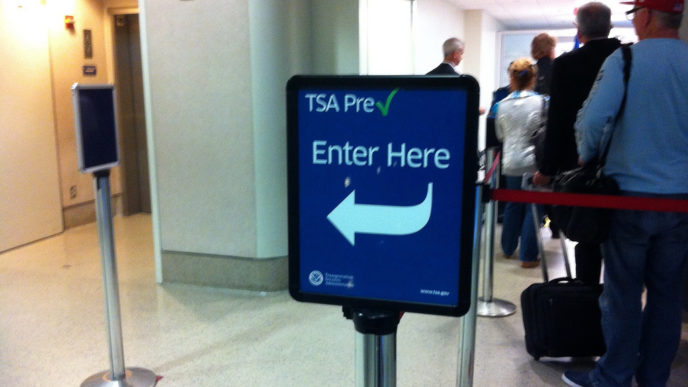
Ex-Airport Security Employee Alleges Managers Recorded, Shared Co-Worker Sex Videos at JFK

A female former security supervisor for the company that protects John F. Kennedy International Airport has filed a federal complaint alleging the outfit was “overrun with misogyny, racism and harassment.”

LaDonna Powell worked for four years at Allied Universal Security Services, which is contracted by the Port Authority of New York and New Jersey to secure the Queens airport. She claims in court papers filed Tuesday that she “was subjected to a shocking campaign of abuse and hazing.”

In an exclusive interview with the I-Team, Powell said male managers touched her inappropriately and made lewd comments about her body. Four of those managers are named as defendants in the federal lawsuit. The suit also names two Allied project managers and one executive for the company.

A spokesperson for Allied Universal Security Services, which bills itself as the largest security services company in North America, told the I-Team the company just received the lawsuit Tuesday morning and is reviewing it. She said Allied does not comment on pending litigation. (Read more from “Ex-Airport Security Employee Alleges Managers Recorded, Shared Co-Worker Sex Videos at JFK” HERE)

Follow Joe Miller on Twitter HERE and Facebook HERE.
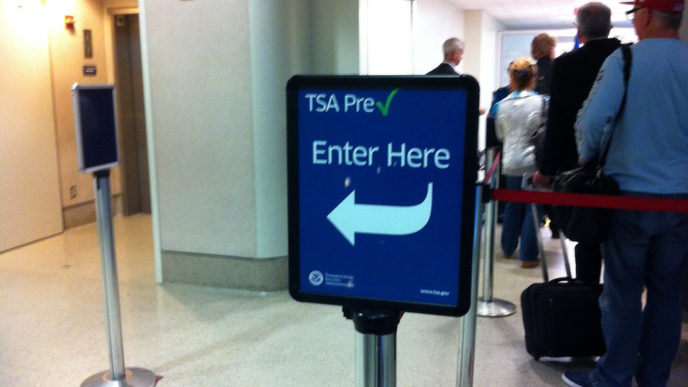
TSA Agent Touches Passengers Crotch 8 Times

. . .For those curious about what the “enhanced” pat-down involves, I had a first-hand experience (no pun intended) Sunday evening September 10 in the Kansas City airport. (This is going exactly where you think it’s going, so feel free to stop reading right now.)

After going through a metal detector in the TSA-Pre security line, I was randomly selected to see if a machine would detect explosives on my hands. My palms were swabbed and the machine detected explosives, even though I had not recently handled a gun, flammable liquids, or any sort of explosives. Another airline passenger told me the same machine had detected explosives on the hands of another passenger who had gone through the line minutes before I did . . .

For what it’s worth, this isn’t the story of an agent who didn’t know how to do a pat-down. The agent described exactly what he was going to do before he did it and seemed to be simply carrying out the government’s policy. I’m sure he’d like a job that involves less groping.

I’m not a crazy ACLU-type. I’ve had no problem with body-scanners or previous TSA pat-downs. In 2009, a terrorist famously smuggled a bomb in his underwear aboard a U.S. flight. But an agent of the state should probably only touch a citizen’s genitals seven or eight times if the agent has reasonable suspicion, and not because a machine is malfunctioning or calibrated, intentionally or unintentionally, to detect explosives on everyone who is tested. (Read more from “TSA Agent Touches Passengers Crotch 8 Times” HERE)

Follow Joe Miller on Twitter HERE and Facebook HERE.

Former TSA Boss Among Candidates for FBI Director

A former Transportation Security Administration leader is among the latest candidates President Donald Trump is considering for FBI director.

White House press secretary Sean Spicer said Trump met Tuesday with former TSA Administator John Pistole as well as Chris Wray, a former top Justice Department official who has served as New Jersey Gov. Chris Christie’s personal lawyer.

Trump is still on the hunt for a new FBI director three weeks after he fired James Comey. Before he departed on his first overseas trip, which ended Saturday, Trump met with former Connecticut Sen. Joe Lieberman, former Oklahoma Gov. Frank Keating and acting FBI director Andrew McCabe. Lieberman later pulled his name from consideration. (Read more from “Former TSA Boss Among Candidates for FBI Director” HERE)

Follow Joe Miller on Twitter HERE and Facebook HERE.

DHS Head Backs Phone Searches of Those Entering U.S. At Airports

The Department of Homeland Security will continue searching the mobile phones and electronic devices of travelers at U.S. airports, the agency’s leader said as lawmakers of both parties questioned whether the anti-terrorism tool is unlawfully intrusive.

DHS Secretary John Kelly, speaking Wednesday to the Senate Homeland Security Committee, said such searches are valuable in the fight to keep terrorists out of the U.S. and that they affect a fraction of the 1 million people who enter the country every day.

The electronics searches are “not routine; it’s done in a very small number of cases,” the retired Marine general told lawmakers. “If there’s reason to do it, we will do it. Whether it’s France, Britain Egypt, Saudi Arabia or Somalia, it won’t be routinely done at a port of entry.”

Kelly appeared before the panel to announce that the number of undocumented immigrants apprehended at the border last month reached a 17-year low since President Donald Trump took office. (Read more from “DHS Head Backs Phone Searches of Those Entering U.S. At Airports” HERE)

Follow Joe Miller on Twitter HERE and Facebook HERE.

Mom Says TSA Agents Traumatized Son With ‘Horrifying’ Security Check

A mother who asked TSA agents at DFW International Airport for alternative screening for her son with special needs said they were “treated like dogs” and forced to miss a flight during an extensive security check, according to her Facebook post that has since gone viral.

But the Transportation Security Administration said in a prepared statement that it followed approved procedures to “resolve an alarm of the passenger’s laptop.”

Jennifer Williamson wrote Sunday morning that her son has a sensory processing disorder and that she asked agents to “screen him in other ways per TSA rules.”

An accompanying video shows a TSA agent patting down her son. The agent pats down his backside before moving to his front. She writes in the post they were kept for more than hour in the “horrifying” incident.

TSA disputed Williamson’s account, noting in its statement that the passengers were at the checkpoint for about 45 minutes, including the time it took to discuss screening procedures with the teen’s mother and the inspection of three carry-on items. The pat-down took about two minutes, according to the agency. (Read more from “Mom Says TSA Agents Traumatized Son With ‘Horrifying’ Security Check” HERE)

Follow Joe Miller on Twitter HERE and Facebook HERE.
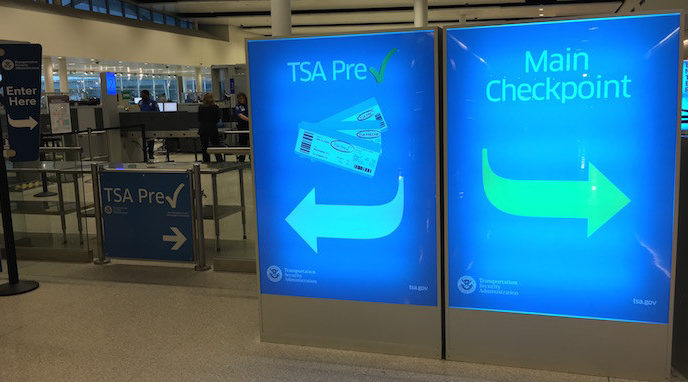
TSA’s New Groping Process So Invasive, They’re Warning Police to Prepare for Complaints

Something ominous is taking place at the Transportation Security Administration (TSA) right now, having to do with a more aggressive version of the already invasive pat-down method. The TSA is so certain their new groping method will offend that they have taken action to warn police ahead of time that they will undoubtedly be receiving complaints.

The TSA — one of America’s most corrupt and incompetent agencies whose ostensible job is fighting terrorism — is apparently so unsatisfied with the mere ability to strip search babies, remove colostomy bags, beat up blind cancer patients, and fondle your genitalia, that this week they announced a more invasive physical pat-down.

Taking note of their increased ability to grope anyone who wishes to fly on an airplane, the agency expects passengers to consider the examination unusual.

In fact, as Bloomberg reports,the TSA decided to inform local police in case anyone calls to report an “abnormal” federal frisking, according to a memo from an airport trade association obtained by Bloomberg News. The physical search, for those selected to have one, is what the agency described as a more “comprehensive” screening, replacing five separate kinds of pat-downs it previously used.

“Passengers who have not previously experienced the now standardized pat-down screening may not realize that they did in fact receive the correct procedure, and may ask our partners, including law enforcement at the airport, about the procedure,” TSA spokesman Bruce Anderson wrote March 3 in an email, describing why the agency notified police.

The fact that the TSA is alerting police to the fact that there will likely be an increase in complaints is bad enough. However, their vague details about the newly enhanced sexual assault with the fronts of their hands leave the imagination open for the worst.

On its website, the TSA says employees “use the back of the hands for pat-downs over sensitive areas of the body. In limited cases, additional screening involving a sensitive area pat-down with the front of the hand may be needed to determine that a threat does not exist.”

“Due to this change, TSA asked FSDs [field security directors] to contact airport law enforcement and brief them on the procedures in case they are notified that a passenger believes a [TSA employee] has subjected them to an abnormal screening practice,” Airports Council International-North America (ACI-NA) wrote

As the Free Thought Project has pointed out countless times, the TSA has been caught in a myriad of criminal activities — including everything from massive drug trafficking conspiracies to brutal beat downs. Granting this already despicable group of cronies the ability to further dehumanize Americans for the facade of safety is nothing short of irresponsible and tyrannical.

Laughably, the ACI-NA is justifying these enhanced pat-downs by claiming TSA agents aren’t intelligent enough to remember all the procedures.

The pat-down change is “intended to reduce the cognitive burden on [employees] who previously had to choose from various pat-down procedures depending on the type of screening lane,” the ACI-NA wrote in its notice, as reported by Bloomberg.

Now, instead of a dimwitted TSA agent fumbling to remember what pat-down to do in which lane, they can just pull the person off to a secret room and have their way with the front of their hands. Thanks, America!

Of course, when they were pressed with questions in regards to their new molestation techniques, the TSA said they couldn’t comment because “knowing our specific procedures could aid those who wish to do travelers harm in evading our measures.”

To the average American who buys into the ‘terrorists hate our freedom’ propaganda, this move by the TSA to grant them the legal ability to grope themselves and their children, will be mostly accepted. However, to those of us who pay attention and realize that the TSA has a 95% failure rate at stopping anything from coming through, as well as being a massively corrupt and predatory organization, this move is seen for what it actually is — conditioning for the police state. (For more from the author of “TSA’s New Groping Process So Invasive, They’re Warning Police to Prepare for Complaints” please click HERE)

Follow Joe Miller on Twitter HERE and Facebook HERE.
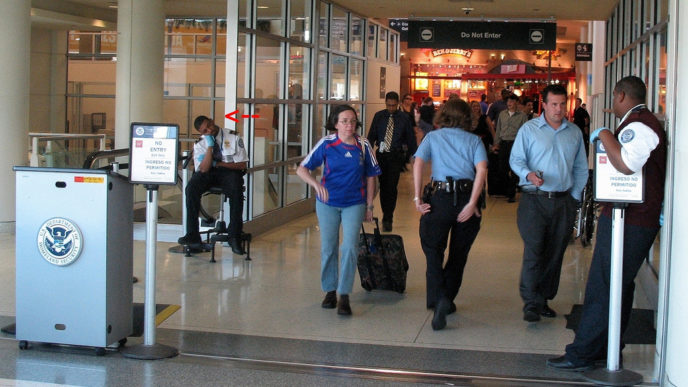
U.S. Airport Pat-Downs Are About to Get More Invasive

While few have noticed, U.S. airport security workers long had the option of using five different types of physical pat-downs at the screening line. Now those options have been eliminated and replaced with a single universal approach. This time, you will notice.

The new physical touching—for those selected to have a pat-down—will be be what the federal agency officially describes as a more “comprehensive” physical screening, according to a Transportation Security Administration spokesman.

Denver International Airport, for example, notified employees and flight crews on Thursday that the “more rigorous” searches “will be more thorough and may involve an officer making more intimate contact than before.”

“I would say people who in the past would have gotten a pat-down that wasn’t involved will notice that the [new] pat-down is more involved,” TSA spokesman Bruce Anderson said Friday. The shift from the previous, risk-based assessment on which pat-down procedure an officer should apply was phased in over the past two weeks after tests at smaller airports, he said. (Read more from “U.S. Airport Pat-Downs Are About to Get More Invasive” HERE)

Follow Joe Miller on Twitter HERE and Facebook HERE.

TSA ‘Virtual Strip Searches’ Linked to Deaths

The legal battle over the Transportation Security Administration’s installation of Advanced Imaging Technology – its “virtual strip search” machines – in airports has gone on for nearly a decade, and it’s focused mostly on privacy rights.

The feds use an X-ray type technology designed to reveal whether an airline passenger is carrying a weapon or another banned item underneath clothing.

But there have been numerous lawsuits over the images the machines create – initially an essentially nude rendering of the passenger – and how the images were handled. The agency said it altered its software so that the images now render a “stick figure” that doesn’t reveal intimate details.

But now there’s a lawsuit raising another claim: The machines are responsible for hundreds of deaths per year.

The lawsuit was filed in the District of Columbia Court of Appeals by the Competitive Enterprise Institute and the Rutherford Institute against the Department of Transportation and the TSA. (Read more from “TSA ‘Virtual Strip Searches’ Linked to Deaths” HERE)

Follow Joe Miller on Twitter HERE and Facebook HERE.

Another Travel Fiasco Courtesy of the TSA

I have long been a believer that, in most cases, a private company will do a more effective and efficient job than any government agency charged with the same task. My recent travel experience solidified that belief.

It all started out with a half-empty water bottle at Ronald Reagan National Airport just outside the District of Columbia.

I had checked in the night before, checked my bag at the curbside when I arrived, and now had a full hour to go through security. With Congress gone since late July and much of the District emptied out until Labor Day, I didn’t expect long security lines. I was right. I breezed through in two minutes, until…

Like many airline passengers, I had forgotten to take my plastic bottle of water out of my bag before placing it on the moving belt for security screening. So, naturally, the screener pulled my bag and after I waltzed through the body image scanner with no hiccups, I joined the Transportation Security Administration agent assigned to check my bag.

As I suspected, the water bottle was the culprit but he still had to do a mandatory chemical test of my bag. That’s when they take those little black sticks with swatches on the end and rub them over your belongings, or sometimes the palms of your hands, and then run them through a machine. Fairly routine. Except this time my swatch sent off an alarm. No noise, just a flashing “Alarm” text on the machine’s computer screen. So, they tried again. Same response.

That meant I qualified for a full-body pat-down. I know people who have gone ballistic when asked to have that done, but I go along as I’ve got nothing to hide and I just want to get my purse and get to my gate. Nope. After the pat-down, they do a chemical test on me and my swatches send off the alarm too.

We’re now about 15 minutes and five (yes, five) TSA agents into this little drama. The screener, the guy who first checked my bag, the female TSA agent who was assigned to do the pat-down, the TSA agent who had checked my ID and boarding pass were all there, along with another agent who, as best as I could tell, was simply assigned to stand next to me and make small talk and make sure I didn’t go anywhere.

The agents do another chemical test and decide they need to do another full-body pat-down. They want to do this one in private, assign a new female TSA agent to do it, but tell the original one to also attend as a witness. When I come back out, there is now a manager involved and they are calling the head of something—I could never get the official title—who was supposedly the only person at Reagan airport who could come check my chemical tests and figure out what was going on.

Twenty minutes later, and with no sense of urgency, he arrives. So here we, meaning me and now up to eight TSA agents, go again. Now they are taking out my items one by one to run through the screener—my two lipsticks, eyeshadow, computer power cord, jewelry bag, wallet, sunglasses, etc. Not sure why the original crew didn’t do that, but at this point it was clear most of these folks, bless their hearts, probably had this job because it is one of the few that requires no problem-solving skills or ability to act with speed, and where, heaven knows, customer satisfaction is found nowhere on a personnel review form.

Four gray TSA bins, each holding a few of my items, are then whisked off by no less than three TSA agents (that’s right, it took three people to carry four bins holding heavy-duty items like makeup and hand sanitizer) to a back room. I’m told nothing. For another 15 minutes I sit, not asking too many questions because I still have hope against hope that I might make my flight and don’t want to do anything to take one of these whiz kids off their game.

Now, 55 minutes into this whole process, the back room door opens, out come all my bins and items and I’m told I’m free to go. Dumping everything into my bag and grabbing my shoes, which I had not been allowed to put on, I race barefoot to the gate.

Alas, it was not meant to be. I missed my flight.

The only positive, or so I thought, was that now I’d have time to go back and check in with the TSA folks to find out exactly what it was that caused the problem. I hadn’t taken the time to do so when they finally gave me the all-clear because I just wanted to get to the gate. But now, in an attempt to not relive this experience in the future, I was determined to find out what shampoo I had used or lotion I was wearing that sent their chemical sensors into a frenzy.

No such luck. They can’t tell you that. When I got back to the TSA area, I found the agent who had been the original screener and asked him if he had been told what had caused the problem. “I can’t tell you,” was his response. “It’s a chemical but I’m not allowed to tell you what kind.”

I prodded further, “You mean you know what it is, you must have concluded it wasn’t dangerous because you all finally let me go, but you can’t tell me so that I make sure not to wear it again or have it in my bag again?”

Mr. TSA Agent: “Right. Sorry.”

So how many TSA agents did it take to make me miss my flight yet give no explanation as to why or what to do different next time around?

I lost count.

My story apparently isn’t unique. A man putting on his shoes after coming through security and sitting on the bench next to me as I was working on this article said the exact same thing happened to his wife last summer, except that in her case it turned out she wasn’t sporting some odd lotion or perfume, the machine had simply malfunctioned multiple times. Too bad she missed her international flight while they figured that out.

I wonder if her story, or mine, would have been different if more U.S. airports did what most European airports do, use private screeners. Since 2001, something called the Screening Partnership Program has existed that allows for U.S. airports to contract with private screeners as opposed to using those assigned by the TSA.

A study by the House Transportation Committee found that $1 billion could be saved over five years if America’s 35 largest airports used private screeners. My Heritage Foundation colleague David Inserra has pointed out that “with smaller overhead costs and lower levels of attrition, the screening program is likely a financial boon for most airports.” He also says those airports report improved customer service.

So why do roughly only 20 U.S. airports make use of the private screening option? Because the Obama administration, in one of its “go around the laws we don’t like” moves, suspended the program in 2011 (Congress rightly later reinstated it), because it can take up to four years for an airport to get approval due to government bureaucracy, and because the TSA and its unionized workforce has no interest in competing with the private sector.

The reality is that air travel need not be the fiasco it has become. Congress can rein in the TSA by streamlining the process to hire private screeners and forbidding the unionization of its employees.

Until then, maybe you shouldn’t shower before your flights. (For more from the author of “Another Travel Fiasco Courtesy of the TSA” please click HERE)

Follow Joe Miller on Twitter HERE and Facebook HERE.