Serial Rapist Connected With Nobel Peace Prize Convicted, Causes Unprecedented Delay in Award

By East Lothian Courier. The man at the centre of a sex abuse and financial crimes scandal in Sweden that is tarnishing the academy that awards the Nobel Prize in Literature has been convicted of rape and sentenced to two years in prison.

Jean-Claude Arnault, 72, a major cultural figure in Sweden, had faced two counts of rape for the same woman in 2011.

He was found guilty of one rape but was acquitted of the other because the victim said she was asleep at the time and judges said her account was not reliable. (Read more from “Serial Rapist Connected With Nobel Peace Prize Convicted, Causes Unprecedented Delay in Award” HERE)

____________________________________________________

Arnault, the Frenchman at the center of the Nobel Prize scandal, had long history of alleged sexual assaults

By DW. In November 2017, Arnault was accused of assaulting at least 18 women, including a claim backed by three witnesses that he groped Sweden’s Crown Princess Victoria at an Academy event in 2006. He was charged with two counts of rape, after several charges had to be dropped due to insufficient evidence or the statute of limitations having lapsed. . .

There are also suspicions that Arnault has leaked the winner of the [Nobel] Literature Prize to the media several times.

As a result, the Academy announced that it will not hand out its literature award until 2019, saying that it needs to regain public trust in its processes. This is the first time the prize has been canceled in six decades. Previously, the Academy has declined to award a writer in times of conflict or when they believed none of the nominees were worthy. (Read more from this story HERE)

____________________________________________________

French Photographer at the Center of Nobel Prize Sex Scandal Is Jailed for Two Years for Rape in Sweden

By The Sun. The French photographer at the centre of the scandal that rocked the Nobel Prize has been jailed for two years for rape in Sweden.

Jean-Claude Arnault was charged with two counts of rape and the court found him guilty of one count and acquitted him of the other.

Judge Gudrun Antemar said: “The court’s conclusion is that the evidence is enough to find the defendant guilty of one of the events.”

She added the evidence “has mainly consisted of statements made during the trial by the injured party and several witnesses”.

The trial was held behind closed doors to protect the identity of the victim, which has not been disclosed. (Read more from “French Photographer at the Center of Nobel Prize Sex Scandal Is Jailed for Two Years for Rape in Sweden” HERE)

Follow Joe Miller on Twitter HERE and Facebook HERE.

Creating a Suspect Society: The Scary Side of the Technological Police State

It’s a given that Big Brother is always watching us.

Unfortunately, thanks to the government’s ongoing efforts to build massive databases using emerging surveillance, DNA and biometrics technologies, Big Brother (and his corporate partners in crime) is getting even creepier and more invasive, intrusive and stalker-like.

Indeed, every dystopian sci-fi film (and horror film, for that matter) we’ve ever seen is suddenly converging into this present moment in a dangerous trifecta between science and technology, Big Business, and a government that wants to be all-seeing, all-knowing and all-powerful—but not without help from the citizenry.

On a daily basis, Americans are relinquishing (in many cases, voluntarily) the most intimate details of who we are—our biological makeup, our genetic blueprints, and our biometrics (facial characteristics and structure, fingerprints, iris scans, etc.)—in order to navigate an increasingly technologically-enabled world.

As journalist Anna Myers notes, “Fingerprint readers, eye scans, and voice recognition are no longer just the security methods of high-tech spy movies. Millions of mobile phone, bank, and investment customers now have these technologies at their fingertips. Schwab uses voice recognition, Apple uses fingerprints, Wells Fargo scans eyes, and other companies are developing heartbeat or grip technology to verify user identity. Whether biometric technology will thrive or meet its demise depends not only on the security of the technology, but also whether the U.S. legal system will adapt to provide the privacy protections necessary for consumers to use it and for companies to invest in its development. Currently there is no federal law and only one state with a law protecting biometric information.”

Translation: thus far, the courts have done little to preserve our rights in the face of technologies and government programs that have little respect for privacy or freedom.

Consider all the ways we continue to be tracked, hunted, hounded, and stalked by the government and its dubious agents:

By tapping into your phone lines and cell phone communications, the government knows what you say.

By uploading all of your emails, opening your mail, and reading your Facebook posts and text messages, the government knows what you write.

By monitoring your movements with the use of license plate readers, surveillance cameras and other tracking devices, the government knows where you go.

By churning through all of the detritus of your life—what you read, where you go, what you say—the government can predict what you will do.

By mapping the synapses in your brain, scientists—and in turn, the government—will soon know what you remember.

By mapping your biometrics—your “face-print”—and storing the information in a massive, shared government database available to bureaucratic agencies, police and the military, the government’s goal is to use facial recognition software to identify you (and every other person in the country) and track your movements, wherever you go.

And by accessing your DNA, the government will soon know everything else about you that they don’t already know: your family chart, your ancestry, what you look like, your health history, your inclination to follow orders or chart your own course, etc.

Of course, none of these technologies are foolproof.

Nor are they immune from tampering, hacking or user bias.

Nevertheless, they have become a convenient tool in the hands of government agents to render null and void the Constitution’s requirements of privacy and its prohibitions against unreasonable searches and seizures.

Consequently, no longer are we “innocent until proven guilty” in the face of DNA evidence that places us at the scene of a crime, behavior sensing technology that interprets our body temperature and facial tics as suspicious, and government surveillance devices that cross-check our biometrics, license plates and DNA against a growing database of unsolved crimes and potential criminals.

Increasingly, we are all guilty until proven innocent as the government’s questionable acquisition and use of biometrics and DNA to identify individuals and “solve” crimes makes clear.

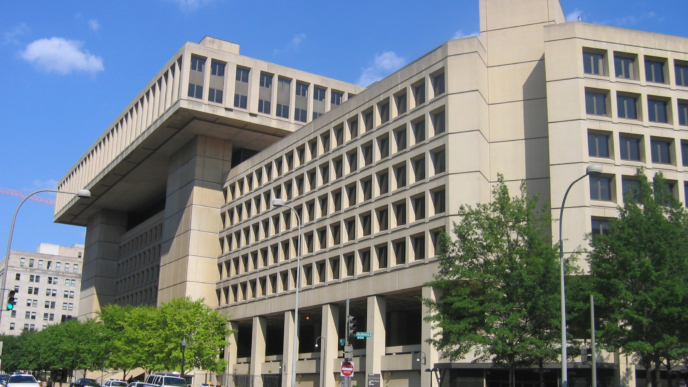
Indeed, for years now, the FBI and Justice Department have conspired to acquire near-limitless power and control over biometric information collected on law-abiding individuals, millions of whom have never been accused of a crime.

Going far beyond the scope of those with criminal backgrounds, the FBI’s Next Generation Identification database (NGID), a billion dollar boondoggle that is aimed at dramatically expanding the government’s ID database from a fingerprint system to a vast data storehouse of iris scans, photos searchable with face recognition technology, palm prints, and measures of gait and voice recordings alongside records of fingerprints, scars, and tattoos.

Launched in 2008, the NGID is a massive biometric database that contains more than 100 million fingerprints and 45 million facial photos gathered from a variety of sources ranging from criminal suspects and convicts to daycare workers and visa applicants, including millions of people who have never committed or even been accused of a crime.

In other words, innocent American citizens are now automatically placed in a suspect database.

For a long time, the government was required to at least observe some basic restrictions on when, where and how it could access someone’s biometrics and DNA and use it against them.

That is no longer the case.

The information is being amassed through a variety of routine procedures, with the police leading the way as prime collectors of biometrics for something as non-threatening as a simple moving violation. The nation’s courts are also doing their part to “build” the database, requiring biometric information as a precursor to more lenient sentences. And of course Corporate America has made it so easy to use one’s biometrics to access everything from bank accounts to cell phones.

We’ve made it so easy for the government to target, identify and track us—dead or alive.

It’s like shooting fish in a barrel.

For instance, in March 2018, Florida police showed up at a funeral home, asked to see the corpse of 30-year-old Linus F. Phillip, and attempted to use the dead man’s finger to unlock his cell phone using his biometric fingerprint. (It turns out, cops unlocking cell phones with dead people’s fingerprints is now relatively common.)

In 2016, the Department of Justice secured a warrant allowing police to enter a California residence and “force anyone inside to use their biometric information to open their mobile devices.”

Two years earlier, in 2014, a Virginia court “declared it legal to use criminal suspects’ fingerprints to open up smartphones.”

This doesn’t even touch on the many ways in which the government is using our DNA against us, the Constitution be damned.

In 2015, the U.S. Supreme Court let stand the Maryland Court of Appeals’ ruling in Raynor v. Maryland, which essentially determined that individuals do not have a right to privacy when it comes to their DNA.

Although Glenn Raynor, a suspected rapist, willingly agreed to be questioned by police, he refused to provide them with a DNA sample.

No problem: Police simply swabbed the chair in which Raynor had been sitting and took what he refused to voluntarily provide. Raynor’s DNA was a match, and the suspect became a convict. In refusing to hear the case, the U.S. Supreme Court gave its tacit approval for government agents to collect shed DNA, likening it to a person’s fingerprints or the color of their hair, eyes or skin.

Whereas fingerprint technology created a watershed moment for police in their ability to “crack” a case, DNA technology is now being hailed by law enforcement agencies as the magic bullet in crime solving.

It’s what police like to refer to as a “modern fingerprint.”

However, unlike a fingerprint, a DNA print reveals everything about “who we are, where we come from, and who we will be.”

With such a powerful tool at their disposal, it was inevitable that the government’s collection of DNA would become a slippery slope toward government intrusion.

Certainly, it was difficult enough trying to protect our privacy in the wake of a 2013 Supreme Court ruling in Maryland v. King that likened DNA collection to photographing and fingerprinting suspects when they are booked, thereby allowing the government to take DNA samples from people merely “arrested” in connection with “serious” crimes.

At that time, Justice Antonin Scalia warned that as a result of the Court’s ruling, “your DNA can be taken and entered into a national database if you are ever arrested, rightly or wrongly, and for whatever reason.”

Now, Americans are vulnerable to the government accessing, analyzing and storing their DNA without their knowledge or permission.

As the dissenting opinion in Raynor for the Maryland Court of Appeals rightly warned, “a person desiring to keep her DNA profile private, must conduct her public affairs in a hermetically sealed hazmat suit…. The Majority’s holding means that a person can no longer vote, participate in a jury, or obtain a driver’s license, without opening up his genetic material for state collection and codification.”

All 50 states now maintain their own DNA databases, although the protocols for collection differ from state to state. That DNA is also being collected in the FBI’s massive national DNA database, code-named CODIS (Combined DNA Index System), which was established as a way to identify and track convicted felons and has since become a de facto way to identify and track the American people from birth to death.

Indeed, hospitals have gotten in on the game by taking and storing newborn babies’ DNA, often without their parents’ knowledge or consent. It’s part of the government’s mandatory genetic screening of newborns. However, in many states, the DNA is stored indefinitely.

What this means for those being born today is inclusion in a government database that contains intimate information about who they are, their ancestry, and what awaits them in the future, including their inclinations to be followers, leaders or troublemakers.

For the rest of us, it’s just a matter of time before the government gets hold of our DNA, either through mandatory programs carried out in connection with law enforcement and corporate America, or through the collection of our “shed” or “touch” DNA.

While much of the public debate, legislative efforts and legal challenges in recent years have focused on the protocols surrounding when police can legally collect a suspect’s DNA (with or without a search warrant and whether upon arrest or conviction), the question of how to handle “shed” or “touch” DNA has largely slipped through without much debate or opposition.

Yet as scientist Leslie A. Pray notes:

We all shed DNA, leaving traces of our identity practically everywhere we go. Forensic scientists use DNA left behind on cigarette butts, phones, handles, keyboards, cups, and numerous other objects, not to mention the genetic content found in drops of bodily fluid, like blood and semen. In fact, the garbage you leave for curbside pickup is a potential gold mine of this sort of material. All of this shed or so-called abandoned DNA is free for the taking by local police investigators hoping to crack unsolvable cases. Or, if the future scenario depicted at the beginning of this article is any indication, shed DNA is also free for inclusion in a secret universal DNA databank.

What this means is that if you have the misfortune to leave your DNA traces anywhere a crime has been committed, you’ve already got a file somewhere in some state or federal database, albeit it may be a file without a name.

In other words, you’re a suspect to be watched.

As Forensic magazine reports, “As officers have become more aware of touch DNA’s potential, they are using it more and more. Unfortunately, some [police] have not been selective enough when they process crime scenes. Instead, they have processed anything and everything at the scene, submitting 150 or more samples for analysis.”

Even old samples taken from crime scenes and “cold” cases are being unearthed and mined for their DNA profiles.

Today, helped along by robotics and automation, DNA processing, analysis and reporting takes far less time and can bring forth all manner of information, right down to a person’s eye color and relatives. Incredibly, one company specializes in creating “mug shots” for police based on DNA samples from unknown “suspects” which are then compared to individuals with similar genetic profiles.

If you haven’t yet connected the dots, let me point the way.

Having already used surveillance technology to render the entire American populace potential suspects, DNA technology in the hands of government will complete our transition to a suspect society in which we are all merely waiting to be matched up with a crime.

No longer can we consider ourselves innocent until proven guilty. Now we are all suspects in a DNA lineup until circumstances and science say otherwise.

Of course, there will be those who point to DNA’s positive uses in criminal justice, such as in those instances where it is used to absolve someone on death row of a crime he didn’t commit, and there is no denying its beneficial purposes at times.

However, as is the case with body camera footage and every other so-called technology that is hailed as a “check” on government abuses, in order for the average person—especially one convicted of a crime—to request and get access to DNA testing, they first have to embark on a costly, uphill legal battle through red tape and, even then, they are opposed at every turn by a government bureaucracy run by prosecutors, legislatures and law enforcement.

What this amounts to is a scenario in which we have little to no defense of against charges of wrongdoing, especially when “convicted” by technology, and even less protection against the government sweeping up our DNA in much the same way it sweeps up our phone calls, emails and text messages.

Yet if there are no limits to government officials being able to access your DNA and all that it says about you, then where do you draw the line?

As technology makes it ever easier for the government to tap into our thoughts, our memories, our dreams, suddenly the landscape becomes that much more dystopian.

With the entire governmental system shifting into a pre-crime mode aimed at detecting and pursuing those who “might” commit a crime before they have an inkling, let alone an opportunity, to do so, it’s not so far-fetched to imagine a scenario in which government agents (FBI, local police, etc.) target potential criminals based on their genetic disposition to be a “troublemaker” or their relationship to past dissenters.

Equally disconcerting: if scientists can, using DNA, track salmon across hundreds of square miles of streams and rivers, how easy will it be for government agents to not only know everywhere we’ve been and how long we were at each place but collect our easily shed DNA and add it to the government’s already burgeoning database?

It’s not just yourself you have to worry about, either.

It’s also anyone related to you who can be connected by DNA.

These genetic fingerprints, as they’re called, do more than just single out a person. They also show who you’re related to and how. As the Associated Press reports, “DNA samples that can help solve robberies and murders could also, in theory, be used to track down our relatives, scan us for susceptibility to disease, or monitor our movements.”

Capitalizing on this, police in California, Colorado, Virginia and Texas use DNA found at crime scenes to identify and target family members for possible clues to a suspect’s whereabouts.

Who will protect your family from being singled out for “special treatment” simply because they’re related to you? As biomedical researcher Yaniv Erlich warns, “If it’s not regulated and the police can do whatever they want … they can use your DNA to infer things about your health, your ancestry, whether your kids are your kids.”

For that matter, how do you protect yourself against having your DNA extracted, your biometrics scanned and the most intimate details of who you are—your biological footprint—uploaded into a government database?

What recourse do you have when that information, taken against your will, is shared, stolen, sold or compromised, as it inevitably will be in this age of hackers? We know that databases can be compromised. We’ve seen it happen to databases kept by health care companies, motor vehicle agencies, financial institutions, retailers and intelligence agencies such as the NSA.

And what about those cases in which the technology proved to be wrong, either through human error or tampering?

It happens more often than we are told.

For example, David Butler spent eight months in prison for a murder he didn’t commit after his DNA was allegedly found on the murder victim and surveillance camera footage placed him in the general area the murder took place. Conveniently, Butler’s DNA was on file after he had voluntarily submitted it during an investigation years earlier into a robbery at his mother’s home.

The case seemed cut and dried to everyone but Butler who proclaimed his innocence.

Except that the DNA evidence and surveillance footage was wrong: Butler was innocent.

That Butler’s DNA was supposedly found on the victim’s nails was attributed to three things: one, Butler was a taxi driver “and so it was possible for his DNA to be transferred from his taxi via money or another person, onto the murder victim”; two, Butler had a rare skin condition causing him to shed flakes of skin—i.e., more DNA to spread around, much more so than the average person; and three, police wanted him to be the killer, despite the fact that “the DNA sample was only a partial match, of poor quality, and experts at the time said they could neither say that he was guilty nor rule him out.”

Unfortunately, we now find ourselves in the unenviable position of being monitored, managed, convicted and controlled by our technology, which answers not to us but to our government and corporate rulers.

This is the fact-is-stranger-than-fiction lesson that is being pounded into us on a daily basis.

While the Fourth Amendment was created to prevent government officials from searching an individual’s person or property without a warrant and probable cause—evidence that some kind of criminal activity was afoot—the founders could scarcely have imagined a world in which we needed protection against widespread government breaches of our privacy on a cellular level.

Yet that’s exactly what we are lacking.

Once again, technology has outdistanced both our understanding of it and our ability to adequately manage the consequences of unleashing it on an unsuspecting populace.

In the end, as I make clear in my book Battlefield America: The War on the American People, what all of this amounts to is a carefully crafted campaign designed to give the government access to and control over what it really wants: you.

_________________________________________________

Constitutional attorney and author John W. Whitehead is founder and president of The Rutherford Institute. His books Battlefield America: The War on the American People and A Government of Wolves: The Emerging American Police State are available online at www.amazon.com. He can be contacted at [email protected]. Click here to read more of John Whitehead’s commentaries.

Follow Joe Miller on Twitter HERE and Facebook HERE.

Harvard Poll: Without Corroboration of Allegations, Large Majority of Americans Want Kavanaugh Confirmed

Let’s begin with some interesting national polling numbers about the Kavanaugh confirmation imbroglio, broken down by Democratic pollster Mark Penn. He notes that as things stand right now, Americans tip slightly against Kavanaugh’s confirmation — but absent any strong corroboration of the charges against the nominee, a substantial majority would like to see him approved (via HotAir and The Hill):

If the FBI finds no corroboration of the charges, 60 percent believe that Kavanaugh should then be confirmed, according to a weekend Harvard CAPS/Harris poll…Sen. Jeff Flake (R-Ariz.), feeling rather directly the corrosive split within the nation, has the support of the country in insisting upon a brief and limited FBI investigation before the final vote. Sixty-six percent of Americans support that decision, and that includes 80 percent of Democrats, 69 percent of independents but only 45 percent of Republicans…the credibility of their testimony does not appear to be the decisive factor. Rather, the question comes down to corroboration as the standard for tipping public opinion on whether Kavanaugh should ascend to the high court. In terms of the overall needle, after the testimony was heard, 37 percent say confirm the nomination, 44 percent say reject it, and 18 percent remain undecided, with Democrats going one way and Republicans the other. But once the voters are told that the named witnesses deny any knowledge of the allegation, this shifts to 57 percent who favor confirmation — and that goes up to 60 percent, if the FBI agrees there is no corroboration.

So a supermajority of independents, and nearly half of Republicans, favor the truncated and expedited FBI probe. This reinforces the instinct and logic I laid out in recommending this course of action late last week: It adds a layer of needed legitimacy to an eventual confirmation vote, all else being equal. If the FBI cannot find corroboration for the charges against Kavanaugh, 60 percent of Americans favor confirmation. As it stands, the more people learn about the facts of the case, the more likely they are to support Kavanaugh’s approval. Penn points out that when a question correctly states that the named witnesses (by both Ford and Ramirez) cannot corroborate the accusations, confirmation support shoots up by 20 points to 57 percent.

(Read more from “Harvard Poll: Without Corroboration of Allegations, Large Majority of Americans Want Kavanaugh Confirmed” HERE)

Follow Joe Miller on Twitter HERE and Facebook HERE.

American Imam Deletes Post After Suggesting Sharia Law Should Apply in Weighing Dr. Ford Allegations

Imam Zaid Shakir, the Muslim-American co-founder of Zaytuna College in Berkeley, California deleted a post on his on his popular Facebook page after receiving backlash for suggesting Sharia law should be applied in judging if Dr. Christine Blasey Ford’s allegations against Judge Brett Kavanaugh are credible.

“I do not support the appointment of Judge Brett Kavanaugh to the Supreme Court of the United States,” he began. “My position, however, is based neither on the accusations nor the testimony of Dr. Christine Blasey Ford.” . . .

Shakir went on to explain that he believes Ford’s allegations “cannot be used as evidence against Judge Kavanaugh.” He based his reasoning on “Muslim teachings” from the Qur’an, citing verse 24:4 which says “Those who bring charges of sexual improprieties against chaste women, then fail to come forth with four corroborating witnesses, lash them eighty times and never again accept their testimony. Such are truly corrupt.” . . .

“The honor these verses are designed to protect is real, as are the condemnations they issue, as well as the punishments they threaten,” Shakir wrote. “If anyone can randomly produce vile accusations against anyone they please, and the only standard assessing the veracity of those accusations is our subjective feeling concerning the credibility of the accuser or the accused, none of us would be safe against the impugnment of his or her honor.”

Shakir warned against attacking Ford, but claimed “we are to remain silent and if we chose to speak it should be along the lines of the skepticism mentioned in the above-quotes verses and not in the voice of blind acceptance.” (Read more from “American Imam Deletes Post After Suggesting Sharia Law Should Apply in Weighing Dr. Ford Allegations” HERE)

Follow Joe Miller on Twitter HERE and Facebook HERE.

Capitol Police Just Arrested a Democratic Congressional Staffer in the Doxxing of GOP Senators

By Townhall. Capitol Police on Wednesday evening arrested a Democratic congressional staffer who allegedly doxxed a handful of Republican senators and then posted their personal information online.

Jackson Cosko, 27, was charged with making public restricted personal information, witness tampering, threats in interstate communication, unauthorized access of a government computer, identity theft, second-degree burglary and unlawful entry, although additional charges could be added. . .

Last week, Sens. Lindsey Graham (R-SC), Orrin Hatch (R-UT) and Mike Lee (R-UT) had their home addresses, home phone numbers, cell phone numbers and email addresses added to their public Wikipedia pages. The postings came as the Senate Judiciary Committee questioned Kavanaugh over Dr. Christine Blasey Ford’s sexual assault allegations. All three Republican appear to believe Kavanaugh to be innocent. (Read more from “Capitol Police Just Arrested a Democratic Congressional Staffer in the Doxxing of GOP Senators” HERE)

_____________________________________________________

Suspect in Congressional Doxxing Cases Arrested

By Roll Calls. Capitol Police have arrested a suspect in the doxxing of senators and releasing personal information onto the internet. . .

Cosko is in police custody pending his first appearance, which is scheduled for Thursday at 1:30 p.m. in the U.S. District Court for the District of Columbia, according to U.S. Attorney’s Office spokesperson Bill Miller.

The Capitol Police investigation is ongoing, and Cosko could face additional charges, according to USCP spokesperson Eva Malecki. The case is being prosecuted by the Cyber Crime National Security Sections of the U.S. Attorney’s Office for the District of Columbia.

Cosko was recently an unpaid intern for Texas Democrat Sheila Jackson Lee. He no longer works there and the office is “cooperating with law enforcement.”

He previously worked for Democratic Sens. Maggie Hassan of New Hampshire and California’s Barbara Boxer, who has since retired. (Read more from “Suspect in Congressional Doxxing Cases Arrested” HERE)

Follow Joe Miller on Twitter HERE and Facebook HERE.
Police Won’t Investigate Domestic Violence Allegations Against Keith Ellison. Here’s Why.

By Townhall. On Wednesday, the Minneapolis Police Department said they would not investigate domestic violence allegations against Rep. Keith Ellison, who also serves as the Democratic National Committee’s deputy chair. MPD said they won’t conduct an investigation due to a conflict of interest, or the appearances of a conflict of interest, the Associated Press reported.

Minnesota Democratic officials asked MPD to conduct an investigation into allegations made by Ellison’s ex-girlfriend, Karen Monahan, after their attorney found her claims to be unsubstantiated. . .

Ellison allegedly called Monahan a “f–king b–ch” and dragged her off a bed by her feet. The allegations were thrown into the public eye when Monahan’s son posted on Facebook detailing what he had witnessed and evidence he found on his mother’s computer. (Read more from “Police Won’t Investigate Domestic Violence Allegations Against Keith Ellison. Here’s Why.” HERE)

______________________________________________________

Citing Conflict, Minneapolis Police Won’t Look Into Claim Against Keith Ellison

By Star Tribune. The DFL Party’s attempt to find a law enforcement agency willing to investigate a domestic abuse claim against U.S. Rep. Keith Ellison was mired in uncertainty Wednesday, after the Minneapolis Police Department said it would seek to refer the case to another jurisdiction.

Earlier Wednesday, the DFL asked Minneapolis police to investigate after both a city attorney and a county prosecutor declined to review a report the party commissioned that did not substantiate the allegation. . .

“Due to a conflict of interest, or the appearance of a conflict of interest, the Minneapolis Police Department will not be handling the matter involving Congressman Keith Ellison,” read a police statement. It said the department is in communication with other law enforcement agencies to which it may refer the case. Ellison’s son, Jeremiah Ellison, is a member of the Minneapolis City Council. (Read more from “Citing Conflict, Minneapolis Police Won’t Look Into Claim Against Keith Ellison” HERE)

Follow Joe Miller on Twitter HERE and Facebook HERE.

FBI Expands Probe, Interviews Kavanaugh Friend Who Hosted Party Mentioned in Calendar

By Townhall. According to both national and local Denver news sources, FBI agents participating in the Brett Kavanaugh investigation spent time interviewing Tim Gaudette on Tuesday. Gaudette, who is now living in the Park Hill neighborhood of Denver, Colorado, was a high school classmate of Kavanaugh’s at Georgetown Prep.

The FBI’s interview with Gaudette is significant, because of an alleged July 1, 1982 gathering referenced on Judge Kavanaugh’s high school calendar. The event was supposed to have taken place at “Timmy’s” house. The “Timmy” referenced is known to be Tim Gaudette. . .

But according to the Washington Post, Kavanaugh’s July 1, 1982 calendar entry “has become the focus of lawmakers’ concerns.” Democratic senators on the committee have questioned whether or not that gathering could have been the location of Dr. Christine Blasey Ford’s alleged sexual assault. Ford claims that while she is “100%” sure that Brett Kavanaugh was her attacker, she does not recall the specific date, time, or place of said assault. . .

Tim Gaudette’s attorney, Kenneth Eichner, confirmed to the Washington Post that his client was indeed interviewed on Tuesday in Denver by the FBI, but declined to comment further.

The recent FBI interview with Gaudette came after President Donald Trump authorized the FBI to broaden the scope of the Kavanaugh investigation. The FBI had already conducted interviews with Mark Judge, another high school classmate of Kavanaugh’s. Judge has repeatedly denied having any knowledge of the alleged sexual assault on Dr. Ford, and has also denied the now largely-discredited accusations from Julie Swetnick–namely, that both Judge and Kavanaugh were present at parties where women were routinely drugged and gang-raped. (Read more from “FBI Expands Probe, Interviews Kavanaugh Friend Who Hosted Party Mentioned in Calendar” HERE)

________________________________________________

The FBI Confidential Kavanaugh Report: Who’s Allowed to Read It and Where

By NBC News. The much-awaited FBI’s supplemental background investigation will be delivered on Wednesday night to Capitol Hill, added to Supreme Court nominee Brett Kavanaugh’s current file, and lawmakers will start reading it on Thursday morning.

What will be delivered, according to aides and senators, are the “302” forms of the FBI interviews, which summarize the contents of the interviews. The FBI, which has spent only a few days on the investigation, will not be submitting a conclusion as to who’s telling the truth in the case.

All 100 Senators will have access to the new information, but not their staffs. There also are 10 Judiciary Committee staffers who have access to the secret Kavanaugh file, which is a paper report — there are no pdf’s or emails of it. And it will not be made public.

Majority Leader Mitch McConnell, R-Ky., who has said he wants a confirmation vote this week, said on the Senate floor Wednesday night that the FBI report would be provided by the FBI to the Senate that night. McConnell set a key procedural vote for Friday that would set the stage for a possible full Senate vote as early as Saturday. (Read more from “The FBI Confidential Kavanaugh Report: Who’s Allowed to Read It and Where” HERE)

Follow Joe Miller on Twitter HERE and Facebook HERE.

Is it Time for President Trump to Give Kavanaugh the Boot?

Like many patriots, I was not terribly excited about President Trump’s nomination of Brett Kavanaugh several months ago. Unlike Amy Barrett, Judge Kavanaugh was lackluster on his commitment to life, seemed to be in bed with the Bushes, and had real problems following the dictates of the Fourth Amendment. But given my support for the President, I was willing to give his nominee – and his better understanding of the difficult Senate confirmation battle – the benefit of the doubt.

Well before Christine Blasey Ford’s questionable allegations against Kavanaugh, I started hearing rumblings in liberty circles about Kavanaugh’s work with Establishment-pawn Kenneth Starr during the Vince Foster investigation in the mid-nineties. It took little time to determine that young Brett Kavanaugh was instrumental in the takedown of an important whistle-blower – Patrick Knowlton – an innocent bystander sucked into the whirlwind of the Vince Foster investigation because of what he saw on the day Foster’s body was discovered in Fort Marcy Park. Contradicting the official narrative, Knowlton claimed Foster’s car wasn’t at Marcy Park when he stopped to relieve himself, about seventy minutes after Foster supposedly drove himself there to commit suicide.

A British journalist assigned to Washington, Ambrose Evans-Pritchard, tracked down Knowlton and discovered that no one on Starr’s team had interviewed him, even though he was the first known person at the Foster crime scene. Pritchard, now the international business editor of the Daily Telegraph, published a story forcing the FBI to follow up. Knowlton’s life would never be the same.

According to Knowlton, the FBI’s efforts weren’t to get to the truth but to get him to change his story. The agency’s first witness statement attributed to him was completely made up. According to journalist Pritchard, the FBI’s statement

contradicted [Knowlton’s] express assertions. He said the FBI had tried repeatedly to badger him into changing his story on key facts. Each time he refused. Now it appeared they had written in what they wanted to hear. He agreed to go public and accused the FBI of falsifying his witness statement. This was to court trouble.

After the falsified FBI witness statement, Knowlton was then called before the DC grand jury to face none other than Starr’s deputy, Brett Kavanaugh. In an article published just yesterday, Pritchard claims

What happened first was an eye-opener. Before testifying, he suffered two days of what appeared to be systematic intimidation by a large surveillance team. This was observed by two other witnesses, including Chris Ruddy, now the powerful chief executive of NewsMax.

Mr. Ruddy called me in shock from Dupont Circle to recount what he saw. A deeply-shaken Mr. Knowlton contacted me from his home several times, until his phone was cut off.

Veteran intelligence agents might recognize a method. It had the hallmarks of a boilerplate softening-up operation. In my view – unprovable – the objective was to frighten him before his grand jury appearance. It smacked of police state behavior on the streets of Washington DC.

I informed Mr. Starr’s office that their grand jury witness was being intimidated. So did Mr. Knowlton’s lawyer, who asked for witness protection. Nothing was done. Mr. Kavanaugh brushed it off, saying the Telegraph was behind all this mischief in order to “sell newspapers”.

When Mr. Knowlton appeared at the grand jury – thinking he was doing his civic duty – he says he was subjected to two and a half hours of character assassination by Mr. Kavanaugh. There was little attempt to find out what he knew about the Foster death scene.

Knowlton blames Brett Kavanaugh personally for what happened to him during this process.

According to Pritchard, Kavanaugh went on to write the Starr report himself, rejecting the observations of not just Knowlton, but also the concerns of his colleague, federal prosecutor Miquel Rodriguez, who was forced out of the investigation because of his concerns about the cover-up.

Even though there were other major problems with the official narrative surrounding Foster’s supposed suicide, no bigwigs in the beltway would touch it with a ten foot pole. Now, twenty-three years later, most “respectable” politicos still run for cover when even a whisper of any type of Foster cover-up conspiracy is heard. No surprise then that even our few congressional allies are staying mum to Kavanaugh’s fixer past.

But this past is relevant, far more so than what we heard in last week’s hearings. As is the fact that globalist George Bush personally went to bat repeatedly for Kavanaugh over the past several weeks. If confirmed, Kavanaugh will just be another stooge on the bench, tossing patriots a bone here and there, but ultimately moving the high Court closer to the globalist oligarchs, and further away from our Founders’ intent.

Bombshell: Ford Lied Under Oath

By Daily Wire. A new letter, released by Senate Judiciary Chairman Chuck Grassley (R-IA), states that a former boyfriend of Christine Blasey Ford says that he personally witnessed her coaching someone on how to take a polygraph test, despite the fact that she testified under oath that she had never done so.

“The full details of Dr. Ford’s polygraph are particularly important because the Senate Judiciary Committee has received a sworn statement from a longtime boyfriend of Dr. Ford’s, stating that he personally witnessed Dr. Ford coaching a friend on polygraph examinations,” Grassley wrote.

Ford’s ex-boyfriend said in his letter that Ford coached Monica L. McLean on how to pass a polygraph test, saying that she “explained in detail what to expect” during the polygraph and how to be “less nervous” about the test.

A source familiar with the matter told The Daily Wire that there is potentially a second witness who can corroborate the claims made by Ford’s ex-boyfriend.

(Read more from “Bombshell: Ford Lied Under Oath” HERE)

______________________________________________________

Trump Mocks Kavanaugh Accuser Christine Blasey Ford

By Washington Post. President Trump mocked the account of a woman who accused Supreme Court nominee Brett M. Kavanaugh of assault and told a Mississippi crowd that the #MeToo movement was unfairly hurting men.

Trump, in a riff that has been dreaded by White House and Senate aides, attacked the story of Christine Blasey Ford at length — drawing laughs from the crowd. The remarks were his strongest attacks yet of her testimony.

“ ‘I don’t know. I don’t know.’ ‘Upstairs? Downstairs? Where was it?’ ‘I don’t know. But I had one beer. That’s the only thing I remember,’ ” Trump said of Ford, as he impersonated her on stage.

“I don’t remember,” he said repeatedly, apparently mocking her testimony. (Read more from “Trump Mocks Kavanaugh Accuser Christine Blasey Ford” HERE)

Follow Joe Miller on Twitter HERE and Facebook HERE.

Rape Charges Against 4 California Dentists Dismissed After Video Surfaces

By News Las Vegas. Four dentists from California, including three brothers, who faced rape charges for the alleged assault of a woman at the Wynn Las Vegas, had all charges dismissed in court Monday.

Charged were Ali Badkoobehi and brothers Poria Edalat, Saman Edalat and Sina Edalat. The charges included sex assault, conspiracy to commit sex assault and first-degree kidnapping for the late July incident. . .

The unnamed woman alleged that the four men raped her repeatedly in a room at the Wynn early July 28 after she met one of the men at a Wynn bar. (Read more from “Rape Charges Against 4 California Dentists Dismissed After Video Surfaces” HERE)

___________________________________________________

Dentists Accused in Las Vegas Resort Rape Case Have Charges Against Them Dropped

By Fox News. . .Lawyers for the four dentists maintained all along the allegations were false. They predicted in August the case would be dropped once prosecutors reviewed the video evidence.

The dentists were already free on their own recognizance and none of them attended Monday’s hearing. The three Edalat brothers released a statement following the hearing.

“We are so grateful to the justice system for recognizing that we were the victims in this case,” the statement said. “We knew when the facts came out that the vicious allegations would be exposed as lies and our good names would be cleared. We want to thank our families, friends and lawyers for sticking by us through this horrific ordeal.”

The statement added: “At this sensitive moment in our history, we believe that women should be respected and heard and believed. But as this case shows, it is also important to keep a critical eye on those willing to use the (#MeToo) movement for their own selfish motives and remember that innocent until proven guilty is one of our country’s bedrock principles.” (Read more from “Dentists Accused in Las Vegas Resort Rape Case Have Charges Against Them Dropped” HERE)

Follow Joe Miller on Twitter HERE and Facebook HERE.