US Military Member Killed in Somalia, 1st Death Since 1993

A U.S. service member has been killed in Somalia during an operation against the extremist group al-Shabab — the first U.S. combat death there in more than two decades — as the United States steps up its fight against the al-Qaida-linked organization in a country that remains largely chaos.

“We do not believe there has been a case where a U.S. service member has been killed in combat action in Somalia since the incident there in 1993,” U.S. Africa Command spokesman Patrick Barnes said Friday. The United States pulled out of Somalia after that incident in which two helicopters were shot down in the capital, Mogadishu, and bodies of Americans were dragged through the streets.

In a statement, the U.S. Africa Command said the service member was killed Thursday during the operation near Barii, about 40 miles (64 kilometers) west of Mogadishu. The Pentagon said two other service members were wounded. (Read more from “US Military Member Killed in Somalia, 1st Death Since 1993” HERE)

Follow Joe Miller on Twitter HERE and Facebook HERE.

North Korea Accuses US, south Korea of Assassination Attempt

North Korea on Friday accused the U.S. and South Korean spy agencies of an unsuccessful assassination attempt on leader Kim Jong Un involving biochemical weapons.

In a statement carried on state media, North Korea’s Ministry of State Security said it will “ferret out and mercilessly destroy” the “terrorists” in the CIA and South Korean intelligence agency responsible for targeting its supreme leadership.

North Korea frequently lambasts the United States and South Korea, but its accusation Friday was unusual in its detail. (Read more from “North Korea Accuses US, south Korea of Assassination Attempt” HERE)

Follow Joe Miller on Twitter HERE and Facebook HERE.

Trump’s First International Trip Shows Middle East a Priority

President Donald Trump could be indicating his highest international priority in traveling to the Middle East ahead of European summits later this month, experts say, while also honoring three of the world’s major religions.

Trump will travel to Saudi Arabia, then to Israel, and finally to Italy to visit the Vatican in Rome. This will be his first international trip as president.

The president announced the travel to centers of three major religions–Islam, Judaism, and Christianity–during a National Day of Prayer event Thursday in the Rose Garden of the White House.

The trip comes ahead news came ahead of already-scheduled travel to Brussels for the NATO summit May 25 and a Group of Seven, or G7, gathering May 27 in Sicily.

Trump’s travel plans are a good sign to American allies following President Barack Obama’s two terms, said Mike Makovsky, a former Pentagon official who is now the president of the Jewish Institute for National Security of America.

“President Trump has had this image of a great disruptor, but this shows he is a great restorer of our ties with our traditional allies,” Makovsky told The Daily Signal. “This is an important message after eight years of Obama. It reverberates globally by reassuring our traditional allies, who realize this is a good signal.”

Even with other problems abroad such as North Korea, the Trump administration is focusing much attention on the Middle East with challenges including the Islamic State terrorist army, the civil war in Syria, an emboldened Iran, and unstable countries such as Iraq and Libya.

“The Middle East is a big problem and he wants to do something to address it,” said Richard Benedetto, an adjunct professor in American University’s government department, adding:

It’s significant that Saudi Arabia is the first stop. They have been our second-closest ally [after Israel] in the Middle East and our closest Arab ally. Each president–Bill Clinton, George W. Bush, Barack Obama–has worked closely with the Saudis.

While in Saudi Arabia, Trump is scheduled to meet with leaders of the five other countries of the Gulf Cooperation Council, a political and economic alliance of Arab nations. They are Bahrain, Kuwait, Oman, Qatar, and the United Arab Emirates.

“He recognizes the importance of bringing all of our partners together, and certainly looking for ways that we can combat some of the greatest threats to all of the world,” White House spokeswoman Sarah Huckabee Sanders said of the president at a press briefing Thursday. “And that’s going to take some buy-in and some of the people in the Middle East taking a larger stake in that process, and I think that’s a big part of what we’re going to see on that trip.”

America needs the participation of four key countries for a coalition to help stabilize the Middle East and combat the Islamic State—Egypt, Israel, Jordan, and Saudi Arabia—said James Carafano, vice president for national security and foreign policy studies at The Heritage Foundation.

Trump already has visited with the leaders of Egypt, Israel, and Jordan at the White House. He is going to Saudi Arabia. He will handle the Middle East differently than his immediate predecessors, Obama and Bush, Carafano said.

“This trip will have a specific operational component, it’s not just for balance or checking off boxes,” Carafano told The Daily Signal, adding:

He wants to re-engage with the Middle East, not as Bush did in a muscular way, and obviously not in a lead-from-behind Obama way. Unlike Europe, with the Middle East, everything is bilateral. Relationships are important.

Trump met earlier in the past week with Palestinian Authority President Mahmoud Abbas, and frequently has talked about the Middle East peace process. However, showing commitment to a peace deal is as much strategy as it is a goal, Carafano said, explaining that it’s an important way to get Arab allies on board for other U.S. national security priorities.

The third destination, a visit with Pope Francis at the Vatican, might be a harmonious way to check a box after going to the holy cities of Islam and Judaism, Carafano said.

Still, considering the rhetorical clash the pope and Trump had during the 2016 campaign over immigration, Benedetto said, their meeting will have symbolic importance.

“Americans have always seen the pope as a world spiritual leader,” Benedetto said. “Trump’s executive order seemed to be a way of showing he cares for people of faith, and this meeting could show that moral leadership is important to him.”

Trump signed an executive order on religious freedom Thursday that directed the Internal Revenue Service not to target political speech by leaders of churches and other houses of worship. It also eased Obamacare-related regulatory burdens on religious organizations.

Bridging the gap could be worthwhile, said Craig Shirley, a presidential historian whose most recent book is “Reagan Rising: The Decisive Years, 1976 to 1980.”

President Ronald Reagan’s relationship with Pope John Paul II was “world altering” in ending the Cold War, Shirley said.

“I don’t know if we could see that here without a strategic alignment against Islamic terrorism, as there was against Soviet communism,” Shirley told The Daily Signal. “Being from Poland, Pope John Paul II saw Soviet communism first hand. Pope Francis hasn’t directly experienced Islamic terrorism.” (For more from the author of “Trump’s First International Trip Shows Middle East a Priority” please click HERE)

Follow Joe Miller on Twitter HERE and Facebook HERE.

Encouraging April Jobs Report Shows Need for More Pro-Growth Reforms

The April jobs report is in, and the Trump administration is taking a victory lap.

That’s because the Bureau of Labor Statistics reported an increase of 211,000 jobs (up from an unimpressive 79,000 in March) and a drop in the unemployment rate from 4.5 percent to 4.4 percent—the lowest rate since May 2007.

In addition, the number of people who were employed part time for economic reasons—or working part time but want to work full time—fell by 281,000, continuing a positive trend.

The primary gains in jobs came from leisure and hospitality (55,000 jobs), health care and social assistance (37,000 jobs), financial activities and insurance carries (33,000 jobs), and mining/support for mining—which includes the oil and coal industries (15,000 jobs).

Since President Donald Trump was elected, nearly 50,000 jobs have been added in the mining/support for mining sector. This is important, because Trump campaigned on the promise to bring back jobs like these that were lost because of President Barack Obama’s regulations.

But as with most job reports in recent history, the good and not-so-good go hand in hand.

This month, the labor force participation rate fell a 10th of a point to 62.9 percent, continuing the trend of people dropping out of the labor force, or just giving up looking for a job. Last month, 162,000 people joined this discouraged group.

The labor force participation rate is arguably one of our most important economic and social indicators. Currently, the United States has 254,588,000 people that are able to work, and only 160,213,000 are currently participating in the labor force.

With entitlement spending at levels that threaten national solvency, it is important to understand why so many Americans that could be working don’t do so.

There is much work to be done to convince the 94.4 million people currently not working that reentering the workforce is worth it. The best way to achieve this is by creating more jobs through more economic growth.

The slow rate of growth over the last eight years is likely both a symptom and a cause of declining participation in the labor force. Over the last year, we have averaged growth at or below two percent, which is well below the historic average of 3.3 percent.

If growth is the goal, the formula is pretty simple: Obamacare must be repealed, tax cuts and tax reform must be signed into law, and we must move beyond executive orders to substantive legislative reform.

We must continue to cut regulation of all shapes and sizes that get in the way of growth.

It is not enough just to announce an intention to do these things. They must be pushed across the finish line.

When Trump took office on Jan. 20 of this year, he spelled out several goals for his administration.

At the top of that list was to create 25 million jobs over the next 10 years. This would require the economy to create 208,000 jobs each month over the next 10 years.

Some experts have declared that we have reached our peak economic growth. But that is defeatist thinking. If Washington simply gives Americans the economic freedom to innovate, they will find a way to adapt to any circumstance.

Economic growth can also come in unanticipated ways. Just look at the fracking boom. Ten years ago, we were waving the white flag on domestic fossil fuel production and felt totally reliant on foreign energy sources. Now, we are a world leader.

If the Trump administration can translate its policy directives into action, we have the potential to see job growth like never before. Until then, we will continue to see good and bad jobs reports.

Let’s hope the good continues to outweigh the bad. (For more from the author of “Encouraging April Jobs Report Shows Need for More Pro-Growth Reforms” please click HERE)

Follow Joe Miller on Twitter HERE and Facebook HERE.

New Strategy Needed to Confront Islamist Threats in War of Ideas

Coming into office, President Donald Trump declared defeating and destroying ISIS to be his foreign policy top priority.

In contrast with the Obama administration, he had no hesitation defining precisely the root of the threat: Islamist terrorism—not vaguely phrased “violent extremism,” “workplace violence,” or “manmade contingencies.”

This definition of the threat also needs to come with a far more concise strategy to combat it. The shorthand for the Obama strategy was “CVE,” or “Countering Violent Extremism.”

Like the evasive title, this program failed. The United States continues to face terror attacks from radicalized individuals, such as last year’s Orlando nightclub massacre.

In a recent article for The National Interest, “Top 10 Ways to Make the War on the ‘War of Ideas,’” The Heritage Foundation’s James Carafano writes that “the new team in Washington needs to right-size the effort, making it complimentary with effective counterterrorism measures and U.S. strategy overseas.”

Carafano’s 10 points are:

1. Helping Americans understand the changing nature of the war. This could potentially occur through the creation of a 9/11-style commission to define the threat for this new era.

2. Do not allow efforts to be captured by ulterior motives. This happens when the perpetrators of violence are excused as victims, and therefore not to blame.

3. Focus on Islamist threats. The Islamist threat is a very specific and anti-democratic threat that cannot be countered with a generic counterterrorism approach.

4. Limit domestic programs and keep them modest in character. Overly broad programs to counter radicalization have failed in the past. For instance, one FBI anti-terror program in 2012 identified the real terror threat as right-wing terrorism, not Islamism.

5. Focus domestic programs on counterterrorism. Identify and hone in on individuals that pose potential threats, and prevent those individuals from successfully striking. Most domestic terrorists have been on law enforcement’s radar screen prior to attacking.

6. Make domestic programs bottom-up. Equip local communities and law enforcement to confront terrorism, instead of hoping that the federal government can handle the terror threat all by itself.

7. Emphasize support to the field in overseas programs. Again, local officials and political leaders will be far better equipped than central authorities to deal with radicalization on the ground in trouble spots.

8. End handouts that don’t deliver. No more government-funded conferences and meetings for ineffective NGOs, such as George Soros’ Open Society Foundations.

9. Avoid obsessing over social media. Social media is not itself the root cause of terror attacks. Social media is a contributing factor in radicalization that is most effective where there is already a local network to carry out attacks.

10. Drop the label. The Obama administration’s “Countering Violent Extremism” label is too vague. Islamist extremism represents a well-defined threat that we need to fight in the name of all that human decency and liberal democracy stand for.

An 11th point that should be added is the importance of information and communication in defeating the enemy.

For that, the United States government has powerful tools—in particular, the civilian entities of U.S. International Broadcasting under the Broadcasting Board of Governors.

These broadcasters are legitimate and important tools of U.S. foreign policy, and have been ever since they were created in World War II.

The U.S. government has devoted millions of dollars over the last 15 years toward expanding these broadcast services to the Middle East and Afghanistan, with varying degrees of success.

Networks that came from these efforts include the Middle East Broadcasting Network (which consists of Radio Sawa and Al Hurra Television), Voice of America’s Persian News Network, Radio Free Afghanistan, and Radio Farda (for Iran) produced by Radio Liberty in Munich.

The Trump team must now create a comprehensive broadcasting strategy to reach and inform audiences who are trapped behind enemy lines, often by autocratic Islamist regimes. This should become part of a clear, focused, and revitalized counterterrorism strategy. (For more from the author of “New Strategy Needed to Confront Islamist Threats in War of Ideas” please click HERE)

Follow Joe Miller on Twitter HERE and Facebook HERE.

How Court Reviewing Challenge to Trump’s Travel Ban Swung Left Under Obama

The federal appeals court deciding the constitutionality of President Donald Trump’s travel ban was once reliably conservative. But it underwent a transformation during the Obama administration, and Democratic appointees now outnumber Republican appointees 2 to 1.

A New York Times Magazine article in March 2003 vividly described the Richmond, Virginia-based U.S. Court of Appeals for the 4th Circuit as the “shrewdest, most aggressively conservative federal appeals court in the nation.”

“It is confident enough to strike down acts of Congress when it finds them stretching the limits of the federal government’s power and hard-headed enough to rule against nearly every death-row defendant who comes before it,” the Times wrote.

But today, the 4th Circuit has a higher percentage of Democratic appointees than even the San Francisco-based 9th Circuit, a court with a liberal reputation that Trump frequently has spoken out against.

Democrats appointed 10 of the 4th Circuit’s 15 judges. When President Barack Obama took office on Inauguration Day 2009, only five of the 4th Circuit’s 15 judgeships were filled by Democratic appointees.

“There has been a transformation of this court without much notice and without much difficulty,” said Kevin Walsh, a University of Richmond law professor who clerked for Paul V. Niemeyer, a current 4th Circuit judge who was appointed by President George H.W. Bush.

“The conventional wisdom is stuck in the late 1990s and early 2000s,” Walsh told The Daily Signal in an interview. “The conventional wisdom is that the 4th Circuit is a very conservative federal appellate court. That is just not true.”

Court Moves Left

The 4th Circuit has left its mark on some important recent cases.

Within the past year, the appeals court overturned North Carolina’s voter identification law and sided with a transgender teenager over a battle to use a boys’ restroom.

In a 2014 case, a three-judge panel of the 4th Circuit — consisting of two judges appointed by a Democrat and another nominated by President Bill Clinton, then renominated by President George W. Bush — upheld the legality of tax subsidies provided to Americans to pay for health insurance under Obamacare.

The Supreme Court later confirmed the 4th Circuit’s ruling in the case, King v. Burwell.

The 4th Circuit’s transformation will be tested when the court’s full roster of judges hears oral arguments Monday about Trump’s revised travel ban.

In March, after a federal judge halted the first version of his executive order, the president issued a new one to bar entry, for 90 days, to those from six terrorism-plagued, Muslim-majority countries who never before have come to America.

Federal judges in Maryland and Hawaii quickly blocked major sections of the president’s revised order, again preventing the administration from implementing it.

The Trump administration appealed both those district court rulings. The 4th Circuit reviews appeals of decisions from federal judges or juries in Virginia, West Virginia, Maryland, North Carolina, and South Carolina.

So while the 4th Circuit is taking the Maryland case, the 9th Circuit will hear the appeal from the Hawaii district court May 15.

Signifying the importance of the case, the 4th Circuit decided to bypass the traditional three-judge panel — the construct that usually hears federal appeals court cases — in favor of a so-called en banc hearing, which includes all the court’s judges.

‘The Last Word’

While legal experts expect the case ultimately to be decided by the Supreme Court, appeals courts have the final say in most matters of federal law.

The Supreme Court reviews roughly 75 cases a year, compared to more than 55,000 cases that the nation’s 13 circuit courts (or federal courts of appeals) heard last year.

This disparity exists because the Supreme Court accepts only 1 percent of the cases submitted to it.

“This is something that people don’t appreciate,” said Walsh, who also clerked for the late Supreme Court Justice Antonin Scalia. “There are only so many cases that go up to Supreme Court each year. For all other cases, the last word in the federal system comes from these courts of appeals. So the 4th Circuit is a very important court.”

Walsh and other legal experts say they doubt Obama deliberately reshaped the 4th Circuit as a matter of strategy. They say he was simply taking advantage of an opportunity.

In 2009, Obama inherited 54 openings in the lower federal courts — district and circuit. That included four vacancies in the 4th Circuit, more than any other appeals court.

Today, nine of the 13 circuit courts have a majority of justices appointed by a Democrat, compared to only one when Obama took office.

“The fact the 4th Circuit has taken a liberal turn is not surprising considering how many judges President Obama got to put on that court,” said Elizabeth Slattery, a legal fellow at The Heritage Foundation. “I don’t have a sense the 4th Circuit was a high priority for Obama. It was just there was a large number of vacancies, and he took advantage of that.”

‘Reputation for Collegiality’

Trump has an opportunity to put his stamp on the lower federal courts, which currently have 121 vacancies. Trump has submitted one nominee for those openings so far.

But unless things change, the makeup of the 4th Circuit won’t shift under Trump because the court has no vacancies.

Russell Wheeler, an expert on judicial nominations at the Brookings Institution, says that a court’s balance of Democratic and Republican appointees is not necessarily an indicator of how a court rules on cases.

He notes that Republican-appointed district judges already have voted against Trump’s travel order in previous rulings.

“The party-of-appointing president is hardly a sure-fire predictor of decisions, certainly of any one judge’s decision in any single case,” Wheeler told The Daily Signal, adding:

In the aggregate, though, there are some fairly consistent if small differences. The reasons the differences aren’t greater is because judges by and large take their role seriously. When the law is clear, the outcome is equally clear, and that’s most of the cases. When the statute and precedents are more ambiguous and allow of more than one reasonable interpretation, judges tend to some degree to fall back on their own notions of sound public policy.

Allison Orr Larsen, a law professor at the College of William and Mary, clerked for one of the 4th Circuit’s leading conservative voices, J. Harvie Wilkinson III, who remains on the court. Though the court isn’t the conservative staple it once was, Larsen said, it still maintains a serious, collegial reputation.

Indeed, one feature of the court has not changed, she said. As a matter of tradition, its judges rise from the bench to shake lawyers’ hands after oral arguments.

“Gone are the days when it was safe to call the 4th Circuit a reliably conservative court,” Larsen told The Daily Signal. “But what remains consistent is that the 4th Circuit still prides itself on its reputation for collegiality, and I know this [travel ban] case will be thoughtfully deliberated by all the judges, regardless of who appointed them to the bench.” (For more from the author of “How Court Reviewing Challenge to Trump’s Travel Ban Swung Left Under Obama” please click HERE)

Follow Joe Miller on Twitter HERE and Facebook HERE.

Netanyahu: Abbas Lied to President Trump

Israeli Prime Minister Benjamin Netanyahu called out Palestinian Authority chairman Mahmoud Abbas for lying to President Donald Trump during their meeting Wednesday.

The leader of the anti-Semitic Palestinian Authority came to the United States as President Trump seeks a peace agreement between Israel and Palestine.

“I want to see peace with Israel and the Palestinians,” Trump told Reuters last week. “There is no reason there’s not peace between Israel and the Palestinians — none whatsoever.”

During a joint press conference with the president, Abbas expressed a desire for peace and claimed that Palestinian children are brought up in a “culture of peace.”

“Mr. President, I affirm to you that we are raising our youth, our children, our grandchildren on a culture of peace,” Abbas told Trump. “And we are endeavoring to bring about security, freedom and peace for our children to live like the other children in the world, along with the Israeli children in peace, freedom and security.”

Prime Minister Netanyahu called out Abbas’ egregious lie.

“I heard President Abbas yesterday say that they teach, Palestinians teach their children peace. That’s unfortunately not true,” Netanyahu said Thursday. “They name their schools after mass murderers of Israelis and they pay terrorists.”

President Trump is mistaken if he believes Abbas is genuinely interested in finding peace. The Palestinian leader has a series of ties to terrorist organizations and has previously motivated his people to commit acts of violence against the Israeli people.

Despite Abbas’ history as a bad actor, PM Netanyahu reserves hope that peace can be achieved.

“But I hope that it’s possible to achieve a change and to pursue a genuine peace. This is something Israel is always ready for. I’m always ready for genuine peace,” Netanyahu said.

President Trump has previously criticized the Palestinian authority for teaching their children hate “from a very young age.”

(For more from the author of “Netanyahu: Abbas Lied to President Trump” please click HERE)

Follow Joe Miller on Twitter HERE and Facebook HERE.

Catholic Hospitals in Belgium Now Provide Euthanasia as an Option for Those With ‘Hopeless Suffering’

Psychiatric patients in Catholic-run Belgium hospitals will now be given the option to die.

The Belgian branch of the Catholic religious order the Brothers of Charity said on their website that they take patients’ requests to die seriously. Those with “hopeless suffering” are now allowed to die upon request. They will make sure the patient is killed only if they don’t have a “reasonable” prospect of treating them.

The chairman of the hospital’s board told a Belgian news source that allowing people to choose to die is consistent with their criteria for treatment. Now they are making it available as an option. The “inviolability of life” is not an absolute, he said.

The order runs 13 psychiatric clinics in Belgium. Previously, its hospitals had sent people who wanted to die to other hospitals. It began treating the mentally ill in 1815.

A Real Tragedy

The head of Brothers of Charity “strongly opposes” the practice. Speaking to MercatorNet, Brother René Stockman called the decision “a real tragedy.” The order had resisted the push by the Belgian government and medical establishment for widely available euthanasia. Now, he said, the order’s opponents are saying “that finally the group of the Brothers of Charity capitulated and came into their camp.”

Catholic theologian Fr. Thomas Petri told LifeSiteNews he wasn’t surprised. Euthanasia, he said, “is not only an offense against the Gospel of Jesus Christ, but an offense against life itself.”

Petri said the board of Brothers of Charity insist they are both pro-life and pro-euthanasia. The contradiction is irrational. “In the United States, such persons are normally encouraged to seek psychiatric care.”

The order began its work with the mentally ill by “breaking of the shackles used to restrain the mentally ill in the crypts of Gerard the Devil’s Castle in Ghent,” according to its website. Then, they freed them. Now they’ll help them die. (For more from the author of “Catholic Hospitals in Belgium Now Provide Euthanasia as an Option for Those With ‘Hopeless Suffering'” please click HERE)

Follow Joe Miller on Twitter HERE and Facebook HERE.
Andra Merritt Answers Felony Charges for Secretly Recording Planned Parenthood Execs

A pro-life hero for exposing Planned Parenthood’s collusion in the baby-parts industry, Sandra Merritt appeared in criminal court Wednesday. Last month California brought a 15-count felony charge against her.

Merritt works with David Daleiden, founder of the Center for Medical Progress. Posing as employees of a fake company and sing fake names and IDs, they went to a conference with abortion providers in 2014 and met with Planned Parenthood executives. They secretly recorded 14 people.

Some videos show Planned Parenthood employees describing late-term abortion methods. Others show executives haggling over compensation for fetal tissue. The conversations appear in multiple videos released since 2015.

The Charges

California’s Attorney General Xavier Becerra charged them in March. He brought one charge for each of the 14 people filmed. The 15th is for conspiring to invade privacy.

Becerra is a former Democratic congressman. He took the position when former Attorney General Kamala Harris left for the U.S. Senate this year. Harris began investigating Merritt and Daleiden in 2015. She had taken donations from Planned Parenthood.

California law makes it illegal to record someone without their knowledge when they reasonably expect privacy. However, other journalists have not been charged for similar investigative work in California.

An animal rights group filmed at California poultry farms in 2014 and 2015, National Review notes. It exposed mistreatment of ducks and chickens. State authorities didn’t charge the group. They did investigate the farms.

This isn’t the first time that Merritt and Daleiden have been charged for their undercover work. A Texas grand jury charged them with felonies for using fake identification. The charges were dismissed last year.

Planned Parenthood

Planned Parenthood claims it does nothing wrong. In March, it called the undercover videos “fraudulent.”

The organization has also claimed that the videos were “deceptively edited.” However, as LifeSiteNews noted, they released their full recordings. An independent analysis showed that the “Planned Parenthood executives caught on video clearly say what they said.”

Merritt and Daleiden’s undercover work sparked investigations of Planned Parenthood in several states. They’ve had effect.

Even though no states brought charges against Planned Parenthood, The Federalist noted, Planned Parenthood stopped receiving money for aborted fetal tissue. Two medical companies were recently charged with illegally profiting from fetal tissue. The companies are “top partners” of Planned Parenthood, The Free Beacon reported.

Committees in both the U.S. House and Senate have investigated Planned Parenthood for over a year. Rep. Diane Black of the House panel said the investigation “laid bare the grisly reality” that abortionists are “driven by profit.”

WTVB reports that Merritt and Daleiden will appear before a California court again on June 8. Liberty Counsel is seeking dismissal of the charges. (For more from the author of “Andra Merritt Answers Felony Charges for Secretly Recording Planned Parenthood Execs” please click HERE)

Follow Joe Miller on Twitter HERE and Facebook HERE.
Public Prayer in America Facing Serious Threats

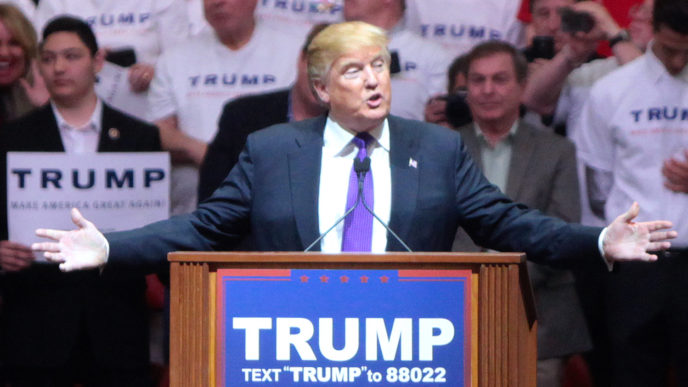
“Maybe,” says Liberty Council’s Jeremy Dys, “we will get through this year without receiving reports of city leaders going to their national day of prayer celebrations in their towns and being threatened with lawsuits as a result.”

Maybe Dys will get his wish this year. But even as America observes a National Day of Prayer, people’s right to pray in public is under attack across the country. In one case, police denied a person’s right to pray in her own home.

Today, President Donald Trump signed an executive order today protecting religious freedom. He said, “We will not allow people of faith to be bullied.” The Family Research Council’s Tony Perkins says that “the open season on Christians and other people of faith is coming to a close in America.”

The Rundown

In the meantime, though, people across the country have to fight in the courts for their right to pray. Here are a few of the cases.

In 2015 in Seattle, a high school football coach was suspended and then fired for praying on the field after games. Coach Joe Kennedy merely said a silent prayer. He did not instruct the players to join him. Yet for merely saying a silent prayer as he’d done for many years, this beloved coach lost his position. A federal court will finally hear his case this summer.

In Kansas, a police officer threatened to arrest a woman for praying in her own home. Mary Ann Sause is a retired Catholic nurse on disability. The officers came to her home and demanded entry without telling her why. When she began praying, one of the officers told her he would arrest her if she didn’t stop.

First Liberty is representing her in a lawsuit against the police department. A federal district court ruled that being ordered by armed officers not to pray “may have offended her, it does not constitute a burden on her ability to exercise her religion.” The U.S. court of appeals for the 10th Circuit is now hearing the case.

And More Cases

In Texas, The Freedom From Religion Foundation filed a lawsuit against Montgomery County Justice of the Peace Wayne Mack. He is facing ethics charges for allowing a chaplain to open court sessions in prayer. Yet a sign clearly says people are not required to attend the prayer. Texas Attorney General Ken Paxton issued an opinion stating the prayers are constitutional. The Supreme Court upheld the practice in Town of Greece v. Galloway, he argues.

Similarly, in Pennsylvania, Americans United for the Separation of Church and State is suing the state legislature. The legislature permits religious leaders to say a prayer at the start of sessions.

The Freedom From Religion Foundation threatened to sue the Harrison School Board in Arkansas for saying prayer before meetings. So far, the board is defying its threat.

A Cherished Tradition of Public Prayer

The U.S. has a long, cherished tradition of prayer in the public sphere. There is a reason we enjoy an annual National Day of Prayer.

But many people disagree. They try to use the law and the courts to empty our public life of any recognition of God. State legislatures around the country already protect public prayer, and Congress should do the same. (For more from the author of “Public Prayer in America Facing Serious Threats” please click HERE)

Follow Joe Miller on Twitter HERE and Facebook HERE.