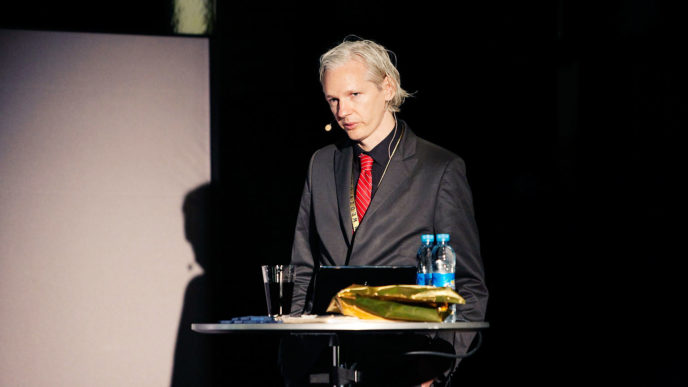
Assange Exposes Clinton War Crimes, Asks Sweden to Set Him Free

World Press Freedom Day, celebrated May 3, stemmed from the necessity to admonish governments the world over a free media acts as a barometer of the health of a nation — insofar as wrongdoing, exposed, can’t continue unnoticed — but today’s celebration has been severely tempered by a decline in the rights of journalists.

In the one nation which should be considered a bastion of press freedom — enshrined expressly in its storied Constitution — the dogged pursuit of governmental transparency in living up to the journalist’s duty to act as watchdog of the State will instead emblazon a permanent target for prosecution. Or worse.

WikiLeaks, itinerant publisher of leaked information of the stripe governments would rather remain hidden, has endured a horrendously negative propaganda campaign from U.S. officials from both sides of the aisle after voluminous caches of documents exposed flagrant, pompous misbehavior at every level.

Founder and editor-in-chief Julian Assange rightly condemns the brazen hypocrisy in the United States maintaining claims it desires press freedom, while simultaneously attempting to change the definition of ‘media’ in order to bring grave charges against WikiLeaks — going so far as to deem published leaks akin to espionage.

While that couldn’t be further from reality, wrongdoings exposed in WikiLeaks’ capacious searchable cache of documents veritably guarantee revelations will occasionally make headlines for years to come — and for American officials, that’s too dangerous to allow.

Hillary Clinton, herself the subject of countless damning emails and documents, has championed the clarion call to crucifixion of Assange under the premise that WikiLeaks, inexplicably in conjunction with Russia, threw the election from her clutches to gift a win to Donald Trump.
Taking “absolute personal responsibility” for the loss in one breath, Clinton claimed with forked tongue she “was on the way to winning until a combination of Jim Comey’s letter, on October 28, and Russian WikiLeaks raised doubts in the minds of people who were inclined to vote for me, but got scared off.”

Shifting blame shirks responsibility for the corruption and mendacity documents proved Clinton so fond, just as she had on previous occasions, so Assange responded accordingly.

Referencing the contents of WikiLeaks’ various Clinton files, Assange pinged the former secretary of state as the “butcher of Libya.”

Clinton’s attempts to shift blame from her actions to the messenger revealing them — and that legions of her supporters sprinted to parrot that logical fallacy — constitutes the exact bumbling of information characteristic of declining press freedom.

In fact, it is the failed presidential candidate’s countless maneuverings on interventionist U.S. foreign policy that left Libya and other nations — having been termed generically, ‘brutal dictatorships,’ prior to American encroachment — decimated beyond repair.

For many of those targets, including Libya, America’s particular brand of Freedom brought with it warlords of every stripe, spates of unhindered violence, and generally deplorable living and humanitarian conditions the original leaders would never have tolerated for civilians, no matter how totalitarian their style of rule.

Invading Libya under the premise Muammar Gaddafi was a tyrant proved to be a whopper of a lie — given the West discovered, to them, a panic-inducing plan by the Libyan leader to move all of Africa away from the almighty petrodollar in favor of the gold-backed dinar.

And that — the lie-shattering evidence in leaked documents from an ethical, free press, which officials could only deliver in their own, newly naked words — is why the media must have as free rein as possible to diligently scrutinize the State, lest its tendency to approve atrocities and justify appalling actions run amok.

It is in that vein Assange through his attorneys has requested the Swedish government drop its detention order against him, which has effectively made the editor a political refugee with limited asylum inside the Ecuadorian Embassy’s walls.

Allegations of sexual assault have been a millstone around Assange’s neck since he first arrived at the embassy in 2012 — Sweden’s detention order and its extradition friendliness with the United States effectively guaranteed his setting foot outside would earn arrest, removal to Sweden, and a short flight straight to an American prison cage under ridiculous espionage allegations.

In December 2016, SMS records proved police had fabricated the rape accusation against Assange — which should have led to Swedish officials to drop its interest in his detention.

Since that did not occur — and due to the Trump administration’s stated goal to relentlessly pursue the WikiLeaks founder for acting with the enemy — Per Samuelson, one of the attorneys representing Assange, asserted Wednesday,

Given that the U.S. is obviously hunting him now, he has to make use of his political asylum and it is Sweden’s duty to make sure that Sweden is no longer a reason for that fact he has to stay in the embassy.

If they rescind the detention order, there is a possibility he can go to Ecuador and then he can use political asylum in an entire country.

CIA Director Mike Pompeo crushed centuries of press tradition recently, in terming WikiLeaks a “hostile intelligence service” — simply because a witch hunt befits the current establishment’s penchant for dodging any unfavorable spotlights on its corruption, greed, graft, and pomposity.

As the falling dominoes of liberty are tragically wont to do, should one publisher be characterized as hostile, it should be assumed any press outside the mainstream, corporo-government paradigm is considered equally a threat — and the thriving, imperative independent press would be next in line for execution.

Whatever miscreants have bought the State’s scaremongering about WikiLeaks — that a free press is somehow antithetical to a free, functioning society — would do well to remember the freedom to choose among hundreds and thousands of media platforms, as opposed to a propaganda of just two flavors should the State take over those duties.

Reporters Without Borders — guardian of free journalism — reports the United States this year ranks an abhorrent forty-third on its World Press Freedom Index.

Until U.S. officials halt their war on journalism, it is perhaps a necessity to forget the First Amendment’s protection of the free press — words that hollow in practice should not be a boast permitted to a country acting in direct contradiction to the promise they once offered. (For more from the author of “Assange Exposes Clinton War Crimes, Asks Sweden to Set Him Free” please click HERE)

Follow Joe Miller on Twitter HERE and Facebook HERE.

Trump’s Political Epitaph

Based on its current trajectory, history might capture the total significance of Donald Trump’s Presidency in a single three-word phrase, “He wasn’t Hillary.”

Perhaps that is all we should have expected given his inflated rhetoric and the Avogadro’s Number of campaign promises that gave his candidacy an air of P.T. Barnum:

“Although Barnum was also an author, publisher, philanthropist, and for some time a politician, he said of himself, ‘I am a showman by profession… and all the gilding shall make nothing else of me.’”

Although we had all hoped Trump would follow through, I think deep down we knew that he wouldn’t. Yet, he wasn’t Hillary and perhaps that is enough.

President Trump is now rapidly discarding campaign promises in a manner not unlike a thief shedding the loot after a failed burglary.

Swamped by the self-interest and self-preservation of a corrupt federal government, Trump may have already succumbed to its laissez-faire attitude toward the performance of duty, where the appearance, rather than the substance of fulfilling voter sentiment is a satisfactory outcome.

During the campaign, Trump said “I will build a great, great wall on our southern border, and I will make Mexico pay for that wall. Mark my words.”

In true Washington D.C. fashion, that 30-foot Mexican-financed concrete wall has now been politically transformed into a taxpayer-financed barrier resembling the chicken wire my father used in a futile attempt to protect his strawberry plants from the bunny rabbits.

If Americans are confused as to what is the “Trump Doctrine,” it appears to be determined by ratings, where national policy comes in the form of Tweets, easily changed or deleted according to what is favorably “trending.”

Ratings as a measurement of success emanates from the same false premise as inherited wealth is a measure of accomplishment. In any environment where money and social status comprise the currency of “competence,” vapidity can be easily mistaken for intellectual rigor.

As football coach Barry Switzer noted: “Some people are born on third base and go through life thinking they hit a triple.”

There are reasons for what we are seeing.

President Trump needs affirmation like others need oxygen. He was sustained during the campaign by enthusiastic rallies and primary victories based entirely on his promises.

Now an inhabitant of the Beltway bubble, Trump has apparently adopted the traditional Republican Party recipe for obtaining affirmation, which is to ignore the voters and offer political capitulation to the Democrats in exchange for a few kind words in op-ed columns or an appearance on one of the Sunday morning talk shows.

If the Democrats, media and the lobbyist-controlled Republicans are collecting administration scalps, then Trump is handing them the knife, dismissing loyalists who are unpleasant reminders of campaign promises and aligning himself with those who are eager to make his tenure as chief executive inconsequential.

President Trump still has an opportunity to be more than just not being Hillary, but only by recognizing that he was elected, not for who he is or isn’t, but for what he said he would do, and then delivering.

Under present circumstances, pleasing the political establishment and representing the people are mutually exclusive endeavors.

Trump must choose between going with the flow or rising above it and to remember, as President, history will determine his final rating. (Reprinted in full with permission of the author. Article originally appeared HERE.)

Follow Joe Miller on Twitter HERE and Facebook HERE.

Active TB Increases in Minnesota; 90 Percent Foreign-Born, 11 Refugees Diagnosed Overseas Before Arrival

The number of active tuberculosis (TB) cases diagnosed in Minnesota increased 12 percent in 2016 to 168, up from 150 one year earlier, according to the Minnesota Department of Health’s (MDH) Tuberculosis Prevention and Control Program’s Quarterly Surveillance Report, October 1, 2016 – December 31, 2016.

Ninety percent of these 168 cases (152 of 168) were foreign-born, significantly higher than the national 2016 average of 67.9 percent of active TB cases that were foreign-born.

Fourteen of these 168 cases, or 9 percent were diagnosed within the first year in the United States of the 2,635 refugees who were resettled in Minnesota in FY 2016. The majority of these refugees came from two high TB burden countries: 1,195 came from Somalia, and 653 came from Burma, according to the State Department’s interactive website.

Eleven of these 14 cases of active TB in refugees were actually diagnosed in pre-immigration exams overseas before their arrival in Minnesota – a remarkable situation that would have either violated U.S. law or required the granting of a waiver by the United States Citizenship and Immigration Services (USCIS) office within the Department of Homeland Security, since active TB is a “Class A” health risk which is prohibited entry to the U.S. without such a waiver.

Three of these 14 cases of active TB in refugees were diagnosed during the refugee health exams conducted after their arrival in the United States. (Read more from “Active TB Increases in Minnesota; 90 Percent Foreign-Born, 11 Refugees Diagnosed Overseas Before Arrival” HERE)

Follow Joe Miller on Twitter HERE and Facebook HERE.
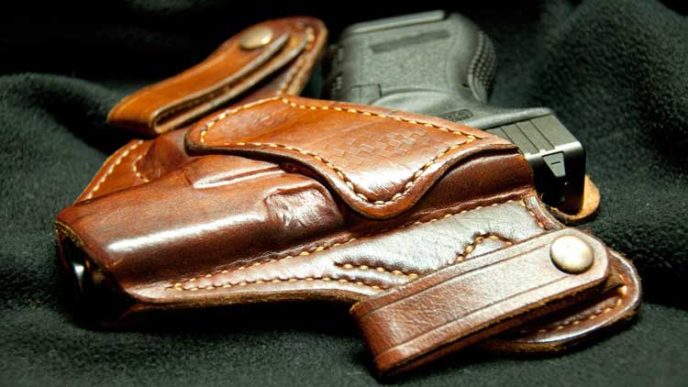
Police: Concealed Carry Permit Holder Shoots, Kills ‘Active Shooter’

On Wednesday night a concealed carry permit holder shot and killed an alleged “active shooter” at Zona Caliente Sports Bar in Arlington, Texas.

The incident occurred around 6:15 pm. WFAA reported, “A man opened fire at the Zona Caliente Sports Bar… but police say a customer with a gun of his own put a stop to it.”

The man reported to police as an “active shooter” was 48-year-old James Jones. He allegedly walked into Zona Caliente, began arguing with the manager — 37-year-old Cesar Perez — and then pulled out a gun and killed Perez. At that moment a concealed carry permit holder responded by pulling his own gun and killing Jones. (Read more from “Police: Concealed Carry Permit Holder Shoots, Kills ‘Active Shooter'” HERE)

Follow Joe Miller on Twitter HERE and Facebook HERE.

Bill Allowing Adopting Agencies to Refuse Gay Couples Becomes Law

Alabama Governor Kay Ivey signed a bill on Wednesday that would allow adoption agencies in the state to turn away gay couples who want to adopt a child. The law purports to support religious freedom by not forcing faith-based organizations to potentially close down or face penalties as a result of acting in accordance with religious beliefs. Like many religious freedom bills that have been passed in various states, House Bill 24‘s language frames the issue as preventing discrimination against religious people or institutions.

“This bill would prohibit the state from discriminating against child placing agencies on the basis that the provider declines to provide a child placement that conflicts with the religious beliefs of the provider,” the text of the bill says.

“The bill is not to discriminate against anyone,” Rep. Rich Wingo, who sponsored the bill, said to AL.com. “Nowhere in the bill does it say anything like that or lead you to believe that.” (Read more from “Bill Allowing Adopting Agencies to Refuse Gay Couples Becomes Law” HERE)

Follow Joe Miller on Twitter HERE and Facebook HERE.

Russian Bombers, Fighter Jets Fly Near Alaska, Prompting Air Force Escort

Two Russian Bear bombers — escorted for the first time by a pair of Su-35 “Flanker” fighter jets — entered Alaska’s Air Defense Zone on Wednesday night, U.S. officials told Fox News.

The Russian formation was intercepted by a pair of U.S. Air Force F-22 stealth fighter jets that were already flying a patrol about 50 miles southwest of Chariot, Alaska. A NORAD spokesperson told Fox News the intercept began at 9 p.m. ET on Wednesday and a defense source said it also occurred into Thursday.

It was the first time the U.S. Air Force has seen advanced Russian Su-35 fighter jets escort Russian Cold War-era bombers near Alaska.

The Russian fighter jets were unarmed and remained in international airspace, officials said.

Late last month, Russian bombers flew near Alaska over four consecutive days for the first time since 2014. (Read more from “Russian Bombers, Fighter Jets Fly Near Alaska, Prompting Air Force Escort” HERE)

Follow Joe Miller on Twitter HERE and Facebook HERE.

Poll: Hispanic Support for President Trump Jumps to 45 Percent

A stunning new poll shows that Hispanic support for President Donald Trump has grown to 45 percent since his election.

“The biggest surprise in this new poll is Trump’s approval among Hispanic voters, which is at 45 percent approval/51 percent disapproval,” Zogby said. “In February the numbers were less among Hispanics at 39 percent approval/53 percent disapproval.”

In November, Trump won roughly 29 percent of the Latino vote.

It is not clear why Trump’s support has risen among Latinos. But a series of polls stretching back to 2014 show that many Hispanics strongly support more border security to protect their communities from crime and low-wage labor. For example, a poll of Latinos taken in June 2014 showed “77 percent [support] for an e-verify system for employers [and] 78 percent for stronger border security.” The 2014 poll of 800 registered Latinos was funded by FWD.us, an advocacy group supported by Facebook CEO Mark Zuckerberg.

This surge in Hispanic support is accompanied by a decline in Trump’s general approval, going from 48 percent approval down to 43 percent in the current survey. (Read more from “Poll: Hispanic Support for President Trump Jumps to 45 Percent” HERE)

Follow Joe Miller on Twitter HERE and Facebook HERE.

Here Are the Challenges Facing the Senate After House Passes Obamacare Replacement Bill

Republicans cleared a major hurdle on Wednesday in advancing their proposal repealing and replacing Obamacare. But the House GOP’s health care bill is likely to see major changes in the Senate, where Republicans must contend with strict budget rules and slim margins to pass the legislation.

The House passed the American Health Care Act by a vote of 217-213 Thursday afternoon, capping weeks of negotiations that sought to satisfy conservative and centrist Republicans.

The bill repeals a number of Obamacare’s major provisions, including the individual and employer mandates, and replaces the law’s tax credits with age-based, refundable tax credits.

House leaders and the White House worked for weeks to get the health care bill through the lower chamber after conservatives and centrist Republicans came out against the original proposal.

The legislation that passed Thursday included amendments to address the concerns of both factions of the Republican party.

But though the health care plan was narrowly approved by the House, the bill could undergo a major makeover in the Senate.

There, a 12-member group of senators is drafting the Senate’s own proposal repealing and replacing Obamacare, which will include parts of the plan that passed the House.

“The safest thing to say is there will be a Senate bill, but it will look at what the House has done and see how much of that we can incorporate in a product that works for us in reconciliation,” Sen. Roy Blunt, R-Mo., said.

Republicans are using a budget tool called reconciliation to fast-track their Obamacare replacement plan through the Senate, where it will need 51 votes to pass.

Republicans hold 52 seats.

Margins for Senate Majority Leader Mitch McConnell are slim, and already, several GOP senators have been skeptical of the House’s Obamacare repeal plan.

Sen. Susan Collins, R-Maine, criticized the bill in March and opposes efforts to defund Planned Parenthood. The legislation strips the organization of its federal funding for one year.

Additionally, four other Republican senators—Rob Portman of Ohio, Cory Gardner of Colorado, Lisa Murkowski of Alaska, and Shelley Moore Capito of West Virginia—expressed concerns about the bill’s plan for phasing out Obamacare’s Medicaid expansion in March.

Portman reaffirmed his opposition to the legislation Thursday.

“I’ve already made clear that I don’t support the House bill as currently constructed because I continue to have concerns that this bill does not do enough to protect Ohio’s Medicaid expansion population, especially those who are receiving treatment for heroin and prescription drug abuse,” the Ohio Republican said in a statement.

Conservatives, too, have their own concerns with the House’s Obamacare repeal plan.

Sen. Ted Cruz, R-Texas, emboldened his colleagues to “continue to improve the bill.”

“For many weeks, I have been working closely with my Senate colleagues, from across the ideological spectrum, on consensus reforms to make health insurance more affordable,” Sen. Ted Cruz, R-Texas, said in a statement. “We must deliver on that promise.

Conservative members of the Freedom Caucus are holding out hope that the upper chamber repeals more of Obamacare.

“Let’s be honest, when we sent an Obamacare repeal legislation to the Senate, it got better because we had folks like Mike Lee and Sen. [Ted] Cruz and Sen. [Marco] Rubio and Sen. [Rand] Paul and all these conservative senators who pushed the so-called reconciliation rules, who pushed the envelope and made it a slightly better piece of legislation,” Rep. Jim Jordan, R-Ohio, told The Daily Signal. “So we’re hoping that’ll happen again.”

In addition to addressing the concerns of Senate Republicans, GOP senators crafting their own bill must adhere to strict rules that govern the reconciliation process. Those rules ensure the tool is used only on bills that change taxes, spending, or the deficit.

Senators can challenge a provision of legislation by raising a point of order against “extraneous matter” included in the bill if he or she believes it violates the Byrd rule, named for the long-serving Democratic senator from West Virginia, Robert Byrd.

The Byrd rule outlines six tests to determine what constitutes “extraneous matter,” and some tests hold more weight than others.

If a senator objects to a part of a reconciliation bill, the Senate parliamentarian advises members on whether it meets the requirements or not. If the parliamentarian says a provision violates the Byrd rule, it may be removed from the bill, or it may be deemed fatal to the legislation.

House Speaker Paul Ryan said the House GOP’s health care bill was crafted to adhere to the rules of reconciliation.

But health policy experts warn that some provisions of that legislation could pose problems for Republicans in the Senate.

“I think the bill is ultimately going to have to be significantly rewritten to answer some of those concerns and hopefully takes it more toward something approaching an actual repeal of Obamacare,” Chris Jacobs, a senior health care policy expert at the Texas Public Policy Foundation and founder of Juniper Research Group, told The Daily Signal.

Jacobs has previously warned about pro-life protections included in the tax credits, which prevent the use of federal dollars to pay for most abortions, and the Senate parliamentarian has ruled in the past that those pro-life provisions violate the Byrd rule.

“There’s past precedent to suggest that this is ultimately a policy change and may not be permitted under the Byrd rule,” he said. “A policy change with an incidental budgetary impact. Therefore, it’s essentially not permitted under the Byrd rule.”

But removing the pro-life provisions for the tax credits could pose further problems for Republicans in both chambers.

“It raises the entire question of whether or not the tax credits remain politically viable because it will be taxpayer funding for plans to cover abortion, just like Obamacare,” Jacobs said.

Jacobs and other experts raised concerns about the fate of the House GOP’s original bill in the Senate several weeks ago. But since then, Republican leaders have added several amendments to the legislation, including one that allows states to pursue waivers to opt out of some Obamacare regulations and another that allocates money to states to set up programs to protect people with pre-existing conditions.

The Senate parliamentarian hasn’t yet ruled whether those amendments will pass muster in the upper chamber, but Jacobs said an analysis from the Congressional Budget Office would’ve provided some clarity.

Reconciliation bills can’t increase the deficit, and Jacobs said a “score” from the nonpartisan agency will detail the provision’s fiscal impact.

The House voted without an analysis from the Congressional Budget Office, which estimates how many people will lose or gain coverage and what the costs of the bill will be.

Though it’s unclear whether the waiver scheme created by the House GOP’s bill will withstand what’s called a “Byrd bath,” Jacobs said it would’ve been better for Republicans to repeal the regulations outright.

“I think a better solution is to repeal the regulations rather than having this waiver option of if you like your Obamacare, you can keep it,” he said. (For more from the author of “Here Are the Challenges Facing the Senate After House Passes Obamacare Replacement Bill” please click HERE)

Follow Joe Miller on Twitter HERE and Facebook HERE.

Trump: ‘No One Should Be Censoring Sermons or Targeting Pastors’

President Donald Trump asked two nuns with the Little Sisters of the Poor to join him in front of a Rose Garden audience Thursday before he signed an executive order easing enforcement of Obamacare regulations forcing religious organizations to pay for employee health plans covering contraception and abortion-inducing drugs.

Trump’s order also takes aim at a 1954 law prohibiting pastors and other religious leaders from supporting specific candidates from the pulpit.

However, the order is scaled back considerably from a draft, leaked in February, that also addressed religious organizations’ freedom in hiring staff, prompting mixed reviews from conservatives.

“We know all too well the attacks against the Little Sisters of the Poor, incredible nuns who care for the sick, the elderly, and the forgotten,” Trump said, before asking representatives of the Catholic order to identify themselves and inviting them to the podium.

The nuns’ lawsuit against the Obama administration over the so-called contraceptive mandate went to the the Supreme Court, which didn’t make a final determination.

“Congratulations, you sort of just won a lawsuit,” Trump said jokingly to the two nuns. “That’s a good way of doing that. I want you to know that your long ordeal will soon be over.”

The president’s executive order states that the administration’s policy is to protect religious liberty. It directs the Internal Revenue Service to use maximum discretion to alleviate the law governing churches and partisan politics, known as the Johnson Amendment. And it offers regulatory relief for religious objectors to Obamacare rules.

“With this executive order, we are ending the attacks on your religious liberty and we are proudly reaffirming America’s leadership role as a nation that protects religious freedom for everyone,” Trump said.

Trump held the event, attended by Christian, Jewish, and Muslim clergy from across the country, on the National Day of Prayer.

Trump focused his remarks on rolling back 1954’s Johnson Amendment, named for Sen. Lyndon Johnson, the Texas Democrat who would become president nine years later. The law threatens churches, religious institutions, and other nonprofits with revocation by the IRS of their tax-exempt status if they talk partisan politics.

James Dobson, an iconic Christian broadcaster who founded the traditional values group Focus on the Family, was among faith leaders attending the Rose Garden event.

“How could I not be satisfied? I mean, we have been struggling with that Johnson Amendment since I’ve been in radio, which is 40 years,” Dobson told The Daily Siganal.

He also said the Obama administration sued his current organization, Family Talk, over Obamacare’s contraceptive mandate.

“When that mandate came down, I wrote the president [Obama] saying I cannot comply. ‘You must come get me, because we’ll close our doors,’” Dobson said. “We’ve been in a lawsuit ever since, and it went to the 10th Circuit and was headed for the Supreme Court. That goes away today. Yes, I’m happy about it.”

However, Greg Baylor, senior counsel with the Christian legal group Alliance Defending Freedom, said the order leaves Trump’s campaign promises “unfulfilled” and is “disappointingly vague.” In a formal statement, Baylor said:

A pledge to ‘provide regulatory relief’ is disappointingly vague, especially given the long existence of an obvious means of solving the problem: crafting an exemption that protects all those who sincerely object on religious and moral grounds so that they can continue to serve their communities and the most vulnerable among them. We encourage the administration to pursue that course of action and to do so promptly so that it can resolve the dozens of cases still pending against it.

During his Rose Garden remarks, Trump invoked the civil rights icon and pastor Martin Luther King Jr. and the history of the African-American church, as well as the larger Judeo-Christian tradition, as reason to honor the role of religion in America’s politics.

“This financial threat against the faith community is over,” Trump said. “No one should be censoring sermons or targeting pastors. … America has a rich tradition of social change beginning in our pews and pulpits.”

Trump also heralded the Founding Fathers’ vision as evidence of the intended role of religion in public life:

Freedom is not a gift from government. Freedom is a gift from God. It was Thomas Jefferson who said the God who gave us life gave us liberty. Our Founding Fathers believed religious liberty was so important that they enshrined it in the very First Amendment in our great and beloved Constitution.

Yet for too long, the federal government has used the power of the state as a weapon against people of faith, bullying and even punishing Americans for following their religious beliefs.

The draft of the executive order that leaked earlier this year, however, also protected the right of religious organizations to align staffing decisions with their missions. And it would have prevented the federal government from discriminating against its employees or contractors for practicing their religious beliefs.

Trump “caved” on these and other provisions in the draft order, said Ryan T. Anderson, a senior research fellow with The Heritage Foundation whose studies include religious liberty. In a commentary for The Daily Signal, Anderson wrote of the president:

Back in February, he caved to the protests of liberal special interest groups as he declined to issue an executive order on religious liberty that had been leaked to hostile press. And earlier today, he issued an executive order on ‘free speech and religious liberty’ that does not address the major threats to religious liberty in the United States today.

Today’s executive order is woefully inadequate. Trump campaigned promising Americans that he would protect their religious liberty rights and correct the violations that took place during the previous administration.

Penny Nance, president of Concerned Women for America, was among those attending the Rose Garden event. Nance told The Daily Signal she was happy with the outcome.

“We were very pleased with what we’ve seen so far. It’s a great first step,” Nance said. “There are still things left to do. We were pleased to be here today. What a beautiful day. This is a great day for religious liberty.” (For more from the author of “Trump: ‘No One Should Be Censoring Sermons or Targeting Pastors'” please click HERE)

Follow Joe Miller on Twitter HERE and Facebook HERE.
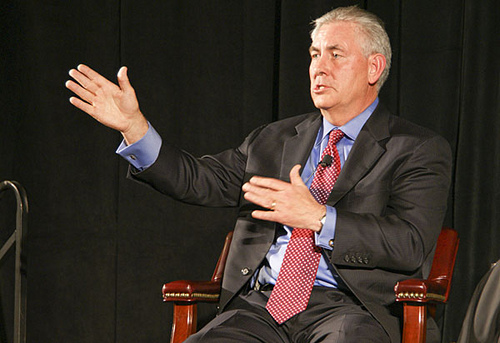
Is the White House Embracing Human Rights in US Foreign Policy?

With the myriad U.S. interests at stake in foreign policy, where exactly do human rights fit in?

Secretary of State Rex Tillerson spoke to this question on Wednesday while discussing the role of values in U.S. foreign policy decision making.

Now I think it’s important to also remember that guiding all of our foreign policy actions are our fundamental values: our values around freedom, human dignity, the way people are treated. Those are our values. Those are not our policies; they’re values. And the reason it’s important, I think, to keep that well understood is policies can change. They do change. They can change … Our values never change.

Tillerson’s remarks suggest that human rights will be a component of the Trump administration’s foreign policy paradigm.

As in past administrations, U.S. engagement with foreign nations takes into consideration U.S. national interests, national security priorities, opportunities for economic advancement, and of course, human rights.

Tillerson reiterated that U.S. engagement with foreign countries, especially on human rights, may look different based on the various interests at stake.

Although frank, this admission reflects a realistic understanding of the complex nature of U.S. relations with other countries. It says that the U.S. should make clear its values and voice them, but also recognize that a foreign policy solely focused on human rights would be restrictive.

Unfortunately, the U.S. must deal with governments that are less than perfect in their respect for human rights—sometimes considerably so. But perspective and consideration are necessary.

Consider the cases of China and Cuba.

Addressing major threats to the U.S. and its allies should include working with China on issues like maritime security and the proliferation of weapons of mass destruction is necessary, even if we regard China’s domestic policies as abhorrent.

By contrast, restoring diplomatic relations with Cuba without requiring changes to its own repressive policies sends the signal that human rights are not a priority for the U.S.

Either way, Tillerson acknowledged that “…in some circumstances, [the U.S.] should and [does] condition our policy engagements on people adopting certain actions as to how they treat people.”

Balancing these priorities requires sound advice and judgement. To ensure that human rights are a priority, the administration should move quickly to fill crucial positions in the State Department.

Early on in the administration, President Donald Trump held a meeting with key stakeholders in the human trafficking community, signaling that U.S. leadership on trafficking in persons is critical to ending this global scourge.

Human trafficking may prove to be a gateway issue for other human rights concerns internationally and at home.

With the U.S. Department of State’s annual Trafficking in Persons report slated to come out mid-summer, and key legislation—the Trafficking Victims Protection Act—up for reauthorization, the conversation on trafficking will continue to be of importance through the rest of 2017.

The administration should take advantage of the ongoing conversation on human trafficking to reassert U.S. leadership, not just on trafficking, but also on other pressing human rights challenges. These include major threats to democracy and good governance across the globe, as well as the continued rise of religious persecution.

Advancing first principles and core American values overseas has been a critical component of past administrations, and should remain a critical part of the Trump administration’s foreign policy priorities. For that, more critical roles need to be filled.

Tillerson’s remarks offer promise that this will continue to be the case, but he cannot do it alone. (For more from the author of “Is the White House Embracing Human Rights in US Foreign Policy?” please click HERE)

Follow Joe Miller on Twitter HERE and Facebook HERE.