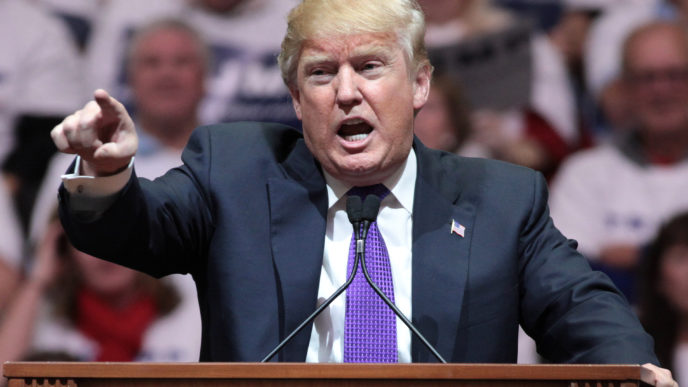
Rick Perry Once Wanted to Cut the Department of Energy. Now Trump Wants Him to Lead It

More Trump transition team news broke late Monday night, as Fox News’ Bret Baier reported that “an informed source” close to the transition team claimed President-elect Donald Trump will nominate former Texas Governor Rick Perry to lead the government agency responsible for unleashing a trans-dimensional man-eating beast on an unsuspecting Indiana town — err, the Department of Energy.

As the former governor of Texas — one of the nation’s largest oil producing states — Rick Perry makes sense to lead the department in charge of overseeing energy production, energy conservation, and related research and development. The U.S. Department of Energy is also responsible for America’s nuclear weapons program and nuclear energy.

Observers quickly noted, however, that the DOE was one that then-presidential candidate Perry forgot in his pledge to eliminate three federal agencies during a 2012 Republican primary debate. That “oops” moment more or less ended his 2012 presidential campaign.

But Perry was right, there is certainly plenty to cut. President Obama has funneled billions of dollars into the department to subsidize black-hole green energy projects that would never be sustainable otherwise, without the cronyist backing.

Remember Solyndra? American taxpayers lost as much as $850 million to the green-project boondoggle at President Obama’s direction. But Solyndra, of course, is but one example in the rigged, ideologically driven market.

It is not the role of the federal government to step into the marketplace and aid an industry that cannot compete on a level playing field. Perry can go a long way toward ending the green-energy crony capitalism so prevalent under the Obama administration.

If the former Texas governor indeed becomes the secretary of energy, he also has the opportunity to end Obama’s war on nuclear power. The Obama administration proposed defunding the Savannah River plutonium mixed oxide recycling plant in its 2017 fiscal year budget, while increasing funding for green energy investment. Rick Perry as secretary of energy could redirect the department’s resources away from wasteful projects, and toward clean nuclear power. (For more from the author of “Rick Perry Once Wanted to Cut the Department of Energy. Now Trump Wants Him to Lead It” please click HERE)

Follow Joe Miller on Twitter HERE and Facebook HERE.

How a Billionaire Democrat Running for Governor Won in Trump Country

As results rolled in on election night, most political consultants and commentators were caught off guard by the victory of Republican presidential nominee Donald Trump.

But in West Virginia, a state where Trump trounced Democratic nominee Hillary Clinton, another wealthy businessman also claimed victory after capturing the attention of voters for his outsider perspective.

In the race for governor, Jim Justice, a Democrat who is West Virginia’s only billionaire, defeated Republican opponent Bill Cole by 7 percentage points.

Though they may be on opposite sides of the political spectrum—at least in party affiliation this year—the similarities between Trump and Justice are evident.

Justice, however, wasn’t the only candidate to win a governor’s race in a state where voters split the ticket.

In Montana and North Carolina, voters also elected Democrat governors, but supported Trump at the top of the ticket. By contrast, Vermont and New Hampshire voters elected Republican governors but supported Clinton.

Still, in none of those states was the support for Trump as overwhelming as it was in West Virginia.

There, the president-elect bested Clinton by 42 percentage points—a margin second only to Wyoming.

On its face, it’s difficult to see how Democrat Justice could have won the state against Republican Cole, especially given West Virginia’s support for Trump.

But to those who have watched the state move from a Democratic stronghold to one where Republicans hold majorities in the House of Delegates and the state Senate, Justice’s rise to the governor’s mansion didn’t come as much of a shock.

“Jim Justice was just an iconic candidate,” Rex Repass, CEO of Repass Research and Strategic Consulting, and director of the MetroNews West Virginia Poll, told The Daily Signal. “He’s the savior of the Greenbrier hotel. He’s well known in the state, and he’s a business person.”

“Plus, he relates to West Virginians very well,” Repass said. “He just comes across as one of them.”

And Trump’s popularity in the state actually may have helped Justice, 65.

“Jim Justice is the most Trump-like person running for office whose name isn’t Donald Trump,” Geoff Skelley, associate editor of Larry Sabato’s Crystal Ball at the University of Virginia’s Center for Politics, told The Daily Signal.

‘Hero’ in West Virginia

It’s difficult to ignore the parallels between the governor-elect and the president-elect.

“Trump and Justice, the two of them together winning in the same year, makes a lot of sense, especially the way things are going in West Virginia,” Skelley said. “It’s a state that’s suffered immensely in recent times, so it doesn’t shock me that voters really took to a renewal message regardless of the party label of the two candidates.”

Both Trump and Justice are wealthy businessmen with no political experience who used their positions as outsiders to woo voters.

Justice’s net worth tops $1.6 billion, according to Forbes, and he is the only billionaire in West Virginia.

His wealth made it possible for him to self-fund his campaign, as Trump did. According to campaign finance reports, Justice loaned his campaign more than $2.6 million.

Over the course of their lives, both men have pledged allegiance to both political parties, with Justice most recently changing his affiliation from Republican to Democrat in February 2015.

And they both campaigned on the promise of economic prosperity.

Now that they’ve won their respective offices, each man plans to collect a salary of just $1.

But though both Justice and Trump have been successful in business, they’re not without their troubles.

In October, one month before Election Day, NPR reported that Justice’s mining companies owed $15 million in taxes and fines.

Still, Justice’s success as a candidate, like Trump’s, can be tied to his personality.

“Personality matters immensely with these kinds of things,” Skelley said. “The idea of ‘Make America Great Again’ for Trump wasn’t dissimilar for Justice. He’s that ‘West Virginia First’ kind of guy.”

In West Virginia, Justice is considered a hero, and a hero for one reason in particular: Justice saved the Greenbrier resort.

The Greenbrier, located in White Sulphur Springs and dubbed “America’s Resort,” has been in operation since 1778. But by 2009, it was on the verge of bankruptcy.

That year, Justice made national news when he beat Marriott Corp., which thought its effort would be a slam dunk, to buying the resort.

In the 18 months following the purchase, the billionaire was able to return the Greenbrier to profitability, according to The Washington Post.

And six days after buying the Greenbrier, Justice hired back the more than 600 employees who were laid off when the resort was hemorrhaging money.

Justice then convinced the PGA to replace the Buick Open, held in Flint, Michigan, with a golf tournament at the Greenbrier—creating the Greenbrier Classic—and persuaded the New Orleans Saints football team to hold its training camp on the resort’s campus.

In June, after deadly floods hit West Virginia, the Greenbrier closed to the public. But Justice opened the resort free of charge to flood victims in need of a place to stay.

Defeating the guy who restored the Greenbrier to its former glory would be a tall task for any challenger, said Repass, who has conducted the MetroNews West Virginia Poll since 1980.

“He’s done so much, and he’s perceived as someone who can open doors and build positive economic momentum in the state,” Repass said, adding:

Bill Cole ran a strong campaign, but I think he was really behind the eight ball from the beginning. You buy the Greenbrier, and you’re a hero in West Virginia for a long time.

A ‘Coal Man’

Republicans in West Virginia for years have used the “war on coal” as an easy line of attack against Democrats competing at the state and national levels.

But it was nearly impossible for that line to stick to Justice.

Justice made his money in the coal industry, inheriting Bluestone Industries and Bluestone Coal Corp. from his father after his death in 1993.

In 2009, Justice sold Bluestone Coal Corp. to OAO Mechel, a Russian company, for $568 million.

In February 2015, the billionaire bought the coal company back for $5 million—less than 1 percent of what he sold it for—a dramatic indication of how much the price of coal had fallen.

“It’s ridiculous to think a coal man is wanting to support the war on coal,” William Gorby, a history professor at West Virginia University, told The Daily Signal.

During the campaign, Justice distanced himself from Clinton and said he couldn’t support the Democratic presidential nominee because of her energy policies.

“The reason I can’t be [a supporter] is her position on coal is diametrically, completely wrong in many, many different ways,” Justice said in an interview with the MetroNews radio network.

But the billionaire businessman’s record as a coal operator isn’t clean, detractors note.

“He’s screwed every coal operator in West Virginia at one time or another,” Dave “Mudcat” Saunders, a Democratic political strategist, told Politico in September.

In 2014, NPR reported that Justice had nearly $2 million in unpaid fines to the federal government.

Justice’s mining companies still owe a total of $15 million in fines and taxes in six states, according to a second NPR investigation published in October.

But Justice’s troubles in running his coal mines didn’t motivate voters to support Cole.

After the second of two gubernatorial debates, Repass conducted a focus group with 12 voters and found that though Justice’s tax issues “raised a red flag,” they largely still trusted him.

“It was about overall trust and feeling like he would work hard for the state,” Repass said, adding:

People understood that successful business people who have multiple companies from time to time have challenges with basically dealing with tax issues and having to appeal tax issues and having to work with vendors.

Typical Democratic Candidate

Gorby, who studies West Virginia and Appalachian history, said Justice is no different than other Democrats who have run for governor in the Mountain State and won.

Since the 1970s, West Virginia’s Democratic Party has made a habit out of nominating gubernatorial candidates who are independently wealthy or political outsiders, Gorby said. Think Jay Rockefeller, governor from 1977 to 1985, and Gaston Caperton, governor from 1989 to 1997.

“[Caperton] ran on the idea that you need an independently minded figure to run and make some structural reforms, and was able to get elected,” Gorby said. “Justice used that same language and was using that same mentality.”

But this year’s governor’s race didn’t exactly pit an outsider against a political insider.

Like Justice, Republican candidate Cole is a businessman; he owns several car dealerships in West Virginia and Kentucky.

Cole served just seven months in the state House of Delegates in 2010, when he filled a vacant seat. In 2012, Cole was elected to the state Senate and became president of the chamber last year.

During Cole’s tenure, the Senate passed a litany of bills that should’ve bolstered his conservative bonafides, including a ban on abortions after 20 weeks, a right-to-work bill, and a measure allowing residents to carry concealed handguns without a permit.

But Rob Cornelius, who used to work with the state party and currently chairs the Wood County Republican Party, said Cole’s political consultants ended up burying his record and distancing him from Trump.

“[Voters] didn’t know Cole, they didn’t perceive him to be conservative, and they enjoyed Jim Justice’s ‘Mayberry’ act,” Cornelius told The Daily Signal.

Gorby, though, said Justice was able to use Cole’s record against him.

During this year’s legislative session, lawmakers were forced to reconvene in Charleston for a 17-day special session to work out budget issues, which provided Justice with fodder on the campaign trail.

“Bill Cole wasted over a half a million dollars of your money on a special session to pass a budget that solved nothing,” the Democrat candidate said in an ad in September. “What West Virginia needs is jobs—good jobs that increase state revenue and decrease unemployment. That’s how you balance the budget.”

In a radio interview, Cole attempted to shift the blame for the special session to Justice and accused the Democrat’s campaign of pushing House delegates to slow down budget negotiations because “it’ll make the Republicans look bad.”

But Justice’s ability to use the special session against Cole had the desired effect, Gorby said.

“There were a lot of issues that came up during the campaign and during the debates where Justice was able to effectively criticize some of the policies that had been pushed by Cole,” he said. “Jim Justice made a persuasive argument by blaming a lot of that on the Senate president that we had to have a special session, that we spent several hundred thousand dollars, and we didn’t really solve a lot of the long-term budget issues.”

Some say one more legislative change may have hurt Cole.

During the 2015 session—Cole’s first as Senate president—the Republican-controlled state Legislature decided to eliminate “straight-ticket” voting, which allows voters to select a party’s entire slate of candidates.

According to the secretary of state’s office, 27 percent of West Virginia voters took advantage of the straight-ticket option during the 2014 general election. Of those who voted straight ticket, 53 percent voted Republican.

“That was a curious move to make for Republicans controlling both houses of the state Legislature to decide to do that,” Skelley said of the decision to eliminate straight-ticket voting.

Gov. Earl Ray Tomblin, a Democrat, perhaps “had some foresight saying this is a good thing to do,” Skelley said.

“I wonder if that hurt Cole to some degree.”

Justice may be faced with an early test as he assumes office Jan. 16.

According to reports, Trump has considered U.S. Sen. Joe Manchin, D-W.Va., for one or more positions in his administration.

If the president-elect taps Manchin, himself a former West Virginia governor, Justice would be responsible for filling the vacancy. (For more from the author of “How a Billionaire Democrat Running for Governor Won in Trump Country” please click HERE)

Follow Joe Miller on Twitter HERE and Facebook HERE.

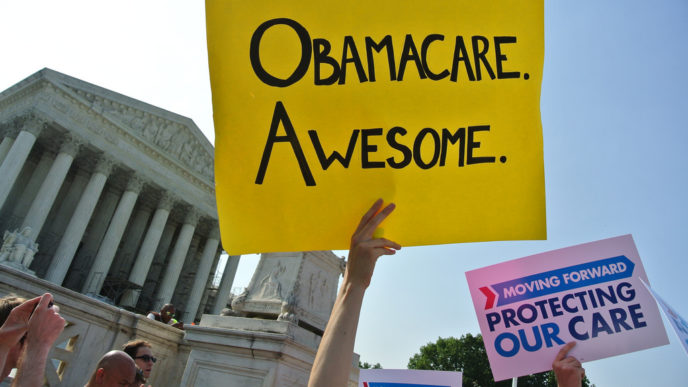
Obamacare May Soon Be Over. Here’s What Americans Have Thought of the Law Since 2010.

In the midst of open enrollment for Obamacare, there is plenty of bad news for health law supporters, from skyrocketing premium rates to diminished insurer participation. Public opinion remains steadily opposed to the law.

While some tracking polls try to highlight satisfaction with individual components of the law, Obamacare as a whole has largely been unpopular.

After a fluid first few months in 2009 as the plan got underway in Congress, public opinion of Obamacare settled into a consistent trend in early 2010, with opposition outweighing support—often by a sizable margin.

Gallup’s tracking, for instance, shows that since the law took effect in 2013, a majority of Americans have consistently disapproved of it, ranging from a low of 48 percent in July 2015—just after the Supreme Court’s ruling upholding the law’s federal subsidies—to a high of 56 percent.

Gallup shows disapproval averaging at 51.4 percent for this time period, an average of nine points higher than the law’s average approval rating of 42.6 percent.

In the world of political polling, inconsistency among polls is an occasional hazard to be grappled with, but not in the case of Obamacare polling. Pew Research Center’s tracking of the law’s approval ratings tells a remarkably similar story to Gallup’s.

Disapproval averages at 49.5 percent since 2013, and approval comes in at 42.3 percent, an average of seven points lower.

Disapproval soars around the time of the botched rollout late in 2013, and dips after the Supreme Court ruling that upheld a key component of the law in July 2015. Disapproval rebounded in 2016 to 54 percent, while approval fell again to 44 percent, leaving a 10-point gap.

Even Kaiser’s monthly tracking study, which is one of the more positive measures of the health law, shows that unfavorability usually outranked favorability at an average of 44 percent over 40.1 percent.

(One of the few exceptions was shortly before the 2012 presidential election when President Barack Obama was re-elected—the only point at which Gallup showed approval for the law rising above disapproval.)

Kaiser started monthly tracking of the law in early 2010—earlier than Gallup and with more regularity than Pew—shedding some light on the period before the law went into effect.

Before public opinion settled into consistent disapproval, there was a more fluid period in 2010. Favorability spiked in April after the Senate, lacking the 60th vote needed to end debate and pass the bill, did so with a simple majority using the process of budget reconciliation.

Approval spiked again mid-year and then in September as some of the more popular aspects of the law, including the measure protecting access to insurance for those with pre-existing conditions, began to take effect.

Yet, in October, favorability dropped down to 42 percent, where it would largely remain over the next six years.

Given the proliferation of polls on this controversial law, a few news aggregation sites have produced tracking averages based on multiple poll sources.

RealClearPolitics shows average disapproval of the law fluctuating right around the 51 percent mark, while the average in favor of the law comes out around 40 percent, consistent with Gallup and Pew. The Huffington Post’s average against the law fluctuates around 49 percent, while average approval for the law varies around 41 percent.

Moreover, all of the trend lines show that the gap between disapproval and approval is gradually widening—that in fact, a law that has never received popular support is actually growing more unpopular with time.

The American people don’t like Obamacare and never have, and it’s not hard to see why. Pew and Gallup both report that year after year, more Americans say the law has had a negative effect on them and their families (31 percent and 29 percent in 2016, respectively) than a positive effect (23 percent and 18 percent).

Pew reports even worse numbers for the law’s effect on the country as a whole—44 percent believe it has been negative. In addition to soaring premium costs, Obamacare has led to rising out-of-pocket costs, shrinking networks and accessibility, and fewer options.

Given these numbers and the negative effects Obamacare has had on the system as a whole, it’s time for a new direction. Now is the time to repeal Obamacare and focus on solutions that Americans want. (For more from the author of “Obamacare May Soon Be Over. Here’s What Americans Have Thought of the Law Since 2010.” please click HERE)

Follow Joe Miller on Twitter HERE and Facebook HERE.
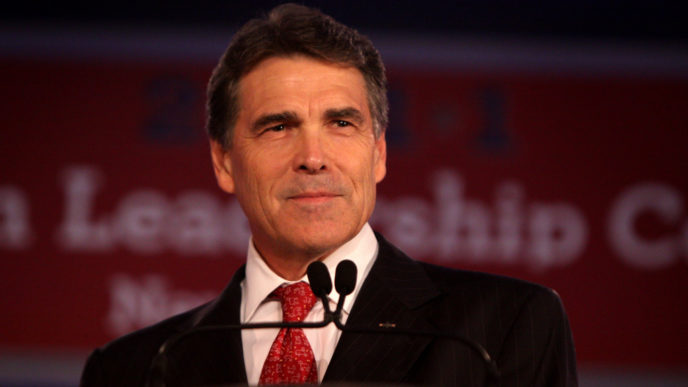
Wisconsin Recount Confirms Trump Victory, Increases His Margin over Clinton

On Monday, Wisconsin’s vote recount ended any controversy surrounding President-elect Donald Trump’s victory in the traditionally blue state.

The Associated Press reported that Trump’s margin of victory actually increased in the recount, whose results were certified Monday.

The Republican nominee picked up an additional 162 votes in the state, according to the report. Trump earned approximately 22,000 more votes than Democrat opponent Hillary Clinton.

Green Party presidential nominee Jill Stein has been the driving force behind recount efforts, challenging vote totals in Wisconsin, Pennsylvania and Michigan. She has alleged that voting machines in those states are susceptible to fraud, with no evidence save for those states usually voting Democrat.

Stein raised enough money to initiate the recount in Wisconsin, though courts denied her efforts in Pennsylvania and Michigan.

In Pennsylvania, U.S. District Judge Paul Diamond said he rejected the Green Party’s lawsuit on numerous grounds. The state’s attorney general also opposed the effort.

Suspicion of a hacked Pennsylvania election “borders on the irrational,” Diamond wrote in his review of the case, while granting the Green Party’s recount bid could “ensure that no Pennsylvania vote counts” given Tuesday’s federal deadline to certify the vote for the Electoral College.

“Most importantly, there is no credible evidence that any ‘hack’ occurred, and compelling evidence that Pennsylvania’s voting system was not in any way compromised,” Diamond wrote.

He also pointed to the lawsuit’s lack of legitimate standing, calling the four-week delay in its filing “unexplained” and “highly prejudicial.”

Thus far, Wisconsin’s recount uncovered no widespread voter fraud or hacking. Stein has, however, raised almost $10 million, which is more than she was able to raise throughout her campaign.

Critics also have wondered where that money will go if not toward recount efforts. Some have even said the recount effort is equivalent to “burning money.”

Stein’s campaign doesn’t anticipate any leftover funds, though its website indicates that any extra funds will go toward “election integrity efforts.”

Usually, Federal Election Commission guidelines require campaigns to ask donors if they’re willing to have their donations transferred to another fund. Stein’s campaign may not have to do so since it initially specified that leftover funds will go toward those efforts.

Other critics said Stein’s calls for a recount were the result of a nudge from the Clinton campaign, but Stein’s website says Stein is not seeking the recounts to help Clinton. Rather, the site says, “These recounts are part of an election integrity movement to attempt to shine a light on just how untrustworthy the U.S. election system is.”

Her recounts, like the 27 that have preceded them since 2000, have thus far shown the opposite, as the final results changed just 0.06 percent. (For more from the author of “Wisconsin Recount Confirms Trump Victory, Increases His Margin over Clinton” please click HERE)

Follow Joe Miller on Twitter HERE and Facebook HERE.
Former Democratic Congressman Gets 10 Years in Prison for ‘Widespread Criminal Activity’

The long-awaited sentencing of former Pennsylvania Congressman Chaka Fattah was handed down Monday in his federal corruption case.

U.S. District Judge Harvey Bartle III, who presided over the case, sentenced Fattah to serve a 10-year prison term.

Fattah was found guilty in June of numerous charges, including bribery, racketeering, money laundering and several types of fraud.

Following his conviction, he announced his resignation from Congress.

Upon announcing Fattah’s sentence, Bartle said, “Those in high places will certainly know what happens in this courtroom today.”

He went on to say, “While you have done much good, you also engaged in grave and widespread criminal activity. You abused your trust, time and time again.”

After hearing his sentence, Fattah stood and addressed the judge, saying, “The investigation and the trial has been the most disappointing event in my now 60-year life. I’ve helped tens of millions of people and that has nothing to do with the fact that I have been found on the wrong side of these questions by a jury.”

Defense attorney Albert Dandridge turned to Fattah’s family and supporters in the courtroom and said, “That’s about as good as we could have expected.”

Prosecutors were seeking a sentence between 17 and 22 years for Fattah.

Fattah was ordered to present himself to the prison by Jan. 25, 2017.

As Fattah exited the courthouse, he briefly spoke with reporters.

He did not comment on the sentence, except to say, “We respect the court’s decision.”

Fattah also thanked his family, friends and staff for their support “through this very tough time.”

In February, Bartle sentenced Fattah’s son, Chaka Fattah Jr., to five years in prison for fraud and ordered him to pay $1.1 million in restitution to those he defrauded, including banks, clients and the Philadelphia School District.

When the younger Fattah said he didn’t know that anything he did was against the law, the judge responded, “Mr. Fattah, you had many opportunities and advantages that most young people could only dream about. You made a plethora of bad choices of your own free will.” (For more from the author of “Former Democratic Congressman Gets 10 Years in Prison for ‘Widespread Criminal Activity'” please click HERE)

Follow Joe Miller on Twitter HERE and Facebook HERE.
Why Many Americans Trust Donald Trump More Than the CIA

While flying home recently from an overseas trip, I watched a movie in which the CIA played a prominent role, and if the movie is anything is close to reality, the CIA knows a lot – and I mean a whole lot, from what’s on our computers to what we’re talking about on our phones.

Yet a healthy percentage of the American population seems to trust President-elect Trump more than our nation’s Central Intelligence Agency. How can this be?

I asked my Twitter followers, “When it comes to alleged Russian influence on the elections, do you believe the CIA or Trump?”

Remarkably, only 18 percent said they trusted the CIA while 44 percent said they trusted Trump and 38 percent said they were unsure – and it should be noted that while the vast majority of my Twitter followers are, to my knowledge, Christian conservatives, a good number of them did not support Trump. Why, then, are they so distrusting of the CIA?

To answer that question, we can ask this: “Do you personally trust the federal government?” As broad as that question is, I think the answer for many Americans would be, “No, I don’t.”

After all the federal government is the IRS, the Department of Justice, the FBI – and also the CIA. The federal government is the big bad “them” which is always out to get the vulnerable little “us.”

As for Trump, while he is about to become the head of that very federal government, he is perceived by many Americans to be “one of us” rather than part of the system, and the way he is conducting himself thus far as president-elect, with his Twitter account as active as ever, continues to reinforce that perception. He is the champion of “us.”

The federal government is also hardly a stranger to corruption or mismanagement, unless you believe the IRS was not guilty of unfair treatment of conservative organizations and the Department of Justice was not guilty of favored treatment of Hillary Clinton and FBI Director James Comey acted in a completely dispassionate and professional manner. And so it’s easy to think that the information linked from unnamed CIA sources is unreliable. After all, this is President Obama’s CIA, is it not?

Confidence in Institutions
We also should bear in mind that the source for the Russian hacking claims is the liberal, mainstream media, which has also taken a big credibility hit in recent months.

Consider these striking results from a June, 2016 Gallup poll focused on Americans’ “confidence in institutions.”

The pollster said to each participant, “I am going to read you a list of institutions in American society. Please tell me how much confidence you, yourself, have in each one – a great deal, quite a lot, some, or very little?”

At the top of the list was the military, with a high mark of 73 percent positive (41 percent responding with “a great deal” of trust and 32 percent with “quite a lot”). At the bottom of the list was Congress, with only a 6 percent positive response (those responding with “a great deal” of trust were too small to number; 6 percent said they had “quite a lot” of trust in Congress). What a staggeringly poor showing for our elected officials, and what a strong showing for our military.

Numbers two and three at the top of the list were small business (68 percent total) and the police (56 percent). Rounding out the bottom of the list were big business (18 percent total), newspapers (20 percent) and television news (21 percent). And despite the constant attacks on religion in America, the church ranked number four on the list, one slot higher than the presidency, which was then followed by the Supreme Court, the public schools, banks, and organized labor.

The offshoot of all this is that the CIA is perceived by many as being part of a larger, untrustworthy system, while those pushing the Russian hacking narrative are part of the untrustworthy media. Added to this is the fact that the Hillary Clinton campaign is supportive of efforts to launch an investigation into the alleged Russian hack, and it’s easy to see why many trust Trump more than the CIA right now.

Callers to my radio show also emphasized that, whoever was behind the hack, what was revealed was only damning because it was true. Because of this, there’s very little sympathy for the Democratic complaints about the hacking and more concern with the content of the hacked material than the question of who did the hacking.

I personally have no idea whether Russia hacked us or not, and obviously, it will be important for Trump and the CIA to find a place of rapprochement and trust in the days ahead. But right now, Trump continues to represent the views of a fairly significant portion of the populace which is, after all, how he got elected. (For more from the author of “Why Many Americans Trust Donald Trump More Than the CIA” please click HERE)

Follow Joe Miller on Twitter HERE and Facebook HERE.

Where Was the Media Outrage When Obama Ignored Intelligence Briefings on ISIS?

In an interview with Chris Wallace and “Fox News Sunday” over the weekend, President-elect Donald Trump indicated that he does not like to receive intelligence briefings every day, because the information can become repetitive.

“You know, I’m, like, a smart person. I don’t have to be told the same thing in the same words every single day for the next eight years. Could be eight years — but eight years. I don’t need that,” Trump said. “But I do say, ‘If something should change, let us know.’”

Naturally, the media and liberal opponents are apoplectic. Outgoing Sen. Harry Reid, D-Nev. (F, 2%) told CNN Monday that Trump’s stance on briefings was “very concerning.” And Wired.com’s Andy Greenberg stated it is “the most troubling recent revelation of all.” Wrote Greenberg:

That dismissal and disregard of the intelligence agencies’ fact-finding represents a disturbing potential preview of the next four years, say former members of the US intelligence community who spoke with WIRED. They worry that it threatens to politicize the intelligence community’s work, pushing it toward conclusions that will please the president rather than inform him. They say the growing rift demoralizes staffers, leading to a loss of valuable talent, and that it could leave the commander-in-chief himself dangerously ignorant of crucial world events.

Now, the president-elect of the United States disregarding the value of intelligence briefings is absolutely a cause for concern. But where were the media and Harry Reid when it comes to President Obama and the briefings?

Back in 2014, the Government Accountability Institute released a report indicating that Obama only attended a little over just 40 percent of his daily intelligence briefings up to that point in his presidency:

In September 2014, the Government Accountability Institute updated an analysis of how much time President Barack Obama has spent attending his Presidential Daily Briefs (PDBs), as recorded on the White House official calendar and Politico’s comprehensive calendar. The updated study covered the president’s first 2,079 days in office, running from January 20, 2009 through September 29, 2014. Of those, President Obama attended a total of 875 Presidential Daily Briefs for an overall 42.09% attendance rate.

An unidentified senior Pentagon aide also confirmed to the Daily Mail that the president skipped his intel briefings.

“It’s pretty well-known that the president hasn’t taken in-person intelligence briefings with any regularity since the early days of 2009,” an unidentified senior Pentagon aide also stated to the Daily Mail in 2014. “He gets them in writing.”

Worse, still, is those sources in the Daily Mail report confirmed that the president knew about ISIS since before the 2012 election and ignored his intelligence reports to fulfill his campaign promise to remove American boots on the ground in Iraq. The withdrawal of American troops was accomplished in December 2011, and ISIS subsequently grew in strength to become a major threat throughout the Mideast.

The president, he said, was hearing information about ISIS ‘long before that. It goes back to the autumn of 2012.’

Al-Qaeda in Iraq, he said, had already begun to metamorphose into ISIS before Obama ran for president the first time. In 2006 the group’s Mujahideen Shura Council declared an Islamic ‘state’ in western and central Iraq, a development U.S. military intelligence was aware of since they were stationed ‘in country.’

By the late autumn of that year the nascent self-proclaimed Sunni country was organized and holding open-air military parades.

President Obama ordered America’s military to pack up and return home at the end of 2011. By that time, the would-be nation ISIS’s goals had exploded to encompass controlling land in Syria. And its tactical toolbox had grown to include the kind of genocidal preferences that ISIS has showed in 2013 and 2014.

In 2014, President Obama claimed that that U.S. intelligence had been caught off guard by the rise of ISIS in Syria and Iraq. “Our head of the intelligence community, Jim Clapper, has acknowledged that, I think, they underestimated what had been taking place in Syria,” Obama said during a “60 Minutes” interview.

Another former Pentagon official with experience combatting the Islamic militants told The Daily Beast, “Either the president doesn’t read the intelligence he’s getting or he’s bullsh—ing.”

So, while the media would like to excoriate Trump for his seemingly hands-off approach to national security thus far during the transition, their words hold little credibility in light of Pres. Obama’s similar intelligence-briefings stance in the past.

Trump has yet to take office, but President Obama’s disregard for intelligence reports and his commitment to ending the war in Iraq solely out of rigid ideological reasons may well have permitted ISIS to become the global threat it quickly became.

Donald Trump would do well to learn from Obama’s mistakes. (For more from the author of “Where Was the Media Outrage When Obama Ignored Intelligence Briefings on ISIS?” please click HERE)

Follow Joe Miller on Twitter HERE and Facebook HERE.
Trump’s ‘Penny Plan’ Could Slash Federal Spending over Decade

Being penny-wise could pay off big over the next decade, according to budget experts looking at part of President-elect Donald Trump’s spending plan.

While campaigning in September, Trump told the New York Economic Club, “If we save just one penny of each federal dollar spent on nondefense, and non-entitlement programs, we can save almost $1 trillion over the next decade—again this is spending that does not touch defense, and that does not touch entitlements.”

Trump’s plan is narrower than similar plans previously proposed in Congress for an across-the-board 1 cent out of every $1 cut in each federal agency’s budget from the previous year, because it would exclude cuts from the military and entitlements.

But, since most federal agencies are projected to grow by 4 percent per year, this could lead to a reduction in spending by a quarter over a decade, or about $630 billion less in nondefense discretionary spending, according to the Committee for a Responsible Federal Budget. Trump projected “almost $1 trillion” in his economic speech in September.

For now, the Trump transition team did not have details as to how quickly the plan would be implemented. More details will come after Trump takes office, transition team spokesman Jason Miller said.

“The penny plan is something the president-elect spoke about on the campaign trail as part of a broader economic and spending plan,” Miller told The Daily Signal during a conference call with reporters. “We’ll explain of the mechanics of it after he is in office. But it is an innovative cost-cutting measure.”

What seems to be a small reduction, one penny out of every dollar or 1 percent, would accumulate over 10 years. For example, a federal agency with a $100 billion budget would decline to $99 billion the next year, then to $98.01 billion the year after that.

The Trump version of the penny plan would apply only to nondefense discretionary spending, which already faces spending caps.

Discretionary spending includes areas such as education, research, environmental and health programs, foreign aid, or any spending that Congress must set. That’s as opposed to entitlement or “mandatory” programs such as Social Security, Medicare, and Medicaid that occur without annual action by Congress.

“Trump’s version of the penny plan is actually more targeted and thoughtful because it isolates this to spending that is already being capped,” Marc Goldwein, senior vice president of the Committee for a Responsible Federal Budget, told The Daily Signal.

Goldwein said a one-fourth reduction in nondiscretionary spending over a decade will accumulate, even if the “penny” branding seems small.

“This will seem modest in the first years, but it will accumulate significantly,” he said. “I’m not advocating against a 25 percent reduction, but it will mean there are some nondefense discretionary programs that they’ve got to deal with.”

Goldwein also said this won’t necessarily conflict with Trump’s ambitious plans for infrastructure, since most of that will be financed through highway funds.

If Trump’s economic policies are successful in spurring job growth, then government revenues could increase enough to pay for infrastructure spending, said Justin Bogie, a senior policy analyst with The Heritage Foundation.

However, unlike other “penny plan” proposals in Congress, the Trump plan shields defense and entitlement spending.

“Entitlements are the biggest driver of the debt,” Bogie told The Daily Signal. “ [Trump’s version of the plan] limits itself on how much it can save. But, it’s better than nothing.”

Politically, Bogie thinks the penny plan could be easy to sell.

“It’s very anecdotal to say that if every agency cuts just one penny from every $1, you’ll have substantial savings,” Bogie said.

The plan already has support in Congress. In July, House Budget Committee member Rep. Mark Sanford, R-S.C., and Senate Budget Committee Chairman Mike Enzi, R-Wyo., introduced a version of the “penny plan” that “would cut a single penny from every dollar the federal government spends.”

This would be across the board, and would cap federal spending as a percentage of the economy at 18 percent by 2022.

It is quite unlikely lawmakers would have the discipline to keep a “penny plan” in place for a decade, said Damian Brady, director of research at the National Taxpayer Union Foundation. Yet, if such a plan is in place for even a few years it would at least reduce spending as a percentage of the economy and maybe lead to a budget surplus, he said.

“If it’s enacted and actually adhered to, it would definitely lead to more savings,” Brady told The Daily Signal of the penny plan. “It’s nice on paper but history tells us Congress and the executive branch don’t hold the line on spending for long. If they do this for a couple of years, they will have extra money to play around with and begin spending again.” (For more from the author of “Trump’s ‘Penny Plan’ Could Slash Federal Spending over Decade” please click HERE)

Follow Joe Miller on Twitter HERE and Facebook HERE.
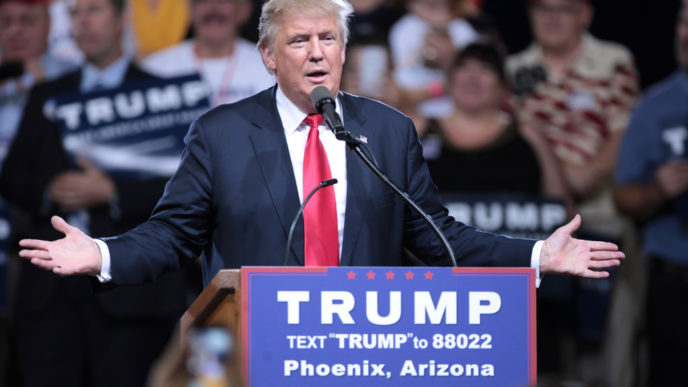
Obama’s Effort to Force Women into Combat, Allow Transgender Troops Results in $135 Billion Cover-Up, Deaths

Just as the newly-elected Trump administration is preparing to take office, America gets a surprise reveal from The Washington Post that President Obama’s Pentagon deliberately suppressed a 2015 report revealing $125 billion in wasteful spending could be saved over five years. Secretary of Defense (not for long, thank God!) Ashton Carter, his deputy Robert Work and other underlings squashed the report and its findings, placing secrecy restrictions on it and removing it from public view. They were busy with more important things like getting women into combat units and people with gender identity confusion to serve openly. Exposed just three days after the $619 billion National Defense Authorization Act of 2017 was passed, it reeks of a cover-up.

The Post reports:

Pentagon officials knew their back-office bureaucracy was overstaffed and overfunded. But nobody had ever gathered and analyzed such a comprehensive set of data before…Based on reams of personnel and cost data, their report revealed for the first time that the Pentagon was spending almost a quarter of its $580 billion budget on overhead and core business operations such as accounting, human resources, logistics and property management. The data showed that the Defense Department was paying a staggering number of people — 1,014,000 contractors, civilians and uniformed personnel — to fill back-office jobs far from the front lines.

Despite the recommendations to address the waste, namely through attrition and redirection of the funds to weapons repair and development and the troops themselves, officials used the scare tactic that revealing it would result in budget cuts. They used this excuse to hide it.

As I’ve previously reported, our military aircraft are at a mere 30 percent readiness, with the Marines even cannibalizing museum pieces to get some aircraft working. Our carrier fleet is in a similar state of disrepair and decline. The Heritage Foundation’s 2016 Index of U. S. Military Strength notes, with emphasis added:

Admiral Jonathan Greenert, Chief of Naval Operations (CNO), testified in his March 2015 posture statement, the Navy was “compelled to further reduce the capacity of weapons and aircraft, slow modernization, and delay upgrades to all but the most critical shore infrastructure” due to continued budget shortfalls of $11 billion.

The Obama administration has slashed military personnel — 20,000 Marines in 2012, 20,000 from the Army in 2015 and another 30,000 this year — as well as military pay and pensions. While drawing down, however, they’ve prioritized spending for more recruiters to go after women for combat jobs because they want to see an increase in female representation in the ranks. Also on their priority list are mobile “unconscious bias” training units to disabuse grunts of believing in the physiological differences between men and women that are reconfirmed every time they test against men’s standards. And then there’s the “Transgender 101” training, sex change operations and safe spaces now being provided at taxpayer expense.

Reduced flight training due to budget cuts imposed on the services has resulted in several fatal crashes, including one last January that killed 12 Marines. The waste revelation is more than just a disgrace. Marines have died directly due to a lack of funding for the training they need, but Obama’s Pentagon wouldn’t deign to divulge the waste, let alone slash office jobs held by civil servants. The stink of Washington elitism is repugnant. Far from the fray, detached from the consequences of their actions, they’re willing to put men and women in harm’s way without the things they need to succeed and to survive.

The government’s first and most basic responsibility is to protect citizens against enemies foreign and domestic. Yet the hard-earned dollars of those same citizens are being squandered in the worst way. More importantly, the lives of those actually defending the country are not only being put in greater peril but are being squandered just to fund more overpriced contractors and civilian desk jockies. Ashton Carter couldn’t care less.

Luckily for us, far better leadership is soon to take over in the form of retired Marine General James Mattis, a man who cares deeply for America’s defenders. His oversight of the Pentagon can’t come soon enough. (For more from the author of “Obama’s Effort to Force Women into Combat, Allow Transgender Troops Results in $135 Billion Cover-Up, Deaths” please click HERE)

Follow Joe Miller on Twitter HERE and Facebook HERE.
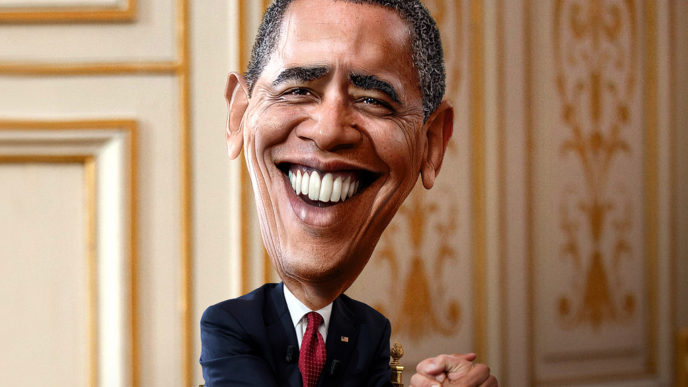
Perry Said to Be Trump’s Top Candidate for Energy Secretary

Donald Trump has narrowed his search for energy secretary to four people, with former Texas Governor Rick Perry the leading candidate.

People familiar with the president-elect’s selection process said two Democratic senators from energy-producing states — Heidi Heitkamp of North Dakota and Joe Manchin of West Virginia — are also in the mix, along with Ray Washburne, a Dallas investor and former chairman of the Republican National Committee.

If Trump picks any of the four he’ll break with recent tradition of putting scientists at the top of the Energy Department. Among other things, the agency is responsible for policies on the safe handling of nuclear material and on emerging energy technologies.

Trump met with Perry and Washburne while attending the Army-Navy football game in Baltimore on Saturday. It was at least the second time he’d spoken to the men for potential roles in the new administration. Trump interviewed Heitkamp at Trump Tower in New York on Dec. 2, and is scheduled to meet with Manchin on Monday. (Read more from “Perry Said to Be Trump’s Top Candidate for Energy Secretary” HERE)

Follow Joe Miller on Twitter HERE and Facebook HERE.