‘American Muslims Are Here to Stay,’ CAIR Tells Trump

The Council on American-Islamic-Relations and other Muslim groups called on President-elect Donald Trump Wednesday to reach out to Muslims and other communities “impacted” by his campaign rhetoric.

“As citizens of this great nation, we accept the result of the democratic process that has bound us together as one nation,” said CAIR national executive director Nihad Awad.

“Regardless of who won or lost yesterday’s election, American Muslims are here to stay. We are not going anywhere, and will not be intimidated or marginalized.”

As a press conference in Washington D.C. reacting to the presidential election outcome, Awad said that to CAIR’s knowledge neither Trump nor any member of his campaign had reached out to representatives of Muslim organizations since the result was announced.

He said CAIR invites Trump, as it has done before, to reach out to Muslim community leaders “to meet and to have a serious and deep conversation about the future of this country and how we can work together.” (Read more from “‘American Muslims Are Here to Stay,’ CAIR Tells Trump” HERE)

Follow Joe Miller on Twitter HERE and Facebook HERE.

Trump’s Win Isn’t the End, Says Levin. Time to Hold This New ‘GOP Monopoly’ Accountable

Wednesday night on the “Mark Levin Show,” Conservative Review’s Editor-in-Chief addressed the historic election that swept Republicans into power and placed Donald Trump in the White House.

Levin offered his congratulations to President-elect Donald Trump, but he reminded his audience that it was not Trump who defeated Hillary Clinton. Rather, the constitutional conservatives who went forth and voted for him are the real victors.

Listen:

Trump won by running on “one of the most conservative policy records and agendas of any modern president,” Levin said.

“It wasn’t until later when you, when WE held his feet to the fire … insisting that he embrace conservative principles” that he was able to do so, Mark remarked.

Donald Trump has won. The Republicans control the government.

Now it’s time to get to work on implementing that conservative agenda. “And we’re going to insist that on these very, very important conservative issues upon which many of you voted — that this Republican monopoly advance our principles … the principles they said that they would institute,” Levin said.

“We’re going to insist on it.” (For more from the author of “Trump’s Win Isn’t the End, Says Levin. Time to Hold This New ‘GOP Monopoly’ Accountable” please click HERE)

Follow Joe Miller on Twitter HERE and Facebook HERE.

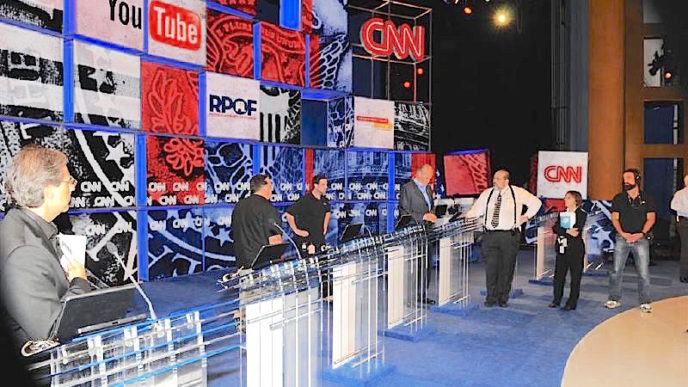
Wikileaks: Of Course CNN and the DNC Were Colluding on Questions for Republicans

If there is one thing that has been laid completely bare for the world to see, it is the fact that the mainstream media and the Democratic Party are in lock step and collude on coverage. Any claim to objectivity the media have has gone completely out the window. The latest evidence was released last night by WikiLeaks. In the second DNC email dump of the campaign, it was shown that CNN was asking the DNC for questions to ask at least two GOP presidential candidates during interviews. The DNC of course was all too happy to join in.

In an email on April 28, 2016, the DNC research director Lauren Dillon asked her staff to compile questions for CNN to ask Sen. Ted Cruz, R-Texas (A, 90%). In the email, Dillon makes it clear that CNN was asking for help. The email stated, “CNN is looking for questions.”

Phil Kerpen uncovered the email with questions that was sent back to Dillon and presumably forwarded to CNN.

Questions for Cruz included one on North Carolina’s HB2 Bathroom bill and whether Cruz only came to D.C. to run for president.

The questions of Cruz weren’t the only ones that were requested for CNN. Earlier in the week, the DNC was compiling questions for Wolf Blitzer to ask Donald Trump. The questions were for an interview with Wolf Blitzer that was later cancelled.

Earlier emails released by WikiLeaks from John Podesta’s Gmail account showed that Donna Brazile was given CNN debate questions ahead of time, which she shared with the Clinton campaign. This happened on at least two occasions and caused CNN to terminate its relationship with Brazile.

Conservatives have long called CNN the “Clinton News Network.” The revelations of internal communications at the DNC and from Podesta’s emails show that they have every reason to give the network that moniker.

It isn’t only CNN. WikiLeaks has shown that CNBC’s John Harwood asked Podesta on September 21, 2015, “What should I ask Jeb …” The Daily Caller explains how the Bush interview then went down.

On Sept. 25, Harwood sat down for a 10 question interview with Bush.

It’s not yet known if Podesta responded to Harwood’s question.

In other leaked emails Harwood praised Hillary Clinton and Podesta. Harwood also referred to President Barack Obama as “the black guy.”

WikiLeaks has also exposed that Politico’s Glenn Thrush sent stories to Podesta for sign off. The Boston Globe worked with the Clinton campaign for an op-ed placement to best serve the needs of the campaign. That episode has led to a Massachusetts political activist Steve Aylward to file an FEC complaint against The Globe.

No matter who wins the election tomorrow, it is now clear that the media are a propaganda arm of the Democratic National Committee — something conservatives have suspected for a while but is now confirmed by internal communications.

CNN, ABC, CNBC, Politico, and others need to come clean about their true relationships with the Democratic Party and its politicians. If they don’t, the American people will continue to lose trust in them. (For more from the author of “Wikileaks: Of Course CNN and the DNC Were Colluding on Questions for Republicans” please click HERE)

Follow Joe Miller on Twitter HERE and Facebook HERE.

2 GOP Senators Advocate Post-Election Vote on Supreme Court Nominee

Two Republican senators are breaking ranks with GOP leadership over the confirmation of President Barack Obama’s stalled Supreme Court nominee.

Sen. Johnny Isakson, R-Ga., predicted that Merrick Garland would be confirmed by the Senate during the lame-duck session of Congress. Sen. Jeff Flake, R-Ariz., has also advocated for action on Garland’s nomination in the post-election session.

“My prediction is this: If Hillary Clinton wins next Tuesday, Garland will be confirmed before January,” Isakson said Friday, according to The Huffington Post.

Isakson said he believes Garland would be a better alternative than potential Clinton nominees.

“He’s probably a lot more conservative than anybody she would appoint. If Donald Trump wins, there probably won’t be a confirmation of Merrick Garland,” Isakson said.

Garland, who currently is the chief judge of the U.S. Court of Appeals for the D.C. Circuit, was appointed by Obama in March to replace the late Justice Antonin Scalia, who died in February.

Isakson’s comments clash with statements made by fellow Republican senators, including GOP leaders who have ruled out confirmation during the lame-duck session.

“We’ve already made it very clear that a nomination for the Supreme Court by this president will not be filled this year,” Senate Majority Leader Mitch McConnell said in September.

Senate Majority Whip John Cornyn was even more blunt when asked by CNN about possibility: “No.”

In recent weeks, several Republican senators have suggested blocking Clinton’s nominees if she is elected president.

“I am going to do everything I can do to make sure four years from now, we still got an opening on the Supreme Court,” said Sen. Richard Burr, R-N.C., according to a recording obtained by CNN.

At a Colorado rally in October, Sen. Ted Cruz, R-Texas, told reporters that there is a historical precedent for the court operating with fewer than nine members.

“I think there will be plenty of time for debate on that issue,” Cruz said. “ … I would note, just recently, that Justice [Stephen] Breyer observed that the vacancy is not impacting the ability of the court to do its job. That’s a debate that we are going to have.”

Breyer, a Supreme Court justice appointed by President Bill Clinton, told MSNBC in October, “The court, when it began at the time of the Constitution’s writing, had six members. They had six members for several years. They had 10 members for several years after the Civil War. They functioned with an even number of members.”

Meanwhile, Sens. John McCain, R-Ariz., and Mike Lee, R-Utah, have been upfront about their intention to block potential Clinton court nominees.

During a radio interview in October, McCain said that Senate Republican leadership would “be united against any Supreme Court nominee that Hillary Clinton, if she were president, would put up.”

Similarly, Lee has said he believes there would be little difference between Garland and a potential Clinton nominee.

“As a former law clerk … I don’t believe there would be a real substantive distinction, a real noticeable difference between the voting pattern of a justice who would be appointed by a President Hillary Clinton … and Merrick Garland,” Lee told reporters in October.

Until Friday’s statement from Isakson, Flake was a lone voice advocating for lame-duck confirmation of Garland.

“I think the principle ought to be for Republicans to confirm the most conservative jurist that we’re able to confirm,” Flake told CNN’s Jake Tapper in September. “And if we do lose the election, then we ought to move swiftly, I think, to confirm Merrick Garland.”

Carrie Severino, chief counsel and policy director of the Judicial Crisis Network, said that supporting Garland would be detrimental to conservative values.

“Garland would provide the fifth vote to undermine First Amendment free speech and freedom of religion, to gut the Second Amendment right to bear arms, and to invite unelected agency bureaucrats, like those at the EPA, to micromanage every aspect of American life,” Severino told The Daily Signal in an email.

Ilya Shapiro, a fellow in constitutional studies at the libertarian Cato Institute, told The Daily Signal via email that it the distinction between a “moderate” and a “radical’ Supreme Court justice nominated by a Democrat president is not great.

“Justices appointed by Democratic presidents vote together north of 95 percent [of the time] on they key controversies that split the Court,” Shapiro said. “In that sense, it doesn’t matter whether the next nominee is a ‘moderate’ or ‘radical’ progressive. Moreover, on the issues that produce a heterodox split — typically the left/right ‘principled’ against the centrist ‘pragmatic’–a more [left-wing] nominee might be better. For example, Judge Garland inevitably defers to government interests in law enforcement cases, which Justice Scalia assuredly did not.”

Writing for National Review last week, Heritage Foundation experts James Wallner and John Malcolm argued that senators shouldn’t rubber-stamp a president’s judicial nominees.

“To preserve our cherished liberties and our constitutional system of government, both the executive and the legislative branches must engage in robust give and take about the kinds of men and women who ought to be confirmed to life-tenured positions in the judicial branch,” they wrote. “And senators have a sworn obligation to reject nominees who, they believe, would fail to uphold the Constitution.” (For more from the author of “2 GOP Senators Advocate Post-Election Vote on Supreme Court Nominee” please click HERE)

Follow Joe Miller on Twitter HERE and Facebook HERE.

On Election Day, ‘We the People’ Tell the Government What to Do

In urging the delegates to a New York convention to ratify the U.S. Constitution in 1788, Alexander Hamilton emphasized the principal strength of the new Constitution: “Here, sir, the people govern.”

The federal government gets its mandate from the American people. You are in charge. Express your will: vote.

You help govern your country through the exercise of your right to vote. As the U.S. Supreme Court has said: “No right is more precious in a free country than that of having a voice in the election of those who make the laws under which, as good citizens, we must live.”

When he first became president in 1885, Grover Cleveland stressed in his inaugural address the public trust held by every voter:

He who takes the oath today to preserve, protect, and defend the Constitution of the United States only assumes the solemn obligation which every patriotic citizen—on the farm, in the workshop, in the busy marts of trade, and everywhere—should share with him. The Constitution which prescribes his oath, my countrymen, is yours; the government you have chosen him to administer for a time is yours; the suffrage which executes the will of freemen is yours; the laws and the entire scheme of our civil rule, from the town meeting to the state capitals and the national capital, is yours. Your every voter, as surely as your chief magistrate, under the same high sanction, though in a different sphere, exercises a public trust.

In his farewell address to the American people in 1989, President Ronald Reagan echoed the words of Cleveland a century earlier, emphasizing that the American people remain in charge of their government:

Ours was the first revolution in the history of mankind that truly reversed the course of government, and with three little words: ‘We the People.’ ‘We the People’ tell the government what to do; it doesn’t tell us.

On behalf of your fellow citizens, we ask you to choose carefully in deciding upon the representatives, senators, president, and state and local officials who will make our laws. Your choice, along with the choices of your fellow citizens, will determine what America is to become. You, your fellow citizens, and future generations will live in the America you choose.

Conservatives will do tomorrow and the next day exactly what we did yesterday and the day before: We will continue to formulate and promote conservative public policies based on the principles of free enterprise, limited government, individual freedom, traditional American values, and a strong national defense.

We know our principles and we adhere to them. That is our public trust. The American people can count on us, just as we count on the American people.

God bless the United States of America and its people. Now, go vote. (For more from the author of “On Election Day, ‘We the People’ Tell the Government What to Do” please click HERE)

Follow Joe Miller on Twitter HERE and Facebook HERE.

Report: Hillary Had Maid Illegally Handle Classified Information

News broke Sunday morning that Democratic presidential nominee and former Secretary of State Hillary Clinton illegally tasked her maid, who lacked proper security clearance, with printing and handling classified information at Clinton’s residence in Washington, D.C.

According to various emails and FBI memos obtained by the New York Post, Marina Santos, was also given illegally access to a high security room in Clinton’s house that is known as a sensitive compartmented information facility, or SCIF.

The New York Post reports:

Clinton would first receive highly sensitive e-mails from top aides at the State Department and then request that they, in turn, forward the messages and any attached documents to Santos to print out for her at home.

The claim is backed up by several emails, including one from 2011 in which Clinton asked longtime aide Huma Abedin to “Pls ask Marina to print for me in am.” The Post does note that this email was sensitive but unclassified.

In a classified email from 2012, another one of Clinton’s aides told Clinton, “We can ask Marina to print this.” Another 2012 email read, “Marina is trying to print for you.” Santos would also grab documents for Clinton from the secure fax in the SCIF.

According to the Department of Defense, access to SCIF areas is limited to people with appropriate security clearances. As a former Air Force intelligence official told The Stream, “People without SCI clearances are not allowed in a SCIF without an escort by someone who has an SCI clearance and No Way are they allowed access to a fax.” In fact, all classified materials must be removed from view before the person enters. Clearly, such security procedures were not followed in this case.

The revelation brings even more evidence of what FBI Director James Comey referred to back in July as Clinton’s “extreme carelessness” of handling classified information, putting national security at risk. Some have expressed concern that the FBI has not subpoenaed Santos, a Filipino immigrant, or the iMac and printer she used — or even the printouts themselves.

The news came hours before FBI Director James Comey told Congress in another letter that despite reopening their investigation into Clinton’s emails last week, the Bureau has “not changed our conclusions that we expressed in July with respect to Secretary Clinton.” The agency said that the 650,000 emails found on a senior Clinton aide’s husband’s computer were either unrelated to the prior investigation or had already been looked into.

Daily Mail reports that “Republican presidential nominee Donald Trump blasted the arrangement on Sunday morning, telling a Sioux City, Iowa crowd that Clinton was ‘completely jeopardizing the national security of the United States.’” (For more from the author of “Report: Hillary Had Maid Illegally Handle Classified Information” please click HERE)

Follow Joe Miller on Twitter HERE and Facebook HERE.

Trump Makes Final Plea for Catholic Votes

Republican presidential nominee Donald Trump is making a final pitch for Catholic support in the waning days of the 2016 presidential campaign.

“From marching for civil rights to educating millions of children, serving the poor and helping define the pro-life movement, clergy and lay Catholics across the country have made countless contributions to the American success and the American success story,” said Trump, who discussed Christianity, his comments about women and other issues with EWTN’s Raymond Arroyo last month.

Describing as many in Washington as “hostile” to Catholics and “to members of Catholicism,” Trump said that his administration “will stand side by side with American Catholics” for values they hold as “Christians and Americans.”

Recent polls show radically different levels of support for Trump and his Democratic opponent, former Secretary of State Hillary Clinton, among Catholics. One tracking poll says Trump is ahead by 13 points, while another poll says Clinton has an 11-point margin among the faithful.

Support for Trump among Catholics has been more complicated than for past GOP presidential nominees. Typically, practicing socially conservative Catholics back the GOP nominee while liberal and less-practicing Catholics go for Democrats. This year, many practicing Catholics are concerned about whether Trump’s recent conversion on the issue of abortion is genuine, though most appear to be standing with him against the openly pro-abortion Clinton. Clinton, for her part, has said she will repeal the Hyde Amendment, which prevents most taxpayer funding of abortion, and has campaign staffers who have attempted to subvert the U.S. Church.

Both Clinton and Trump have been criticized by clergy for their proposed policies and some rhetoric on the campaign trail. Clinton’s campaign manager and Vice President nominee are both Catholic, though running mate Senator Tim Kaine (D-VA) has said he supports women ordination and changing the Church’s teachings on homosexual relationships. (For more from the author of “Trump Makes Final Plea for Catholic Votes” please click HERE)

Follow Joe Miller on Twitter HERE and Facebook HERE.

Paul Ryan in Precarious Position Ahead of Election Day

Paul Ryan says he’s running for House speaker again, but the Wisconsin Republican’s air of confidence belies divisions within the GOP and a deep-seated disdain for the party establishment from conservatives.

“I am going to seek staying on as speaker,” Ryan told Wisconsin talk-radio host Jerry Bader in an effort to quell speculation Friday. “There’s a lot of unfinished work to do, and I think I can do a lot to help our cause and our country.”

Returning to the job he’s held since October 2015 won’t be easy. The results of Tuesday’s election—regardless of who wins the presidency—are likely to bring calls for new leadership on Capitol Hill. Plus, with several House Republicans in danger of losing their seats, Ryan will face a more conservative caucus, potentially with fewer allies in his own party.

Conservatives, however, aren’t the only lawmakers creating headaches for the 46-year-old speaker from Janesville, Wisconsin.

This weekend, the latest challenge came not from the conservative House Freedom Caucus but instead a centrist Republican from Ohio. Politico reported Saturday that Rep. Jim Renacci, R-Ohio, is circulating a letter seeking to delay GOP leadership elections. The vote is set to take place Nov. 15, just one week after Election Day. It is a precursor to the official vote for House speaker in January.

“There are fractures in the conference which truly need to be discussed, vetted, and healed,” states the Renacci letter, which was obtained by Politico. “Asking members to vote for a leadership team within 24 hours of their return to Washington without time to reflect on ways of coming together as a conference is truly ill advised. That in itself ignores the reality that the conference is divided. … There is no reason to hastily hold elections.”

In a subsequent interview with Politico, Renacci also declined to endorse Ryan for speaker.

“At this stage of the game, I don’t know who all is running,” Renacci told Politico. “I’m very supportive of Paul, but when it comes to elections I want to see who’s in before committing [to] who I’m supporting.”

Renacci isn’t the first lawmaker to complain about the hurried nature of the leadership vote. In September, the Freedom Caucus mulled pushing for a delay as well. Conservatives wanted to evaluate Ryan’s handling of the lame-duck session of Congress before committing to support him.

There’s also another factor at play: Republican supporters of Donald Trump are unhappy with Ryan’s treatment of the GOP presidential candidate and, according to Politico, “they’ll lay the blame at Ryan’s feet if the GOP nominee loses narrowly.”

One such lawmaker, conservative Rep. Jim Bridenstine of Oklahoma, announced last month he wouldn’t support Ryan as speaker.

Another conservative, Rep. Thomas Massie, R-Ky., cited a different reason for his opposition to Ryan.

“It would be very difficult for him to get my vote based on what I assume his motives are, which are to run for president in 2020,” Massie told The Huffington Post last week.

Massie, who voted against Ryan for speaker in 2015, also outlined a series of conditions he would use to judge the next speaker. In a statement to The Huffington Post, he wrote:

The next speaker shouldn’t send the House on vacation for five weeks in August unless the appropriations bills are done. The next speaker needs to make good on the broken promise to give members and the American public time to read the bills. The next speaker should immediately put a stop to the institutionalized extortion that requires members to pay for their committee assignments with lobbyists’ money. Finally, the next speaker needs to allow a debate on whether or not to authorize the military conflicts the president has unilaterally engaged us in around the globe.

Under his leadership, Ryan failed to complete the annual appropriations process, prompting the need for a lame-duck session of Congress next month to fund the government. Conservatives opposed the post-election session because some members who are retiring or lost their elections will no longer be accountable to constituents, yet voting to spend billions in taxpayer money.

While Ryan put significant effort into the “A Better Way” agenda, there were few legislative accomplishments for conservatives to cheer about this year. One of the few cited by Ryan’s office—the fiscal relief package for Puerto Rico—was unpopular among conservatives.

“The American people are calling for action, not just ideas,” Rep. Jim Jordan, chairman of the Freedom Caucus, told The Daily Signal last month.

“The American people already understand the difference between what the parties stand for,” Jordan added. “What they want to see from Republicans is a willingness to stand firm and get something done.”

Ryan has pointed to 2017 as an opportunity to enact his agenda. In the radio interview with Bader, he said, “I’ve led us to offer a very comprehensive agenda to take to the country and I want to execute and implement that agenda.”

Executing and implementing that agenda could help win over some of Ryan’s critics. But for conservatives like Rep. Dave Brat, R-Va., Ryan needs to do more. That includes opposition to a trade deal negotiated by the Obama administration and a firm stance against amnesty for illegal immigrants.

“If he commits to regular order—in writing—and no Trans-Pacific Partnership until we reduce regulations and no amnesty bills and a commitment to reduce federal spending, then I will vote for any candidate who backs these conservative positions that 80 percent of Republicans share,” Brat told CNN.

“Each of these issues should just be reflexive for any Republican,” Brat added. “They should not take more than 5 seconds to say ‘yes.’”

Like Massie, Brat voted against Ryan for speaker in 2015. They were two of the nine Republicans who cast a ballot for Rep. Daniel Webster, R-Fla. The others were Reps. Curt Clawson, R-Fla.; Louie Gohmert, R-Texas; Paul Gosar, R-Ariz.; Walter Jones, R-N.C.; Bill Posey, R-Fla.; Randy Weber, R-Texas; and Ted Yoho, R-Fla.

Many members aren’t saying publicly if they’ll support Ryan until after Election Day.

“I’m not commenting on leadership elections until after Nov. 8,” Rep. Mark Meadows, R-N.C., told CNN. Meadows is a candidate to succeed Jordan as chairman of the Freedom Caucus if he decides to step down.

Jordan, meanwhile, was pressed by CNBC’s John Harwood last week on Ryan’s future, but he wouldn’t commit either way.

“There’s time to deal with who’s in leadership, who may not be in leadership, how leadership is done, what the rules are, what we’re going to focus on in the lame duck,” Jordan said on CNBC.

Jordan’s group of 40 Freedom Caucus members hold the most sway over the speaker election in January. Members of the conservative caucus huddled at Meadows’ Washington, D.C., apartment last week to plot their strategy.

Following the meeting, Politico reported that Freedom Caucus members might support Ryan if one of their own secured a seat at the leadership table. At least a couple lower-tier leadership roles could be available—vice chairman of the conference and secretary of the conference—if incumbents decided not to seek re-election to those roles.

But one Freedom Caucus member, Rep. Justin Amash of Michigan, suggested such a deal with GOP leadership wasn’t in the cards.

The uncertainty, at least for now, puts Ryan in a precarious position. Last year, he initially rebuffed the speakership before eventually emerging as John Boehner’s replacement. Since getting the job, he’s made defending the Republican majority a top priority. The GOP’s 2012 vice presidential nominee is using his national profile to raise money and campaign for incumbents. That includes members of the Freedom Caucus.

Ryan recently visited the districts of two vulnerable Freedom Caucus members: Reps. Rod Blum, R-Iowa, and Scott Garrett, R-N.J. They’ve returned the favor by supporting Ryan.

He’s also donated to the campaigns of more than a quarter of Freedom Caucus members, according to The Daily Caller News Foundation. They include Reps. Mick Mulvaney, R-S.C.; Alex Mooney, R-W.Va.; Mark Sanford, R-S.C.; Barry Loudermilk, R-Ga.; and Warren Davidson, R-Ohio.

Ryan will need as many of those conservative members in his corner given the probability that some of the 246 House Republicans won’t be back in January.

Even if he wins the initial backing of his GOP colleagues on Nov. 15, there’s still the possibility that Ryan won’t have the votes in January when the full House votes for speaker. To be elected speaker, Ryan needs 218 votes. Because no Democrats will support a Republican speaker, Ryan must limit the number of defections within the GOP to remain in the job.

“The final exam for Paul Ryan will be in January 2017, when there is a speaker election,” Rep. Raul Labrador, R-Idaho, told The New Yorker last year, “and we will look at his body of work and determine whether he gets a passing grade or not.”

Ryan won 236 votes last year. With a smaller GOP majority likely in January, it will be in the hands of House conservatives to ultimately decide if Ryan deserves to remain in the job. (For more from the author of “Paul Ryan in Precarious Position Ahead of Election Day” please click HERE)

Follow Joe Miller on Twitter HERE and Facebook HERE.

What’s Causing the Surge of Illegal Immigration? Lawmakers Want Answers and Action

Four members of Congress are calling on the Obama administration to quickly address the recent spike in illegal immigration along the U.S.-Mexico border.

In a letter to Department of Homeland Security Secretary Jeh Johnson, the four lawmakers ask the administration to “take immediate action and mobilize all available resources of the department to stop the ongoing surge of illegal immigration at the southwest border.”

The letter was sent Thursday by Sens. Chuck Grassley, R-Iowa, and Jeff Sessions, R-Ala., along with Reps. Bob Goodlatte, R-Va., and Trey Gowdy, R-S.C. Grassley and Goodlatte lead each chamber’s judiciary committees.

According to the letter, the lawmakers believe the immigration surge is connected to the U.S. presidential election.

“Numerous media reports indicate that this surge is a large-scale effort to enter the United States before this year’s presidential election,” the letter states. “The onslaught of illegal immigration reflects continued efforts by aliens from Central America—El Salvador, Honduras, and Guatemala—to overwhelm our limited resources at the border, which inevitably results in the release of tens of thousands of removable aliens within the United States.”

The letter also states that “thousands” of Haitians and Africans are gathering in two Mexican cities, Tijuana and Mexicali, and “asserting dubious claims of asylum [to U.S. Customs and Border Protection officers], which will practically guarantee their entry.”

In the last fiscal year, according to the letter, 408,870 illegal immigrants were found by the Border Patrol attempting to cross the U.S.-Mexico border.

“Of those apprehended, more than 77,000 were members of so-called ‘family units,’ which represents an increase of 95 percent over [fiscal year] 2015 figures, and nearly 60,000 were unaccompanied alien minors, which reflects a 49 percent increase over the previous fiscal year,” the letter reports.

Currently, the 40,000 illegal immigrants are being held by Immigration and Customs Enforcement.

The letter warns that this record number could easily reach 47,000 in the very near future.

“Without additional funding, ICE likely will release thousands of those detained into the United States, many of whom are criminals, who will abscond and hide from authorities,” the letter states.

Goodlatte, Gowdy, Grassley, and Sessions are calling on Homeland Security to immediately address this issue. They noted the department abruptly canceled a briefing last week with congressional staff, leaving questions about the recent surge unanswered.

“It has come to light through information provided to our committees that the department may have issued a directive to limit engagement with Congress until immediately before the election,” they wrote. “Any such directive, if issued, would be an unacceptable political ploy and a serious infringement of Congress’ oversight authority under the Constitution. We fully expect that such a directive, if issued, would be immediately rescinded.”

David Inserra, a homeland security expert at The Heritage Foundation, believes this is yet another instance that illustrates President Barack Obama’s lack of action to address the country’s immigration policy.

“The Obama administration’s failure to enforce our immigration laws and ongoing promises of amnesty or legalization by policymakers have encouraged continuing waves of illegal immigration,” Inserra said in an email to The Daily Signal. “Until the U.S. redoubles the enforcement of its immigration laws and provides ICE and other immigration agencies with the resources they need, the U.S. will keep struggling with the surges of illegal immigration we have seen and continue to see at our borders.” (For more from the author of “What’s Causing the Surge of Illegal Immigration? Lawmakers Want Answers and Action” please click HERE)

Follow Joe Miller on Twitter HERE and Facebook HERE.
Who Pays for Politicking on Air Force One? Here’s the Formula for How Costs Are Split

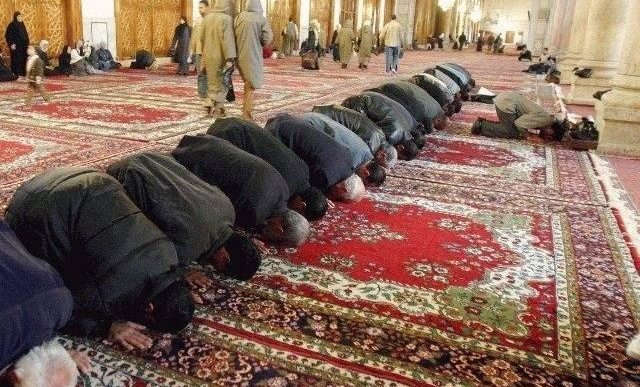
President Barack Obama hit the skies in Air Force One in the week before the presidential election, stumping for who he hopes to be his successor—at a cost that will mostly be covered by taxpayers, but will be partially refunded by the campaign.

The president stumped for Hillary Clinton, stopping for speeches in Columbus, Raleigh, Miami, Jacksonville, and Fayetteville, North Carolina. Obama previously stumped for Clinton in Charlotte, Philadelphia, Cleveland, and Orlando.

Air Force One, for fiscal year 2016, has an estimated cost per flying hour of $180,118, according to the U.S. Air Force information obtained by Judicial Watch.

The reimbursement is based on what a flight would cost if it were a first-class commercial airline, according to Federal Election Commission regulations.

All presidential travel is classified into two categories. It can be taxpayer-paid official travel, involving any presidential duties. Or it’s unofficial travel, including political trips, which would require some reimbursements to the federal treasury.

The Reagan administration established written standards in 1982 about political travel on Air Force One. The guidelines determined when the president and vice president would travel entirely at government expense and when political campaigns or committees would have to reimburse the government for these costs.

Subsequent opinions by the Justice Department and Office of Legal Counsel and the Federal Election Commission backed up the Reagan administration policy, extending to the first lady and vice president’s spouse, according to a 2012 report by the Congressional Research Service.

The Federal Election Commission guidelines require that the cost of Air Force One travel be offset by “the lowest unrestricted and non-discounted, first-class airfare in the case of travel between cities served by regularly scheduled first-class commercial airline service,” or the “the normal and usual charter fare or rental charge for a comparable commercial aircraft of sufficient size to accommodate all campaign travelers and security personnel, if applicable, in the case of travel to or from a city not regularly served by regularly scheduled commercial airline service.”

White House press secretary Josh Earnest predicted early last week that Obama would be very active on the campaign trail before Election Day.

“I would anticipate that the president will spend a significant amount of time traveling next week in support of not just Secretary Clinton’s presidential campaign, but Democrats further down the ballot,” Earnest said.

“The president’s view is that the stakes in the election are high, not just in terms of determining who will occupy the Oval Office for the next four years, but how much success President Obama’s successor will have in advancing their agenda through the Congress, so that would account for the president’s passion.”

Previous presidents of both parties have typically taken the presidential plane on the campaign trail both for their desired White House successor and for candidates running for office in congressional and gubernatorial campaigns. Usually, the party out of power raises questions about how tax dollars are funding partisan politics.

To fly first class in the cities Obama visited in the final week of the campaign, it would cost $5,396.82 per person, based on Expedia numbers. That would seem hefty, but the total Air Force One cost for travel would be about $1.08 million. This would be just under six flight hours, according to the website Flightmanager.com.

“The average cost to fly on commercial is far less than the taxpayers are covering, it’s just a small portion,” Demian Brady, director of research at the National Taxpayers Union Foundation, told The Daily Signal. “There are also a lot of undisclosed costs. We need a fairer system for compensation as well as greater transparency.”

Campaign flights earlier in the year were shorter. In September and October, Obama traveled to Charlotte, Philadelphia, Cleveland, and Orlando to stump for Clinton.

The highest price for a round-trip flight from the District of Columbia to Charlotte would be $2,869.10 per person, according to the travel site Expedia. A one-day round-trip flight from the District to Philadelphia and back would cost $872.20 per person.

A one-day round-trip flight from the District to Cleveland and back would cost $886.20 for a first-class round trip. A first-class round-trip commercial flight from Washington to Orlando would cost as much as $1,077.20 per person.

The presidential trips from the District of Columbia to Charlotte, Philadelphia, and Cleveland would have all been less than one hour, based on flight time estimates from the website FlightManager.com. So, that would mean at least one way, the flights would each be less than $180,118.

Still, for those three presidential round trips, the cost would be about $540,000 combined—most of which taxpayers would absorb. The less than two hours to Orlando and back on Air Force One would cost about $528,000 round trip.

Vice President Joe Biden and first lady Michelle Obama made campaign appearances for Clinton, while the president also made campaign trips for Democratic congressional campaigns this year.

The National Taxpayer Union Foundation has studied presidential travel, determining earlier this year that Obama has officially had the second-most flights abroad of any president except for Bill Clinton. The organization, however, does not track campaign travel separately.

In February 2013, Obama had a trip that mixed official and unofficial business, according to a Government Accountability Office report released last Wednesday.

Obama first flew to Chicago to deliver remarks about the economy, and from there to Palm Beach, Florida, for a vacation. The entire trip cost the Defense Department $2.8 million and cost the Department of Homeland Security $770,000 because of the needed protection from the Secret Service, according to the new GAO finding.

There isn’t a tally on how much Obama has spent on political travel throughout his presidency and what proportion has been reimbursed. However, there were similar tallies for former President George W. Bush.

A 2006 report by the Rep. Henry Waxman, D-Calif., the then-ranking member of the House Oversight and Government Reform Committee, determined that Bush’s travel for Republican candidates in 2002 cost $15.7 million, and the taxpayers covered 97 percent of the expense.

Further, former Vice President Dick Cheney’s travel to campaign events in 2006 cost about $7.2 million, and just $200,000 was reimbursed to the taxpayers, according to the Waxman report. (For more from the author of “Who Pays for Politicking on Air Force One? Here’s the Formula for How Costs Are Split” please click HERE)

Follow Joe Miller on Twitter HERE and Facebook HERE.