
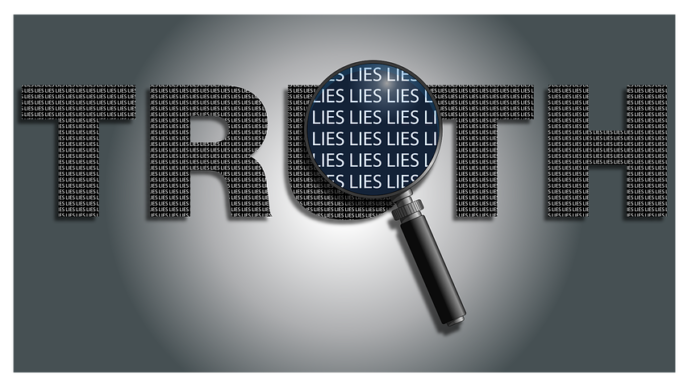
7 of the Media’s Most Egregious Lies in 2016

The dominant story pushed by the mainstream media in the last few weeks of 2016 has been the harm caused by “fake news.” Indeed, a simple Google search reveals countless stories centering around the topic of fake news, its harmful effects, and what people (or the government) should do to fight it.

But while mainstream media consternation over fake news draws nearer to peak hysteria with each passing day, looking back at 2016, there were plenty of times the mainstream media itself spread blatant falsehoods as “news.”

Here are seven of the worst media lies from 2016.

1. Ted Cruz stole votes from Ben Carson

What was reported: Ted Cruz’s campaign launched a “dirty trick” in the Iowa caucuses by intentionally spreading a false report that Dr. Ben Carson had dropped out of the race. Caucus goers were then told that a vote for Carson would be a wasted vote. Ted Cruz won the Iowa caucuses by cheating.

The facts: The Ben Carson suspension rumor in February originated with a CNN report that gave many, many people the impression that Dr. Carson was returning home to Florida after the caucus, presumably to drop out after his fourth-place finish. They gained this impression because Carson did return home — apparently to do laundry — rather than continue on to the New Hampshire or South Carolina contests.

One of those people who believed Carson’s dropout was imminent was Congressman (and Ted Cruz supporter) Steve King, R-Iowa (B, 81%), who tweeted: “Carson looks like he is out. Iowans need to know before they vote. Most will go to Cruz, I hope.” By this time, CNN had tweeted a second time: “After the #IAcaucus, @RealBenCarson plans to take a break from campaigning.”

Following that report, a Cruz staffer told precinct captains, “Breaking News. The press is reporting that Dr. Ben Carson is taking time off from the campaign trail after Iowa and making a big announcement next week. Please inform any Carson caucus goers of this news and urge them to caucus for Ted Cruz.”

Now, Sen. Marco Rubio, R-Fla. (C, 74%)’s campaign aggressively pushed that narrative as well. But Ted Cruz’s campaign bore the brunt of the blame for “lying,” as CNN vehemently denied that they had suggested Carson was dropping out. CNN “fact-checkers” stuck to accusing Cruz of spreading a falsehood.

The media was complicit in characterizing Cruz as a dirty sport, and Donald Trump seized on the controversy to label Sen. Cruz “lyin’ Ted.” The Cruz campaign never fully recovered from the fallout of the Carson debacle, and, in this writer’s opinion, this distorted media narrative in all likelihood cost Ted Cruz needed momentum from his Iowa win and ultimately the Republican nomination.

2. Trump supports a “Muslim ban” … and that would harm Muslim Americans

What was reported: Donald Trump called for a “total and complete” ban on Muslims entering the United States.

The facts: The actual text of Trump’s proposal read, at the time: “Donald J. Trump is calling for a total and complete shutdown of Muslims entering the United States until our country’s representatives can figure out what is going on.”

That is, by plain reading, a temporary restriction on Muslim immigration. As Trump would later clarify:

Nevertheless, the fearmongering Huffington Post (of anti-Trump editor’s note fame) insisted in a recent piece, “The comment was an unequivocal and alarming pledge that threatened to impact the world’s 1.6 billion Muslims, but today, it’s unclear what the fate of Muslim Americans will be in a Trump administration.”

First, Trump’s proposal wouldn’t affect 1.6 billion Muslims; it would exclusively apply to migrants attempting to enter the U.S. who are from hotbeds of terrorism. Such a policy has been previously implemented by the Obama administration, and tighter restrictions are supported by a majority of Americans.

Second, the “fate of Muslim Americans” is not thrown into question under a policy that restricts immigration, because … they are already in the country.

Media fearmongering on Muslim ban = lie.

3. Orlando nightclub terrorist used an “AR-15”

What was reported: “AR-15 Rifle Used in Orlando Massacre Has Bloody Pedigree,” (NBC); “Orlando Shooting Puts Spotlight on AR-15 Rifle,” (Newsweek); “The history of the AR-15, the weapon that had a hand in the United States’ worst mass shooting,” (Washington Post).

The facts: As TheBlaze’s Jason Howerton dutifully reported in the aftermath of the Orlando nightclub terror attack in June, jihadist Omar Mateen did not use an AR-15 rifle in carrying out his massacre of 49 people at the Pulse gay nightclub. Mateen used a Sig Saucer MCX carbine, which have virtually “no major parts that interface with AR-15s in any way, shape or form,” as Bearing Arms’ Bob Owens explained.

The media excitedly launched a blind crusade against the AR-15, pushing for Obama’s executive actions on gun control. Democratic lawmakers eventually joined in on the frenzy, launching a sit-in protest that inspired fawning coverage from the media and ridicule from conservatives.

4. Anyone can legally buy a gun; easily

What was reported: During the Orlando jihad (gun control) hysteria, CBS News reported it took “38 minutes and $1,030 for our @CBSNews producer to buy an AR-15 and walk out legally armed in Virginia.” Additionally, terrorists can easily use the “gun show loophole” to purchase firearms without background checks, The New York Times told America.

The facts: First thing’s first: CBS had to issue a correction because the reporter did not purchase an AR-15. Next, it is not so easy to buy a gun. You have to pass a background check, which the CBS producer, Paula Reid, did because she didn’t have a criminal record. Well … she didn’t until she broke federal law by purchasing that gun under false pretenses.

You see, Reid told the gun store’s general manager that she intended to purchase the firearm and “undergo training” with a “NRA-certified instructor.” The actual story, however, revealed the purchase was for their story and that they had transferred the firearm to a “federally licensed firearms dealer and weapons instructor in Virginia, just hours after we bought it.” The gun store owner, after gaining knowledge of the report, alerted the ATF of a potential “straw purchase” — a federal crime.

As RedState’s Streiff wrote, “All this segment did was demonstrate that if someone is intent upon violating the law, the technical term for people like this is “criminals”, then they will violate the law. If the dealer acts in good faith and does all the appropriate checks and is deceived their is very little else one could expect them to do.”

As for the whole, so-called “gun show loophole”? As CRTV contributor Steven Crowder has demonstrated, that is a myth.

You need to pass a background check to purchase a gun at a gun show.

5. The Clinton email investigation was not closed. Or was it? Yes it was. No it wasn’t.

What was reported: In July, after FBI Director James Comey announced the FBI would not recommend prosecution against Hillary Clinton’s handling of classified information on her private email server, the media reported the case “closed.” On Oct. 28, Director Comey sent a letter to Congress indicating that additional emails relevant to the Democratic presidential candidate’s case had been discovered.

After initially reporting that the case was “reopened,” the media backtracked after left-wing sites ThinkProgress and The Daily Banter argued that the case was not “reopened” on a technicality. Then Politifact claimed the FBI didn’t “reopen” the investigation because “it wasn’t formally closed.”

The facts: As Conservative Review Editor-in-Chief Mark Levin explained, Director James Comey said the new information was “pertinent to the investigation.” If the investigation was closed, as the media reported in July (in an effort to aid their anointed candidate), then Comey’s language clearly indicated that the new evidence “reopened” the FBI’s investigation. Listen to his explanation at 7:08:

Rob Eno further spelled it out on Twitter for the apparently illiterate (or just extremely ethics-deprived) liberal bloggers:

The investigation was closed. Then new evidence reopened the case. Period.

6. Muslim teen’s claims of a Trump supporter attack; post-election “hate crime wave”

What was reported: Yasmin Seweid, a female Muslim teen, claimed she was harassed by Trump supporters on a New York City subway. Her claims received widespread media coverage, as Katrina Trinko documented for The Daily Signal:

“Muslim teen verbally attacked on NYC subway,” reported CBS News. “Drunk Men Yelling ‘Donald Trump’ Attempt To Remove Woman’s Hijab On NYC Subway,” was the BuzzFeed headline. “Muslim Woman Harassed on Subway by 3 Men Who Call Her ‘Terrorist,’ Chant Trump’s Name: NYPD,” reported NBC 4 New York.

Slate wrote, “Three white men who were apparently intoxicated repeatedly yelled anti-Islam insults at a Muslim student in the New York City subway and no one did anything. The men, who yelled ‘Donald Trump!’ several times and even tried to pull off the terrified 18-year-old’s hijab, also accused her of being a terrorist.”

This story was the most publicized of a supposed wave of hate crimes committed by bigoted Trump fans after the election.

The facts: As is an unmistakable pattern from the Left, Yasmin Seweid’s story was a complete fabrication and the mainstream media was all too happy to fall for it hard, reporting it as trending news. Police became concerned about the lack of corroborating evidence and witnesses during their investigation, and the 18-year-old eventually admitted the story was a lie. Seweid now faces criminal charges for filing a fake hate crime report.

Her hoax does not stand alone (not by a long, long shot). In their agenda to further perpetuate the very worst stereotypes and narrative about Donald Trump’s supporters, the mainstream media have reported a number of “hate crimes” that were later discovered to be fake. The Daily Caller has compiled a list, which includes a false report of a Muslim woman robbed of her hijab and a black woman harassed at a Philadelphia gas station. Reason’s Elizabeth Nolan Brown has an even more comprehensive list, in which she illustrates how the truth on common narratives are usually far more nuanced and complicated than the mainstream media could ever care for.

As Brown writes, “The picture that emerges isn’t a wave of hoaxes, a wave of attacks on minorities by Trump-emboldened bigots, nor a wave of attacks on Trump supporters by intolerant liberals—though all have occurred—but something more complex and, hopefully, a little less frightening, even if the stories that have happened are still horrible.”

7. Fake news is an epidemic that cost Hillary Clinton the election

What was reported: There is an epidemic of “fake news” in America, enabled and spread via social media, that The New York Times, The Washington Post, and countless other mainstream media outfits (and Obama himself) warn could threaten democracy itself. Indeed, Hillary Clinton lost the election because of fake news.

The facts: Data show that fake news sites have extremely limited reach and struggle to reach a mass audience. Peter Hasson and The Daily Caller cite one example to help illustrate the point: “Fake news site DenverGuardian.com, subject of coverage from the New York Times and the Washington Post, is ranked 91,688 in web traffic in the U.S., according to web analytics firm Alexa. To put that number in perspective: the site supposedly impacting the national political scene is more than 84,000 slots behind the website for a Virginia community college.” Other sites frequently decried by the mainstream media are, if possible, even more irrelevant.

The fact of the matter is Hillary Clinton did not lose the election because of a gullible electorate prone to lies. Were that the case, a compulsive liar such as Mrs. Clinton should’ve won easily.

Fake news cost her the White House? No — Hillary Clinton lost the election because she is untrustworthy. Hillary Clinton lost the election because her incompetent campaign thought they should focus on states that would help run up her popular vote numbers, instead of keying in on battleground states like Michigan, Wisconsin, and Pennsylvania.

Hillary Clinton lost the election because her economic ideas do not offer a path to growth. She lost because her extreme position on abortion is well outside the mainstream of the electorate. She lost because of the vicious intolerance the Left has for religious Americans (though only of the Christian variety). She lost because her open-borders proposals threaten American sovereignty.

Hillary Clinton lost because she was corrupt and under federal investigation for placing American national security at risk on an easily hackable private email server. She was a terrible candidate and no amount of “fake news” could have changed that about her, as was demonstrated by the Praetorian Guard media’s failed attempt to get her elected president.

And why did the media fail? Because the American people’s trust in the media has fallen to record lows, in no small part thanks to their continued reporting of lies and advancing of their liberal agenda.

If members of the media have any hope of regaining their credibility, they can start by telling the truth. (For more from the author of “7 of the Media’s Most Egregious Lies in 2016” please click HERE)

Follow Joe Miller on Twitter HERE and Facebook HERE.
Conservatives and Libertarians: Don’t Be Fooled by These Two Extra-Constitutional Grassroots Movements

The call for an Article V Convention of States has flushed out some strange bedfellows seeking a common goal. Some groups claiming to be conservative are showing themselves to be involved in using deceptive rhetoric and false history to break up the Constitution. These particular political activists lament the formation of the American government under the Constitution. Yes, they look to to undermine it, using bits and pieces of history to back up their claims, much like American progressives do.

“The activists position themselves on the Right, using the organization of the tea party, groups like the Michigan Campaign for Liberty (a state chapter of Ron Paul’s Campaign for Liberty), and even the Tenth Amendment Center to distort the Constitution so that it fits their agenda.” One activist told me his work for the Campaign for Liberty was to perfect the Constitution by breaking up the bond between the federal government and the states. He lamented that the nation should never have ratified the Constitution, but instead kept the Articles of Confederation. (Keep in mind that the Articles were proving to be insufficient, a major impetus for conceiving the Constitution.) It is those who might have previously been defined as Anti-Federalists, who operate across the nation as nullifiers and secessionists, anarchists disguised as liberty experts, and Constitution-destroyers disguised as constitutionalists, that are racing parallel to the Left.
To be clear, nullification in and of itself is not a bad thing, but the interpretation of its use is what people I call “nullifiers” abuse. Nullifying federal law means to rebuke the federal government for overreach. It is meant as a warning shot, a call of unconstitutionality, or a tool of shame to put the federal government on notice that the state knows it has done wrong. The “nullifiers” believe that states can use nullification as a void of federal law, to refuse to follow it, to break from the federal government. In their view, if enough states nullify federal law, it builds the resume for secession.

The merging of anti-constitutional political thought between the Left and the nullifiers on the Right came to light when Democratic lawmaker Zoe Lofgren, D-Caif. (F, 23%) complained in a hearing that her constituents’ votes counted for less than those of the voters of Wyoming.

Her convoluted reasoning, which she repeated for emphasis, was that many times the number of people in California voted for Hillary Clinton than the number of people in Wyoming that voted for Donald Trump, showing indisputable evidence of how unfair the Electoral College is.

Lofgren claimed that a constitutional convention was needed to prevent, “the majority being ruled by a minority.” She claimed that a dissolution of the union, or secession, would be necessary to prevent future such problems, and further claimed that there was only a need for three more states to call for such a convention. Where she gets that number from is anyone’s guess.

“Rational people, not the fringe, are now talking about whether states could be separated from the U.S., whether we should have a Constitutional Convention,” Lofgren said.

The underlying joke in her comments is obvious; as a fringe, irrational type, Lofgren isn’t quite the right messenger. But the clip is interesting since she uses 1) the movement to amend the Constitution through a convention of states, which she ignorantly called a constitutional convention, and 2) describes breaking apart the union with secession, the same things called for by Ron Paul and his folk.

The Ron Paul cabal position themselves as defenders of the Constitution, even though they disparage constitutionalists in their silly attempts to ultimately destroy the Constitution, while accusing everyone else of doing it. Ron Paul believes states have the right to secede, even though in the past a civil war was fought to keep the union together, a historical fact he refuses to believe, and instead claims the Civil War destroyed the “right” of secession. His views, and carefully crafted phraseology, do not stop his volunteers across the nation from advocating for breaking up government through nullification and secession.

It is not the fault of the Constitution that the federal government has so vastly exceeded its limited powers; it is the fault of people who have consistently tried to undermine it. It seems elementary then to tell both the secessionist nullifiers and the secessionist Left to stop trying to destroy the Constitution, and work to remedy the mess through the people of the States.

But now, as the leftist sour grapes movement builds for the next four years, the similarities between the ultimate goals of the Left and the nullifiers on the Right are striking.

It’s interesting. For years leading up to this point, proponents of secession and nullification consistently described an Article V Convention of States as a “con-con” or, constitutional convention. Using the “con-con” term, they mocked Article V COS proponents, claiming employment of the state convention process would be destroying the Constitution. They claimed they revered the Constitution, while actively working to break it apart. Their vehement attitude against employing a constitutional remedy to our federal mess and their tight grip on employing an extra-constitutional method instead, like nullification and secession, further exposed their leanings.

And now, people like Zoe Lofgren, a confused congresswoman, and her friends on the Left, always on the lookout for ways to destroy the Constitution, are virtually making the case for the nullifiers.

Nullifiers’ ultimate goal is anarchy, the Left’s ultimate goal is something of a dictatorship/monarchy. But serious constitutionalists don’t fault the creation of the Constitution itself as the nation’s worst sin, as these two groups do.

The bottom line is that the nullifiers and secessionists of today are plodding and purposeful. They, on the Right and the Left, have disparaged the very creation of the Constitution and are working to destroy it. (For more from the author of “Conservatives and Libertarians: Don’t Be Fooled by These Two Extra-Constitutional Grassroots Movements” please click HERE)

Follow Joe Miller on Twitter HERE and Facebook HERE.

2016: A Year of Ups and Downs … and Trump

Well, we made it to the end of 2016. Boy, was that exhausting, and frustrating, and depressing, and exhilarating — often at the same time. And it was unbelievable. Unbelievable, as in, “OMG, I can’t believe the guy from The Apprentice is going to be president!” Folks can quibble about the President-elect’s net worth, complain about his financial and real estate holdings, but one thing is inescapable: Donald J. Trump owned 2016.

On New Year’s Eve, it’s fitting to note he also owns a winery. However, you don’t need to travel to Charlottesville for vintage Trump. He seemed to offer a sip, glass or barrel full every day. Yes, for of it was bitter left a bad taste in the mouth. Some critics refuse to taste anything other than their own sour grapes. Others love every drop of Trump vintage 2016.

What is hard to argue is that in 2016 Donald Trump captured the mood of many every day Americans. All the moods. Captured them in his face. Let’s face it, the guy does “expressive” the way New York City does New Year’s Eve. So it seems that if we want to remember what we’ve gone through in 2016, as a nation and as individuals, politically and personally, we really don’t need a lot of words. We just need the mug of the man who we used to call “The Donald,” but who in mere weeks we will be calling “Mr. President.” (For more from the author of “2016: A Year of Ups and Downs … and Trump” please click HERE)

Follow Joe Miller on Twitter HERE and Facebook HERE.

10 Absolutely Reprehensible Salon Pieces From 2016 That Will Make Your Blood Boil

You know Salon – the raging liberal online magazine that represents everything that is wrong with Leftist media. Salon is notorious for its sensational, controversial, and downright bizarre headlines. The outlet is best known for normalizing pedophilia, glorifying abortion, entertaining whiners, and most of all … hating on conservatives.

Though there are many (everyone has their favorite), here are 10 of the most atrocious Salon pieces of 2016.

1. “I’m not a monster”: A pedophile on attraction, love and a life of loneliness

A logical follow-up to the sympathetic 2012 piece, “Meet pedophiles who mean well.” We’d rather not.

2. TV’s 10 best abortion moments of 2016

This one earned the hearty approval of abortion giant Planned Parenthood:

#upsideof2016 People talking about abortion on prime time tv and helping reduce stigma. https://t.co/qKkcnPgt9w

— Planned Parenthood (@PPIAction) December 19, 2016

3. Born of slavery, the Electoral College could stand against racism in 2016 — and stop Donald Trump

Did the Electoral College take a stand against racism? If by “stand against racism” you mean “stand against flyover country,” then no, no they did not.

4. GOP’s next battle against gay rights: Proposed First Amendment Defense Act will use “religious freedom” to legalize discrimination

Translation: “Liberty-loving conservatives will use the ‘Constitution’ to inform legislation.”

5. Lena Dunham will destroy Donald Trump: Millennials are now the largest generation, and their power is enormous

How’s that millennial thing working for you, Dunham? Maybe that “enormous” power will serve you and your fellow snowflakes better in Canada.

6. Women divorce better than men: They’re happier, more confident and less likely to self-destruct

Women have progressed past feeling human emotions. Yay, feminism.

7. Hate crimes against Muslims have risen, even as hate crimes against everyone else have declined

Do you mean to tell us that hate crimes against police have declined as well? The Left has a pretty interesting understanding of “hate.” And reality.

8. MLK was a disruptor: How Black Lives Matter carries on Martin Luther King’s legacy of effective activism

That time Salon compared MLK to BLM and we lol’ed.

9. Hillary Clinton, don’t even think of dumping Huma Abedin

Clinton supporters reached a new low with the hagiography of Huma. The strange irony of supposedly pro-women, pro-tolerance liberals supporting an individual with ties to anti-women, pro-Sharia law organizations and values.

10. Hideous, disgusting racists: Let’s call Donald Trump and his supporters exactly what they are

Let’s call the Left exactly what they are: Hypocrites. Fear-mongers. And sore losers. Sticks and stones… (For more from the author of “10 Absolutely Reprehensible Salon Pieces From 2016 That Will Make Your Blood Boil” please click HERE)

Follow Joe Miller on Twitter HERE and Facebook HERE.

7 Times 2016 Politics Made Us Laugh Instead of Cry

The 2016 presidential election proved to be a comedic gold mine, complete with … let’s say colorful candidates, goofy gaffes, and our dear friend Twitter. Whether it was a great year for politics or not is up for debate. But if there’s one thing most people can agree on, it’s that after a year like 2016, we all deserve a good laugh.

Here are seven of 2016’s best moments in political comedy:

7. “What If CNN Fact-Checked Hillary and Obama Like They Do for Trump?”

Back in August, Heat Street created a “What If CNN Fact-Checked Hillary and Obama Like They Do for Trump?” spoof. The clip highlights CNN’s liberal bias and their obsession for fact-checking Trump in their chyrons. It’s deliciously vindicating, and yes, quite funny:

6. That time Anthony Weiner threatened to run for mayor of NYC

One of the most unintentionally hilarious moments in political comedy occurred over the summer, when former New York Congressman Anthony Weiner told a reporter that if Donald Trump Jr. were to run for New York City mayor, he would “come out of retirement just to beat him like a rented mule” in the mayoral race.

Twitter had fun with that one, and Donald Trump Jr. was king for a day.

5. SNL’s Hillary & Bernie Cold Open

“Saturday Night Live” produced plenty of funny (and not-so-funny) political sketches during election season, including “Bern Your Enthusiasm” and Hillary Clinton’s coopted campaign ad. But the show’s spring finale featured what has to be the best cold open to come out of the presidential primaries.

In the funny-because-it’s-true category, a very uptight but gleeful Hillary Clinton (Kate McKinnon) admits to a depressed Bernie Sanders (Larry David) at a bar that the DNC “rigged” the election in her favor. The two even toast to former DNC Chair Debbie Wasserman Schultz, the one person Sanders diehards detest more than Clinton:

4. Hillary’s Got Talent!

Hillary Clinton’s over-the-top reaction to the confetti at the Democratic National Convention gave everyone a good laugh. But YouTube comedy channel “Super Deluxe” managed to kick it up a notch with a comedic magic trick known as “context.”

The result: “Hillary’s Got Talent.” God bless the internet.

3. Jay Leno tags in

Comedy veteran Jay Leno wins the prize for best bipartisan roast of 2016. In a special Halloween appearance on “The Tonight Show Starring Jimmy Fallon,” Leno made comedy great again by seizing all of the material that too many comedians were too afraid to touch. And everyone loved it.

2. Hillary goes “Between Two Ferns with Zach Galifianakis”

Hillary Clinton’s appearance on “Between Two Ferns with Zach Galifianakis” ended up being one of the most substantive political sketches of the 2016 election. Galifianakis employed his typical awkward interrogation tactics, asking HRC questions about her shifting views on Obama’s Trans-Pacific Partnership trade deal, her … consistent fashion taste, and, of course, the email scandal.

It’s unclear how much of the interview was genuine and how much of it was pre-planned, but it was cringingly awkward and memorable nonetheless:

1. Jimmy Fallon’s spot-on Trump impressions

You’ve seen them, and you know you want to see them again. There were the 2015 classics, like “Donald” interviewing Donald, and “Donald’s” phone call with Hillary Clinton. But Fallon’s Super Tuesday spoof — complete with a life-size cardboard cutout of New Jersey Gov. Chris Christie after he endorsed Trump — was just genius. Fallon proved that orange is the new black.

Thanks for the laughs (and tears), 2016! (For more from the author of “7 Times 2016 Politics Made Us Laugh Instead of Cry” please click HERE)

Follow Joe Miller on Twitter HERE and Facebook HERE.

The Enormous Opportunity of Trump’s Presidency

In 2016, the American people voted to change the direction of our country. They elected a new president and vice president. They returned Republican majorities to Congress with a two-year probation period to show we can deliver results.

This election cycle and its outcome were a loud message to the Washington establishment. In 2017, it’s my resolution to continue working to ensure that message translates into real results.

That means keeping our promises and making tough decisions.

For the last seven years, Georgians and Americans across the country struggled to cope with the worst economic recovery since the Great Depression. It’s time for bold changes that will get our economy growing again, and get Americans working again. The policy prescriptions of the Obama years failed.

President-elect Donald Trump’s first 100 days in office are an enormous moment of opportunity to begin turning the page.

We need to put patients in charge of their health care choices with a free-market solution that increases access and lowers the overall spiraling costs of health care, which Obamacare did nothing to address.

We need to undo the regulatory regime and scale back the power of unelected bureaucrats. Let’s start with the Environmental Protection Agency’s onerous Waters of the U.S. Act and Clean Power Plan, things we know are crushing farmers, land owners, and small businesses right here in Georgia.

We need to begin dramatically reforming and simplifying our tax code. We can start by doing away with the repatriation tax, which has locked trillions of dollars in overseas profits out of our economy.

We also finally need to unleash our full domestic energy potential, starting with simply approving the Keystone XL pipeline, something both Trump and the Republican majorities in Congress support.

Both political parties are to blame for both the crisis we face today and Washington’s lack of results. The lessons of 2016, and the failures of the last seven years, must not be forgotten in 2017.

In 2017, politicians in Washington must be ready to say, “we cannot afford it.” The national debt surpassed $19 trillion earlier this year. Unless we change course, it will rise to nearly $30 trillion over the next decade. The debt crisis is here, and we must not wait any longer to acknowledge and deal with that economic reality.

In 2017, we have to restore America’s role as a global leader. President Barack Obama’s failed foreign policy created a void of American leadership. Largely as a result, the world is more dangerous than it has ever been in my lifetime. We have to develop a real strategy to defeat ISIS and deal with the multitude of threats we face from all corners of the globe.

In 2017, we need to advance conservative ideas and principles. We will nominate and confirm a judge to the Supreme Court. Whomever he or she will be, they must stand steadfast in support of the United States Constitution and our founding principles of economic opportunity, fiscal responsibility, limited government, and individual liberty.

This is not about securing the legacy of another career politician. The American people demanded real change in the way Washington does business. Come January, an outsider businessman who is listening to the people will be in the White House.

That’s just the first step. Trump is surrounding himself with a dream team of policy experts, many of whom have spent their careers outside of the Washington bubble.

The people of Georgia elected me to do all I can to change the direction of our country. Working with Trump and his capable team, we now have an enormous moment of opportunity to really begin doing so. I’m excited to get to work. (For more from the author of “The Enormous Opportunity of Trump’s Presidency” please click HERE)

Follow Joe Miller on Twitter HERE and Facebook HERE.
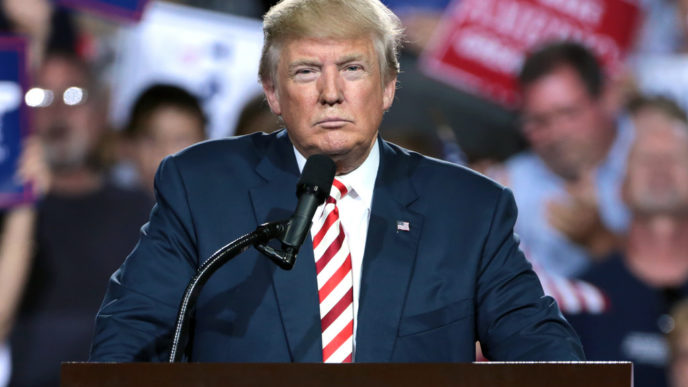
How States Could Restrict Use of Food Stamps in Trump Era

Officials in at least two states are preparing to ask the new Trump administration for approval to prohibit use of food stamps to buy junk food and candy—a restriction the Obama administration has opposed.

At least 25 states already prohibit welfare recipients from using Electronic Benefit Transfer cards to pay for alcohol, tobacco, gambling, lottery tickets, guns, or adult venues.

But heading into 2017, states such as Maine and Arkansas are looking to go further.

The Maine Department of Health and Human Services plans to submit a waiver request to the U.S. Department of Agriculture as soon as Donald Trump is sworn in as president Jan. 20. If approved, it would allow the state to prohibit food stamp recipients from using their benefits to buy sugary items such as candy and soda.

“We want to have it on their desks as soon as possible,” Mary Mayhew, commissioner of Maine’s Department of Health and Human Services, told The Daily Signal, adding:

What an individual with their own money that they earned chooses to buy is their prerogative. What a program known as Supplemental Nutrition Assistance—that is taxpayer funded—supports should be restricted and directed based upon the policy intent of the program.

In Arkansas, state Rep. Mary Bentley, R-Perryville, has filed a bill in the state House of Representatives to restrict the use of food stamps to “food products and beverages that have sufficient nutritional value.”

“People can go buy Red Bull with food stamps,” Bentley said, “and that’s not encouraging health.”

Maine’s health and human services agency submitted a waiver request to the federal government last year that would have allowed it to ban the purchase of junk food with food stamps.

But the Agriculture Department ultimately denied Maine’s request. The federal government has yet to approve a waiver for any state looking to further restrict food stamp purchases.

Still, the rejection hasn’t deterred Mayhew, who hopes that the Trump administration will be more willing to accept changes to the food stamp program.

“I hope that this will be met with more common sense than it has in the past that a program known as Supplemental Nutrition Assistance will put the emphasis back on nutrition in the development of policies and will support an effort by Maine to ban soda and candy to be able to be purchased with food stamps,” Mayhew said.

In Arkansas, Bentley’s bill doesn’t specify which foods and beverages would be prohibited—the state Department of Human Services is tasked with compiling a list—but she told the Northwest Arkansas Democrat-Gazette that chips, soda, and candy would be among the items banned.

The bill also instructs the Arkansas Department of Human Services to pursue a waiver from the federal government.

In an interview with Arkansas’ KFSM-TV, Bentley said:

We have a large amount of food stamps in our state, but yet we have the highest rate of senior hunger and hunger for kids. So obviously, the food isn’t headed in the right direction. I want it to be used for food at the table, and to feed kids.

Officials in both Maine and Arkansas said junk food bans would curb each state’s obesity rates, hold down Medicaid costs, and help ensure food stamp recipients use the food stamp program as intended.

Maine’s Medicaid program spent more than $1.5 million from October 2014 to October 2015 on medical claims related to obesity, according to the state Department of Health and Human Services.

In Arkansas, Medicaid and Medicare finance nearly 40 percent of the state’s $1.25 billion in obesity-related medical costs, according to a 2015 report issued by the Winthrop Rockefeller Institute.

“Everyone understands that soda and candy have no nutritional value and therefore don’t have any place in the Supplemental Nutrition Assistance Program,” Mayhew said.

At least nine states—California, Illinois, Michigan, Minnesota, Nebraska, New York, Pennsylvania, Texas, and Vermont—have requested waivers from the federal government or called on Congress to allow states to ban junk food purchases with food stamps.

But none has been successful so far.

Josh Archambault, a senior fellow at the Foundation for Government Accountability, said that under the Obama administration, the “general operating principle” has been to deny attempts by states to lessen the number of participants in the food stamp program, known as SNAP.

Since President Barack Obama took office in January 2009, the number of those receiving SNAP benefits increased from 32 million to nearly 45 million by January 2016, according to the Agriculture Department.

“Waivers have revolved around ‘How do we make it as easy as possible to get people on the program?’” Archambault told The Daily Signal, describing the Obama administration’s approach.

Mayhew agreed.

“When states like Maine were seeking commonsense reform or the authority to manage the program in keeping with its focus and with a commonsense approach, those efforts were continually thwarted by the federal government,” she said. “There have been constant roadblocks thrown up by this administration.”

But following the Nov. 8 elections, which saw Republicans maintain control of the U.S. House and Senate as well as retake the White House, there could be movement on the federal level.

Some on Capitol Hill talk about moving a welfare reform bill in 2017 or 2018, Archambault said, which could set up a “robust discussion” surrounding the rules for various welfare programs, including food stamps.

“Some of these early requests for waivers could set the stage for a bigger discussion in Congress in terms of changing the rules and funding the programs,” he said, “and that would change the playing field.”

Though it’s possible states could see changes to the food stamp program in the Trump administration, questions remain.

“It’s a brave new world here with a new administration coming in, but with that does come some question marks,” Archambault said. “There’s pent-up demand at the state level to request flexibility, and we’ll have to wait and see.” (For more from the author of “How States Could Restrict Use of Food Stamps in Trump Era” please click HERE)

Follow Joe Miller on Twitter HERE and Facebook HERE.

Marco Rubio’s Response to Kerry’s Anti-Israel Speech Will Make You Fist-Pump!

Senator Marco Rubio, R-Fla. blasted Secretary of State John Kerry’s “shameful” speech in a message posted to Facebook Wednesday.

“Secretary Kerry today once again decided to cater to the demands of freedom’s enemies and devote an entire speech to disparaging a country that is one of our closest allies,” Rubio wrote. He accused the Obama administration of abandoning American values abroad. “When we fail to take a stand against those that seek to deny #Israel’s right to exist or try to question the Jewish history of Jerusalem, we hurt not just Israel but our own credibility.”

“The greatest immediate threat to the future of Israel is not a stalled peace process, or settlements, but the abandonment of the Jewish state by the current U.S. administration at a time when it needs America’s support more than ever,” Rubio declared.

“I look forward to working with President-elect Trump and his incoming team to restore our relationship with Israel to its proper place … This shameful episode in American foreign policy cannot end soon enough,” he concluded.

Senator Tim Scott, R-S.C. (B, 89%) also condemned Kerry’s speech, characterizing the Obama administration’s proposals as “a path to pain.”

Republicans in Congress are calling to defund the United Nations in light of the anti-Israel resolution passed last week.

“Twenty-two percent of the United Nations budget comes from the American taxpayer, and I’m going to lead the charge to withhold funding until they repeal this resolution,” Senator Lindsey Graham, R-S.C. (F, 30%) told CNN.

Senator Ted Cruz, R-Texas (A, 97%) promised congressional action in conversation with the Washington Free Beacon.

“The disgraceful anti-Israel resolution passed by the UNSC was apparently only the opening salvo in the Obama administration’s final assault on Israel,” said Cruz. “President Obama, Secretary Kerry, Ambassador Power, and their colleagues should remember that the United States Congress reconvenes on January 3rd, and under the Constitution we control the taxpayer funds they would use for their anti-Israel initiatives.”

Despite near hysterics from Secretary of State Kerry in opposition to Israeli settlements in traditional Israeli lands Wednesday, the next Congress and president are unlikely to continue Obama’s radical anti-Israel agenda. (For more from the author of “Marco Rubio’s Response to Kerry’s Anti-Israel Speech Will Make You Fist-Pump!” please click HERE)

Follow Joe Miller on Twitter HERE and Facebook HERE.
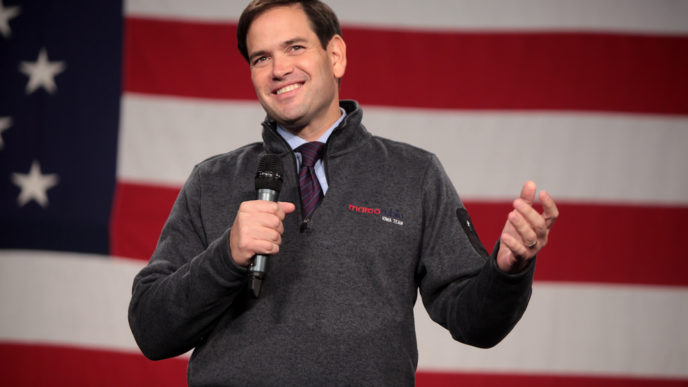
Why Conservatives Should Keep a Close Eye on Betsy Devos’ Time at the Department of Education

In a rare moment where I wonder whether I might be hallucinating, I seem to find myself in agreement with Juan Williams, the liberal Fox News, ex-NPR commentator. In a recent op-ed in The Hill, Williams takes a hard look at Donald Trump’s nominee for secretary of education, Betsy DeVos, and concludes that she might do great things for education … and she might do the exact opposite.

Education policy has long been one of my interests, and with respect to policy there are few evils greater than the Department of Education. Apart from being blatantly unconstitutional (the Constitution makes no mention of education and therefore reserves it to the states, not the federal government) the attempt to federalize education has led to such abominations as high-stakes testing, Common Core Standards, and data collection on students. It’s one of the first departments I would like to see a conservative president eliminate in its entirety. And while Trump has shown no signs of going this far, at first glance DeVos looks like she might be a step in the right direction.

As an education activist in Michigan, she was a strong supporter of school choice and her efforts greatly increased the state’s number of charter schools. Unlike many liberals, Juan Williams recognizes the benefits of choice in education and even admits to sending his own children to a charter school in Washington, DC because charter schools are just better than the public alternatives.

But DeVos is an untested quantity in anything like the role which she is being given, and there is no way to know how her past support for school choice will manifest itself at the federal level. It might take the form of a federalized voucher system, which many conservatives would consider a good thing. I would urge caution, however, before enthusiastically embracing such a system. Yes, federal vouchers would allow you to take your child to a private or religious school you otherwise might not be able to afford, but it also hands the federal government the purse strings of those institutions. If a school teaches something the government doesn’t like, there is always the threat of reclassifying the school in order to deny it voucher money.

Schools will do almost anything to avoid this loss of funding, which means that the Department of Education could essentially control the curriculum or standards of private schools just as it does for public schools now. In this way, what initially seemed like more choice becomes less choice as all schools, public and private, conform to the same standards.

One of Williams’ chief criticisms of DeVos is based on claims that the charter schools in Michigan don’t work, meaning that students don’t perform well on standardized tests or have high graduation rates compared to public schools in the state. There may be some truth in this, but we should always be careful of getting bogged down in data when it comes to education. Despite what the Left would have us believe, it’s not really possible to objectively measure education. It’s necessary for parents and children to decide what kind of school works for them, and that decision can’t be captured in a simple numerical score.

In short, I generally agree with Williams, especially when he says:

To me, no area of public policy is more in need of positive disruption than a public education system that is condemning too many children, especially black and Latino children, to live in poverty because they are not equipped with a good education.

To his credit, Williams recognizes that the status quo is unacceptable, although I suspect we differ on the question of how much public schools, as opposed to other forms of education, should be prioritized.

DeVos looks like she might be willing to shake things up, which is something we badly need, but her success as Education Secretary is far from certain. Her past support of Common Core is concerning, meaning that she does foresee a federal role in testing standards that is fundamentally anti-choice. She has since rescinded that position, but time will tell whether this is a genuine conversion, or a matter of political convenience. (For more from the author of “Why Conservatives Should Keep a Close Eye on Betsy Devos’ Time at the Department of Education” please click HERE)

Follow Joe Miller on Twitter HERE and Facebook HERE.

How the FAA’s War on Drones Is Killing a Popular Pastime

One year ago, officials at the Federal Aviation Administration rang in the holidays as only bureaucrats can: writing new regulations forcing drone owners to register themselves with the federal government before their first flight.

And because nothing says “Christmas” quite like criminal fines and jail time, the agency promised $277,500 in civil and criminal penalties and three years’ imprisonment to any overeager youngster who rushed out to play without first thinking about the wishes of a distant bureaucracy.

The FAA’s recreational registry was, and remains, one of the most egregious acts of regulatory overcriminalization in recent memory. Even the agency’s own registration task force reported that the criminal penalties drone owners would face were disproportionate in the hobby drone context. Nevertheless, the FAA charged ahead, releasing its interim final rule to the public just three weeks after the task force report, and a scant seven days before going into effect.

Before it could regulate, though, the agency first had to get around the Congress. In 2012, legislators passed the FAA Modernization and Reform Act, plainly stating that the FAA “may not promulgate any rule or regulation regarding model aircraft” flown for recreational purposes.

The agency responded that the registry is not really a regulation, and that drones are not really model aircraft; they are “aircraft” for the purposes of federal law, so the agency always had the authority to require registration. Never mind that this claim contradicted all prior agency guidance on drone regulation.

Once it twisted itself in a knot to get around Congress’ prohibitions, the FAA then had to figure a means to bypass the public notice and comment process mandated by the Administrative Procedure Act, as well.

That standard rulemaking process can take months or years. It is designed to give the public a chance to review proposed rules and to ensure that administrative agencies are responsive to public concerns. Notice and comment brings at least a modicum of accountability and transparency to the regulatory process.

It also serves to ensure that citizens are not caught unaware by new rules that are promulgated suddenly and without warning—an especially grave concern when, as with the drone owners’ registry, they contain criminal penalties.

But the FAA got around these restrictions by using the narrow “good cause” exemption. If agencies can show that the normal process is “impracticable, unnecessary, or contrary to the public interest,” it can skip public participation and issue a final rule.

In this case, the FAA claimed America’s skies were about to be overrun by hoards of drones that, like a modern take on a Hitchcock classic, would wreak havoc and endanger the national airspace. Because of this exigent threat, officials claimed, public safety demanded swift regulatory action.

There were some flaws to this line of reasoning. First, the FAA could not, and still cannot, point to a single collision between a drone and a civilian airliner.

Officials frequently cite figures that they claim demonstrate a rising incidence of near-collisions, but analysis has concluded that in only a tiny fraction of these purported instances did the pilot feel the need to take evasive action. In fact, in many cases, the object originally identified as a drone turned out to be something else altogether.

The FAA’s exigency argument fails because the skyrocketing popularity of drones was hardly surprising. Congress legislated on the subject three years before the FAA announced its registry. It seems reasonable enough that an agency specializing in aviation safety should have been able to anticipate the issue. Somehow, the “failure justifies fiat” argument worked—subject to a lawsuit pending in the D.C. Circuit Court of Appeals, over whether the drone registration is illegal.

Finally, despite claiming that exigent threats to the national airspace required prompt action, the registry does nothing to deter or prevent bad actors from using drones to commit crimes or acts of terror, similar to how gun rights restrictions generally haven’t stopped bad actors from committing gun violence. Drone owners are not registered automatically at the point of sale, but instead are supposed to register at home before sending their drones on their first flight.

Someone buying a drone to use it for illicit purposes can also easily evade the registry requirement with little risk of penalty after the fact, because if the drone is crashed into an aircraft, explodes, burns, or otherwise evades capture, tracing the unmarked drone back to its owner will be virtually impossible.

Even for those who do comply, FAA-assigned unique personal ID numbers can be placed inside the drone, making remote identification impossible. Ultimately, the drone would have to crash, largely intact and in an area where it could not be retrieved by its owner, for the registry to be useful in tracking down responsible parties.

Certainly, for those who already want to fly responsibly, a registry may be a means of discouraging reckless conduct and reinforcing safety. But for those who want to use drones for ill purposes, the deterrent value is nil.

Fortunately, the FAA’s lawless actions have not escaped notice and scrutiny. Aside from the legal challenge to the registry requirement, the House Freedom Caucus recently identified the recreational rule as one of over 200 Obama-era regulations that should be repealed when the incoming Trump administration takes office in January.

Concerns about safety, whether to aircraft in the national airspace or to people and property on the ground, are not invalid, and should not to be taken lightly. Fortunately, a wide array of technology-agnostic criminal, tort, and property laws exist that address many of the harms and risks of drones. For example, it is already a federal crime to damage, destroy, or interfere with an aircraft.

The FAA should reconsider how it might work with partners in critical military and civil infrastructure, long-standing and self-regulating hobbyist communities, and technology groups to fashion sensible rules to address drone-specific harms or drone-related conduct that existing laws and regulations do not reach.

And of course, any restrictions on recreational drone activities must be authorized by Congress.

A year ago, the FAA began the process of overcriminalizing and over-regulating drones—a process that continues beyond just the recreational registry. Its redefinition of the term “aircraft” has exposed children to 20-year prison sentences for crashing toys. Its burdensome and restrictive commercial drone regulations have driven innovation and development abroad.

Clearly, the FAA won’t be stopping itself anytime soon. It’s time to rein them in. (For more from the author of “How the FAA’s War on Drones Is Killing a Popular Pastime” please click HERE)

Follow Joe Miller on Twitter HERE and Facebook HERE.