Posts

What Donald Trump Could Really Do for America’s Working Class

Since as a winning candidate Donald Trump made a powerful symbol of the impending 1,000 lost jobs at Carrier Air Conditioning, it was inevitable that he would intervene in that business. It would have been politically foolish not to — and as the many savvy professionals whom he crushed in 2016 now should realize, Trump is nobody’s fool. So we learned this week that he has indeed used the many levers at an incoming president’s disposal to strong-arm/sweet-talk the company into saving those jobs for Americans, and denying them to Mexicans.

My first book was on the merits of the free market and free trade, but when I watched the footage of Carrier workers learning last year that their jobs were on the chopping block, I got teary-eyed myself and found my heart saying (despite my head) that Trump should indeed violate economic logic and engage in big government meddling, to “do something” for those workers — as Ronald Reagan once intervened against his principles to use a tariff to “save” Harley-Davidson from Japanese competitors.

Protectionism: Patriotic But Self-Defeating

There’s a strong rational case against protectionism — especially of the kind Trump engaged in here. The most benign form of protectionism, as free market economist Wilhelm Röpke explained, is a simple tariff. A small or medium tariff indeed distorts the market and imposes some inefficiency, but not necessarily more than any other form of tax. If imposed with advance notice and kept at predictable levels, businessmen and investors can simply figure it in to the cost of doing business — as they currently do the cost of environmental regulations.

What Trump did with Carrier is an order of magnitude worse: He singled out a particular company, and got the federal government down into the nuts and bolts of how it does business, threatening its corporate parent with lost federal contracts unless it made a specific decision — namely, avoid opening a factory in Mexico, and keep one open in the U.S. That is more than “leveling the playing field” against supposedly unfair foreign competition. It is picking winners and losers, like a umpire who has been bribed.

If the president gets in the business of directly trying to decide how every major manufacturing company in America makes such decisions, he is abandoning the free market altogether. Like Franklin Roosevelt, he is making himself effectively a board member of each of those companies. That starts a vicious cycle. Soon companies catch on that by threatening to move their factories abroad, they can provoke a presidential reaction — that pretty soon, the feds will move in and start offering tax breaks and other incentives, maybe extra federal contracts if they stay on American soil. Think of the squalid hog-slopping that happens when cities bid for the Olympics, or the bidding wars provoked by movie producers hungry for subsidies, and sports franchises who want new stadiums at taxpayer expense.

Making America Like the Post Office or Amtrak

All of this political meddling is profoundly wasteful, as the rotting hulks of Olympic complexes (and massive resulting deficits) testify all around the world. Such crony capitalism tends to benefit not productive and innovative companies, but those which are skilled at lobbying and greasing politicians’ palms. The more any business relies on federal help, the closer it becomes not to Southwest Airlines or Fedex, but to Amtrak and the Post Office. Is that really the way to make our companies profitable and high-paying? One of the most compelling reasons why the British voted for Brexit was to escape the micromanagement of the economy imposed by the wannabe federal government of the European Union.

Add up all those objections to protectionism, and then factor in how it raises the prices of ordinary goods for ordinary consumers, and you see why conservatives generally oppose it.

And yet, we need to look out for hard-pressed ordinary workers — the kind of people whose businesses don’t get bailed out by the U.S. federal government, as enormous Wall Street banks were after their reckless run of irresponsible investments in shaky mortgages, which crashed in 2008. Steve Bannon is right to observe that this bailout — conducted almost at gunpoint, under the threat of a “Great Depression” — was a corrupt transfer of wealth from the little guy to the “1 percenters,” which violated every tenet of free market economics and simple justice.

It is healthy that we feel some solidarity with blue collar workers simply because they’re fellow Americans — whose ancestors fought in our wars, and who still disproportionately enlist in our country’s armed services. (Long gone are the days when young men from elite schools routinely signed up for at least four years — though some Southerners still do.) The impulse to choose to “buy American” stems from the virtue of patriotism.

A Real Pro-Worker Agenda

We can be patriotic but smart. We can look out for U.S. workers without turning them into postal workers. (My dad was a mailman; as he told it, when two windows are open in a post office with a long line waiting, that means five workers sit idle, flipping through copies of Playboy they’ve stolen from the mail.) Here is a list of measures which a President Trump could take instead of Putin-style palm-greasing and browbeating to interfere with companies’ rational economic decisions. These steps would be populist in the positive sense, since they benefit the people.

Secure our country’s borders and workplaces by building a wall and making E-Verify mandatory for every business with more than five workers. Americans shouldn’t have to compete with unregulated, exploited laborers who can be threatened with deportation by their employers.

Drastically cut low-skill legal immigration, and the resettlement of refugees from distant countries. Some jobs are simply doomed to migrate overseas. But there’s no reason to fill the entry-level and low-skill jobs that can’t be outsourced with recent arrivals from other countries. Fixing immigration by itself would reduce most of the pressure on less-skilled American workers’ wages.

Cut our corporate tax rates, which are currently among the highest in the world. Stop granting tax breaks to individual companies (like Carrier) and grant them to … every company doing business in the U.S.

Greatly increase the per-child tax deduction for families, who are struggling under the regressive Social Security tax.

Promote school choice not by creating vouchers, which would give federal bureaucrats control over even private, Christian schools. Instead, create large and refundable tax credits which parents could use for tuition at any school — including home schools.

In one “grand bargain” piece of legislation, dismantle the labyrinth of regulations imposed after 2008 on banks to prevent them from failing, and use anti-trust laws to break up enormous banks that can threaten the whole economy with their reckless investments. Any bank that’s “too big to fail” is too big to exist — and the proliferation of such banks offers a perfect excuse for massive government meddling in that sector of the economy.

Reverse Richard Nixon’s massive blunder, and as George Gilder recommends, recouple U.S. currency to the price of gold. America’s post-war boom took place on a modified gold standard, and 1970s stagflation resulted when we abandoned it. Some link to an external commodity in limited supply in the real world would stop the Federal Reserve from massively inflating the money supply every time an incumbent president wanted to win an election — and sparking a mindless “boom” of wasteful investments in pointless dotcom startups and dodgy real estate boondoggles.

Each of these ideas is Constitutional, populist and economically sound. A Trump administration could stick up for blue-collar workers and middle-class families without descending intp cronyism and corporatism. It just takes imagination and political courage. (For more from the author of “What Donald Trump Could Really Do for America’s Working Class” please click HERE)

Follow Joe Miller on Twitter HERE and Facebook HERE.

Trump and the Media: Star-Crossed Lovers

Remember back in those first Republican presidential debates when Donald Trump would seemingly mess with Jeb Bush and Rand Paul just because he thought it was fun?

Right from the start, he was marking his territory like some kind of feral dog. He smelled weakness, and off he went — straight to the White House.

Now that he’s there, don’t expect this old dog to suddenly learn new tricks. Why would he? The old tricks are working. This is a man who invented an alter ego named John Barron just so he could mess with reporters’ minds. Which I know is a pretty low bar, considering how messed up many of those minds already are.

Journalism has been trolling the American public for decades now with its fake news and elitist contempt, but now it has met its match. Trump has seen its malarkey and raised it. And like double-down addicts who always think the next hand of poker will set them free, progressive journalism is almost certainly about to bankrupt itself of whatever shred of integrity it had left.

In fact, Trump is counting on it.

Amidst making cabinet selections that ultimately haven’t looked too different from what Jeb himself would have selected, Trump yelled “squirrel” in the form of sharing his opinion on flag burning earlier this week.

Off to the races we went.

Ironically, the chattering class took a break from demanding Draconian limits be placed on Christian speech and expression to offer an ode to the First Amendment. Which took Trump right where he wanted to go. Otherwise known as his happy place, where he holds court on Twitter with barely trained seals.

The great prophet Snoop Dog had it right: Hate the game, not the player. Trump is just the dealer here, and you’re not a dealer if there’s no one to deal to. It’s not his fault the mainstream media have all the self-control of a meth addict.

For all the stress Trump put his messaging team through during the campaign, this is an amusement park for him now that he has won and in governing mode. He gets to call all the shots with the biggest bully pulpit on the planet. Just wind up that jack-in-the-box that is the artist formerly known as journalism, and watch it annoyingly pop again and again and again.

He will watch amused as various members of the press write column after dutiful column about their vital watchdog role, during what they believe to be the most dangerous presidency of our lifetime. Meanwhile, Trump will smile a yuge smile, because he knows he has them right where he wants them. They simply have no idea what is happening to them.

This goes way beyond flag burning and midnight Tweet binges. For example, Trump has announced his own multi-billion-dollar version of the New Deal as part of his strategy to Make America Great Again. With this week’s crony capitalist deal with Carrier being the opening salvo on that front.

So while he’s got the discredited media birthing cows on television defending flag-burning-America-haters, Trump was in Indiana celebrating 1,000 jobs he “saved” before he’s even sworn in. Exactly the side-by-side “America First” comparison Team Trump is looking for. Because Team Trump understands as leery as people may be about a Trump presidency, they hate the media even more.

Even though they bring out the worst in the other, Trump and the media need each other like we need oxygen to breathe. They’re like the stereotypical binging rock star and his junkie groupie, who can’t stay away from each other. But when they hook up, it always ends up with both of them naked in a seedy hotel with full ash trays, dirty needles, and half-drank liquor bottles everywhere. He always wakes up before her and sneaks out, leaving her to clean up the mess.

And given the fact Trump is about to be inaugurated while the media implode, it’s pretty obvious who’s who in this analogy. (For more from the author of “Trump and the Media: Star-Crossed Lovers” please click HERE)

Follow Joe Miller on Twitter HERE and Facebook HERE.
The Trump Administration Should Crack Down on Silly Rules That Carry Criminal Penalties

President-elect Donald Trump’s “Contract with the American Voter” pledges that “for every new federal regulation, two existing regulations must be eliminated.”

This should be celebrated by the majority of Americans who think the federal government does too much.

At the outset of this regulatory unwinding, one potential priority stands out above the others. The Trump administration should review the 300,000 or more federal regulations that carry criminal penalties with the goal of amending them to carry only noncriminal sanctions—or otherwise, repeal them altogether.

Over a century ago, the Supreme Court decided that Congress may set a criminal penalty “for violations of regulations to be made by an executive officer.” (United States v. Grimaud (1911)). Since then, writes former U.S. Attorney General Edwin Meese III, the “Congress has delegated to a host of federal agencies the power to define by regulation the elements of a broad range of different criminal laws.”

Today, these regulations number over 300,000. They are published in the bowels of the federal register—the place where few people outside of law firms and major corporations look to find laws—and are often drafted in ambiguous and often hyper-technical language that can’t be understood.

One might assume that if a regulation is serious enough for violators to be subject to criminal prosecution, it would be designed to prohibit conduct that is seriously harmful and morally condemnable. But this is often not the case.

For example, no one worries when they leave their house at night that a dog might bark at a squirrel. Most people don’t even pretend that they could prevent all dogs from barking. Yet it is a federal crime to allow a pet to make a noise that scares wildlife within a national park.

Nobody fears a local ice cream store might put a few too many drops of wine into a wine sorbet for sale. But that is also a federal crime punishable by up to one year in jail and fines of up to $1,000.

Consider John Sturgeon’s story as told by Heritage Foundation scholar Paul Larkin:

For more than 15 years, John Sturgeon used a hovercraft to reach moose-hunting grounds in Alaska without any incident or objection. Then, one day in 2007, two National Park Service rangers told Sturgeon that he was on federal property and hovercraft were illegal.

What followed this was almost a decade of costly litigation that concerned “federal criminal regulations no one knows (riding a hovercraft is prohibited) in places where no one lives (Alaskan backcountry).”

With little to no input from or accountability to voters, bureaucrats have run amok with the power to create new crimes.

One account on the Twitter social media platform titled “A Crime a Day” features plenty more federal criminal regulations that deserve scrutiny from any administration that is intent on reducing the size, scope, and power of the administrative state. These include:

Making it a crime to sell mixed nuts if the nuts pictured on the label aren’t in decreasing weight order (21 USC §333 & 21 CFR §164.110(f)).

Making it a federal crime to let small cigars leave the cigar factory unless they’re labeled “small” or “little” (26 USC §5762 & 27 CFR §41.73).

Making it a crime for amateur radio operators to sell amateur radio equipment, and using amateur radio too often (47 USC §502 & 47 CFR §97.113).

Making it a federal crime for the operator of a wharf to let his longshoremen use common drinking cups (33 USC §941(f) & 29 CFR §1918.95(b)(3)).

As these provisions convey, there are key differences between regulations and criminal statutes that must not be overlooked.

John Malcolm, director of The Heritage Foundation’s Edwin Meese III Center for Legal and Judicial Studies, has previously written:

Criminal laws are meant to enforce a commonly accepted moral code backed by the full force and authority of the government. Regulations, on the other hand, are meant to establish rules of the road in a variety of areas designed to curb excesses and to address consequences in a complex, rapidly evolving, highly industrialized society, with penalties attached for violations of those rules.

Allowing bureaucrats to enforce policy agendas with criminal penalties, and thus to create crimes that neither Congress nor the public likely ever imagined or intended, can have serious consequences. Malcolm continues:

While people often debate whether our society is overregulated, regardless of one’s views on that subject, it is important to recognize that there is a significant difference between regulations that carry civil or administrative penalties for violations and regulations that carry criminal penalties for violations. Individuals caught up in the latter may find themselves deprived of their liberty and stripped of their right to vote, to sit on a jury, and to possess a firearm, among other penalties that simply do not apply when someone violates a regulation that carries only civil or administrative penalties.

Experience shows that swift and certain civil sanctions are enough for agencies to deter and punish misconduct. In fact, even these are sometimes too severe.

Consider the example of Andy Johnson, a Wyoming welder. The Environmental Protection Agency fined him $16 million—$37,500 a day—for constructing a stock pond on his private 8-acre farm. Johnson described these penalties as “very threatening.”

Heritage scholars James Gattuso and Diane Katz report that the Obama administration “is responsible for an unparalleled expansion of the regulatory state, with the imposition of 229 major regulations since 2009 at a cost of $108 billion annually.”

Many regulations from previous administrations can and should be reviewed by a new administration seeking meaningful deregulation.

Yet “many of the worst effects” of overregulation, write Gattuso and Katz, such as “the loss of freedom and opportunity,” are greatest where violating an arcane regulation can be met with jail time, criminal fines, and all of the consequences that come with criminal prosecution and conviction.

So long as the Trump administration is looking for regulations to axe, officials in the Justice Department, federal agencies, and Congress should work together to strike as many regulatory crimes as possible. (For more from the author of “The Trump Administration Should Crack Down on Silly Rules That Carry Criminal Penalties” please click HERE)

Follow Joe Miller on Twitter HERE and Facebook HERE.

Speaker Ryan Says He and Trump Have Patched Things Up

The speaker of the House tells Scott Pelley he and President-elect Donald Trump have made up and speak on the phone nearly every day. On the campaign trail, the two were at odds. Speaker Ryan had called one of Trump’s statements racist and Trump dismissed him as ineffective and disloyal, but Ryan says the two are not looking back and are already working together. Ryan spoke to Pelley today in Washington in an interview to be broadcast on 60 Minutes, Sunday Dec. 4 at 7 p.m. ET/PT . . .

Scott Pelley: You called Donald Trump a racist.

Paul Ryan: No, I didn’t. I said his comment was.

Scott Pelley: Well, I’m not sure there’s a great deal of daylight between those two definitions. But he definitely called you ineffective and disloyal. Have you patched it up?

Paul Ryan: Yeah, we have. We’re fine. We’re not looking back. We’re looking forward. We– we actually– we’ve had– we– like I said, we speak about every day. And it’s not about looking for– back in the past. That’s behind us. We’re way beyond that.

(Read more from “Speaker Ryan Says He and Trump Have Patched Things Up” HERE)

Follow Joe Miller on Twitter HERE and Facebook HERE.
Top 4 Homeland Security Issues for the Trump Administration

President-elect Donald Trump and his soon-to-be-selected secretary of homeland security will have a full plate when they take over in January.

Indeed, there are so many areas for reform and improvement that any efforts to fix the Department of Homeland Security could easily get bogged down.

Luckily, The Heritage Foundation has identified four main priorities that the next administration should focus on.

1. DHS Management

DHS management needs to be fixed. Its organizational cohesiveness and central leadership continue to present significant challenges that require more work than the Obama administration’s Unity of Effort initiative.

Additionally, the DHS’ office policy should be strengthened to create intra-agency policy, resolve agency disputes, and, above all, drive structural change so that DHS components can work more efficiently as a cohesive unit.

Luckily, the newly released National Defense Authorization Act conference report takes a step in this direction by upgrading the head of the DHS office of policy from assistant secretary to under secretary.

2. Immigration Laws

Current immigration laws must be enforced. In fiscal year 2015, DHS data show that only 462,463 removals and returns occurred—the lowest number since 1971. Immigration and Customs Enforcement deported merely 63,000 criminal illegal immigrants from the U.S. compared to 150,000 in 2015.

President Barack Obama’s executive actions on immigration enforcement must be rescinded, and the 287(g) program, which trains and deputizes state and local police to help enforce immigration laws, needs to be strengthened.

Rapid-removal authority under Section 235 of the Immigration and Nationality Act should be expanded to discourage surges of illegal immigration. Additional prosecutors, judges, and agents should be requested so that more cases can be heard and illegal immigrants deported.

The U.S. also needs to make sure these criminal illegal immigrants appear at their designated court hearings by expanding effective “alternatives to detention,” such as GPS tracking anklets.

3. Cybersecurity

DHS has a much larger role in domestic cybersecurity due to the passage of the Cybersecurity Information Sharing Act. The primary purpose of that bill was to make information sharing between private and public sectors more efficient.

This sharing will need to be monitored and improved, together with DHS’ intrusion detection and prevention system known as Einstein.

DHS will also need to play a role in helping the Trump administration respond to state-sponsored and directed cyberattacks. The U.S. should deploy all the tools at its disposal, including diplomatic, legal, visa, financial, and others, to retaliate.

4. Proper, Thorough Vetting

There is growing concern over how individuals, whether they are refugees, permanent immigrants, or visitors, are vetted before entering the U.S.

The refugee process takes on average 12-18 months to complete, with background checks being requested through various department databases, including the State Department, DHS, FBI, and National Counterterrorism Center databases.

Interviews are conducted that ask security and country-specific questions. In the case of Syrian refugees, the Syrian Enhanced Review has already started applying additional scrutiny to cases.

Congress needs detailed information from the administration on the nature of the risks incurred in the vetting process, and how it plans to mitigate those risks. Congress and the administration must also work together to begin the much-needed repair of America’s intelligence capabilities.

For regular immigrants and visitors, there is the traditional visa process, which involves a less lengthy but similar vetting process. San Bernardino attacker Tashfeen Malik managed to slip through this system, proving that there is always room for improvement.

Visitors from many countries are able to use the Visa Waiver Program, which does not require an in-person interview in order for the applicant to travel to the U.S.

Instead, VWP countries provide the U.S. with important intelligence on a variety of things, including known and suspected terrorists, serious criminals, and lost and stolen passports, as well as improving their airport security. VWP is a unique tool that is extremely valuable for U.S. security and should be strengthened and expanded.

In order to keep our homeland secure, the next homeland security secretary should prioritize these four issues. These reforms are essential to a cohesive, effective, and efficient Department of Homeland Security that can keep the U.S. safe. (For more from the author of “Top 4 Homeland Security Issues for the Trump Administration” please click HERE)

Follow Joe Miller on Twitter HERE and Facebook HERE.
Trump’s Cabinet Picks Sounding Alarms

It’s often said “personnel is policy” when it comes to an incoming president’s Cabinet selections, and that’s what has some of Donald Trump’s most fervent supporters asking, “Why THESE people?”

In fact, Americans on both the left and right of the political aisle are expressing concern over the president-elect’s recent choices for key positions in his administration.

On Wednesday came word that Vice-President-elect Mike Pence was meeting with former Secretary of State Condoleezza Rice, an outspoken Trump critic. In October, Rice called for Trump to end his bid. “Donald Trump should not be president. He should withdraw,” she wrote in a Facebook post following release of a decade-old video of Trump having a lewd conversation about women. Rice even insisted Trump replace himself with “someone who has the dignity and stature to run for the highest office in the greatest democracy on earth.” In July, Rice declined to attend the Republican National Convention. The Trump team has not indicated whether it is considering Rice for a Cabinet post.

Also Wednesday, the New York Times reported Trump may be considering professional wrestling magnate Linda McMahon for the Small Business Administration. McMahon developed World Wresting Entertainment, or WWE, with her husband, Vince McMahon. Upon leaving Trump Tower Wednesday, McMahon told reporters, “The meeting went great. It was really nice to be up, and I was honored to be asked to come in. Anytime I think the president-elect of the United States asks you to come in for a conversation, you’re happy to do that. We talked about business and entrepreneurs and creating jobs, and we talked about S.B.A.”

Trump may also be considering former Alaska Gov. Sarah Palin for secretary of Veterans Affairs, Reuters reported Wednesday. Trump has long said a top priority of his administration will be to improve veterans’ care. (Read more from “Trump’s Cabinet Picks Sounding Alarms” HERE)

Follow Joe Miller on Twitter HERE and Facebook HERE.
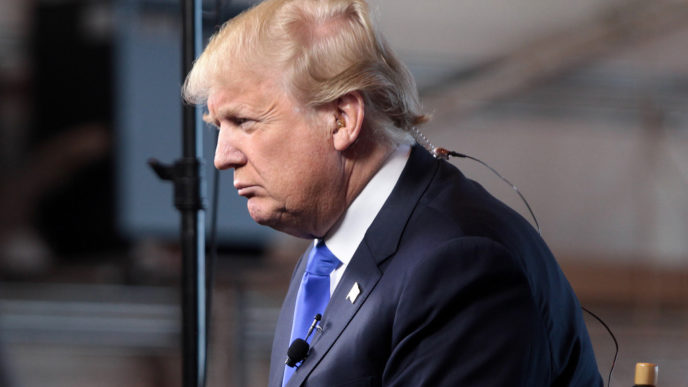
Meet Wilbur Ross, Trump’s Pick for Commerce Secretary

President-elect Donald Trump tapped Wilbur Ross, an investor and longtime Trump associate, to serve as secretary of the Department of Commerce, the transition team announced Wednesday.

“Wilbur Ross is a champion of American manufacturing and knows how to help companies succeed. Most importantly, he is one of the greatest negotiators I have ever met, and that comes from me, the author of The Art of the Deal,” Trump said in a statement. “Together, we will take on the special interests and stand up for American jobs.”

Ross, 79, is a billionaire investor most known for rescuing failed companies — a reputation that earned him the nickname “the king of bankruptcies,” according to Politico.

He’ll take over the Commerce Department as the new administration gears up for implementation of Trump’s “America First” economic plan, which involves creating more than 25 million jobs in the next 10 years.

A native of New Jersey and a former Democrat, Ross spent 25 years at the head of Rothschild Inc.’s bankruptcy practice, according to Forbes. He then launched WL Ross & Co., an investment firm, in 2000 and currently serves as its chairman.

Ross is worth an estimated $2.5 billion, according to Forbes.

“I am delighted to have been selected to join President-elect Trump’s Cabinet and look forward to working especially closely with [newly appointed Treasury Secretary] Steve Mnuchin to implement the economic programs which we have developed jointly to implement the president-elect’s strategy for accelerating our economic growth,” Ross said in a statement.

The 78-year-old billionaire has resurrected companies in the steel, coal and textiles industries. Ross also helped Trump salvage his Trump Taj Mahal casino in 1990, when the casino was on the verge of bankruptcy.

Ross and investor Carl Icahn decided to restructure the bankruptcy filing in 1991, according to The New York Times, which allowed Trump to save his brand.

Ross is most known for his decision to buy struggling steelmakers including LTV and Bethlehem Steel, which he turned into a new company called International Steel Group. In 2004, Mittal Steel purchased International Steel Group for $4.5 billion.

Despite Ross’ success in that deal, the billionaire’s foray into the steel industry took a drastic turn in 2006 when an explosion at the Sago Mine in West Virginia killed 12 miners. A company Ross owned, International Steel Group, took over the mine just months earlier.

Ross served as an economic adviser to Trump during the campaign and shares Trump’s views on the Trans-Pacific Partnership, calling it the “worst trade deal yet for American manufacturing” in an August op-ed in the Pittsburgh Post-Gazette.

If confirmed by the Senate to lead the Commerce Department, Ross will succeed Penny Pritzker. President Barack Obama selected Pritzker for the post in 2013.

As secretary, Ross would serve as a liaison between the White House and the business community. The Commerce Department oversees the U.S. Patent and Trademark Office, the International Trade Administration, the National Weather Service and the Census Bureau.

Ross graduated from Yale University and Harvard University, and lives with his third wife in Palm Beach, Florida, not far from Trump’s Mar-a-Lago estate.

His second wife is Betsy McCaughey, who served as New York’s lieutenant governor from 1995 to 1998. McCaughey also served on Trump’s economic team during the campaign. (For more from the author of “Meet Wilbur Ross, Trump’s Pick for Commerce Secretary” please click HERE)

Follow Joe Miller on Twitter HERE and Facebook HERE.
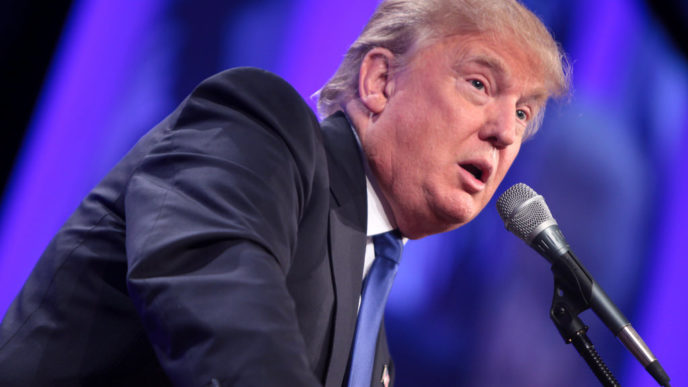
Why This Potential Pick for DHS Would Be a Huge Reversal on Trump’s Biggest Campaign Promise

The possible appointment of Rep. Michael McCaul, R-Tex. (F, 56%) to the position of Homeland Security chief may finally signal to Donald Trump’s most loyal supporters that the president-elect is not going to follow through on his chief campaign proposals of border security and immigration.

McCaul, who chairs the House Homeland Security Committee, met with the president-elect Tuesday in Trump Tower. He is said to be among a handful of individuals in the running to become the next secretary of the Department of Homeland Security.

During his presidential campaign, especially in the GOP primary, Trump promised to build a security wall along the southern border to strengthen domestic national security. He has also pledged to enforce immigration law and restore order to the immigration system as a whole.

Conservative critics of Rep. McCaul say he’d be a “very disappointing” pick to lead DHS, a gargantuan government department created in the wake of the Sept. 11 attacks.

McCaul, of course, has also earned the scorn of many a conservative for floating the idea of challenging Sen. Ted Cruz, R-Texas (A, 96%) in a primary.

“We certainly hope that Donald Trump would not reward a deceptive pro-amnesty lawmaker like Michael McCaul with a Cabinet position,” William Gheen, president of Americans for Legal Immigration PAC, told the Washington Times on Tuesday. “That would be very disappointing to all of us that believed his campaign promises to secure our borders and deport millions of illegal immigrants under current U.S. laws.”

Immigration hawks are particularly startled by McCaul’s 2015 Secure Our Borders First Act. Critics say the Texas representative’s co-authored bill ignored policy solutions to deal with the millions of people living in America illegally, like the administration’s “catch and release” policy.

Another factor working against McCaul’s credibility to head the Cabinet department simply in charge of “keeping America safe” is his support for Obama’s Countering Violent Extremism (CVE) agenda, which seeks to prevent jihadist radicalization through a mix of community and counter-propaganda approaches.

The overarching goal of the CVE approach is to stop would-be jihadists before they act, by countering the destructive narratives that may radicalize them within their local communities and online. The problem, critics claim, is that the structure of the program does not actually lend itself to countering violent extremism.

Obama’s pilot program has been criticized as a “catastrophic failure,” primarily because it fails to address the roots of this brand of violence and extremism (jihadism), and engages Muslim organizations with extremist ties, instead of reformist outfits.

As Dr. Zuhdi Jasser, a Muslim reformist and president of the American Islamic Forum for Democracy puts it, entrusting groups like these with counter-terrorism responsibilities is akin to “treating arsonists like firefighters.”

What was Rep. Mike McCaul’s role in this? After criticizing President Obama’s approach during the White House CVE conference in Feb. 2015, the House Homeland Security Committee chairman sponsored a bill to create an entire CVE office inside the Department of Homeland Security.

Other potential nominees for DHS secretary (and related national security posts) include: Milwaukee County Sheriff David Clarke, New Jersey Governor Chris Christie, former House Speaker Newt Gingrich, California Rep. Duncan Hunter, former Pennsylvania Rep. Robert Smith Walker, Lt. Gen. Keith Kellogg, former U.S. Ambassador to the United Nations John Bolton, and former CIA officer Clare Lopez. (For more from the author of “Why This Potential Pick for DHS Would Be a Huge Reversal on Trump’s Biggest Campaign Promise” please click HERE)

Follow Joe Miller on Twitter HERE and Facebook HERE.
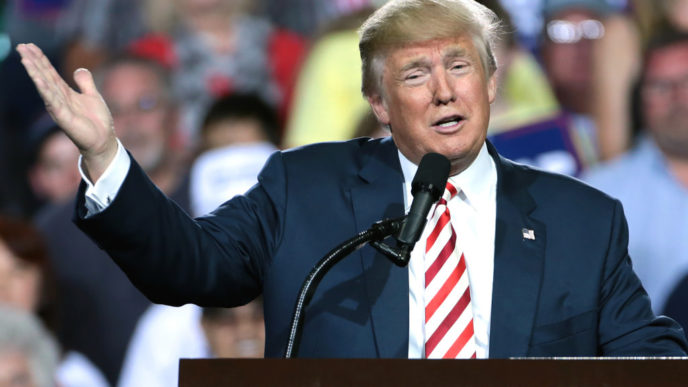
Will Trump and Republicans Finally Shut Down Suicidal Somali Immigration?

For years, our political leaders have learned all the wrong lessons from Israel. They spent two decades trying to localize the jihad and diminish its significance to that of a conventional land dispute between “Israelis and Palestinians.” All the while forgetting Israel was confronted with a global Jihadist threat and that they were the harbinger of what was going to come to the West. Yet, rather than tightening immigration, Europe and the United States opened the doors to the Islamic world and are now facing the same enemy Israel has faced for years, albeit without their robust security apparatus. Now, with the news of the Ohio State attack fresh in our minds, we can appreciate that much like in Israel, bombings, stabbings, and vehicular attacks have become a regular occurrence.

If we don’t get serious about prioritizing our security needs through immigration policy, yesterday’s attack in Ohio State could be just the beginning of things to come. In fact, it is a reflection of a new norm that has already come to our shores. From Chattanooga and Fort Hood to San Bernardino and Orlando, we’ve witnessed jihad through mass shootings. From University of California Merced and the first Columbus, Ohio stabbing last year, to the Minneapolis mall stabbing and yesterday’s stabbing and vehicular attack at Ohio State, we are witnessing jihad by other means. The common thread is not the weapon of choice, but the jihadist motivation perpetrated on America by individual Muslim immigrants or children born to immigrant parents that have been admitted over the past two generations to this country.

Nowhere do our suicidal immigration policies exemplify this problem more than with Somali immigration over the past two decades. We’ve brought in over 130,000 Somali refugees ever since Somalia collapsed into a failed state in the early ‘90s. To my knowledge, we have never taken in a consistent and significant flow of refugees from any other country for this many consecutive years. While everyone is focusing on Syrian refugees, we have brought in at least as many Somali refugees this year, even though the conflict there has been raging for over a generation.

What have we gotten for our hospitality?

At least 40 young Somalis have been investigated for terrorism in the Minneapolis area since 2008 and some of them were convicted earlier this month. But the problem runs much deeper than a few dozen individuals. What sort of climate of neighbors, friends, family, and religious community leaders cultivates the mentality that leads to involvement in terrorism?

Last year, U.S. Attorney Andrew Lugar warned that there is “a terror-recruiting problem in Minnesota” among the Somali youth and that it does not stem from overseas but “may be their best friend right here in town.” Similarly, a federal judge warned earlier this month, “This community needs to understand there is a jihadist cell in this community. Its tentacles spread out.”

Last year, Ami Horowitz (no relation), a filmmaker who produces documentaries, recorded “man on the street” segments with Somali immigrants in Minneapolis’s Cedar Riverside community. His findings were quite disconcerting to say the least. Almost all of the dozen or so people he interviewed said they preferred Sharia law over the Constitution and felt it should be a crime to insult Muhammad. This random sampling, while more pronounced in the Minneapolis Somali community, jives with other findings that show these sentiments to be widespread among American Muslims. A poll commissioned by the Center for Security Policy last year found that 51 percent of Muslims living in America believe “Muslims in America should have the choice of being governed according to sharia.” Twenty-nine percent agree that violence against those who insult Mohammad is acceptable and 25 percent agree that violence against America can be justified as part of Global Jihad. Among males under the age of 45 that number rises to 36 percent.

Thus, the threat of homegrown terrorism is born out of the threat of homegrown subversion and a culture that is fundamentally incompatible with our values. This is why the entire debate over “vetting” refugees is a non-sequitur. Authorities will rarely discover official ties to known terror groups when investigating families with young children apply for refugee status from a Middle Eastern country. But a large number of these families subscribe to Sharia law and raise their children accordingly. In other words, they are not people “who are attached to our Country by its natural and political advantages,” a quality James Madison felt should be a litmus test for immigration.

What experience in America and Europe has shown over the past few years is that the children of immigrants are the ones who are most likely to be drawn into jihad. Yet, there is no way to vet people like Abdul Razak Ali Artan, the Ohio State jihadist, who came to America as a teenager. The Chattanooga shooter was just two years old when he came from Kuwait, the Elizabeth New Jersey bomber was a young boy when he came with his asylum-seeking family from Afghanistan, and the Orlando and San Bernardino terrorists were born after their families immigrated here.

Perforce, there is no way to vet a mentality born out of a religious worldview that rejects our values. Europe’s experience stands as a testament to the suicidal path we are following with regards to immigration, particularly from countries like Somalia.

As with any form of immigration, there will always be decent and productive people from any country. Somalia is no different. But it is downright reckless for our political leaders to continue risking our security when we are having such widespread difficulty with many of the Somali immigrants already in America. As Ayaan Hirsi Ali, herself a Somali immigrant, wrote last year, “I have no objection to other people coming to America to seek a better life for themselves and their families. My concern is with the attitudes many of these new Muslim Americans will bring with them – and with our capacity for changing those attitudes.”

This is Trump’s first big test. Instead of focusing on flag burning or other sensational headlines, he needs to return to his campaign promises to end these suicidal immigration policies. The Ohio State jihadist demonstrates the veracity of his campaign rhetoric on refugee resettlement. Why is Trump not being more vocal about it?

Furthermore, this will be Rep. Tom Price’s, R-Ga. (D, 62%) other major test, aside from overseeing the repeal of Obamacare. Many people forget that the head of HHS oversees the Office of Refugee Resettlement. He must immediately rein in the private resettlement contractors and enforce the letter and spirit of the statutes which require advanced consultation with states and to ensure that local communities are not fundamentally transformed and burdened by resettlement, as required by law. He should work with governors, such as Texas Governor Greg Abbot who are drawing the right conclusions from recent terror attacks committed by refugees:

As I noted last week, Trump can shut off immigration from dangerous countries at will on the first day of his presidency without an act of Congress. Concurrently, it would be advisable for Republicans in Congress to back up his executive order with permanent legislation to prioritize the safety of the American people over the cult of multiculturalism.

Over two decades after Black Hawk Down, the mistakes of our Somalia intervention are plaguing us more acutely than ever and have now become an enemy within. It’s time to stop the madness. (For more from the author of “Will Trump and Republicans Finally Shut Down Suicidal Somali Immigration?” please click HERE)

Follow Joe Miller on Twitter HERE and Facebook HERE.
See College Students’ Responses When Asked to Compare Castro to Trump

College students in the nation’s capital thought it was a “tough question” whether former Cuban President Fidel Castro or American President-elect Donald Trump is more favorable.

Campus Reform, a project of the Leadership Institute, polled several students at American University in Washington, D.C., and captured the students’ responses in the video below.

Many students could not give a clear answer whether they thought Castro, the Cuban dictator who died last week, or Trump was a better leader.

Some of the American University students told Campus Reform they favored Castro over Trump.

“I would say at this very moment, I have a better opinion of Fidel Castro,” one female student said in the video.

As The Heritage Foundation’s Ana Quintana wrote in an op-ed piece for The Daily Signal, “Religion was criminalized, dissent was violently punished, and Cuban citizens became property of their communist state” under Castro’s rule.

One student told Campus Reform she didn’t have an opinion on either man.

“I never really had an opinion on [Castro] to start with other than he was really, really bad for the world,” the student said. “Donald Trump, I still don’t have any opinion on. I just choose to ignore it.”

Another student said that if Trump’s administration “is anything like he said it will be, then I think that Fidel Castro will absolutely have been a better leader to the Cuban people than Trump will be to the U.S., just based on his statements alone.” (For more from the author of “See College Students’ Responses When Asked to Compare Castro to Trump” please click HERE)

Follow Joe Miller on Twitter HERE and Facebook HERE.