Posts

YES, PRESIDENT TRUMP WILL BUILD A WALL: ‘I’m Very Good at This, It’s Called Construction’

So relays Louis Nelson at a very butthurt Politico:

“What we are going to do is get the people that are criminal and have criminal records, gang members, drug dealers, where a lot of these people, probably 2 million, it could be even 3 million, we are getting them out of our country or we are going to incarcerate,” he said in the interview, to air on “60 Minutes … But we’re getting them out of our country; they’re here illegally.”

Only then, Trump said, will he figure out a plan to deal with the “terrific people” who are in the U.S. illegally but have otherwise clean criminal histories. Securing the border, he said, is a prerequisite for any other action on immigration…

…One unchanged part of his immigration platform has been his plan for the construction of a wall along America’s southern border with Mexico, something he said he would force the Mexican government to pay for by threatening to cut off the flow of money from immigrants to their families south of the border. Trump said Sunday that while an actual wall will be necessary along some portions of the border, a mere fence will suffice in others.

“I’m very good at this; it’s called construction,” he said.

If I were President-Elect Trump, I’d have added the word “dumbass” to my response, but that’s — perhaps — the reason I’m not the President-Elect. (For more from the author of “YES, PRESIDENT TRUMP WILL BUILD A WALL: ‘I’m Very Good at This, It’s Called Construction'” please click HERE)

Follow Joe Miller on Twitter HERE and Facebook HERE.

A LEFTIST’S GUIDE TO ANTI-TRUMP PROTESTS: Chapter 12 — How to Wear Your Protest Safety Pin

Now that the Soros-funded radicals are using safety pins to signify their disrespect for the Constitution, our summer intern @BiffSpackle offers these helpful fashion tips:

161114-safety-pin-protest

(For more from the author of “A LEFTIST’S GUIDE TO ANTI-TRUMP PROTESTS: Chapter 12 — How to Wear Your Protest Safety Pin” please click HERE)

Follow Joe Miller on Twitter HERE and Facebook HERE.

Trump Says He’ll ‘Phase out’ Political System That Empowers Lobbyists

President-elect Donald Trump told “60 Minutes” reporter Lesley Stahl that the prominence of lobbyists in his presidential transition was due to the need for qualified people who know the system, not a violation of his campaign vow to “drain the swamp” in Washington.

Stahl continued to press Trump on the point, pointing out that his transition team is “filled, with lobbyists,” including lobbyists from Verizon and the oil, gas, and food industries. Trump responded, “Everybody’s a lobbyist down there. … I’m saying that they know the system right now, but we’re going to phase that out. You have to phase it out.”

One of Trump’s talking points throughout his presidential campaign was a promise to “drain the swamp” in D.C. of insiders and lobbyists. Spokesperson Kellyanne Conway said on Sunday that Trump would retain quality people with D.C. experience; later in the day, Trump named Republican National Committee Chairman Reince Priebus as his Chief of Staff. Trump has promised lobbyist reforms would take place within his first 100 days as president.

Trump, who has admitted to earning the favor of politicians by sending them money during his time as a businessman, told “60 Minutes” that

Everything, everything down there — there are no people — there are all people that work — that’s the problem with the system, the system. Right now, we’re going to clean it up. We’re having restrictions on foreign money coming in, we’re going to put on term limits, which a lot of people aren’t happy about, but we’re putting on term limits. We’re doing a lot of things to clean up the system. But everybody that works for government, they then leave government and they become a lobbyist, essentially. I mean, the whole place is one big lobbyist.

Trump’s words somewhat echo those of another President-elect who vowed to change Washington: then-Senator Barack Obama (D-IL). The president declared in his 2010 State of the Union address that “we have excluded lobbyists from policymaking jobs,” while his aide David Axelrod said the next year that the administration”has ended the revolving door between industry and government.”

Last year, however, Politico noted that “seven years into Obama’s presidency, the revolving door shuttling officials out of his administration is spinning at a rapid clip.” In 2013, a scholarly study estimated that Obama had used various loopholes and technicalities to hire more than 100 former lobbyists at the White House. (For more from the author of “Trump Says He’ll ‘Phase out’ Political System That Empowers Lobbyists” please click HERE)

Follow Joe Miller on Twitter HERE and Facebook HERE.

Left Reacts With Violence, Death Threats After Trump Win

Ironically, some protesters carry signs that say “Love trumps hate” and “Love always wins” — while many of their fellow protesters riot, smash windows, attack bystanders, block traffic and vandalize cars and property.

Chanting “Not my president!,” the protesters reject the election of Donald Trump because they disagree with him, even though he was legally elected. “You got climate change, you got the Iran deal. You got gay rights, you got mass deportations. Just everything, straight up and down the line, the guy is wrong on every issue,” said one protester outside the Trump Tower in New York City. However, what many protesters really want is to force local changes like rent control — if they want anything at all besides the pleasures of violent protest.

It’s possible that others manipulate the rioters for their own purposes. Many of the demonstrators are funded by wealthy activists like left-wing billionaire George Soros, recruited through ads on Craigslist. Since the election, new ads have been posted that say things like, “Be Civil, but Don’t Back Down.” Todd Walther, spokesman for the Charlotte-Mecklenburg Fraternal Order of Police, told CNN that 70 percent of those arrested in Charlotte had out-of-state IDs. Blocks of buses were caught on video in Chicago busing in protesters from Wisconsin.

Portland and Los Angeles

The worst violence has taken place in Portland, Oregon. On Thursday, over 4,000 demonstrators showed up to riot, setting a dumpster on fire and vandalizing 19 cars at a dealership in Northeast Portland. Anarchists joined the protest and vandalized buildings, kicked cars, attacked drivers, and knocked out power. One driver reported her windshield smashed. Many were armed with bats and threw projectiles at police officers.

By 8:30 p.m., police labeled it a riot. The Oregon State Department of Transportation was forced to shut down parts of Interstates 5 and 84 for awhile. The protesters refused to disband when asked by police, and over 26 people were arrested. The groups included Don’t Shoot Portland and Black Lives Matter, which combined in Portland to become a new group called “Portland’s Resistance.”

Portland’s Resistance issued a list of demands after the rioting, which include, “An acknowledgement of Portland’s racist past and concrete steps to rectify that sad truth,” “An acknowledgement that we are living on stolen land and efforts to rectify that fact,” and “Rent control and an end to no cause evictions.”

In Los Angeles, hundreds of protesters marched onto the busy 101 freeway Thursday night, bringing traffic to a stop. They vandalized property, threw bottles and launched fireworks. They burned a giant papier-mache Trump head. A woman in Los Angeles assaulted a police officer, hitting him on the head with handcuffs. On Wednesday night, 28 were arrested. On Sunday, the number of demonstrators swelled to 8,000.

On Friday evening, police reported burning projectiles and bottles thrown at them and graffiti spray-painted. Interstate 5 was closed in two places. Around midnight on Friday, a demonstrator in Portland was shot by an 18-year-old man “wearing black, dark hoodie and saggy blue jeans” who was angry about traffic being stalled. Another 71 were arrested Saturday evening, mostly for disorderly conduct, with 67 booked into jail overnight.

Oakland, Seattle, Indianapolis and Other Cities

Though the protests in Portland and Los Angeles have gotten much of the media’s attention, protests in cities all across the country are descending into violence.

Protesters in Oakland started fires in street intersections and in dumpsters. One led to the closure of a Bay Area Rapid Transit station. Buildings were smashed, and a federal building was set on fire. “Full communism” was spray painted on a Wells Fargo bank in downtown Oakland. Protesters smashed a police car and put it on fire.

Only about 100 protesters showed up to riot in Seattle’s Capitol Hill neighborhood, but they were violent. According to KIRO 7, “they set fires, blocked traffic and threw bottles.”

Two police officers were injured by protesters throwing rocks and seven people arrested on Saturday evening in Indianapolis. In Denver, protesters briefly shut down an interstate. The protest in New York City on Tuesday outside of Trump Tower swelled Wednesday night to 100,000, and Friday evening police arrested 11 people for disorderly conduct. A Black Lives Matter ‘anti-bullying’ advocate pushed an elderly Trump supporter to ground, cutting his head, outside Trump Tower in NYC.

So many protesters hit the streets in downtown Chicago on Wednesday that the area was “shut down.” Protesters stopped traffic on Interstate 95 in Miami. Protesters blocked traffic in Madison, Wisconsin and Interstate 80 near Iowa City. In New Orleans, the famous Lee Circle monument was completely covered in graffiti, and the phrase “Die whites die” spray painted in surrounding areas. An effigy of Trump was burned and a bank’s windows shattered.

In Oakland, demonstrators spray painted “Kill Trump” graffiti. Demonstrators in Dallas dragged and kicked an effigy of Trump and smashed windows. Protesters in Philadelphia say they intend to continue demonstrating every day until Trump’s inauguration.

Violent Incidents and Threats

Though the protests have gotten most attention, individuals in other places have suffered acts of anti-Trump violence. Here are some examples:

A high school girl near San Francisco was beaten to the ground by another girl after she posted her support of Trump on Instagram.

A mob of young black men beat a white man in Chicago reportedly because they believed he had voted for Trump, then dragged him through the streets hanging out the back of his car.

An 11-year-old boy in Texas was attacked by classmates after telling them he voted for Trump in the class mock election, putting him in crutches.

A Latina woman in California said on live CNN that “people have to die.”

Calls have been made on Twitter to assassinate Trump.

At the same time, Trump opponents are making up incidents of violence by Trump supporters — and getting caught fabricating them. A Muslim student at the University of Louisiana at Lafayette admitted to police that she made up a story about having her hijab ripped off and wallet stolen by two white male Trump supporters.

Trump and Obama Respond

Trump expressed his disappointment, tweeting, “[P]rofessional protesters, incited by the media, are protesting. Very unfair!” Rudy Giuliani described the demonstrators as “a bunch of spoiled cry-babies.” Bill Bennett described the riots as a “tantrum [that] our gal lost, so we’re going to protest.” Breitbart sarcastically characterized the protests as “triggered.”

President Obama could call on the rioters to stop the violence, but hasn’t. Considering most of the rioting is taking place in the downtown areas of large, blue cities, the demonstrators are primarily causing damage to themselves. (For more from the author of “Left Reacts With Violence, Death Threats After Trump Win” please click HERE)

Follow Joe Miller on Twitter HERE and Facebook HERE.

Trump: ‘Very Important’ Supreme Court Nominee Will Overturn Roe v. Wade, Let States Control Abortion

In a wide-ranging interview with 60 Minutes that aired on Sunday night, President-elect Donald Trump reiterated his vow to nominate a Supreme Court justice who will vote to overturn the 1973 Roe v. Wade decision that legalized abortion nationwide.

“I’m pro-life. The judges will be pro-life,” said Trump, adding that if Roe v. Wade “ever were overturned, it would go back to the states.” Pressed by reporter Lesley Stahl on the consequences of abortion legalization being left up to the individual states, Trump said that women who want abortions will “have to go to another state” if the one in which they live bans the procedure.

During the campaign, Trump promised to sign a late-term abortion ban, vowed to defund Planned Parenthood as long as it conducts abortions, and to make permanent an annually-approved budget rider that bans federal funding for most abortions. While Trump’s positions are being widely hailed by pro-life groups, Trump’s answer also suggests that he would not try to make abortion widely illegal outright.

As for the High Court itself, Trump has promised to make nominating a replacement for deceased Justice Antonin Scalia a top priority once in office. This promise and others on abortion and religious liberty helped drive faith-based voters to back Trump. ABC News reports that 57 percent of voters who considered the Court their number one issue backed Trump, compared to 40 percent for Clinton. Exit polls showed that over one-fifth of voters said the Court was their most important issue.

The full exchange between Trump and Stahl on abortion and the Court is below:

Lesley Stahl: One of the things you’re going to obviously get an opportunity to do, is name someone to the Supreme Court. And I assume you’ll do that quickly?

Donald Trump: Yes. Very important.

Lesley Stahl: During the campaign, you said that you would appoint justices who were against abortion rights. Will you appoint– are you looking to appoint a justice who wants to overturn Roe v. Wade?

Donald Trump: So look, here’s what’s going to happen– I’m going to– I’m pro-life. The judges will be pro-life. They’ll be very—

Lesley Stahl: But what about overturning this law–

Donald Trump: Well, there are a couple of things. They’ll be pro-life, they’ll be– in terms of the whole gun situation, we know the Second Amendment and everybody’s talking about the Second Amendment and they’re trying to dice it up and change it, they’re going to be very pro-Second Amendment. But having to do with abortion if it ever were overturned, it would go back to the states. So it would go back to the states and–

Lesley Stahl: Yeah, but then some women won’t be able to get an abortion?

Donald Trump: No, it’ll go back to the states.

Lesley Stahl: By state—no some —

Donald Trump: Yeah.

Donald Trump: Yeah, well, they’ll perhaps have to go, they’ll have to go to another state.

Lesley Stahl: And that’s OK?

Donald Trump: Well, we’ll see what happens. It’s got a long way to go, just so you understand. That has a long, long way to go.

(For more from the author of “Trump: ‘Very Important’ Supreme Court Nominee Will Overturn Roe v. Wade, Let States Control Abortion” please click HERE)

Follow Joe Miller on Twitter HERE and Facebook HERE.

Why Trump’s ‘Settled Law’ Comments on Gay Marriage Could Be Bad News for His Immigration Agenda

President-elect Donald Trump’s belief that last summer’s gay marriage decision by the U.S. Supreme Court is settled law says a lot about where the incoming administration’s priorities are going to be. And it points to some potential future political problems from the federal courts, especially when it comes to immigration.

“It’s irrelevant,” he said on CBS’ Sunday’s airing of “60 Minutes,” regarding his personal views on gay marriage. “These cases have gone to the Supreme Court, they’ve been settled, and I’m fine with that.”

Firstly, this is a clear deviation from Trump’s stated position on Roe v. Wade in the same interview, which he and his surrogates have pledged to overturn. That clearly signals that, for some reason, SCOTUS railroading state sovereignty on making their own abortion laws isn’t the final word, but doing so for the kinds of unions that states recognize somehow is.

The myth of judicial supremacy drove one of the greatest narratives of the 2016 election cycle — that Americans had to get out the vote to decide on an executive who would pick the right oligarchs to legislate from the federal bench. Now it’s back, and some things apparently are “settled law,” while others are not.

Setting the inconsistencies here aside, conceding the myth of judicial supremacy as the president-elect has done here is going to create a host of problems down the road.

The transition team is already putting up a hard front on immigration, by staffing people like Kris Kobach, Kansas’ current secretary of state who helped write Arizona’s SB 1070. The state law, passed in 2010, drew intense criticism and boycotts from open-borders advocates for doing nothing more than giving police the ability to enforce America’s immigration laws. SB 1070 was gutted once and for all in a legal settlement with open-borders groups in September.

If the Trump administration and Congress are willing to kowtow to the Supreme Court’s decision in Obergefell v. Hodges, they shouldn’t hold their breath on getting any sort of meaningful reform accomplished when it comes to immigration, either. If the federal courts and the Supreme Court start getting ahold of forthcoming immigration bills and first-100 directives, we’re going to have a lot of really problematic “settled law” on our hands.

Despite the technical victory immigration enforcement advocates won in U.S. v. Texas earlier this year, the federal circuit courts have still been, for the most part, openly hostile to any sort of immigration control at the state level whatsoever. This hostility has reared its head in everything from forcing Arizona to issue drivers licenses to illegals to mandating that six states completely ignore ICE while voiding thousands of illegal immigration detainers.

But considering it’s hard to imagine that the Trump administration would take judicial tampering in immigration reforms lying down, the president-elect’s statement that Obergefell is “settled law” is probably best understood as an indicator of future priorities. That shouldn’t come as a shock to anyone, given his public stance in spring regarding bathroom bill battles, and his relationship with Peter Thiel.

However, despite this and other concessions that Trump has made to the LGBT community, others are still losing their minds and warning of the forthcoming homophobic cataclysm that will arise from a Trump-Pence administration. Following last week’s immediate election reactions (or, overreactions, rather), similar voices are now decrying the transition team’s inclusion of former Ohio secretary of state Ken Blackwell as a sign of an oncoming assault on gay rights.

Huffington Post’s “Queer Voices” editor-at-large, Michelangelo Signorile points to comments made by Blackwell eight years about handling same-sex attraction and warns, “Expect each of these individuals and more religious bigots to have prominent positions in the Trump administration.”

Again, the heightened anxieties despite Trump’s historically moderate stance on the issue is beyond perplexing. Perhaps the shocking realization that a sizable chunk of the American people disagree with your agenda, that said voters’ First Amendment rights are no longer on the chopping block, and that the shiny new federal death ray you were going to use to obliterate the latter isn’t coming is a lot to deal with all at once.

Proponents of natural marriage have already made peace with the fact that many of their fellow citizens don’t see eye-to-eye with them. It’s time to realize that common-sense compromise on the subject at this juncture (like First Amendment Defense Act, which the president-elect has pledged to sign) isn’t persecution or discrimination; it’s a way forward in a republic that’s deeply divided on a fundamental issue of public and private import.

While it was grossly unrealistic in the first place that the Supreme Court — even with a shiny new originalist justice on board — would overturn Obergefell v. Hodges, it looks like the issue won’t face much pressure from the oncoming administration the next four years. However, if the Trump administration actually wants to clamp down on illegal immigration against the forces of an overwhelmingly open-borders federal judiciary, the president-elect might want to be careful using phrases like “settled law.” (For more from the author of “Why Trump’s ‘Settled Law’ Comments on Gay Marriage Could Be Bad News for His Immigration Agenda” please click HERE)

Follow Joe Miller on Twitter HERE and Facebook HERE.

Trump’s Agenda Will Be at Risk If Congress Passes Big Spending Bill in December

Congress returns this week for its lame-duck session—that period of time between November and the end of the year where accountability in Washington is at its lowest.

Voters aren’t really paying attention now that the main event—the election—is over, and retiring and newly defeated members are no longer held accountable for the votes they’re about to cast.

In short, this is prime time for the backroom deals, tax increases, bloated spending bills, and general arm-twisting that have given Washington such a bad name.

This time around, members of Congress will face pressure to “clear the decks” for the new president—code words for throwing everything but the kitchen sink into a giant bill and passing it as fast as possible on their way out the door, hopefully while no one is looking.

This is particularly true when it comes to spending bills. The lame-duck Congress must pass a funding bill by Dec. 9. House Speaker Paul Ryan and Senate Majority Leader Mitch McConnell have previously discussed passing an omnibus spending bill—that is, a thousand-page package containing all 12 appropriations bills—to fund the government for the entire year.

Now that Donald Trump is the president-elect, such a move would be a mistake.

Come January, the Republicans will have unified control of the presidency, the House of Representatives, and the Senate. Passing a funding bill that expires well into the new term of the president-elect would bind the new Congress, and limit the legislative options of the new president.

As conservatives have pointed out—most recently in a memo by the Conservative Action Project—any spending bill longer than two months will significantly diminish the ability of Republicans to impose their legislative agenda in the new year.

Furthermore, passing an omnibus spending bill would be inherently undemocratic. On Nov. 8, the voters expressed their will and elected a new president, and a new Congress. For this current, lame-duck Congress to pass a spending bill that will restrict the ability of these newly elected representatives—including the new president—from implementing their priorities is an affront to the very principles on which electoral government stands.

Put another way, a deck-clearing, omnibus spending bill will effectively hamstring Trump from implementing key portions of his 100-day agenda.

The wall that Trump wants to build along the southern border? It won’t be immediately possible if this current Congress passes an omnibus spending bill in December. The repeal and replacement of Obamacare would likely be delayed as well.

The mandate the voters laid out is very clear, and this current Congress would do well to heed it. Ryan and McConnell should not waste their time negotiating with a departing president at the expense of the president-elect’s ability to do what the voters elected him to do. (For more from the author of “Trump’s Agenda Will Be at Risk If Congress Passes Big Spending Bill in December” please click HERE)

Follow Joe Miller on Twitter HERE and Facebook HERE.
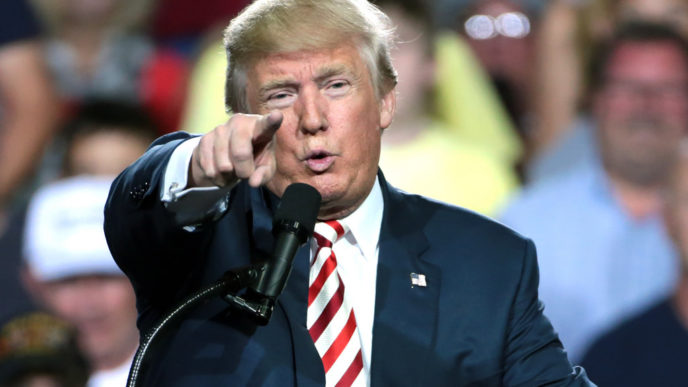
Obama Predicts Trump Will Maintain Iran Nuclear, Paris Climate Deals

President Barack Obama predicted Monday that his successor might keep some of his major legacy items such as the Iran nuclear deal, the Paris climate agreement, and potentially even Obamacare, stating that President-elect Donald Trump isn’t ideological.

Trump will find that “reality will assert itself,” Obama said during his first post-election press conference.

“On a lot of issues, what you’re going to see is that now comes governing, now is the hard part,” Obama said.

The president had mostly cordial words for Trump, a Republican, whom he had a war of words with during the presidential campaign as he stumped for Democratic presidential nominee Hillary Clinton.

Obama doesn’t believe Trump, a longtime New York businessman, will enter office with a particularly ideological agenda.

“He is coming to this office with fewer set hard and fast policy prescriptions than a lot of other presidents,” Obama said. “I don’t think he is ideological and ultimately he is pragmatic. That can serve him well as long as he’s got good people around him and he’s got a good sense of direction.”

Obama asserted this a day after a Trump interview on CBS’s “60 Minutes” aired, where the incoming president said he wanted to maintain some provisions of the Affordable Care Act, such as requiring coverage for pre-existing conditions and allowing people to remain on their parents’ health insurance up to age 26.

“This has been the holy grail for Republicans for the last six or seven years, we’ve got to kill Obamacare,” Obama said, later adding, “It’s one thing to characterize this as not working when it’s just an abstraction. Suddenly you’re in charge and you’re going to repeal it, well, what happens to those 20 million people that have health insurance?”

Obama also urged Trump not to reverse his 2012 Deferred Action for Childhood Arrivals, an executive action that shields the children of illegal immigrants from deportation.

The controversial Iran nuclear deal and the Paris climate agreement are matters Obama anticipates Trump might keep.

“Do I think the new administration will make some changes? Absolutely,” Obama said. “But these international agreements, the tradition has been that you carry them forward across administrations, particularly if after you examine them, you find out they are doing good for us.”

Obama defended the Iran deal as holding Iran accountable. He said:

The main argument against it was that Iran wouldn’t abide by the deal, that they would cheat. We now have over a year of evidence that they have abided by the agreement. That’s not just my opinion. That’s not just people in the administration. That’s the opinion of Israeli military intelligence officers who were part of a government that vehemently opposed the deal. So my suspicion is that when the president-elect comes in and meets with his Republican colleagues on the Hill, that they will look at the facts, because to unravel a deal that is working and preventing Iran from pursuing a nuclear weapon would be hard to explain.

Obama noted both the Iran nuclear agreement and the Paris climate agreement were multilateral deals, which will make it more difficult for the United States to withdraw unilaterally.

“Now, you’ve got 200 countries that have signed up for this thing,” Obama said. “The good news is, what we’ve been able to show over the last five, six, eight years is that it’s possible to grow the economy and possible to bring down carbon emissions as well.” (For more from the author of “Obama Predicts Trump Will Maintain Iran Nuclear, Paris Climate Deals” please click HERE)

Follow Joe Miller on Twitter HERE and Facebook HERE.
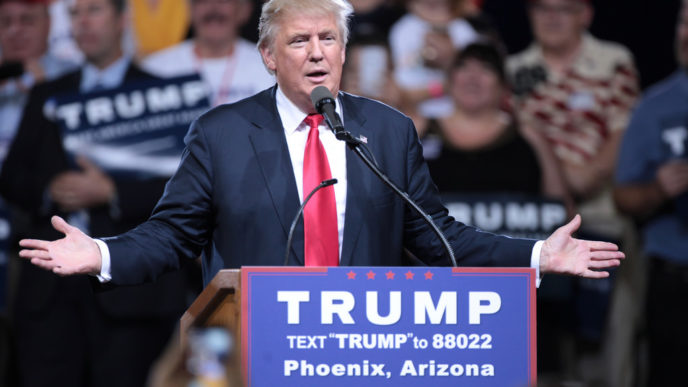
Anti-Trump Protests in 31 Photos

From New York to the District of Columbia, Americans across the country took to the streets over the weekend to voice their dismay with President-elect Donald Trump. In the video above, The Daily Signal compiled a roundup of some signs, symbols, and messages used at these rallies. (Warning: Some signs contain profanity.)

(For more from the author of “Anti-Trump Protests in 31 Photos” please click HERE)

Follow Joe Miller on Twitter HERE and Facebook HERE.

Have White Evangelicals Joined With the KKK and Nazis?

A gay website announces, “Who’s happy Trump won? The Klan, Nazis and anti-immigrant activists worldwide,” explaining that “racists, homophobes, Islamophobes, haters and anti-semites are genuinely ecstatic over his election.”

A respected NBA coach says, “I’m still sick to my stomach, and not basically because the Republicans won or anything, but the disgusting tenor, tone and all the comments that have been xenophobic, homophobic, racist, misogynistic. And I live in that country where half the people ignored all that to elect someone. That’s the scariest part of [the] whole thing to me.”

Yet it was white evangelicals who played a critical role in getting Donald Trump elected, voting for him at the rate of 81 percent. Accordingly, a headline on USA Today proclaimed, “White evangelicals just elected a thrice-married blasphemer: What that means for the religious right.” And a New York Times op-ed was titled, “The Rage of White, Christian America.”

Are these sentiments exaggerated?

Commenting for Christianity Today, African American pastor Jonathan Brooks said, “Donald Trump is our president and I am speechless. Deep down inside, despite what we have seen over that last few years, I thought we had made progress. I just knew that a blatant racist and accused misogynist could not be the leader of our country. But I was wrong! America proved that we care more about preserving a way of life that privileges a few than protecting the lives of our most marginalized.”

Dominique Gilliard, another African American evangelical leader stated, “While Hillary was undoubtedly a flawed candidate, white evangelicals’ unprecedented supported of Trump — despite his racism, misogyny, and ethnocentrism — is revelatory, and deplorable. Did this bear witness to whiteness rather than the Gospel? What did this communicate to the world about our God?”

As expressed pointedly by Mexican-born Chicago pastor Paco Amador (quoting the words of Sandra Maria Van Opstal), “How long [Lord] must we live in a country that continues in the idolatry of white supremacy and self-preservation?”

But was this election really about “the idolatry of white supremacy and self-preservation”? Did white evangelicals simply ignore Trump’s “racism, misogyny, and ethnocentrism,” indeed, his alleged “blatant” racism? And why did a “slightly larger share of black and Latino voters cast ballots for Trump than supported Mitt Romney in 2012,” as noted in a post-election article on CNN.com?

If a vote for Trump was a vote for “white supremacy and self-preservation,” then why did more black and Latino voters cast votes for Trump than for Romney?

And how many African American and Hispanic evangelicals voted for Hillary Clinton? (Overall, 88 percent of African Americans and 65 percent of Hispanics voted for her.)

While many fine Christians are incredulous that a fellow Christian could vote for Trump, I am equally incredulous that a fellow Christian could vote for Hillary. To me, that is a vote for the shedding of innocent blood in the womb, for radical LGBT activism, for the potential restriction of our religious freedoms, and for an extremely dangerous shifting of the Supreme Court that could have negatively impacted our country for a generation or more.

And, quite candidly, my reluctant vote for Trump had nothing to do with “the idolatry of white supremacy and self-preservation” — of “whiteness rather than the gospel” — nor did I overlook our president-elect’s myriad, glaring faults. And of the many friends I know who voted for Trump, none of them did it glibly, none of them excused his failings, and none of them did it to preserve some kind of white power structure or privilege. (Interestingly, the vast majority of black callers to my radio show voted for Trump.)

How, then, do we bridge this deep, painful gap in our perceptions?

Bridging the Deep, Painful Gap

As a white, male evangelical, I need to listen carefully to my black and Hispanic colleagues, along with others who are appalled at the Trump election (in particular, women of all backgrounds), and I need to understand how threatening and obscene his words sound to them. And as much as I disagree, I need to understand why so many see this as an issue of maintaining white superiority.

More broadly, I need to understand how Trump is perceived by immigrants and minorities in general, especially Mexicans and Muslims. Although the media has certainly inflamed tensions, there is a reason those tensions exist.

On the flip side, those who are appalled that their fellow-believers could vote for Trump need to understand that many of us were primarily voting against Hillary and therefore for the unborn, for a conservative Supreme Court, and for religious liberty. We were also voting against what we felt was the negative direction our country had taken under President Obama, a direction that would have been continued under Hillary Clinton — and to repeat, for us, this had nothing whatsoever to do with “the idolatry of white supremacy and self-preservation.”

And while some of us would question whether Trump is actually racist, let alone blatantly racist, most of us would not dispute that he is the most unlikely candidate ever supported by conservative Christians. Yet we believe that, in God’s sovereign purpose, He could be raising up this unlikely vessel for such a time as this. And the fact that he has so many solid evangelicals so close to him, possibly at a level unprecedented in numerous elections, gives us genuine hope that he has an open ear to our cause and will seek to be the president of all the people of America.

Certainly, some evangelicals have almost granted president-elect Trump the status of savior, even trying to present him as a saint, and I have consistently challenged this mentality. Yet I do not believe that is the case with the vast majority of his conservative Christian voters, many of whom supported other candidates before finally turning to Trump. (Seminary president Dr. Richard Land, who voted for Trump and encouraged others to do so, said on my show that, out of the 17 Republican candidates, Trump was his 18th choice.)

In short, evangelicals who voted for Trump need to understand why their anti-Trump colleagues are so devastated and shocked by the outcome of the election. There are legitimate reasons for their concerns. Conversely, anti-Trump evangelicals need to understand that their colleagues who voted for Trump are not white supremacists who blindly embraced a debased candidate, and we had legitimate, prayerfully calculated reasons for our votes.

In the end, since Donald Trump is the incoming president of the United States, it is imperative that all of us come together and work for the common good, but that can only happen if we do our best to see one another’s perspective.

Can we find a way to join together as one for the good of our hurting nation, even with our deeply mixed views on our president-elect?

We really have no choice. And regardless of our views about president-elect Trump, for whose success as president we pray, we can and must do the work of the church — living godly lives, preaching the gospel, helping the poor and the needy, and standing for justice. (For more from the author of “Have White Evangelicals Joined With the KKK and Nazis?” please click HERE)

Follow Joe Miller on Twitter HERE and Facebook HERE.