Posts

Trump’s Pro-Second Amendment Platform Could End Gun Sales Boom

President-elect Donald Trump is expected to push to relax gun laws when he takes office, but significant changes in the firearms industry began as soon as he was elected – and some put the law of unintended consequences squarely in the cross hairs.

For instance, while Trump’s unapologetic pro-Second Amendment stance may be good for gun owners, it has already dealt a blow to manufacturers, who enjoyed record sales throughout President Obama’s eight years in office. Stocks in companies like Smith & Wesson and Sturm, Ruger & Co. plunged on Nov. 9, and experts say it is because Trump’s election erased fears that guns would become harder to get.

“A lot of people were buying guns simply because they were worried Hillary Clinton’s regulations would make it more costly and more difficult to buy guns, and people are not going to feel quite the need to go out and buy guns now,” Crime Prevention Research Center President John Lott told FoxNews.com. “I think the stock market is a pretty good predictor of what’s going to happen, and the fact that you see drops in stock prices by almost 20 percentage points –I think that’s pretty significant.”

While the government does not publish an official number of gun sales, background checks, a gauge of how many people try to buy guns, skyrocketed under President Obama. In 2008, 12.71 million background checks were conducted, a number on pace to double this year, to set an all-time record. (Read more from “Trump’s Pro-Second Amendment Platform Could End Gun Sales Boom” HERE)

Follow Joe Miller on Twitter HERE and Facebook HERE.

Like Obama’s First Term, Most Americans Want Trump to Address These Two Policy Areas

In many ways, incoming president Donald Trump and outgoing president Barack Obama couldn’t be more different. Trump is brash, while Obama is smooth. Trump’s worldview is more nationalist, while Obama’s is more globalist. Obama is a liberal ideologue, while Trump is a centrist pragmatist. Yet, in other ways, it’s actually kind of startling to see how similar the two men are, and by extension, how similar the country is to where we were eight years ago.

A new poll from Reuters/Ipsos finds that a plurality of voters want President-elect Trump to make health care his top priority when assuming office. In second place was a concern over jobs and the economy. Does this sound familiar to anyone?

In 2008, America had just been rocked by one of the worst financial crises in history. After two terms of George W. Bush, the voters were ready for something different, and due to economic insecurity, they rejected John McCain’s promise of a foreign policy presidency for Obama’s promise of “hope and change,” with an emphasis on health care reform and salvaging the economy from ruin.

It wasn’t at all surprising that change should win out in those troubled times over the decayed establishment. People felt vulnerable and needed new ideas to try to push the country back on the right track. What is surprising is that after eight years of “hope and change,” people still largely feel the same way.

Donald Trump’s election is undeniably a call for change, as many commentators have pointed out. What this shows is that the status quo — the things people thought they wanted in 2008 — have proven utterly unsatisfactory. Back then, there was a sense of great urgency to repair the nation’s broken health care system. And make no mistake, it was broken.

But Obamacare, Barack Obama’s signature legislative achievement, has been such an abject failure that the same sense of urgency remains undiminished today. Rising premiums, sky-high deductibles, and a malfunctioning market where insurers continue to drop out of the program are making Americans less medically secure than ever, despite the president and his cronies repeatedly assuring us that it’s working great. We know through direct experience that it isn’t.

Similarly, the economy remains in heavy focus. While it’s clear that we are not in the same desperate position we were in 2008, the recovery has been one of the slowest in history. And despite the official jobs numbers coming out of the Bureau of Labor Statistics, once again direct, personal experience tells voters that work is hard to come by, and small businesses struggle under a regulatory burden that is undeniably worse than it was before Obama took office. While again, the White House assures us that they “saved or created” millions of jobs through stimulus packages, bailouts, and quantitative easing, the results of all these policies have not inspired confidence in the electorate.

It’s hard to draw any other conclusion than that Trump’s election is serving much the same purpose as Obama’s election did in 2008, although with one important difference. While voters certainly viewed Obama as a condemnation of the Bush administration, Bush had not come into office promising to do the very things that formed the basis for Obama’s campaign. Today, we see that health care and the economy, the two policy issues Obama most aggressively tackled, remain the chief source of voter anxiety.

In other words, Obama didn’t just fail to keep the country happy, he failed at his own stated goals in such a spectacular way, that somehow Donald Trump (I still can’t believe it) is now going to be president. Eight years from now, will we once again be desperate for change? For all our sakes, I hope not. (For more from the author of “Like Obama’s First Term, Most Americans Want Trump to Address These Two Policy Areas” please click HERE)

Follow Joe Miller on Twitter HERE and Facebook HERE.

Trump Wants a Short-Term Spending Package. Will Congress Back Him?

President-elect Donald Trump requested Congress pass a short-term spending bill to fund the government through March, according to reports.

House Republican members are looking to pass a spending bill, or continuing resolution, that would fund the government through March 31.

A continuing resolution funds government programs short term through appropriations legislation.

“I would say the simple solution for a lot of us here is just look at the [continuing resolution],” Rep. Steve King, R-Iowa, told reporters Wednesday at a monthly forum with lawmakers and journalists on Capitol Hill. “Set the [continuing resolution] at the 1040 spending level [$1.040 trillion] … so there’s an opportunity for the new Congress to be seated and the new president to be sworn in and pick it up from there. We know what that path looks like. It’s clean, it’s simple, and it should be doable.”

Senate Republicans have raised concerns over waiting to allocate federal funds for 2017.

Senate Majority Leader Mitch McConnell, R-Ky., has told reporters he would support a spending bill that would fund the government through September. Senate Minority Leader Harry Reid, D-Nev., favors passing a long-term term spending bill now, CQ Budget Tracker’s David Lerman wrote in a Thursday morning email briefing.

Sen. John McCain, R-Ariz., says those who support a short-term spending bill are “idiots” and “will do great damage to the military and our ability to defend the nation.”

“Whatever the House can pass, we’ll pass over here,” Senate Majority Whip John Cornyn, R-Texas, said.

In a closed-door meeting Thursday, House Speaker Paul Ryan, R-Wis., was reported to have been in favor of a short-term spending bill.

“A long-term spending bill is a needless concession to Democrat priorities,” Rachel Bovard, director of policy services at The Heritage Foundation, told The Daily Signal. “It makes absolutely no sense for Paul Ryan and Mitch McConnell to waste time cutting a long-term spending deal with a departing president, when Republicans will have unified control of the government in January.”

The now lame-duck Congress must pass a spending bill to keep the government from shutting down.

The government is currently funded until Dec. 9.

“I don’t think anybody expects that [Trump] balance the budget the day he gets here,” Rep. Jim Jordan, R-Ohio, told reporters on Wednesday. “So he’s got to have some runway for that.”

The Hill reported on Thursday:

House Appropriations Chairman Hal Rogers, R-Ky., told reporters that Trump was driving factor behind the short-term spending bill—which his committee had largely opposed.

“I would have certainly liked to have finished up our bills,” Rogers told CQ Budget Tracker. “And we were making good progress. But time is running out. And secondly, we thought it important that the new president have input on the spending plans.”

An omnibus spending bill funding the government for longer than a short-term package would be a “mistake,” Heritage’s Bovard wrote in a recent op-ed.

“Furthermore, any long-term bill will limit President-elect Trump’s ability to implement his agenda upon taking office,” Bovard said. “If Republicans are at all strategic, they will pass a short-term bill into early next year, therefore giving themselves and the new president the maximum ability to implement GOP priorities.”

Vice President-elect Mike Pence met with House Republicans Thursday morning on Capitol Hill.

“We’re going to be working with the administration to make America strong, more prosperous, and to do the things that frankly President [Barack] Obama hasn’t been able to do in the last eight years and we’re pretty excited,” Rep. Raúl Labrador, R-Idaho, told reporters Wednesday.

Ryan met with Pence Thursday, both desiring to work “hand-in-glove over the next two months.” (For more from the author of “Trump Wants a Short-Term Spending Package. Will Congress Back Him?” please click HERE)

Follow Joe Miller on Twitter HERE and Facebook HERE.

Trump Outlines 6 Steps He’ll Take to ‘Drain the Swamp’ in Washington

In a video message released Monday, President-elect Donald Trump told Americans the first executive actions he’ll take on Jan. 20 to “drain the swamp” in Washington. They include, in Trump’s words:

1. “On trade, I am going to issue our notification of intent to withdraw from the Trans-Pacific Partnership, a potential disaster for our country. Instead, we will negotiate fair, bilateral trade deals that bring jobs and industry back onto American shores.”

2. “On energy, I will cancel job-killing restrictions on the production of American energy—including shale energy and clean coal—creating many millions of high-paying jobs. That’s what we want, that’s what we’ve been waiting for.”

3. “On regulation, I will formulate a rule which says that for every one new regulation, two old regulations must be eliminated, it’s so important.”

4. “On national security, I will ask the Department of Defense and the chairman of the Joint Chiefs of Staff to develop a comprehensive plan to protect America’s vital infrastructure from cyberattacks, and all other form of attacks.”

5. “On immigration, I will direct the Department of Labor to investigate all abuses of visa programs that undercut the American worker.”

6. “On ethics reform, as part of our plan to drain the swamp, we will impose a five-year ban on executive officials becoming lobbyists after they leave the administration—and a lifetime ban on executive officials lobbying on behalf of a foreign government.”

(For more from the author of “Trump Outlines 6 Steps He’ll Take to ‘Drain the Swamp’ in Washington” please click HERE)

Follow Joe Miller on Twitter HERE and Facebook HERE.

3 Things Congress Must Do to Prepare for a Trump Administration

Earlier this month, voters all across the country shocked the political and media establishments. America’s message was simple: We are tired of corrupt insider dealing in Washington and the self-serving nature of the establishment political class.

This didn’t happen by chance. Millions of Americans found a reason to engage in the political process. Whether it was opposition to massive unconstitutional government, a desire to drain the corrupt swamp, or an understanding of how much progressivism is hurting our nation, these Americans rallied around Donald J. Trump.

Congress will be making decisions on the budget and will have the opportunity to lay the groundwork for a full repeal of Obamacare under a Trump administration.

Historically, Congress has used lame-duck sessions—the short period between an election and the beginning of a new Congress—to pass bad and unpopular policies without being held accountable.

In 2008, we saw the automotive industry bailout; in 2010, the nuclear treaty with Russia; and in 2012, a New Year’s Day vote on $620 billion of tax increases.

But this year, Democrats must come to terms with the fact that the American people have spoken, and said no to the liberal policies of President Barack Obama and Hillary Clinton. The president and his congressional allies have no mandate to legislate, and Republicans have no excuse not to lead.

It is imperative conservatives take up three major initiatives in the remaining months of 2016:

1. Pass a continuing resolution, not a bad spending deal. With only two months left in Obama’s presidency, Congress should not negotiate any massive spending deal with him.

Instead, it should pass a simple, short-term continuing resolution that will fund the government into the beginning of Trump’s presidency. This would allow the newly elected Congress to present Trump with a principled, conservative budget.

2. Take the first steps toward fully repealing Obamacare. Earlier this year the House and Senate failed to pass budgets, which means the fiscal year 2017 budget can be used as a vehicle to begin the process of repealing Obamacare through reconciliation.

Heritage Foundation expert Paul Winfree outlines the process:

Last year, Congress failed to pass a budget for fiscal year 2017, creating an opportunity for Congress to pass two budgets next year, rather than just one. This gives Republicans two shots at getting filibuster-proof reconciliation bills to Trump.

The first budget is simple. The spending and tax levels include one assumption: The ACA [Affordable Care Act] is repealed. That ACA repeal budget should also include instructions to the relevant committees in Congress. Congress should be able to easily pass a budget resolution with these criteria with simple majorities in each chamber and begin the process of work on the reconciliation bill before Inauguration Day. This will set up the ability for Congress to pass a reconciliation bill repealing all the budgetary components of the ACA immediately after Trump is sworn into office.

A successful reconciliation process will set the stage for a full and total repeal of Obamacare under a Trump administration.

3. Prepare for a principled Supreme Court nomination: Conservatives led the charge against Obama nominees earlier this year and called for #NoHearingsNoVotes on Obama’s Supreme Court nomination. It was the right thing to do because it allowed the American people to have a voice in ensuring the next justice is willing and able to uphold the Constitution.

In the coming weeks, conservatives must understand the purpose and mechanics of the “two-speech rule”—a device that can be used to defeat the filibuster and ensure a conservative is appointed to the Supreme Court.

The American people have ushered in a new day in American politics, and Republicans have no excuse but to offer a bold and positive agenda. It’s time to raise our gaze in defining the art of the possible in order to repair the damage Obama has done in the last eight years. (For more from the author of “3 Things Congress Must Do to Prepare for a Trump Administration” please click HERE)

Follow Joe Miller on Twitter HERE and Facebook HERE.

Trump Has Condemned Post-Election Violence. Why Are Dem Leaders Encouraging It?

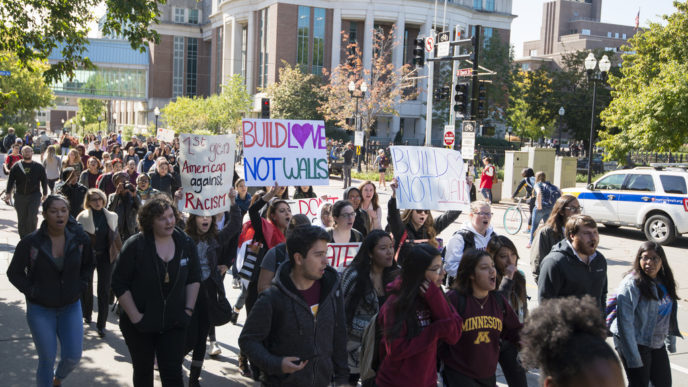
Last week, President-elect Donald Trump condemned violence allegedly done by racists and others against minorities after he won the White House. Though frequently unsubstantiated and/or proven false, the narrative of a virulently racist and bigoted America post-election has been furthered by the anti-Christian, anti-conservative Southern Poverty Law Center (SPLC), which published a largely unverified report claiming 700 incidents of hate, hate-based harassment etc. were reported to it since Trump was elected.

Meanwhile, proven cases of violence by liberal Trump opponents have been witnessed in protests around the nation. Traffic has been blocked, police and civilians have been attacked and arrests have been made. Additionally, Trump backers have been specifically targeted in a handful of beatings and other proven situations nationwide.

Again, Trump has made efforts to tamp down the flames, though CNN’s Brian Stelter and others say he should do more. Contrast this to Democratic leaders, who have been urged by Trump’s campaign manager to speak out against the violence.

Retiring Senate Minority Leader Harry Reid (D-NV)

Rather than condemn violence around the nation, Reid said late this week that he “was concerned” after the election whether “the world is going to be destroyed.” Last week, Reid called Trump “a sexual predator” who “fueled his campaign with bigotry and hate.” Reid also said:

I have heard more stories in the past 48 hours of Americans living in fear of their own government and their fellow Americans than I can remember hearing in five decades in politics. Hispanic Americans who fear their families will be torn apart, African Americans being heckled on the street, Muslim Americans afraid to wear a headscarf, gay and lesbian couples having slurs hurled at them and feeling afraid to walk down the street holding hands. American children waking up in the middle of the night crying, terrified that Trump will take their parents away. Young girls unable to understand why a man who brags about sexually assaulting women has been elected president.

Not a word against Trump opponents who are tearing up the streets …

Senator Elizabeth Warren

Warren, long considered a liberal favorite for the White House if she were to run, told MSNBC’s Rachel Maddow last week that while liberals must “listen” to people who voted for Trump, those people protesting Trump “have a right to have their voices heard.”

Warren is right. But where is her condemnation of the violence by the left? This is the same woman who called Tea Party activists “anarchists” after 17 percent of the U.S. federal government shut down in 2013, and who said Republicans were holding the government “hostage.”

President Barack Obama

President Barack Obama was asked about the domestic protests on his last international trip as the White House occupant. He declined to condemn the violence and, perhaps just as offensively, compared the often-violent protests to peaceful ones by conservative groups during his presidency.

“I would not advise people who feel strongly or are concerned about some of the issues that have been raised over the course of the campaign, I would not advise them to be silent,” Obama said during a joint news conference with German Chancellor Angela Merkel.

Obama said protests are just something Trump would have to get used to as the leader of the free world.

“I’ve been the subject of protests during the course of my eight years,” he said. “And I suspect that there’s not a president in our history that hasn’t been subject to these protests.”

As a former Tea Party Patriots employee, I remember the days of protests against Obama. They were usually forward-looking affairs, urging policy changes and demanding things like less government spending and fair treatment of all citizens by the IRS. Participants would also clean up after themselves, rather than leave the site covered in trash and the streets littered with broken glass. Even the most raucous Tea Party events were town hall meetings with senators and representatives, where yelling was the worst thing that happened.

Non-Tea Party protests were likewise peaceful. The March for Life is D.C.’s largest annual protest, and like prayer vigils frequently held for America’s future, it is peaceful.

Democratic White House Nominee Hillary Clinton

Hillary Clinton’s first speech since conceding the White House race to Trump was largely benign in terms of addressing the violence in the nation by liberals who preferred her over Trump. Unlike Reid, she didn’t fan the flames of irrational fear. Unlike Obama and Warren, she didn’t encourage the protests while ignoring the strong core of lawbreaking in them.

But nor did she call for peace. Nor did she reiterate a call for her supporters to accept the results of the election.

Legitimate Concerns Undermined by Poor Leadership

After a normal election, it might be reasonable for CNN’s Stelter and others to demand Trump ask for peace. After all, he is the next President, and his leadership ought to be important. But this was not a normal election. Furthermore, while rational concerns have been expressed by some protesters, overreactions by liberal leaders has made it almost impossible for Trump to stem the protests and the violence.

Trump’s concession speech was amazing and magnanimous, and both Obama and Clinton made solid speeches as well immediately after Trump’s victory. But it is Obama, Warren and Clinton to whom protesters will listen, not the President-elect the liberals trashing our streets and ambushing their fellow Americans believe is the next Hitler.

Then again, wasn’t Bush supposed to be the next Hitler? (For more from the author of “Trump Has Condemned Post-Election Violence. Why Are Dem Leaders Encouraging It?” please click HERE)

Follow Joe Miller on Twitter HERE and Facebook HERE.

The Left’s Post-Trump Win Campaign of Terror

A few months back, I wondered aloud here why campus leftists would invite fellow students to bite the heads off fetus cookies. Or what purpose was served by hanging a Jesus dartboard in a dorm. The answer I found was simple. And alarming.

The left in America is engaged in what Catholic philosopher Thomas Molnar called “cultural terrorism.” As someone who survived both a Nazi concentration camp and post-war Stalinist Hungary, Molnar knew whereof he spoke. And the post-election actions of America’s left, from the streets of major cities to the halls of Congress itself, come straight from the radical playbook of Saul Alinsky and his disciples (which included both Barack Obama and Hillary Clinton).

Cultural terrorism is designed to work much like the bombs-and-bullets variety, using words and symbols instead. Its objectives, laid out in Molnar’s classic, The Counter-Revolution, are

To shatter the sense of normalcy, peace, and civic order that make it possible to live a middle-class existence in a free society.

To profane the sacred spaces and shatter the pious conventions that hold citizens together by wholesome inertia.

To introduce division, fear, distrust, and ethnic groupthink — whatever it takes to detach people from their natural deference to legitimate, elected authority.

To produce a sense of crisis, in which radical ideologies and rash actions seem no longer off the table, but somehow proportionate and maybe even necessary.

The Worse Things Get, the Better it is!

The Italian Communists used to cooperate with neo-Fascist terrorists planting bombs in the 1970s, under the slogan, “The worse things get, the better it is!” Their theory was that social chaos and widespread killing would lead to a crackdown by the government, which would speed up the coming of a Communist revolution. On a lesser scale (so far) that is where we are today.

I doubt that the average outraged campus snowflake or needlessly frightened black or Latino protestor has any idea of how he is being used, but the leaders behind the unrest across America are self-aware, and politically ruthless — as were the organizers of the Occupy movement. That fact was documented in Occupy Unmasked, which Trump strategist Stephen Bannon helped to make.

When radical activists encourage thousands of ghetto residents to block public roads, and cossetted students to mock and defy police, they are attacking the sense of predictable public order. When protestors gather outside the Trump International Hotel in our nation’s capital holding a sign that says “Rape Melania,” they are asking for a street fight with Trump supporters — or really, any passerby possessed of a sense of decency. The leaders who organize these outrages are hoping that something gets violent and ugly — that an outraged (white) motorist runs somebody down, or a stressed-out cop (of any color) starts shooting civilians. All that would feed into and verify their manufactured emergency, give millions more citizens the false impression that we are approaching martial law.

Never Let a Crisis Go to Waste

If that sounds outrageous and implausible to you, keep in mind the Clintonite mantra “Never let a crisis go to waste.” Remember that Wikileaks revealed the fact that a senior Clinton campaign staffer hoped that mass shooters would turn out to be white Christians. Recall that the riots in 1968 that handed vast cultural power to the radical left in West Germany were started when a policeman shot a student. Decades later, it turned out that the policeman was in fact an East German spy, who probably acted on orders to light the spark for revolution.

What does it mean when the losers in an election announce that the winner is “Not My President”? When reporters give millions of dollars in free publicity to a contemptible fringe figure like white nationalist Richard Spencer, who played no role whatsoever in the election of Donald Trump? (The Communist Party, USA endorsed Hillary Clinton. Had she won, would the media have featured its leader in alarmist photo spreads?) What does it signify when Trump’s newly-elected Vice President cannot even attend a Broadway show without being challenged and humiliated? When the next president’s appointees (such as Steve Bannon and Sen. Jeff Sessions) are subject to a non-stop campaign of lies and vilification as racists and extremists, outside the bounds of decent society and therefore ineligible for office?

Recall that before the election, Hillary Clinton herself discounted half of Trump’s supporters as “deplorables” motivated by hatred. Outraged, out-of-touch elitists cannot accept the fact that their fellow citizens rejected their grab at power — which remember, was supposed to pack the Supreme Court with far-left mandarins who would have taken critical issues, from abortion and gun rights to free campaign speech and religious liberty, out of the hands of the grubby, untrustworthy masses. These privileged “progressives” came so close to attaining that final liquidation of democracy that they could taste it. And now they’re not willing to let it go.

They will go on and on and on, promoting civil disorder and stoking the flames of division, in the hope that something goes horribly, bloodily wrong in some American city. Then they can send out their experts in “healing” and “reconciliation” across the media, and demand that the Trump administration back off on its central policies — which will clearly have proved to be too “radical” and “provocative.” To ease the crisis which they provoked, they will work up bipartisan measures with bland, defeatist establishment Republicans, so both parties can work together to annul the effects of Trump’s historic victory.

For our part, we must stay calm. We must insist in firm but measured tones on the legitimacy of our country’s last democratic election. We must frustrate attempts at character assassination on decent men whom President-elect Trump appoints to office, and wait out this national paroxysm of elitist rage and envy. We must pray that Trump’s supporters, and policemen across America, have the patience and long-suffering to let these arsonists’ fires simply burn themselves out. Then normalcy will return. We must stand firm by principles, insist on justice and order, and turn the other cheek. Do anything else, and the cultural terrorists win. (For more from the author of “The Left’s Post-Trump Win Campaign of Terror” please click HERE)

Follow Joe Miller on Twitter HERE and Facebook HERE.

Trump Should Let the Senate Kill Obama’s Climate Treaty

When is a treaty not a treaty? According to the Obama administration, whenever the president says so. This claim is especially dubious with respect to the Paris agreement on global warming, which as Marlo Lewis of the Competitive Enterprise Institute has shown, is more ambitious than predecessor agreements that were universally accepted to be treaties.

Surely if President Obama possesses an asserted authority to declare an agreement identical in form and more ambitious in substance than previous treaties to be a non-treaty then President Trump will have the authority to reach the opposite, more plausible conclusion.

There is little doubt that the Trump administration will reject the Paris agreement, but the option of properly recognizing it as a treaty and allowing the Senate to formally reject it has several advantages.

First, it prevents the dangerous precedent of a president binding the country and his successor to international commitments without the broad support that the Constitution requires through the advice and consent process. Secondly, it sidesteps the question of whether the withdrawal provision of the Paris treaty itself forces us to wait four years before withdrawal is effective. Finally, it exposes as false the talking point that skepticism of the Paris agreement is outside the political mainstream.

John Kerry, who infamously declared global warming a greater threat to the United States than terrorism, gave his final speech on the subject this week to the UN functionaries in Marrakech, Morocco. He offered a soothing fantasy.

“No one should doubt the overwhelming majority of the citizens of the United States who know climate change is happening and who are determined to keep our commitments that were made in Paris,” Kerry said to applause.

Last week’s election emphatically showed the opposite. The Midwest delivered the White House to Trump, who dominated among the working class voters who care far more about how much they are paying to fill up the gas tank and keep their lights on than they do about what United Nations computer models predict about the climate in decades or centuries — the results of which show minimal change anyway. Appalachian voters in particular preferred Trump in a stunning 469 of 490 counties.

The Paris treaty is a magnificent example of the bad deals made for America that ultimately paved Donald Trump’s path to the White House.

Specifically, the Paris treaty effectively bans coal-fired power plants in the United States while China has 368 coal plants under construction and over 800 in the planning stage. India’s coal production under the deal is projected to double by 2020. Even Europe is allowed to build coal plants. It forces Americans to endure painful cuts while the rest of the world continues with business as usual.

Even worse, American taxpayers will be forced to cough up $100 billion in climate-related foreign aid by 2020, with the promise of much more to follow.

Which brings us to the Senate.

Trump can submit the Paris treaty in full confidence that it will not pass with the required 67 votes in a body that has just 48 Democrats. The interesting question: how low can the vote total for this rotten deal go?

With ten Senate Democrats sitting in states Trump carried, many senators will be forced to choose between their green billionaire donors out in San Francisco and the voters they need to survive in 2018. And when the Senate votes the Paris treaty down, it will send an emphatic message to the world that — despite what John Kerry told his friends in Marrakech — the American people are with Trump on this, not Obama. (For more from the author of “Trump Should Let the Senate Kill Obama’s Climate Treaty” please click HERE)

Follow Joe Miller on Twitter HERE and Facebook HERE.

Central America Should Not Worry About Trump’s Election

Recently, the governments of El Salvador, Guatemala, and Honduras agreed as a bloc to seek support from Mexico in response to the election of President-elect Donald Trump.

This move comes in response to the president-elect’s comments during a “60 Minutes” interview, where he vowed to deport unlawful immigrants with criminal records back to their country of origin.

But such knee-jerk reactions are quite shortsighted.

Rather than viewing Trump’s election as a challenge, these countries should capitalize on this unique opportunity to set the region on a proper course. The new administration’s strong focus on immigration and U.S. national security could potentially benefit them long-term.

Located directly south of Mexico, the Northern Triangle countries of El Salvador, Guatemala, and Honduras are caught in the crosshairs of a dire economic and security crisis.

For many years, Honduras and El Salvador have jostled for the top spot among nations with the highest homicide rates. Violent local and transnational gangs operate with virtual impunity. Drug trafficking runs rampant and has corrupted state institutions that are already fragile.

Guatemala’s 600-mile border with Mexico is a porous haven for drug and human trafficking. High-level corruption within the government, particularly the law enforcement and military, make it virtually impossible to begin addressing these problems.

On the American side, monetary aid to the region has been politicized under the Obama administration. Much like its foreign policy writ large, the administration’s strategy toward Central America has reflected the narrow interests of progressive constituents.

Rather than addressing these countries’ basic security and development challenges, the administration has focused on softer projects like gender issues and climate change.

All the while, security conditions in the region have continued to deteriorate while unlawful migration to the U.S. keeps surging. Mexicans no longer make up the majority of unlawful migrants—these now primarily come from the Northern Triangle countries.

And here again, the Obama administration’s misguided policies have aided the immigration surge.

Consider its response to Honduras’ constitutional crisis in 2009. Instead of supporting the democratic ambitions of a regional partner, the administration declared the lawful deposing of its president to be a “military coup” and responded by suspending critical aid.

Counternarcotic assistance was particularly hit hard, resulting in a further reduction of the country’s already insufficient capacity to combat drug trafficking. Shortly thereafter, a State Department study found that “87 percent of all cocaine smuggling flights departing South America first land in Honduras.”

In addition to America’s porous border and weak immigration laws, these destabilizing factors in Central America play a direct role in incentivizing unlawful migration to the U.S.

As evidenced by various indicators, like the continued flow of unlawful migrants and high homicide rates, the Obama administration’s foreign policy toward Central America has been ineffective.

The doomsday prophecies pushed by the media about the coming Trump administration are baseless. Instead of buying into the hype, the Northern Triangle countries should embrace an administration that is so keenly focused on restoring security to the region. (For more from the author of “Central America Should Not Worry About Trump’s Election” please click HERE)

Follow Joe Miller on Twitter HERE and Facebook HERE.
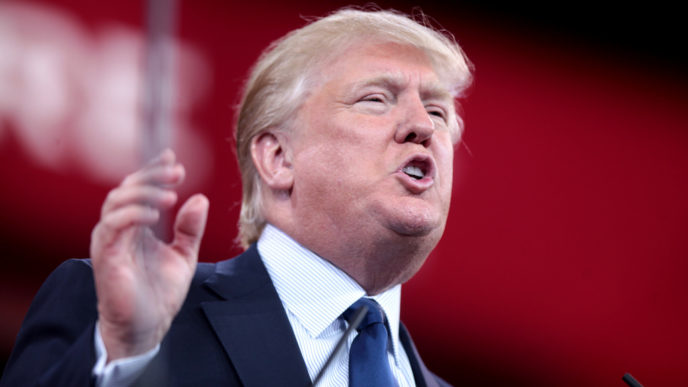
Trump Agrees to Pay $25 Million to Settle Trump University Lawsuit

President-elect Donald Trump has agreed to settle lawsuits against him regarding the now-defunct Trump University for $25 million.

The lawsuits were filed in California and New York.

New York Attorney General Eric Schneiderman issued a statement Friday afternoon indicating that 6,000 former students will receive restitution for their tuition payments and the State of New York will receive up to $1 million in penalties.

The president-elect won’t admit to any wrongdoing under the agreement.

The deal eliminates a litigation headache for Trump two months before his inauguration.

Trump had indicated during the campaign earlier this year that he wanted the cases to go to trial and would not settle them.

Trump posted a lengthy statement about the litigation in California after indicating the federal judge in the case, Gonzalo Curiel — an Obama appointee with Mexican heritage — was not making fair preliminary rulings in the case.

The businessman indicated that 98 percent of the students who participated in the real estate seminars gave the coursework positive ratings.

“Normally, legal issues in a civil case would be heard in a neutral environment. However, given my unique circumstances as nominee of the Republican Party and the core issues of my campaign that focus on illegal immigration, jobs and unfair trade, I have concerns as to my ability to receive a fair trial,” he wrote.

“While this lawsuit should have been dismissed, it is now scheduled for trial in November,” he added.

The trial was slated to begin at the end of the month and the president-elect faced the prospect of being compelled to testify in court either just as he is preparing to take office or shortly afterwards. (For more from the author of “Trump Agrees to Pay $25 Million to Settle Trump University Lawsuit” please click HERE)

Follow Joe Miller on Twitter HERE and Facebook HERE.