Posts

Jury Finds Meta and Google Negligent in Landmark Social Media Addiction Trial

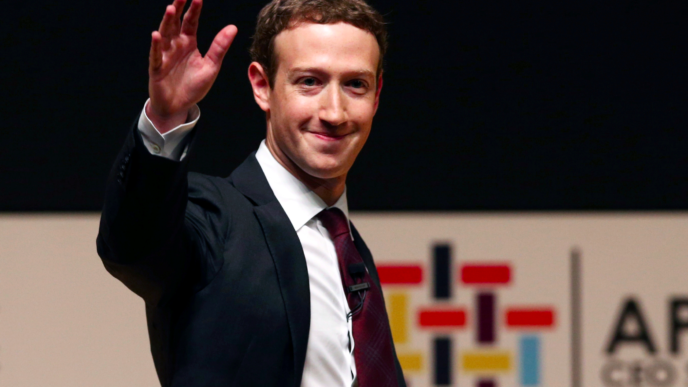
A Los Angeles jury has found Mark Zuckerberg’s Meta and Google’s YouTube liable in a groundbreaking lawsuit concerning harm to children using their platforms, awarding $3 million in damages to a young woman who claims social media addiction during childhood worsened her mental health.

NBC News reports that in a precedent-setting verdict, jurors in the high profile social media addiction trial deliberated for more than 40 hours across nine days before determining that both Meta and YouTube were negligent in the design and operation of their platforms. The jury concluded that each company’s negligence was a substantial factor in causing harm to the plaintiff, a 20-year-old woman who testified that her childhood use of social media created an addiction to the technology and aggravated her mental health problems.

The multimillion-dollar award is expected to increase significantly, as jurors determined that the companies acted with malice or highly egregious conduct. This finding means the jury will soon hear additional evidence and return to deliberations to decide on punitive damages, which could substantially raise the total compensation.

Meta and Google-owned YouTube were the final two defendants remaining in the case after TikTok and Snap reached settlements before the trial commenced. The plaintiff, identified in court documents as KGM and referred to as Kaley by her legal team during proceedings, provided testimony alongside high-profile technology executives. Meta leaders Mark Zuckerberg and Adam Mosseri appeared as witnesses, while YouTube CEO Neal Mohan was not called to testify.

According to her testimony, Kaley started using YouTube when she was six years old and began using Instagram at age nine. She told jurors that she spent time on social media platforms all day long throughout her childhood. The legal team representing Kaley, headed by attorney Mark Lanier, was responsible for demonstrating that the negligence of the respective defendants was a substantial factor in causing harm to their client. (Read more from “Jury Finds Meta and Google Negligent in Landmark Social Media Addiction Trial” HERE)

Top Trending Google Search Of 2025 Revealed

Google revealed that assassinated Turning Point USA (TPUSA) founder Charlie Kirk was the top trending search on its engine for 2025.

Google announced that Kirk beat out other search queries such as Democratic mayor-elect Zohran Mamdani of New York City, the Netflix film “K-Pop Demon Hunters,” the iPhone 17 and the 43-day fall government shutdown. Authorities arrested Tyler Robinson, 22, early in the morning of Sept. 12, accusing him of fatally shooting Kirk during a TPUSA event at Utah Valley University two days earlier.

Kirk’s assassination was the third-most searched item for when it came to news, according to Google’s Year in Search 2025 report. It drew more searches than the wildfires that tore through the Los Angeles area in January, the selection of the new pope by the Roman Catholic Church, the Jeffey Epstein files, President Donald Trump’s inauguration for his second term, and the tariffs Trump imposed in April.

Kirk was also the top search when it came to those who passed away, ranking ahead of notable people like actors Michelle Trachtenberg, Val Kilmer, Gene Hackman and Diane Keaton, wrestler Hulk Hogan, Pope Francis and Food Network host Anne Burrell.

Kirk’s widow, Erika, who succeeded her late husband as CEO of the conservative student group, ranked fourth in trends for people, beating out Pope Leo XIV, Cleveland Browns quarterback Shedeur Sanders, White House press secretary Karoline Leavitt and ABC late-night talk show host Jimmy Kimmel. Robinson, the TPUSA founder’s alleged assassin, ranked second among trending people on Google in 2025. (Read more from “Top Trending Google Search Of 2025 Revealed” HERE)

Google Admits to Years of Secret Censorship of Conservatives — Including Suppression of Restoring Liberty

After years of denials from both Big Tech and left-leaning political voices, Google has now officially admitted to censoring conservative content — including media like Restoring Liberty — under pressure from the Biden administration.

In a recent filing to the House Judiciary Committee, Google’s parent company, Alphabet, confessed that it engaged in a pattern of removing, suppressing, or “de-ranking” right-of-center viewpoints. Much of this activity happened at the behest of federal officials, even when the content didn’t technically violate company policies.

“Senior Biden Administration officials, including White House officials, conducted repeated and sustained outreach to Alphabet and pressed the Company regarding certain user-generated content related to the COVID-19 pandemic that did not violate its policies,” wrote Alphabet’s attorney, Daniel F. Donovan.

This means that conservative creators and outlets — including Restoring Liberty — were effectively silenced for posting content that was legally and factually allowed under Google’s own rules. The company acted as a political filter for the White House, despite publicly claiming neutrality.

YouTube’s Role in Shaping the Narrative

Alphabet-owned YouTube played a particularly aggressive role, banning users who questioned official COVID-19 narratives, including the now widely discussed theory that the virus originated in a Wuhan lab. Users who raised concerns about election integrity in 2020 also faced deletion or demonetization.

While YouTube later stated that it “values conservative voices,” actions speak louder than words. Accounts remain shadowbanned or suppressed despite promises to restore them.

Google’s leftward tilt isn’t a secret. The company and its executives have poured millions into Democratic campaigns. WikiLeaks exposed internal communications from former Google CEO Eric Schmidt, who offered direct assistance to Hillary Clinton’s 2016 campaign. He even outlined a plan to help her win — not from a neutral tech position, but as an enthusiastic political ally.

More recently, Google’s own artificial intelligence tools, such as the Gemini AI model, came under fire for historically inaccurate and racially charged content.

Photo credit: Flickr

Look How The Google Speech Police Scold Me For Searching The Term ‘Illegal Alien’

Google has found a new way to police the speech of its users: scolding them for typing factual terms into its search bar.

After a Justice Department lawsuit resulted in Texas ending in-state tuition for illegal aliens at state universities, I used Google to look up more details about the case. In response to the search “texas scholarships for illegal aliens,” the search engine’s AI overview slapped a patronizing warning at the top of the page, scolding me that “the term ‘illegal alien’ is considered pejorative and offensive.”

“It is more accurate and respectful to use terms like ‘undocumented students’ or ‘immigrant students,’” the note continued.

But a term like “immigrant students” is far less accurate, because the lawsuit applied only to immigrants who are in the United States illegally, not immigrants on student visas or green card holders.

I reached out to Google asking if it was company policy to scold users for the words they type into the search bar and pressure them to self-censor, and a Google representative emailed back but did not provide a response to my question. Nor would she point to any inaccuracy in the term, or explain why the search engine recommended a less accurate term. (Read more from “Look How The Google Speech Police Scold Me For Searching The Term ‘Illegal Alien’” HERE)

Photo credit: Flickr

Ultra-Woke Google Drops Racial Hiring Targets, Will ‘Review’ DEI Practices

Google, the wokest company in all of Silicon Valley, is eliminating its racial hiring quotas and reviewing its DEI programs, joining other tech giants rethinking their approach to “diversity.”

The Wall Street Journal reports that Google announced on Wednesday that it will no longer set specific hiring targets based on race. This decision comes as part of a broader pullback from DEI efforts across Silicon Valley, with companies like Meta and Amazon also scaling back their diversity initiatives.

Google’s move marks a notable reversal from its 2020 commitment to increase the proportion of leadership roles held by “underrepresented groups” by 30 percent by 2025. The announcement was made in an email to employees, which also revealed that the company is currently evaluating the continuation of its annual diversity report, a practice it has maintained since 2014.

The tech giant said it is reviewing its DEI-related grants, training, and initiatives to assess their impact and potential risks. This review is partially in response to recent court decisions and executive orders by President Trump aimed at curbing DEI efforts in the government and among federal contractors.

This is a titanic shift for ultra-woke Google, which infamously launched its Gemini AI image creator in 2024 which rewrote history to include “underrepresented” groups.” (Read more from “Ultra-Woke Google Drops Racial Hiring Targets, Will ‘Review’ DEI Practices” HERE)

Disgusting: New Google Christmas Ad Flaunts ”Non-Binary” Influencer

Tech giant Google has been accused of going woke after their new Christmas advert featured a genderfluid beauty influencer.

The advertisement for Google Shopping features TikTok and Instagram personality Cyrus Veyssi, 30, searching for skincare products using the Google service.

Veyssi, who uses they/he pronouns, appears to be wearing women’s clothing as he complains about having dry skin in the ad. . .

Conservative commentator and de-transitioner Oli London posted the video to his X account saying: ‘Google launches WOKE Christmas campaign featuring man wearing women’s clothing complaining about his skin.’

Others quickly joined in with his put-down of the advertisement, with one saying: ‘I’m so sick and tired of woke groups and companies pushing this disgusting degeneracy and mental illness.’ (Read more from “Disgusting: New Google Christmas Ad Flaunts ”Non-Binary” Influencer” HERE)

Google’s Pro-Kamala Harris Bias Exposed: A Disturbing Look at Tech Giants’ Political Manipulations

An undercover video has exposed Google’s covert support for Vice President Kamala Harris and her leftist agenda. This insider leak not only confirms long-held suspicions but raises serious questions about the integrity of search engine advertising and the influence of tech giants on the 2024 presidential election.

Dakota Leazer, a Google growth strategist, has been caught on tape admitting that Google has been actively promoting Kamala Harris through its ads. This revelation comes courtesy of James O’Keefe and his team, known for their investigative reporting and hidden-camera exposures. According to Leazer, Google’s ad strategy has been strategically skewed to favor Harris, with ads masquerading as impartial news content to manipulate public perception. “Google was essentially promoting through its ads rhetoric that was very pro-Kamala,” Leazer confesses in the video.

This disclosure confirms what many conservatives have long suspected: tech behemoths like Google are not neutral arbiters of information but are instead engaging in political machinations to sway public opinion. Leazer’s comments reveal a disturbing trend where Google’s ads were designed to look like genuine news reports from reputable sources, such as PBS, when in reality, they were promotional materials for Harris’s campaign. This deception aimed to create a façade of unbiased reporting, thereby manipulating users into believing they were receiving fair and objective information.

Moreover, Leazer’s comments shed light on Google’s broader strategy of capitalizing on fear to drive ad revenue. According to him, Google’s primary objective is to attract and monetize users who are most fearful, a demographic Leazer claims is currently dominated by the left. “I think right now the left is more fearful than the right is,” he asserts, explaining that this fear-driven approach has led Google to push pro-Harris narratives. This strategy not only undermines the integrity of search engine advertising but also raises ethical questions about exploiting users’ anxieties for financial gain.

The implications of these revelations extend beyond just Google’s practices. Reports have surfaced indicating that Harris’s campaign has been engaging in questionable tactics, such as manipulating news headlines and descriptions to make it appear as though major news outlets like Reuters, CBS News, CNN, NPR, and the Associated Press are endorsing her. These tactics involve creating misleading ad headlines that distort the actual content of news stories, thus misrepresenting the support of established media organizations.

The fallout from these manipulative practices is already being felt. A family-run broadcasting outlet, which was targeted by Harris’s campaign, is reportedly considering legal action after their reputation was potentially damaged by the deceptive ad practices.

Google Hit Hard as Judge Finds Violation of U.S. Antitrust Laws

On Monday, Google faced a significant legal setback as U.S. District Judge Amit P. Mehta ruled that the tech giant violated U.S. antitrust laws through its search business. This ruling marks a notable moment in the ongoing scrutiny of Big Tech companies, highlighting the clash between corporate power and regulatory oversight.

Judge Mehta’s decision is rooted in the assertion that Google has behaved as a “monopolist,” leveraging its dominant position in the search engine market to suppress competition. Specifically, Mehta condemned Google for using exclusive contracts to ensure its search engine was the default option for major browsers like Apple’s Safari and Mozilla’s Firefox. “After having carefully considered and weighed the witness testimony and evidence, the court reaches the following conclusion: Google is a monopolist, and it has acted as one to maintain its monopoly,” Mehta stated, emphasizing that Google’s practices violated Section 2 of the Sherman Act.

The ruling follows a high-profile lawsuit filed last January by the Department of Justice (DOJ) and several state attorneys general. They accused Google of monopolizing various digital advertising technologies, thereby violating both Sections 1 and 2 of the Sherman Act. Attorney General Merrick B. Garland underscored the gravity of the allegations, asserting that Google’s actions aimed to “eliminate or severely diminish any threat to its dominance over digital advertising technologies.”

Financially, Google has reportedly invested billions to secure its dominant position. Notably, it paid Apple approximately $18 billion in 2021 alone to remain the default search engine on Safari. Critics argue that such expenditures are a clear attempt to stifle competition and entrench its market position. During the trial, Google’s CEO Sundar Pichai defended the company, asserting that Google’s dominance was a result of providing superior services to consumers. In contrast, Microsoft’s CEO Satya Nadella criticized Google’s practices, describing them as creating an “oligopolistic” relationship with Apple.

The DOJ’s complaint also accused Google of maintaining a protected monopoly over its advertising space within its search engine. Allegations included raising ad prices beyond what is deemed reasonable in a free market, which supposedly reflects Google’s excessive market power. The claim highlights a broader concern that Google’s market practices may be undermining fair competition and inflating costs for advertisers and consumers alike.

This ruling is significant as it represents the first major antitrust case involving a tech company in over two decades. The outcome could set a precedent that influences other legal challenges facing tech giants such as Apple, Amazon, and Meta. While Judge Mehta has yet to determine the specific consequences for Google, the potential ramifications could be profound, impacting not just Google’s operations but also shaping the regulatory landscape for the tech industry at large. (Read more from “Google Hit Hard as Judge Finds Violation of U.S. Antitrust Laws” HERE)

Google Fires 28 Employees Involved in Sit-in Protest Over $1.2B Israel Contract

Google has fired 28 employees over their participation in a 10-hour sit-in at the search giant’s offices in New York and Sunnyvale, California, to protest the company’s business ties with the Israel government, The Post has learned.

The pro-Palestinian staffers — who had donned traditional Arab headscarves as they stormed and occupied the office of a top executive in California on Tuesday — were terminated late Wednesday after an internal investigation, Google vice president of global security Chris Rackow said in a companywide memo.

“They took over office spaces, defaced our property, and physically impeded the work of other Googlers,” Rackow wrote in the memo obtained by The Post. “Their behavior was unacceptable, extremely disruptive, and made co-workers feel threatened.”

In New York, protesters had occupied the 10th floor of Google’s offices in the Chelsea section of Manhattan as part of a protest that also extended to the company’s offices in Seattle for what it called “No Tech for Genocide Day of Action.”

“Behavior like this has no place in our workplace and we will not tolerate it,” Rackow wrote. “It clearly violates multiple policies that all employees must adhere to – including our code of conduct and policy on harassment, discrimination, retaliation, standards of conduct, and workplace concerns.” (Read more from “Google Fires 28 Employees Involved in Sit-in Protest Over $1.2B Israel Contract” HERE)

Feds Demanded ID of YouTube Users Who Watched Certain Videos

We’ve all made that joke, “Searching for this in Google is gonna get me on an FBI watch list.” But according to a recent report, that might actually be true if you watched some very specific YouTube videos last year. A United States federal court ordered Google to turn over the identities of tens of thousands of users who watched certain videos in a specific timeframe.

Federal investigators obtained court-approved subpoenas for any YouTube viewers who watched tutorials on mapping via drones and augmented reality software, according to a report from Forbes. The investigators had been communicating with a suspected money launderer undercover, sent them links to the relevant videos, then demanded Google identify anyone who had watched said videos immediately following.

The subpoena included names, addresses, telephone numbers, and browsing history for Google accounts for as many as 30,000 people, tracing traffic to the relevant videos for one week in January 2023. It’s not clear whether Google complied with the demands for user information, though corporations are typically hesitant to fight subpoenas issued by courts. (Read more from “Feds Demanded ID of YouTube Users Who Watched Certain Videos” HERE)