Posts

REPORT: New Epstein Emails Reveal Graphic Recruitment Tactics, Deep Ties to Ghislaine Maxwell

Newly uncovered emails from Jeffrey Epstein’s personal Yahoo account have shed disturbing new light on how the convicted sex offender allegedly operated his trafficking network — not only exploiting underage girls, but actively using victims to help recruit others, often with the help of Ghislaine Maxwell, according to a new Bloomberg report released Sept. 12.

The trove, which spans over 20 years and includes thousands of messages, focuses especially on the period between 2005 and 2008, as Epstein came under mounting legal scrutiny in Florida. The emails suggest that, rather than retreating, Epstein and Maxwell tightened their grip on a coordinated operation to recruit and reward young women — while simultaneously crafting legal strategies to avoid consequences.

According to Bloomberg, the emails included messages from Epstein’s female associates, who regularly sent him photos and dossiers of prospective targets. These profiles included age, ethnicity, job, personality traits, and physical descriptions.

One particularly callous email allegedly shows Epstein dismissing a candidate with a single line:

“Fat and Asian sorry.”

This language and system underscore what investigators have long alleged — that Epstein’s network operated like a targeted grooming machine, designed to identify and isolate vulnerable young women who could be manipulated or bought.

In a 2007 email, Epstein received a spreadsheet from his accountant, detailing over $1.8 million in gifts and cash payments made between 2003 and 2006.

Among the entries were:

Direct cash payments to girls later identified as victims

Electronics, including laptops

Victoria’s Secret purchases

One individual received $75,000 in gifts alone

This financial documentation appears to align with accusations that Epstein used money and material goods to not only silence victims, but bind them into his operation — creating an exploitative cycle of dependence.

Maxwell’s Involvement: 650 Messages, Damning Replies

Despite claims during her trial that her relationship with Epstein diminished after his first legal troubles, the emails tell a different story.

650 messages between Epstein and Maxwell were identified

203 messages were sent in just the first half of 2008, as his legal team negotiated a plea deal

In one striking exchange, Epstein allegedly emailed Maxwell asking:

“Which one do you prefer,,, lewd and lascivious conduct,, or procuring minors for prostitution”

Maxwell’s alleged reply:

“I suppose lewd and lascivious conduct… I would prefer lewd and lascivious conduct w/a prostitute if possible.”

This exchange — during an active criminal investigation — appears to undercut Maxwell’s defense that she was no longer involved in Epstein’s world at the time. In fact, it suggests that she was still actively engaged in his legal defense and his broader operation.

Though communications between the two reportedly slowed after Epstein’s 2008 imprisonment, they resumed in late 2014, just as Maxwell faced new allegations from Virginia Giuffre, one of Epstein’s most vocal accusers.

In 2014, Maxwell allegedly emailed Epstein:

“Can you send me the file on Virginia that your lawyers have or whatever info you have on her.”

Then, in January 2015, she forwarded a confidential 20-year-old Palm Beach County Sheriff’s report to Epstein. The report involved a 15-year-old Giuffre accusing two men of rape — a case that was eventually dropped due to “lack of credibility,” according to the document.

Ten days later, Maxwell sent another email to Epstein’s legal team, voicing concern over an emerging U.K. investigation:

“This would take whatever slim shred of a life I have after this mess and kill it.”

Maxwell is currently serving a 20-year sentence after being convicted of sex trafficking minor girls in connection with Epstein’s abuse network. Her legal team has submitted a final appeal to the U.S. Supreme Court, which is set to be reviewed during the justices’ “long conference” — a session where petitions accumulated over summer recess are considered.

The newly released emails — particularly those directly contradicting Maxwell’s claims of distancing herself from Epstein — may further complicate her appeal.

Trump Allies Musk, Bannon, and Thiel Named in New Epstein Estate Documents

Newly released documents from the estate of convicted sex offender Jeffrey Epstein have reignited scrutiny into the late financier’s ties with powerful political and tech figures—including several close associates of President Donald Trump. The files, turned over to the House Oversight and Government Reform Committee and published by committee Democrats on Friday, indicate that Epstein maintained connections with Elon Musk, Steve Bannon, and Peter Thiel well after his 2008 sex crimes conviction.

According to a copy of Epstein’s itinerary, Musk—currently CEO of X (formerly Twitter) and Tesla—was tentatively scheduled to visit Epstein’s private island in the U.S. Virgin Islands on December 6, 2014. A handwritten note attached to the itinerary reads, “is this still happening?” Musk has previously denied any meaningful relationship with Epstein, though he has acknowledged being introduced to him at social events.

The documents also list a planned lunch with billionaire venture capitalist Peter Thiel on November 27, 2017, and a February 16, 2019 breakfast meeting with Steve Bannon, Trump’s former White House chief strategist. The Bannon meeting took place just months before Epstein’s 2019 arrest on federal sex trafficking charges. Neither Bannon nor Thiel have issued public comments in response to the new revelations.

These meetings are particularly notable given the timing: all occurred after Epstein’s widely criticized 2007 non-prosecution agreement, which allowed him to avoid federal charges despite strong evidence he had exploited underage girls. Critics say the deal emboldened Epstein and gave him cover to continue abusing minors until his arrest more than a decade later.

While Musk, Bannon, and Thiel have not been formally accused of any wrongdoing in connection with Epstein, the newly released documents suggest that Epstein remained within elite social and political circles even after being labeled a sex offender.

Though not named in this batch of documents, Trump’s ties to Epstein and his inner circle remain a subject of ongoing public interest. Trump was photographed with Epstein on multiple occasions in the early 2000s and once described him as a “terrific guy” who “likes beautiful women, many of them on the younger side.” However, after Epstein’s 2019 arrest, Trump quickly distanced himself, claiming they had a falling out and had not spoken in over a decade.

Trump also downplayed the broader Epstein scandal during his presidency, at one point referring to the case and its surrounding conspiracies as a “hoax” when asked about Epstein’s death and alleged connections to other high-profile figures.

Yet some of Trump’s closest allies appear to have maintained relationships with Epstein long after his 2008 conviction. Bannon, a key architect of Trump’s 2016 campaign and his nationalist political platform, met with Epstein in early 2019. Thiel, another influential Trump supporter and a prominent GOP donor, had lunch with Epstein in late 2017, according to the documents. Both men helped shape Trump’s administration.

“This should be clear to every American: Jeffrey Epstein was friends with some of the most powerful and wealthiest men in the world,” said Sara Guerrero, a spokesperson for House Oversight Democrats. “Every new document produced provides new information as we work to bring justice for the survivors and victims.”

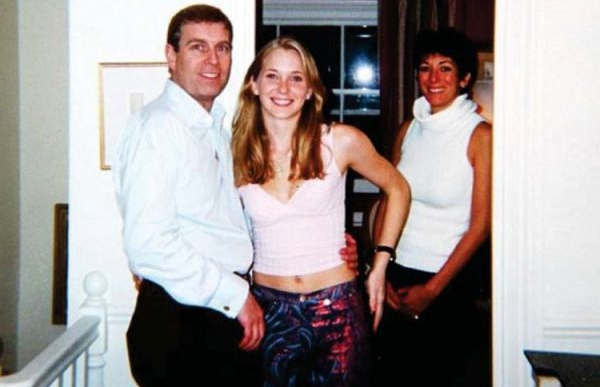
The new disclosures come alongside other troubling revelations, including flight records confirming that Britain’s Prince Andrew flew on Epstein’s jet—dubbed the “Lolita Express” by locals—on multiple occasions in the early 2000s. According to the files, Epstein even arranged for Prince Andrew to receive $200 massages, the same amount Epstein’s victims have said they were paid.

Photo credit: Flickr

Internal Fallout Deepens Over Epstein Files as Bondi Clashes with FBI Director Kash Patel

A growing internal rift within the Trump administration has spilled into public view following the Justice Department’s controversial handling of the Jeffrey Epstein files, with Attorney General Pam Bondi at odds with FBI Director Kash Patel amid a wave of political and public backlash.

According to sources cited by The Wall Street Journal, Bondi has become increasingly paranoid that Patel and top FBI officials are “trying to destroy her” by leaking damaging internal details to the media. The conflict has reportedly escalated behind closed doors, culminating in a tense exchange with former President Donald Trump.

When Bondi brought her concerns directly to Trump—citing personal criticism she has faced over the Justice Department and FBI’s limited release of names in the Epstein case—the former president reportedly offered little sympathy, instead telling her to “buck up” and weather the scrutiny.

Other administration officials were less diplomatic. Some allegedly told Bondi to “stop scrolling social media” and avoid getting drawn into online speculation about her role in the department’s messaging on the Epstein investigation.

The administration’s internal strife stems from the joint DOJ-FBI memo released over two months ago, which sought to quell controversy over the heavily redacted files connected to Jeffrey Epstein’s sex trafficking network. The documents, while confirming Epstein’s death in 2019 was ruled a suicide, offered few revelations and left out several key names expected by the public and the media.

While Trump officials initially downplayed the political fallout, the reaction from the MAGA base has been both intense and sustained. Many of Trump’s supporters—who had long viewed the Epstein scandal as a symbol of elite corruption—expressed deep frustration that the investigation appeared to shield high-profile individuals.

FBI Director Patel has since faced sharp bipartisan criticism during recent congressional oversight hearings. Lawmakers pressed Patel on why the bureau withheld additional names and records, particularly those potentially implicating prominent figures.

Patel, a former national security adviser turned FBI chief, has maintained that the bureau has “no evidence” implicating anyone but Epstein in the trafficking of minors. The claim has only fueled more skepticism and allegations of a cover-up.

The tensions have begun to take a toll on the administration’s personnel structure. Chad Mizelle, Chief of Staff to Attorney General Bondi and a key liaison between the DOJ and the White House, is expected to step down from his role on October 3. The DOJ has not issued a statement confirming or commenting on Mizelle’s impending departure.

Further instability appears to be on the horizon at the FBI. Multiple insider sources have told the Daily Mail that co-Deputy Director Dan Bongino is likely to exit the bureau by the end of the year. While Bongino’s appointment was always seen as temporary, sources suggest the ongoing Epstein controversy has accelerated his timeline.

In response to Bongino’s anticipated departure, Bondi recently appointed former Missouri Attorney General Andrew Bailey as a second deputy director—a highly unusual move that has sparked internal speculation. While DOJ and White House officials insist Bailey is not being groomed for a higher role, the appointment is widely seen as a contingency for potential leadership reshuffling.

BOMBSHELL: Senior DOJ Epstein Investigator Reveals ‘Epstein Was CIA’ — Confirms ‘R-pes Occurred While Bill Clinton Was on the Plane’

Jeffrey Epstein was working with the CIA, according to a former Department of Justice employee, RadarOnline.com can reveal.

The late sex offender was said to be protected from justice while working with the agency.

The individual, Glenn Prager, who is believed to have previously worked with the DOJ, claimed to Project Veritas founder James O’Keefe, the “[DOJ] didn’t want to go after him [Epstein] because he’s an asset for the United States and Israel. It’s not talked about yet, but it’s soon to come out that he [Epstein] was a CIA informant.”

However, the DOJ was quick to respond to the shocking claim and said in a statement to O’Keefe: “This individual worked at the Department of Justice as a program analyst over fifteen years ago.

“He has no understanding of, or access to, the underlying facts in this investigation. His statements should not be considered accurate.”

They added: “It is disgusting that someone would further exploit victims of sexual abuse by fabricating stories for their personal benefit.”

(Read more from “BOMBSHELL: Senior DOJ Epstein Investigator Reveals ‘Epstein Was CIA’ — Confirms ‘R-pes Occurred While Bill Clinton Was on the Plane’” HERE)

Trump, Epstein ‘Best Friends Forever’ Statue Hastily Removed From DC’s National Mall

A garish statue of President Trump and late pedophile Jeffrey Epstein was mysteriously erected on the National Mall on Tuesday — and removed by Wednesday morning.

The bronze sculpture stood about 12 feet tall and appeared to show both men in a merry dance with Trump’s left hand gripping Epstein’s right.

One of the plaques under the figures read: “We celebrate the long-lasting bond between President Donald J. Trump and his ‘closest friend’ Jeffrey Epstein” and attributed the stunt to an anonymous group called “The Secret Handshake.”

“We’re a very small group of citizens who are using art, irony, and humor to express social commentary and spark political conversation in public spaces,” the group told USA Today.

US Park Police hauled the installation away before daybreak Wednesday, telling WUSA 9 that it wasn’t in compliance with a permit that initially allowed it to remain through Sunday evening — though the department did not specify the issue. (Read more from “Trump, Epstein ‘Best Friends Forever’ Statue Hastily Removed From DC’s National Mall” HERE)

Photo credit: Gage Skidmore via Flickr

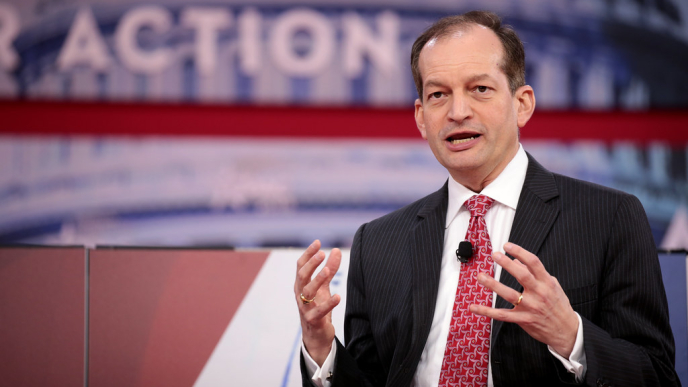
Why Did Acosta Let Epstein Off Easy? Former Prosecutor Testifies

Former Labor Secretary Alex Acosta on Friday offered long-awaited testimony to the House Oversight Committee, breaking his silence on why he approved a controversial 2007 plea deal that shielded Jeffrey Epstein from federal prosecution.

Acosta, who previously served as U.S. Attorney for the Southern District of Florida, admitted the decision was fraught with risk and legal uncertainty — and ultimately, a matter of judgment.

“There was real concern that a failed prosecution would allow Epstein to walk free completely,” Acosta said, according to a committee press release summarizing the testimony.

Epstein, who was facing potential life in prison on federal sex trafficking charges, instead pleaded guilty to two state-level charges in 2008. He served just 13 months in a Palm Beach County jail and was granted controversial work release privileges.

A 2020 Department of Justice report found Acosta had used “poor judgment” in the case but did not commit professional misconduct. The report also acknowledged internal disagreements over whether to prosecute Epstein at the federal or state level, citing evidentiary weaknesses that could have jeopardized a trial.

“A trial and loss would have sent a devastating message,” the committee summary stated. “We believed a negotiated resolution — flawed though it was — would at least establish some accountability.”

Acosta expressed regret over the outcome and accepted personal responsibility for the decision to approve the deal.

“I stand by my role in trying to secure some measure of justice,” he told the committee. “But I regret the outcome — deeply.”

Epstein died in jail in 2019 while awaiting trial on new federal sex trafficking charges. His death was ruled a suicide, though questions surrounding his connections and past legal deals have persisted.

Four Arrested After Trump and Epstein Image Projected on Windsor Castle

Giant projections of President Donald Trump alongside convicted paedophile Jeffrey Epstein were beamed onto Windsor Castle late Tuesday night leading to the arrest of four people.

The arrests were made on “suspicion of malicious communications” after a selection of images featuring the two appeared on the historic landmark ahead of Trump’s arrival for his unprecedented second state visit, Thames Valley Police said.

Trump is the only president to be invited for two state visits, the first being in 2019. The year before that, he met the late Queen Elizabeth II at Windsor Castle during a working visit.

The BBC reports those arrested were a 60-year-old from East Sussex, a 36-year-old and a 50-year-old from London alongside a 37-year-old from Kent.

The force said an investigation was under way after officers responded “swiftly” to stop the projection on the castle, where Trump will meet King Charles during the first full day of his state visit on Wednesday. (Read more from “Four Arrested After Trump and Epstein Image Projected on Windsor Castle” HERE)

FBI Director Claims “No Credible Information” Epstein Trafficked Minors to Others, Despite Pending Federal Sex Trafficking Charges at Time of Death

FBI Director Kash Patel told the Senate Judiciary Committee on Tuesday that the bureau has found “no credible information” that Jeffrey Epstein trafficked underage girls to anyone but himself.

Patel’s testimony — which came during a contentious hearing already mired in controversy — effectively attempted to shut the door on one of the most disturbing and unresolved criminal sagas of the 21st century. And in doing so, it raised serious questions about the integrity of the FBI’s leadership, its independence, and its commitment to accountability for the powerful.

Let’s be clear: Jeffrey Epstein was a convicted pedophile, and he died while awaiting trial on federal sex trafficking charges. Dozens of survivors have alleged for years — in court documents, media interviews, and sworn testimony — that Epstein operated not alone, but as part of a sprawling, high-powered trafficking network that extended deep into the elite circles of finance, media, and politics. Flight logs, photographs, and sealed deposition transcripts have repeatedly pointed to the involvement of other men — many of whom have never faced public questioning, let alone criminal charges.

To dismiss all of this as lacking “credible information” is not only professionally negligent — it’s morally repugnant.

Tuesday’s hearing, ostensibly convened to review the FBI’s handling of the investigation into the assassination of conservative activist Charlie Kirk, quickly spiraled into a broader critique of Patel’s leadership. At the center of the firestorm was his handling of the Epstein case — and, more pointedly, the Department of Justice’s decision earlier this year to quietly end its review of the matter.

Patel’s argument, laid out before skeptical senators, was that the FBI’s ability to build a broader case was limited due to the actions of a Florida U.S. attorney two decades ago — a reference to the now-infamous 2008 sweetheart plea deal Epstein received under then-U.S. Attorney Alexander Acosta. That deal shielded Epstein’s alleged co-conspirators from prosecution, but it has since been widely condemned as a gross miscarriage of justice.

But Patel didn’t stop at blaming the past. He insisted that “all credible information” the bureau has on Epstein has now been released — a claim that rings hollow to many, particularly in light of the bureau’s refusal to declassify additional documents and its failure to pursue leads implicating other powerful men.

Worse, Patel’s remarks seem designed not to seek the truth, but to quell rising public anger among Trump supporters who expected more aggressive action — and exposure — surrounding Epstein’s network.

As if to underline the political nature of the hearing, Patel also used the opportunity to defend his decision to fire dozens of veteran FBI agents, many of whom had been involved in high-profile investigations into Trump’s conduct. One former agent, Christopher Meyer, issued a statement ahead of the hearing, asserting that his loyalty was to the Constitution, “not to any political party, ideal, or narrative.” Another former official accused Patel of saying privately that his job “depended on expelling” those who had investigated the former president.

Meanwhile, Patel has come under fire for prematurely — and inaccurately — claiming that Kirk’s alleged assassin had been captured, a misstep that law enforcement officials say could have jeopardized the investigation. The suspect, 22-year-old Tyler Robinson, was not apprehended until a full day later.

Americans deserve a full, transparent investigation — not political theater, not half-truths, and certainly not dismissive pronouncements from officials more concerned with party loyalty than with the truth.

Photo credit: Gage Skidmore via Flickr

Lisa Murkowski and Dan Sullivan Join Republicans to Block Release of Epstein Files in Narrow Senate Vote

In a sharply divided Senate, U.S. Senators Lisa Murkowski and Dan Sullivan — both Republicans from Alaska — voted Wednesday night in favor of tabling an amendment that would have required the U.S. Department of Justice (DOJ) to release case files related to convicted sex offender Jeffrey Epstein. The amendment, introduced by Senate Minority Leader Chuck Schumer (D‑N.Y.), was narrowly defeated 51–49.

Schumer’s amendment, attached as part of debate over the bipartisan National Defense Authorization Act (NDAA), sought to force disclosure of Justice Department and other federal records in the Epstein sex trafficking investigation. Supporters of the amendment argued that the public, especially survivors of Epstein’s abuse, deserve full transparency.

All Senate Democrats voted in favor of releasing the files, joined by Republican Sens. Josh Hawley of Missouri and Rand Paul of Kentucky. The rest of the GOP, including Murkowski and Sullivan, joined in voting to table (set aside) the amendment, blocking its consideration.

Sen. Lisa Murkowski (R‑Alaska) said she voted against the motion to release the files not because she opposes transparency per se, but because she viewed Schumer’s amendment as a last‑minute procedural surprise. She called it a “political stunt” and said the process was flawed.

Sen. Dan Sullivan (R‑Alaska) defended his vote similarly, saying that while he believes as much information as possible should be released in a way that protects survivors, he opposed Schumer’s approach of forcing the issue into the defense bill knowing it might be stripped out in later negotiations.

Senate Democratic Leader Chuck Schumer pressed repeatedly for the files’ release, arguing that Republicans have long claimed support for transparency but now had a moment to prove it. He criticized what he described as obstruction, cover‑ups, and misinformation.

The Alaska Democratic Party sharply criticized Murkowski and Sullivan, accusing them of being complicit in a “cover‑up” and failing to respond to both survivors and constituents who want disclosure.

The vote has heightened scrutiny of President Donald Trump’s past promises. During the 2024 campaign, Trump pledged to release Epstein‑related files; however, after entering office, his administration has declared that no comprehensive “client list” exists and has resisted further disclosure.

This vote goes beyond procedural maneuvering. For many, it symbolizes a larger struggle over how much of the Epstein case — including possible connections to influential individuals — remains hidden from public view.

As Schumer put it on the Senate floor:

“The American people deserve transparency…. If Republicans vote no, you’ll be saying to the American people that they should not see the Epstein files.”

Photo credit: Flickr

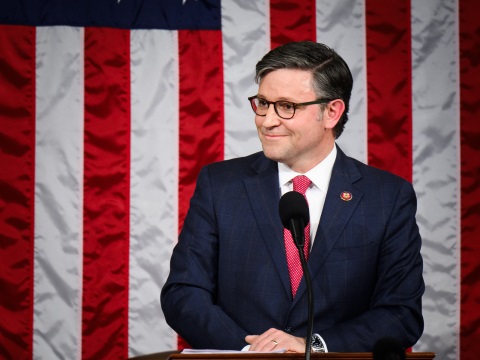
U.S. Congressman Demands New Investigation After Speaker’s ‘FBI Informant’ Assertion in Trump‑Epstein Case

Rep. Jared Moskowitz (D‑Fla.) is calling for a renewed congressional investigation into President Donald Trump’s alleged cooperation with law enforcement in connection with Jeffrey Epstein, following a surprising claim from House Speaker Mike Johnson (R‑La.) that Trump acted as an FBI informant during his past interactions with Epstein.

On September 5, Speaker Johnson told reporters that Trump “was an FBI informant to try to take this stuff down,” referring to the Epstein case. The statement sparked confusion, backlash, and urgent questions about what exactly Johnson meant.

Within days, Johnson’s office attempted to clarify the remarks. He said he may have used the wrong terminology and that he meant Trump cooperated to some extent—not that he held the classic role of an informant. Johnson emphasized that Trump had never impeded the Epstein investigations and had, in fact, expelled Epstein from his Mar‑a‑Lago property when rumors of wrongdoing emerged.

Rep. Jared Moskowitz described the Speaker’s claim as a “significant event” and argued that it falls squarely within the House Judiciary Committee’s jurisdiction. He questioned whether the FBI, under Director Kash Patel, has verified any such informant status.

Moskowitz also raised the possibility that Trump’s alleged informant status could have come about if Trump was “turned” — i.e. that he may have been compelled to cooperate in order to avoid repercussions for complicity or for knowledge of wrongdoing.

With Epstein’s case involving high‑profile individuals, the public is demanding clarity. If the Speaker of the House makes such a claim, many believe Congress has a responsibility to verify it. Moskowitz has emphasized this point.

The claim — and the backtracking — have added fuel to already heated debates over Trump’s relationship with Epstein, the release of Epstein‑related files, and accusations from both sides about cover‑ups and political exploitation of the case.

This issue remains fluid. As more evidence emerges — whether in public documents, DOJ statements, or Congressional testimony — key questions are likely to stay in the spotlight: What did Trump actually do?

Photo credit: Gage Skidmore via Flickr