Posts

The Possible Upsides of Korea Crisis

Not only is the current showdown with North Korea unlikely to lead to a military conflict, it is likely that all the countries involved will walk away believing they have achieved something for their side. In fact, it could be the perfect storm of crisis diplomacy that’s a win-win for everybody—for now.

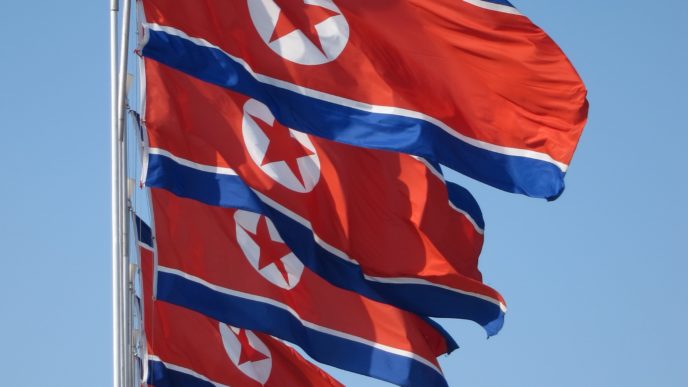
Pyongyang gets the world’s attention. Kim family diplomacy requires that the world see its regime as a dangerous, unpredictable menace. Otherwise, why would anybody care to deal with the world’s poorest nation at the far end of the planet?

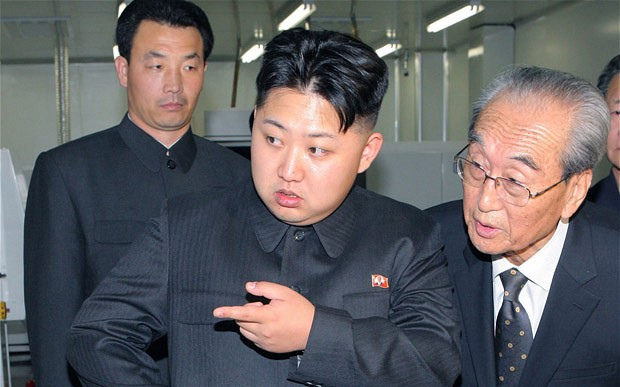
Usually the annual military parade gets no more attention than a joke on the late-night shows. This time around, Kim Jong Un’s half-serious salute got worldwide coverage. The question for Kim is how to parlay fear-mongering into some kind of strategic advantage.

Seoul and Tokyo got a big reassurance of commitment from Washington, as the U.S. rushed to show both that we’d honor our obligations to mutual defense. Nothing says we care like an armada of ships and a fleet of nuclear-capable bombers.

Beijing used the crisis to establish a rapport with the new U.S. president. Rather than stiff-arm President Donald Trump or play rope-a-dope, President Xi Jinping adopted a let’s make-a-deal attitude.

Washington got to look strong, too. In a little over a week, Trump met with top foreign leaders, including Xi, dealt with the situation in Korea, and handled a crisis in Syria. For a fledgling administration led by a president with little foreign policy chops, that was a damn decent performance.

That Trump navigated through the crisis, so far, so well is a hopeful indicator that he will deliver a mature and responsible foreign policy. Indeed, signs point in that direction.

By giving all the players involved enough space to save face, Washington helped defuse rather than escalate the crisis.

The question is: Where do we go from here?

Getting through the day without starting World War III doesn’t solve the threat of a nuclear-armed North Korea. The White House needs a sustained responsible policy. The Chinese are not going to solve the problem. Kim is never going to voluntarily give up his nukes.

Just talking will get us nowhere. What is needed is a serious long-term plan that might create future opportunities for de-escalation, something Heritage Foundation expert Bruce Klingner was pressing for even before the crisis started.

The good news is that Trump has weathered the challenge so far. The administration is following the right playbook: maximum pressure but not regime change.

But there is more to be done.

For sure, the U.S. needs to send clearer signals that it is not planning to ratchet up tensions.

While the announced part of the next-step policy seems good, the sanctions portion, including enforcing existing U.S. law, might well be put on hold pending action by China. It’s a problem that China always underperforms on its promises. Trump should not wait long for Beijing to deliver before really turning up the heat on sanctions. (For more from the author of “The Possible Upsides of Korea Crisis” please click HERE)

Follow Joe Miller on Twitter HERE and Facebook HERE.

North Korea Vows ‘Most Ruthless Blow’ on United States

North Korea is ready to deliver the “most ruthless blow” if provoked by the United States, its ambassador to Moscow said overnight, after US President Donald Trump pledged to keep building up defences against Pyongyang.

“Our army has already said that if there will be even the smallest provocation from the United States during exercises, we are ready to deliver the most ruthless blow,” Interfax news agency quoted ambassador Kim Hyong-Jun as saying . . .

Mr Trump on Wednesday pledged to Japanese Prime Minister Shinzo Abe that the US would “continue to strengthen its ability to deter and defend itself and its allies with the full range of its military capabilities,” a day after Pyongyang fired a ballistic missile into the Sea of Japan (East Sea).

North Korea’s foreign ministry on Monday assailed Washington for its tough talk and for an ongoing joint military exercise with South Korea and Japan which Pyongyang sees as a dress rehearsal for invasion.

The “reckless actions” are driving the tense situation on the Korean peninsula “to the brink of a war”, a ministry spokesman was quoted as saying by the official KCNA news agency. (Read more from “North Korea Vows ‘Most Ruthless Blow’ on United States” HERE)

Follow Joe Miller on Twitter HERE and Facebook HERE.
Ex-CIA Director Says North Korea May Be Prepping to Kill 90% of Americans

The mainstream media, and some officials who should know better, continue to allege North Korea does not yet have capability to deliver on its repeated threats to strike the U.S. with nuclear weapons. False reassurance is given to the American people that North Korea has not “demonstrated” that it can miniaturize a nuclear warhead small enough for missile delivery, or build a reentry vehicle for an intercontinental ballistic missile (ICBM) capable of penetrating the atmosphere to blast a U.S. city. . .

[But] North Korean dictator Kim Jong-Un has been photographed posing with what appears to be a genuine miniaturized nuclear warhead for ballistic missiles. And North Korea does, in fact, have two classes of ICBMs—the road mobile KN-08 and KN-14—which both appear to be equipped with sophisticated reentry vehicles.

Even if it were true that North Korea does not yet have nuclear missiles, their “Dear Leader” could deliver an atomic bomb hidden on a freighter sailing under a false flag into a U.S. port, or hire their terrorist allies to fly a nuclear 9/11 suicide mission across the unprotected border with Mexico. In this scenario, populous port cities like New York, New Orleans, Los Angeles, and San Francisco, or big cities nearest the Mexican border, like San Diego, Phoenix, Austin, and Santa Fe, would be most at risk. . .

In February and March of 2015, former senior national security officials of the Reagan and Clinton administrations warned that North Korea should be regarded as capable of delivering by satellite a small nuclear warhead, specially designed to make a high-altitude electromagnetic pulse (EMP) attack against the United States. According to the Congressional EMP Commission, a single warhead delivered by North Korean satellite could blackout the national electric grid and other life-sustaining critical infrastructures for over a year—killing 9 of 10 Americans by starvation and societal collapse.

Two North Korean satellites, the KMS-3 and KMS-4, presently orbit over the U.S. on trajectories consistent with surprise EMP attack. (For more from the author of “Ex-CIA Director Says North Korea May Be Prepping to Kill 90% of Americans” please click HERE)

Follow Joe Miller on Twitter HERE and Facebook HERE.
Tillerson: No ‘Strategic Patience’ With North Korea, Maybe War

On his way to China, Trump’s secretary of state, Rex Tillerson, stopped off in South Korea.

During a visit to the demilitarized border, Tillerson dissed the Obama administration. He said its policy of “strategic patience” has run its course and all “all of the options are on the table.”

Tillerson said “obviously if North Korea takes actions that threatens South Korean forces or our own forces, that would be met with (an) appropriate response. If they elevate the threat of their weapons program to a level that we believe requires action that option is on the table.”

Trump sent out a tweet to underscore the new policy. He went so far as to take a swipe at China, already irritated by the US position on its activity in the South China Sea.

It looks like the Trump administration is dead serious about starting a war with North Korea if it continues to build and test missiles and nukes.

Although it is probably unlikely Trump will be able to start a war with North Korea—additional draconian sanctions seem more likely—the residents of Seoul, 35 miles from the border, might want to prepare a go-bag. North Korea has tens of thousands of missiles aimed at them. (For more from the author of “Tillerson: No ‘Strategic Patience’ With North Korea, Maybe War” please click HERE)

Follow Joe Miller on Twitter HERE and Facebook HERE.
North Korea, Malaysia Ban Each Other’s Citizens From Leaving

North Korea barred Malaysians from exiting its borders and Malaysia followed suit Tuesday, turning ordinary citizens into pawns in the diplomatic battle surrounding the investigation into the bizarre death of North Korean leader Kim Jong Un’s half brother.

The tit-for-tat directives come as relations between the two countries disintegrate over the poisoning of Kim Jong Nam in a crowded airport terminal in Kuala Lumpur on Feb. 13.

“This is way out of normal diplomatic practice,” Lalit Mansingh, a New Delhi-based scholar and longtime top Indian diplomat, said of North Korea’s decision. He could not recall anything similar in recent years, where so many everyday citizens were pulled into a diplomatic standoff. (Read more from “North Korea, Malaysia Ban Each Other’s Citizens From Leaving” HERE)

Follow Joe Miller on Twitter HERE and Facebook HERE.

Mystery Deepens in North Korea Princeling Assassination

What do we really know about the sudden death of an exiled North Korean princeling? Aside from heated media speculation and an instant “it’s-gotta-be-Pyongyang” reaction from Seoul’s spy agency, not much.

As the investigation continues, the mystery of just what happened to the half brother of North Korean leader Kim Jong Un as he waited for a flight in a Malaysian airport only deepens. Was Kim Jong Nam poisoned? Are the two female suspects trained killers or dupes? How can we be sure that North Korea, which seems the obvious culprit, was even involved?

South Korea’s National Intelligence Service — no friend to Pyongyang — and eager reporters across Asia have assembled a dramatic, almost cinematic profile of the last hour of Kim’s life. But there’s still a surfeit of unanswered questions. (Read more from “Mystery Deepens in North Korea Princeling Assassination” HERE)

Follow Joe Miller on Twitter HERE and Facebook HERE.
North Korea Suspected Behind Murder of Leader’s Half-Brother: U.S. Sources

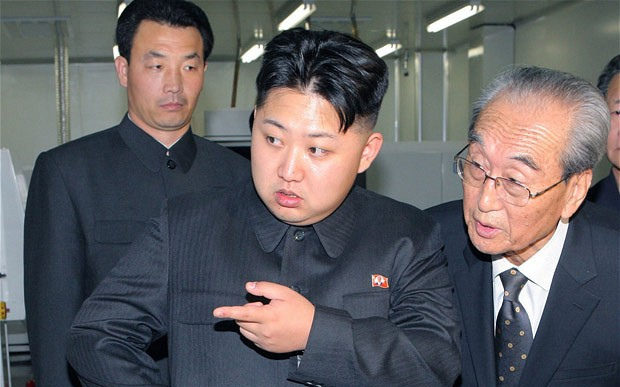
The U.S. government strongly believes that North Korean agents murdered the estranged half-brother of North Korean leader Kim Jong Un in Malaysia, U.S. government sources said on Tuesday.

American authorities have not yet determined exactly how Kim Jong Nam was killed, according to two sources, who did not provide specific evidence to support the U.S. government’s view.

A South Korean government source also had said that Kim Jong Nam had been murdered in Malaysia. He did not provide further details.

South Korea’s foreign ministry said it could not confirm the reports, and the country’s intelligence agency could not immediately be reached for comment.

In Washington, there was no immediate response to a request for comment from the Trump administration, which faces a stiff challenge from a defiant North Korea over its nuclear arms program and the test of a ballistic missile last weekend. (Read more from “North Korea Suspected Behind Murder of Leader’s Half-Brother: U.S. Sources” HERE)

Follow Joe Miller on Twitter HERE and Facebook HERE.

North Korea Tests a Missile, and Donald Trump

Pyongyang launched another ballistic missile on Saturday, raising tensions and pushing itself to the top of the Trump administration’s policy agenda.

Preliminary reports indicate the missile flew approximately 300 miles, but it is unclear what the missile type was or whether the launch was a success of failure. But, it doesn’t appear to have been the initial test flight of an intercontinental ballistic missile that Pyongyang had vowed to launch “anywhere, anytime.”

Last year, North Korea conducted two nuclear tests and 24 ballistic missile tests, its most extensive year of testing. Pyongyang had not tested a missile since October, leading to speculation that the regime’s restraint was to not give the advantage to conservative candidates during a forthcoming South Korean presidential election or to wait until the Trump administration had completed its North Korea policy review.

In 2009, North Korea conducted a long-range missile test and a nuclear test as the Obama administration was formulating its own policy toward Pyongyang.

During my meetings in Seoul this week, all senior U.S. and South Korean officials expected a missile launch wouldn’t occur for several more months. It is unclear why Pyongyang abandoned its testing hiatus or chose to do so while President Donald Trump was hosting Japanese Prime Minister Shinzo Abe.

In any case, the launch will undermine those in the U.S. and South Korea advocating resumption of long-stalled negotiations to curb North Korea’s nuclear and missile programs.

The increasing North Korean threat has aggravated long-standing allied concerns of U.S. abandonment exacerbated by perceptions of diminished U.S. military capabilities and resolve during the Obama administration and comments made by Trump during the campaign suggesting conditionality of U.S. troop presence in Asia.

Secretary of Defense James Mattis’ trip to Seoul and Tokyo last week assuaged much of the allied concerns, though as one senior South Korea official commented, “the concerns are gone, but anxiety remains.”

In recent months, there have been growing South Korean fears of a decoupled alliance in which the U.S. “wouldn’t trade Los Angeles for Seoul” once North Korea demonstrates an unambiguous capability to threaten the continental U.S. with nuclear ICBMs.

This has led to greater advocacy in South Korea for a range of military options, including the reintroduction of U.S. tactical nuclear weapons that were withdrawn in the 1990s, development of an indigenous South Korean nuclear program, and greater reliance on preemption strategies.

The Trump administration should build on the positive momentum generated from its recent affirmation of its “ironclad commitment” to defend South Korea and Japan by closely coordinating on an allied response.

The launch is yet another violation of United Nations resolutions prohibiting any North Korean launch using ballistic missile technology and the allies should press Beijing for further restrictions on North Korea financial activity, most notably coal exports to China.

Given Chinese foot-dragging on fully implementing required U.N. resolution sanctions, the Trump administration should go beyond the timid incrementalism of the Obama administration by more vigorously enforcing U.S. laws against North Korean transgressions.

While President Barack Obama talked a good game on sanctions, his administration pulled its punches, sanctioning a limited number of entities while holding other actions in abeyance until the next North Korean provocation. Obama’s most significant actions against the regime last year were the result of requirements contained in Congress’ North Korea Sanctions and Policy Enhancement Act.

The Trump administration should use the extensive authorities already contained in existing legislation and executive orders to impose targeted financial measures against a broader array of North Korean entities. Just as importantly, the U.S. should end its self-imposed restraint against third-party sanctions against Chinese entities facilitating North Korea’s nuclear and missile programs.

Washington should also consult with Seoul to accelerate the planned deployment of the THAAD (Terminal High Altitude Area Defense) ballistic missile defense system to South Korea.

Both governments have agreed to the deployment but it is not scheduled to occur until later this year. North Korea’s resumption of missile tests shows the need to more quickly augment allied defenses.

The U.S. and South Korea should continue the planned annual Key Resolve and Foal Eagle joint military exercises which begin in early March. Washington should reassure our allies by including U.S. strategic assets, such as B-52 and B-2 bombers as well as dual-capable aircraft and nuclear naval vessels.

However, the allies should tone down public messaging about “decapitation attacks” and preemptive strikes that are potentially destabilizing and could lead either side to misinterpret the other’s intentions, fueling tension and raising the risk of miscalculation.

Responding to the growing North Korean nuclear and missile threats is like a military version of playing “whack-a-mole.” Unlike the arcade game, however, in the real world there is the very real danger that the mole will whack back. (For more from the author of “North Korea Tests a Missile, and Donald Trump” please click HERE)

Follow Joe Miller on Twitter HERE and Facebook HERE.
‘EFFECTIVE’ RESPONSE: Mattis Warns North Korea Against Nuclear Weapons Attack on US, Allies

In an explicit warning to North Korea, U.S. Defense Secretary Jim Mattis on Friday said any use of nuclear weapons by the North on the United States or its allies would be met with what he called an “effective and overwhelming” response . . .

“North Korea continues to launch missiles, develop its nuclear weapons program, and engage in threatening rhetoric and behavior,” Mattis said with Han standing at his side and U.S. and South Korean flags at their backs.

“We stand with our peace-loving Republic of Korea ally to maintain stability on the peninsula and in the region,” he added. “America’s commitments to defending our allies and to upholding our extended deterrence guarantees remain ironclad: Any attack on the United States, or our allies, will be defeated, and any use of nuclear weapons would be met with a response that would be effective and overwhelming.” (Read more from “‘EFFECTIVE’ RESPONSE: Mattis Warns North Korea Against Nuclear Weapons Attack on US, Allies” HERE)

Follow Joe Miller on Twitter HERE and Facebook HERE.

North Korea: Cold War Relic, Present Day Threat

You can kick the can down the road, but when Kim Jong Un announces, as he did last Sunday, that “we have reached the final stage in preparations to test-launch an intercontinental ballistic rocket,” you are reaching the end of that road.

Since the early 1990s, we have offered every kind of inducement to get North Korea to give up its nuclear program. All failed miserably. Pyongyang managed to extort money, food, oil and commercial nuclear reactors in exchange. But it was all a swindle. North Korea was never going to give up its nukes because it sees them as the ultimate guarantee of regime survival.

The North Koreans believe that nukes confer inviolability. Saddam Hussein was invaded and deposed before he could acquire them. Kim won’t let that happen to him. That’s why Thae Yong Ho, a recent high-level defector, insisted, “As long as Kim Jong Un is in power, North Korea will never give up its nuclear weapons, even if it’s offered $1 trillion or $10 trillion in rewards.”

Meanwhile, they have advanced. They’ve already exploded a handful of nuclear bombs. And they’ve twice successfully launched satellites, which means they have the ICBM essentials. If they can miniaturize their weapons to fit on top of the rocket and control re-entry, they’ll be able to push a button in Pyongyang and wipe out an American city. (Read more from “North Korea: Cold War Relic, Present Day Threat” HERE)

Follow Joe Miller on Twitter HERE and Facebook HERE.