Posts

North Korean Sub-Launched Missiles Threaten US Allies

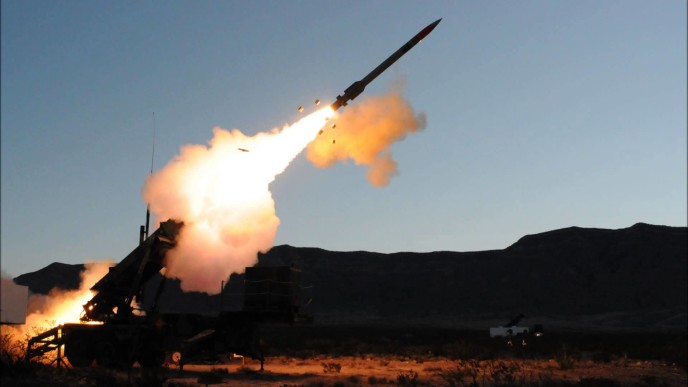
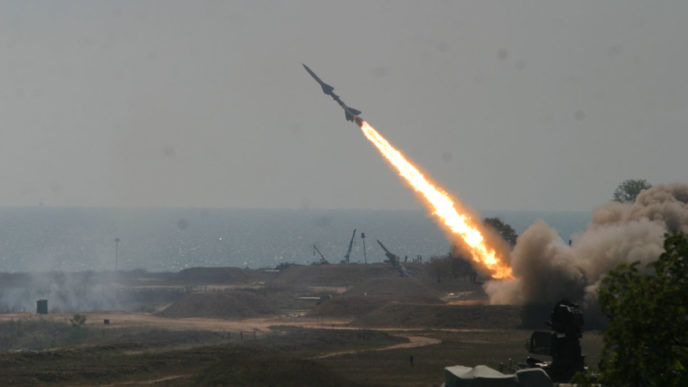
North Korea conducted its most successful test launch of a submarine-launched ballistic missile on Tuesday. The missile traveled 500 kilometers (300 miles), a considerable improvement over the 30-km range of the previous launch, and landed within Japan’s air defense identification zone.

South Korean military officials report that North Korea used an unusual 500-km high trajectory so as not to penetrate the Japanese air defense zone further. If launched on a regular 150-km high trajectory, the submarine-launched missile might have traveled over 1,000 km.

After the unsuccessful missile test earlier this year, the South Korean ministry of defense assessed it would take North Korea three to four years before deploying a submarine ballistic missile force. However, after yesterday’s test, some South Korean military authorities warn deployment potentially could occur within a year.

South Korea does not currently have defenses against submarine-launched ballistic missiles. The SM-2 missile currently deployed on South Korean destroyers only provides protection against anti-ship missiles. South Korea has recently expressed interest in the U.S.-developed SM-3 or SM-6 ship-borne systems to provide anti-submarine launched missile defense.

Some experts are dismissive of a submarine-based ballistic missile threat based on the perception that North Korea’s old and noisy submarines would be easy to detect. However, in 2010, a North Korean submarine sank the South Korean naval corvette Cheonan in South Korean waters. In August 2015, 50 North Korean submarines—70 percent of the fleet—left port and disappeared despite allied monitoring efforts.

Despite post-Cheonan efforts, South Korean anti-submarine warfare capabilities remain an area of concern for allied military planners. A strong anti-submarine capability is not only critical for homeland defense but also for protecting sea lines of communication during a crisis on the Korean Peninsula. During a Korean conflict, the South Korean navy could have a critical mission to protect U.S. carrier groups deployed near the peninsula by engaging North Korean submarines.

Expanding Missile Threat

North Korean leader Kim Jong Un is pushing forward rapidly on both nuclear and missile fronts. In addition to submarine missile launches, this year he has successfully tested a nuclear weapon, an intercontinental ballistic missile, a road-mobile intermediate-range missile as well as medium- and short-range missiles, re-entry vehicle technology, a new solid-fuel rocket engine, and an improved liquid-fuel ICBM engine. During Kim’s four-year reign, Pyongyang has conducted 34 missile tests, more than twice as many as his father Kim Jong Il did in 17 years in office.

In June, North Korea successfully tested a Musudan intermediate-range missile, which led experts to conclude the regime currently has the ability to threaten U.S. bases in Guam, a critical node in allied plans for defending South Korea. Successful No Dong medium-range missile tests were conducted in July and August, accompanied by North Korean statements that they were practice drills for preemptive nuclear attacks on South Korea and U.S. forces based there.

A North Korean media-released photo showed the missile range would encompass all of South Korea, including the port of Busan where U.S. reinforcement forces would land. Adm. Bill Gortney, commander of North American Aerospace Defense Command, stated that North Korea is capable of putting a nuclear warhead on the No Dong medium-range ballistic missile that can reach all of South Korea and Japan.

In March, Kim Jong Un observed another missile launch simulating a nuclear missile attack on South Korean targets. The regime declared those launches were “a sea port of debarkation ballistic missile test [conducted] under the simulated conditions of exploding nuclear warheads from the preset altitude above targets in the ports under the enemy control where foreign aggressor forces are involved.”

In February, North Korea again used a Taepo Dong missile to put a satellite into orbit, the same technology needed to launch an ICBM nuclear warhead. Assessments indicate that the satellite was approximately 450 pounds, twice as heavy a payload as the previous successful satellite launch in Dec. 2012, and that the missile may have a range of 13,000 km, putting the entire continental United States within range.

Defending Allied Security

The accelerated pace of North Korean nuclear and missile tests reflect Kim’s intent to deploy a spectrum of missile systems of complementary ranges to threaten the U.S. and its allies with nuclear weapons. Kim affirmed at the National Party Congress in May—the first held in 36 years—that North Korea will never negotiate away its nuclear weapons.

The U.S. and South Korea should:

Deploy the THAAD ballistic missile defense system. The Terminal High Altitude Area Defense, or THAAD, is more capable than any system that South Korea has or would have for decades to defend against North Korean land-based missiles.

Refute fallacious Chinese arguments against THAAD. Beijing asserted that THAAD deployment would impinge on its security interests. However, a careful analysis of THAAD interceptor and radar capabilities and Chinese missile deployment sites reveal Chinese technical objections are disingenuous. Beijing’s true objective is preventing improvement in allied defensive capabilities and multilateral cooperation.

Demonstrate THAAD radar is not a health threat. South Korean critics of THAAD deployment claim fears of radiation risks from the X-band radar, saying it would kill bees and irradiate melons. Independent South Korean measurements show the levels of electromagnetic waves emanating from the radar are at an intensity far safer than required by Korean law.

Deploy sea-based ballistic missile defense against the submarine missile threat. The THAAD system is not designed to counter SLBM threats. The X-band radar can only detect missiles in an approximate 90-degree arc, which would be directed toward North Korea, not the waters surrounding the Korean Peninsula. Therefore, Washington and Seoul should discuss deployment of SM-3 or SM-6 missiles on South Korean naval ships.

Augment allied anti-submarine warfare capabilities. North Korea’s apparent ability to evade allied submarine detection systems is worrisome. Washington should facilitate South Korean collection and analysis capabilities and linkage with U.S. naval intelligence. Seoul requires wide-area ocean-surveillance capability, for both coastal defense and blue-water operations.

North Korea continues its relentless quest to augment and refine its nuclear weapons arsenal and missile delivery capabilities. The international community should maintain a comprehensive effort of augmented sanctions for North Korea’s repeated violations of U.N. resolutions and international law.

But the U.S. and its allies must implement measures to defend themselves against the spectrum of North Korea’s military threats. Ballistic missile defense is an important part of the broader strategy of strong alliances, forward-deployed U.S. military forces in the Pacific, and devoting sufficient resources to the U.S. defense budget. (For more from the author of “North Korean Sub-Launched Missiles Threaten US Allies” please click HERE)

Follow Joe Miller on Twitter HERE and Facebook HERE.

N. Korea: US Has Crossed Red Line, Relations on War Footing

North Korea’s top diplomat for U.S. affairs told The Associated Press on Thursday that Washington “crossed the red line” and effectively declared war by putting leader Kim Jong Un on its list of sanctioned individuals, and said a vicious showdown could erupt if the U.S. and South Korea hold annual war games as planned next month.

Han Song Ryol, director-general of the U.S. affairs department at the North’s Foreign Ministry, said in an interview that recent U.S. actions have put the situation on the Korean Peninsula on a war footing.

The United States and South Korea regularly conduct joint military exercises south of the Demilitarized Zone, and Pyongyang typically responds to them with tough talk and threats of retaliation. (Read more from “N. Korea: US Has Crossed Red Line, Relations on War Footing” HERE)

Follow Joe Miller on Twitter HERE and Facebook HERE.

Seoul Says N. Korea Test-Fires Submarine-Launched Missile

South Korea said that North Korea on Saturday test-fired what appeared to be a submarine-launched ballistic missile off its eastern coast.

The missile was fired from a location near the North Korean coastal town of Sinpo, where analysts have previously detected efforts by the North to develop submarine-launched ballistic missile systems, said an official from Seoul’s Defense Ministry, who didn’t want to be named, citing office rules. He couldn’t immediately confirm how far the missile traveled and where it landed.

North Korea’s acquiring the ability to launch missiles from submarines would be an alarming development for rivals and neighbors because missiles from submerged vessels are harder to detect in advance. While security experts say it’s unlikely that North Korea possesses an operational submarine capable of firing missiles, they acknowledge that the North is making progress on such technology. (Read more from “Seoul Says N. Korea Test-Fires Submarine-Launched Missile” HERE)

Follow Joe Miller on Twitter HERE and Facebook HERE.

S. Korea Says North Fails With Attempted Missile Launch

North Korea on Tuesday appeared to have tried and failed with a fresh ballistic missile launch in violation of existing UN resolutions, South Korea’s defence ministry said.

The ministry declined to speculate on the missile type, but local media cited military sources as saying it was a powerful, medium-range Musudan missile that has already undergone three failed launches this year.

UN resolutions ban North Korea from any use of ballistic missile technology, although it regularly fires short-range missiles into the sea off its east coast.

Tuesday’s failed effort came with tensions still running high on the divided Korean peninsula following the North’s fourth nuclear test in January and long-range rocket launch a month later.

The defense ministry in Seoul said the missile test took place at around 5:20 am South Korean time (2020 GMT Monday) near the eastern port city of Wonsan. (Read more from “S. Korea Says North Fails With Attempted Missile Launch” HERE)

Follow Joe Miller on Twitter HERE and Facebook HERE.

Back From the Dead: Former North Korean General Believed Executed Turns up Alive

A former North Korean military chief who Seoul had said was executed is actually alive and in possession of several new senior-level posts, the North’s state media said Tuesday.

The news on Ri Yong Gil marks yet another blunder for South Korean intelligence officials, who have often gotten information wrong in tracking developments with their rival. It also points to the difficulties that even professional spies have in figuring out what’s going on in one of the world’s most closed governments.

Ri, who was considered one of North Korean leader Kim Jong Un’s most trusted aides, missed two key national meetings in February. Seoul intelligence officials later said that Kim had him executed for corruption and other charges. (Read more from “Back From the Dead: Former North Korean General Believed Executed Turns up Alive” HERE)

Follow Joe Miller on Twitter HERE and Facebook HERE.

Obama on Why the U.S. Won’t ‘Destroy North Korea’

hqdefaultPresident Obama is back at the White House after a week in the Middle East and Europe. During his trip, “CBS This Morning” co-host Charlie Rose spoke with the president in Germany for a wide-ranging interview. Mr. Obama had just announced 250 additional American troops will go to Syria to help in the fight against ISIS . . .

In regards to North Korea, Mr. Obama described the regime as “a massive challenge.”

“Our first priority is to protect the American people and our allies, the Republic of Korea, Japan, that are vulnerable to the provocative actions that North Korea is engaging in,” Mr. Obama said.

He said North Korea is “erratic enough” and the country’s leader, Kim Jong Un, is “irresponsible enough that we don’t want them getting close.”

“But it’s not something that lends itself to an easy solution,” Mr. Obama said. “We could, obviously, destroy North Korea with our arsenals. But aside from the humanitarian costs of that, they are right next door to our vital ally, Republic of Korea.” (Read more from “Obama on Why the U.S. Won’t ‘Destroy North Korea'” HERE)

Follow Joe Miller on Twitter HERE and Facebook HERE.

North Korea Just Made Chilling Announcement That Might Have US Leaders Worried

North Korea now claims it has brought the United States within its nuclear reach.

The renegade nation, which has conducted four atomic weapons tests this year, said Saturday it has successfully tested a new engine for an intercontinental ballistic rocket that can reach the American mainland.

Critics note that North Korean claims have often far outstripped reality.

South Korean officials have said that despite some progress with its missile technology and nuclear program, North Korea does not yet have a fully functioning, reliable intercontinental ballistic missile and may not be able to arm what it has with a nuclear warhead.

However, analysts warned that the North cannot be disregarded.

“With all the missiles they’re building, the ranges are getting longer and they’re going to be able to throw more stuff further,” said Jeffrey Lewis, director of the East Asia program at the James Martin Center for Nonproliferation Studies in Monterey, Calif. (Read more from “North Korea Just Made Chilling Announcement That Might Have US Leaders Worried” HERE)

Follow Joe Miller on Twitter HERE and Facebook HERE.

North Korea Claims Successful Test of ICBM Engine

North Korea said Saturday it has successfully tested the booster capability of a new intercontinental ballistic rocket engine that could give it the power to target the United States with nuclear strikes.

“We have learned from North Korea’s official Central News Agency’s news that North Korea has conducted another test in securing another technical step in developing its intercontinental ballistic rocket (ICBM) engine,” said a South Korean military official from the Ministry of National Defense . . .

The test, if true, would mean that North Korea made another step towards an ICBM program that could be used in an attack on U.S. soil, according to a North Korean expert in South Korea.

“North Korea seems to be trying to tell the world that their repeated recent threats about launching nuclear strikes on the U.S. are not bluffing,” Uk Yang, a North Korea expert at Korea Defense and Security Forum. “By disclosing their ICBM technology bit by bit and today’s test, if successful, confirms that they have booster technology for ICBM missile.” (Read more from “North Korea Claims Successful Test of ICBM Engine” HERE)

Follow Joe Miller on Twitter HERE and Facebook HERE.

‘Suspicious’ Activity at North Korea Nuclear Complex

Recent satellite images of North Korea’s main nuclear complex show suspicious activity that could be linked to re-processing plutonium for additional nuclear bombs, a US think tank said on Tuesday.

Analysis of the images focused on exhaust plumes from a steam plant used to heat a radiochemical laboratory facility at the Yongbyon complex.

The facility is used for processing plutonium from a five-megawatt reactor at Yongbyon into weapons-grade fissile material.

Whether the exhaust plumes mean “re-processing additional plutonium is under way or will be in the near future remains unclear”, analysts at the US-Korea Institute at Johns Hopkins University concluded.

However, they noted a recent statement by US National Intelligence Director James Clapper that North Korea could be ready to extract weapons-grade plutonium from the nearby reactor’s spent fuel rods in a matter of weeks. (Read more from “‘Suspicious’ Activity at North Korea Nuclear Complex” HERE)

Follow Joe Miller on Twitter HERE and Facebook HERE.

North Korea Tells Citizens to Prepare Themselves for Famine [+video]

North Korea instructed the country Monday to brace itself for possible famine and severe economic hardship — but not to despair, because “the road to revolution is long and arduous,” according to an editorial in the state-run newspaper.

The article, published in Rodong Sinmun — the print mouthpiece of the North Korean government — comes less than a month after the U.N. Security Council voted in favor of slapping the Hermit Kingdom with tougher sanctions, after the country teased its potential nuclear and military capabilities earlier this year. The editorial stated that hardships to come might evoke another “arduous march” — the term assigned to the famine that struck the country in the mid-1990s, killing as many as 3 million people, reports the Telegraph, a British newspaper.

“We may have to go on an arduous march, during which we will have to chew the roots of plants once again,” the editorial piece read. (Read more from “North Korea Tells Citizens to Prepare Themselves for Famine” HERE)

Follow Joe Miller on Twitter HERE and Facebook HERE.