Posts

Russia Derangement Syndrome. Let’s Focus on REAL Threats to American Security

The current Russia “debate” is counter-productive. Yes, Russia meddled in our elections, but Russia did not determine the result. Hillary Clinton’s loss is on her, not Putin. This level of concern from the world’s sole superpower only inflates Putin’s power, and — as the citizens of Aleppo can attest — that power will not be a force for good.

Let’s get a few things straight about Russia. First, it is a mafia basket case in precipitous decline economically, culturally, and demographically. Most of it resembles the Third World. After the Cold War, American military personnel returning from Russia were typically incredulous that such a backward place had caused such fear in the West. It has only gone downhill since.

In 1985, the Soviet Union had 275 million people, a $2.2 trillion economy, and 13 treaty allies. Today, the Russian Federation has 144 million citizens. Even though it is one of the world’s largest producers of oil, it’s economy has shrunk to just $1.3 trillion, putting it on par with Spain (a country with 46 million people and no oil). Last year, Russian poverty reached 15.7 percent. And most of its former allies are now part of NATO, and Russia makes its bed with powerhouses Belarus and Armenia.

But Putin wants you to imagine Russia in the big, bad boy of 1980s Cold War USSR. Think “Red Dawn” or “The Hunt for Red October.” In reality, putting today’s Russia in those movies would be like Jack Ryan hunting rogue Uruguayan submarines — Russia’s nearest rival on the U.N.’s Human Development Index.

Sure, Russia is an existential threat to Estonia, Georgia, and Ukraine, not us. But Russia has nuclear weapons, you say? Two words: North Korea.

Second, put into perspective the meme that Trump is pro-Russian. I am sure Russians cheered his election, not because they succeeded in installing a Manchurian Candidate in the White House, but because they think they have Trump’s number. That’s on Trump to disprove.

Clinton would have had difficulty making that case after cashing all those Clinton Foundation checks from Russia.

President Obama proudly conjured the “reset button.” And who can forget President Bush peering into Putin’s soul? Both look like fools because of it.

As an aside, Vice President-elect Pence might want to take notes if he wants to succeed Trump. Putin always prefers the party out of power. Always. He offers the illusion of good relations after the White House changes parties. If the Trump administration foolishly makes the same Faustian Bargain as Obama and Bush, Putin’s shenanigans will target him. Ask Clinton.

Third, be honest about what Russia did. Yes, Russia hacked the DNC and the personal emails of Clinton, Inc. cronies. Russia released it through their agent Julian Assange. But the idea that John Podesta’s leaked emails trumped the will of 300+ million people is ludicrous.

The irony of the situation is that Putin was reacting to polls just like everyone else. He likely saw Clinton as inevitable. As such, the leaks were about damaging her before she entered office, not electing Trump. They were to ensure U.S. policy toward Russia remained feather-pillow soft in the event Russia investments in the Clinton Foundation did not pan out.

In the near term, the most practical thing is to be honest about Russia. Putin spent hundreds of millions of dollars to discredit a losing presidential candidate — all while Russian babushkas must save pennies to buy food.

Insufficient though Putin’s effort may have been, he still messed with America. That comes with a price, but determining that price should not distract us from the important stuff.

Virtually the entire Democratic Party seems obsessed with Russia, forgetting its pride in Obama’s Seinfeldian snark to Mitt Romney about Russia in 2012. “The 1980s are calling to ask for their foreign policy back.” Indeed.

The medium-term solution is to support regional allies like Estonia, Georgia, and Ukraine, so they can handle Russia for us. They’re more than capable if we back them properly. Look at alliances through the prism of leverage. You will find them quite useful, especially if we want to clear our docket of nettlesome bullies like Putin and deal with the threats that matter.

The long-term solution is to atomize and reorganize our dysfunctional national security structure, but that is another discussion.

The new administration needs to focus on advancing a conservative foreign policy agenda that tackles the threats facing this country, chief among them radical Islam. An administration consumed with Russia will not have the time.

By all means, point out that Russia meddled. Punish them. Better yet, help our allies do it. But be honest about it, and quit obsessing about Russia. It just encourages Putin’s sad grasp for unearned relevance. We have more important things to be doing. (For more from the author of “Russia Derangement Syndrome. Let’s Focus on REAL Threats to American Security” please click HERE)

Follow Joe Miller on Twitter HERE and Facebook HERE.

America’s CIA, FBI and NSA Continue to Lose Credibility, Issue Politicized Second Russian Hacking Report

The report “Assessing Russian Activities and Intentions in Recent US Elections” released on January 6th by the Director of National Intelligence could be classified as “spam,” an irrelevant message sent over the Internet to large numbers of users for the purposes of advertising.

Out of the twenty-five pages, there is what some may describe as “news”, if you believe in assessments rather than evidence, of which none is provided:

(1) The heads of Obama’s three intelligence-gathering agencies, the Central Intelligence Agency (CIA), The Federal Bureau of Investigation (FBI), and The National Security Agency (NSA) assess that, “Russian President Vladimir Putin ordered an influence campaign in 2016 aimed at the US presidential election. Russia’s goals were to undermine public faith in the US democratic process, denigrate Secretary Clinton, and harm her electability and potential presidency. We further assess Putin and the Russian Government developed a clear preference for President-elect Trump” (disclaimer – I had a clear preference for Trump too);

(2) the three agencies “did not make an assessment of the impact that Russian activities had on the outcome of the 2016 election,” but none of the Russian activities were “involved in vote tallying”;

(3) Obama’s political appointees “assess with high confidence that Russian military intelligence (General Staff Main Intelligence Directorate or GRU) used the Guccifer 2.0 persona and DCLeaks.com to release US victim data obtained in cyber operations publicly and in exclusives to media outlets and relayed material to WikiLeaks,” although any link between Russian intelligence and Wikileaks was not identified;

(4) “Disclosures [from the Democratic National Committee and senior Democrat officials] through WikiLeaks did not contain any evident forgeries,” that is, the Democrats really said/did those things.

The bulk of the report, however, simply provides information about US intelligence analysis techniques, scope and sourcing, previously published material and describes:

“longstanding Russian messaging strategy that blends covert intelligence operations-such as cyber activity-with overt efforts by Russian Government agencies, state-funded media, third-party intermediaries, and paid social media users or ‘trolls,'” especially the role of RT (formerly Russia Today), the “Kremlin’s principal international propaganda outlet.”

None of that is exactly “news” as the report itself admits:

“During the Cold War, the Soviet Union used intelligence officers, influence agents, forgeries, and press placements to disparage candidates perceived as hostile to the Kremlin, according to a former KGB archivist.”

What is interesting is an article by another “Russia’s state-run propaganda” outlet, Sputnik News, which said that Annex A of the US intelligence report claims that “Kremlin’s TV Seeks To Influence Politics, Fuel Discontent in US,” but buried at the bottom of that page is a note stating, “This annex was originally published on 11 December 2012 by the Open Source Center, now the Open Source Enterprise.”

That is, the information cited in the US intelligence report “to provide evidence of RT influencing the American public [in 2016] was compiled in December 2012.”

According to Sputnik News, “The report focuses on television shows and interviews that took place four years before Trump was elected, and well before he was even a politician” and that two RT shows, Breaking the Set and Truthseeker, mentioned in the US intelligence report, were off air before the 2016 election season began.

I would not be terribly shocked to learn that Russian intelligence hacked Democratic Nation Committee computers and John Podesta’s personal email account on Putin’s orders and provided information from those activities to WikiLeaks and DCLeaks.

Neither the first nor the second intelligence report, however, provide direct evidence to support that accusation, but the report authors rely on Americans’ natural inclination to believe it.

The lack of evidence, the timing of the revelations as well as the delayed punitive measures taken against Russia, generate skepticism.

Public reports of alleged Russian hacking surfaced in October 2016 and it was probably known to the US intelligence community much earlier, as their report implies.

Why weren’t Russians expelled, sanctions applied and reports produced prior to the election?

One wonders if any of what has occurred after the election, would have, if Hillary Clinton had won on November 8th.

So, what is the point of the ex post facto intelligence revelations and the diplomatic punishment of Russia other than a result of Obama’s failed Russian foreign policy, his personal animosity towards Putin, a ruse to discredit the election of Donald Trump and a means to hamper the incoming administration?

Perhaps, the Obama Administration can issue a report on that. (For more from the author of “America’s CIA, FBI and NSA Continue to Lose Credibility, Issue Politicized Second Russian Hacking Report” please click HERE)

Follow Joe Miller on Twitter HERE and Facebook HERE.

Obama’s Actions Against Russia Are ‘Too Little, Too Late’

President Barack Obama on Thursday took steps to retaliate against Russia for what he called “aggressive harassment of U.S. officials and cyber operations aimed at our election.”

Obama’s actions include sanctioning Russian intelligence agencies and individuals as well as expelling 35 Russian government officials from the United States.

“These actions follow repeated private and public warnings that we have issued to the Russian government,” Obama said in a statement, “and are a necessary and appropriate response to efforts to harm U.S. interests in violation of established international norms of behavior.”

The Daily Signal asked Luke Coffey, director of The Heritage Foundation’s Douglas and Sarah Allison Center for Foreign and National Security Policy, about Obama’s actions. Here are his answers to our questions.

Some in the media are saying Russian hacking helped Donald Trump win the election against Hillary Clinton. Is there any truth to that?

Hillary Clinton lost the presidential election because the American people rejected her progressive vision of America and the idea of another four years of Obama’s failed policies. She alone is responsible for her defeat.

Russia’s actions are indeed alarming, and they must be taken seriously. Russia has a proven track record of taking an interest in the internal events and election processes of NATO member countries.

In this case, the forensic evidence released by the Department of Homeland Security and the FBI is detailed and persuasive in showing Russia hacked the Democratic National Committee. So Russian denials are not credible.

However, it should be noted that there is no evidence of any interference in the voting and ballot counting processes.

Obama took new measures Thursday to retaliate. What will those measures achieve?

Obama’s announcement of sanctions against sections of Russia’s intelligence community and expelling 35 Russian diplomats from the U.S. is welcome but long overdue. This is too little, too late.

[Russian President Vladimir] Putin respects two things: strength and consistency. Over the past eight years, Obama has shown neither of these traits. This is why Russia felt confident enough to take the actions that it did.

What steps should Congress and the White House take to investigate the extent of Russia’s actions?

Any investigation into this matter needs to be independent, bipartisan, and given enough time to do a comprehensive job. Obama’s rushed internal review lacks creditability.

The U.S. has military superiority over Russia, but technology has become more important than ever to our national security. Just how serious is the cyberthreat from Russia?

As The Heritage Foundation’s 2017 Index of U.S. Military Strength states, “Russia seeks to maximize its strategic position in the world at the expense of the United States,” maintains “incredibly advanced” cyberwarfare capabilities, and assesses “the overall threat from Russia as ‘aggressive’ and ‘formidable.’”

The U.S. intelligence community has continued to serve us skillfully and often gallantly to keep all Americans safe 24/7. That needs to be a priority now and in the future. (For more from the author of “Obama’s Actions Against Russia Are ‘Too Little, Too Late'” please click HERE)

Follow Joe Miller on Twitter HERE and Facebook HERE.

Trump Says He Will Meet With Intelligence Leaders About Russia

President-elect Donald Trump will meet with the Intelligence Community next week to discuss Russian interference in the election, he said in a vaguely worded statement issued Thursday evening that did not mention sanctions announced by President Obama earlier that day.

“It’s time for our country to move on to bigger and better things,” Trump wrote in the brief statement. “Nevertheless, in the interest of our country and its great people, I will meet with leaders of the intelligence community next week in order to be updated on the facts of this situation.”

The statement did not define “this situation,” but the transition team earlier in the day had promised a response to the announced sanctions would be forthcoming.

Trump has repeatedly denied any Russian involvement in the hacks of the Democratic party that intelligence officials have said were an attempt to “interfere” in the U.S. election.

He has characterized any reports to that effect as an attempt by Democrats to delegitimize his election. (Read more from “Trump Says He Will Meet With Intelligence Leaders About Russia” HERE)

Follow Joe Miller on Twitter HERE and Facebook HERE.
Could Murder of Russian Ambassador Lead to a Reassessment of Turkey’s Role in NATO?

Imagine if the U.S. Ambassador to Mexico were publicly executed in Mexico City by a Mexican government security guard who shouted slogans about “justice” for illegal immigrants. And if then we found out that the guard had a track record of involvement in radical nationalism. How would the U.S. government respond to that? What would ordinary Americans demand that we do?

Expect the Russian government to be similarly aggressive in responding to the blatant, vicious murder of Andrei Karlov, its Ambassador to Turkey — who was gunned down on camera while visiting an art gallery by Turkish riot policeman Mevlut Mert Altintas. Russian president Vladimir Putin has called for Russian security services to be involved in Turkey’s investigation of the murder, which was caught on camera (WARNING: graphic footage):

Revenge for Those “Moderate Rebels” in Syria

The murderer claimed that his attack was revenge against Russia, which has helped Syria’s dictatorial government defeat al Qaeda-allied Islamist rebels in Aleppo, preserving that country’s secular regime and the safety of religious minorities in Syria, including a million Christians. Turkey has been one of the prime sponsors of the Islamist militias in Syria, which have executed Christians, ISIS-style, in regions which they seized. Those jihadists also benefited from U.S. aid, advocated by the likes of John McCain and Lindsey Graham for “moderate rebels” who turned out not quite to exist.

If a confrontation were to develop between the governments, whose side will America take? The media-vilified Russian government or the Islamist regime in Turkey? By treaty, we are actually committed to defend Turkey, because it is still a member of NATO. No doubt Erdogan’s rogue regime feels empowered by that legacy of the Cold War. It will also count on the reflexive hostility to Russia by those who see that country as our inveterate enemy, whatever its regime. But it’s time to reconsider those impulses, and a Trump administration seems likely to ponder long and hard whether Russia is our enemy or Turkey our friend.

Who is Invading Europe: Russia or Turkey?

Before Russia shook off its Communist regime, Turkey was a solid U.S. ally, with a secular government that did a reasonable job of protecting the rights of Christian and other minorities — the tragic remnants of Byzantine Christianity after centuries of ethnic cleansing and grinding Islamic rule under the Ottomans. That Muslim empire lorded it over the citizens of Hungary, Romania, Greece, Bulgaria and Serbia for centuries. Features of Ottoman rule included the regular kidnapping of thousands of Christian infants, to be raised as Muslim soldiers.

Secular Turkey could protect its minorities, serve as a U.S. ally, and advance toward modernization as long as it was a military regime, which enforced its non-Islamic constitution by refusing to hold elections. Once Turkey, under misguided American pressure to democratize, began its transition to mass elections during the late 1990s, the voice of Islamist radicals began to drown out all the others.

Springtime for Islamists

Now the country is ruled by the increasingly autocratic Recep Tayyip Erdogan, who has jailed hundreds of journalists in the wake of a dubious coup attempt in July. Erdogan has made it clear that he is nostalgic for Turkey’s old imperial, Islamist past: He is dressing his palace guards in old Ottoman uniforms, revising history books to glorify the country’s Islamist past, and cracking down on the religious rights of Christians.

Turkey aided and abetted the mass colonization of Europe by Syrian “refugees,” who under international law should have remained there, as the “first safe country” they could reach. Instead, Turkey helped them to enter Greece and other countries, from which they could travel to Germany, Sweden, and other lands with generous welfare systems. The resulting wave of immigrant crimes and terrorist attacks is disrupting politics all across the European Union.

Instead of mitigating the flow, Turkish president Erdogan is using the fear of more refugees as a stick in negotiations with the EU, demanding that it continue moves to admit Turkey to the EU, and grant visa-free travel for the whole population of Turkey throughout the whole European Union — or else face a new influx of 1-2 million more colonists, who he threatens to ship into a supine Europe unwilling to defend its southern borders.

NATO was created to deter a Russian invasion. It succeeded. What a hideous irony it would be if NATO were used to protect a regime that is invading Europe with a far more intractable enemy: Muslims who oppressed and terrorized large parts of Europe for 400 years. (For more from the author of “Could Murder of Russian Ambassador Lead to a Reassessment of Turkey’s Role in NATO?” please click HERE)

Follow Joe Miller on Twitter HERE and Facebook HERE.

What a Special Committee Investigating Russia’s Cyberattacks Could Do

A bipartisan group of senators is pressing for the creation of a special panel—known as a select committee—to investigate and provide the definitive account of Russian cyberattacks on the U.S. political system.

Sens. John McCain. R-Ariz., and Lindsey Graham, R-S.C., along with incoming Democratic leader Chuck Schumer of New York and Sen. Jack Reed, D-R.I., called for a select committee on cybersecurity in a bipartisan letter to Senate Majority Leader Mitch McConnell, R-Ky.

McConnell, so far, has resisted the idea of appointing a unique investigative body, preferring to go through the normal process where already existing committees with jurisdiction over cybersecurity issues, like the Intelligence Committee and Armed Services Committee, conduct their own probes.

“We don’t need to set up a special committee to do what we [can do] through regular order,” McConnell said Monday night on Kentucky Educational Television.

Supporters of the select committee say Russia’s actions are extraordinary enough to warrant an all-encompassing investigation.

“Recent reports of Russian interference in our election should alarm every American,” the bipartisan group of senators wrote on Sunday to McConnell. “Cybersecurity is the ultimate cross-jurisdictional challenge, and we must take a comprehensive approach to meet this challenge effectively.”

McConnell would need to allow the vote on a select committee to go forward, although senators could force a vote on the floor.

According to media reports, the intelligence community, including the CIA and FBI, have concluded that hackers associated with Russia broke into the computer systems of the Democratic National Committee and other political organizations, and leaked emails during the presidential campaign.

The CIA recently told Congress that Russia tried to help President-elect Donald Trump win. A new leaked memo shows the FBI director backs that assessment. Russia hackers also tried to hack the Republican National Committee, The Wall Street Journal reports.

The procedural debate is important because forming a select committee would raise the public profile of Russia’s actions at a time when Trump continues to reject the conclusions of intelligence reports.

The Daily Signal below explains the many questions surrounding a potential select committee.

What Is a Select Committee and How Is One Formed?

Congress usually forms a select committee to examine a specific issue for a limited time, but they are rarely created. When they are, these special panels tackle issues that span the different coverage areas of the normal committee structure.

“You can imagine if lots of committees looked into this, you would get different answers and interpretations of evidence, so there is a lot of value in having a select committee that produces the definitive account,” Susan Hennessey, a fellow in national security in governance studies at the Brookings Institution, said in an interview with The Daily Signal.

Members and senators in either chamber of Congress could introduce a resolution creating a select committee. The House and Senate could also authorize a select committee together, but it’s more likely to be handled by one chamber individually.

On Monday, Politico reported that Sen. Cory Gardner, R-Colo., plans to introduce a bill that, if passed, would mandate a new select Senate committee on cybersecurity.

A stand-alone proposal in the Senate creating a select committee would require 60 votes to overcome a filibuster attempt. The president cannot veto the imposition of a select committee.

Select committees are made up of lawmakers from both parties chosen by leadership.

What Would a Select Committee on Cybersecurity Do?

Lawmakers spell out the specific duties of a select committee in the resolution mandating its creation.

“The role could be framed as a committee just investigating Russian cyberattacks or it could be framed more broadly and be about foreign cyberattacks conducted on the U.S. since a specified date,” said Jordan Tama of American University, who specializes in foreign and national security policymaking.

Schumer, McCain, Graham, and Reed, indicated to McConnell that the panel they propose would focus not only on Russian cyber behavior but also potential threats from other countries, including China and Iran.

The senators recommended that such a committee also develop “comprehensive recommendations and, as necessary, new legislation to modernize our nation’s laws, governmental organization, and related practices to meet this challenge.”

Typically, however, select committees do not have direct legislative authority, meaning they cannot issue legislation. They usually devise a report with recommendations for action, and lawmakers could use the findings to separately introduce legislation outside the committee structure.

A select committee does have the power to issue subpoenas, and they would likely hold high-profile news conferences and hearings, bringing more attention to the Russian hacking issue.

Supporters of a major investigation say that would be the biggest role of a select committee—credibly telling the story of what happened to a still skeptical public.

A new Politico/Morning Consult poll revealed that just one-third of Americans say they believe Russia influenced the 2016 presidential election.

“Many Americans still don’t believe that the Russians influenced our elections, and vast majorities for Russians don’t believe it,” Michael McFaul, a former U.S. ambassador to Russia in the Obama administration, wrote in an email to The Daily Signal. “You need firm attribution before taking steps against Russian individuals or agencies.”

What Other Select Committees Has Congress Authorized?

The most prominent recent example is the House select committee investigating the 2012 attacks on the American diplomatic compound in Benghazi, Libya. Democrats have dismissed that committee as partisan.

Select committees have a longer history in the Senate where dozens have been formed, according to CNN, including ones probing the Iran-Contra scandal, Watergate, and the Ku Klux Klan.

The 9/11 Commission, set up to provide the “complete account” of the Sept. 11 attacks, is perhaps the most recognized congressionally-authorized investigation. However, an independent commission is different than a select committee in significant ways.

The 9/11 Commission included bipartisan members who were not in elected office at the time, but they had previous legislative and executive experience.

House Democratic leader Nancy Pelosi, D-Calif., has led a chorus in her caucus calling for an independent commission into Russia’s actions this election. Republicans so far are not supporting that effort.

Does the Trump Administration Have to Follow the Committee’s Findings?

Trump has downplayed the Russian hacks so far, and if he maintains that stance, he could clash with Republicans in Congress if they participate in a select committee that proposes actions against the Kremlin.

“The president is not bound by the findings, nor does he have to agree with it,” Hennessey said. “To the extent the committee’s report includes classified information, he does have some control over what can be made public.”

Tama said Trump could also limit the degree to which the executive branch cooperates with a select committee investigation.

“With an investigation, the bigger, more direct conflict is whether Trump will allow or encourage executive branch officials to cooperate with the investigation,” Tama said. “Any congressional investigation can be made more complicated if the president is not cooperating either directly or implicitly by saying he doesn’t want the executive branch to cooperate.”

Reince Priebus, White House chief of staff, suggested Sunday that Trump will accept Russia’s role in the hacking if the intelligence agencies draft a report with consensus agreement.

“I think he would accept the conclusion if they would get together, put out a report, and show the American people they are on the same page,” Priebus said on “Fox News Sunday.” (For more from the author of “What a Special Committee Investigating Russia’s Cyberattacks Could Do” please click HERE)

Follow Joe Miller on Twitter HERE and Facebook HERE.

Russian Ambassador to Turkey Gunned down ‘for Aleppo.’ What’s next for Turkish-Russian Relations?

Russia and Turkey have come a long way over the past year.

In November 2015, the Turkish Air Force blew a Russian fighter jet out of the sky. And the countries were (and continue to be) at great odds over the civil war in Syria. Over the past year, however, relations between the two countries have rapidly improved. Their successful detente was illustrated by the Russian ambassador’s speaking engagement at a photo exhibit’s opening ceremony in the Turkish capital of Ankara.

Today, however, Russian Ambassador to Turkey, Andrey Karlov, was delivering remarks, when he was assassinated by a lone assailant who has since been identified as 22-year-old Turkish police officer Mevlut Mert Altintas. The off-duty officer reportedly shouted, “Allahu akbar! Do not forget Aleppo! Do not forget Syria! Do not forget Aleppo! Do not forget Syria!”

“After shooting the ambassador, the gunman climbed to the second floor of the same building and a 15-minute shootout with police ensued before he was killed, Turkey’s Anadolu news agency reported,” the AP reports.

Now, where do we go from here?

Take him at his word?

The gunman’s actions and rhetoric suggest he was motivated by the Russian government’s role and action in Syria’s civil war. It should be noted that he did not attack the stunned innocent bystanders at the exhibit after striking down the Russian ambassador.

Was this a mere act of revenge, or something much more?

Was the shooter a jihadist?

Pro-government sources in Turkey are alleging that shooter could have been tied to Al Nusra, an ally of al-Qaeda that is operating in Syria. But there appears to be no proof of any substantial ties thus far.

What is the state media saying?

Observers may want to check in with the state-run media outlets in both Moscow and Ankara, as the media censors often reflect the official government stance on important issues.

Blame Gulen?

The Turkish government, often without proof, frequently takes to blaming Gulenists — followers of Fethullah Gulen, a popular cleric who now lives in exile in America — for terrorist attacks or any other negative event that happens inside the country.

Most notably, after a failed July coup attempt, Turkish President Tayyip Erdogan blamed Gulen for inciting the attempted overthrow. Yet, he never provided any evidence that Gulen was involved.

And right on cue, the mayor of Ankara has alleged Gulen is to blame for Andrey Karlov’s assassination.

Blame America/the West?

Nothing unites two adversaries like some good old-fashioned anti-American conspiracies, which are known to be rife in both Turkey and Russia.

Katehon, a Russian think tank that promotes extreme anti-American views, has called the assassination a “typical CIA operation” meant to sow discord between Russia and Turkey.

Additionally, a Kremlin representative has blamed the attack on the “secret services” of a “NATO country.”

Syria

Will this incident worsen the ever-increasing sectarian chaos in Syria? Just before the assassination, Russia had finally agreed to pause its military campaigns in Aleppo and let select civilians evacuate from the area. Does this latest incident mean the deal is off? (For more from the author of “Russian Ambassador to Turkey Gunned down ‘for Aleppo.’ What’s next for Turkish-Russian Relations?” please click HERE)

Follow Joe Miller on Twitter HERE and Facebook HERE.
How Russia’s Cyberattacks Have Affected Ukraine

Ukraine’s May 25, 2014, presidential election was a pivotal moment for the country.

A revolution that February, in which more than 100 died, had overthrown pro-Russian President Viktor Yanukovych.

Two weeks prior to the election, on May 11, pro-Russian separatists in the eastern Ukrainian cities of Donetsk and Luhansk declared their independence from Kyiv.

At the time of the vote, separatist forces, receiving weapons and financing from Moscow, were on the march, taking town after town across eastern Ukraine.

The country as a whole was still reeling from the body blow of losing the Crimean Peninsula to Russia that March. And with a war brewing in the east, Ukraine’s new pro-Western government was under pressure to cement its legitimacy and restore faith in the democratic process.

There were fears of an all-out Russian invasion or a combined offensive by pro-Russian separatists and Russian regulars advancing as far as the Dnieper River, cleaving Ukraine in two.

Officials advised citizens in Kyiv to use the city’s metro in case of a Russian aerial bombardment or artillery blitz. Spray-painted signs on the sides of buildings pointing to the nearest bomb shelter became ubiquitous in cities across Ukraine.

And as Ukraine’s regular army—decimated by decades of neglect and corruption—was on its heels in the Donbas, legions of civilian volunteer soldiers banded into partisan militias and set out for the front lines.

“There was a real chance the front could have collapsed in 2014,” Denys Antipov, a Ukrainian army veteran, told The Daily Signal. “Nobody knew what was going to happen. It was a war for our independence.”

The survival of Ukraine as a sovereign, democratic nation was at stake. And the presidential election needed to go smoothly—thus making it a prime target for a Russian cyberattack.

Four days prior to the election, on May 21, 2014, a pro-Russian hacktivist group called CyberBerkut launched a cyberattack against Ukraine’s Central Election Commission computers.

According to Ukrainian news reports, the attack destroyed both hardware and software, and for 20 hours shut down programs to monitor voter turnout and tally votes.

On election day, 12 minutes before polls closed, CyberBerkut hackers posted false election results to the election commission’s website. Russia’s TV Channel One promptly aired the bogus results.

Ukrainian officials said the cyberattack didn’t affect the outcome of the election because Ukraine used paper ballots. The votes were counted by hand.

Ukrainian investigators later uncovered evidence that CyberBerkut hackers had penetrated the election commission’s computers in March, more than two months prior to the election.

“I believe that we should not underestimate the ability of hackers—especially those that enjoy state sponsorship—to disrupt the political process of a country,” wrote Nikolay Koval, who served as chief of Ukraine’s Computer Emergency Response Team during the 2014 revolution, in a 2015 NATO report on Russia’s cyberwar in Ukraine.

No Silver Bullet

When Russia went to war with Georgia in 2008, it launched cyberattacks against Georgian government computers and media websites.

“In Georgia, cyberattacks were closely coordinated with Russian military operations,” wrote James Andrew Lewis, senior fellow at the Center for Strategic and International Studies, in the NATO report.

“The internet has become a battleground in which information is the first victim,” Reporters Without Borders said in a statement published to the group’s website in August 2008 during the Russo-Georgian War.

Cyberwarfare was not, however, a “silver bullet” for Russia in Georgia. Likewise, Russian cyberattacks in Ukraine have been, so far, mostly used to create chaos and increase the fog of war, rather to effect any militarily significant outcome.

“The most notable thing about the war in Ukraine, however, is the near-complete absence of any perceptible cyberwar,” wrote Martin Libicki, a RAND Corp. analyst, in the NATO report.

“In particular, there are two major forms of cyberattack that have not taken place in the Russo-Ukrainian conflict: attacks on critical infrastructure and attacks on defense systems,” Libicki added.

Yet, according to news reports, since 2014, Russia has maintained a low-level cyberoffensive against Ukraine, targeting banks, railroads, the mining industry, and power grid.

Military communications and secure databases have also been attacked, according to Ukrainian officials. Pro-Russian hackers have also leaked stolen, sensitive information from Ukrainian government networks and the accounts of government officials to the internet.

And according to a report by LookingGlass, a U.S. cybersecurity firm, a Russian cyber espionage campaign called “Operation Armageddon” allegedly began targeting Ukrainian government, law enforcement, and military officials in 2013.

“It is evident that Russia has fully embraced cyber espionage as part of their overall strategy to further their global interests,” the LookingGlass report said.

Yet, according to Lewis, Russia’s cyberattacks on Ukraine have achieved little.

“The incidents in Ukraine did not disrupt command and control, deny access to information, or have any noticeable military effect,” Lewis, the Center for Strategic and International Studies senior fellow, wrote.

He added, “Cyberattacks are a support weapon and will shape the battlefield, but by themselves they will not produce victory.”

Despite its limitations, cyberwarfare was a key component of Russia’s “hybrid warfare” playbook in Ukraine. Online disinformation campaigns helped cloud Western media reports about Russia’s direct involvement in military operations in Crimea and the Donbas.

“Information campaigning, facilitated by cyber activities, contributed powerfully to Russia’s ability to prosecute operations against Ukraine in the early stages of the conflict with little coordinated opposition from the West,” Keir Giles, associate fellow of the Russia and Eurasia Programme and director of the Conflict Studies Research Center at Chatham House, wrote about Russian hybrid warfare.

“Russia, more than any other nascent actor on the cyberstage, seems to have devised a way to integrate cyberwarfare into a grand strategy capable of achieving political objectives,” Giles added.

A ‘Part of Daily Life’

Even though Russian cyberattacks were not decisive on the battlefields of Georgia and Ukraine, Moscow has aggressively used cyber means to target foreign political processes and to spread propaganda.

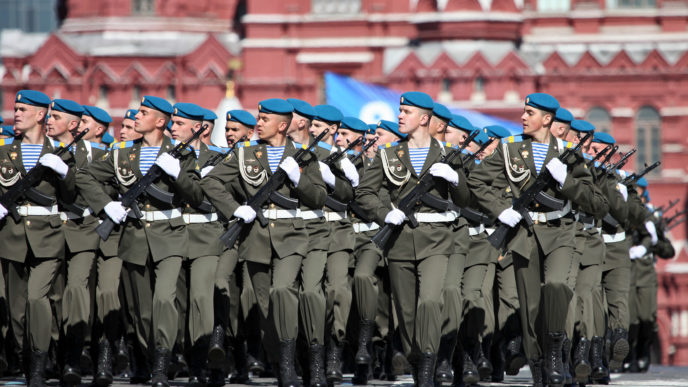
Russia’s military intervention in Ukraine was accompanied by a wave of cyberattacks, chiefly comprising distributed denial of service attacks, on government and business organizations in Poland and Ukraine, as well as the European Parliament and the European Commission.

Russia has also launched cyberattacks against the governments of countries across Europe, including the Netherlands, Estonia, Germany, and Bulgaria.

“Russia considers itself to be engaged in full-scale information warfare, involving not only offensive but defensive operations—whether or not its notional adversaries have actually noticed this happening,” Giles, the Chatham House expert, wrote.

In 2007, Estonia faced a monthlong cyberattack, which targeted government computer networks, the media, and banks.

“The cyberattacks in Estonia, composed of service disruptions and denial of service incidents, could best be compared to the online equivalent of a noisy protest in front of government buildings and banks,” Lewis wrote. “They had little tangible effect, but they created uncertainty and fear among Estonian leaders as they were considered a precursor to armed Russian intervention.”

Bulgaria’s Central Election Commission was hit by a cyberattack in October this year, during local and municipal elections.

The attack was a distributed denial of service attack similar to what Russian hackers used in Ukraine, Georgia, Estonia, and Poland. It included 530,000,000 visits to the commission’s website in 10 hours. (Bulgaria has a population of 7.2 million.)

Russian hackers have also targeted Western European governments. Germany’s domestic intelligence agency, BfV, said in May that Kremlin-linked hackers had targeted Germany’s parliament. And in May, Russian hackers targeted German Chancellor Angela Merkel’s Christian Democratic Party.

Merkel has been a firm proponent of maintaining EU sanctions against Russia for its military interventions in Ukraine. The German chancellor is up for re-election in 2017.

A cyberattack on Deutsche Telekom, a German telecommunications company, in November spurred German officials to publicly address the Russian cyberthreat.

The head of Germany’s foreign intelligence service, Bruno Kahl, warned that Russian hackers might target next year’s German presidential elections.

“We have evidence that cyberattacks are taking place that have no purpose other than to elicit political uncertainty,” Kahl told the German newspaper Süddeutsche Zeitung in November.

“The perpetrators are interested in delegitimizing the democratic process as such, regardless of who that ends up helping,” Kahl said. “We have indications that [the attacks] come from the Russian region.”

And without specifically blaming Russia for the Deutsche Telekom attack, Merkel said, “Such cyberattacks, or hybrid conflicts as they are known in Russian doctrine, are now part of daily life, and we must learn to cope with them.”

According to news reports, a Russian cyber espionage campaign also targeted the Netherlands-based international investigation into the Malaysia Airlines Flight 17 shootdown over eastern Ukraine, as well as the World Anti-Doping Agency investigation into Russian Olympic athletes.

“Russian strategic culture focuses on war as political activity; for cyberpower to have a truly strategic effect, Russia believes that it must contribute directly to shaping political outcomes by altering the political perceptions of their opponents to better suit their interests,” James J. Wirtz, dean of the School of International Studies at the U.S. Naval Postgraduate School, wrote in the NATO report on Russia’s cyberwar in Ukraine.

Cold War Tradecraft

In 2014, cyberattacks linked to Russian hacking groups increased on U.S. government computer networks.

U.S. officials in Europe have also been the target of Russian cyberattacks.

In February 2014, a disparaging phone conversation between Geoffrey Pyatt, U.S. ambassador to Ukraine, and Victoria Nuland, U.S. assistant secretary of state for European and Eurasian Affairs, was uploaded to YouTube.

The U.S. government pinned the bugging of the phone conversation and its online release on Russia.

“I would say that since the video was first noted and tweeted out by the Russian government, I think it says something about Russia’s role,” former White House press secretary Jay Carney said at the time.

“Certainly we think this is a new low in Russian tradecraft,” Jen Psaki, the State Department’s press secretary at the time, said in response to the leaked phone call.

Russia’s cyberwar strategy draws on Soviet tradecraft. The USSR conducted clandestine operations around the world to extend Soviet influence and undermine the legitimacy of, and sow chaos within, Western democracies.

These tactics included leaking false information to foreign media outlets.

“The Soviets always tried to influence both friend and foe; the Russians are doing the same,” Steven Bucci, a visiting fellow at The Heritage Foundation who served for three decades as an Army Special Forces officer, told The Daily Signal in an earlier interview.

War, or Something Else?

The U.S. government currently has no clear definition for when a cyberattack crosses the threshold from a crime or an act of espionage to an act of war.

And, so far, Russian cyberattacks on NATO countries like Bulgaria, Estonia, Germany, Poland, and the U.S. have not spurred NATO’s invocation of Article V—the Western military alliance’s collective defense protocol.

The U.N. Charter is also ambiguous about when a cyberattack merits a kinetic military response.

“Skeptics rightly claim that in cyberwar, no one dies,” Kenneth Geers, ambassador of NATO’s cybersecurity center and a senior fellow at the Atlantic Council, told The Daily Signal. “But to some degree, our concept of national security must evolve with technology.”

In a 2011 White House report, the Department of Homeland Security listed 16 “Critical Infrastructure Sectors,” which, if destroyed, would have a “debilitating effect on security, national economic security, national public health or safety, or any combination thereof.”

The list comprised infrastructure assets like power grids, air traffic control systems, and dams. The country’s electoral process was not listed as a critical infrastructure sector to be protected from cyberattacks.

The Democratic and Republican national committees are nonprofit organizations, which are responsible for financing and organizing their own cybersecurity.

Geers argued, however, that the government has a responsibility to secure the DNC and RNC email servers because they have national security value.

“In some way, the U.S. government will define these servers as ‘critical infrastructure’ and articulate some level of responsibility for protecting them,” Geers said. “The U.S. government is responsible for protecting our country and its citizens, and that certainly includes the security of our democracy, especially from foreign power manipulation.”

According to Bucci, the alleged Russian hacking of the DNC over the summer was espionage and falls well short of the threshold required to merit a military response.

“The U.S. government has never defined an act of war in cyber,” Bucci said. “This would not be close in anyone’s book. It’s not a crime either. It’s spying. The release of the purloined emails is for influence.”

The White House’s 2011 “International Strategy for Cyberspace” alluded to the use of military force to retaliate against a cyberattack.

According to the report: “When warranted, the United States will respond to hostile acts in cyberspace as we would to any other threat to our country. We reserve the right to use all necessary means—diplomatic, informational, military, and economic—as appropriate and consistent with applicable international law, in order to defend our nation, our allies, our partners, and our interests. “

In testimony before the House Armed Services Committee on June 22, Thomas Atkin, acting assistant secretary of defense for homeland defense and global security, said the Pentagon has no clear-cut threshold for when a cyberattack becomes an act of war.

Cyberattacks could merit a military response if there was an “act of significant consequence,” Atkin told Congress.

“As regards an act of significant consequence, we don’t necessarily have a clear definition,” Atkin said. “But we evaluate it based on loss of life, physical property, economic impact, and our foreign policy.”

“Computer network operations, even when they are this daring, are closer to covert action than traditional warfare,” Geers said, referring to the alleged Russian hacking of the DNC.

“Only the president can decide” when a cyberattack becomes an act of war, Geers added. (For more from the author of “How Russia’s Cyberattacks Have Affected Ukraine” please click HERE)

Follow Joe Miller on Twitter HERE and Facebook HERE.
Key Questions About Russia’s Alleged Hacking of the US Election

A Central Intelligence Agency report that Russian operatives intervened in the U.S. election to help President-elect Donald Trump win has roiled Capitol Hill, producing a bipartisan call for congressional investigations.

But there is skepticism within the U.S. government, particularly at the Federal Bureau of Intelligence, that the evidence definitively proves that the Russians had the specific goal of influencing Americans to vote for Trump.

This split, amplified by Trump’s expressed disbelief in the CIA’s conclusion, sets up an early test for the next president, who will likely come into office as lawmakers—including Republicans—are investigating what happened.

At the same time, Trump, who has vowed a closer relationship with Russia, will have to deal with a range of policy challenges dealing with the Kremlin’s military interventions in wars in Syria and Ukraine.

The Daily Signal below explains the many questions of the Russian hacking controversy, and what consequences may come from it.

What Happened and When?

In early October, the Obama administration confirmed what the intelligence community had long expected, formally accusing Russia of trying to interfere in the 2016 elections, including by hacking the computers of the Democratic National Committee and other political organizations, and releasing the information to WikiLeaks.

In its announcement, the Obama administration noted Russia had previously attempted to interfere in other countries’ political processes, using other techniques to influence public opinion in Europe.

The White House, at this point, was considering potential responses, including economic sanctions, but it did not mount an offensive reply.

In the weeks before the presidential election, The New York Times reported that American spy and law enforcement agencies were united in the belief that the Russian government had deployed computer hackers to sow chaos into the campaign.

But last week, as The Washington Post first reported, the CIA produced a formal assessment to lawmakers concluding that Russia did not just intend to disrupt the election, but intervened with the primary goal of electing Trump as president.

“It doesn’t appear that there is any real uncertainty here about the origins of the attacks,” said Michael O’Hanlon, director of research for the foreign policy program at Brookings Institution, in a response to emailed questions from The Daily Signal. “I see the differences as ones of interpretation—who can really be sure of Russian motives based on observation of their actions?”

The FBI has not affirmatively concluded the Russians’ intent.

It is unclear why the CIA waited until after the election to reveal its judgment.

Intelligence officials also believe that Russia hacked the databases keeping Republican National Committee data, but chose to release only documents from the Democrats. The committee has denied that it was hacked.

How Have Politicians Reacted?

Trump dismissed the CIA’s report, referencing the agency’s faulty 2002 conclusion that the Iraqi leader, Saddam Hussein, had weapons of mass destruction.

“I think it’s ridiculous. I think it’s just another excuse. I don’t believe it,” Trump said on Sunday in an interview on Fox News.

Republicans in Congress have also been careful about supporting the CIA’s assertion that Russia tried to throw the election to Trump—and that the Kremlin’s influence impacted the result. But many lawmakers in Trump’s party have been forceful in calling for investigations into what happened.

“I don’t believe any member of Congress should summarily dismiss an assessment from the intelligence community with respect to Russian interference in an American election,” Rep. Charlie Dent, R-Pa., told The Daily Signal in an interview, adding:

We must take this seriously and investigate it. I have not seen any evidence thus far that the outcome of the presidential election was impacted by Russia’s actions. But with that said, it disturbs me greatly that Russia is attempting to interfere with our democratic process, not only in the U.S., but throughout Europe as well.

Senate Majority Leader Mitch McConnell, R-Ky., said on Monday that he supported congressional investigations of possible Russian cyberattacks, which will be led by the Intelligence Committee and Armed Services Committee.

McConnell said the investigations would occur through the normal committee process, and he did not endorse the creation of a special select committee probe.

House Speaker Paul Ryan, R-Wis., seemed to suggest Monday he backs a similar investigation of Russian “state-sponsored cyberattacks.”

“Throughout this Congress, the Intelligence Committee [has] been working diligently on the cyber threats posed by foreign governments and terrorist organizations to the security and institutions of the United States,” Ryan said in a statement. “This important work will continue and has my support.”

Democrats also want a congressional probe, and Hillary Clinton’s campaign even said it supports a request by members of the Electoral College for an intelligence briefing on foreign intervention in the presidential election, Politico reported.

President Barack Obama, meanwhile, has ordered a full review into Russia’s hacking to capture “lessons learned” to be concluded before Trump’s inauguration.

Is It Normal for Intelligence Agencies to Disagree?

David Shedd, a former director of the Defense Intelligence Agency who has worked for the CIA, said it’s normal for the FBI to take a more cautious view of intelligence assessments because of its law enforcement obligation.

“The bureau [FBI] will be more conservative,” said Shedd, who is now a visiting fellow at The Heritage Foundation. “They are evidence driven. They are about making a court case, determining what will stand up in court. The intelligence community is not about making evidentiary conclusions rising to the level of a court action, but making a judgment that falls considerably short to what the FBI would need to make a similar call.”

Despite the CIA’s lower burden of proof, Patrick Eddington, a Cato Institute policy analyst in homeland security and civil liberties and former CIA analyst, said it’s wrong to assume the agency’s conclusions are flimsy.

“The reality is the CIA does not always get it wrong, and I think because of the track record of the agency, people naturally have a level of skepticism on whether this is real,” Eddington told The Daily Signal in an interview. “That makes it all the more important for everything surrounding this judgment—all the raw intelligence it is based on—to be made public so everyone can make their own conclusions.”

How Can the US Respond?

If Obama elects not to take action, the Trump administration will have a range of options on how to respond to Russia.

These include imposing economic sanctions for “malicious cyber-enabled activities,” a new executive branch tool that Obama created last year, but hasn’t used yet.

The Justice Department could indict Russian actors for hacking. The National Security Agency may also retaliate with its own cyber tools against the Kremlin.

Shedd suggested the U.S. take broader actions to discourage Russia aggression not only in cyberspace, but in other foreign policy endeavors.

“If I were sitting again in the Situation Room, I would be making a very strong case that our response needs to be asymmetrical to the cyberattack,” Shedd said. “Why in the world would we do cyber on cyber as our only response? My advice is to look at what [Russian President Vladimir] Putin’s other objectives are. That could be getting him out of Syria and Ukraine—something that fits into our larger relationship with that country.”

Eddington suggested more caution, noting Putin’s unpredictability.

“You have to start with appropriate defensive measures, making sure our systems from a political and social engineering standpoint can’t be hacked,” Eddington said. “When we start talking about offensive measures, we have to be careful and calculated about what we do. At the end of the day, you need to make sure the response is such that Putin cannot afford a repeat, pays some sort short-term to medium-term cost, but at the same time, do not put Russia and the U.S. at the brink of confrontation. We are in uncharted territory in so many ways.” (For more from the author of “Key Questions About Russia’s Alleged Hacking of the US Election” please click HERE)

Follow Joe Miller on Twitter HERE and Facebook HERE.

CIA Says Russia Intervened to Help Trump Win White House

The CIA has concluded that Russia intervened in the 2016 election to help President-elect Donald Trump win the White House, and not just to undermine confidence in the U.S. electoral system, the Washington Post reported on Friday.

Citing U.S. officials briefed on the matter, the Post said intelligence agencies had identified individuals with connections to the Russian government who provided thousands of hacked emails from the Democratic National Committee and others, including the chairman of Hillary Clinton’s presidential campaign, to WikiLeaks.

The officials described the individuals as people known to the intelligence community who were part of a wider Russian operation to boost Trump and reduce Clinton’s chances of winning the election.

“It is the assessment of the intelligence community that Russia’s goal here was to favor one candidate over the other, to help Trump get elected,” the Post quoted a senior U.S. official as saying. “That’s the consensus view.”

The Post said the official had been briefed on an intelligence presentation made by the Central Intelligence Agency to key U.S. senators behind closed-doors last week. (Read more from “CIA Says Russia Intervened to Help Trump Win White House” HERE)

Follow Joe Miller on Twitter HERE and Facebook HERE.