Posts

Terror in St. Petersburg: What You Need to Know

Russia’s St. Petersburg subway train system was hit with major explosions Monday afternoon, resulting in the deaths of at least 12 people and dozens of casualties, Russian media said.

Here’s what you need to know about the underground chaos caused from a suspected terror attack.

1. What happened?

At least one explosive device, reportedly resembling a nail bomb, detonated at a main junction in the St. Petersburg metro system. The metro has been completely shut down so that police can investigate the matter and prevent further potential attacks.

The incident occurred at about 2:40 p.m. local time. Russian strongman Vladimir Putin has indicated that the explosion is being investigated as a possible act of terrorism. Putin expressed his condolences, as he was in St. Petersburg for a forum with the president of Belarus, a close ally of Russia.

Police have found and deactivated an additional unexploded bomb in a separate station, according to reports.

Social media users posted photos and video of the carnage that unfolded after the explosion.

2. Who is responsible?

At least one witness told the media that a man threw a backpack onto the train just prior to the explosion. The backpack reportedly contained a nail bomb, which is similar to the explosives used by the 2013 Boston Marathon bombing terrorists.

Russia faces an increasingly radicalizing Islamic population. Many Russian nationals from Chechnya have gone off to the Middle East to fight for ISIS and other terror groups. At least 2,400 Russians have gone to fight for ISIS since 2014, according to studies.

Russian news agency Interfax reports that surveillance footage may have captured an image of the attack’s suspect.

3. What’s next?

The attack may be taken especially personally for Russian President Putin, who was born in and long served as a government official in St. Petersburg, a city of over 5 million. The Russian autocrat has a track record of dealing with Islamic terror threats with a heavy hand.

From his early military campaigns in Dagestan to the current civil war in Syria, Putin has utilized indiscriminate bombing campaigns to clamp down on insurgencies and protect his interests.

The state-controlled RT is providing live coverage of the incident’s aftermath.

(For more from the author of “Terror in St. Petersburg: What You Need to Know” please click HERE)

Follow Joe Miller on Twitter HERE and Facebook HERE.

In Ukraine, Russia Weaponizes Fake News to Fight a Real War

As the Russian shells and rockets rained down on them in the front-line town of Debaltseve in February 2015, Ukrainian troops began to receive curious, anonymous SMS messages on their cellphones.

“Your comrades nearby already left their positions, so you should leave yours as well,” one message read.

The messages also claimed that Ukrainian President Petro Poroshenko, as well as Ukrainian military commanders, had “betrayed” the soldiers.

The Ukrainian military later concluded that Russian military forces had taken over the local cellphone network with mobile jamming stations. The SMS messages were part of a psychological operation against Ukrainian troops, not too different in its intent from dropping propaganda leaflets from airplanes, a psychological warfare technique that dates back to World War I as a way to demoralize troops.

“Three years into the Russian aggression, we have experienced every Kremlin method and technique there is,” Poroshenko told The Daily Signal.

“And I should remind that Moscow started its campaigns in Crimea and eastern Ukraine particularly with the subtle manipulation of information,” Poroshenko said. “Tanks, artillery, and hundreds of innocent victims followed later.”

The combined use of propaganda and cyberwarfare to support military operations on the ground are hallmarks of Russian “hybrid warfare.”

In Ukraine, Russian military forces have combined World War I and II-era weapons and tactics—like artillery bombardments, tank attacks, and trench warfare—with weapons unique to the 21st century battlefield, such as cyberattacks and sophisticated propaganda campaigns geared toward TV and internet audiences.

In September 2014, U.S. Gen. Philip Breedlove, then NATO’s top commander, called Russia’s hybrid war in Ukraine “the most amazing information warfare blitzkrieg we have ever seen in the history of information warfare.”

“Fake news is a weapon,” Viktor Kovalenko, a Ukrainian journalist and army combat veteran from the 2015 battle of Debaltseve, told The Daily Signal.

“I saw firsthand how Russians use fake news against the Ukrainian troops on the front line,” Kovalenko, a former professor of journalism at the Taras Shevchenko National University of Kyiv, added. “Via fake news Russians wanted to defeat Ukrainians the same way, effectively, as by artillery and tanks.”

Hybrid warfare is Russia’s modern interpretation of a Soviet military doctrine called “deep battle,” in which military operations extend beyond the front lines deep into an enemy country’s territory in order to hinder its ability to wage war.

And, some say, Russia is tapping into its hybrid warfare arsenal, now battle-tested in Ukraine, to wage a uniquely 21st century style of war against the United States and the European Union.

For its part, the U.S. is currently investigating whether Russia spread fake news and used cyberwarfare to interfere with the 2016 U.S. presidential election.

“Whether it is Ukraine, the EU, or the United States, Russia has the same playbook and goals,” Poroshenko, the Ukrainian president, said. “It employs hybrid warfare—so-called fake news, computer hacking, cyberattacks on critical infrastructure, snap drills, direct military interventions, and so on and so forth—to undermine the Western democracies and break the transatlantic unity.”

Fake News, Real War

In 2014, Kovalenko was conscripted into the Ukrainian army’s 40th Brigade as an active-duty senior lieutenant. In late January 2015, the 40th Brigade was hunkered down in the eastern Ukrainian town of Debaltseve, taking intermittent artillery fire as they skirmished against infantry assaults from a combined force of pro-Russian separatists and Russian regulars.

Then, on Jan. 28, all hell broke loose. A massive artillery, mortar, and rocket bombardment pummeled the Ukrainian troops in and around Debaltseve.

“We had already become accustomed to the sound of distant, sporadic shelling,” Kovalenko wrote in his diary at the time. “But on the evening of 28 January, mortar shells and self-propelled rockets, launched from Russian MLRSs (‘Grads’), began falling on our base so frequently that, as it seemed to me, they were exploding several times per second.”

The only refuge was to seek shelter underground. And that’s what many soldiers and civilians did. And that’s where many of them died.

In late February 2015, weeks after the battle ended, the United Nations reported that the bodies of hundreds of civilians had been found in houses and in cellars throughout Debaltseve. Some were entombed when their homes collapsed onto them due to a direct hit. Others suffocated when incendiary devices sucked the oxygen out of the air.

Altogether, more than 500 Ukrainian civilians died in the battle, according to United Nations and U.S. estimates.

In one bombardment, a piece of rocket shrapnel about the size of a gumball tore through the room in which Kovalenko was sleeping, slicing through his sleeping bag like a razor. Kovalenko was unscathed, but rattled.

“From that night I slept on the bed no more!” Kovalenko wrote. “Two weeks later, on 13 February, the whole bedroom was completely destroyed by enemy mortars and rockets.”

Minutes, seconds; feet, inches. That’s often the threshold between life and death in this kind of materiel war. Your survival often has less to do with your skills as a soldier than just blind luck.

Describing one close call, Kovalenko wrote: “The location of the shell hole in the backyard led me to conclude that I had miraculously survived with God’s help, because at the moment of the explosion I was standing indoors behind a thick concrete wall. But if I hadn’t delayed exiting the apartment, I would have run right into the blast-area of death.”

Seeing Red

As fighting raged in Debaltseve, cease-fire negotiations were simultaneously going on 750 miles away in the Belarusian capital of Minsk.

Ukrainian officials later claimed that the approximately 6,000 Ukrainian troops in Debaltseve faced a combined Russian-separatist force of about 15,000 to 17,000 soldiers, including about 12,000 to 13,000 Russian regulars.

The Kremlin denied it was supporting the separatists or had its own troops fighting in Ukraine. Yet, tellingly, Russian President Vladimir Putin had a place at the cease-fire’s negotiating table alongside Poroshenko, German Chancellor Angela Merkel, and French President Francois Hollande.

A deal was struck in Minsk on Feb. 12. The cease-fire was supposed to go into effect on Feb. 15, but it was dead on arrival. Russian artillery, rockets, and small arms assaults never let up in Debaltseve.

“From early morning till late evening, and sometimes during the nights, they have been shelling, firing and trying to break our defense lines,” Kovalenko wrote in his diary from the battle. “Their attacks couldn’t be possible without support from Russia, which sends them heavy weaponry, lots of ammunition, and military instructors as well.”

Then, on Feb. 18, 2015, suffering heavy casualties, and while under persistent shelling and rocket fire, Ukrainian forces withdrew from Debaltseve. In the ensuing chaos, Ukrainian soldiers who missed the mechanized retreat had to escape on foot, dodging Russian Grad rockets—a multiple-launch rocket system that carpets a targeted area in a hailstorm of shrapnel and explosions.

Today, the town remains under combined Russian-separatist control.

Overall, about 185 Ukrainian soldiers died in the battle, with about another 200 listed as captured or missing.

On Feb. 23, 2015, Ukrainian soldiers taken prisoner in Debaltseve were paraded through the separatist strongholds of Donetsk and Luhansk. It was Defender of the Fatherland Day—a Russian holiday that commemorates the first mass conscription into the Red Army during the Russian Civil War.

“Russian media aggressively labeled the Ukrainians ‘Nazis’ and ‘fascists,’ so that the purported mass parade of [prisoners of war] would awaken memories of how the Soviets happily paraded German prisoners on Red Square, Moscow, in 1945,” Kovalenko wrote.

Hybrid War

More than two years after Minsk II went into effect, daily combat persists along the 250-mile-long front lines in eastern Ukraine’s embattled Donbas region.

A third of the 10,000 Ukrainians who have died in the war were killed after the February 2015 cease-fire was signed. Casualties, both civilian and military, still occur daily on both sides of the conflict. And about 1.7 million Ukrainians remain de facto refugees in their own country due to the war.

The Minsk II cease-fire has largely kept the war in check, and both sides have not made any major offensives in more than two years. But the Ukraine war is not confined to the battlefields of the Donbas.

As airpower did after World War I, Russia’s hybrid war against Ukraine has redefined the boundaries of the modern battlefield.

“Cyberpower has in part replaced many forms of traditional power, from air and submarine power to assassination,” Kenneth Geers, ambassador of NATO’s cybersecurity center and a senior fellow at the Atlantic Council, told The Daily Signal.

Early airpower theorists argued that targeting an enemy country’s industry and infrastructure could destroy its industrial capacity to wage war. That theory was later extended to include targeting civilian population centers to damage morale.

In his 1921 book, “The Command of the Air,” Italian air warfare theorist Giulio Douhet wrote:

No longer can areas exist in which life can be lived in safety and tranquillity, nor can the battlefield any longer be limited to actual combatants. On the contrary, the battlefield will be limited only by the boundaries of the nations at war, and all of their citizens will become combatants, since all of them will be exposed to the aerial offensives of the enemy.

According to a 1945 study by the U.S. Strategic Bombing Survey, “Strategic bombing was the major means by which the Allies were able to strike a direct blow at the morale of German civilians.”

“Bombing did not stiffen morale,” the report added. “The hate and anger it aroused tended to be directed against the Nazi regime.”

Hybrid weapons have not replaced the more tactical uses of combat airpower like close air support, or air interdiction. But hundreds of miles behind the front lines in Ukraine, Russia’s propaganda and cyberattacks have supplanted the strategic use of airpower to effect Russia’s deep battle doctrine.

The war in Ukraine has become a proving ground for Russia’s strategic use of hybrid warfare weapons like propaganda and cyberattacks.

“Ukraine has been an evolutionary step forward,” Geers said, “with examples of digital conflict seen across the spectrum, in every domain, from politics to diplomacy, in military operations, business, critical infrastructure, and social media.”

Russian cyberattacks have targeted Ukraine’s power grid, its biggest international airport, and the country’s 2014 presidential election. And Russian propaganda has targeted the morale of Ukrainian civilians and soldiers.

“Russian propaganda on the territory of Ukraine is part of hybrid war, which is carried out against the Ukrainian people,” Vitaliy Yarema, Ukraine’s former prosecutor general and former first deputy prime minister on security and defense, told The Daily Signal.

“As for today, the situation in Ukraine is still not stable,” Yarema said. “The systematic strikes and protests, which result in destabilizing the socioeconomic and the legal system of the country, are a direct result of Russian propaganda, and threaten no less than open warfare in the east.”

Misinformation

Ukraine’s 2014 revolution overthrew a kleptocratic, pro-Russian ruler. To prevent a similar scenario in Russia, the Kremlin discredited Ukraine’s pro-European revolution as a CIA-sponsored, neo-Nazi coup.

Through propaganda, Russia was able to create a false narrative, painting its 2014 seizure of Crimea and the ensuing conflict in the Donbas as grassroots efforts instigated by disaffected Ukrainians who believed the new government in Kyiv was illegitimate.

In a March 18, 2014, speech at the Kremlin, Putin said Ukraine’s post-revolution government “resorted to terror, murder, and riots.”

“Nationalists, neo-Nazis, Russophobes, and anti-Semites executed the coup,” the Russian president said.

Putin claimed the people of Crimea had turned to Russian for help. “Naturally, we could not leave this plea unheeded,” Putin said. “We could not abandon Crimea and its residents in distress. This would have been betrayal on our part.”

Beginning on April 6, 2014, pro-Russian separatists operating under the watchful eye of Russian intelligence agents and special forces troops took over multiple towns in eastern Ukraine, spawning two breakaway republics—the Donetsk People’s Republic, or DNR, and the Luhansk People’s Republic, or LNR.

Throughout the summer of 2014, Ukraine’s armed forces launched a military operation to stop the separatist takeover of eastern Ukraine and take back lost territory. By July 2014, Ukraine had retaken 23 out of 36 districts captured by combined Russian-separatist forces.

Russian media broadcast a series of reports painting the conflict as a crusade to protect ethnic Russians in eastern Ukraine.

U.S. journalist David Satter described Russia’s propaganda campaign against Ukraine in his 2016 book, “The Less You Know, the Better You Sleep: Russia’s Road to Terror and Dictatorship under Yeltsin and Putin.”

Satter, the first American journalist to be expelled from Russia since the Cold War, wrote:

Among the false reports intended to stoke nationalist hysteria were the story of a three-year-old boy who was allegedly tortured and crucified by the Ukrainian military in Slaviansk, a report on the raising of the levels of the Lopan and Kharkov rivers so that NATO submarines could reach Donetsk, a report on the cancellation of the May 9 World War II commemoration in Kiev and its replacement by a gay pride parade, a report that the Ukrainians had stopped selling bread to Russian speakers, and a report that Petro Poroshenko, the Ukrainian president, was preparing to make Hitler’s birthday a national holiday.

Propaganda ultimately played a key role in Russia’s military campaign against Ukraine; it became an effective recruitment tool.

Within the separatist territories, Russian propaganda spurred tens of thousands of Ukrainians to take up arms against their countrymen. An enlistment office for the separatist republics was opened in Moscow for Russian citizens who wanted to join the war.

And Russia’s false news reports disseminated worldwide via the internet drew foreign fighters to join Russia’s proxy army against Ukraine—including from Serbia, France, Brazil, and the United States.

Even today on the Ukrainian side of the front lines in the Donbas, some villages and towns only receive Russian broadcast television—Ukrainian TV and news programs are unavailable, except by cable.

A New Battlefield

Russian cyberattacks and propaganda are nonlethal weapons of war, complicating the debate on what exactly comprises a proportional response to such methods.

“The adversary is constantly perfecting its hybrid warfare, especially in the cybersphere,” Poroshenko told The Daily Signal, referring to Russia.

“I’m glad to see that our Western partners have acknowledged the threat and started strengthening their cybersecurity,” the Ukrainian president added.

NATO, for its part, has already said cyberattacks are a military threat.

“Cyberspace is an official domain of warfare.” Geers said. “NATO has named cyberattacks, along with ballistic missiles and terrorism, as one of the top three threats to the alliance.”

“The ubiquity, inter-connectivity, and intimacy of computers have made some cyberattacks more powerful than traditional kinetic attacks,” Geers added.

“When you attack a country, it’s an act of war,” U.S. Sen. John McCain, R-Ariz., said during a December 2016 interview on Ukrainian TV, referring to Russia’s alleged operations to influence the 2016 U.S. presidential election.

At a Senate Intelligence Committee hearing Thursday, Sen. Mark Warner, D-Va., said Russian hackers had “weaponized” stolen information during the 2016 election.

Warner said the Senate’s investigation into Russian meddling in the election was meant to hold “Russia accountable for this unprecedented attack on our democracy.”

Yet, despite the rhetoric from both Democrats and Republicans equating Russia’s election meddling with acts of war, the U.S. has not yet retaliated against Russia with conventional military force.

In November 2016, the U.S. House of Representatives passed a bill that included measures to counter Russian propaganda in the U.S. And under former President Barack Obama, the U.S. placed additional sanctions on Russia for its alleged presidential election cyberattacks.

Even in Ukraine after three years of war, Russian websites are not blocked, and many Ukrainians still watch Russian TV channels.

“The Kremlin actively and absurdly exploits democratic freedoms against democracies,” Kovalenko told The Daily Signal.

“Fake news is a major tool in Kremlin’s propaganda to deceive its enemies,” Kovalenko said. “It’s one of the weapons in the information war, relaunched by Moscow in recent years for the first time since the Soviet Union collapsed. Among the foreign enemies is the government of Ukraine. But the Kremlin also wants to deceive Europe and the U.S., to make them weaker.” (For more from the author of “In Ukraine, Russia Weaponizes Fake News to Fight a Real War” please click HERE)

Follow Joe Miller on Twitter HERE and Facebook HERE.

This Is the Reason Russia Is Banning Children From Watching the New Power Rangers Movie

Russia has slapped an “18+” adults-only rating on the new Power Rangers movie after widespread Western media reports that it includes a female character questioning her sexuality. The film is rated PG-13 in the U.S.

Notably, Russia reportedly has not given a similar adult rating to Disney’s remake of Beauty and the Beast, despite its alteration of the original animated film to make one of its characters (Le Fou) homosexual, in what the director called an “exclusively gay moment.”

The Hollywood Reporter reported:

“On Friday, WDSSPR, the Russian distributor of Power Rangers, informed theaters that the age restriction for the movie has been changed from 16+ to 18+, meaning that only viewers over 18 will be admitted to the screenings.

“The distributor provided no explanation for assigning the stricter age restriction, but it followed harsh criticism from several [Russian] legislators over the movie’s LGBTQ content.”

(Read more from “This Is the Reason Russia Is Banning Children From Watching the New Power Rangers Movie” HERE)

Follow Joe Miller on Twitter HERE and Facebook HERE.
Russian Protest Leader Alexei Navalny Gets 15 Days in Jail

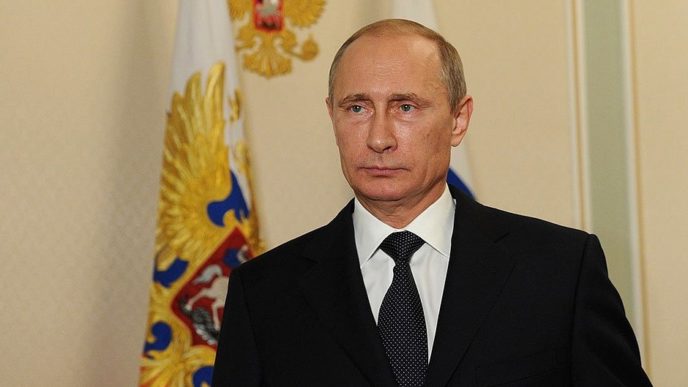
Russian opposition leader Alexei Navalny, who organized a wave of nationwide protests against government corruption that rattled authorities, was jailed for 15 days on Monday by a Moscow court for resisting police orders.

Navalny was arrested Sunday as he walked to a protest in Moscow and spent the night in jail before appearing in court.

Tens of thousands of anti-corruption protesters took to the streets across Russia on Sunday in the biggest show of defiance since 2011-2012 anti-government protests. (Read more from “Russian Protest Leader Alexei Navalny Gets 15 Days in Jail” HERE)

Follow Joe Miller on Twitter HERE and Facebook HERE.
Russia Rocked by Nationwide Protests

Russia’s opposition, often written off by critics as a small and irrelevant coterie of privileged urbanites, put on an impressive nationwide show of strength Sunday with scores of protest rallies spanning the vast country. Hundreds were arrested, including Alexei Navalny, the anti-corruption campaigner who is President Vladimir Putin’s most prominent critic.

It was the biggest show of defiance since the 2011-2012 wave of demonstrations that rattled the Kremlin and led to harsh new laws aimed at suppressing dissent. Almost all of Sunday’s rallies were unsanctioned, but thousands braved the prospect of arrests to gather in cities from the Far East port of Vladivostok to the “window on the West” of St. Petersburg.

An organization that monitors Russian political repression, OVD-Info, said it counted more than 800 people arrested in the Moscow demonstrations alone. That number could not be confirmed and state news agency Tass cited Moscow police as saying there were about 500 arrests. (Read more from “Russia Rocked by Nationwide Protests” HERE)

Follow Joe Miller on Twitter HERE and Facebook HERE.
The Ridiculous Reason the FBI Has Decided to Investigate Conservative Websites

The FBI is investigating whether conservative news sites, including Breitbart and InfoWars, cooperated with the Russian government in an effort to influence the presidential election.

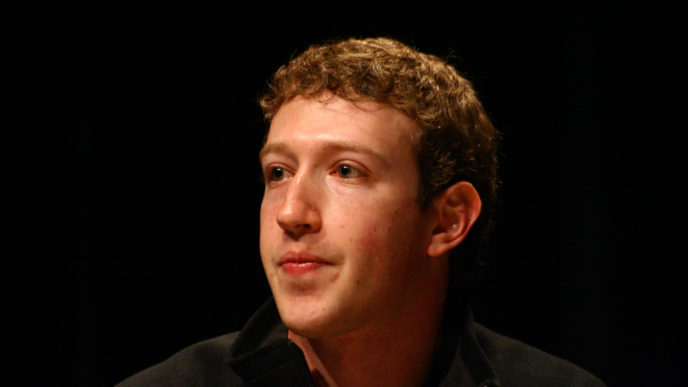
McClatchy reports the investigation is focused on the use of strategically-timed social media “bots” employed to blitz social media with pro-Donald Trump and anti-Hillary Clinton stories.

A bot is simply a program that gathers information based on defined specifications.

“The bots’ end products were largely millions of Twitter and Facebook posts carrying links to stories on conservative internet sites such as Breitbart News and InfoWars, as well as on the Kremlin-backed RT News and Sputnik News,” sources told McClatchy.

“This may be one of the most highly impactful information operations in the history of intelligence,” one former U.S. intelligence official stated on a condition of anonymity.

Federal investigators are seeking to discover if Breitbart and other sites cooperated in the efforts.

According to Alexa, Breitbart’s web traffic shot up dramatically in October, in relation to other similar websites, and has remained at a high level since. It currently is in the top 100 most viewed websites in the country, even outpacing FoxNews.com.

Breitbart reported on Nov. 19 that it experienced a record 300 million page views over the previous 31 days.

The news site did not respond for comment about the McClatchy story.

Breitbart’s former chairman, Steve Bannon, stepped down to become the CEO of the Trump campaign in August. He now serves as a top adviser on the president’s White House staff.

InfoWars’ Alex Jones responded to the story on his radio program on Monday.

“To be called a Russian asset by McClatchy and by the LA Times and by a bunch of other publications today is funny, if it wasn’t so serious,” he said.

“I don’t personally take this as a threat … I’m threatened for the country. I mean if the Russians want to secure our borders, cut our taxes, not have us go bankrupt, rebuild our military, block radical Islam — well then, hell, I’m a Russian agent! But I’m not,” Jones added, according to The Daily Caller.

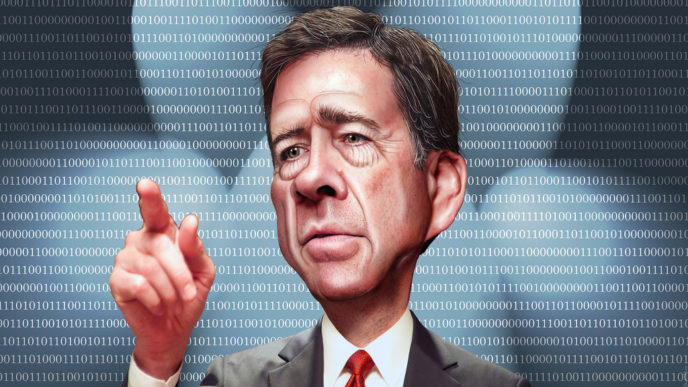
As reported by Western Journalism, FBI Director James Comey confirmed on Monday in testimony before the House Intelligence Committee that his agency is investigating “alleged links” between the Russian government and the Trump campaign.

Earlier this month, former Director of National Intelligence James Clapper stated on Meet the Press there was “no evidence” of collusion between the Trump campaign and Russia.

House Intelligence Committee Chairman Devin Nunes, R-Calif., voiced the same conclusion on Fox News Sunday. (For more from the author of “The Ridiculous Reason the FBI Has Decided to Investigate Conservative Websites” please click HERE)

Follow Joe Miller on Twitter HERE and Facebook HERE.
Report: FBI Investigation Into Trump-Russian Connects Instigated by Clinton Opposition Researcher

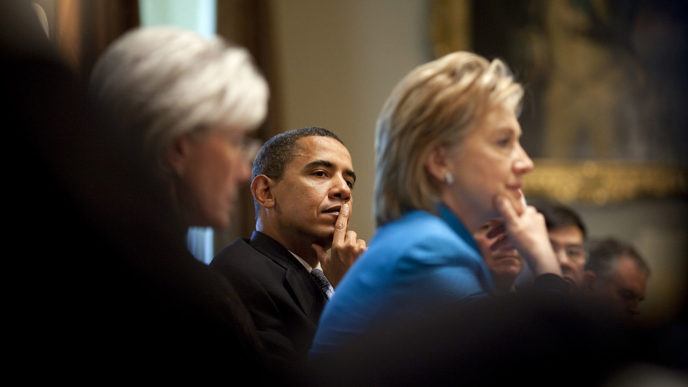
The FBI investigation into potential connections between the Trump campaign and the Russian government began just weeks after a former British spy doing opposition research for Hillary Clinton supporters briefed bureau agents on evidence he had collected on such ties, Yahoo News reported Monday.

According to Chief Investigative Correspondent Michael Isikoff, Christopher Steele, a former British MI-6 intelligence officer specializing in Russian operations, had been hired as an investigator by Fusion GPS, an opposition research firm working on behalf of Clinton. On July 5, 2016, Steele went to the FBI with what he’d compiled on contact between Trump advisers and Kremlin officials.

The early contact between Steele and the bureau now appears to have set in motion a chain of events that led to Monday’s extraordinary testimony by Comey that the bureau has been actively investigating possible links between the Trump campaign and the Kremlin since “late July” — or more than three months before Election Day.

If true, this would put the match of the fuse for this Russian business in the hand of someone with a vested interest in helping Hillary Clinton take down Trump. Further, the calendar raises an intriguing possibility.

The Curious Timing of the Plane on the Tarmac

Why is the July 5th date significant? For starters, it is the day FBI Director James Comey stood in front of the nation, explained all the egregious ways Hillary Clinton had violated and flouted the law in the handling of classified information, then said he was recommending against prosecuting her.

Attorney General Loretta Lynch quickly accepted the recommendation.

Days earlier, on June 27, Lynch had secretly met on a tarmac in Phoenix with Bill Clinton. In the dust-up after the rendezvous was revealed, Lynch recused herself from the Hillary email investigation.

But perhaps all eyes were on the wrong prize. Perhaps emails had as much to do with the meeting as photos of grandchildren. Let’s add Steele into the mix.

Would Steele have taken his bag of goodies to the FBI first? No. He would go to his client, Fusion GPS. The opposition research firm then goes to their client, and soon the Clinton campaign has their hands on explosive allegations that Donald Trump is in cahoots with the Russians. What are the Clinton’s going to do with the information?

Naturally, bring the goodies to someone who can do the most damage with it. Namely, their old friend, the Attorney General of the United States.

Bill’s pitch would be pretty simple: “We have information to share about potential criminal wrongdoing and interference in the election by a foreign power, and I have to deliver it to you personally.” (This would also explain the still-simmering mystery over why Lynch would agree to meet with Clinton, knowing that, given the on-going Hillary investigation, such a meeting was a gross breach of ethics.)

If Lynch Bites

Here’s the beauty. If Lynch bites, you have Donald Trump under investigation during the final months of the campaign. You have justification to have friendly electronic ears and eyes trained on his operations, and who knows what will emerge? Even if she doesn’t bite, you and your billion dollar campaign war chest still have Steele’s information to use politically.

Or maybe Lynch just says, “Bill, don’t get me involved. If you really have something, have your guy take it to the FBI.”

Is that what happened? We do know that within days of that prearranged secret meeting, the Clinton opposition researcher was knocking on Comey’s door and an investigation into the Trump campaign’s ties to Russia was set in motion with all the snooping and surveilling that would entail. We also know the fruit of that intelligence was spread around the administration and friendly media outlets like orange slices at a youth soccer tournament.

Questions for the Attorney General-Turned #Resistance Champion

If Lynn has a few moments between her calls of support for the anti-Trump resistance, perhaps she can answer a few questions:

“When did you first hear of any Trump-Russian connections?”

“From whom?”

“What action did you take with that information?”

“When did the White House get wind of it?”

“Did you discuss in any way shape or form Donald Trump, his associates and/or the Russians during your secret meeting with Bill Clinton?”

“Would you care to say that under oath?”

“Given you met with the husband of Donald Trump’s opponent right around the time the FBI got involved in investigating Trump, did you recuse yourself from that investigation?”

“Do you consider yourself a political opponent of Donald Trump?”

And finally, “Do you agree with The Federalist‘s Mollie Hemingway that ‘we really should be having a conversation about the surveillance of a political opponent during a campaign and what that means’?”

Perhaps Lynch already did have a conversation about the surveillance of a political opponent during a campaign.

“A Big Gray Cloud”

House Intelligence Chairman Devin Nunes (R-Calif) says the FBI bombshell announcement of the on-going investigation — presented by Comey with the permission of an Obama hold-over at the Department of Justice — has left a “big gray cloud” over Trump’s White House.

So let a full investigation continue. And as more sunlight enters into the situation it’ll be curious to see who, despite the clouds, ends up burned. (For more from the author of “Report: FBI Investigation Into Trump-Russian Connects Instigated by Clinton Opposition Researcher” please click HERE)

Follow Joe Miller on Twitter HERE and Facebook HERE.
FBI Director Confirms Investigation of Russia’s Meddling in US Election, Including Any Links to Trump Campaign

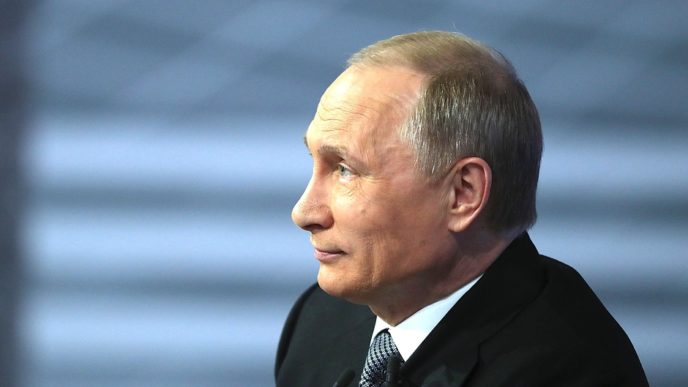
For the first time, the director of the FBI publicly revealed Monday that the bureau is conducting a counterintelligence investigation of the Russian government’s efforts to interfere in the presidential election and whether there was any coordination between the Trump campaign and Moscow.

“I have been authorized by the Department of Justice to confirm that the FBI, as part of our counterintelligence mission, is investigating the Russian government’s efforts to interfere in the 2016 presidential election and that includes investigating the nature of any links between individuals associated with the Trump campaign and the Russian government and whether there was any coordination between the campaign and Russia’s efforts,” FBI Director James Comey said during testimony before the House Intelligence Committee.

“As with any counterintelligence investigation, this will also include an assessment of whether any crimes were committed.”

Comey said the bureau decided to go against convention and publicize the existence of an ongoing FBI investigation because it considers the Russia probe to be an “unusual circumstance” that “is in the public interest.”

Comey and National Security Agency Director Michael Rogers, who also testified before the House committee, said they stand by a report the intelligence community issued in January that concluded with “high confidence” that “Russian President Vladimir Putin ordered an influence campaign in 2016 aimed at the U.S presidential election.”

The report said the Russians had deployed computer hackers to undermine the presidential campaign, with the goal of harming Democratic candidate Hillary Clinton while boosting the candidacy of Republican nominee Donald Trump.

“Putin hated Clinton so much that the flip side is he had a clear preference for the person she was running against,” Comey said at Monday’s hearing.

The House and Senate intelligence committees are conducting separate investigations into Russia’s actions during the presidential campaign.

Comey and Rogers confirmed the Russian effort did not succeed in affecting actual vote tallies.

The White House sought to focus on this detail, although Comey and Rogers acknowledged they could not determine whether Russia’s actions had any influence on voters’ decisions.

“Following this testimony it’s clear that nothing has changed,” White House press secretary Sean Spicer said during his daily press briefing Monday. “The president is happy that they are pursuing the facts in this.”

Spicer predicted the FBI probe will “vindicate” the Trump team.

He referred to statements by former acting CIA Director Michael Morell and James Clapper, President Barack Obama’s director of national intelligence, that they have seen no evidence of collusion between Trump associates and Russia.

Comey said the FBI investigation into Russia’s actions, and possible ties between individuals associated with the Trump campaign and Moscow, began in July—months before Election Day.

The FBI director would not say whether investigators are probing the actions of Trump himself.

Nor would Comey say how long the FBI’s investigation may last.

The New York Times and other media organizations have reported that some of Trump’s associates were in repeated contact with Russian officials and others close to Putin during the presidential campaign.

Comey and Rogers also testified that their respective agencies have “no information” and “no evidence” to support Trump’s claims via Twitter that his predecessor, Obama, ordered surveillance of Trump Tower toward the end of the campaign.

“The answer is the same for the DOJ and all its components,” Comey said, emphasizing that “no one individual” in the U.S., including the president, can direct electronic surveillance without approval from the Foreign Intelligence Surveillance Court (FISA). “The department has no information that supports those tweets [by Trump].”

Comey declined to say whether any government officials requested an application for surveillance of Trump or any of his associates with the FISA court.

Republican lawmakers at Monday’s hearing mostly focused their questions on their concerns over a proliferation of government leaks of classified material that have distracted and angered the Trump administration.

Last month, Trump said he had directed the Department of Justice to open a criminal investigation into leaks, to find their source.

Comey on Monday did not confirm the existence of such an investigation. He and Rogers condemned the practice of leaking, noting that such unauthorized disclosures have been more frequent in recent months.

Rep. Trey Gowdy, R-S.C., asked Comey: “Unauthorized dissemination is a felony punishable by up to 10 years in federal prison?”

“Yes, as it should be,” Comey said. “It’s a serious, serious crime.”

Gowdy alleged during the hearing that Obama administration officials were behind the leaks, which among other things, included classified intercepts of calls between Michael T. Flynn, Trump’s choice for national security adviser, and Sergey I. Kislyak, the Russian ambassador, weeks before Trump took office. Flynn resigned as national security adviser after the White House determined he had misled Vice President Mike Pence about the conversations.

Comey said he is particularly worried about “an unusually active” stream of recent leaks because, he said, the leakers are revealing incomplete intelligence.

“A lot of it is dead wrong,” Comey said. “Often times, [the leaked information] doesn’t come from people who know the secrets, but people who heard about it. That’s why the information is often wrong.”

As Republicans and Democrats on the Intelligence Committee took different approaches to their questioning, Comey and Rogers stressed the serious implications of Russia’s campaign to undermine Western democracies.

The intelligence leaders said they expect Russia to continue to try to meddle in upcoming European elections—including campaigns in France and Germany—and that Moscow could target the U.S. again.

“They’ll be back,” Comey said. “They’ll be back in 2020, they may be back in 2018 [for the midterm elections]. One of the lessons they may draw from this is that they were successful.” (For more from the author of “FBI Director Confirms Investigation of Russia’s Meddling in US Election, Including Any Links to Trump Campaign” please click HERE)

Follow Joe Miller on Twitter HERE and Facebook HERE.

Trump Administration Sends Strong Signal to Russia by Indicting Hackers

Of all the security threats facing the U.S. today, cyber threats are among the most pernicious. Thankfully, the administration is taking some concrete steps to confront them.

Last week, the Justice Department indicted four individuals on charges relating back to the 2016 hack into Yahoo’s network that compromised at least 500 million user accounts. Of those indicted, two are officers of the Russian Federal Security Service, an agency very similar in function to the United States’ FBI.

According to remarks made by acting Assistant Attorney General Mary McCord, the Russian officers “protected, directed, facilitated, and paid criminal hackers to collect information through computer intrusions in the United States.”

The hackers that worked with the Russian officers have also been indicted on numerous charges. One hacker has been apprehended in Canada, while the other hacker and the two Russian officers are in Russia, where they are safe because the United States does not have an extradition treaty with Russia.

Though these three individuals in Russia cannot be prosecuted in the United States, the indictment charges against them are not useless. The decision by the administration to bring these charges sends a strong message to other nation-states about committing cyberattacks on private companies in the United States.

Private companies such as Yahoo already face a daunting challenge in defending themselves from cyber criminals and hacktivists. But when these cyberattacks come from nation-states, the defenses of a private company are outmatched.

The U.S. government has a responsibility to protect U.S. companies and other domestic computer networks from nation-state hackers, and it has a myriad of tools at its disposal to punish and deter such cyber aggressors.

These tools include the legal charges we saw last week, as well as charges the U.S. brought against five members of the Chinese Liberation Army in 2013 following their cyber espionage against businesses in the United States.

By using legal charges to combat cyber aggression, the United States shows that it is serious about protecting its interests and its companies, and has the evidence to prove other nations are acting maliciously.

Other options to respond to cyber aggression include leveling sanctions against offending nation-states.

A recent example of this came last fall following the hacks on the Democratic National Convention. In response to these hacks, the Obama administration enacted sanctions against five Russian intelligence agencies and three Russian companies, which froze assets and halted transactions and travel between those Russian companies and the United States.

Visa, commercial, and financial restrictions, diplomatic condemnations, actions in international organizations such as the World Trade Organization, and other strategic responses to hacking should all be on the table.

The Trump administration has set a strong precedent by indicting the two Russian Federal Security Service officers and the two hackers that worked with them. But this is just a first step.

Further steps will need to be taken to improve the U.S. deterrence posture against nations who would engage in cyber aggression against the United States. (For more from the author of “Trump Administration Sends Strong Signal to Russia by Indicting Hackers” please click HERE)

Follow Joe Miller on Twitter HERE and Facebook HERE.
On the Brink of World War: Russia Deploys Special Forces to Help Libyan Faction Take Control of Country

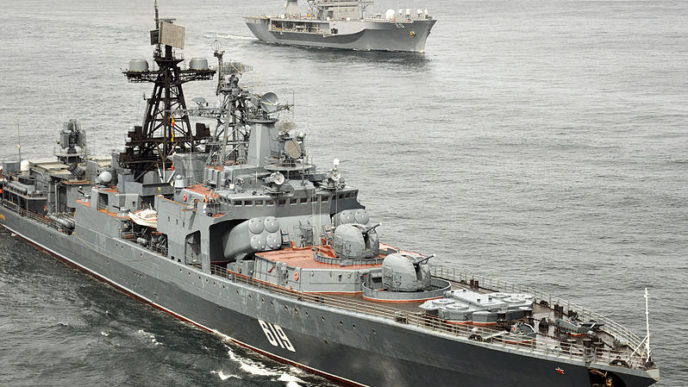
Emerging reports from Western mainstream outlets are now provoking a flurry of accusations and denials from Western, Russian, and African states regarding the allegation that Russia has deployed Special Forces troops to Western Egypt in support of one of the Libyan factions vying for control of the country.

The initial reports came on March 14 from Reuters, citing diplomatic sources from both the U.S. and Egypt. These alleged officials are claiming that any Russian deployment is likely part of an attempt to support Khalif Haftar, the Libyan militia commander who was dealt a blow by an attack on March 3 by the Benghazi Defence Brigades (BDB) on oil ports that his forces controlled.

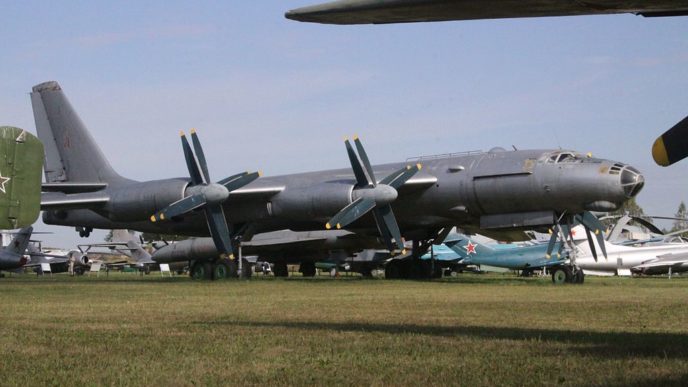
Speaking on conditions of anonymity, the U.S. officials said the United States has observed what they believe to be Russian Special Forces and drones about 60 miles away from the Libyan side of the Egypt-Libya border, at Sidi Barrani.

Reuters also reported that its Egyptian sources provided more detail, stating that a 22 member Russian Special Forces unit had been deployed but the sources did not discuss the mission of the unit. They also said that Russia also used a base farther east in Marsa Matrouh in February.

An Egyptian Army spokesman, Tamer al-Rifai, denied that any Russian unit was on Egyptian soil.

“There is no foreign soldier from any foreign country on Egyptian soil. This is a matter of sovereignty,” he said.

The United States military declined to comment on the situation.

The Russian Defense ministry, however, strongly denied the allegations with the spokesman for the agency, Igor Konashenkov stating that “Certain western mass media have been stirring up the public for years with such false information from anonymous sources.”

Andrei Kasov, the First Deputy Head of the Defense Committee in the Lower House of the Russian Parliament, Aguila Saleh Issa, called the accusations “fake news.”

The Guardian quotes the Libyan President of the House of Representatives as having told RIA Novosti that the Russians were assisting Haftar in other ways. “We asked the Russian government to help us with training the soldiers in our armed forces and the repair of military equipment by Russian specialists because the majority of our officers studied in Russia and many speak the Russian language and know how to use Russian equipment. They promised to help us in the fight against terrorism,” he said.

These reports may be real as Russia has met with Haftar before and it has showed interest in aiding the Haftar faction in Libya. Indeed, Russia has also shown signs of interest in disrupting the plans of the Western powers in Libya. Oil, geopolitical positioning, and influence all play a role in any Russian decisions to become involved in North Africa.

However, the information reported by Reuters has yet to be independently verified and the Western corporate press is well known to peddle official State Department and Deep State narratives for political and geopolitical purposes. Thus, it may also be the “fake news” typical of Western mainstream outlets designed to gin up yet more hysteria and fear over Russia’s “expansionism” and “spread of empire across the globe” so erroneously claimed by Russophobes and warmongers in the mainstream media and pro-war left.

In this regard, only time will tell. (For more from the author of “On the Brink of World War: Russia Deploys Special Forces to Help Libyan Faction Take Control of Country” please click HERE)

Follow Joe Miller on Twitter HERE and Facebook HERE.