Posts

Supreme Court Rules Women Are No Longer Real but Just Fantasies

This past Monday, the Supreme Court of the United States ruled by a vote of 6-3 that a woman is not real.

Writing for the majority, Justice Neil Gorsuch announced, “The six of us on the Court who are clearly smarter than the dissenting three, and, likewise, much brighter and wiser than the hundreds of millions of you deplorable rubes across the land who still believe in biology and genetics, have decided, by god-like fiat, that as of June 15, 2020, a female is no longer a fact, but a fantasy.” . . .

“Therefore, on this grand day of enlightenment, we proclaim that throughout the land, all subjects of the United States of America must now bow in submission to the Rainbow altar and its golden calf. You must pay homage to our Cult of Feelings. You must deny reality and cast all reason aside.

“How foolish of you think that there is a God and that He created man as a binary male and female. How naive of you to think a female is a fact. She is not!

“In our day of gnosis, we know that nothing can be known and, therefore, we know that a woman is little more than a fantasy and a fabrication. We are sure that nothing is sure, but of this one thing we are sure … Being a woman is a social construct and not an objective reality. (Read more from “Supreme Court Rules Women Are No Longer Real but Just Fantasies” HERE)

Follow Joe Miller on Twitter HERE and Facebook HERE

Justices Continue Long, Shameful Silence on Second Amendment

When the Supreme Court earlier this spring dismissed a New York gun case from its docket without ruling on the merits, disappointed Second Amendment advocates still had high hopes.

After all, even though the court hadn’t decided a meaningful Second Amendment case in more than a decade, at least four justices had recently signaled their desire to do so in the near future.

We comforted ourselves with reminders that the court had plenty of pending Second Amendment cases it could take up for next term. Many of them provided even better opportunities for protecting the right to keep and bear arms than those presented in the New York State Pistol & Rifle Association case the court declined to decide in April.

Unfortunately, the court this week dealt a serious blow to hopes that it would hear a Second Amendment case in its next term, denying certiorari in all the gun-related cases pending before it.

In laymen’s terms, the court effectively said, “We will not review the lower court decisions upholding these constitutionally questionable gun control laws.”

Of course, the court could decide later this year to grant certiorari in a different Second Amendment case that has not yet been filed. But the reality is that the justices were presented with a perfect opportunity unlikely to repeat itself later this term, and still declined to take up a case.

That does not bode well for the near future.

To put it bluntly, the justices had their pick of the litter. There was a slew of excellent cases to choose from, representing a wide variety of Second Amendment issues from different states and with different plaintiffs.

Several cases involved state bans on the possession of so-called “assault weapons,” where the court could have clarified whether semi-automatic rifles are the sorts of firearms “commonly used by law-abiding citizens for lawful purposes” that are protected under District of Columbia v. Heller.

Several more cases challenged state requirements of “good cause” for concealed carry permits, where the court could have addressed the scope of the Second Amendment’s protection outside the home.

Other cases dealt with tangential but nonetheless important questions: Can California limit ownership of handguns to a select list of those it arbitrarily deems “safe”? Can states effectively prohibit concealed carry permits for nonresidents? Did the federal government violate the Second and Fifth Amendments by banning interstate handgun sales?

Given these options, the court’s blanket refusal to take up a new Second Amendment case was not a matter of simply waiting for a better fact pattern on the basis that “bad cases make bad law.”

No. This was, at a fundamental level, another abdication by the court in which it once again declined to do its job of saying what the law is with respect to the Second Amendment.

That’s particularly shocking when it comes to the line of cases involving “good cause” requirements for concealed carry permits, where lower courts are split on the matter.

That abdication did not go unnoticed by some members of the court. Justice Clarence Thomas, joined by Justice Brett Kavanaugh, dissented from the denial of certiorari in Rogers v. Grewal, which challenged a New Jersey “good cause” law that, in practice, resulted in a near-total prohibition on concealed carry permits for law-abiding citizens.

Thomas correctly pointed out that “[o]ne of this court’s primary functions is to resolve ‘important matters’ on which the courts of appeal are ‘in conflict.’ The question of whether a State can effectively ban most citizens from exercising their fundamental right to bear arms surely qualifies as such a matter.”

In Thomas’ view, the court should “settle the conflict among the lower courts so that the fundamental protections set forth in our Constitution are applied equally to all citizens.”

Thomas further noted that many lower courts have routinely undermined the Supreme Court’s decisions in District of Columbia v. Heller and McDonald v. City of Chicago. Not only have these courts created a Second Amendment test that is “entirely made up,” but the practical results of that test have been to limit a constitutional right to a judge’s assessment of whether the right is useful at the moment.

How can we possibly explain the court’s continued silence on such an important constitutional issue? After all, it would seem unthinkable that the court would go 10 years without deciding a meaningful First Amendment case, particularly if several states passed statutes requiring “good cause” showings when applying for “public speech permits.”

Given that four of the “conservative” justices—Thomas, Kavanaugh, Samuel Alito, and Neil Gorsuch—have previously signaled their desire that the court address important Second Amendment questions, the problem appears to lie with Chief Justice John Roberts.

It’s possible, though not likely, that Roberts—who joined the Heller and McDonald majorities without reservation—has reevaluated his previous positions on the Second Amendment. Perhaps he never believed the Second Amendment protected much more than an individual right of private citizens to possess handguns inside the home, the most narrow and limited position of the holdings in those cases.

But, more likely, he simply has not tipped his hand in a meaningful way, and the other four conservative justices fear that forcing the issue may have disastrous consequences.

Why might Roberts refuse to tip his hand? It seems at least plausible that Roberts, ever concerned with “institutional legitimacy,” is waiting for a better “political moment.”

Instead of worrying whether the cases before the court present valuable opportunities to correct lower court errors and clarify what the law is, Roberts might be worried about whether the cases present an opportunity for judicial unity.

That makes sense in light of the one Second Amendment case Roberts felt comfortable hearing earlier this year. New York City’s law in the now-dismissed case was so insanely restrictive that, had the city not slightly amended the law and successfully argued the case was moot, the majority opinion might have garnered at least one vote (and perhaps more) from the court’s liberal wing.

By avoiding a contentious 5-4 ruling split along conservative-liberal lines, the court would also avoid the all-too-common outcry from liberal politicians who lambaste justices and demand a court-packing plan because they didn’t get the result they wanted.

It seems more than possible that Roberts is waiting for another “slam dunk” case.

The problem is that, even if another justice had joined a hypothetical majority opinion in New York State Pistol & Rifle, he or she likely would have done so only on the narrowest of grounds, overturning New York City’s particular law without agreeing to any jurisprudence that endangered more common gun control laws.

In other words, none of the liberal justices is likely to ever side with Roberts, et al., in a meaningful Second Amendment case that would broadly strike down “assault weapons” bans or “good cause” concealed carry laws.

If we are waiting for Roberts to find a Second Amendment “judicial unity” case for this court’s current composition, we will be waiting in vain for another decade.

The nation can’t afford that type of wait. We need a court with the courage to say what the law is, even when some politicians don’t want to hear it. (For more from the author of “Justices Continue Long, Shameful Silence on Second Amendment” please click HERE)

Follow Joe Miller on Twitter HERE and Facebook HERE
Trump Is Calling for ‘New Justices’ on Supreme Court

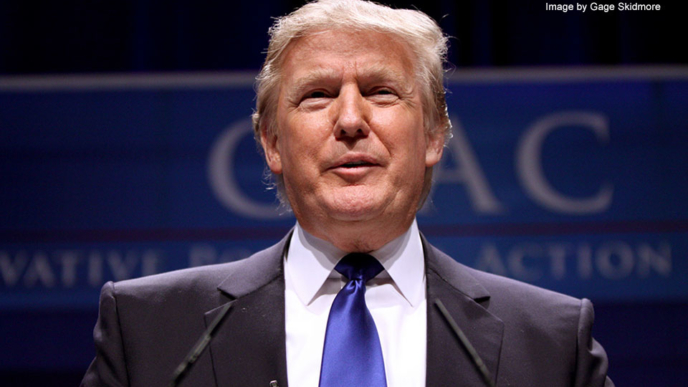
President Trump, in the wake of Thursday’s defeat at the Supreme Court in his efforts to repeal the Obama-era Deferred Action for Childhood Arrivals (DACA) program, called for new justices as conservatives took aim at Chief Justice John Roberts for what they called a “pattern” of siding with the liberal wing in key decisions.

“The recent Supreme Court decisions, not only on DACA, Sanctuary Cities, Census, and others, tell you only one thing, we need NEW JUSTICES of the Supreme Court. If the Radical Left Democrats assume power, your Second Amendment, Right to Life, Secure Borders, and … Religious Liberty, among many other things, are OVER and GONE!” he tweeted.

He went on to promise that he will release a “new list of Conservative Supreme Court Justice nominees, which may include some, or many of those already on the list, by September 1, 2020.”

Trump’s call comes after the court ruled Thursday, in a 5-4 decision penned by Roberts, that his reversal of former President Barack Obama’s executive order –­ that shielded immigrants who came to the country illegally as children from deportation –­ was in violation of the Administrative Procedure Act (APA), which sets out rulemaking procedures for federal agencies.

(Read more from “Trump Is Calling for ‘New Justices’ on Supreme Court” HERE)

Follow Joe Miller on Twitter HERE and Facebook HERE
Justice Gorsuch Fires a Torpedo at Trump’s Re-Election

Supreme Court Justice Neil Gorsuch fired a torpedo at President Trump’s re-election campaign on Monday morning. That almost certainly wasn’t his intent, but it will be the political effect of the majority decision he authored in Bostock v. Clayton County and Altitude Express Inc. v. Zarda.

Progressives will cheer the high court’s 6-3 decision, ruling that Title VII of the Civil Rights Act of 1964 protects gay and transgender Americans from discrimination in employment. But the fact that the majority decision was authored by Gorsuch and joined by Chief Justice John Roberts, leaving just three of the court’s five conservatives in lonely dissent, will have explosive implications on the right.

During the battle for the Republican nomination in 2016, Trump at first appealed to less religious members of the party while the religious right (conservative white evangelical Protestants and conservative white Catholics) gravitated elsewhere — some to evangelical author Ben Carson, others to Florida Sen. Marco Rubio, and still others to Texas Sen. Ted Cruz. Only after Trump had locked down the nomination and pledged to appoint judges to the federal courts who had been verified as reliably conservative by the right-leaning legal organization The Federalist Society did these crucially important groups come around to supporting the ideologically and temperamentally unorthodox (and morally repellant) nominee.

These voters stuck with Trump through the election and have become some of his most loyal supporters ever since for one reason above all others: because Trump vowed to deliver the federal courts to social conservatives. Trump made good on this promise right out of the gate by nominating conservative Gorsuch to the seat on the Supreme Court formerly held by Antonin Scalia, who died in February 2016 and whose seat Senate Majority Leader Mitch McConnell had held open through the remainder of Barack Obama’s final year in office.

By the time Gorsuch was confirmed and McConnell began fast-tracking a series of judicial nominations to the federal courts, the religious right was firmly in the president’s pocket. That conservatives got a second nomination to the high court less than two years into the Trump administration, replacing the ideologically heterodox Anthony Kennedy with Federalist Society stalwart Bret Kavanaugh, only solidified the bond between Trump and social conservatives. (Read more from “Justice Gorsuch Fires a Torpedo at Trump’s Re-Election” HERE)

Follow Joe Miller on Twitter HERE and Facebook HERE

‘Conservative’ Supreme Court Sides With Liberal Courts on Transgender Prison Surgery, Religious Liberty, Criminal Release

Illegitimate: Establishment-Controlled John Roberts Decides that Constitutional Protections for Religious Liberties No Longer Apply

By Mark Sherman. Over the dissent of the four more conservative justices, Chief Justice John Roberts joined the court’s four liberals in turning away a request from the South Bay United Pentecostal Church in Chula Vista, California, in the San Diego area.

The church argued that limits on how many people can attend its services violate constitutional guarantees of religious freedom and had been seeking an order in time for services on Sunday. The church said it has crowds of 200 to 300 people for its services.

Roberts wrote in a brief opinion that the restrictions allowing churches to reopen at 25 percent of their capacity, with no more than 100 worshipers at a time, “appear consistent” with the First Amendment. Roberts said similar or more severe limits apply to concerts, movies, and sporting events “where large groups of people gather in close proximity for extended periods of time.” (Read more from this story HERE)

______________________________________

U.S. Supreme Court Forces Idaho to Pay for Tranny Surgery for Inmate, Requires 837 Criminals to be Released in Idaho

By Daniel Horowitz. In a matter of a week, the much-vaunted “conservative” Supreme Court sided with two lower court decisions in separate cases to force the state of Idaho to offer a castration “operation” to a male inmate who thinks he’s a female and to release 837 criminals in Ohio. Meanwhile, the court refuse to intervene on behalf of our inalienable rights being trampled every day by state governments. If this is what a conservative Supreme Court is all about, I’d hate to see what a liberal court looks like.

It’s truly hard to conjure up a more extreme ruling from a court than one suggesting that it’s cruel and unusual punishment NOT to offer a castration to a male inmate in prison requesting one. Yet that is exactly what the Ninth Circuit Court of Appeals did when three judges issued an order in August requiring Idaho’s Department of Corrections to fund “gender confirmation surgery” for Adree Edmo.

Unfortunately, none of us are shocked by the depravity from the Ninth Circuit any more. What is shocking, however, is the fact that the Supreme Court refused to stay the ruling last Thursday. One would have expected the high court that is supposedly conservative to easily overturn this decision at the first opportunity. In Estelle v. Gamble (1976), the Supreme Court already set the standard of an Eighth Amendment violation for denying medical care to prisoners as “only medical care so unconscionable as to fall below society’s minimum standards of decency.” Moreover, a First Circuit ruling in 2014 and a Fifth Circuit ruling in March 2019 stated the exact opposite of the Ninth Circuit.

Yet on May 21, the Supreme Court denied the motion from Idaho to stay the Ninth Circuit’s order. According to the court’s order, only Justices Thomas and Alito would have granted the application for stay from the state. How the other three GOP appointees, especially Roberts and Kavanaugh who seem to worship precedent, could allow a ruling like this to stand is stupefying.

This is the second time in recent months that the “conservative” Supreme Court has denied a stay to Idaho in the face of an unprecedented Ninth Circuit ruling creating radical phantom rights centered on twisting the Eighth Amendment. In September, the high court denied a stay of a Ninth Circuit ruling creating an Eighth Amendment right to camp out on Boise’s city streets. The city issued a public health and safety ordinance to clear out these encampments, but the Ninth Circuit ruled that it would be tantamount to cruel and unusual punishment to do so – just like denying the “right” to a castration procedure.

Now let’s move on to the Ohio prison case, because it appears that criminals are the only ones with rights these days. On April 22, a federal judge in Ohio ordered the Bureau of Prisons to release 837 federal inmates in one Ohio facility into home confinement for fear of the coronavirus. Courts all over the country have already mandated the release of state prisoners. In total, 67,000 have been released from state prisons and jails at a very painful cost to public safety. This is the first fight over the federal prison system. Yesterday, the court voted 6-3 to deny a request for a stay, at least for now. Justices Thomas, Alito, and Gorsuch would have granted the stay.

It’s truly shocking to watch how the virus can be used as a pretext to eliminate the entire Bill of Rights for peaceful Americans without due process. However, these same courts have no problem using the virus to override the very generous due process that resulted in incarceration of dangerous criminals. The Ohio judge said that anyone deemed at risk from the virus must be released, regardless of his threat level or how much time he has served.

As I’ve observed before, the virus has already spread far and wide in prisons, and there is no point in mass releases now. The death rate in prisons is remarkably low, most cases are asymptomatic, and there is therefore no reason why prisoners should have a greater right to avoid the virus than the general population. In fact, by releasing these criminals, not only would the federal government endanger public safety, but it would be releasing younger people into the general population, where they would be more likely to spread the virus. The BOP has already taken more precautions to quarantine in the facilities than the prisoners would abide by were they released.

Isn’t it interesting how some of these same allegedly conservative justices refuse to side with individual rights when it comes to states shutting down businesses, infringing upon individual movements, and mandatory mask requirements, yet they suddenly discover individual liberty for criminals, including the “right” to a taxpayer-funded castration, the right to criminal release, and the right to homeless encampments on city streets?

Hey, phony conservative justices: If you are so into transmogrifying the Cruel and Unusual Punishment clause of the Bill of Rights – even against public safety goals of a state – shouldn’t that apply to the lockdowns and unprecedented assaults against our rights? Or is the Bill of Rights only for criminals?

If the “my body, my choice” mantra applies to murdering the unborn and requesting us to pay for castration, then it should apply to our own bodily integrity not to wear masks and not to be spied on by the corona fascists. (For more from the author of “‘Conservative’ Supreme Court Sides With Liberal Courts on Transgender Prison Surgery, Criminal Release” please click HERE)

Follow Joe Miller on Twitter HERE and Facebook HERE
Warning of 2020 Presidential Election Chaos Based on Supreme Ruling; Trump Denies Biden’s Insane Claim About Delaying 2020 Election

By WND. There will be “chaos” in the 2020 presidential election if the Supreme Court decides that states cannot require Electoral College electors to vote for the candidate their voters select, warns an analysis by two legal scholars. . .

In the two cases – Chiafalo v. Washington and Colorado Department of State v. Baca – a designated Electoral College elector chose not to vote for the candidate that earned the most popular votes in the state. The electors were replaced and were sued.

“The court, as is its wont, might decide that question by parsing how the Framers anticipated the Electoral College would operate. But there would be immediate real-world consequences of ‘unbinding’ presidential electors – consequences that could throw the 2020 presidential election into chaos,” wrote Smith and Noti. . .

But if the Supreme Court rule they are free to support the candidate of their choice, the 538 members of the Electoral would become “the most important elected officials in the nation.” . . .

“Here’s the scary part: Of the four most important federal anti-corruption laws, not one covers presidential electors,” they wrote. “Electors can accept unlimited amounts of money in connection with their official duties. And they don’t even need to tell anyone.” (Read more from “Warning of 2020 Presidential Election Chaos Based on Supreme Ruling” HERE)

______________________________________________________

Trump Denies Biden Claim He Might Try to Delay 2020 Election: ‘Why Would I Do That?’

By Fox News. resident Trump denied on Monday an assertion by presumptive Democratic presidential nominee Joe Biden that he would try to delay November’s presidential election due to the coronavirus pandemic.

“I never even thought of changing the date of the election,” Trump said during a news conference in the White House Rose Garden. “Why would I do that?”

Trump dismissed the comment as “made-up propaganda.”

The president’s comments come several days after Biden claimed that Trump might work to delay the election. Biden’s words came on the heels of comments from Dr. Anthony Fauci, the top U.S. disease expert, who said in an interview that he could not guarantee that it will be safe to physically vote at polls in November due to the coronavirus.

“Mark my words, I think he is going to try to kick back the election somehow, come up with some rationale why it can’t be held. That’s the only way he thinks he can possibly win,” Biden said in an online campaign event, according to a pool report. (Read more from “Trump Denies Biden Claim He Might Try to Delay 2020 Election: ‘Why Would I Do That?'” HERE)

Follow Joe Miller on Twitter HERE and Facebook HERE

Supreme Court Rules Green Card Holding Immigrant Subject to Deportation

The Supreme Court upheld a lower court decision against a permanent immigrant resident subject to deportation for multiple crimes.

In a 5-4 decision split along ideological lines on Thursday, the high court issued a ruling to broaden the scope of crimes that make immigrants, including green card holders, ineligible to have their deportation orders canceled.

The case, Barton v. Barr, involved the U.S. government ordering Jamaican immigrant Andre Martello Barton to be deported in 2016 for multiple crimes in Georgia, including firearms violations, drug crimes, and aggravated assault offenses. Barton, a permanent resident who holds a green card, applied for a cancellation of removal, which the attorney general is authorized to grant under U.S. law so long as an immigrant meets certain eligibility requirements.

One such requirement demands that immigrants reside within the United States for at least seven years after being granted any form of legal status. However, the residency requirement is subject to “stop-time rule,” which halts time accrued within the country should an immigrant commit a crime, making them “inadmissible.” The law was part of the immigration package signed into law by President Bill Clinton in 1996. At the time, Clinton lauded the package as legislation that “strengthens the rule of law by cracking down on illegal immigration at the border, in the workplace, and in the criminal justice system — without punishing those living in the United States legally.” . . .

“Removal is particularly difficult when it involves someone such as Barton who has spent most of his life in the United States,” Justice Brett Kavanaugh wrote in the court’s majority opinion. “Congress made a choice, however, to authorize removal of noncitizens — even lawful permanent residents — who have committed certain serious crimes … the immigration laws enacted by Congress do not allow cancellation of removal when a lawful permanent resident has amassed a criminal record of this kind.” (Read more from “Supreme Court Rules Green Card Holding Immigrant Subject to Deportation” HERE)

Follow Joe Miller on Twitter HERE and Facebook HERE

Democrats Triple Down on Threatening the Supreme Court

Yesterday Senate Minority Leader Chuck Schumer directly threatened Justices Neil Gorsuch and Brett Kavanaugh on the steps of the Supreme Court.

“I want to tell you Justice Kavanaugh and Justice Gorsuch: You have unleashed a whirlwind, and you will pay the price,” Schumer said to a pro-abortion crowd.

After Chief Justice John Roberts berated Schumer for his remarks, calling them “dangerous,” Schumer doubled down with a statement that doesn’t reflect the facts and proceeded to attack Roberts.

(Read more from “Democrats Triple Down on Threatening the Supreme Court” HERE)

Follow Joe Miller on Twitter HERE and Facebook HERE

Supreme Court Declines to Intervene… Where It Actually Belongs

Does the Supreme Court control the outcome of broad political and social questions? Not at all. The Constitution vests the high court with mandatory original jurisdiction over only four types cases, which tend to be pretty uncommon. But these very cases seem to be the only ones the Supreme Court declines to take.

There’s a dirty little secret about our political system that few realize. Congress has plenary power over the entirety of what is known as the Supreme Court’s “appellate jurisdiction.” That means that Congress can regulate or exclude any type of case from the Supreme Court’s reach through the appeals process, except for one of the four types where the Constitution vests it with “original jurisdiction.” One of those cases just came before the Supreme Court, and on Monday, the court finally showed humility at the wrong time and declined to take the appeal.

Art. III, § 2, cl. 1 of the Constitution vests the high court with original jurisdiction over “all cases affecting ambassadors, other public ministers and consuls;–to all cases of admiralty and maritime jurisdiction;–to controversies to which the United States shall be a party;–to controversies between two or more states.”

Well, Arizona has a complaint that California is taxing Arizona citizens who have nebulous ties to the Golden State and thereby draining Arizona’s government revenue. California assesses an $800 “doing business” tax against Arizona businesses and banks that conduct no real business in California, other than a passive investment in a California company. Since the “doing business” taxes are deductible, Arizona loses an estimated $484,000 in tax revenue every year. According to Arizona’s attorney general, Mark Brnovich, 13,300 Arizona-based LLCs pay about $10.6 million a year in California taxes without having any presence in California.

This case obviously opens up a nasty can of worms related to interstate taxation and the concept of taxation without representation. As the National Taxpayers Union warned in an amicus brief: “California’s cross-border seizure of funds from the bank accounts of Arizona residents amounts to casus belli in the classic sense of requiring collective self-defense. But unlike conventional cross-border raids that rely on physical mobilization, technological advances allow California to reach into Arizona bank accounts without physically traveling outside its own borders. This precedent, if allowed to stand, would allow any state with revenue aspirations to reach passive investors in every other state by using multistate banks as conduits for backdoor extractions.”

In other words, this is exactly why we have a federal government and more specifically why the Constitution mandated that the Supreme Court mediate these disputes.

Instead, the Supreme Court dismissed Arizona’s motion yesterday without offering any explanation. Now Arizona has no recourse but to sue in California state courts, which our Founders sought to avoid, for obvious reasons.

Justice Thomas, joined only by Justice Alito, tore into his colleagues for dismissing this case.

The Constitution establishes our original jurisdiction in mandatory terms. Article III states that, “[i]n all Cases . . . in which a State shall be [a] Party, the supreme Court shall have original Jurisdiction.” §2, cl. 2 (emphasis added). In this circumstance, “[w]e have no more right to decline the exercise of jurisdiction which is given, than to usurp that which is not given.” Cohens v. Virginia, 6 Wheat. 264, 404 (1821) (Marshall, C. J., for the Court). Our original jurisdiction in suits between two States is also “exclusive.” §1251(a). As I have previously explained, “[i]f this Court does not exercise jurisdiction over a controversy between two States, then the complaining State has no judicial forum in which to seek relief.” Nebraska v. Colorado, 577 U. S. ___, ___ (2016) (opinion dissenting from denial of motion for leave to file complaint) (slip op., at 2). Denying leave to file in a case between two or more States is thus not only textually suspect, but also inequitable.

Well, indeed, the modus operandi of the federal courts these days is to “usurp what is not given” to them, while declining to exercise “the jurisdiction which is given.” It’s truly ironic to watch the federal courts insert themselves into all issues of internal order within a state where they doesn’t belong, be it life, marriage, election law, or internal economic issues. We have federal courts hearing cases that statute explicitly precludes them from hearing. We have federal courts abusing the rules of standing. And we have federal courts issuing injunctions outside the parties properly before the court.

Yet there is this erroneous perception that the federal courts reign supreme over the other branches and can usurp their power with impunity, when in fact the opposite is true. There can be no greater authority on this matter than Chief Justice Oliver Ellsworth, who served as the first Senate Judiciary Committee chairman and is often called “the father of the national judiciary.” Writing an opinion in a 1796 case, Ellsworth authoritatively asserted, “If Congress has provided no rule to regulate our proceedings, we cannot exercise an appellate jurisdiction; and if the rule is provided, we cannot depart from it.”

As Clarence Thomas wrote in a 2018 case, “When Congress strips federal courts of jurisdiction, it exercises a valid legislative power no less than when it lays taxes, coins money, declares war, or invokes any other power that the Constitution grants it.”

For example, Congress stripped the federal courts of all power to block deportations under “expedited removal,” but the courts are issuing injunctions anyway. There is no apparent will on the part of the Supreme Court to remove its inferior courts from this realm.

Yet when it comes to an interstate dispute, the one area where the high court must insert itself, plaintiffs are told to go to the other state’s court for relief because the justices have washed their hands of the case. Truly a system upside down.

Perhaps, if the Supreme Court doesn’t want to use its power where the Constitution requires it, Congress should negative its power in all the cases where that authority exists solely at the discretion of Congress. (For more from the author of “Supreme Court Declines to Intervene… Where It Actually Belongs” please click HERE)

Follow Joe Miller on Twitter HERE and Facebook HERE

Trump Impeachment Attorney Jay Sekulow Floated for the Supreme Court

In the wake of President Trump’s acquittal, White House allies are floating a Supreme Court appointment for top impeachment lawyer Jay Sekulow.

“He’s certainly qualified,” said former Trump lawyer John Dowd about a potential appointment, speaking to Politico. “He’d be a terrific Supreme Court justice.” Dowd was briefly on the team representing Trump during the probe by then-special counsel Robert Mueller into allegations of collusion between Russia and the Trump campaign, alongside Sekulow.

Sekulow was one of a handful of lawyers representing the president in his Senate impeachment trial, playing a quiet role next to celebrity attorneys Alan Dershowitz and Ken Starr. . .

He is viewed as a savvy media hand, but critics charged during the trial that his presentation was poor. CNN analyst Jeffrey Toobin praised Sekulow for his past Supreme Court arguments but took issue with his performance on the Senate floor. (Read more from “Trump Impeachment Attorney Jay Sekulow Floated for the Supreme Court” HERE)

Follow Joe Miller on Twitter HERE and Facebook HERE