Posts

Syrian Christians Need Guns

As Stream readers know, I and my European organization lobby a lot for the Christians in Syria and Iraq. On one occasion I was working the corridors of the European Parliament (EP) for this cause, and had an ugly encounter. I met people who claimed to represent Syria’s Christians. I quickly realized who they really were: agents of the brutal Assad government.

They thought I was ignorant. So they tried to convince me that another Syrian Christian who had just addressed an EP conference was a paid stooge of Kurdish militias. They told me that the Federation of Northern Syria was mere propaganda for Kurdish “terrorists.” They even claimed that the Christian military group cooperating with Kurds and Arabs, the Syriac Military Council, did not exist.

What these people didn’t know was that the man they were maligning was a friend of mine. Nor that I had been to visit the headquarters of the Syriac Military Council, and met with the brave Syrian Christians who are fighting for their freedom. I know the Kurdish leaders who are fighting alongside Christians and other minority groups as comrades in arms.

I confronted these Assad loyalists with all these facts. The conversation grew awkward. Then I asked them if they were really working for Assad’s government. They left, and I never spotted them again in the European Parliament.

Meeting those people so willing to lie about their own country pointed up a tragic fact: The Assad regime has a very strong hold over thousands of helpless Christians in Syria. Assad presents himself as their protector, and many in the West accept this at face value. There’s a good reason for that: The strongest groups of anti-Assad rebels are radical Islamists tied to al Qaeda. These are the main groups backed by Turkey and Saudi Arabia. And where they have conquered Christian towns, they have ethnically cleansed them, just as ISIS would.

If the U.S. helps these groups to replace Assad — the way the U.S. helped radical Islamists come to power in Iraq — the Christians of Syria would be finished. (Most of Iraq’s 1 million Christians were driven into refugee camps or killed after the U.S. invasion.) Knowing this, many of these unarmed, frightened people cling to Assad, as Iraqi Christians once clung to Saddam Hussein. And Assad works hard to keep these Christians under his control.

A friend of mine once visited a Syrian bishop. While they were sitting together the bishop got a call. It was from the Syrian secret service. They wanted to know whom he was meeting with. Assad keeps Christians on a very short leash indeed. The Christian community puts up with it out of fear of the alternatives: ISIS or al Qaeda. The bishops know that their flock is at Assad’s mercy.

Many Syrian Christians want an end to Assad’s dictatorship. Many have been victims of the regime. A friend of mine was tortured. Another saw his father “disappeared” by the Syrian secret police. I have received reports of young people being arrested and tortured because they “liked” the wrong Facebook pages.

The Christians of Al Qaryatayn trusted Assad to protect them. But in August 2015, he ignored their dire situation, and let ISIS take the town. He waited almost a year before taking action, leaving many of them to be abducted or killed by ISIS. The Assad regime has made extensive deals with ISIS to buy gas, electricity and oil. He made it his priority to fight the Free Syrian Army rather than ISIS.

Such facts explain why not all Christians in Syria support Assad. Some have instead joined the Syriac Military Council. As part of the Syrian Democratic Forces (SDF) they have been fighting against ISIS in North-East Syria since 2013 and will be part of the operation to take Raqqa. The SDF is not in any direct conflict against the Assad regime, but it is completely independent of it. These Syriac-Assyrian Christians experienced his oppressive methods first-hand. They don’t want to go back under his control.

Thankfully, the U.S. is allied with the Syrian Democratic Forces. However, a legacy policy from the Obama administration is still in place: As I reported here at The Stream, the U.S. supports the Christian militias with words, but won’t give them arms.

Now President Trump has made the decision to back the removal of Assad from power. He made this choice tangible by shelling the Shayrat Airfield as retaliation for the chemical attack at Khan Sheikhun, for which the U.S. blamed Assad.

Even without that chemical attack, the Assad regime is clearly a brutal dictatorship. The Syrian people deserve better than Assad, ISIS or al Qaeda. The great risk is that if the U.S. intervenes directly, it will hand the country to al Qaeda — as the Turks and Saudis are spending millions trying to do.

As John Zmirak and Jason Jones wrote here at The Stream, the only decent, humane solution for Syria is a Swiss-style decentralized regime. Such a government would leave power in the hands of local and regional governments and protect minority groups. The Federation of Northern Syria implemented precisely this. Kurds allied with Christians and moderate Sunni Arabs control a large swathe of the country. Instead of allowing Assad or al Qaeda to crush this free, tolerant government, a peace plan should protect it. The Russians are already behind such a plan to federalize Syria. The U.S. must use its vast influence to support it.

If the U.S. really wants Assad out of power, it needs to remove one of his key sources of support: The desperate loyalty of terrified Syrian Christians. President Trump could do that, and steal Assad’s mantle as “protector” of these people, by backing those Syriac-Assyrian Christians in Syria who are already fighting ISIS: The Syriac Military Council. The Federation of Northern Syria already controls an area twice the size of Lebanon. Would the U.S. really like to see ISIS, al Qaeda or Assad gain control of the innocent people who now live there in safety and freedom?

Why continue Obama’s bankrupt policy of singling out Christians to deny them the means of self-defense against ISIS? Why let Assad pose as the only hope for Syrian Christians? Didn’t the American people elect Donald Trump because they wanted a new approach?

The U.S. should give Syria’s fighting Christians the weapons they ask for. Russia has no objection. Arming the Syriac Military Council would hurt Assad and ISIS, and help protect millions from al Qaeda in the time after. It would also allow them to arm the many who want to join them but cannot due to a lack of arms. Here’s a video plea from the Christians on the front lines fighting ISIS, asking President Trump for help:

Christians in the U.S. can make a real difference in Syria. Contact your representatives and the president, and tell them to help our fellow Christians protect their families. (For more from the author of “Syrian Christians Need Guns” please click HERE)

Follow Joe Miller on Twitter HERE and Facebook HERE.

Easter and Syrian Genocide: What Americans Can Learn

As Christians in America commemorate Easter, we are reminded of those who celebrate Jesus’ resurrection in places hostile to Christianity. Consider the Middle East Christians facing genocide. In an interview with The Stream, Knights of Columbus spokesperson Andrew Walther suggests there is much we can gain from the strength of those brothers and sisters in the Lord.

A Source of Inspiration

Last year then-Secretary of State John Kerry labeled the mass killing of Christians in the Middle East genocide. Still they remain strong in their faith, said Walther, spokesperson for the Catholic group Knights of Columbus (KoC). “They face the brunt of genocide,” but they’re still hanging on, he said. He added that their strength in the face of hardship and genocide should be a source of inspiration for Christians in the U.S.

They are optimistic about the new Trump administration, too. “I’ve been told by Iraqi Christians [that] they see a new openness in the past few months on the part of the U.S. government. They hope it translates into action,” said Walther.

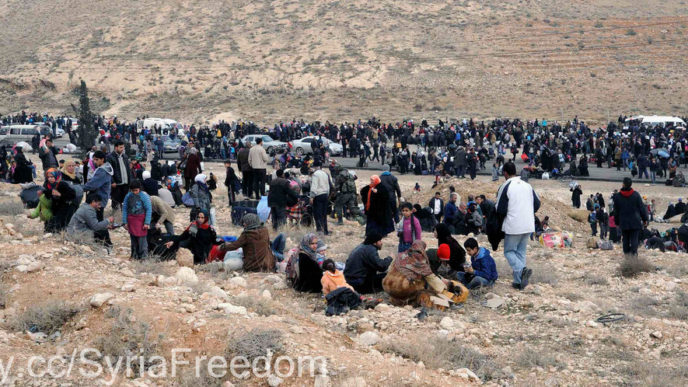
Most Syrian Christians are still displaced, often in smaller camps that don’t get attention from organizations and governments on hand to help. “Christians don’t end up on the radar,” said Walther. But they’ve seen many Christian areas liberated. Some people are moving home. Just the fact that people are moving back is a good sign, said Walther. “It’s a first step, there’s still a long way to go.” He added that despite the problems in the area, there is a palpable optimism that things will get better.

The Cradle of the Church

In Iraq, the Christian population is down 80 percent since 2003. And in Syria, the Christian population is down about 60 percent since their civil war began in 2011. This is troubling for many reasons, but for Walther it goes back to St. Paul and his conversion. “The Syrian Christians weren’t converted by St. Paul,” he explains. “They baptized St. Paul. The idea that this [group] could disappear should be alarming.” He added that the roots of Christianity could disappear from the cradle of the Church. However, his organization is working hard to make sure that doesn’t happen.

Knights of Columbus

The Knights of Columbus has operated in the area since mid-2014 when ISIS really began taking over the territory. Walther said the KoC provide help through medical clinics, food, housing, catecheses programs among others. Just last month, the KoC pledged nearly $2 million to help the Syrian and Iraqi Christian refugees. The KoC use a variety of ways to help the people survive and rebuild.

But the assistance isn’t just for Christians, he is quick to point out. “Our clinics we fund and programs can’t turn anyone away,” he said, adding that it is a remarkable witness to non-Christians in the area who are served by Christian organizations.

Going On With Their Lives

Walther said he’d really like Americans to learn about the Christians in the area and how they’ve been persecuted for centuries. He also wants people to know that Syrian Christians “really want to go on with their lives, to go home and be full citizens in their country. They don’t want to be second-class citizens or discriminated against.” Much like the Western world, they’d like to celebrate Easter with family and contemplate Jesus’ gift to them of salvation without fear of persecution. But their faith has kept them strong, said Walther.

The Stream asked “What can Americans do?” Americans can pray for their brothers and sisters in the Middle East, said Walther, and help when possible through financial or other means. He adds that their strength in the face of genocide is an incredible testimony for American Christians and non-Christians alike. (For more from the author of “Easter and Syrian Genocide: What Americans Can Learn” please click HERE)

Follow Joe Miller on Twitter HERE and Facebook HERE.

Republican Lawmakers Expect Role for Congress in Military Force against Syria

President Donald Trump’s order of a missile strike on a military base in retaliation for the Syrian government’s deadly chemical attack on civilians served as a strong, decisive message to bad actors worldwide, congressional Republicans say, and signified the new administration would hew closely to the traditional concept of American power.

In interviews with The Daily Signal, Republicans of all stripes said they were OK that Trump did not consult Congress before he authorized the strike, in which 59 cruise missiles hit a Syrian air base early Friday morning local time.

It was the first U.S. military action against the government of Syrian President Bashar Assad in the country’s six years of civil war.

But as the Trump administration hints at a tougher approach to the Assad regime, Republican lawmakers say they expect to have a greater influence on future military action.

“With this very positive action in Syria, the president has now brought to the forefront the need for a discussion between Congress and the administration about strategy going forward,” said Rep. Jack Bergman, R-Mich., a freshman lawmaker and Vietnam War veteran. “This event has become a catalyst for the next logical step that we have to have as a country. It’s an opportunity for us as a country to show collaborative leadership within our system.”

Bergman called for the Trump administration to propose an official Authorization for Use of Military Force for Congress to review. Rather than delineating a specific strategy, an AUMF—as the authorization is known—gives the basic legal authority for the U.S. military to use force against an enemy.

“Congress cannot be disengaged,” Bergman told The Daily Signal in an interview. “We need to be involved in creating an AUMF of the future and understand this not a political game. This is about national security.”

How Congress Can Authorize Force

The Trump administration, like its predecessor, is carrying out a military campaign against the Islamic State terrorist group, also known as ISIS, in multiple countries, including Syria.

It takes these actions under an existing AUMF from 2001 permitting the targeting of groups connected to the 9/11 attacks and the 2002 AUMF authorizing the Iraq War.

President Barack Obama, in his second term, urged Congress to give him new authority to use force against ISIS, but there was bipartisan reluctance to do so and lawmakers never took a full vote on such an authorization.

After the U.S. missile strikes last week, some lawmakers—of both parties—said Trump should seek congressional approval for an AUMF that specifically authorizes the U.S. military to fight Assad.

Sen. James Lankford, R-Okla., said it would not be appropriate to use the 2001 authorization, which was intended to fight al-Qaeda, because the Assad regime “is certainly not connected to that group.”

“If you go back to the Federalist Papers, the Constitution is clear the commander in chief is the commander when the military is in the field, but Congress and the American people are responsible for calling out the military to move into battle—whether it’s through a war declaration or authorization for use of military force,” Lankford, a member of the Senate Committee on Homeland Security and Governmental Affairs, said in an interview with The Daily Signal.

Rep. Nancy Pelosi of California, the House Democratic leader, said she supported Trump’s decision to strike the Syrian air base, but that Congress should consider any proposed future military action in Syria.

“If the president intends to escalate the U.S. military’s involvement in Syria, he must come to Congress for an Authorization for Use of Military Force which is tailored to meet the threat and prevent another open-ended war in the Middle East,” Pelosi said in a prepared statement to reporters.

Needed: ‘Clear Plan to Win’

Some Republican lawmakers interviewed by The Daily Signal were more nuanced in their views, saying they are prepared to wait for the Trump administration to first firm up a broader strategy for the Syrian conflict before proposing any future force.

“No recent president in decades has ever needed to go to Congress for such a single strike occasion,” Rep. Lamar Smith, R-Texas, a member of the House Homeland Security Committee, said in an interview with The Daily Signal. “That’s exactly the type of situation where the president is given authority under the Constitution to act. I do expect and feel confident the president will brief members of Congress when we return [from Easter recess], and I think we will be brought up to date on what the policy might be and future actions might be. We will have to wait and see if it scales to an all-out war.”

So far, Trump’s strategy is unclear.

During the presidential campaign, Trump emphasized his focus in Syria would be on defeating ISIS, which maintains its base in that country. And in the early weeks of his administration, the White House articulated that facilitating the removal of Assad from power was not a priority.

Last week, Trump’s calculus seemed to change when the president said the chemical weapons attack had “crossed a lot of lines for me” and that his attitude toward Syria and Assad “has changed very much.”

White House press secretary Sean Spicer seemed to suggest Monday that Trump would act against Syria not just if it again used chemical weapons, but also when it used conventional munitions such as barrel bombs—powerful explosive devices often filled with shrapnel.

The Syrian Network for Human Rights estimates the Syrian government dropped 12,958 barrel bombs in 2016, resulting in the deaths of 653 civilians.

“If you gas a baby, if you put a barrel bomb into innocent people, I think you will see a response from this president,” Spicer said in his daily briefing.

‘Nothing Has Changed’

Spicer walked back and clarified his comment later Monday.

“Nothing has changed in our posture,” Spicer said in a statement to reporters. “The president retains the option to act in Syria against the Assad regime whenever it is in the national interest, as was determined following that government’s use of chemical weapons against its own citizens.”

Other Trump administration officials in recent days have sought to downplay the prospects for future military action against the Assad regime.

Defense Secretary James Mattis, speaking to reporters Tuesday, said the administration’s priority in Syria “remains the defeat of ISIS.”

“Our military policy in Syria has not changed,” Mattis said.

Secretary of State Rex Tillerson, who is meeting with Russian government officials this week, told reporters that the U.S. seeks a negotiated resolution to the Syrian civil war and wants Moscow’s help in pushing Assad from power.

“The final outcome does not provide a role for Assad or the Assad family in the future governance in Syria,” Tillerson said in a Wednesday news conference with Russian Foreign Minister Sergei Lavrov.

Trump, in an interview on Fox Business that aired Wednesday morning, said simply: “We’re not going into Syria.”

Later Wednesday, Trump called Assad “a butcher” and said U.S. relations with Russia could be at an “all-time low.”

“Right now, we’re not getting along with Russia at all—we may be at an all-time low in terms of a relationship with Russia,” Trump said during a news conference at the White House with Jens Stoltenberg, the secretary general of NATO. “This has built for a long period of time, but we’re going to see what happens.”

Rep. Lee Zeldin, R-N.Y., a member of the House Foreign Affairs Committee, said the Trump administration should clearly articulate its priorities in Syria to Congress.

“I am someone who believes strongly we should never send troops into harm’s way unless we have a clear plan to win,” Zeldin told The Daily Signal in an interview, adding:

Part of executing a strategy to win includes getting everybody on the same page to what winning looks like. There is debate that will take place whether Assad should stay in power, and what role the U.S. should have in the region and around the world. While not every part of this debate should be televised for the adversary to see, at the same time there is a responsibility to ensure we are making the right decisions so that the American public is supportive of our efforts.

Lankford said the Trump administration ought to be focused both on defeating ISIS and helping to remove Assad, because the Syrian dictator’s leadership fuels terrorism.

“We hope Assad’s status is resolved diplomatically, but you can’t do diplomacy without a credible military threat behind it,” the Oklahoma Republican said.

If the Trump administration does not provide “a clearly articulated vision” for its strategy in Syria, Lankford said, “Congress should not move forward on any action.”

“No one knows what the American policy is in Syria right now, and what it stands for and will not stand for,” Lankford said. “None of our allied countries in the region will help in the fight unless they know where America stands. The Trump administration has to fix that or the international community will have no reason to engage.”

Constitution ‘Pretty Clear’

Other Republican lawmakers are more specific about what set of U.S. actions in Syria should require congressional oversight.

Rep. Jim Jordan, R-Ohio, a leader of the conservative House Freedom Caucus, said Congress should review any proposed “boots on the ground” in Syria dedicated to targeting the Assad regime.

“The Constitution is pretty clear, you are gonna have a debate in the Congress,” Jordan said in a speech Tuesday in his home district that was attended by a Daily Signal reporter. “That’s the way the founders laid this thing out. If it’s gonna escalate, if it’s gonna be something with boots on the ground or anything like that, I think we’ve got to be real careful about that, and it would warrant a full debate in the House and the Senate before we go any further.”

Rep. Andy Harris, R-Md., also of the Freedom Caucus, said he expects the Trump administration to pursue a diplomatic solution to the Syrian civil war—as Obama did.

But if Trump failed, and then sought military action against Assad, Congress should have a say, Harris said.

“If further escalation involving serious military force is necessary, the president should consult with Congress first,” Harris told The Daily Signal in an interview.

“For instance, if the administration decides its diplomatic efforts weren’t working and decided they needed to attack the Syrian air force, that is probably something they should obtain congressional approval for,” Harris said.

He doesn’t believe Trump would need Congress’ blessing if the president sought to create no-fly and safe zones in Syria to protect civilians, the Maryland Republican added.

‘Part of the Action’

In the interviews, the Republican lawmakers were not unified in describing how Congress should be incorporated into Trump’s Syria plan.

The GOP lawmakers appear prepared to give the president some freedom now that he has shown himself not to be wedded to the isolationist foreign policy approach he espoused in the campaign.

“I think President Trump has a lot different view of the world than candidate Trump,” Rep. Mike Kelly, R-Pa., said in an interview with The Daily Signal. “He won’t sit back and say, ‘This is how I want the world to be’ without regard for the facts of a given situation.”

“This president is an action guy,” Kelly said, “and I trust he will rely on the advice given by his military advisers. But Congress does need to be a part of the action. That’s our responsibility constitutionally, and I would never walk away from that.” (For more from the author of “Republican Lawmakers Expect Role for Congress in Military Force against Syria” please click HERE)

Follow Joe Miller on Twitter HERE and Facebook HERE.

Tillerson Issues Tough Ultimatum to Putin

U.S. Secretary of State Rex Tillerson issued a ultimatum to Russian President Vladimir Putin over his support of Bashar al-Assad in Syria. He made the comments Tuesday to reporters after a meeting with diplomats in Italy.

Tillerson pressured the G-7 countries to join together against Assad’s regime, and demanded that Putin choose between his ally in Syria accused of war crimes and Hezbollah, or join his detractors, led by the United States. He also made it clear that the United States placed at least part of the blame on Russia for the chemical attack.

“Last week Bashar al-Assad’s regime killed even more of its own people using chemical weapons,” he explained. “Our missile strike in response to his repeated use of banned weapons was necessary as a matter of U.S. national security interests. We do not want the regime’s uncontrolled stockpile of chemical weapons to fall into the hands of ISIS, or other terrorist groups who could and want to attack the United States and our allies” . . .

“It is also clear that Russia has failed to uphold the agreements they had entered into under multiple U.N. Security Council resolutions,” Tillerson added. “These agreements stipulated Russia as the guarantor of a Syria free of chemical weapons, that they would also locate and destroy all such armaments in Syria. Stockpiles and continued use demonstrate that Russia has failed in its responsibility to deliver on its 2013 commitment. It is unclear whether Russia failed to take this obligation seriously, or Russia has been incompetent.” (Read more from “Tillerson Issues Tough Ultimatum to Putin” HERE)

Follow Joe Miller on Twitter HERE and Facebook HERE.

Anonymous US Official: Russia Knew Syrian Chemical Attack Was Coming

The United States has concluded that Russia knew ahead of time that Syria would launch a chemical weapons attack last week, a senior U.S. official says.

The official offered circumstantial elements to back up his claim, but no concrete proof. And others in the Trump administration cautioned that final American determination had been made that Russia had advance knowledge of the attack, which killed more than 80 people and prompted retaliatory U.S. cruise missile strikes.

The senior official said Monday that a drone operated by Russians was flying over a hospital as victims of the attack were rushing to get treatment. Hours after the drone left, a Russian-made fighter jet bombed the hospital in what American officials believe was an attempt to cover up the usage of chemical weapons. (Read more from “Anonymous US Official: Russia Knew Syrian Chemical Attack Was Coming” HERE)

Follow Joe Miller on Twitter HERE and Facebook HERE.

Mattis: Defeating Islamic State Still Top US Priority in Syria

After attacking a Syrian air base in response to President Bashar Assad’s alleged battlefield use of chemical weapons, the Pentagon intends to refocus on defeating the Islamic State group without getting more deeply involved in the country’s civil war, Defense Secretary Jim Mattis said Tuesday.

“The military campaign is focused on … breaking ISIS, defeating ISIS in Syria,” Mattis told reporters in his first Pentagon news conference as President Donald Trump’s defense chief. Last week’s cruise missile assault on a Syrian air base “was a separate issue” meant to demonstrate that the Trump administration will not tolerate what it believes are violations of international conventions against the use of chemical weapons, Mattis said.

The Syrian government has denied that it used chemical arms in an attack on a Syrian town last week. (Read more from “Mattis: Defeating Islamic State Still Top US Priority in Syria” HERE)

Follow Joe Miller on Twitter HERE and Facebook HERE.

Not Just Syria: 5 Huge News Stories to Keep an Eye on Amid the Madness

The world’s eyes and ears have once again turned toward Syria following last week’s chemical weapons attack and U.S. President Donald Trump’s subsequent airstrikes on the Assad government. Mainstream media, independent media, and social media platforms are fixing fierce attention on the ongoing developments.

These events undoubtedly deserve widespread, ongoing scrutiny. From the United States government’s lack of evidence that the Syrian government was behind the chemical attack to the media’s complicity in driving a pro-war narrative and president Trump’s hypocrisy in bombing Syria — after criticizing former president Barack Obama for doing the same thing — further critical analysis of the recent airstrikes is vital.

But even as skepticism toward these events should remain heightened, so should awareness of countless other major developments. Here are five to follow:

1. Trump Appoints Pharmaceutical Consultant to Head the FDA — This week, the president appointed Scott Gottlieb, a pharmaceutical industry insider who has served the boards of multiple pharmaceutical companies, to chair the Food and Drug Administration. Gottlieb currently still works as a consultant for GlaxoSmithKline. He has received $414,000 from GSK, Pfizer, AstraZeneca, Bristol-Myers Squibb, and Valeant Pharmaceuticals. He has also received tens of thousands of dollars in speaking fees from pharmaceutical companies like Merck and Mikart, as well as other corporations — including Goldman Sachs. He has taken several trips through Washington’s revolving door, with brief stints at the FDA mixed in with multiple positions consulting pharmaceutical companies. Trump’s pick follows in the footsteps of Barack Obama, who also appointed a pharmaceutical industry insider to chair the FDA.

2. U.S. Military announces it will deploy 1,500 more troops to Afghanistan this year — The U.S. Army announced last Friday it would send 1,500 Alaska-based troops to Afghanistan as part of Operation Freedom’s Sentinel, an extension of Operation Enduring Freedom, the 13-year war in Afghanistan. The 4th Brigade Combat Team (Airborne), 25th Infantry Division was set to be downsized in 2015, but the Army’s most recent decision nullifies that plan. The Army said the coming deployment is part of a regular rotation but also said it is a response to “emerging mission requirements.”

The Army also activated 1,500 troops last December for Freedom’s Sentinel, suggesting the latest deployment amounts to the continuation of a seemingly endless war in the violence-ravaged country — regardless of who is president

3. WikiLeaks reveals CIA tactics to implant malware in Windows-based computers — On Friday, WikiLeaks continued the release of its Vault7 Series, documents it claims to have hacked from the CIA that detail the extent of the agency’s overreach. Ars Technica reported:

Friday’s installment includes 27 documents related to ‘Grasshopper,’ the codename for a set of software tools used to build customized malware for Windows-based computers. The Grasshopper framework provides building blocks that can be combined in unique ways to suit the requirements of a given surveillance or intelligence operation.

The leaks also included the CIA’s tactics for bypassing anti-virus protection and its use of bank-fraud malware called Carberp. “Once the Carberp source code was leaked in 2013, security experts warned it was akin to ‘handing a bazooka to a child,’” Ars Technica noted.

The leaks follow previous revelations that documented the extent of the CIA’s surveillance abilities, including its capacity to hack into iOs and Android operating systems. Those leaks also revealed the U.S. government was actively working to undermine the security of U.S. tech companies.

The same agency taking it upon itself to hack into private networks has also spent $1 billion annually arming radical rebels in Syria, some of whom have been implicated in the 2013 chemical attack former President Barack Obama used to justify his attempt to bomb the war-torn nation.

4. Tensions between the United States and North Korea continue to escalate — As Trump bombs Syria, the situation on the east Asian peninsula looks like it could devolve into violence, as well. The U.S. is accusing North Korea of aggression over its development of missiles and nuclear weapons — two technologies the U.S. also has at its disposal. However, unlike the United States, North Korea has never used missiles or nuclear weapons against another country. NBC News has reported that the U.S. may move its own nuclear weapons into South Korea as a deterrent to the North. All the hype about North Korean “aggression” should be taken with a grain of salt considering the country hasn’t officially attacked another country outside of Korea ever.

5. Tensions escalate in the South China Sea after Trump meets with Chinese president — Trump was physically meeting with Chinese President Xi Jinping while the Tomahawk missiles began dropping on Syria. We cannot discount the possibility that Trump may have been trying to send China a message of military strength and unpredictability.

The U.S. and China have been on a collision course as China has sought to assert itself defensively in the South China Sea. China has constructed and militarized artificial islands, while the U.S. has positioned its navy for a confrontation in the region. U.S. allies like Japan and the Philippines are locked in a perpetual chess match with China as the powers seek to stake their territorial claims to resources in the China Sea.

China is also North Korea’s closest ally and is viewed as the only entity capable of externally controlling the North. At the time of this article’s publication, China is in the process of moving 150,000 troops to its border with North Korea in preparation for a possible U.S. intervention and the subsequent fallout from it.

***

While the United States starts possibly another war against a sovereign country under Trump’s leadership, it’s important to pay attention to other, equally concerning events unfolding in the U.S. and around the world. While the media and politicians heap praise on Trump for bombing a new country and anti-war marchers take to the streets, we must inform ourselves now and take action before further U.S.-sanctioned carnage engulfs the world and before domestic corruption usurps our rights and freedoms at home. (For more from the author of “Not Just Syria: 5 Huge News Stories to Keep an Eye on Amid the Madness” please click HERE)

Follow Joe Miller on Twitter HERE and Facebook HERE.

President Trump: Find Peace in Syria by Looking to Switzerland

We’re all Syria buffs now. We’re barraged with conflicting reports, atrocity stories, and carefully nurtured narratives. They all seem to goad us to back a major U.S. involvement in that country. (Can you spell “q-u-a-g-m-i-r-e”?) So let’s step back and think for a minute.

How much hope is there for a country where citizens speak three quite different languages? Where they hold starkly opposed religions — each of which damns the members of the other as heretics or infidels? Where religious or ethnic atrocities on each side feed into a history of bitterness?

We are speaking now not of Syria, but of Switzerland.

How Switzerland Solved the Syrian Problem

That’s right, one of the richest, most peaceful countries on earth. The Swiss have low taxes, minimal government, and the most democratic constitution in human history. Citizens’ religious freedom, property rights, gun rights, and freedom of speech are protected even better than in America. Most of a Swiss person’s taxes go to his town, not the federal government. Any citizen can collect signatures to force a national referendum to change the laws.

But Switzerland was once a lot like Syria. Its ethnic factions engaged in vicious attacks and bloody vengeance. Its churches used to whip their members into mutual holy war. Catholics would march with the Eucharist in elaborate processions through Protestant towns. This risked armed attacks by Calvinists. So young Catholics formed shooting clubs. They would march alongside their priests, brandishing rifles. As recently as 1847, the Catholics and Protestants fought a brief civil war that ended with the Jesuits expelled and banned from the country.

Localism über Alles

So what was it that rescued Switzerland from turning out like Syria? What could President Trump learn from the Swiss success story? The answer is simple. Localism and decentralization saved Switzerland. They could save Syria. In fact, a peace plan based on these principles is currently on the table, at the Russian-sponsored Astana talks — which the U.S. so far is boycotting.

True American “federalism” is fine example of localism in action. Let Maine and Mississippi, California and Colorado, make most of their own laws. Suit laws to the values and habits of their citizens. In the teachings of the popes, this idea is called “subsidiarity.” It is designed to keep political power as close as possible to the citizens whom it impacts. You can debate most of your tax burden at your local town meeting.

For more on subsidiarity, see the chapter we wrote about it in The Race to Save Our Century.

Protection for Each Region and Minority Group

Rebuilding after the 1847 civil war, the Swiss did not look to the rigidly centralized government of France. Instead, they modeled themselves on the still quite loosely knit United States. They embedded in their new constitution protections for the rights of every region, and left most of the political power in each region’s hands.

There were some, of course, who wanted a powerful central government that could impose one faction’s wishes on everyone. The Swiss who thought like this had welcomed Napoleon’s invasion. But the country’s deep divisions made such a scheme impossible. At least without a tyrannical government willing to batter the Catholics and Calvinists, French and German speakers, city-folk and farmers, into sullen, begrudged submission.

Reject 20th Century Statism and Centralism

Of course, that is what Bashir Assad’s harsh secular government has done in Syria. He repressed the Sunni majority, while protecting his own embattled (Alawite) minority, along with Christians and other smaller groups. Brutal coercion is likewise the program of Islamist rebels backed by Turkey and Saudi Arabia. Forcibly homogenizing peoples and regions is the model of twentieth century statehood: A powerful central government, dedicated to “national greatness,” crams one ideology down the throat of every hamlet and village.

That’s the model Western powers imposed on the Middle East, along with crackpot borders that took no account of ethnic or religious differences, in the Sykes-Picot agreement in 1916.

A Unified Democracy is Not an Option

Up till now, the only alternative to thuggish, centralized nationalism of the sort practiced by Assad (and before him, Saddam Hussein) has been Islamist theocracy. Islamists like the al Qaeda factions now covet power in Syria. They also wish to impose a single creed and way of life on vibrant, diverse regions. The difference is that Islamists look to sharia as the source of all law and order. That’s bad news for religious minorities. That’s why millions of Alawites and Christians now look for protection either to Assad, or to Kurdish militias.

If Assad were to reconquer Syria, he would brutally crush Islamists and make life hell for religious Sunnis.

If the U.S. topples Assad and lets “nature” take its course, murderous theocrats linked to al Qaeda would do the same to Alawites, Shiites, and Christians.

If Turkey has a strong hand in the settlement, the government it sponsors will crush the Kurdish militias, who seek autonomy for their distinct and long-suffering nation.

There is no prospect of a strong, centralized government that would honor human rights and democracy. That’s not an option in a nation this religiously and culturally fractured. Whoever holds the whip hand of a powerful national government will crush and subdue the others. That is why each side fights so brutally. It’s why most of the factions, including Assad but not the Christians and Kurds, have resorted to chemical weapons.

Restart the Russian-Backed Peace Talks

There is a better way. The peace talks at Astana, stalled for now, envisioned a Swiss-style solution for Syria. Each of the regions now controlled by one faction or other would form a kind of “canton,” with most of the powers that normally go to a central state. These cantons would be linked by a loose confederation, designed to keep peace among them. (Some other Alawite, not Assad, should be its figurehead.) People unhappy in the canton where they ended up would likely vote with their feet, and move to a friendlier region.

The Swiss model is already present in Syria. The Federation of Northern Syria, led by Kurds allied with Christians and tolerant Arabs, is composed of self-governed cantons in voluntary association. It’s the one part of Syria where women take part in politics, all religious groups are free, and power stays close to the people. The Stream‘s Johannes de Jong has written in depth on how federalism works now in this part of Syria.

Such a plan isn’t perfect. It will frustrate the ambitions of every group. And that’s the point. Because in Syria today such ambitions often include erasing minority rights, forcing people to change religions, or simply wiping them out.

Or We Could Just do Iraq All Over Again

In Iraq we tried another plan: Seize power from brutal, secular nationalists. Then spend trillions to set up a fragile central democracy, and leave. That’s what gave us ISIS, and left most of Iraq either in ruins and cleansed of Christians, or ruled by intolerant Shiites who obey the Islamic Republic of Iran. There is no constituency for tolerant, democratic central government in the Arab world. That is why such a government does not exist. Anywhere.

We could deny that fact, for ten or twenty years, and have another Afghanistan on our hands. Or we could admit it, and leave behind a howling wasteland like Iraq.

How about this: Instead of trying this brutal, foolish plan yet again with yet another country, why don’t we look to a model that actually works? Maybe Switzerland, instead of the U.S. or Russia, should lead the Syrian peace talks. (For more from the author of “President Trump: Find Peace in Syria by Looking to Switzerland” please click HERE)

Follow Joe Miller on Twitter HERE and Facebook HERE.

Dramatic Escalation in Syria

According to Syrian media sources, the Russian government has taken measures to guarantee more security for its forces in case of possible attack regarding the recent U.S. Tomahawk air strikes on the Shayrat air base on April 7.

At this moment, two Russian all-purpose jets capable of spotting and intercepting cruise missiles are barraging in the Eastern Mediterranean. Moreover, the Russian forces are ready to carry out retaliatory strikes on the U.S. ships that launch cruise missiles if they attack the Russian military objects (including Khmeimim and Tartus bases).

Meanwhile, the Russian military advisors have arrived at the Syrian bases equipped with the anti-aircraft defense systems to assist Assad’s forces to counter cruise missiles strikes.

The United States fired dozens of cruise missiles at a Syrian air base on Friday from which it said a deadly chemical weapons attack had been launched earlier in the week, escalating the U.S. role in Syria and drawing criticism from Assad’s allies including Russia and Iran.

“What America waged in an aggression on Syria is a crossing of red lines. From now on we will respond with force to any aggressor or any breach of red lines from whoever it is and America knows our ability to respond well,” said the statement.

The joint command center also said the presence of U.S troops in northern Syria where Washington has hundreds of special forces helping the Syrian Democratic Forces (SDF) to oust Islamic State was “illegal” and that Washington had a long-term plan to occupy the area.

The regional alliance said the U.S. cruise missile strikes on a Syrian base killed dozens of civilians would not deter their forces from “liberating” all of Syrian territory.

It’s notable that the British paper Daily Mail has removed an article titled “The United States supported the plan to carry out a chemical attack in Syria and blame Assad regime” dated January 29, 2013.

Meanwhile, thousands took to the streets to protest against the U.S. airstrikes against Syria yesterday. Protesters from all across the country made it clear that they will not stand for U.S. aggression in Syria, in a direct clash with the recent actions ordered by the Trump administration.

As the U.S continues to intervene in Syria, the majority of protesters expressed their concerns saying that money spent on these weapons of mass destruction, should rather go towards funding, “jobs, schools and healthcare.” The Tomahawk missiles that struck Syria in the first wave of airstrikes reportedly cost $60 million USD in total as one Tomahawk missile is valued at approximately $1 million USD. (For more from the author of “Dramatic Escalation in Syria” please click HERE)

Follow Joe Miller on Twitter HERE and Facebook HERE.
Trump’s Response to Syria a Bold First Step in Rebuilding US Credibility

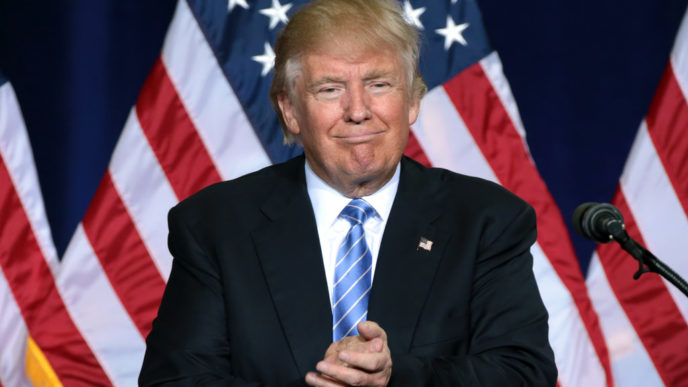
On Thursday, President Donald Trump ordered the launch of 59 Tomahawk cruise missiles against an airfield in Syria.

The strike came in response to Tuesday’s chemical weapons attack ordered by Bashar Assad against the rebel-held town of Khan Sheikhoun in northwestern Syria.

Trump immediately condemned that attack, which reportedly killed 80 people, including men, woman, and infant children. The target he selected for last night’s strike was the airfield used to launch that very attack.

The strategic impact of this tactical move is hard to overstate.

The deterrent effect of this attack for Assad’s use of chemical weapons is clear, but the bigger message is global. This was Trump’s first big step in re-establishing the meaning of American presence, America’s word, and the general respect for American power in the eyes of nations, friend and foe.

Many here in the United States are worried about the escalation in tensions this attack might bring about in the world. But whether you are confronting a playground bully or a rogue nation, you have to be willing to accept risk to protect the things you hold dear.

Bullies may fight back when they are confronted because they won’t willingly give up their power. But refusing to stand up to them simply means you are choosing to live under their rules.

It doesn’t matter what your name is, or whether you have a powerfully protective family or network of friends that will shield you from such confrontations. You have to be willing to step into the breech and accept the associated risk if you want to chart your own destiny.

Elect to run, and you’ll be running for the rest of your life. Choose to hold your ground, and you’ll establish a level of confidence and strength that will make even the worst of actors think twice about challenging the lines you draw in the sand.

Trump’s decision last night drew a line in the sand. It changed the atmosphere across the entire globe and affected the conversations taking place right now in cities like Pyongyang, Moscow, and Beijing—and of course, at Mar-a-Lago.

It put the world on notice that the repercussions for challenging the word or the wherewithal of the United States is no longer limited to stern rhetoric, and that a debilitating, kinetic response can come swiftly and often without warning. (For more from the author of “Trump’s Response to Syria a Bold First Step in Rebuilding US Credibility” please click HERE)

Follow Joe Miller on Twitter HERE and Facebook HERE.