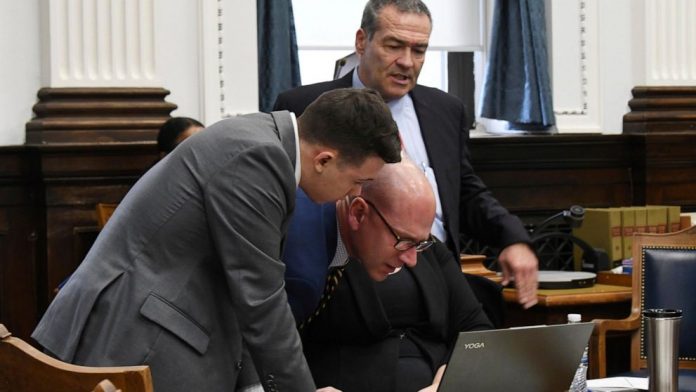
Rittenhouse Trial: Prosecution Big Win on “Provocation” Jury Instruction Saves Chance at Conviction
Much of the [Friday’s] argument over jury instructions centered on the instructions dealing with the legal doctrine of provocation—and that’s because an attack through the doctrine of provocation is the only desperate hope the State has for overcoming Kyle’s powerful claim of self-defense and obtaining convictions on the use-of-force charges against him.
Of the six counts brought against Kyle Rittenhouse in this trial, five are use-of-force felonies (the other is the misdemeanor gun possession charge already discussed). To each of those felony charges, Kyle has raised the legal defense of self-defense. To convict on any of those, then, the State must disprove self-defense beyond a reasonable doubt. How might the State do this, given that it has introduced little if any evidence attacking the core elements of Kyle’s self-defense? By attacking Kyle’s claim of self-defense through the doctrine of provocation. . .
Simple provocation occurs when the defendant engages in unlawful conduct likely to provoke a violent response. When that violent response occurs, the simple provoker cannot claim self-defense for resistance until they exhaust every possibility of avoiding the need to use force, including retreat–where a duty to retreat would not exist in an otherwise lawful act of self-defense.
Provocation with intent occurs when the defendant deliberately provokes a violent response, with the intent of then having an excuse to use deadly force against the person provoked. Importantly, the provoker with intent cannot regain self-defense by withdrawal and communication—on the other hand, the State must prove that malicious intent beyond a reasonable doubt. . .
For example, the State may argue that Kyle was a simple provoker who committed an unlawful act by pointing his rifle at Joshua Ziminski, thus provoking a reasonably foreseeable violent response from Rosenbaum. Although Kyle then fled, the prosecution would argue that he could have fled further than he did, and thus failed to exhaust every possible means of avoiding having to use defensive force. This would mean he had not regained the privilege of self-defense that he lost by his simple provocation. (Read more from “Rittenhouse Trial: Prosecution Big Win on “Provocation” Jury Instruction Saves Chance at Conviction” HERE)
Delete Facebook, Delete Twitter, Follow Restoring Liberty and Joe Miller at gab HERE.