Over One-Third Of US Counties Are ‘Maternity Care Deserts,’ New Report Finds

More than one-third of U.S. counties have significant maternity care access gaps, according to a March of Dimes report released Tuesday.

The report found that 34.6% of U.S. counties are currently “maternity care deserts,” home to 2.4 million women of reproductive age and where 149,000 infants are born each year. Women who live in such “deserts”— many of which are in rural areas of the country — travel roughly three times farther to obtain labor and delivery services on average than those living in counties with broader maternity care access.

An additional 3.4 million women and 209,000 infants presently live in U.S. counties that have “low or moderate” maternity care access, according to the report. Meanwhile, over half of U.S. counties do not have a hospital with labor and delivery services, which impacts nearly 370,000 births per year.

“Across the country, families continue to face unnecessary barriers to maternity care with shifting healthcare and policy decisions threatening to widen gaps and weaken essential services,” March of Dimes President and CEO Cindy Rahman said in a statement. “Now is the time to reimagine what maternity care can and should be by building a system that creates healthier beginnings, stronger communities, and better outcomes for generations to come.”

The report also found that obstetric clinician shortages are worse in rural regions of the U.S., where almost 58% of counties do not have obstetric clinicians, compared with about 19% of urban counties. Moreover, an estimated 96 publicly reported labor and delivery unit closures occurred across 35 U.S. states between January 2024 to May 2026, March of Dimes reported. (Read more from “Over One-Third Of US Counties Are ‘Maternity Care Deserts,’ New Report Finds” HERE)

Trump on Potential Emergency Declaration for Midterms: ‘Stranger Things Have Happened’

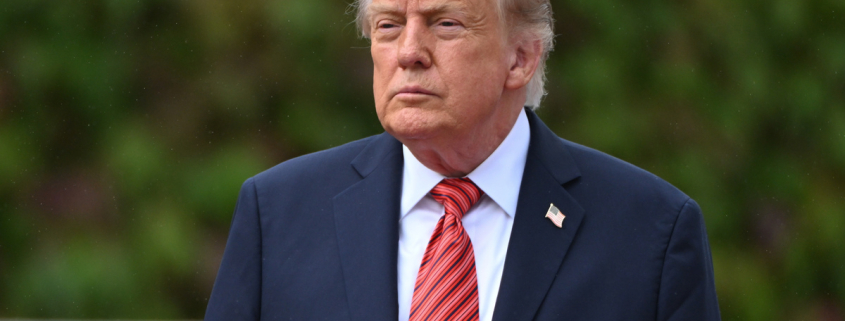
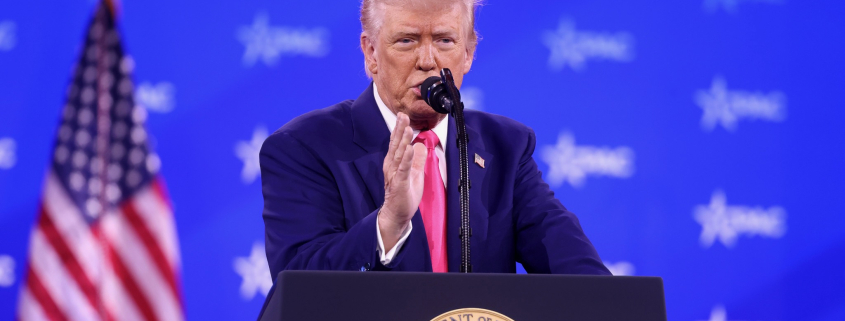
President Donald Trump said that “stranger things have happened” when it was suggested that he could declare a national security emergency for elections on Tuesday.

During an interview that aired on Real America Voice’s America Speaks, Wayne Allyn Root posed the idea of declaring a national security emergency for the midterm elections, which Root said would allow for voter identification requirements at the ballot box.

Root pointed to the 1983 Supreme Court ruling of Immigration and Naturalization Service v. Chadha as the reason the president would have the right to declare a national emergency:

Because it’s so hard to get the Senate to do anything— now they’re on recess; they don’t get anything done—if they never get the Save America Act done, you have the right to declare a national security emergency for elections. And the Supreme Court ruled in 1983 under Reagan, INS versus Chadha, that if you declare a national security emergency as the president of the United States, they can’t challenge it. It can only be overturned by a two-thirds vote of both houses of Congress. So if you do this in the next month, we will get photo ID, proof of citizenship and a limit to mail-in ballots.

Trump’s response was brief but noteworthy. (Read more from “Trump on Potential Emergency Declaration for Midterms: ‘Stranger Things Have Happened’” HERE)

Iran Shuffles Military Leaders, Prepares for ‘Prolonged Confrontation’

Iran’s elusive Supreme Leader Mojtaba Khamenei appointed six new military commanders on Monday, most notably replacing Supreme National Security Council (SNSC) secretary Mohammad Baqer Zolqard with Mohsen Rezaei, a veteran commander of the terrorist Islamic Revolutionary Guard Corps (IRGC).

Radio Free Europe (RFE) noted on Monday that Iranian media had speculated for several days about the fate of Zolqard, who was rumored to have tendered his resignation to the chief executive of the secular wing of the Iranian regime, President Masoud Pezeshkian.

“The president formally chairs the SNSC, but in practice it’s the secretary who wields the greater operational influence, shaping the council’s actions more than the president himself. Even so, neither holds final say since every SNSC decision only becomes binding once the supreme leader signs off,” RFE explained.

Pezeshkian was evasive when asked about the rumors of Zolqard’s resignation, saying on Friday, “there are some differences that we are trying to resolve.”

According to Iranian media reports, Pezeshkian refused to accept Zolqard’s resignation, but the SNSC chief was nevertheless replaced on Monday. His final public act on Sunday was a belligerent declaration that Iran will not negotiate with the United States, or reopen the Strait of Hormuz to international traffic, unless the U.S. met a long list of Iranian demands, including an end to sanctions and paying war reparations. (Read more from “Iran Shuffles Military Leaders, Prepares for ‘Prolonged Confrontation’” HERE)

Mount Everest’s Peak has Ancient Sea Fossils, as Some Hope it Proves Bible Story of Noah’s Ark

The rock sitting atop the world’s tallest mountain is loaded with ancient sea creature fossils — which some are now claiming proves the Bible story of the floods and Noah’s Ark were real events.

The rocks making up Mount Everest’s summit contain the fossilized remains of ancient marine creatures, proof that the highest point on the planet was once sitting at the bottom of the ocean, according to a 2005 finding by the International Union of Geological Sciences.

Geologists believe the summit’s limestone formed on an ancient seafloor and was later thrust upward to form the massive mountain when two gigantic tectonic plates collided with each other around 55 million years ago.

But a now-viral post has brought the old finding back into the spotlight — and has many pointing to it as proof that the Great Flood described in the Book of Genesis really happened.

“Mount Everest contains marine rocks, proving that the highest point on Earth was once at the bottom of the ocean — doesn’t the Bible mention something about that?” David J. Harris, a right-wing news host for Newsmax, wrote on X in a post that has now garnered over 500,000 views.

(Read more from “Mount Everest’s Peak has Ancient Sea Fossils, as Some Hope it Proves Bible Story of Noah’s Ark” HERE)

Weed Is Now America’s Most Commonly Used Drug, And The Reason Why May Be Worse Than You Think

Cannabis-related hospitalizations are climbing as more young Americans appear to be embracing it to cope with how they perceive the state of the world.

Emergency room visits for cannabis hyperemesis syndrome (CHS) — cyclical vomiting caused by frequent cannabis use — rose roughly 16% from Oct. 2025 through May 2026, according to a Thursday report by the Centers for Disease Control and Prevention (CDC).

The report comes after the 2025 National Survey on Drug Use and Health (NSDUH) by the Substance Abuse and Mental Health Services Administration (SAMHSA) found that approximately 21.4 million people in the U.S. use cannabis daily or near-daily, surpassing the consumption frequencies of roughly 19.9 million cigarette smokers and 17.2 million alcohol drinkers.

Tetrahydrocannabinol (THC) is the main compound within cannabis plants which triggers “highs.” Marijuana is a part of the plant with significantly higher concentrations of THC than others. Approximately 33.7% of marijuana users are between the ages of 18-25, according to the SAMHSA’s recent survey.

Multiple studies show that many young people turn to THC to self-medicate for anxiety and depression.

Thirty-four percent of Zoomers, the group of people — also referred to as “Generation Z” — born between 1997 and 2012, reported taking prescription medication for their mental health as of May 2025, whereas 19% reported self-medicating, according to a Harmony Healthcare IT study published in July. (Read more from “Weed Is Now America’s Most Commonly Used Drug, And The Reason Why May Be Worse Than You Think” HERE)

Sudden Death of California Law Student Studying Abroad Linked to Popular Weight Loss Shot

The sudden death of a California law student, who was found in her London dorm room, has been linked to a popular weight loss drug, an inquest heard.

Josephine Nasr, 19, died of a cardiac arrhythmia in her room at the University of East London in September 2025, an East London Coroner’s Court heard last week, the Daily Mail reported.

The second-year law student studying abroad had been prescribed Tirzepatide by her doctor in California, and an empty vial of the popular weight loss drug was discovered by university staff who found her on Sept. 23, 2025, the outlet reported. . .

The 19-year-old had told her father, George Nasr, her mother Lorin Mansour, and her sister, Anastasia Nasr, that she was feeling nauseous and had been vomiting around 8:30 p.m. that evening, the Mail reported.

Anastasia Nasr, who was concerned her sister was becoming dehydrated from the vomiting, called a private healthcare provider so the college student could get IV fluids, the inquest heard.

But after Josephine Nasr stopped answering, the concerned sibling called the university to do a welfare check — with security staff and a nurse discovering her lying on the bathroom floor. (Read more from “Sudden Death of California Law Student Studying Abroad Linked to Popular Weight Loss Shot” HERE)

Damning Fauci Texts Revealed: Admits Second Coronavirus Jab ‘Theoretically Could Be Associated with Miscarriage’

The second coronavirus jab could be theoretically associated with miscarriage in the first trimester, Anthony Fauci admitted in a text on his government-issued cellphone, released by U.S. Sens. Ron Johnson (R-WI) and Rand Paul (R-KY). Yet, this information was not openly offered to the general public as public health officials actively urged pregnant women to get the vaccine.

According to the senators, the government-issued phone contains over 34,000 text messages and 522 voicemails, and they are currently unable to tell if data has been deleted from the device. Most of the numbers on the phone do not have formal contact names. In fact, only three exist on the phone.

While the lawmakers and their staff are combing through the trove of messages on the phone, they released a text chain on Monday, giving Americans a snippet of what is to come.

This particular text chain released by the senators shows a conversation between Fauci, former Centers for Disease Control and Prevention (CDC) director Rochelle Walensky, and former U.S. Surgeon General Vivek Murthy. The conversation, which centered around pregnant women taking the coronavirus vaccine pushed on the American public, took place January 25-26, 2021.

One text shows Murthy asking for any data or theoretical reason why vaccinating early versus later in pregnancy would be preferred. He admitted he had been telling pregnant women that there “hasn’t been evidence of concerning adverse outcomes in the trials,” although he admitted the number of pregnant subjects were “likely” limited. (Read more from “Damning Fauci Texts Revealed: Admits Second Coronavirus Jab ‘Theoretically Could Be Associated with Miscarriage’” HERE)

Scientists Create Chewing Gum that Could Protect High-Risk People from Mouth and Throat Cancer

Building on previous work creating a chewing gum made from bean gum and containing a naturally antiviral protein FRIL, researchers tested oral samples of patients for three microbes associated with cancer.

These included human papillomavirus (HPV) and two bacterial species, Porphyromonas gingivalis (Pg) and Fusobacterium nucleatum (Fn). . .

The bean gum extracts reduced HPV by 93% in saliva samples and 80% in oral rinse samples.

When protegrin, an antimicrobial peptide that kills harmful bacteria, was added to the gum, a single dose reduced Pg and Fn levels to nearly zero.

Notably, the addition of protegrin also didn’t affect beneficial bacteria found in the mouth, contrasting with radiation therapy, which reduces good bacteria and increases disease-causing yeast. (Read more from “Scientists Create Chewing Gum that Could Protect High-Risk People from Mouth and Throat Cancer” HERE)

Photo credit: Flickr

Over 500 Jurisdictions Ban Data Center Construction, Threatening US’ Pole Position in AI Race

Over 500 jurisdictions across the US are slamming the brakes on construction of massive data centers, threatening the US’ position in the AI race against countries like China.

More than 150 localities passed bans last month alone, as tech giants and developers face a tsunami of opposition from local Luddites, news site The Information found.

Over the summer, activists protested from Fredericksburg, Va., to Tyler, Texas, and beyond to voice their opposition to planned data centers. They cited concerns like the environmental impact and energy consumption of the gargantuan sites.

“There’s a pretty strong sense that local people want to oppose these and part of it is the tech bros are forcing AI on us,” Paul Triolo, a partner at consulting firm DGA-Albright Stonebridge Group, told The Post. . .

The backlash is not confined to the local level, and two states have pushed back against data center growth. New York Gov. Hochul, a Dem, enacted a one-year moratorium on new data centers. Texas is taking a less strict approach, with Gov. Greg Abbott, a Republican, implementing a pause so state agencies can audit projects. There is no end date for the hiatus. (Read more from “Over 500 Jurisdictions Ban Data Center Construction, Threatening US’ Pole Position in AI Race” HERE)

Researchers Crack Open ‘Garlic-Shaped Bottle’ Hiding Rare Surprise from 2,200 Years Ago

Researchers in China recently uncovered a very unusual find: a large bottle containing an alcoholic drink buried for more than 2,200 years.

The ancient alcohol was found sealed in a bronze vessel in a Qin tomb at the Shanjiabao cemetery in China’s Ningxia Hui Autonomous Region. The findings were published in the June issue of the Journal of Archaeological Science: Reports.

The tomb dates to the Warring States period (475-221 B.C.), a turbulent era of rival kingdoms before China’s first unification.

The preserved liquid was determined to be an ancient cereal-based alcoholic beverage, a fermented grain drink sometimes loosely described as “beer.”

Unlike other recent discoveries in which archaeologists found only residue from ancient drinks, the bottle contained an impressive 3,740 milliliters, or 3.74 liters, of preserved liquid.

The researchers were surprised when they encountered the liquid, said Ruru Chen, a researcher at Northwest University’s School of Cultural Heritage in Xi’an, China. (Read more from “Researchers Crack Open ‘Garlic-Shaped Bottle’ Hiding Rare Surprise from 2,200 Years Ago” HERE)