Posts

Has Trump Pulled Even With Hillary? Two Experts Weigh the Evidence

If you’re a Donald Trump supporter, this week’s CNN poll showing him leading Hillary Clinton gave some joy. But if you’re a Clinton supporter, you just had to wait five minutes for another poll to show her with a six-point lead.

In keeping with a political season that’s kept professional politicos on their toes and found them often wrong, the polls have swung wildly between Trump and Clinton as they fight for the White House. When the best pollsters in the country disagree, how can people who aren’t in politics read the polls?

RCP v. Huffington

Yesterday, The Stream interviewed a top polling analyst and a professor of polling about how to read the wild swings in the polling. Both Sean Trende of RealClear Politics (RCP) and Philip Harold of Robert Morris University told The Stream that a poll’s accuracy depends on the way it collects its information — which is why different polls give different results, and confound pundits and other observers.

So is it safe to average out the polls to get the collective best guess, the way RCP does? The media frequently cite RCP’s poll averages, but Natalie Jackson of The Huffington Post (HuffPost) said there’s a problem with averaging the polls that way. “The HuffPost Pollster charts calculate trend lines rather than traditional arithmetic mean, so the numbers will differ from simple averages used by sites like RealClearPolitics,” she said. “The reason for this is that a simple average will be very susceptible to individual polls’ deviations — one outlier poll could pull the average in a completely different direction than the rest of the polls indicate.”

In deciding what counts as a real trend, HuffPost looks at the dates the different polls were conducted, the days between the polls and the difference in what they found. In general, Jackson said, 4 or 5 polls have to change within a week to change the HP results.

Jackson said that HuffPost’s way of reading the different polls avoids RCP‘s problem by requiring that the polls in general change before it revises the direction the collected results are moving. HuffPost “looks for trends in the polls and downplays data that deviates significantly from what most data show.” The technical term for their technique is “a Bayesian model called a Kalman filter,” a technique engineers developed to distinguish between actual “signals” (real data) and “noise.”

Jackson argues that polling averages that don’t take trends into account over-estimate temporary results. “Currently, we show a wider race between Trump and Clinton than simple averages because the trend has favored Clinton, and the polls showing Trump ahead — or within a couple of points — appear to be deviations from the trend for now. However, we do have the gap closing, since it’s become clear that Trump is gaining support.”

HuffPost‘s poll tracker finds Clinton’s lead is more than two points larger than RCP‘s 3.3 points.

RCP‘s Trende said that both approaches have advantages and disadvantages. The HuffPost method “does filter out short-term aberrations, but can make it slower to pick up ‘real’ shifts when we have infrequent polling.” Without what he called HuffPost’s “smoothing function,” he said, “there isn’t a lot of difference between their findings and ours.”

Misleading Assumptions

As the argument between Trende and Jackson shows, accurate polling is hard to do. Conservatives found this out the hard way in 2012.

As Hot Air blogger and Going Red author Ed Morrissey told The Stream earlier this year, conservative pollsters — and the Romney campaign’s pollsters as well — thought the electorate had changed and that the polls showing Obama’s comfortable lead were based on “an outdated model.”

“We weren’t trying to be dishonest, we weren’t lying about this, we were just really wrong in our assumptions,” he said. “We weren’t taking the time to find out who these voters were, where they were at, what Barack Obama was doing with his organizing and media strategy in 2012. And those errors compounded on each other to give a completely false impression of what we were going to see that night.”

The same problem affected pollsters in the 2016 presidential primaries. In the Democratic primary, no one gave Bernie Sanders a chance of winning as many votes as he did and staying in the race so long.

Likewise no one expected Donald Trump to do so well, much less win the nomination. As Harold told The Stream yesterday, “Trump won the Republican primaries by bringing in new voters to the ballot box. That makes it very, very difficult for pollsters, who are relying on the statistics from previous elections, to filter out those who do not plan to vote and to weigh their samples.”

The Polls This Week

The objective versus subjective argument came up again this week with CNN’s poll that showed Trump in the lead. MSNBC determined that CNN oversampled lower-educated whites, and using 2012 voting data determined that the poll should have shown Clinton leading by four points. MSNBC assumed minorities will vote for Clinton at the same rates they backed Obama in 2012 and that lower-educated whites don’t come out in unforeseen numbers for Trump. The network could be right — but they could be wrong.

By the way: this article was drafted on September 6. Clinton had a 3.3-point lead, according to the RCP head-to-head matchup. Today, it’s just three points, according to RCP, (and just 2.1 points when the Libertarian and Green Party candidates are counted). HuffPost’s tracker likewise shows Clinton’s lead has shrunk. Who knows what it’ll look like tomorrow? (For more from the author of “Has Trump Pulled Even With Hillary? Two Experts Weigh the Evidence” please click HERE)

Follow Joe Miller on Twitter HERE and Facebook HERE.
Polling Average Shows Trump-Clinton Race Tightening

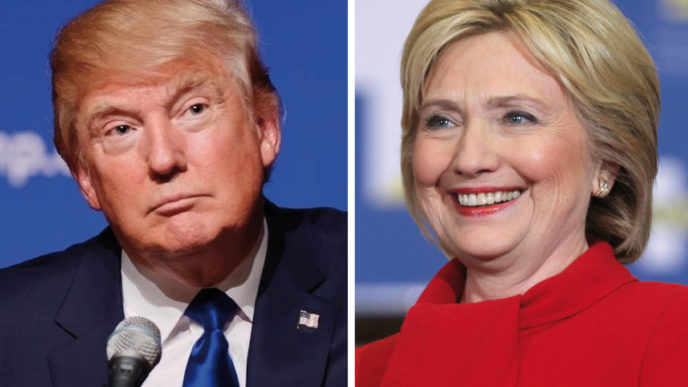
The 2016 presidential election has proven frustrating for many Republicans. The GOP nominee, a businessman with no political resume, has alienated key demographics, insulted prominent members of the press, and divided leading voices in the party. But despite all this, a recent average of national polls suggests he has closed the gap with Democratic nominee Hillary Clinton.

One new CNN poll has Trump ahead by 1 point in a head-to-head match-up, while the RealClearPolitics’ (RCP) average of recent polls has Clinton up by a modest 3.3 points — a lead far smaller than the nearly seven-point lead she had in late August. And while a recent Washington Post-SurveyMonkey poll shows Hillary maintaining a comfortable lead, two poll experts cautioned a measure of skepticism about that polls’ methodology.

“Mark Blumenthal and Jon Cohen are two of the best pollsters in the business,” RCP Senior Elections Analyst Sean Trende told The Stream about the Post‘s online poll. “They do not put out a junk product. That said, it is a new methodology, and even the best methodology can’t fix sampling error.”

Robert Morris University (RMU) professor Philip Harold, Ph.D., was cautious about the poll results. “They surveyed a lot of people, and included all 50 states, but that does not mean it is an accurate poll,” he explained in an e-mail. “There is really no way in this poll to get the opinions of people who are less willing to share their views, which opens it up to significant non-response bias.”

According to Harold, the poll “assumes, in other words, that there is no significant difference between the populations of supporters for the candidates, and their willingness to share their opinion. That is a significant assumption, and one which is belied by the recent history of polling for Trump support, which finds his supporters more reticent to share their opinion (e.g. throughout the primary season he consistently gained 2% more support than the polls predicted).”

“The medium of an online poll may also very well favor Clinton supporters — people who are in front of computers all day and who take online surveys are not the downscale, working class voters who are enthusiastic about Trump,” Harold said. “The Texas results of this poll show that something might be off — it shows a dead heat between Trump and Clinton, which no one really thinks is true.”

Do Third-Party Candidates Matter?

One way of measuring the race is how Trump and Clinton match up when Libertarian Party nominee Gary Johnson and Green Party nominee Jill Stein are included in the polls. RCP’s average in a four-way race found that Clinton’s lead slips to 2.4 points over Trump, indicating that the secondary candidates are taking more from Clinton’s support than Trump’s.

It’s “hard to say” whether Johnson and Stein will factor into November’s elections, said Trende. “Third parties tend to fade down the stretch, except when they don’t (e.g. [Ross] Perot [in 1992]). Given the sky-high unfavorable for both candidates, I wouldn’t be at all surprised if things didn’t fade this year.”

Harold, however, said, “I tend to think that as people’s minds are focused in the months, days and weeks leading up to election day, Stein and Johnson’s numbers will drop. They will be factors and will pick up votes, definitely. But more of a factor will be who votes.”

“Clinton’s challenge is motivating voters who traditionally have had lower turnout, but who voted in much greater numbers the past couple elections for Obama — that is difficult to do,” Harold continued. “Trump’s task is to bring those who have not voted to the polls — that is also very difficult to do.”

“Getting supporters to the polls is what keeps the Clinton campaign up at night,” he said. “They have lots of money and technology, but they do not have an inspiring candidate. The key state in the electoral college is Pennsylvania. Trump needs to win there, and he should win there, given the kind of campaign he’s running. The nice 6-to-9-point gap there Clinton has opened up keeps the Trump campaign up at night.”

Conclusions

In 2012, many conservatives assumed that pollsters were overstating President Barack Obama’s excitement among voters. As Hot Air’s Ed Morrissey told The Stream, “The reason we were doing this so-called unskewing of the polls, which turned out to be a huge mistake, was that we were convinced the electoral model had changed from 2008 to 2010.”

“We were wrong in our assumptions because we were making assumptions,” said Morrissey. Obama ended up beating GOP nominee Mitt Romney by the same margin as the polls predicted. But in its recent poll showing Trump with a three-point lead over Clinton, The Los Angeles Times indicated that what conservatives got wrong in 2012 could end up being correct in 2016.

Harold also says pollster accuracy is a legitimate question in 2016. “Trump won the Republican primaries by bringing in new voters to the ballot box. That makes it very, very difficult for pollsters, who are relying on the statistics from previous elections, to filter out those who do not plan to vote and to weigh their samples.”

According to Trende, however, “Different pollsters have different methodologies. So while the averages are good, there is always a chance that some particular pollster ‘figured things out.’ It might be the LA Times. But it might also be SurveyMonkey (which has HRC +6), so over time you’ll be *closest* to the correct result using averages.”

And what if the popular vote in November comes down to the wire? “If you look closely, in [the RCP] averages, in 538’s averages, and in the SurveyMonkey polls, electoral vote #270 actually falls a touch on the Trump side of the popular vote. In a tied popular vote race, Trump probably has an edge.” (For more from the author of “Polling Average Shows Trump-Clinton Race Tightening” please click HERE)

Follow Joe Miller on Twitter HERE and Facebook HERE.

‘Critical Infrastructure’: Feds Plan Special Declaration to Takeover Elections, Nationwide

Even before the FBI identified new cyber attacks on two separate state election boards, the Department of Homeland Security began considering declaring the election a “critical infrastructure,” giving it the same control over security it has over Wall Street and and the electric power grid.

The latest admissions of attacks could speed up that effort possibly including the upcoming presidential election, according to officials.

“We should carefully consider whether our election system, our election process, is critical infrastructure like the financial sector, like the power grid,” Homeland Security Secretary Jeh Johnson said.

“There’s a vital national interest in our election process, so I do think we need to consider whether it should be considered by my department and others critical infrastructure,” he said at media conference earlier this month hosted by the Christian Science Monitor.

DHS describes it this way on their website: “There are 16 critical infrastructure sectors whose assets, systems, and networks, whether physical or virtual, are considered so vital to the United States that their incapacitation or destruction would have a debilitating effect on security, national economic security, national public health or safety, or any combination thereof.” (Read more from “‘Critical Infrastructure’: Feds Plan Special Declaration to Takeover Elections, Nationwide” HERE)

Follow Joe Miller on Twitter HERE and Facebook HERE.
New Florida Poll Shows Trump Leading Clinton

Florida is a swing state during the general election, with both Republican and Democrats fighting hard to earn votes. Barack Obama won the state both in the 2008 and 2012 presidential elections.

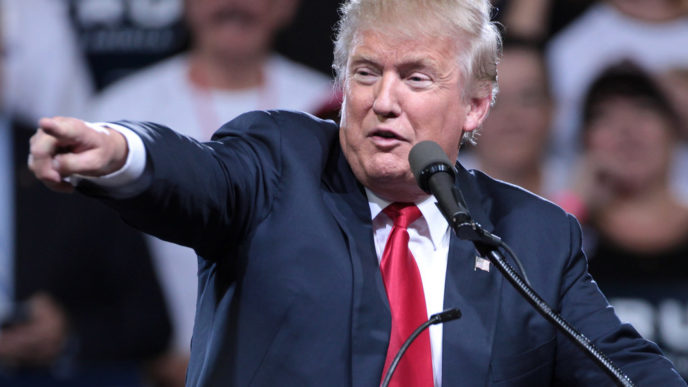
A new survey by the Florida Atlantic University Business and Economics Polling Initiative shows Donald Trump leading Hillary Clinton by two points in the state of Florida.

Trump received 43 percent support over Clinton’s 41 percent. Libertarian candidate Gary Johnson garnered 8 percent and the remaining 5 percent were undecided.

Both candidates have struggled with their favorability ratings in Florida. Trump currently sits at 56 percent unfavorable rating, while Clinton holds 58 percent. However, Trump has a higher loyalty score with voters, earning a strong 94 percent.

Clinton leads Trump among female voters with 4 points, while Trump leads among men 46 percent to 36 percent.

Associate professor of political science at FAU and a research fellow of the Initiative Kevin Wagner believes Florida will remain a close race and only the most pressing issues will determine the winner.

“The fact that both Mr. Trump and Secretary Clinton are significantly upside down in their favorability ratings could make it difficult for either to move substantially ahead,” he said. “Clinton likely got a boost from the fact that Floridians chose experience as the top quality they are looking for in their presidential candidate. But, Floridians also chose dissatisfaction with government as their top issue, which likely favors Mr. Trump.”

When it comes to Florida’s minority voters, Trump is lagging behind. He trails Clinton with African-Americans 68 to 20 percent, and Hispanics 50 to 40 percent, but leads significantly with white voters 49 to 33 percent.

“The race between Clinton and Trump among Hispanics in Florida is closer than it is nationally,” said Monica Escaleras, Ph.D., director of the BEPI. “Some of that is probably the Cuban vote. Trump’s support among Latinos in Florida is helping him stay competitive.”

The GOP nominee and real estate mogul recently launched an Hispanic outreach program which would focus his campaign on winning the Latino vote. This advisory council met with him Saturday in order to determine the most effective ways to present his proposals to the Hispanic community.

Trump has also made an appeal to black voters in order to close the wide gap between himself and Clinton, arguing that blacks who have suffered under Democratic leadership have “nothing to lose,” by taking a chance and voting Republican. (For more from the author of “New Florida Poll Shows Trump Leading Clinton” please click HERE)

Follow Joe Miller on Twitter HERE and Facebook HERE.

A Rare Moment of Hope in the Midst of a Depressing Election

Recently I was invited to participate in the RedState Gathering in Denver, Colorado. During the conference I heard Glenn Beck give a fantastic speech about where we are as a movement and as a culture. One thing he said convicted me to the point I’ve thought about it a lot since.

Beck’s speech was about the need to return to being a people of truth, and a movement of truth. That truth is the greatest casualty of our culture’s decline. And he was right. For example, he talked about those claiming to be in our movement who opted to expose themselves as liars and charlatans during this depressing election cycle. That we shouldn’t forget these people, and remember them going forward. And he was right about that, too.

However, Beck also drew an important distinction between those cretins and those who just philosophically, ideologically, and morally disagree with another about what to do now that Donald Trump is officially the GOP nominee. Beck asked a poignant question: are we leaving space for folks to come together again when this is all over?

Now, light cannot mix with dark anymore than truth can mingle with lies, but just because someone disagrees with you doesn’t mean they’re a miscreant.

Consider Luther, Calvin, and Wesley as three of the greatest Protestant thinkers ever, but they vehemently disagreed with one another in certain doctrinal areas. So are they all heretics at the same time because they couldn’t agree on everything? Furthermore, two of the greatest thinkers in the history of Christendom were Augustine and Aquinas, who each lived prior to the Reformation and are therefore hallmarks of Catholic tradition. Are they heretics, too, because they served the church of St. Peter and not Protestant denominations that wouldn’t be conceived for centuries?

This is the danger of tribalism. It creates a myopia rather than sustaining a movement. We look for people who don’t just share our convictions on non-negotiables, but those who affirm all of our secondary passions and preferences to boot. If you’re looking for a way to shrink your membership, not to mention diminish your effectiveness, that’ll do it right as rain. Works every time.

I realized after Beck’s speech that I was in danger of falling into a similar trap regarding this election, if I had not already. That if I’m rightly concerned about allegiance to Trump’s candidacy causing conservatism to be dumbed down, I need to be equally concerned that not signing up to carry Trump’s considerable baggage doesn’t do the same.

That Trump isn’t the Mendoza Line for conservatism either way. There are people of good conscience on either side of that line. And that if conservatism is truly about conserving the values and virtues that history proves are best for the human condition, then those values were here long before Trump’s divisive candidacy emerged, and will still be here long after it is over.

So what might that look like?

I got a glimpse of what that might look like this week when I was invited to present my “10 Commandments of Political Warfare,” from 2014 book Rules for Patriots: How Conservatives Can Win Again, to a group of activists/party officials in Kansas City. This was a decidedly pro-Trump audience. I am decidedly not.

Yet by focusing on the principles that unite us in the first place, rather than the personalities who don’t, this ended up being one of the more enjoyable talks I’ve done in a while. Even during the Q-and-A portion when Trump came up, the audience was more interested in how my “10 Commandments of Political Warfare” might help Trump than arguing with me over him.

Afterwards, one of them came up to me after seeing Trump’s endorsement in the book, and asked me, “Why the hell isn’t he doing this stuff?”

Some of the fissures exposed during this depressing election will be permanent. That is unavoidable, when people you used to trust reveal themselves to be untrustworthy in broad daylight making it impossible to ignore. Thus, yes, there is a schism taking place. But while that is necessary, it need not be catastrophic. There’s pruning, and then there’s purging. One is painful but necessary discernment. The other throwing the proverbial baby out with the bath water.

I think we can all agree we’ve had enough of angry mobs losing all perspective, and making decisions based on what they’re against and not what they’re for.

I close by now asking you, the reader, the same question Beck asked all of us in Denver a week ago: regardless of which side you’re on, are you leaving space for folks to come together again when this is over? When it comes to Trump, are you leaving space for folks to come together again when this is over? (For more from the author of “A Rare Moment of Hope in the Midst of a Depressing Election” please click HERE)

Follow Joe Miller on Twitter HERE and Facebook HERE.
Newly Released Poll Numbers Suggest Landslide Among One Voting Bloc

With Election Day approaching, voter polls are constantly being considered as the litmus test of how each candidate is faring in their campaign.

A poll among the Spiritually Active, Governance Engaged Conservatives (SAGE Cons), revealed that most of those polled are concerned with the actions of the current administration.

According to the poll, 82 percent of the SAGE Cons participating in the survey strongly agreed that “corruption is widespread throughout the federal government of the United States,” while an additional 15 percent moderately agree.

As a result of this concern, the percentage of SAGE Con voters who say they will support Republican Donald Trump rather than Democrat Hillary Clinton has risen from 11 percent earlier in the race to 84 percent today.

The majority of those surveyed consider Clinton “a prime example of a corrupt politician,” thus assuring that Trump receives their support.

When asked if the stakes in this election were higher than those of previous elections, 98 percent agreed while 82 percent of those “strongly agreed.”

Asked about the significance of the outcome of this election, 96 percent said they felt it would be significant; 72 percent responded the outcome would make a “big difference” in their lives; 24 percent said it would make some difference; and 4 percent felt the outcome would be insignificant.

While this poll shows the majority of SAGE Cons have chosen to support Trump, it also indicates that they do not expect much from either candidate.

The poll revealed 20 percent felt Trump would do a “great” job as president, while 41 percent said he would do a “good” job. Of those remaining, 26 percent gave Trump a “fair” rating compared to 13 percent who have low expectations of his ability to be president.

One area in which Trump received high marks was the issue of his assertion that the country was at war with ISIS.

Of those asked to respond, 96 percent said they felt the statement was correct.

When asked whether they had liberal friends, 84 percent stated they did but were hesitant to discuss politics with them;
32 percent said they occasionally talk politics with their liberal friends, while only 6 percent said they often do so often.

According to market researcher and pollster George Barna, the election will likely be based on how much emphasis the voters place on the character of their choice for president.

“Mr. Trump is not running a very effective campaign, but he has one major benefit to his advantage: the perceived range and nature of the character flaws of his opponent,” Barna said. “In considering the challenges that both candidates pose, many voters are being forced to ponder how much a leader’s character matters, which character traits matter most, and how to balance character against performance.” (For more from the author of “Newly Released Poll Numbers Suggest Landslide Among One Voting Bloc” please click HERE)

Follow Joe Miller on Twitter HERE and Facebook HERE.

Never Trump Conservatives Find a Candidate Willing to Oppose Trump

The Never Trump conservatives have finally found a candidate willing to enter the presidential race.

Evan McMullin, the former policy director for the House Republican Conference and a CIA staffer, announced his bid on his website Monday morning.

“In a year where Americans have lost faith in the candidates of both major parties, it’s time for a generation of new leadership to step up,” McMullin said in a statement to ABC News.

“It’s never too late to do the right thing, and America deserves much better than either Donald Trump or Hillary Clinton can offer us. I humbly offer myself as a leader who can give millions of disaffected Americans a conservative choice for President.”

“Evan has spent his entire career in service to our nation and today he’s continuing on that path as a candidate for president — he is running first and foremost out of a deep love for this country, and because he understands the true brand of American leadership that is required to be Commander-in-Chief,” McMullin’s campaign wrote in a message to supporters.

The deadline to file for president has already passed in more than two dozen states, according to the New York Times, so the independent bid is clearly aimed at thwarting Trump, not actually winning the White House.

McMullin, who is a member of the Church of Latter Day Saints, is likely to have the greatest impact in Utah, where Trump is currently polling at 35 percent to Hillary Clinton’s 25 percent and Gary Johnson 16 percent, according UtahPolicy.com.

Utah is a solid red state whose six Electoral College votes Republican presidential candidates have been able to count on.

McMullin is said to be backed by the group Better for America, which is funded by John Kingston, a former supporter of Mitt Romney, the Times reported. (For more from the author of “Never Trump Conservatives Find a Candidate Willing to Oppose Trump” please click HERE)

Follow Joe Miller on Twitter HERE and Facebook HERE.

Being Hillary’s Running Mate Makes Kaine Feel Like He’s Been ‘Kidnapped’

If anyone has ever wondered what it feels like to run on the presidential ticket with Hillary Clinton, her vice presidential nominee, Virginia Sen. Tim Kaine has a blunt answer for you.

At the Democratic Party’s campaign field office in Grand Rapids, Mich., Sen. Debbie Stabenow, D-Mich., asked Kaine, “Well, what is it like?”

Kaine replied, “It feels like I got kidnapped.”

Politico’s Burgess Everett wrote Kaine is usually much more chatty when he’s not being dragged about the U.S. in the Clinton campaign.

“Kaine has been a bit more buttoned-up than his normal self in his first two weeks as Clinton’s running mate.” Everett wrote. “He still lingers at events and talks to supporters, but has said little to the traveling press even while recording interviews with local and national outlets — belying his habit as a senator of holding long gaggles with reporters as he deals with the rigors of the presidential campaign trail.”

But Kaine apparently has no trouble joking around about his new political commitment to stand behind Clinton as the supportive running mate. While visiting a Milwaukee brewery on the campaign trail, Kaine reportedly said, “Friday afternoon at a brewery in Milwaukee — who says campaigning is tough?”

The New York Times reported Clinton’s selection of Kaine had as much to do with his popularity as it did with the fact Virginia is a swing state. Having been the former governor of Virginia was also seen as a positive aspect to his being chosen.

“Tim Kaine is in many ways, a perfect vice presidential pick for Hillary Clinton…Kaine is really a passionate social justice liberal with a very moderate demeanor,” says Cheryl Stolberg of the Times. (For more from the author of “Being Hillary’s Running Mate Makes Kaine Feel Like He’s Been ‘Kidnapped'” please click HERE)

Follow Joe Miller on Twitter HERE and Facebook HERE.
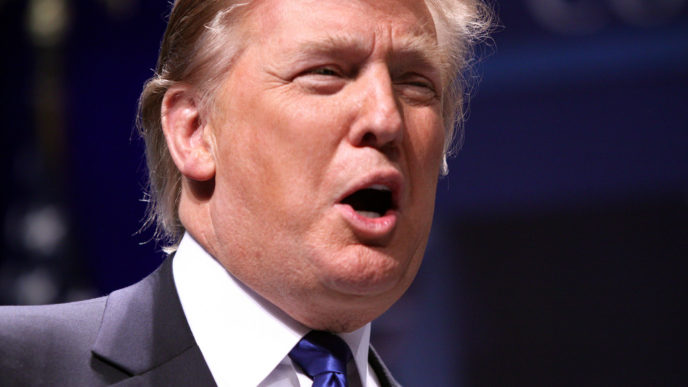
Trump Collapsing? Not So Fast.

Presidential polling this year is like Texas weather. Wait 15 minutes and it’s likely to change.

Yesterday, a McClatchy/Marist poll had Hillary Clinton jumping to a 15-point lead against Donald Trump. A Fox News poll had the Democratic candidate up by 10.

That was yesterday. A new Reuters/Ipsos poll out Friday afternoon indicates Clinton’s lead over Trump has narrowed to less than three points among likely voters, 42% to 39%. This is within the margin of error, suggesting, says Reuters “the race is roughly even.” It also marks a five-point drop for Clinton since Monday.

The Trump staffers who CNBC claimed earlier this week were “suicidal” over the campaign’s sudden collapse can take at least a couple steps back from the edge.

Reuters says “the reasons behind the shift were unclear.” However, in recent days Hillary Clinton was awarded “four Pinocchios” by the Washington Post for her increasingly-reported lie over how FBI Director James Comey characterized her public statements about her private email server. There was also the news of the Obama administration, of which she had been a part, sending $400 million to Iran in the dead of night as an apparent ransom for four American prisoners.

Though the Reuters numbers — and an LA Times/USC poll that shows the race a statistical tie — come as a relief to the Trump campaign, the news is not all sunny. As Robert Eno at Conservative Review noted Friday, Trump is down 6.8 points in the RealClear Politics average (though it does not include the new Reuters poll.) Eno also indicates how the GOP nominee is even running weak in states that have been solidly Republican since the 1980s. For example, Trump is down four in Georgia head-to-head with Hillary, and down six in Florida.

By way of comparison, Eno says that on this date in 2012 Barack Obama had a 2.8 percent lead in the RealClear Politics average over Mitt Romney.

On the other hand, on July 28th, a mere eight days ago, Donald Trump was beating Hillary Clinton in the RCP average. Meaning, applauding or getting agitated over the polls at this point is pointless. We’re better off popping the popcorn, putting up our feet and cheering TeamUSA because this particular race is far from finished. (For more from the author of “Trump Collapsing? Not So Fast.” please click HERE)

Follow Joe Miller on Twitter HERE and Facebook HERE.

Father of Slain Service Member Wants One Presidential Candidate to Apologize

CNN went hunting for comments Tuesday about a presidential candidate who owes an apology to the family of a slain U.S. service member.

The network got them, but probably not in the fashion for which it had hoped.

CNN Newsroom featured Charles Woods, the father of Navy SEAL Tyrone Woods, who was killed in the 2012 Benghazi attack. During the interview, CNN host Carol Costello repeatedly tried to get Woods to call for Donald Trump to apologize for his ongoing spat with Khizir Khan, the father of a slain Army officer, attacked Trump at last week’s Democratic National Convention, sparking a heated response from Trump that has since become controversial.

After playing a clip about the Khan spat, Costello asked Woods, “Should Mr. Trump apologize?”

Woods repeated an earlier statement that he didn’t know what Trump had said, then fired out a demand for an apology he knew was overdue.

“I know who should apologize, and that would be Hillary Clinton, for lying to the American families who lost their loved ones as well as to the American public,” Woods said. “She hasn’t apologized for that yet. In fact, she’s even doubled down and called us liars which is not appropriate, not at all. Like I say, either she’s lying or she has a bad memory.”

Costello then asked Woods whom he would endorse.

“Well, my son would still be alive if Mrs. Clinton was performing her job properly as secretary of state. So in good conscience, I cannot vote for the person who was directly responsible for the death of my son,” he said.

He then explained his reasoning

“There is only two choices and obviously I support Donald Trump. The main reason is because national security, as well as the economy, are the two most important issues that voters are going to have to decide upon next November,” he said.

Woods has made it clear he has not forgiven Clinton for telling him that the Benghazi attack was related to a video when she knew it was not.

“She (Clinton) stood in font of my son’s casket and blamed the rage directed at American embassies on a video she said we had no part of,” Woods said Tuesday on America’s Newsroom. “When they had the casket ceremony she also lied to the American public. These are her words as best as I can recall, ‘rage was directed at American embassies as a result of that awful video that we were not responsible for.’ She said basically the same thing in private to the families that were grieving and then a half hour later she said basically the same thing as far as causation to the American public.” (For more from the author of “Father of Slain Service Member Wants One Presidential Candidate to Apologize” please click HERE)

Follow Joe Miller on Twitter HERE and Facebook HERE.