Posts

U.S. Airstrikes Take Down 12 Al-Qaeda and Taliban Operators

American airstrikes have killed a dozen al-Qaeda and Taliban members in Syria and Afghanistan since Thursday.

On Monday, U.S. Forces-Afghanistan spokesman Col. Sonny Leggett confirmed that American troops had conducted a strike in defense of Afghan troops. The operation killed five Taliban fighters and had no civilian casualties.

The same day, U.S. Central Command spokeswoman Maj. Beth Riordan confirmed an airstrike that killed seven al-Qaeda in Syria (AQ-S) operators.

“The removal of these AQ-S leaders will disrupt the terrorist organization’s ability to further plot and carry out global attacks threatening U.S. citizens, our partners, and innocent civilians,” Riordan said.

Reports of these strikes come soon after another major blow to al-Qaeda. On Sunday, Afghan forces confirmed the death of group propaganda chief Husam Abd al-Rauf, a top aide to leader Ayman al-Zawahiri. (Read more from “U.S. Airstrikes Take Down 12 Al-Qaeda and Taliban Operators” HERE)

Follow Joe Miller on Twitter HERE and Facebook HERE

Russia Secretly Offered Afghan Militants Bounties to Kill U.S. Troops, Intelligence Says

American intelligence officials have concluded that a Russian military intelligence unit secretly offered bounties to Taliban-linked militants for killing coalition forces in Afghanistan — including targeting American troops — amid the peace talks to end the long-running war there, according to officials briefed on the matter.

The United States concluded months ago that the Russian unit, which has been linked to assassination attempts and other covert operations in Europe intended to destabilize the West or take revenge on turncoats, had covertly offered rewards for successful attacks last year.

Islamist militants, or armed criminal elements closely associated with them, are believed to have collected some bounty money, the officials said. Twenty Americans were killed in combat in Afghanistan in 2019, but it was not clear which killings were under suspicion. (Read more from “Russia Secretly Offered Afghan Militants Bounties to Kill U.S. Troops, Intelligence Says” HERE)

Follow Joe Miller on Twitter HERE and Facebook HERE

United States To Sign Peace Deal With Taliban

The United States will sign a peace deal with the Taliban by the end of February, the State Department and Secretary Pompeo announced Friday afternoon.

“U.S. negotiators in Doha have come to an understanding with the Taliban on a significant and nationwide reduction in violence across Afghanistan,” Pompeo’s statement accompanying the announcement reads. “Upon a successful implementation of this understanding, signing of the U.S.-Taliban agreement is expected to move forward. We are preparing for the signing to take place on February 29.”

The official peace deal is preceded by a reduction in violence, that went into effect just after midnight on Saturday, Kabul time. . .

Peace talks between Pompeo and Taliban leaders had improved in recent weeks, and President Donald Trump has flirted with the idea of large-scale troop withdrawals from the Middle East. He touched on the need to end America’s ongoing military engagements during his State of the Union address on February 4. (Read more from “United States To Sign Peace Deal With Taliban” HERE)

Follow Joe Miller on Twitter HERE and Facebook HERE

Russia to Begin Peace Talks With Taliban

A Taliban negotiating team arrived in Russia on Friday, less than a week after President Trump announced that peace talks with the Islamic militant group in Afghanistan were essentially “dead.” . . .

The Russian state news agency Tass, citing the Taliban’s Qatari-based spokesman, Suhail Shaheen, reported that the delegation had met with Zamir Kabulov, Russian President Vladimir Putin’s envoy to Afghanistan. A Taliban official confirmed the visit to The Associated Press on condition of anonymity.

Russia has been accused of aiding the Taliban as a safeguard against a burgeoning affiliate of the Islamic State (ISIS) that has close ties to the Islamic Movement of Afghanistan, a militant group in Central Asia. Russia has stepped up its defenses in Central Asia and has claimed thousands of ISIS fighters were in northern Afghanistan. . .

On Saturday, Trump announced he had called off secret meetings with Afghan government leaders and Taliban officials that were to take place at Camp David. The president noted that the Taliban had claimed responsibility for a recent attack in Kabul that left 12 dead, including an American soldier.”

“What kind of people would kill so many in order to seemingly strengthen their bargaining position?” Trump asked in a statement on Twitter, before adding that if the Taliban cannot agree to a cease-fire, “then they probably don’t have the power to negotiate a meaningful agreement anyway.” (Read more from “Russia to Begin Peace Talks With Taliban” HERE)

Follow Joe Miller on Twitter HERE and Facebook HERE

Donald Trump Escalates War with Taliban, Peace Talks Are ‘Dead’

By Breitbart. President Donald Trump said Monday that talks with the Taliban about peace with Afghanistan were over, citing the terrorist attack last week in Kabul.

“They’re dead as far as I’m concerned,” Trump said when asked about the proposed talks with Taliban leaders.

Trump spoke to reporters as he left the White House, after he canceled a meeting scheduled with the Taliban at Camp David for Sunday.

The president called the Taliban attacks “a big mistake.”

He said that the United States had escalated attacks against the Taliban in response to the terrorist attack that killed 12 people as well as one U.S. soldier and one Romanian solder in Kabul. (Read more from “Donald Trump Escalates War with Taliban, Peace Talks Are ‘Dead’” HERE)

________________________________________________

After Trump Calls off Talks, Afghanistan Braces for Violence

By The New York Times. President Trump’s decision to break off peace talks with the Taliban, at least for now, left Afghanistan bracing for a bloody prelude to national elections this month, while the administration declined on Sunday to rule out a withdrawal of American troops without a peace accord.

In a round of television interviews, Secretary of State Mike Pompeo blamed an attack by the Taliban for the cancellation of talks at Camp David this weekend that the administration had expected would lead to the signing of a peace agreement.

Mr. Pompeo said that the Taliban had “tried to gain negotiating advantage by conducting terror attacks inside the country,’’ resulting in the death of an American soldier in Kabul. “We’re going to walk away from a deal if others try to use violence to achieve better ends in a negotiation,’’ he said. (Read more from “After Trump Calls off Talks, Afghanistan Braces for Violence” HERE)

Follow Joe Miller on Twitter HERE and Facebook HERE

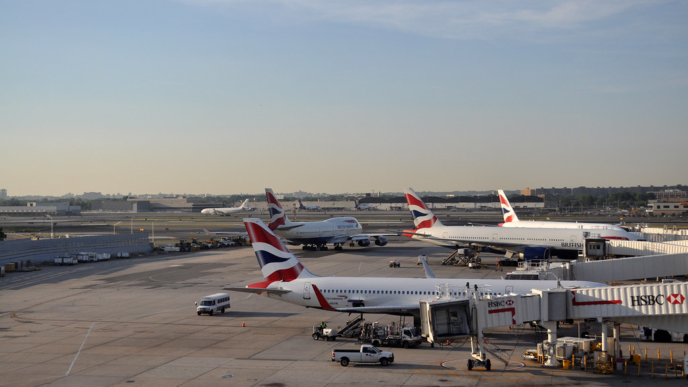
U.S. Citizen Was Reportedly Arrested at JFK Airport for Trying to Join the Taliban

Authorities reportedly arrested a man from the Bronx at John F. Kennedy International Airport for trying to fly to the Middle East to join the Taliban. . .

According to New York’s WNBC-TV, the FBI had been aware of the man and had been monitoring him “for some time” before his arrest. He is being investigated by the Joint Terrorism Task Force, according to the New York Post.

WPIX-TV reported the man was a 34-year-old U.S. citizen who had been born in Bangladesh. He had hoped to board Qatar Airlines flight 704, which was bound for Doha, Qatar. He never made it on the plane, which left Friday morning. . .

While the State Department designated the Taliban as a Foreign Terrorist Organization in 2010, it’s hold over large portions of Afghanistan has led the U.S. to seek to negotiate a peace deal between the group and the U.S.-backed Afghan government.

The U.S. attacked the Taliban after the Sept. 11, 2001, terror attacks, after it offered sanctuary to Osama bin Laden and al Qaeda. At the time, the Taliban controlled the entire country through a brutal and oppressive regime. Currently, the Taliban controls roughly half of all territory in Afghanistan. (Read more from “U.S. Citizen Was Reportedly Arrested at JFK Airport for Trying to Join the Taliban” HERE)

Follow Joe Miller on Twitter HERE and Facebook HERE

American Taliban Fighter Released Early

On Thursday, John Walker Lindh, also known as the “American Taliban” fighter, will be released after serving 17 and a half years of his 20-year sentence. In response, Sen. Richard Shelby (R-AL) and Sen. Maggie Hassan (D-NH) demanded answers in a letter sent to the acting director of the Federal Bureau of Prisons.

In the letter, the senators requested information about “what steps the U.S. government is taking to ensure public safety,” citing a 2017 Foreign Policy article that claims Lindh fully intends to continue spreading his terrorist ideology after his release.

The senators also mentioned that 108 other convicted ISIS, al-Qaeda, or Taliban terrorists will soon be released from prison after completing their sentences over the next few years.

“Little information has been made available to the public about who, when, and where these offenders will be released, whether they pose an ongoing public threat, and what federal agencies are doing to mitigate this threat while the offenders are in federal custody,” the senators’ letter reads.

The letter also cited a report by the chief United States probation officer, the U.S. District Court for the District of Minnesota’s Kevin Lowery, that suggests “that neither the Bureau of Prisons nor the Federal Judiciary’s Probation and Pretrial Services have sufficient nationwide programming to prevent incarcerated terrorist offenders from returning to violence upon completion of their sentences.” (Read more from “American Taliban Fighter Released Early” HERE)

Follow Joe Miller on Twitter HERE and Facebook HERE

Terrorists Obama Released for Bergdahl Are Back on the Battlefield

Five members of the Afghan Taliban who were freed from the U.S. military prison at Guantanamo Bay in exchange for captured American Army Sgt. Bowe Bergdahl have joined the insurgent group’s political office in Qatar, Taliban spokesman Zabihullah Mujahid said Tuesday.

They will now be among Taliban representatives negotiating for peace in Afghanistan, a sign some negotiators in Kabul say indicates the Taliban’s desire for a peace pact.

Others fear the five, all of whom were close to the insurgent group’s founder and hard-line leader Mullah Mohammed Omar, bring with them the same ultra-conservative interpretation of Islam that characterized the group’s five-year rule that ended in 2001 with the U.S.-led invasion.

“The Taliban are bringing back their old generation, which means the Taliban have not changed their thinking or their leadership,” said Haroun Mir, political analyst in the Afghan capital. “What we are more worried about is if tomorrow the Taliban say ‘we are ready to negotiate,’ who will represent Kabul? That is the big challenge because the government is so divided, not just ideologically but on ethnic lines.” . . .

In an unexpected development, Pakistan also bowed to a long-standing Afghan Taliban demand that it release its senior leader, Mullah Abdul Ghani Baradar, who had been in jail in Pakistan since 2010. At the time, Baradar was reportedly jailed after bypassing Pakistan to open independent peace talks with Hamid Karzai, who was then Afghanistan’s president. (Read more from “Terrorists Obama Released for Bergdahl Are Back on the Battlefield” HERE)

Follow Joe Miller on Twitter HERE and Facebook HERE.

No Negotiation: U.S. Rejects Peace Talks With Taliban

The United States has rejected an invitation to join Russia-led talks on Afghanistan because they are unlikely to help bring peace, a State Department spokesman said Wednesday, as the Trump administration prepared to appoint a diplomatic veteran as a new special envoy for the war-battered nation.

Russia said that the Taliban will be joining the Sept. 4 talks in Moscow, along with representatives of several neighboring countries. It will be one of the insurgent group’s biggest diplomatic forays since the 2001 U.S.-led invasion of Afghanistan.

Afghan Foreign Ministry spokesman Sibghatullah Ahmadi told The Associated Press in Kabul that the government will not attend the meeting in Moscow, saying the peace process should be Afghan-led. He also said that “a peace process without the cooperation of the Afghan government would not be successful.”

The State Department official said that as a matter of principle, the U.S. supports Afghan-led efforts to advance a peace settlement. And, based on previous Russia-led meetings on Afghanistan, the Moscow talks are “unlikely to yield any progress toward that end.” The spokesman was not authorized to be quoted by name and requested anonymity.

The Taliban seemed unfazed by Washington and Kabul’s refusal to attend the Moscow meeting.

“Kabul and U.S. refusal to attend the Moscow meeting has no importance to us. We will attend,” Taliban spokesman Zabihullah Mujahid told The Associated Press.

That decision comes as the group escalates attacks across Afghanistan. It has refused direct talks with Kabul, even as it seeks to raises its diplomatic profile in the region and calls for talks with the U.S. which it views as the real power behind the Afghan government.

Secretary of State Mike Pompeo intends to appoint a former U.S. ambassador to Afghanistan, Zalmay Khalilzad, to a special envoy post that would deal with the Afghan-Taliban peace process and Afghanistan’s integration into the administration’s Indo-Pacific strategy, according to two U.S. officials and a congressional aide briefed on the plan.

Khalilzad, who did not respond to queries about his potential new role, is expected to visit South Asia soon, according to the officials, who were not authorized to publicly discuss personnel matters and spoke on condition of anonymity.

A native of Afghanistan who was educated at the American University in Beirut and the University of Chicago, Khalilzad is a diplomatic veteran in Republican foreign policy circles and has also served as U.S. ambassador to Iraq and the United Nations. He was considered for secretary of state by the Trump transition team, notably after introducing then-candidate Donald Trump at his first major foreign policy speech during the campaign.

Despite escalating violence in Afghanistan, the top U.S. commander there said Wednesday that the U.S.-led coalition sees hope in Taliban statements in recent months indicating interest in negotiations to end the 17-year war, and Afghan public and religious clerics’ desire for peace. He contended that could lead to political reconciliation.

“We have an unprecedented window of opportunity for peace now,” Gen. John Nicholson told Pentagon reporters from Kabul. His comments came just a day after rockets slammed into the heart of Kabul as Ghani delivered a speech for the Eid holiday, highlighting the precarious security even in the heavily protected capital.

Nicholson did not address the Russia talks. U.S.-Russian ties are increasingly strained. Washington has eyed Russian engagement in Afghanistan and its links to the Taliban with suspicion. Moscow says it is encouraging the insurgents to abandon hostilities and engage in a dialogue with the Afghan government.

Nicholson, who is slated to turn over command of the war next month, said the Taliban launched major assaults to take control of two provincial centers this year, and after tough battles the Afghans regained control. But he also acknowledged that the military campaign led by the Afghans and backed by the coalition is largely at a stalemate, and that the Afghan government has made little progress taking back additional population centers from Taliban control.

Nicholson took over the war effort in March 2016. In May of that year, 34 percent of Afghanistan’s districts were contested or under militant control or influence, compared with 44 percent as of May 2018, according to U.S. military figures. He will leave as the longest-serving U.S. commander of the coalition.

Nicholson’s time in charge included a key reversal in U.S. policy on the war — stretching from the troop drawdown ordered in the final years of the Obama administration through President Donald Trump’s endorsement last summer of a new strategy to increase U.S. and coalition presence, beef up the training and push for reconciliation.

Nicholson said that the Afghan Air Force and special operations units are growing in numbers and abilities, and that progress will have an increasing impact over the coming year. (For more from the author of “No Negotiation: U.S. Rejects Peace Talks With Taliban” please click HERE)

Follow Joe Miller on Twitter HERE and Facebook HERE.

U.S. Officials Go to Entirely New Level to Achieve Peace, Reportedly Open to Talks With Taliban

The United States is open to holding direct talks with the Taliban to encourage negotiations between the militant group and the Afghan government to end 17 years of war, U.S. officials said Monday.

That marks a tactical shift by the Trump administration, which has previously only appeared willing to participate in discussions with the Taliban if those talks also involve the Afghan government. The U.S. officials said that Afghan-to-Afghan negotiation remains the goal of any engagement with the militants.

The officials were not authorized to speak to media and requested anonymity.

The Taliban have long refused direct talks with the Afghan government, demanding instead to negotiate with Washington. The militants have persisted in that stance despite Afghan President Ashraf Ghani’s unilateral extension of a holiday cease-fire last month in hopes of encouraging the militants to come to the bargaining table. With the Taliban continuing to mount deadly attacks, Ghani ordered government forces to resume military operations this month.

The unprecedented, three-day cease-fire by both sides had offered a rare glimpse of peace for Afghans during which militants fraternized with security force members.

A Taliban official in the small Gulf Arab nation of Qatar told The Associated Press on Monday that no American official or intermediary has been in touch with them to start direct talks, and it had only heard of it in the media. The administration’s willingness to hold direct talks with the Taliban was first reported by The New York Times on Sunday.

The Taliban official, who also spoke on condition of anonymity because he was authorized to speak to journalists, said, “We wait for them to officially inform us.” But he added that if the U.S. is interested in talks, it should take steps to get Taliban leaders off a sanctions blacklist and support the formal opening of the Taliban office in Qatar where its political representatives reside. The official reiterated the Taliban’s call for the withdrawal of foreign troops from Afghanistan.

Asked if the U.S. was willing to hold direct talks with the Taliban, the State Department said Monday, the United States “is exploring all avenues to advance a peace process in close consultation with the Afghan government.”

The department added that “any negotiations over the political future of Afghanistan will be between the Taliban and the Afghan government.”

Last August, President Donald Trump launched an Afghanistan strategy that centered on boosting the capabilities of Afghan security forces and aiming — with help from Pakistan and other interested nations — to compel the militants to negotiate. Secretary of State Mike Pompeo visited Afghanistan last week to reinforce its support for talks.

“The United States will support, facilitate, and participate in these peace discussions, but peace must be decided by the Afghans and settled among them. We expect that these peace talks will include a discussion of the role of international actors and forces,” Pompeo said after meeting Ghani in Kabul on July 9.

The U.S. invaded Afghanistan following the Sept. 11, 2001, terror attacks, and ousted the Taliban government that had hosted al-Qaida. It has about 15,000 troops in Afghanistan, mostly for training government forces.

The conflict appears stalemated, with insurgents controlling or contesting more than 40 percent of the country. The U.N. mission in Afghanistan said Sunday that 1,692 civilians were killed in violence in the first six months of this year, the highest six-month death toll since the systematic documentation of civilian casualties started in 2009. (For more from the author of “U.S. Officials Go to Entirely New Level to Achieve Peace, Reportedly Open to Talks With Taliban” please click HERE)

Follow Joe Miller on Twitter HERE and Facebook HERE.