Posts

Trump and Putin to Meet in Alaska, Zelensky May Join Talks

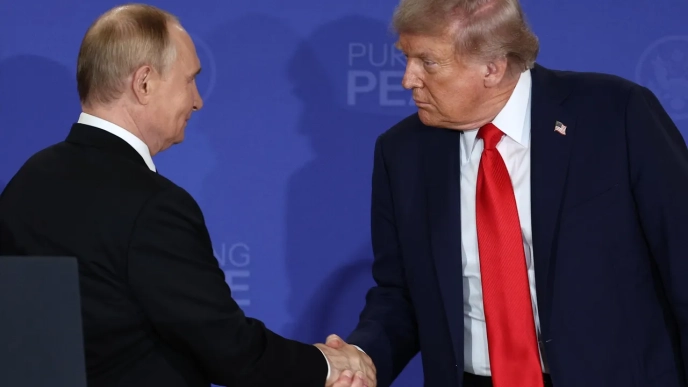
Former President Donald Trump has confirmed that he will meet with Russian President Vladimir Putin in Alaska on Friday, August 15, 2025. The announcement, made on Trump’s Truth Social account, described the event as a “highly anticipated meeting” and promised further details in the coming days.

While Trump stated the date and location were set, a senior White House official reportedly noted that the plans remain “fluid.” According to that official, Ukrainian President Volodymyr Zelensky may also become involved in the discussions.

The meeting comes amid ongoing efforts to address the Russia–Ukraine conflict. Moscow had earlier indicated that it expected Trump and Putin to meet in person to discuss the war, with top Kremlin aide Yury Ushakov confirming that a venue had been agreed upon.

This development follows U.S. Special Envoy to the Middle East Steve Witkoff’s recent visit to Russia, where he met directly with Putin. Those talks were described as a “last-bid attempt” to secure peace in Ukraine, though little concrete progress has been reported so far.

Observers note that Trump’s tone on the conflict has shifted over time—from initial optimism about diplomatic solutions to clear frustration at the lack of movement from Moscow.

White House press secretary Karoline Leavitt said Trump remains “open to meeting with both President Putin and President Zelensky” if it could help advance peace negotiations. The Alaska summit, if it proceeds as planned, could mark one of the most high-profile diplomatic events of the year.

Trump Issues Ultimatum to Putin as Russian Drones Breach NATO Airspace; Putin Agrees to Meet in Alaska

Eastern Europe is once again on edge as Russian drones—some armed with explosives—have breached NATO airspace, triggering security concerns and drawing a pointed warning from U.S. President Donald Trump. President Trump has demanded a resolution to the escalating tensions, giving Russian President Vladimir Putin until Friday to make “meaningful progress” in peace negotiations or face sweeping sanctions targeting Russia’s war economy.

The warning comes as NATO allies in Eastern Europe grow increasingly uneasy over a string of drone incursions and missile strikes brushing up against alliance borders.

In recent days, an explosive-laden drone believed to have originated from Belarus entered Lithuanian airspace, traveling over 100 kilometers before crashing inside a military training zone near the capital, Vilnius. The drone was carrying approximately two kilograms of explosives and came within one kilometer of the Lithuanian president’s residence.

Another drone incident occurred earlier in July, when an unidentified aircraft crashed near the Šumskas border crossing, prompting the evacuation of government officials. Lithuanian Defense Minister Dovilė Šakalienė called the latest breach “unprecedented and alarming,” urging NATO to take the situation seriously and increase regional air defense cooperation.

“This is not merely about Lithuanian airspace—this is NATO territory,” Šakalienė warned. “We need a collective response that reflects the seriousness of the threat.”

Meanwhile, a separate Russian missile strike hit a Ukrainian gas depot just half a mile from Romania’s border, again raising questions about NATO’s preparedness. Although Romania’s air force scrambled F‑16s to patrol the skies, no drone crossed into Romanian airspace during the incident—an outcome Romanian officials attribute to new legislation passed in May that allows for immediate interception or destruction of unauthorized drones.

Romania’s swift response stood in stark contrast to NATO’s broader posture, which has remained muted despite multiple airspace breaches over the past year.

Experts say the incidents reflect a shift in Russia’s military strategy—away from conventional warfare and toward so-called “hybrid” tactics that blend psychological warfare, cyberattacks, and ambiguous military provocations.

“This is the future battlefield,” said Eitvydas Bajarūnas, former Lithuanian ambassador. “It’s not about tanks rolling across borders, it’s about uncertainty, pressure, and the erosion of public confidence in security guarantees.”

Bruno Kahl, head of Germany’s Federal Intelligence Service, has repeatedly warned that Russia is testing the limits of NATO’s unity, using drone incursions and disinformation to gauge how the alliance might respond to more serious provocations. “Russia doesn’t believe NATO will act on Article 5 unless directly challenged,” Kahl said earlier this summer, referencing the alliance’s foundational principle of collective defense.

Amid growing anxiety in Europe, Donald Trump has taken a more confrontational approach. Speaking during an interview on CNBC’s Squawk Box, Trump said Putin’s military adventurism was being fueled by high energy prices and vowed to collapse Russia’s oil-dependent economy if necessary.

“Putin will stop killing people if you get energy down another $10 a barrel,” Trump said. “He’s going to have no choice because his economy stinks.”

Trump warned that unless peace talks show tangible progress by the end of the week, he would push for aggressive sanctions targeting Russia’s energy sector—measures that could cut into the Kremlin’s ability to fund its ongoing war in Ukraine.

While Trump’s ultimatum may place renewed pressure on Moscow, some analysts worry it may also expose cracks in NATO’s deterrence strategy.

Andrew D’Anieri, a regional security expert with the Atlantic Council, noted that repeated incursions without any firm NATO response risk undermining the credibility of the alliance’s collective defense commitments.

“The concerning part is not just the drone flights,” D’Anieri said. “It’s the silence that follows.”

_____________________________________

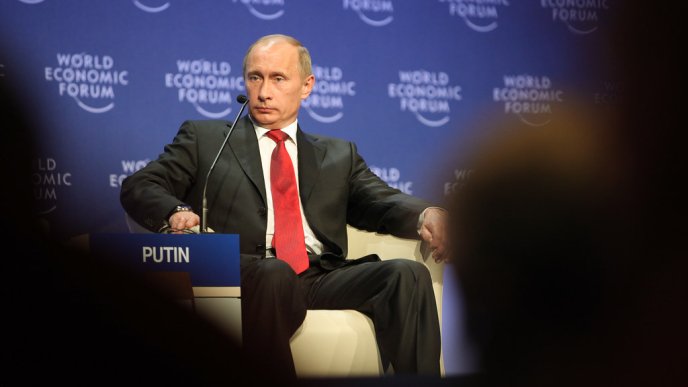
Putin-Trump Meeting to Occur in Alaska on 8/15/25

By Swapna Venugopal Ramaswamy. President Donald Trump and Russian President Vladimir Putin are scheduled to meet next week in Alaska to discuss an end to the three-year Russian war on Ukraine in the first in-person session between the two world leaders since Trump returned to the White House in January.

“The highly anticipated meeting between myself, as President of the United States of America, and President Vladimir Putin, of Russia, will take place next Friday, August 15, 2025, in the Great State of Alaska,” Trump wrote on Aug. 8 in a post on Truth Social. “Further details to follow. Thank you for your attention to this matter!”

The announcement comes on the same day a Trump-imposed deadline on Putin to end the war in Ukraine expires. Talks have been floated for months and were initially supposed to include Ukrainian President Volodymyr Zelenskyy, with Trump facilitating the negotiations. (Read more from this story HERE)

Photo credit: Flickr

Putin Drops Missile Pact, Sparking Fears of New U.S.-Russia Nuclear Arms Race

In a chilling throwback to Cold War brinkmanship, arms race fears are mounting as Putin says Russia is no longer bound by missile treaty limits that once curbed the deployment of intermediate-range nuclear weapons. The announcement has escalated tensions between Moscow and Washington to dangerous new levels as both nations engage in an increasingly volatile military standoff centered around Ukraine.

On Monday, the Russian Foreign Ministry declared an end to its self-imposed moratorium on intermediate-range missile deployments, citing aggressive moves by the United States and NATO allies, particularly the planned stationing of American Typhoon and Dark Eagle missile systems in Germany next year. The ministry warned that such deployments near Russian borders are a “direct threat” to the country’s security and could have “significant harmful consequences” for regional and global stability.

“Russia no longer has any limitations,” Kremlin spokesman Dmitry Peskov told reporters. “Russia believes it has the right to take respective steps if necessary.”

While the statement stopped short of detailing where or when Russia might deploy its own systems, President Vladimir Putin has already announced the coming placement of Russia’s new Oreshnik intermediate-range missiles in Belarus later this year. Designed for maximum speed and devastation, the Oreshnik—capable of flying at Mach 10 and carrying conventional or nuclear warheads—can reportedly reach any target in Europe.

NATO’s Missile Moves Spark Russian Reaction

Russia’s Foreign Ministry justified the policy shift as a response to Washington’s missile plans and broader NATO military buildup. “Decisions on specific parameters of response measures will be made based on the scale of deployment of American and other Western missiles,” the ministry said, stressing the need for a flexible strategy as the international security landscape evolves.

The United States and Russia both abandoned the Intermediate-Range Nuclear Forces (INF) Treaty in 2019 after accusing each other of violations. Signed in 1987 by Ronald Reagan and Mikhail Gorbachev, the INF Treaty had banned land-based missiles with ranges between 500 and 5,500 kilometers. Following the collapse of the agreement, Moscow pledged a voluntary halt in deployment—until now.

Former Russian President Dmitry Medvedev, now deputy chairman of the country’s Security Council, celebrated the end of the moratorium as a “new reality” that “all our opponents will have to reckon with.” In a post on X (formerly Twitter), Medvedev warned, “Expect further steps.”

Trump Orders Submarine Repositioning

The Kremlin’s announcement follows a separate development that could compound tensions. Former President Donald Trump, now leading in the polls as the 2024 election nears, said Friday he had ordered the repositioning of two U.S. nuclear submarines. The move came after a defiant Medvedev dismissed Trump’s warning to accept a Ukraine peace deal or face severe consequences.

Trump said he was alarmed by Medvedev’s combative rhetoric and nuclear threats, noting the escalation as a sign of worsening nuclear brinkmanship. “Each new ultimatum is a threat and a step toward war,” Medvedev had replied to Trump’s peace proposal.

With Trump’s self-imposed deadline for a Ukraine deal approaching, the maneuvering of both Russian and American nuclear assets underscores the renewed volatility in U.S.-Russia relations and the looming threat of a broader conflict that could involve NATO states.

Photo credit: Flickr

Federal Grand Jury Investigates Ex-Obama Officials Over Alleged Trump-Russia Hoax

A federal grand jury has been convened to investigate whether former Obama-era officials coordinated efforts to promote what turned out to be false claims of collusion between Donald Trump and Russia during the 2016 election cycle, according to multiple sources familiar with the matter.

The Justice Department’s probe is centered around the early days of “Crossfire Hurricane,” the FBI’s investigation into alleged ties between the Trump campaign and Russian operatives — an inquiry that ultimately resulted in no findings of collusion after years of scrutiny by Special Counsel Robert Mueller.

The investigation, which could lead to criminal charges, is said to focus on key intelligence figures including former CIA Director John Brennan, former FBI Director James Comey, and former Director of National Intelligence James Clapper. All three served under President Barack Obama and were involved in initiating or advancing the Russia probe.

President Trump and current Director of National Intelligence Tulsi Gabbard have both called for accountability, alleging the Russia narrative was a politically motivated operation designed to derail Trump’s presidency. Gabbard, a former Democrat congresswoman, submitted a criminal referral to Attorney General Pam Bondi last month, citing alleged misconduct by Obama-era intelligence officials and suggesting the former president himself may have orchestrated the effort.

Obama-Era Intelligence Under Scrutiny

Central to the investigation are claims that the infamous Steele dossier — a collection of salacious and unverified allegations compiled by former British spy Christopher Steele — was knowingly used to legitimize the Russia narrative. The dossier was funded by opposition research firm Fusion GPS, on behalf of Hillary Clinton’s 2016 campaign and the Democratic National Committee.

Documents obtained during the inquiry reportedly contradict Brennan’s 2023 congressional testimony, in which he claimed the CIA opposed inclusion of the Steele dossier in an intelligence assessment. At the time, Brennan had allegedly supported its inclusion, according to internal agency communications.

Comey is also facing renewed scrutiny following his 2023 interview with Secret Service agents regarding an image he posted online, interpreted by some as a threat against Trump. Republican lawmakers have long accused Comey of providing false testimony to Congress in 2017, which carries a potential five-year prison sentence — although that charge is subject to a statute of limitations.

Legal Hurdles and Political Fallout

The grand jury inquiry comes at a legally complex moment. In 2024, the Supreme Court ruled that former presidents are immune from criminal prosecution for official acts — a decision that likely shields Obama from direct legal consequences related to presidential directives.

However, DOJ officials are exploring whether lower-level officials knowingly misled Congress or manipulated intelligence for political ends. Treason, while historically rare and difficult to prove, remains on the table as a charge with no statute of limitations.

“Following the compelling case outlined by DNI Tulsi Gabbard, which exposed clear and blatant weaponization by corrupt intelligence officials acting at the behest of the Democrat Party and likely former President Obama, the Administration remains committed to conducting a thorough investigation,” said White House spokesman Harrison Fields.

Trump, who has faced multiple indictments himself in recent years, has argued that he was too forgiving of political rivals during his first term — referencing his decision not to prosecute Hillary Clinton for her use of a private email server while serving as Secretary of State.

“I let her off the hook for what?” Trump said during a recent interview. “Now we know they actually meant it — and it was all a hoax. I think they should pay a price.”

Political and Historical Significance

The grand jury proceedings signal a significant shift in how past political investigations may be scrutinized in future administrations. While many legal experts caution that pursuing charges against former national security leaders could further politicize the justice system, supporters argue it’s necessary to restore public trust.

The Justice Department has not announced a timeline for potential indictments, and sources say the location of the grand jury — whether in Washington, D.C. or another jurisdiction — remains undisclosed for now.

Photo credit: Gage Skidmore via Flickr

Trump Hits India with 25 Percent Tariff, ‘Penalty’ for Enabling Russia

The U.S. will levy a 25 percent tariff on India, which includes a “penalty” for buying military equipment and energy from Russia amid the war in Ukraine, President Donald Trump announced Wednesday.

“Remember, while India is our friend, we have, over the years, done relatively little business with them because their Tariffs are far too high, among the highest in the World, and they have the most strenuous and obnoxious non-monetary Trade Barriers of any Country,” Trump wrote in a post on Truth Social.

He continued:

Also, they have always bought a vast majority of their military equipment from Russia, and are Russia’s largest buyer of ENERGY, along with China, at a time when everyone wants Russia to STOP THE KILLING IN UKRAINE — ALL THINGS NOT GOOD! INDIA WILL THEREFORE BE PAYING A TARIFF OF 25%, PLUS A PENALTY FOR THE ABOVE, STARTING ON AUGUST FIRST.

When reporters asked Trump on Tuesday if a deal with India had been finalized, Trump shot back, “No, it’s not,” the Hill reported. The tariff announcement less than 24 hours later confirmed that answer. (Read more from “Trump Hits India with 25 Percent Tariff, ‘Penalty’ for Enabling Russia” HERE)

Photo credit: Gage Skidmore via Flickr

Jonathan Turley Says This Obama Intel Head Might Want To Lawyer Up

George Washington University law professor Jonathan Turley said Thursday former CIA Director John Brennan could face criminal charges in the wake of new documents regarding the “Russiagate” scandal.

Director of National Intelligence Tulsi Gabbard released documents and a memo Friday detailing what she called a “years-long coup” against Trump after he defeated Clinton in the 2016 presidential race, adding that she had referred the documents to the Justice Department for potential criminal activity. Turley said that while the Supreme Court’s 2024 ruling in favor of Trump’s claims of immunity over “official acts” as president would protect Obama, Brennan and Comey might not be as fortunate.

“It does appear a couple of these figures may have committed perjury. I think the most vulnerable may be Brennan, who is, like, a 30-point buck in the open,” Turley said. “This stuff goes directly to information that he gave to Congress and seems to be in contradiction, and so there are real questions here.” (Read more from “Jonathan Turley Says This Obama Intel Head Might Want To Lawyer Up” HERE)

Photo credit: Gage Skidmore via Flickr

NATO Chief: Putin Envoy Derailed Ukraine Peace Talks with Lecture on 800 Years of Russian History

NATO Secretary-General Mark Rutte revealed in conversation with President Donald Trump on Monday that the Russian government sabotaged peace talks with Ukraine in May by sending a historian to meticulously document the history of Russia beginning in 1250.

Rutte was in Washington to meet with President Trump, who announced a plan to dramatically expand Ukraine’s access to American weapons and laid down an ultimatum to Russian leader Vladimir Putin that requires him to conclude his invasion of Ukraine in 50 days or face punitive secondary tariffs of 100 percent on Russian trade partners. Trump told reporters the deadline was necessary because the Russian government, and Putin personally, were refusing to engage authentically with Kyiv to find an end to the conflict. Trump complained that Putin would be polite and gracious in private phone calls, then immediately escalate the mass killing of civilians, outraging the American president.

Trump has prioritized finding an end to the full-scale invasion of Ukraine, which began in February 2022, since long before his inauguration to a second term in office. He has emphasized the need for both Putin and Ukrainian President Volodymyr Zelensky to engage in difficult conversations earnestly, sternly pressuring Zelensky and scolding him for not being ready for peace following a failed White House engagement in February. In the past month, however, Trump has increasingly expressed frustration with Putin as Zelensky has stepped up attempts to hold viable negotiations.

“I felt that we had a deal about four times and here we are still talking about it,” Trump told reporters on Monday, appearing to blame Russia, not Ukraine, for the failure.

Rutte, sitting alongside Trump, explained that the latest round of talks failed because the Russian government did not take them seriously. (Read more from “NATO Chief: Putin Envoy Derailed Ukraine Peace Talks with Lecture on 800 Years of Russian History” HERE)

CNN: Trump Threatened to ‘Bomb’ Moscow to Prevent Attack on Ukraine

President Donald Trump reportedly threatened to “bomb” Moscow as part of an effort to prevent Russian President Vladimir Putin from attacking Ukraine, according to CNN.

Trump’s comments were reportedly made during a 2024 “private gathering of donors,” audio footage “provided” to the outlet showed.

In addition to threatening Putin that he would bomb Moscow if he went “into Ukraine,” Trump reportedly also issued a “similar warning” to Chinese dictator Xi Jinping regarding Taiwan.

“With Putin I said, ‘If you go into Ukraine, I’m going to bomb the s**t out of Moscow. I’m telling you I have no choice,’” Trump said during the event.

CNN reported that Trump’s comments came as he was making “his case for a second term.” (Read more from “CNN: Trump Threatened to ‘Bomb’ Moscow to Prevent Attack on Ukraine” HERE)

Russia Bombards Ukraine in Extensive Missile and Drone Attack Hours After Trump-Putin Phone Call

Russia targeted the Ukrainian capital of Kyiv and other cities on Friday in the largest missile and drone attack so far in the war, just hours after Vladimir Putin’s phone call with U.S. President Donald Trump.

Ukrainian authorities reported little damage except for some residential buildings in five neighborhoods, the New York Times reported from Kyiv.

Russia has increased its missile and drone attacks on besieged Ukraine in recent months as a U.S.-negotiated ceasefire between the two countries remains elusive. The attack this week will likely set a new record for the largest missile and drone strikes, per Ukrainian officials.

Putin has escalated pressure on Ukraine as President Trump has attempted to facilitate peace negotiations between the two countries. These talks have made little progress. Though Ukraine accepted a U.S.-proposed ceasefire in March, Russia refused to consider the framework.

After the phone call between the Americana and Russian presidents just before the attack, Trump lamented that he “didn’t make any progress with him at all.” (Read more from “Russia Bombards Ukraine in Extensive Missile and Drone Attack Hours After Trump-Putin Phone Call” HERE)

Kremlin Warns That Other Nations Ready to Give Iran Nukes: ‘Dangerous Escalation Has Begun’

Moscow warned Sunday that several nations are prepared to supply Tehran with nuclear weapons, as Russia and China condemned America’s attack on Iran’s nuclear facilities.

Dmitry Medvedev, who serves as deputy head of Russian President Vladimir Putin’s Security Council, claimed Saturday’s US airstrike — the first to use 15-ton GBU-57 “bunker-buster” bombs in combat — only caused minimal damage to Tehran’s nuclear sites, including the fortified Fordow enrichment plant.

Medvedev, who did not specify which countries are ready to arm Tehran, reiterated that the attacks would not stop Russia’s ally in the Middle East from acquiring nuclear weapons.

The statement comes as Iranian Foreign Minister Abbas Araghchi said he will be traveling to Moscow to meet with Putin to discuss countermeasures.

“We enjoy a strategic partnership, and we always consult with each other and coordinate our positions,” Araghchi told Russian media.

Russia’s Foreign Ministry described the American airstrike in Iran as “a gross violation of international law, the UN Charter, and UN Security Council resolutions. (Read more from “Kremlin Warns That Other Nations Ready to Give Iran Nukes: ‘Dangerous Escalation Has Begun’” HERE)